Bhaktapur Durbar Square as a Moving Theatre
Crowds often have their own rhythm, composition, and flow. Every space influences the behaviour or movement of people, and the choreography of crowds in architectural space becomes visible, especially during those times of collective gathering- celebration, protest, or rituals. In such moments, architecture acts as both stage and junction, guiding the crowd through thresholds, courtyards, and streets.
Public squares are often perceived as a static architectural composition. However, they are not just empty plinths but a dynamic stage where social life unfolds through movements, interaction, and collective rituals. Built environments, therefore, function as a setting where human movement is organized, observed, and experienced collectively.
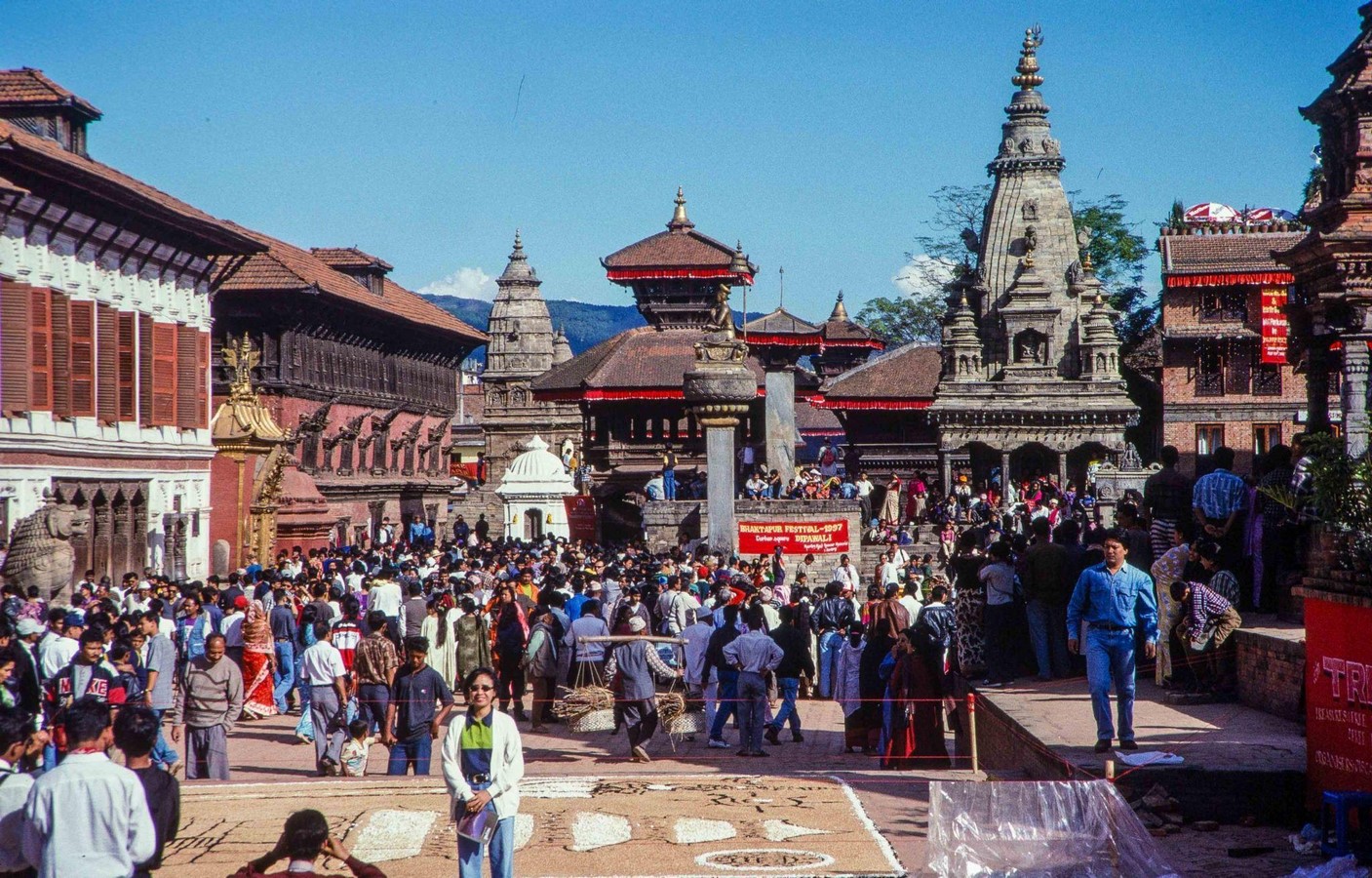
This paper explores Bhaktapur Durbar Square as a moving theater in the context of Nepal, arguing that its spatial composition silently choreographs public gatherings, particularly during the festival of Gai jatra, transforming the public square into a living performance of culture and community.
Historical hierarchy and spatial context
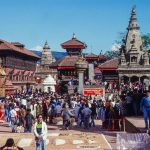
Bhaktapur Durbar Square, built primarily during the Malla period, functions as both a ceremonial ground and a civic hub. Unlike modern plazas designed through rigid zoning, the square evolved organically through the layered addition of temples, courtyards, plinths, and dabalis (raised quadrilateral stone platforms). It is not just a singular open platform but a series of interconnected open areas framed by built edges.
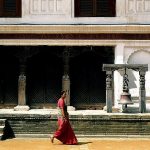
Elevated temple plinths, stepped bases, stone platforms, and visual corridors create varying levels of visual hierarchy within the open ground. This variation allows the space to operate flexibly. Here, the movements are not random but carefully negotiated through century old spatial configuration. Narrow streets compress the flow before releasing it into wider plazas framed by palace facades and temple structures.
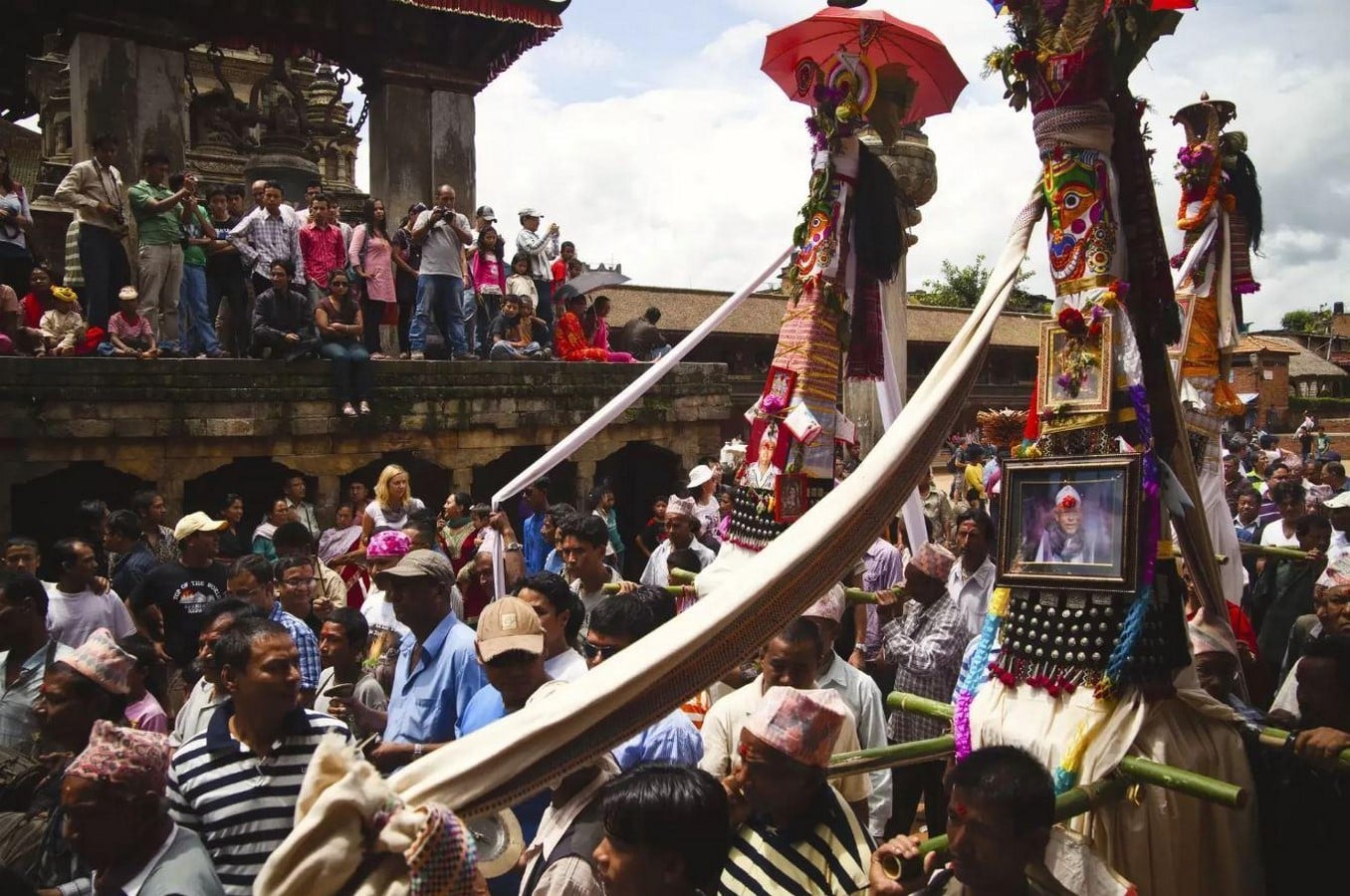
As Niels Gutschow (1979) observed in his studies of Kathmandu Valley urbanism, Malla-period planning reflects a layered system of courtyards and thresholds that caters to movements through various expansions.
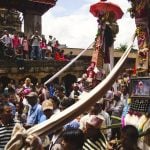
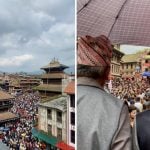
During the jatra, the space accommodates mourning, satire, performance, and procession simultaneously. The openness allows layered activities without chaos, but patterned movement. The balance between enclosure and openness allows architectural space to choreograph dense gathering to flow without collapse.
Gai Jatra as a living performance
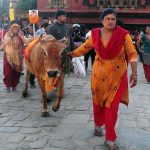
Gai jatra originated during the reign of King Pratap Malla in 17th-century Kathmandu, Nepal. According to legend, following the death of his son, the king invited his citizens and their families who had lost their loved ones to participate in a procession with a cow (gai) or dressing a child symbolising the departed soul’s journey to the afterlife. To console the grieving queen and to show her how grief is a shared experience, the King allowed mockery of social norms, satire, humors and societal faults.
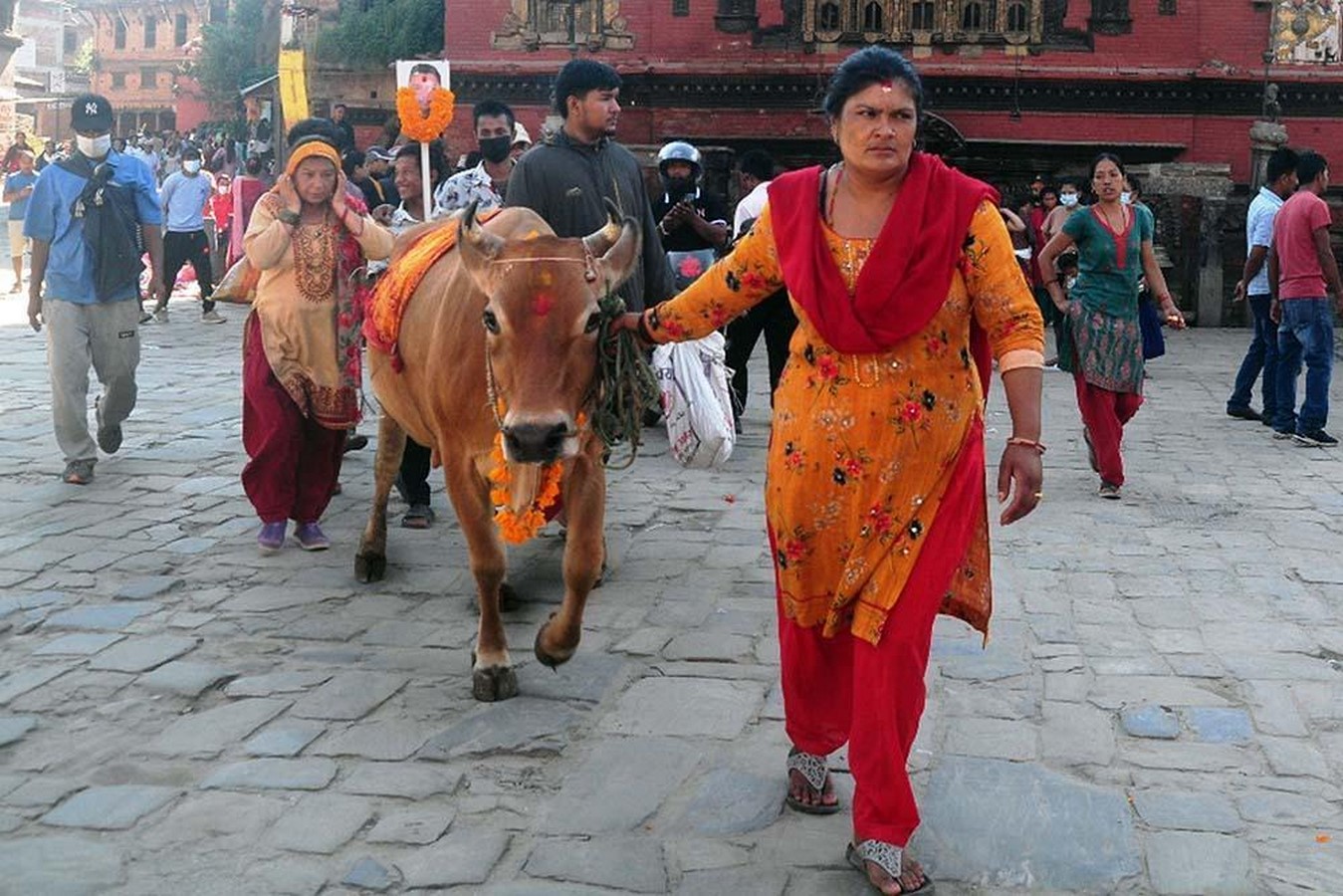
Over time the festival evolved into a significant public event combining grief, satire, performance, and social commentary. The crowd often narrates stories of families and individuals through costumes, play cards, symbolic acts, and their own communal props. As the tradition evolved, Gai Jatra has also become a significant platform for expressions of LGBTQ+ pride parades and political satire, demonstrating its evolving social relevance.
The circulation of people was disciplined by the nature of the space given. Temple steps transform into seating galleries for the viewers, Dabali’s operate as a performing platform, and the central ground becomes both pathway and stage. The contrast between tight alleys and open courtyards intensified the experience of arrival.
Architecture as a silent director
Any space and its architecture function as a director, as the spatial connectivity not just guides experience to the subject but silently guides them as well. Bhaktapur Durbar Square sets out a perfect example of how architectural space can structure collective gathering and communities all at once.
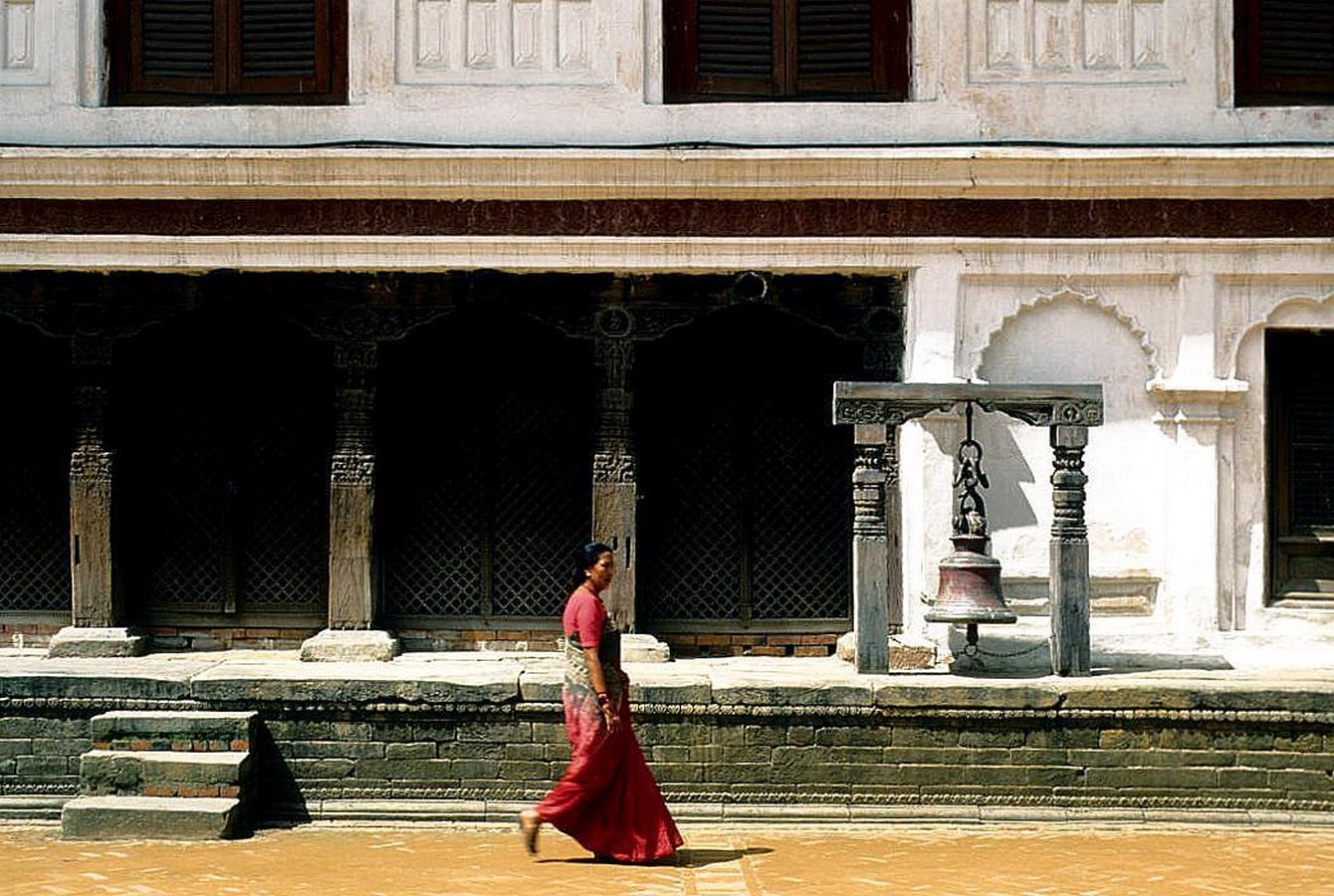
As Spiro Kostof (1991) argues in The City Shaped, historic urban squares operate as a theater of public life, where architecture frames collective identity.
In Bhaktapur, the built masses around the complex created an enclosure without confinement. The variation of height produces natural viewing hierarchies. It also holds a ritual sequencing where narrow lanes generate anticipation, open plaza assembles the crowd, and the temple steps and offers pause, then the space is converted into this beautiful ground where the flow, movement, and pause coexist together.
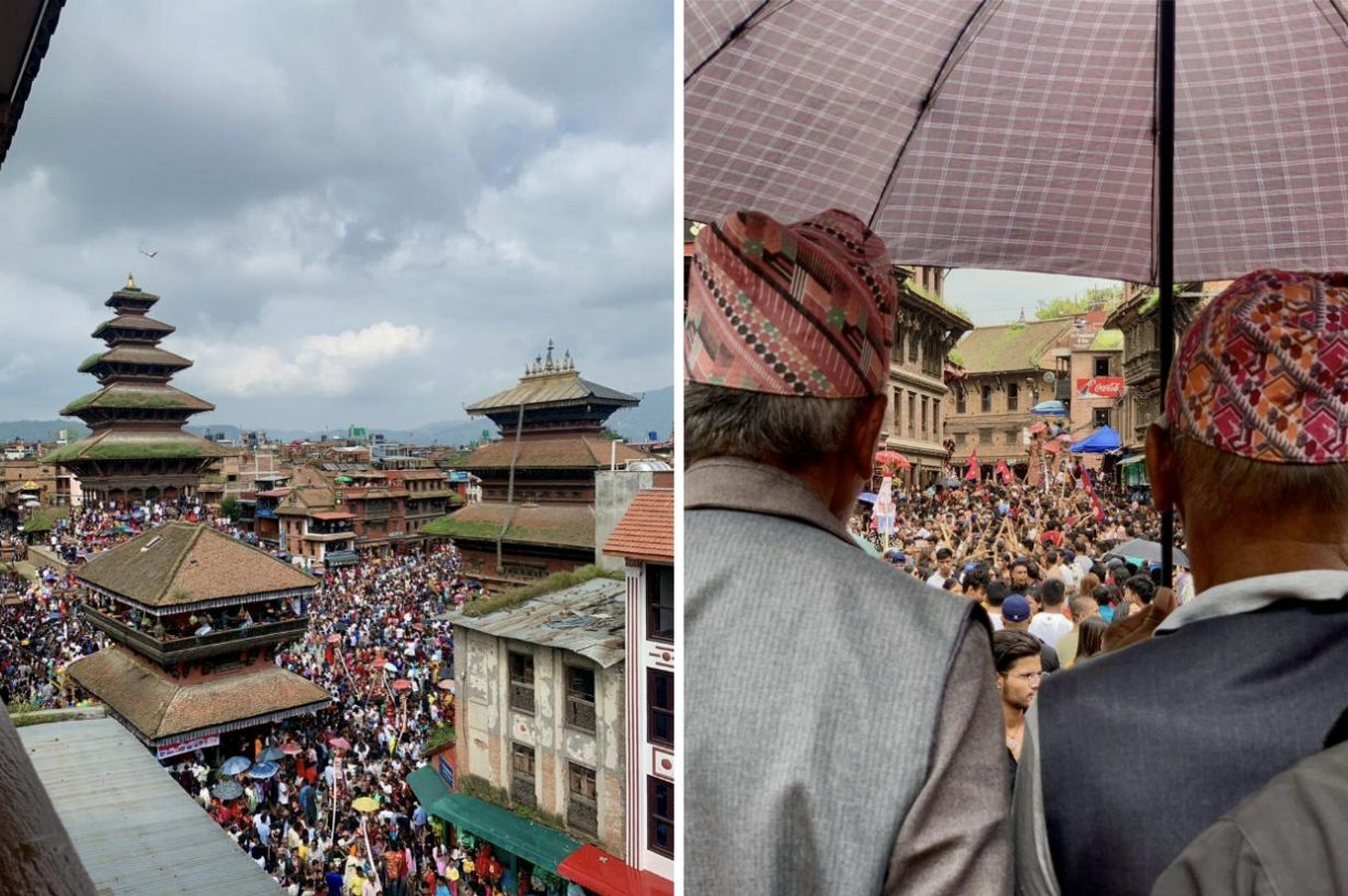
The choreography of crowds in architectural spaces is neither incidental nor purely cultural; it is architectural. Bhaktapur Durbar Square gives an idea of how architecture is not limited to form and structure but extends into the play of human experience.
Through layered plinths, open courtyard, spatial hierarchy, and edges, the square enables the interplay between movement and pause, performer and viewer, ritual and everyday life.
By understanding choreography as a patterned arrangement of discipline and theater as a setting for performance, the square may be interpreted as moving or living theater, one where architecture silently guides the communal rhythm.
In doing so, the square reveals how build epaces can transform into a living stage that shapes, sustains and celebrates collective identity.
References:
- Gutschow, N., & Kölver, U. (1975). Bhaktapur: Ordered space concepts and functions in a town of Nepal. Franz Steiner Verlag.
- Kostof, S. (1991). The city shaped: Urban patterns and meanings through history. Thames & Hudson.
- Slusser, M. S. (1982). Nepal Mandala: A Cultural Study of the Kathmandu Valley. Princeton University Press.
- Gehl, J. (2011). Life Between Buildings: Using Public Space. Island Press.
- UNESCO World Heritage documentation on Bhaktapur Durbar Square.