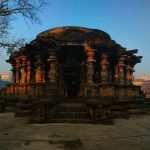
The Kopeshwar temple, nestled in the village of Khidrapur, is a remarkable blend of history, mythology, culture, and excellent craftsmanship. This temple is a testament to how the rule of different dynasties and their social, cultural, and economic conditions can affect yet beautifully influenced architecture.
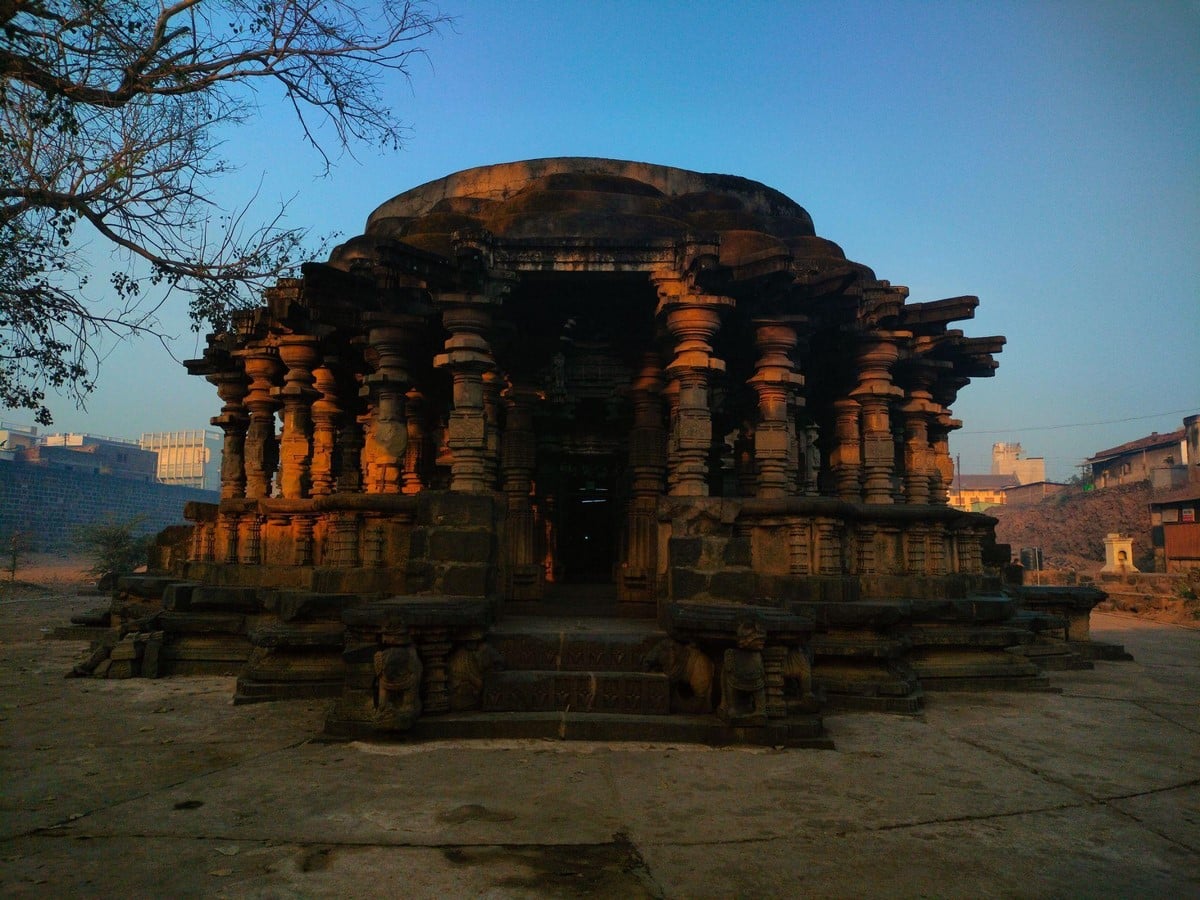
Uniquely, the Kopeshwar temple houses both Shiva and Vishnu deities and is revered by both Shivpant (worshippers of Shiva) and Vishnupant (worshippers of Vishnu) sects, offering a rare example of shared sacred space despite historical differences and conflicts between these groups. This coexistence of Shankar and Vishnu iconography within a single temple is a testament to a potential period of peaceful coexistence. Furthermore, the temple deviates from the traditional layout by omitting the Nandi, which is usually positioned at the entrance, facing the Shivling. This absence and presence of both deities distinguishes the Kopeshwar temple from other temples and invites further investigation into its historical, mythological, and religious context.
Mythological Context-
According to the Mythology, King Dashrat had 16 daughters. Despite his powerful opposition, Sati, his youngest daughter, married Shiva. The King considered Shankar an unsuitable match for his daughter due to his unconventional lifestyle, and hence intentionally excluded Shankar from the Vajpayee Yadnya. Sati went to the Yadnya driven by love for her father and her desire to defend her husband’s honour. At the Yadnya, King Dashrat publicly insulted Shankar and Sati, unable to bear the disrespect, she sacrificed herself in the burning Yadnya. Shankar, upon learning about Sati’s death, rushed there and asked King Dashrat to stop the Yadnya. Shankar showed his anger by hitting his Jata on the land, hence the name Kopeshwar. It is said that Shankar had sent Sati on the Nandi, hence Nandi’s absence in the Temple. It is also said that the temple premises is where Vishnu pacified Shankar, resulting in the presence of both Shankar and Vishnu deities.
The folk tales include that the Pandavas built this temple when they were in exile and that the demons (Rakshas) built the temple in one night.
Historical Context-
The historical context of Kopeshwar is rich and spans several centuries and dynasties. While construction spanned a long period, it’s more accurate to say that the main phases of construction and modifications occurred over several centuries.
The Southern part was ruled by 7 dynasties- Satavahana (Paithan), Chalukya (Badami), Rashtrakuta (Latur), Shilahar (Panhala), Yadav (Devagiri), Adilshahi (Bijapur), and the Maratha Empire, and some of these dynasties had influence over the construction of the Temple.
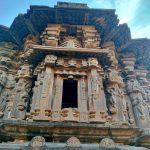
The primary and most significant architectural influences observed are from the Chalukyas, the Shilaharas, and the Yadavas. The Kopeshwar Temple may have begun as early as the 7th century, so it indicates that the initial architectural elements, like the groundwork, foundation, and the early elements of the temple’s structure, were laid out by the Chalukyas. The artistic motifs, sculpture styles, and stone lattice work are strong indicators of Chalukya’s influence. The Shilahars were the primary patrons of the Kopeshwar temple, and the majority of its construction is said to be attributed to them, particularly during the 12th century. They adopted and adapted the existing architectural style, incorporating their features. The temple’s overall layout and intricate sculpture details reflect their craftsmanship. Following the Shilahars, the Yadavas likely contributed to the later additions, renovations, and maintenance. The temple’s superstructure, the shikara, shows clear characteristics of the Bhumija style. The Bhumija style is a sub-style of the Nagara style developed in the Malwa region that emerged during the Malwa and Yadava Dynasties. The style is defined by the arrangement of miniature Shikharas replicating the main Shikha over the Gabhara.
Temple layout –
The temple can be split into seven parts- Swarg Mandap, Sabha Mandap, Antaral, Gabhara, Dakshin Mukhi Mandap, Uttar Mukhi Mandap, and Tarka Kunda.
Swarg Mandap-
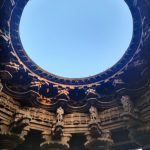
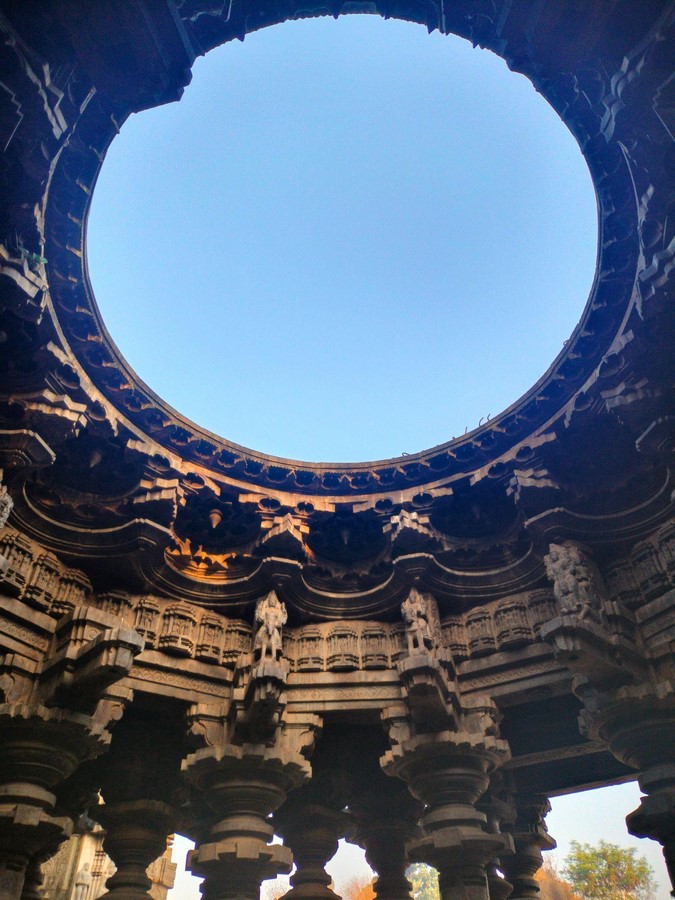
The Swarga Mandap (Heavenly Hall), a remarkable architectural feature, is a grand entrance to the Kopeshwar Temple. This circular mandap, measuring 36 feet in diameter, derives its name from its unique design, the circular opening in its roof. This feature allows the natural light to filter into the mandap. Under the roof is a monolithic stone of 14 feet, also called rangshila in Marathi. Various theories imply that the circular opening was supposed to be covered; it is also believed that the circular monolithic stone was supposed to be the roof covering. But if we observe, there are channels around the Swarga Mandap to drain the water, so if the theory was right, they wouldn’t have provided a drainage system.
It is also said that the Rangshila was treated as a stage for the various performances, and Yagnyas and the opening in the roof was kept to let out the smoke caused. There are 48 intricately carved stone pillars placed in 34 concentric circles in the Swarga Mandap, 12 of which are around the rangshila.
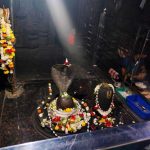
Adding to its allure, a fascinating phenomenon occurs every year in the first week of May, the rays of the sun enter through the circular opening and fall directly on the Shiv Pind, creating a breathtaking spectacle. This festival is called Kirnotsav and is celebrated for 3 days. Also, during the Kartik Purnima, the full moon day, the moon aligns perfectly, appearing centred within the circular opening in the roof.
Sabha Mandap-
The Sabha Mandap (Assembly hall) serves as the transitional area between the Swarga Mandap and the more sacred parts of the temple. It is a spacious 50 x 50 square hall supported by 60 pillars. There is a circular monolithic stone, rangshila, similar to the Swarga Mandap. There are 12 square pillars around the rangshila arranged in a square formation. There are 20 pillars surrounding this quadrilateral and 28 semi-pillars in the wall. In addition to the main Eastern entrance through the Swarga Mandap, there are two more entrances on the Southern and Northern sides, providing alternative pathways into this significant space.
Antaral-
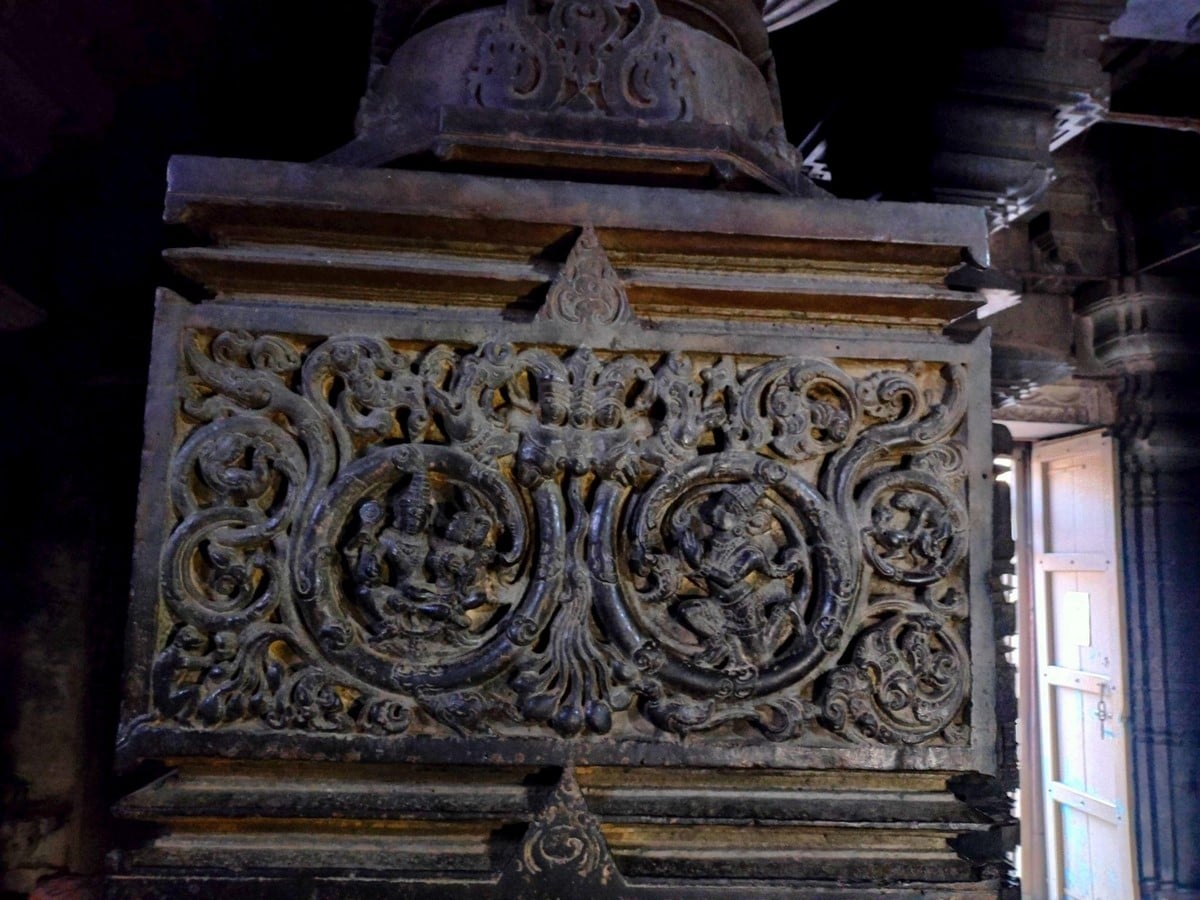
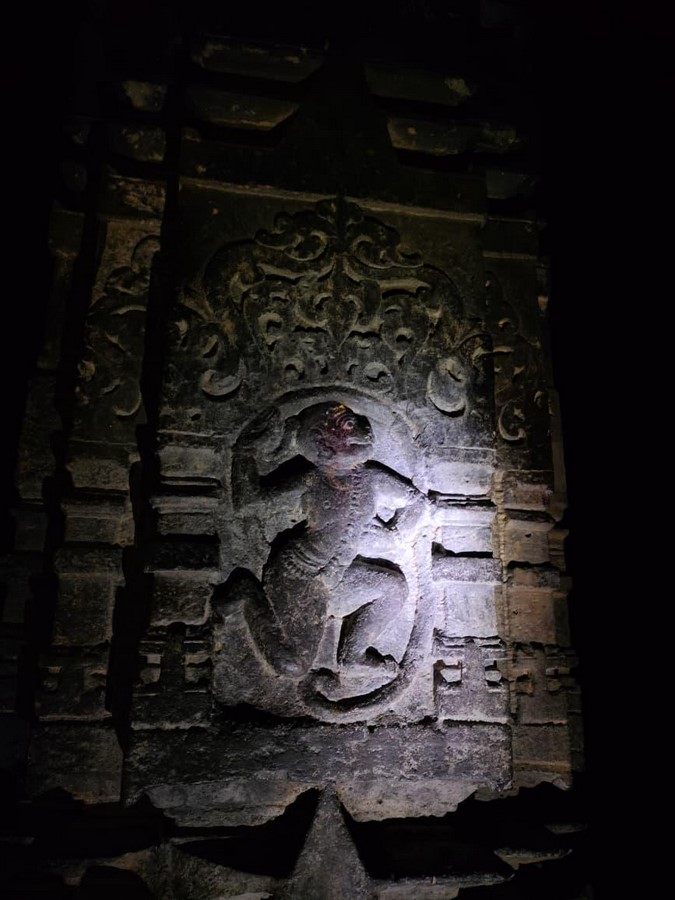
The Antaral, also known as Antarkaksha, forms the enclosed passage between the Sabha Mandap and the Gabhra. This 20×20 chamber serves as a transition point, and as one progresses deeper into it, the level of illumination decreases significantly due to the absence of any wall openings. Guarding the entrance to the Garbha Griha within the Antaral are statues of the gatekeepers Jay and Vijay, positioned on the southern and northern sides of the doorway. Notably, the statue of the gatekeeper facing south is damaged; its remaining portion is now located outside the Dakshin Mukhi Mandap. Adding to the historical significance of the Antaral, inscriptions in the Kannada language can be found on its northern wall.
Gabhara-
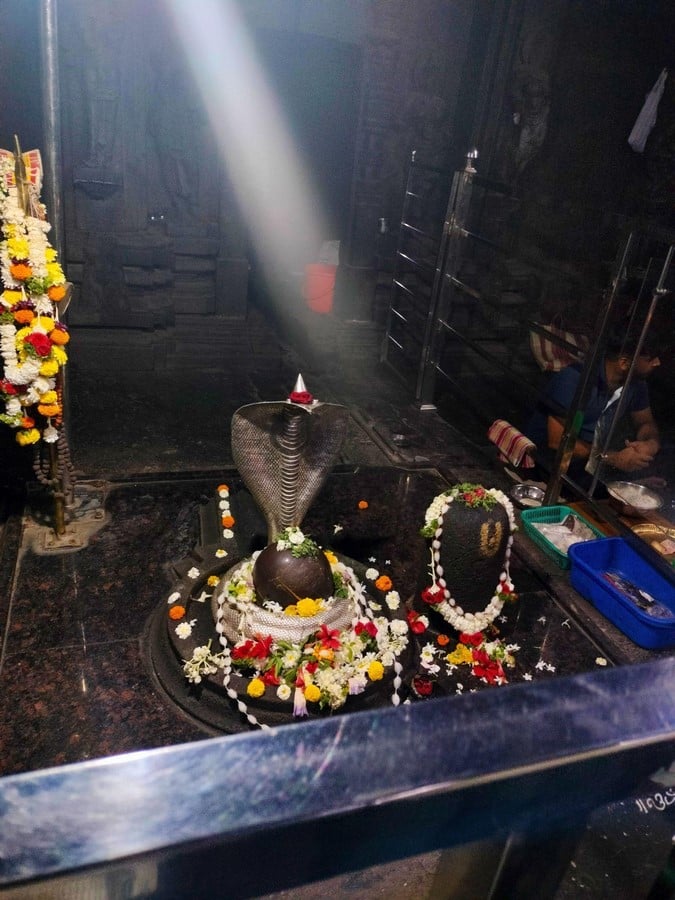
The Gabhara, also known as Garbha Gruha, is the innermost sanctum of a Hindu temple housing the deity.
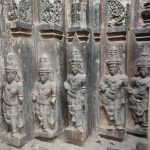
It is conical in shape with a square plan, adding to its visual prominence and signifying the importance of this part of the temple. It is a calm and peaceful place with the Shivling and the Statue of Dhopeshwar (Vishnu). This unique co-existence of both deities within the Garbha Griha further distinguishes the Kopeshwar Temple. There are statues of 18 beautiful women standing with puja materials leaning on the pillars. Although the faces and hands of these statues are broken, the intricate details can be seen or felt through their remaining features, including their ornaments and attire, which hint at their original beauty and artistry.
Tarka Kunda-
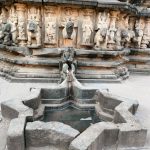
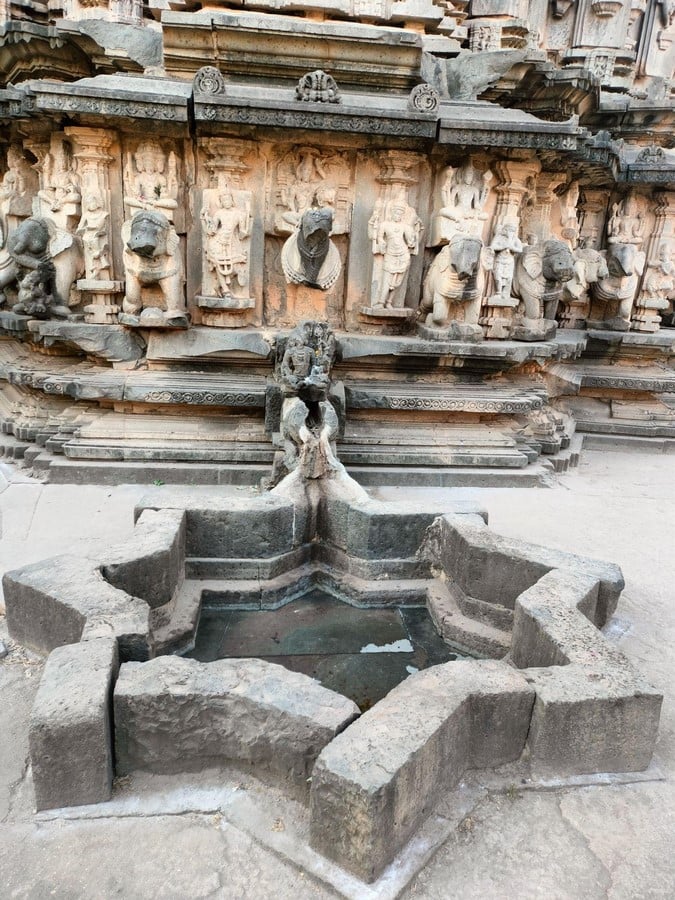
Tarka Kunda is a small, star-shaped water pot. The temple has a proper internal system to bring the anointing water out of the Gabhara; the anointing water falls from the crocodile’s mouth into the Tarka Kunda.
Material-
The temple is constructed in Black Basalt, a volcanic rock renowned for its exceptional durability and hardness. The stone’s fine-grained texture allowed the artisan to create incredibly intricate carvings that adorn the temple, while the dark hues impact the distinctive and imposing aesthetics of the temple. Notably, this particular stone is not found near the temple. It suggests that the heavy stone blocks were transported to the site using the seasonal floods of the Krishna River as a natural water channel, showcasing the remarkable logistical capabilities of the artisans.
Sculptures-
The Kopeshwar temple has a three-level plinth that is 1.5 m high from ground level and is different from the other Maharashtrian Temples. The three layers of the plinth have the flowing patterns: hoof, cyma reversa, and cyma recta, respectively, from bottom to top and serve as the foundation above the structure, which is a layer of elephants called Gajathar. This layer has 92 elephants with different deities seated on its back, and it might seem that these elephants have been carrying the weight of the entire temple. Between every two elephants, there are sculptures of God, Goddesses, and beautiful singers.
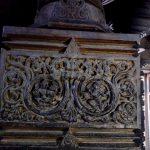
Above the layer of elephants are three small temple-like structures called Devkoksha on the Northern, Eastern, and Southern sides of the Gabhara. This layer acts like a roof for the elephants, almost like a canopy. The pillars have various stories carved, including the Ramayana, Mahabharata, Panchatantra, etc.
Even the roof has intricate carvings, patterns, motifs, etc.
The defaced and vandalised sculptures found in the temple were damaged during the Adilshahi dynasty. The stories suggest that Adil Shah’s daughter fell in love with the Sculptures and refused to return. It is said that the guards defaced and vandalised the sculptures she adored to take her back.
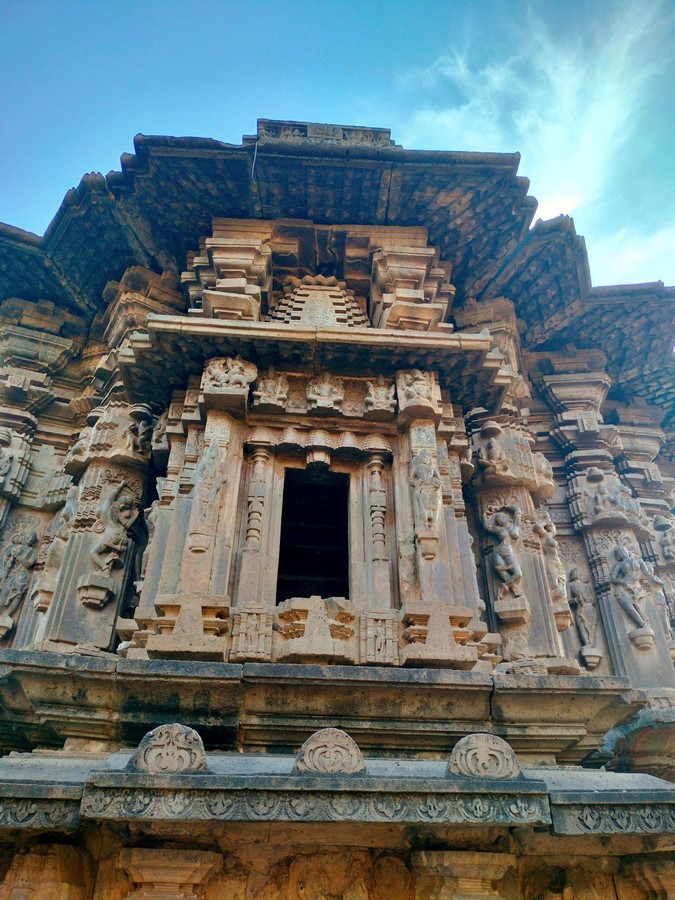
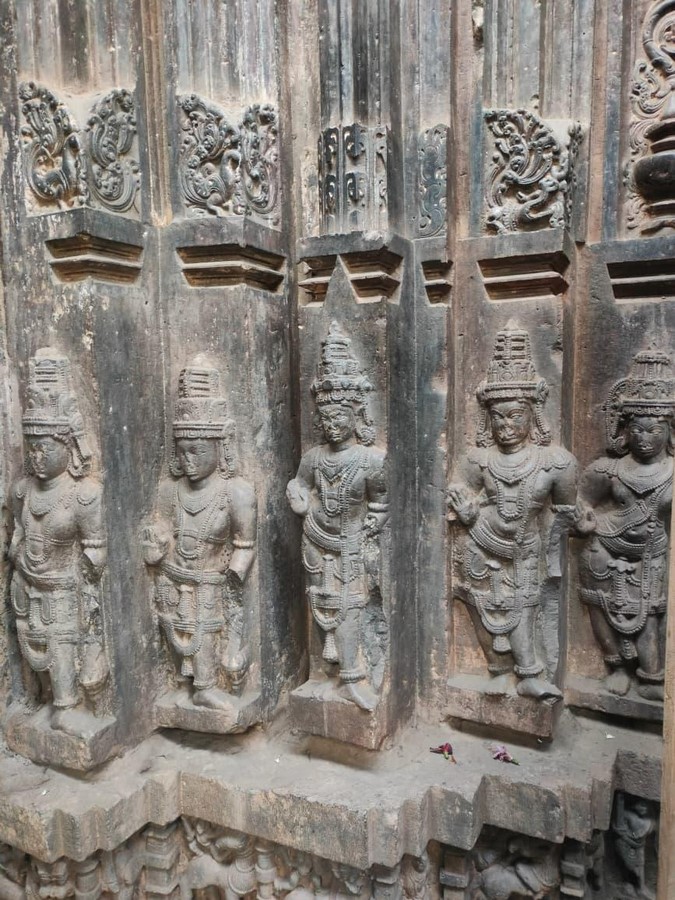
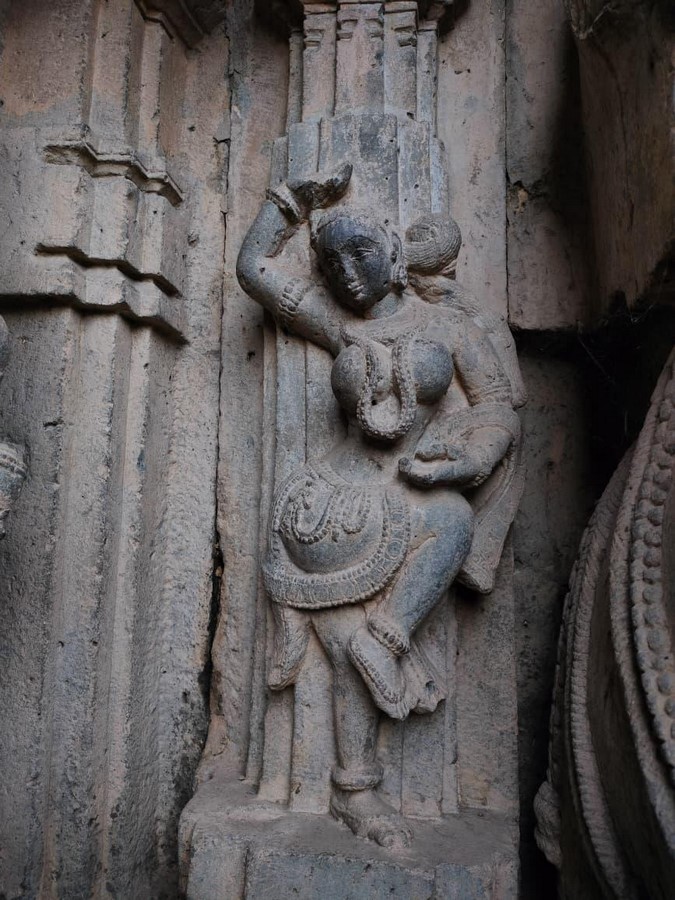
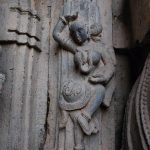
In conclusion, the Kopeshwar temple transcends the definition of a mere architectural wonder and stands as a testament to the unparalleled craftsmanship of the bygone era. The sheer delicacy and meticulous detailing of its sculptures are awe-inspiring, particularly when considering the limited techniques, tools, and information available to the artisans as compared to modern resources. The mastery displayed in rendering intricate ornamentations, weaponry, postures, human anatomy, flora and fauna, human nails, and even the subtle expression of human emotions in stone is remarkable.
The artisans have effectively brought ancient narratives to life, preserving and treasuring moments of history, mythology, and culture in stone. Their unwavering concentration and the lifelike quality they achieved infused stone with the appearance of the skin, creating sculptures that appeal not only to the visual but also to the tactile senses, challenging our understanding of human potential.
In the age of advanced visualisation, documentation, understanding, and creative equipment, the Kopeshwar temple prompts us to reflect on the extraordinary achievements possible with dedication and skills. It serves as a powerful reminder of the enduring legacy of human artistry and the limitless possibilities of human creation, both then and now.