Evolution has been an integral part of human nature since the dawn of time and Architecture has been a fundamental component of it since it shapes the very identity of the society. Throughout the centuries architectural styles have evolved from the ancient pyramids to magnificent Gothic cathedrals and intimidating yet jaw-dropping skyscrapers. All of this has been possible because of the advancement in technology and the distinctive thinking of intellective individuals.
As rural populations started to migrate to the cities, global dynamics began to shift, and urbanisation set course, thereafter resulting in unprecedented and rapid growth. However, this progress came at a cost. The world was soon hit by the energy crisis in the 1970s. It revealed the declining condition of Earth’s natural resources, environmental damage, pollution, and climate change, which threatened the future.
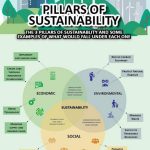
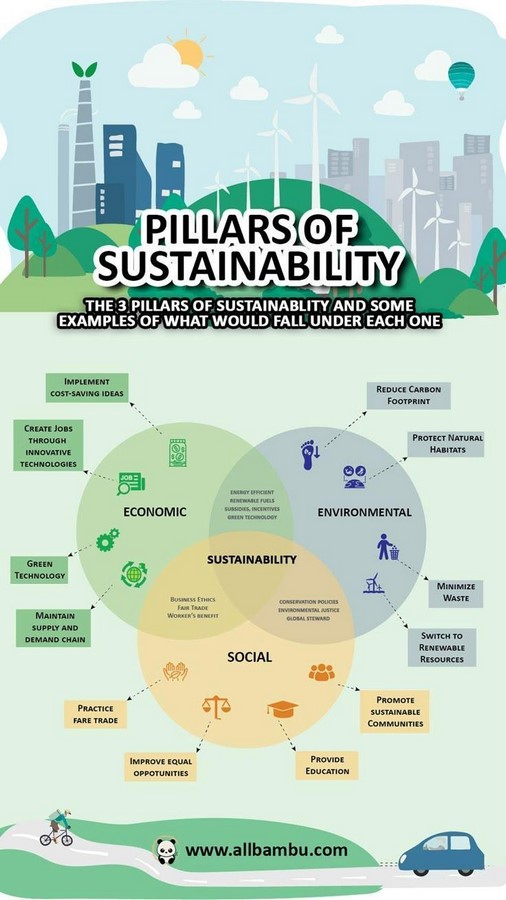
Therefore, to address these challenges, it was in the 1987 Brundtland Report that the three pillars of sustainability were introduced: environmental, social, and economic, which established the foundation of sustainable development. People began to think more about the future, roots of sustainable architecture were therefore strengthened and more eco-friendly spaces and design practices began.
Perspective Shift: Challenges & Innovations
Sustainability has always been a part of Architecture throughout history, evidently visible in practices dating back to civilization, like Mesopotamia’s advanced water management systems and the climate-conscious architectural designs of the Pueblo people.
Architects started to think outside the box and began experimenting with ways to reduce the impact the built environment had on the natural environment while maximizing efficiency. Ancient building techniques were reintroduced with a contemporary approach. This led to the adoption of approaches like using alternative building materials, and eco-friendly materials such as hempcrete and smart glass. These innovations have started to revolutionize the ways of building design.

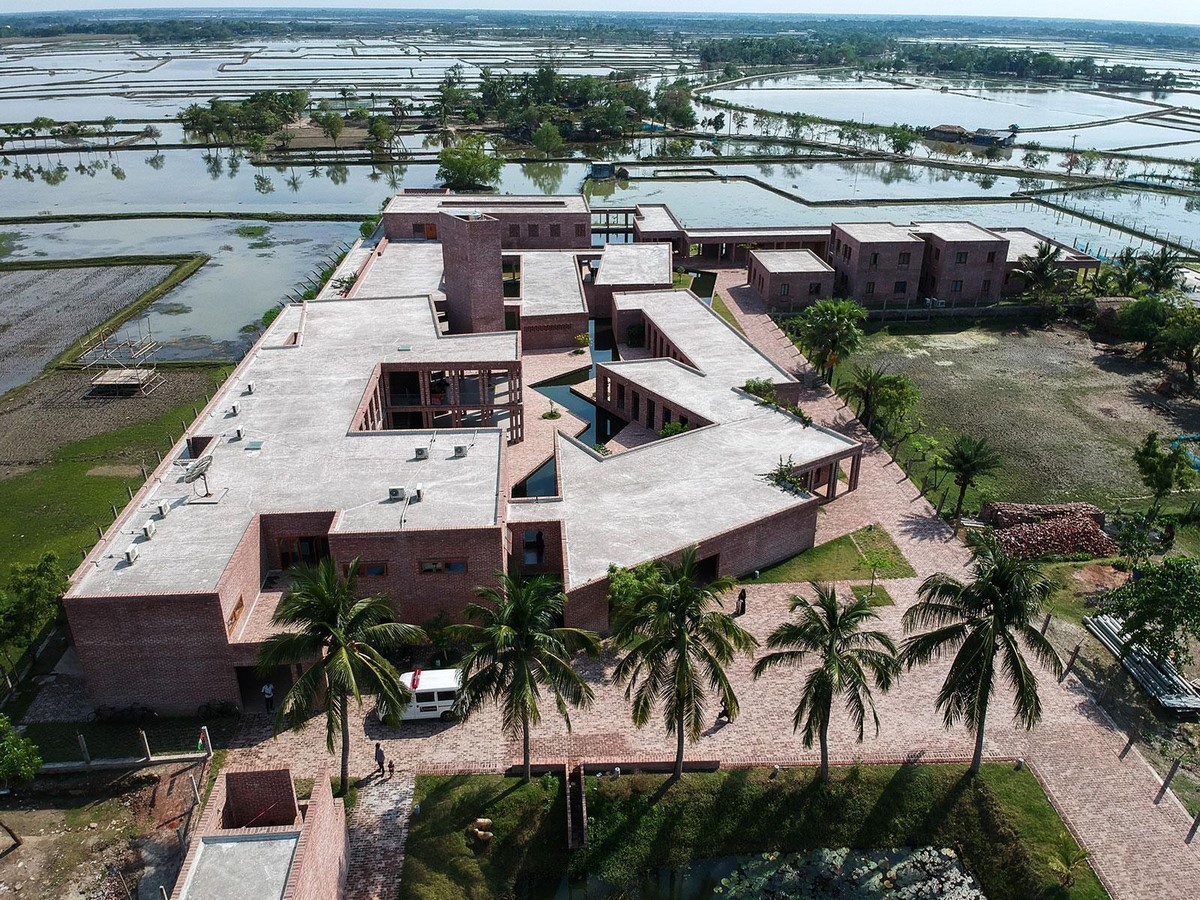
Friendship Hospital, Bangladesh offers not just treatment but true healing, it is a sanctuary where architecture coexists in harmony with nature designed by Kasef Chowdhury/ URBANA. Situated amongst the shrimp fisheries in Bangladesh, the surrounding water was taken up as an inspiration in design which can be seen while walking through the network of open courtyards through the bricked pathways, surrounded by water channels collecting rainwater.
Furthermore, the brick corridors are perforated to allow light and air to filter through, which creates beautiful shadows and patterns throughout the day. The building has its own natural rhythm, with the channels collecting rainwater, a soft murmur of water follows throughout giving a sense of peacefulness.
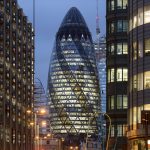
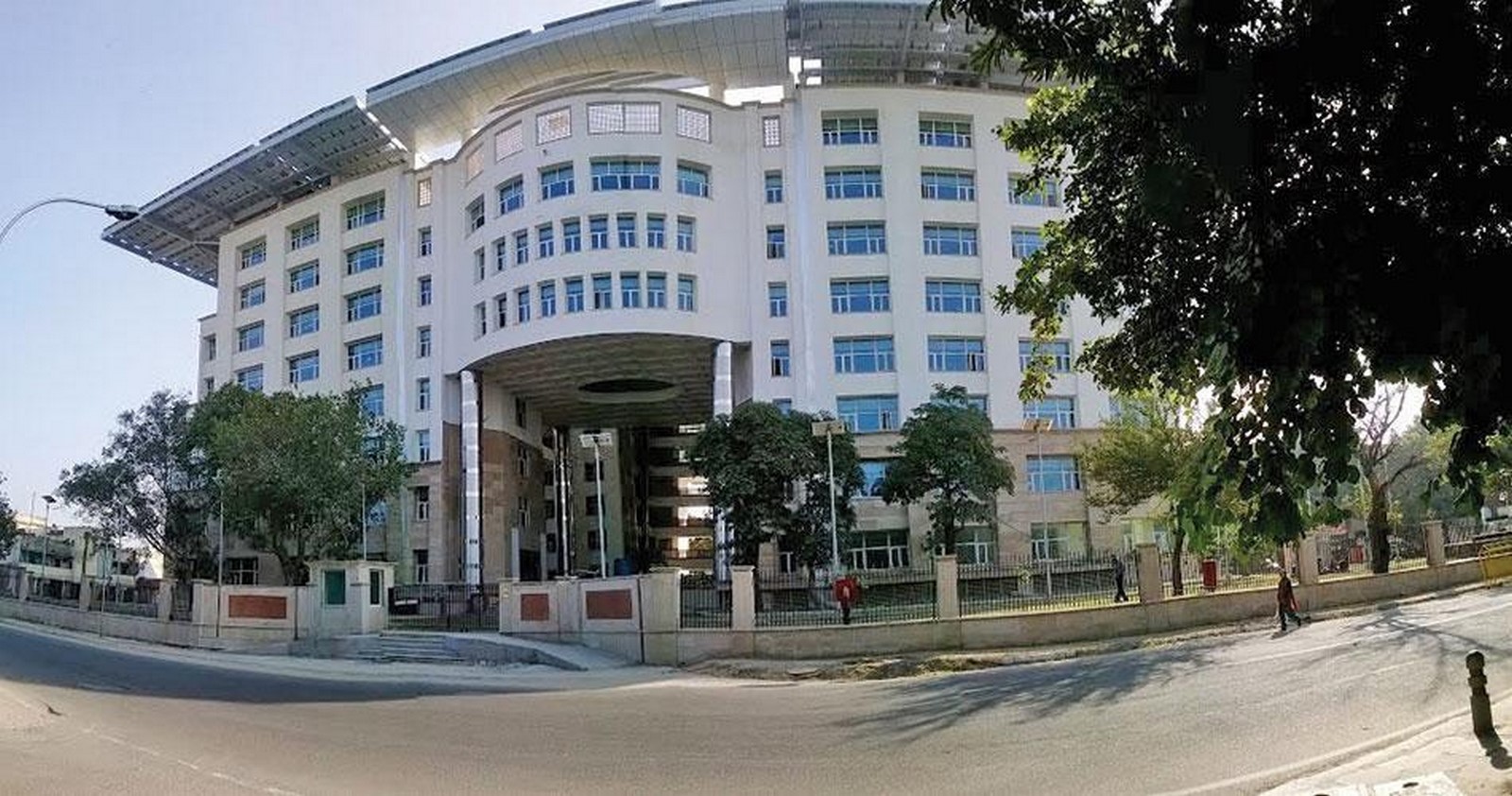
“Don’t judge a book by its cover” or in this case, a building by its façade. The Gherkin in London, with its sleek glass exterior, might seem like just another high-rise, yet it stands as a remarkable feat of sustainable architecture, integrating energy-efficient strategies that significantly reduce its environmental impact. On the other hand, Indira Paryavaran Bhawan in New Delhi, though conventionally designed and built primarily with fly ash bricks, is India’s first Net Zero Energy Building. This MoEF headquarters employs solar panels, passive design strategies, and high-performance glass to optimize daylight while minimizing heat gain. Sustainable techniques found in the building include Rainwater harvesting and an on-site sewage treatment plant to ensure efficient water conservation. Others like green terraces, vertical gardens, and an open courtyard are a few design principles found in traditional Indian fort architecture that enhance thermal comfort and natural ventilation.

Turning Point: Learning From Nature
Nature has been building efficiently for billions of years, from the cooling systems of termite mounds to the strength of a spider’s web and the elegance of a honeycomb. The possibilities seem endless, and with advancements in technology, they feel closer than ever, as nature offers not only strong foundations but also timeless solutions. From this idea emerged one of the most promising shifts in sustainable architecture: Biomimicry.
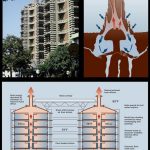
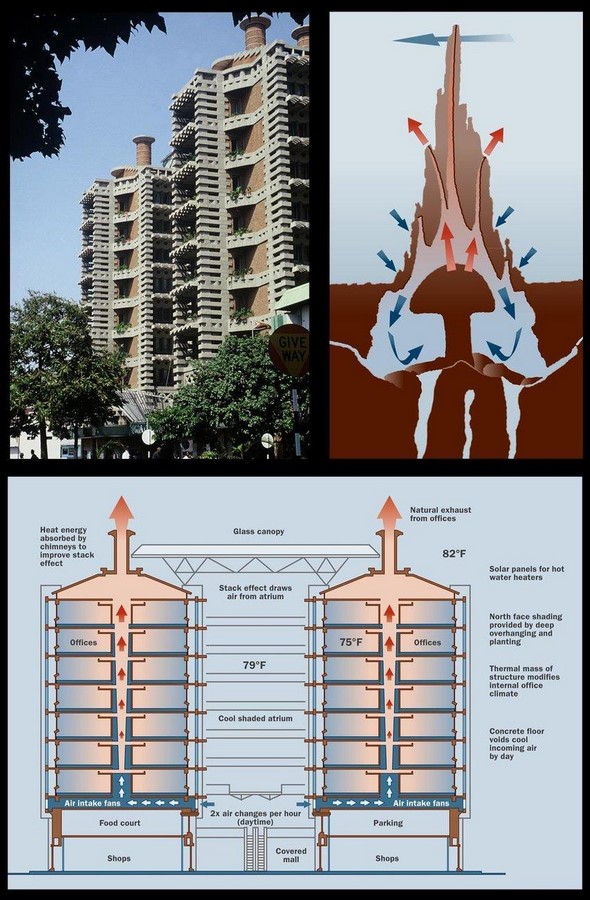
One of the earliest examples of biomimicry in architecture can be witnessed in the Eastgate Centre in Harare, Zimbabwe, designed by architect Mike Pearce in the late 1990s. Inspired by the funnel system of termite mounds, the building uses distinctive brick chimneys on the roof to draw out warm air while pulling in cool night air from below. This design reduces energy consumption by over 10% compared to conventional office buildings, showcasing how nature-inspired design can drive sustainable innovation.
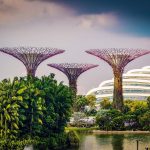
Glowing giants of light and vine, the Supertrees stand tall and wide, mimicking natural trees while serving as a testament to human ingenuity. Their crimson branches stretch toward the stars, breathing life into the night. A walk through Singapore’s Gardens by the Bay evokes this thought immediately, a beautiful blend of nature, art, and technology. Designed to function like trees, they provide shade, collect rainwater, and generate electricity using photovoltaic cells to harness solar energy. They stand as proof that architecture is more than just high-rise buildings; it is about creating purposeful, integrated spaces.

Glimpse of Tomorrow: Future Reimagined
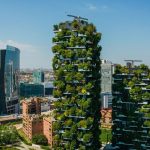
Imagine a world with clean air and open green spaces, where buildings exist in harmony with nature, where the built environment seems to be one with the natural environment. Gleaming glass towers no longer just glare under the sun but instead harness its energy, while rooftops have transformed from barren concrete into a lush green oasis.
Sustainable architecture is no longer a distant vision, it is shaping the cities of today and tomorrow. Several cities aim to become carbon-neutral and have net-zero emissions in the following years. Today, the streets have started to line up with self-sufficient buildings, homes are naturally ventilated, and urban landscapes are evolving into successful ecosystems. The once relentless spread of concrete jungles will feel like a distant memory, replaced by vibrant, living cities that breathe alongside their inhabitants.
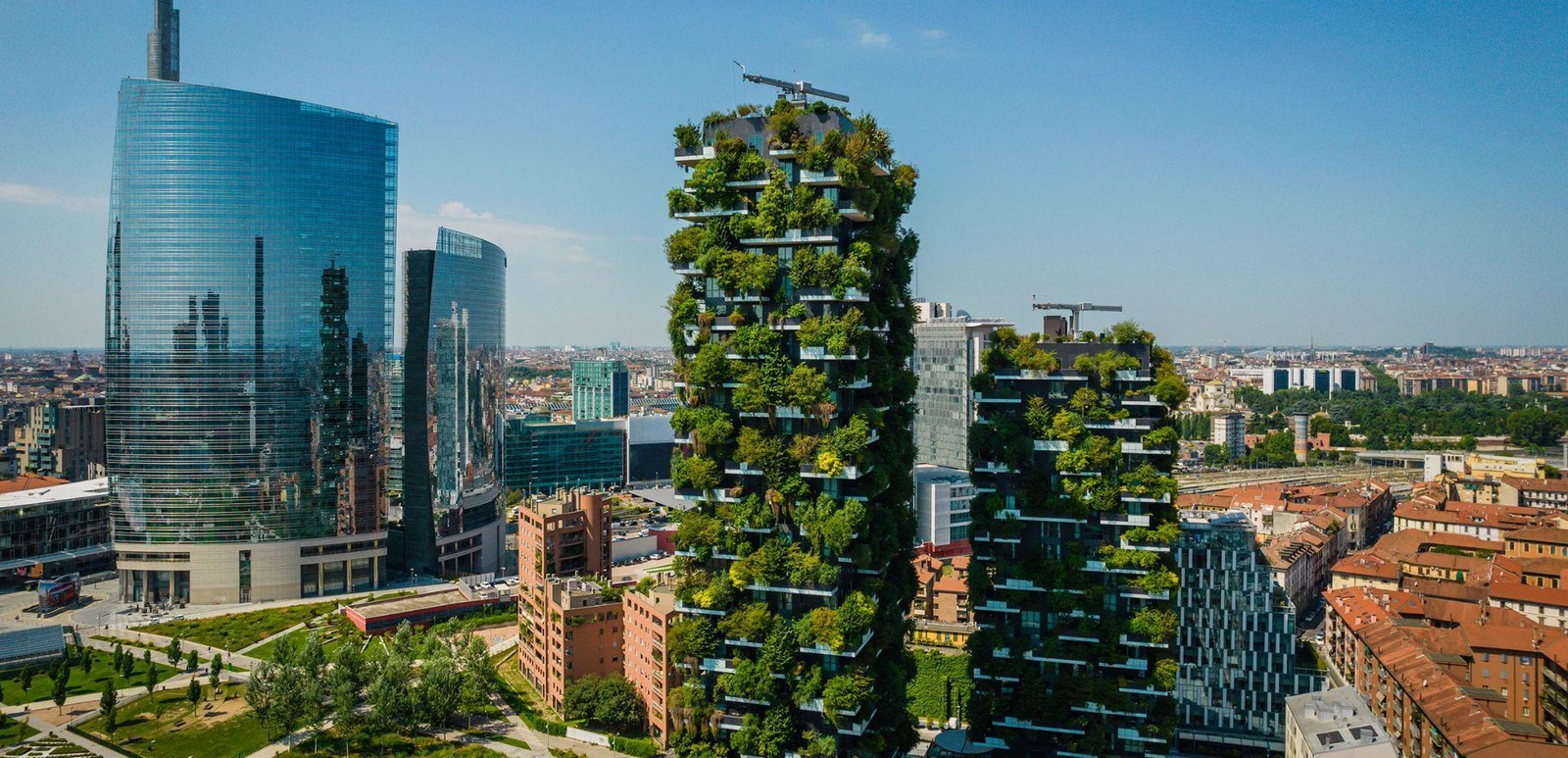
The cities of the future will not be defined by the concrete towers but rather by their harmony with the natural world. Structures will stand as achievements, examples of the innovation benefitting both people and the environment. By adopting sustainability,
Each building is a monument to harmony—a representation of creativity that benefits both people and the environment. The durability and harmony with nature, rather than their mere size, will be the defining characteristics of the cities of the future. By adopting sustainability, we are creating a legacy of cohabitation, creativity, and timeless beauty rather than just embracing sustainability, we are not merely constructing buildings; we are crafting a legacy of coexistence, innovation, and enduring beauty.

References List:
World Commission on Environment and Development (1987). Report of the World Commission on Environment and Development: Our Common Future. [online] United Nations. Available at: https://sustainabledevelopment.un.org/content/documents/5987our-common-future.pdf.
Pearce, M. (2016). Eastgate Building Harare. [online] Mickpearce.com. Available at: https://www.mickpearce.com/Eastgate.html. [Accessed 23 Mar. 2025].
Raghava11(2023). CASE STUDY ON SUSTAINABLE BUILDING-EAST GATE CENTER.pdf. [online] Available at: https://www.slideshare.net/slideshow/case-study-on-sustainable-buildingeast-gate-centerpdf/258570247. [Accessed 23 Mar. 2025].
RIBA International Prize 2021 (no date) RIBA. Available at: https://www.architecture.com/awards-and-competitions-landing-page/awards/riba-international-awards/RIBA-International-awards-2021. [Accessed 23 Mar. 2025].
Daynes, A. (2023). The Complete History of Biomimicry (with Examples). [online] www.learnbiomimicry.com. Available at: https://www.learnbiomimicry.com/blog/history-of-biomimicry. [Accessed 23 Mar. 2025].
NZEB. (n.d.). Indira Paryavaran Bhawan Case Study. [online] Available at: https://nzeb.in/case-studies/nzebs-in-india/nzebs-in-india-case-studies-list/ipb-case-study/. [Accessed 23 Mar. 2025].
Imiplc.com. (2025). Gardens by the Bay | IMI. [online] Available at: https://climatecontrol.imiplc.com/case-studies/gardens-bay [Accessed 23 Mar. 2025].
Hutter Architects (2024). Hutter Architects. [online] Hutter Architects. Available at: https://hutterarchitects.com/sustainable-architecture-examples/. [Accessed 23 Mar. 2025].
Usgbc.org. (2024). USGBC. [online] Available at: https://www.usgbc.org/education/sessions/ancient-civilizations-and-sustainable-innovations-12857978. [Accessed 23 Mar. 2025].
Wikipedia Contributors (2019). Sustainable architecture. [online] Wikipedia. Available at: https://en.wikipedia.org/wiki/Sustainable_architecture. [Accessed 23 Mar. 2025].