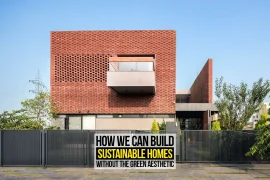
Trends in architecture often evolve to address complex environmental challenges and diverse social needs. To achieve sustainability, architects and engineers are exploring innovative designs (often inspired by nature), and following sustainable trends such as renewables, modular construction, and adaptive reuse. And by incorporating advanced materials, they create resilient buildings that respond to and harmonise with their surroundings.
- But what will the future trends be?
Sustainable architecture is moving beyond merely reducing environmental impact to fostering a regenerative approach, where buildings actively support ecological health. Emerging materials, adaptive construction methods, and smart technologies promise to transform how buildings function within their environments and address global challenges, from climate change to urban overcrowding.
Future Architecture
In the coming decades, architects and engineers envision buildings that use bio-based materials to absorb CO₂, modular construction techniques that enable rapid and flexible development, and intelligent systems that monitor and optimize energy use autonomously. While some of these trends are already underway, others are speculative glimpses of what could be achieved through continuous innovation.


Materials
One of the most transformative trends in sustainable architecture is the development of eco-friendly, bio-inspired materials. Unlike traditional building materials, these innovative substances can adapt to environmental changes or even contribute positively to a building’s ecological footprint. Algae-based façades, for instance, generate biofuel through photosynthesis, turning building surfaces into renewable energy sources, while also absorbing CO₂, creating a net-positive impact on the surrounding environment (EcoLogicStudio, n.d.a).
In pursuit of reducing the construction industry’s environmental footprint, another promising material component that could become more commonly used in the future is mycelium. Mycelium-based materials are known for their amazing soundproofing and fire-resistant properties. These are also biodegradable and capable of self-repair, making them ideal for long-lasting, low-maintenance structures (Snøhetta, 2021).


Mycelium-based materials also bring a unique aesthetic appeal to interiors with their natural colours and textures, transforming walls and surfaces into visually captivating, almost artistic features. Who knows, maybe this organic aesthetic could influence future trends, perhaps becoming even more popular in both interior and product design?
Another innovative material that could be a future trend is bio-concrete, which uses bacteria to “heal” cracks, thus extending the lifespan of structures and reducing maintenance needs. Looking to the future, it may become more popular to incorporate “living” materials that actively interact with their environment. Imagine buildings with outer layers that adjust in real-time to temperature and light changes, providing enhanced insulation and maximising energy efficiency.
Kinetic Design
Kinetic or mobile architecture addresses both resilience and adaptability making it a great component of sustainable architecture. Buildings with kinetic façades can respond to environmental factors such as sun exposure, temperature, and weather conditions, reducing energy use in heating and cooling thereby optimising energy efficiency.

Future trends might incorporate kinetic design in every building, making it not only efficient but also resilient to weather conditions. Maybe future developments will allow for fully mobile buildings that could be relocated as needed? This concept could be particularly promising in disaster-prone areas, where temporary or adaptable structures could quickly provide shelter and resources with minimal setup, or the existing buildings could “evolve” to withstand adverse conditions and offer reliable shelter. Kinetic design embodies a flexible approach to sustainable architecture, where buildings adapt in response to environmental challenges and evolving user needs.
Just imagine a research facility that can move across a landscape to study different ecosystems; or a mobile house – other than a traditional van or a motorhome – reminiscent of the one seen in Howl’s Moving Castle animation by Miyazaki; or even adaptable furniture and amenities that shift to meet your needs and follow you throughout a space.

Construction Methods
Construction methods are also evolving to support sustainable architecture. Modular and prefabricated construction techniques allow components to be manufactured off-site and assembled with minimal waste and energy. This method reduces the carbon footprint of the construction process and enables quick and flexible responses to changing urban needs, as buildings can be expanded, reconfigured, or relocated with ease (Daab Design, n.d.).


Additionally, 3D printing technology offers the potential to construct complex structures using sustainable materials while also reducing both waste and transportation emissions, making it ideal for remote or resource-scarce locations. The speculative future of 3D printing in architecture includes printing entire buildings on-site using local earth-based materials, bio-materials or recycled materials, further enhancing sustainability.
Smart Technology
Worth mentioning is the development of technologies that will transform sustainable architecture through smart technologies that will enable buildings to monitor and adjust their own energy use. AI-driven systems allow buildings to predict and adapt to energy demands based on factors like occupancy and weather. For example, a smart HVAC system can learn a building’s daily usage patterns, adjusting temperature settings to minimize energy use during off-peak hours (Chinnakannan et all., 2022). Similarly, intelligent lighting systems can adjust based on natural light levels, further conserving energy. With the rapid developments of AI and technologies, it is likely that future cities will incorporate those technologies.
Future Cities: Scenario
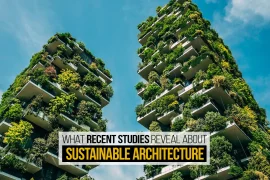
Looking forward, sustainable architecture may lay the groundwork for cities that function as regenerative ecosystems. Imagine walking through a city where each building is designed to interact with its environment, from algae façades that absorb pollutants to green roofs that host urban farms. The once grey cities are now greener, the air is cleaner, and every structure is powered by renewable energy. The structures surrounding you seem like they are “living”, with either biomaterials or kinetic façades that change as you pass by.


These future cities might also feature adaptable public spaces that can transform based on the community’s needs, such as parks that double as water collection systems or modular housing that can expand and grow depending on the population shifts. At night, an AI-driven lighting system reduces light pollution, adjusting street lighting based on the presence of pedestrians and vehicles, saving energy. Suddenly you realise these futuristic cities somehow form this harmony between human and non-human, coexisting with what’s natural and what’s artificial, and forming a living organism.
Future trends will shape future cities. And by integrating new, advanced materials, adaptive designs, and smart technologies, we could create thriving and self-sustaining environments, promising a vision of sustainable cities.
Reference list:
Chinnakannan, A., Nilsson, O., Hussain, K., & Avelar, V. (2022). Using AI to Optimize HVAC Systems in Buildings: A Real-world Example. Schneider Electric – Energy Management Research Center. White Paper 508.
Daab Design (n.d.). Modular Housing: A simple and elegant approach to housing using off-site prefabrication [online]. Available from: https://www.daabdesign.co.uk/projects/modular-housing [Accessed date: 8 November 2024].
EcoLogicStudio (n.d.). Photo.Synthetica Curtain [online]. Available from: https://www.ecologicstudio.com/projects/photo-synth-etica [Accessed date: 8 November 2024].
EcoLogicStudio (n.d.). Photo.Synthetica Tower Linz [online]. Available from: https://www.ecologicstudio.com/projects/photosynthetica-tower-linz [Accessed date: 8 November 2024].
Snøhetta (2021). Mycelium: Exploring Regenerative Materials [online]. Available from: https://www.snohetta.com/projects/mycelium-research [Accessed date: 8 November 2024].
Snøhetta (2019). Biocrete: A new type of carbon-neutral concrete [online]. Available from: https://www.snohetta.com/projects/biocrete [Accessed date: 8 November 2024].