The Fitzwilliam Museum is a historic jewel housed in Cambridge, United Kingdom. It’s a proud manifestation of the giving tradition of the University of Cambridge and is adored by Cambridge locals and visitors alike. The museum has a rich artistic and architectural history that like most things in life isn’t so black-and-white.
The History
The Fitzwilliam Museum is a prestigious, free-to-all gallery and partner of Cambridge University’s Museums Consortium (University of Cambridge). The museum is renowned for its rich history and collection and is one of the 16 major museum partners funded by Arts Council England to drive artistic development (Almeroth-Williams for the University of Cambridge).
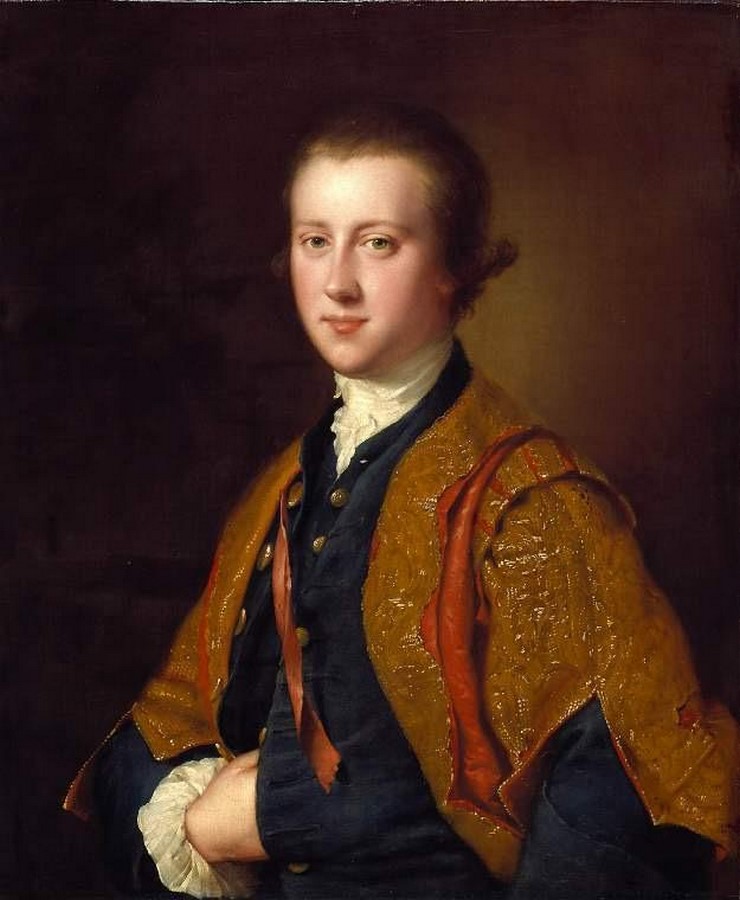
The museum is a product of the seventh Viscount Fitzwilliam of Merrion’s 1816 bequeathment of his artistic and literary collection to the University of Cambridge. Richard Fitzwilliam “was the eldest son of Richard Fitzwilliam, 6th Viscount Fitzwilliam of Merrion, and Catherine, eldest daughter and co-heir of Sir Matthew Decker, baronet, of Richmond (University of Cambridge, “The Hon. Richard Fitzwilliam, Later 7th Viscount Fitzwilliam of Merrion”).” Fitzwilliam, the seventh Viscount of Merrion, graduated from the University of Cambridge, Trinity Hall. Fitzwilliam felt it necessary that the prestigious European academic powerhouse have its own museum and library.

Fitzwilliam’s bequest included 144 pictures, 500 folio albums, and 130 medieval manuscripts, and formed the foundation upon which the museum’s notable legacy was built.
The Fitzwilliam Museum was the first purpose-built public art gallery in the country and housed one of the finest private collections of paintings, drawings, sculptures, and antiquities in Europe. The museum became world-famous for its acquisition of the Elgin Marbles from Lord Elgin in 1816. These Parthenon marble sculptures became the most iconic pieces in the museum’s collection.
In 1848, thirty-two years after it was endowed, the Museum opened three days a week, for members of the university as well as members of the general public.
The Art
Today, the Fitzwilliam Museum is one of the leading museums of art and antiquities in Britain, with over half a million visitors each year. Its collections span over two thousand years of history and include works by some of the most famous artists in the world, such as Leonardo da Vinci, Michelangelo, Raphael, and Rembrandt.
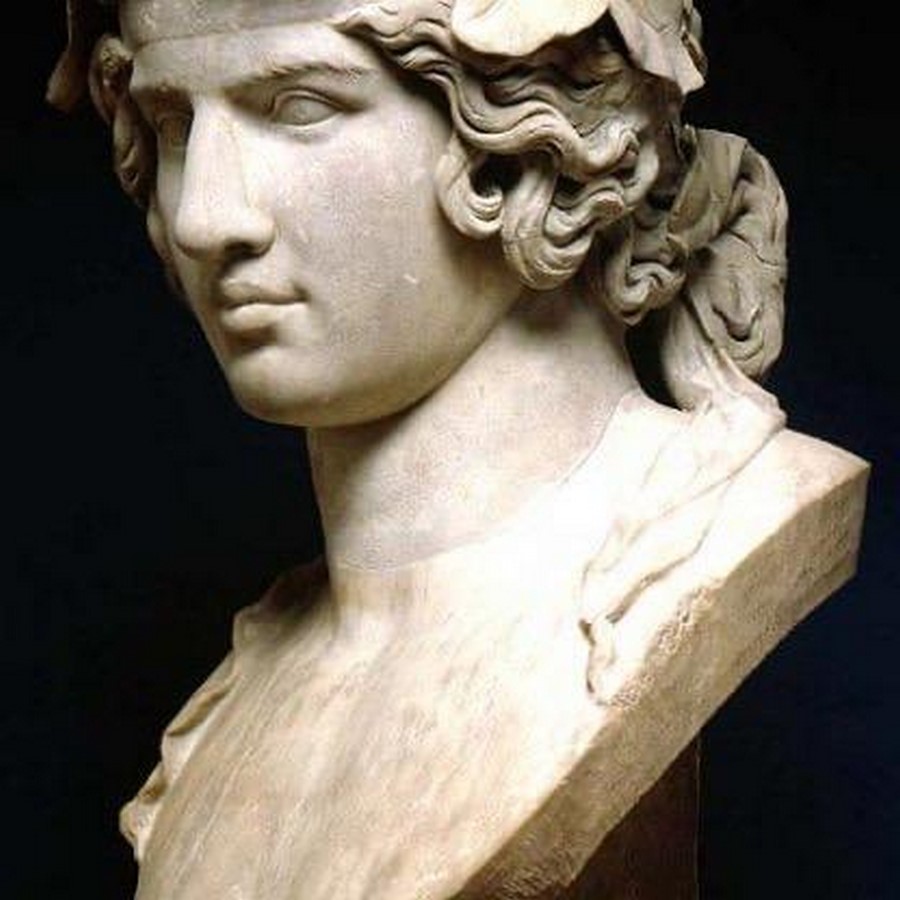
Other notable names wading in the sea of Fitzwilliam’s original bequest include Titian, Veronese, Palma Vecchio, composers Handel and Purcell (University of Cambridge, “The Hon. Richard Fitzwilliam, Later 7th Viscount Fitzwilliam of Merrion”).
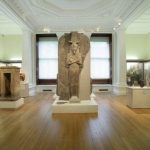
One of the highlights of the collection is the Egyptian Gallery 19, which houses a range of artifacts from ancient Egypt, including mummies, sculptures, and jewelry

Gallery 3 features a range of coveted works by “Claude Monet, Pierre-Auguste Renoir, George Stubbs, John Everett Millais, Dante Gabriel Rossetti, Anthony Van Dyck, Pablo Picasso, L. S. Lowry, Edgar Degas, Virginia Woolf, and Samuel Palmer as of December 2022.
The Fitzwilliam Museum also has an extensive collection of Greek and Roman artifacts, as well as a wide range of pottery, tapestries, and other decorative objects.
The museum’s repertoire spans a wide range of artistic styles over a breadth of centuries, more than a short read can cover. For more information about the collections visit Collections at the Fitzwilliam.
The Architecture & Design
After Fitzwilliam’s bequest, the University acted swiftly to make the historic works available to the public, beginning with a temporary space that is now the current site of the Whipple Museum of the History of Science.
The museum’s permanent location was purchased in 1821 for the sum of €8500. After this, the University held a quite popular architectural competition in 1834, the winner of which would be the architect of its permanent site at Trumpington Street (The Fitzwilliam Museum).
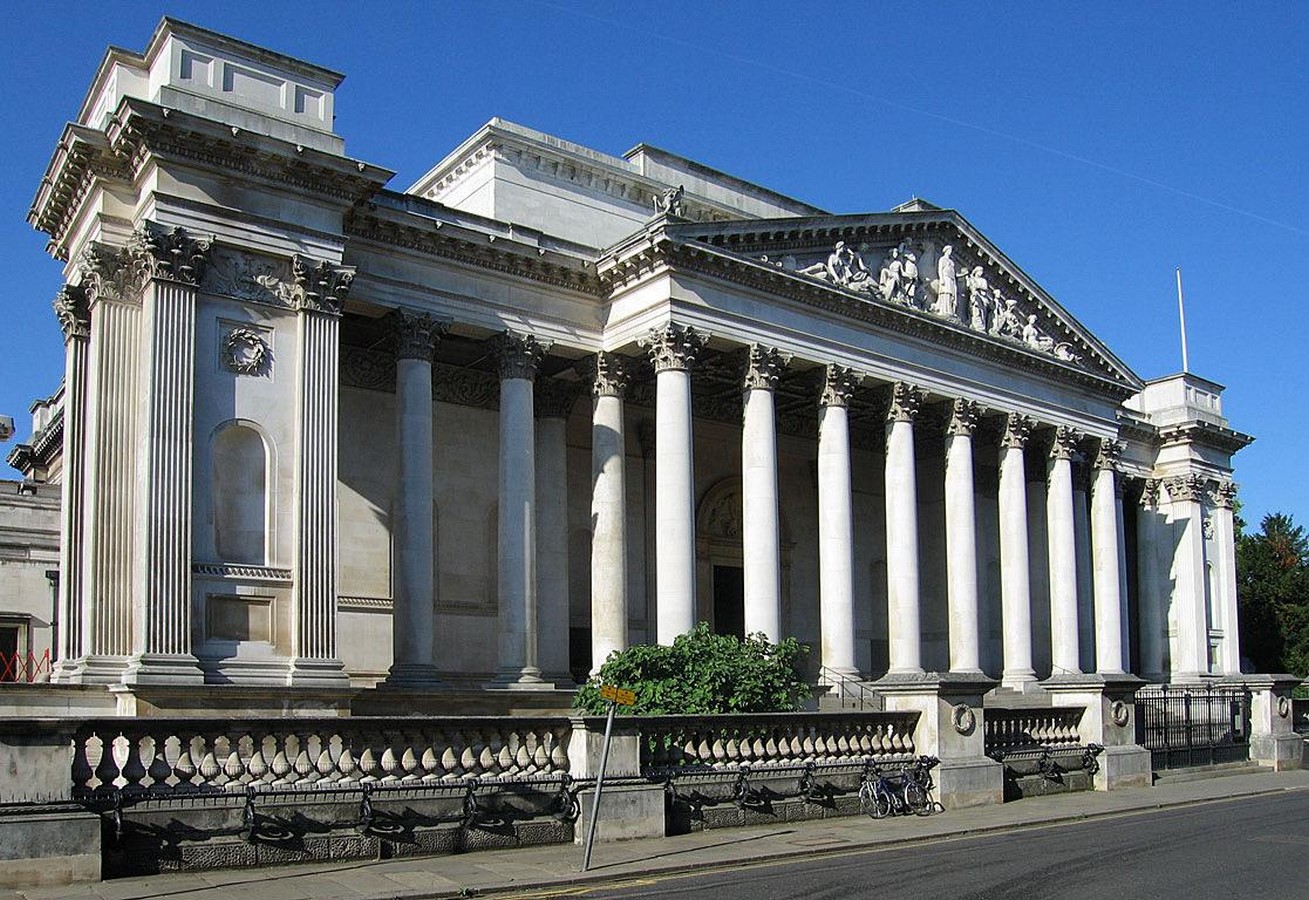
The select elegant, neo-classical design was born from the mind of George Basevi, a notable architect of the time. After Basevi’s death in 1845, the structure was overseen by architect Charles Robert Cockerell.
Finally in 1848, more than three decades after the original endowment, the Fitzwilliam Museum was open to the public.
The museum is an excellent example of Neo-Gothic architecture. At the building’s face towers a series of Corinthian columns. The corners are framed with the scalloped score patterns typical of the Corinthians columns while the entryway columns are smoothed in a very Tuscan-like manner.
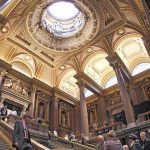
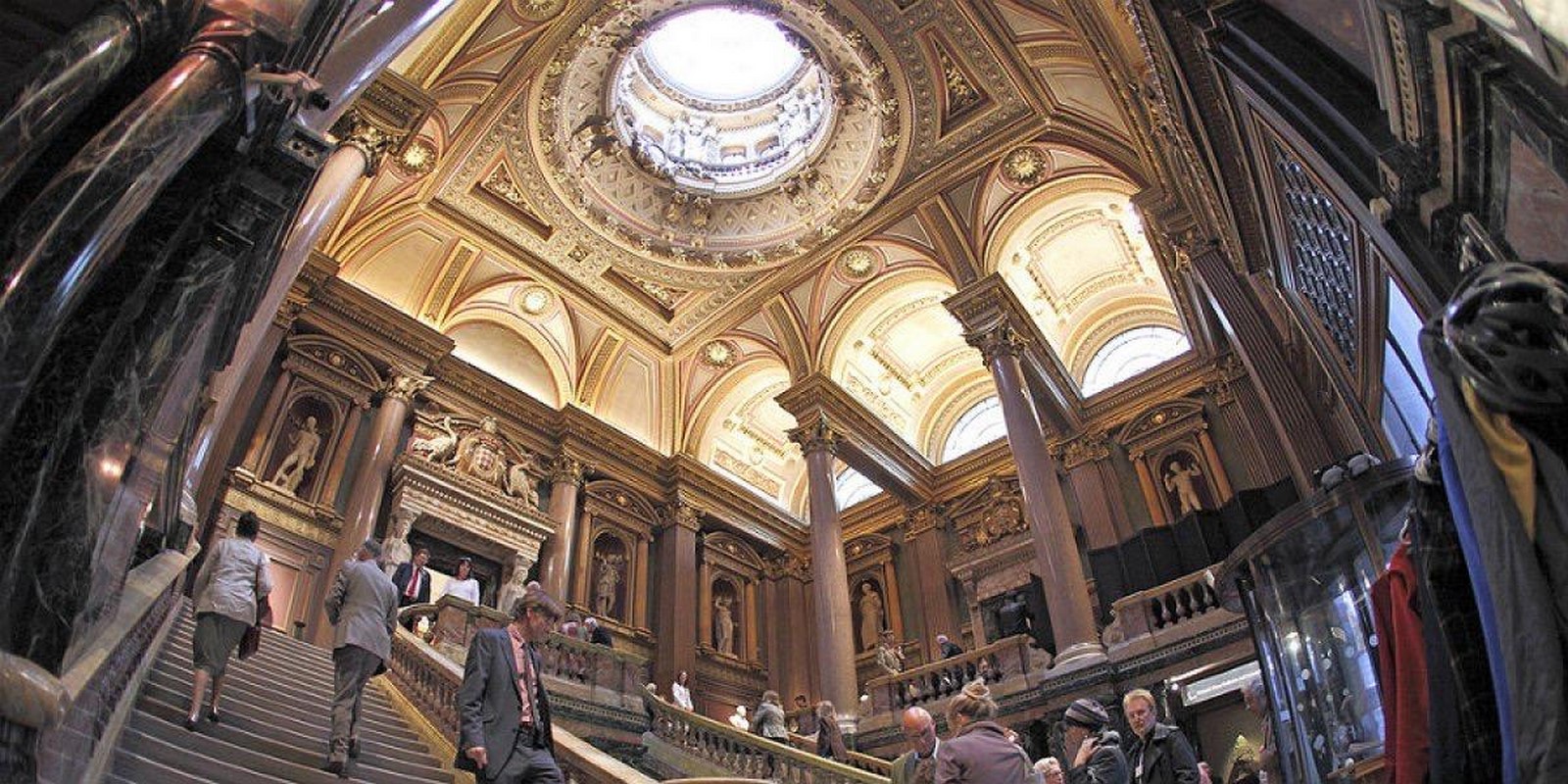
The interior of the museum is just as impressive as the exterior. The main hall is two stories high and features a grand staircase that rounds up to the subsequent gallery spaces. The ceilings are adorned with neo-classic embellishments that edge on gothic while remaining celestially backlit by light pouring in through the stained glass windows of the upper clerestory and center skylight. Further additions in 1931, 1936, 1966, 1975, and 2004 doubled the square footage and added to the historic motifs.
The Fitzwilliam Museum is one of the most popular tourist attractions in Cambridge and is certainly worth an in-person visit to fully appreciate the gravity and opulence of the architect.
Food for Thought
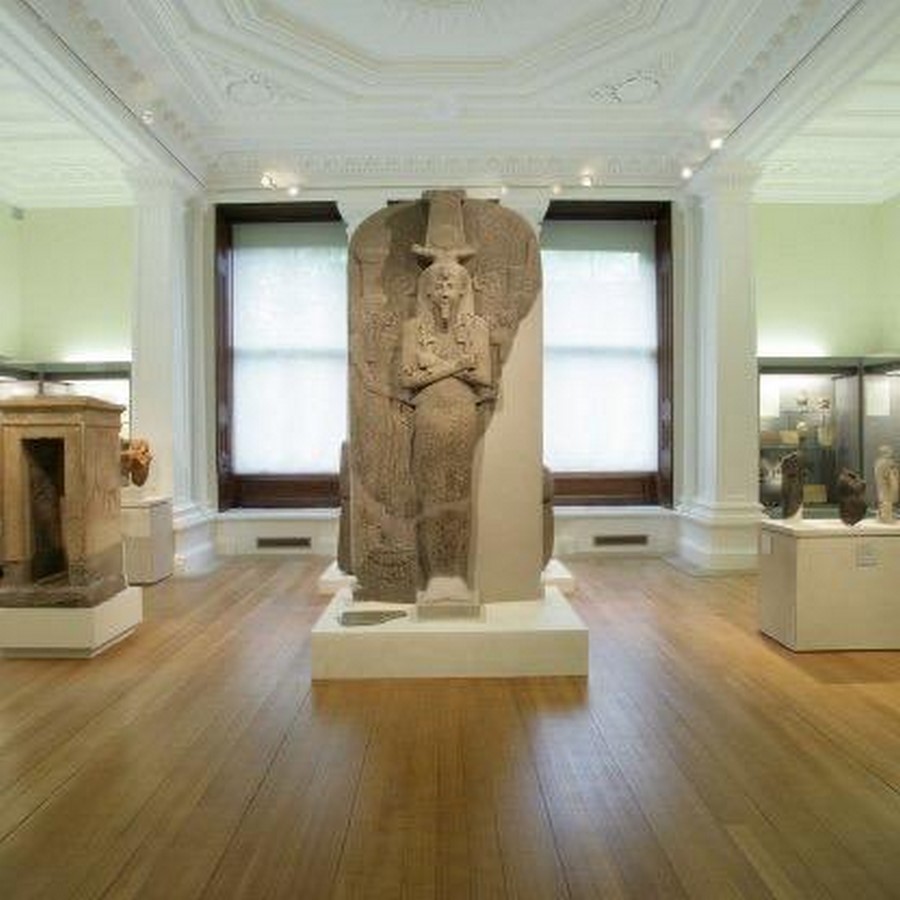
The Fitzwilliam is an incredible museum filled with art and antiquity that is certainly worth a visit from the architectural history buff. However, as architects and designers, it is important to navigate history and the built environment with a holistic humanitarian understanding that acknowledges and considers all aspects of human centricity and retains a modicum of skepticism.
The Fitzwilliam is a beautifully presented journey through history and keeper of antiquities, many of which are not native to the place they are being kept. The museum holds sacred artifacts and sarcophagi which were secured through donors and dealers with original origins unknown (The Fitzwilliam Museum, n.d.). The fact that these items exist in gorgeous, glamourous, and history-filled offspring of the aristocracy that is the Fitzwilliam cannot be fully appreciated without acknowledging the efficacy governing how the items were acquired.
This is not to take away from what the museum offers but a seed of thought for the future of equity in the public art space and how architects and designers can contribute.
Reference list
Almeroth-Williams, T. (2022). Cambridge collections awarded Arts Council England funding. [online] University of Cambridge. Available at: https://www.cam.ac.uk/news/cambridge-collections-awarded-arts-council-england-funding [Accessed 14 Dec. 2022].
Fitzwilliam Museum (n.d.). Founding the Fitzwilliam. [online] The Fitzwilliam Museum. Available at: https://www.fitzmuseum.cam.ac.uk/about-us/founding-the-fitzwilliam [Accessed 14 Dec. 2022].
The Fitzwilliam Museum (n.d.). Egypt. [online] The Fitzwilliam Museum. Available at: https://fitzmuseum.cam.ac.uk/about-us/collections/egypt [Accessed 15 Dec. 2022].
The Fitzwilliam Museum (n.d.). Our collections: an overview. [online] The Fitzwilliam Museum. Available at: https://www.fitzmuseum.cam.ac.uk/about-us/collections [Accessed 15 Dec. 2022].
University of Cambridge (n.d.). About us – Cambridge University Museums. [online] University of Cambridge & Botanic Gardens. Available at: https://www.museums.cam.ac.uk/blog/about-us/ [Accessed 14 Dec. 2022].
University of Cambridge (n.d.). The Hon. Richard Fitzwilliam, later 7th Viscount Fitzwilliam of Merrion. [online] Beyond the Label. Available at: https://beyondthelabel.fitzmuseum.cam.ac.uk/labels/richard-fitzwilliam [Accessed 14 Dec. 2022].