Why mountains demand a different kind of thinking, and what we lose when we ignore it
The Ground That Doesn’t Stay Still
I stood on a construction site in Himachal Pradesh, watching a team try to dig a foundation trench. The ground was responding to something – water flowing underground, probably. The soil kept shifting. What was solid one hour would be waterlogged the next. The structural engineer kept saying, ‘The mountain won’t stay like this.’ That phrase stuck.
Because that’s what mountains are. Unstable. The ground quite literally moves. Earthquakes. Landslides. Soil erosion accelerated by monsoons. Frost heave in winter. The mountain is always shifting. Always exerting pressure. Always demanding negotiation.
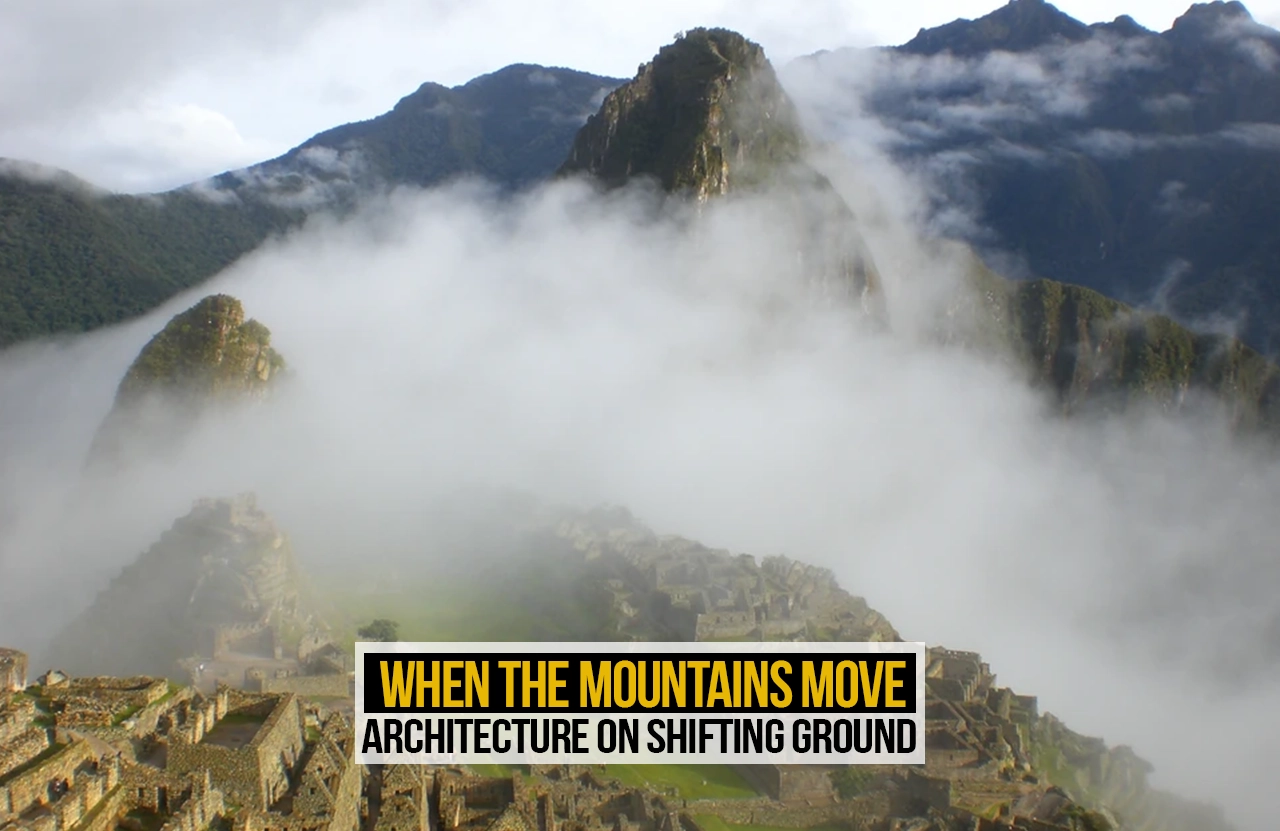
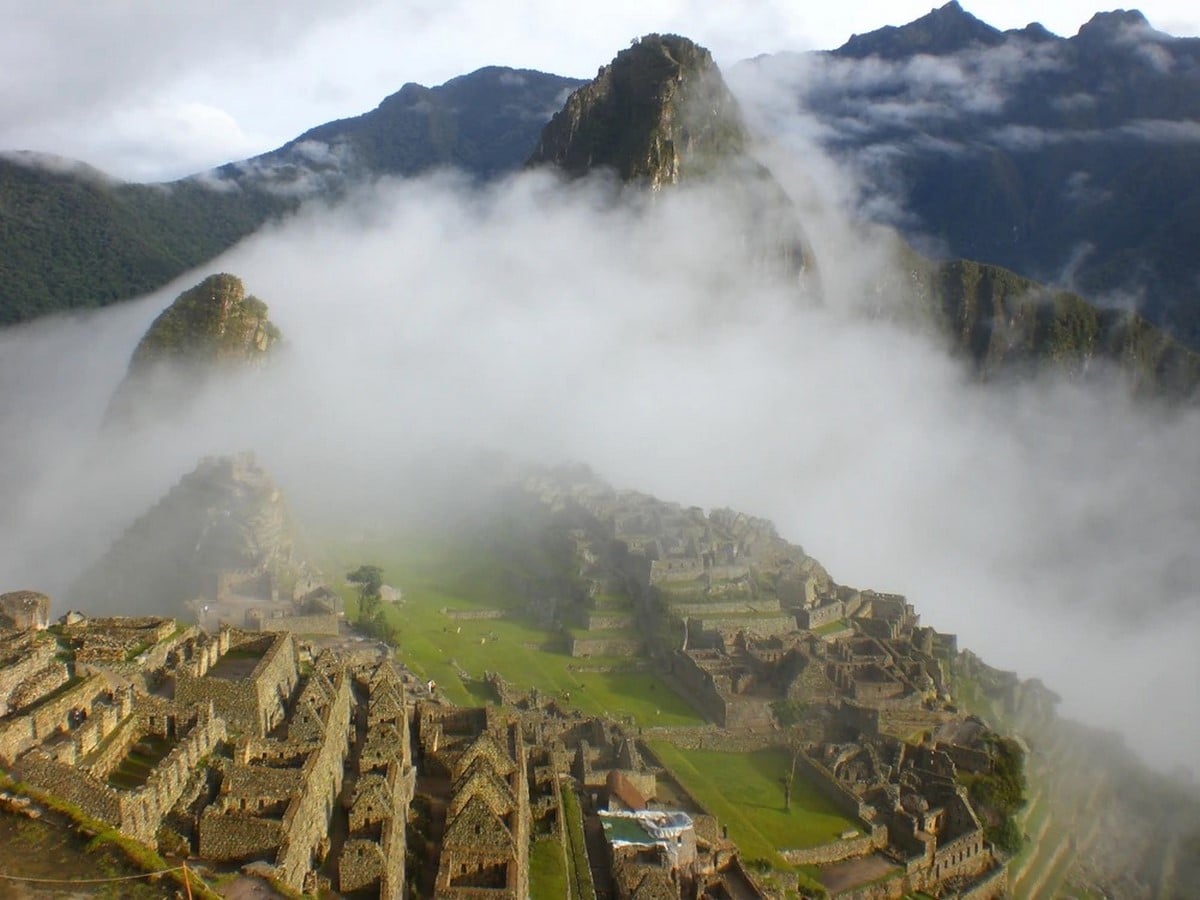
And yet mountains are home to millions. People have lived there for centuries. Built entire civilizations on slopes that shouldn’t support civilization. This isn’t carelessness. It’s a different kind of architectural thinking. One that acknowledges the mountain as an active participant, not passive backdrop.
What Vernacular Builders Already Know
Walk through any traditional mountain settlement in India and notice: the buildings aren’t built at right angles to the slope. They’re terraced. Stepped. Responding to contour rather than imposing a grid. This isn’t aesthetic choice. It’s survival.
The stone houses of Himachal Pradesh, the wooden structures of Kashmir, the buildings of Spiti Valley at 3600 metres elevation – they share something crucial: they’re negotiating with the mountain, not fighting it. The footprint adapts. The orientation follows aspect and wind. Materials are local because they perform in that climate. This is sophistication disguised as simplicity.
Look at what Herzog and de Meuron do in Swiss mountain projects. Or Peter Zumthor’s thermal baths in Vals. Or how Norwegian architects work in the fjords. The geographical difference disappears. The principles are identical. Minimal disruption. Building into the mountain, not on top of it. Respecting existing contours. Using local materials that perform. This is global mountain logic.
The problem with most contemporary development in mountains is that we’ve forgotten this lesson. We flatten slopes. We build uniform structures. We cut diagonal roads across hillsides. Each intervention destabilises the mountain further. The 2013 Uttarakhand disaster wasn’t only about rainfall. It was about hillside construction that ignored centuries of local knowledge. Development that treated mountains as an inert landscape to engineer, not living systems with their own logic.
When the Ground Shakes: Seismic Thinking
Most of India’s mountain regions sit on seismic zones. The Himalayas are still being formed. Tectonic plates actively move. In architectural terms, this means every building must anticipate movement. Not if, when.
Traditional mountain construction developed without understanding plate tectonics. Builders simply observed what worked over centuries. In Himachal Pradesh, structures use stone in specific ways – not precisely mortared, but with gaps that allow movement. Wooden structures that can flex. Details that anticipate what happens when the ground shifts. These aren’t accidental. They’re encoded learning.
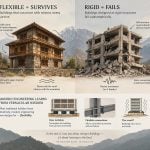
The 2015 Nepal earthquake revealed this starkly. Traditional Newari architecture performed better than modern construction, even modern buildings designed with earthquake codes. The traditional buildings had learned what actually works. They had centuries of body knowledge.
Contemporary mountain architecture must make these ancient logics explicit. Not dismissing traditional building as primitive. Not romanticising it. Understanding it. Learning what happens when you design flexibility into connections. What happens when you account for movement in every detail.
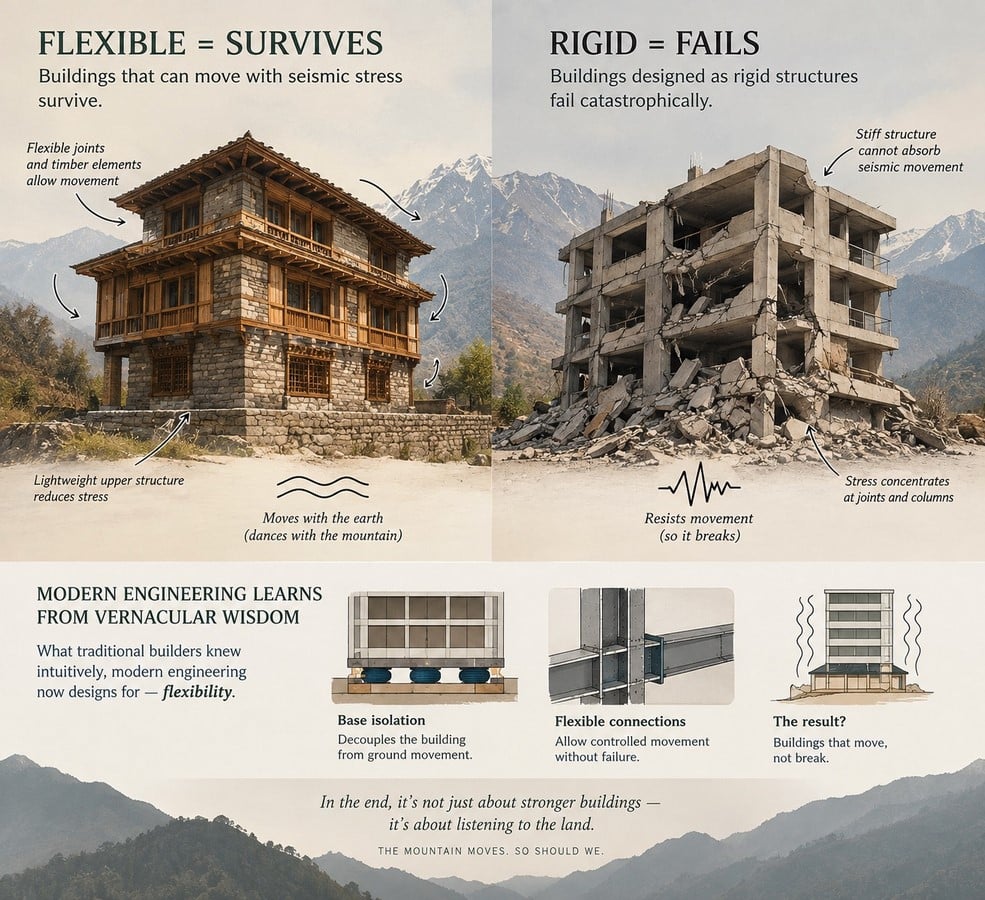
The comparison shows why traditional flexibility works. Buildings that can move with seismic stress survive. Buildings designed as rigid structures fail catastrophically. Modern engineering (base isolation, flexible connections) is essentially learning what vernacular builders understood: buildings must dance with the mountain, not resist it. Source: Author ( generated Image)
Climate at Altitude: Extremes Demand Clarity
A building at 3000 metres experiences something fundamentally different. Temperature swings are extreme. Wind is relentless. In winter, snow load. In summer, intense UV. The monsoon becomes sleet, becomes snow, becomes rain – sometimes all in the same week.
This means detail becomes survival. In Ladakh and Spiti, buildings have small windows that face south for thermal gain but minimise heat loss. Deep overhangs to protect from sun and snow. Materials chosen for performance in extremes, not fashion. Stone for thermal mass. Timber for flexibility. Earth for insulation. These aren’t aesthetic. They’re physics.
Contemporary architects designing in mountains often overcomplicate. They bring systems designed for plains – large windows, mechanical ventilation, materials chosen for other contexts. Then they’re shocked when the building performs poorly. The mountain doesn’t care about architectural ambition. It responds only to what actually works.
Nordic architects understand this. Scandinavian mountain architecture is almost austere. Large thermal mass. Minimal openings. Deep eaves. Robust materials. No pretence. It works year after year in unforgiving climate. Not because they’re copying tradition, but because they’ve independently discovered the same truths.
The Constraint of Access
You cannot design a mountain building the same way you design a plains building because getting materials to the site is exponentially harder. Roads are often seasonal. Heavy machinery can’t reach certain elevations. Some sites require everything to be transported by human labour.
This constraint, paradoxically, often leads to better architecture. It forces architects to think about material reduction. To use local materials instead of importing. To design systems that local craftspeople can build. To think about maintenance with limited resources. To simplify. Every constraint forces honesty.
I watched a school being built in Himachal. 2000 metres elevation. Three hours from the nearest proper road. They couldn’t bring sophisticated materials. They worked with local stone, local timber, local knowledge. The resulting building is extraordinary – not despite constraints, but because of them. The constraints forced authentic design.
This is understood globally by mountain architects. In Swiss Alps, Himalayan regions, Patagonian peaks – the constraint of distance and difficulty often produces better architecture than unlimited resources.
What Gets Lost When We Don’t Listen
When you flatten a slope for development, impose planning logic from the plains, bring in materials designed for temperate climates – you’re not just ignoring mountain logic. You’re erasing generations of accumulated knowledge. Local building practices disappear. Craftspeople’s skills become irrelevant. Communities lose agency.
This is happening across Indian mountains. Hill stations are being overdeveloped with flat-ground planning. Traditional settlements fragmenting. Young people not learning ancestral building skills because contemporary development doesn’t value them. And then, predictably, these new developments fail. They’re colder than vernacular buildings. More expensive to maintain. They crack from seismic movement. They’re incompatible with actual climate. And yet they continue being built.
The irony is bitter: we dismiss traditional building as primitive, then we build worse structures using ‘modern’ methods. We abandon knowledge earned through centuries because we’re confident technology can solve anything. Then the monsoon comes, or the earthquake, and we’re shocked.
Why This Matters Now
Climate change is accelerating mountain instability. More intense monsoons. More extreme temperature swings. Accelerated snowmelt. Increased seismic activity. The mountain is moving faster. And we’re responding by building bigger, more complex, more energy-dependent structures on unstable ground. It’s indefensible.
If we’re serious about resilient architecture – architecture that can actually survive environmental extremes – we need mountain building. Not dismissing it. Not romanticising. Understanding it carefully. Learning what centuries of inhabitation have proven.
The future of sustainable architecture isn’t new materials or technology. It’s understanding place-specific logic. Learning what mountains allow. Respecting the ground before building on it.
Standing on that unstable hillside, watching the engineer worry about foundation depth, I understood something important: the architect’s job isn’t to conquer the mountain. It’s to listen to it. To understand what it’s telling you about how to build. When the mountains move, buildings must move with them. Not resist. Negotiate. That’s mountain architecture.
References:
Kundoo, A. (2007) Architecture and Earthquake: Building in Himalayan Regions. New Delhi: ARUP Publications.
Zumthor, P. (1998) Thinking Architecture. Basel: Birkhauser.
Herzog, J. and de Meuron, P. (2002) Natural History. Baden: Lars Muller.
Tuladhar, J.M. (2016) Earthquake Resilience in Traditional Nepalese Architecture. Journal of Seismic Heritage, 5(1), pp. 12-28.
Rudofsky, B. (1964) Architecture Without Architects. New York: Museum of Modern Art.
Miller, A.M. (2011) Climate Adaptation in Alpine Architecture. Architectural Digest International, 18(4), pp. 78-95.