It is said that Frank Gehry has spent more than half a century trying to overturn the meaning of design within architecture. Architecture, which in its essence is an art form, is ever-changing, responding to different contexts, political ideologies, and trends. The works of a famous designer or a pioneering architect almost always influence it.
Contemporary architecture, not to be confused with modern architecture, is the style of architecture which is more present and rooted in the current trend and era. It refers to no particular era of architectural styles, but instead creates innovations more in line with the current state of the world. This style is unique to each architect and produces structures that are nothing alike to one another, which sometimes can be labelled as ‘unconventional’.
This article will examine the influence of various pioneers in contemporary architecture and their contributions to and impact on this style. Each architect has made a significant contribution to this style, which has inspired architects in terms of ideology, design, or technology.
1. Zaha Hadid
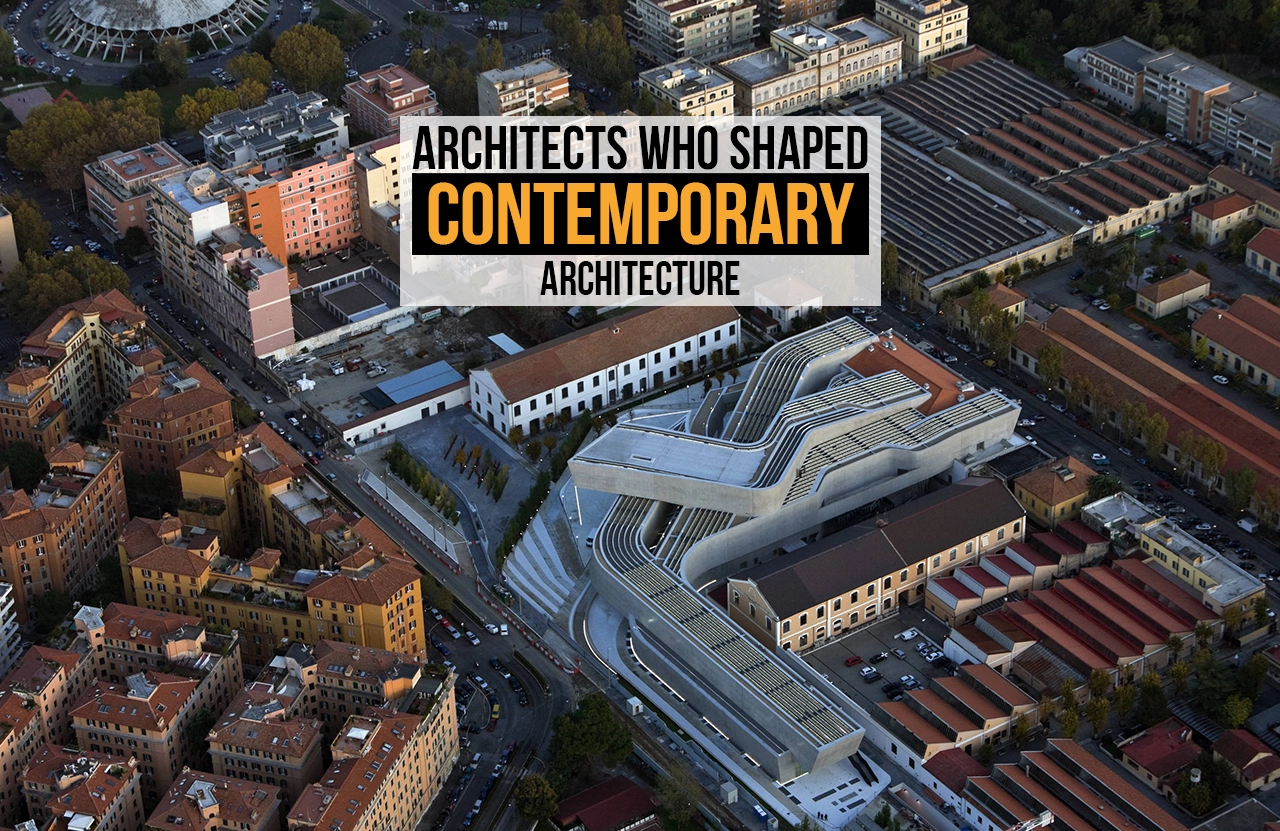
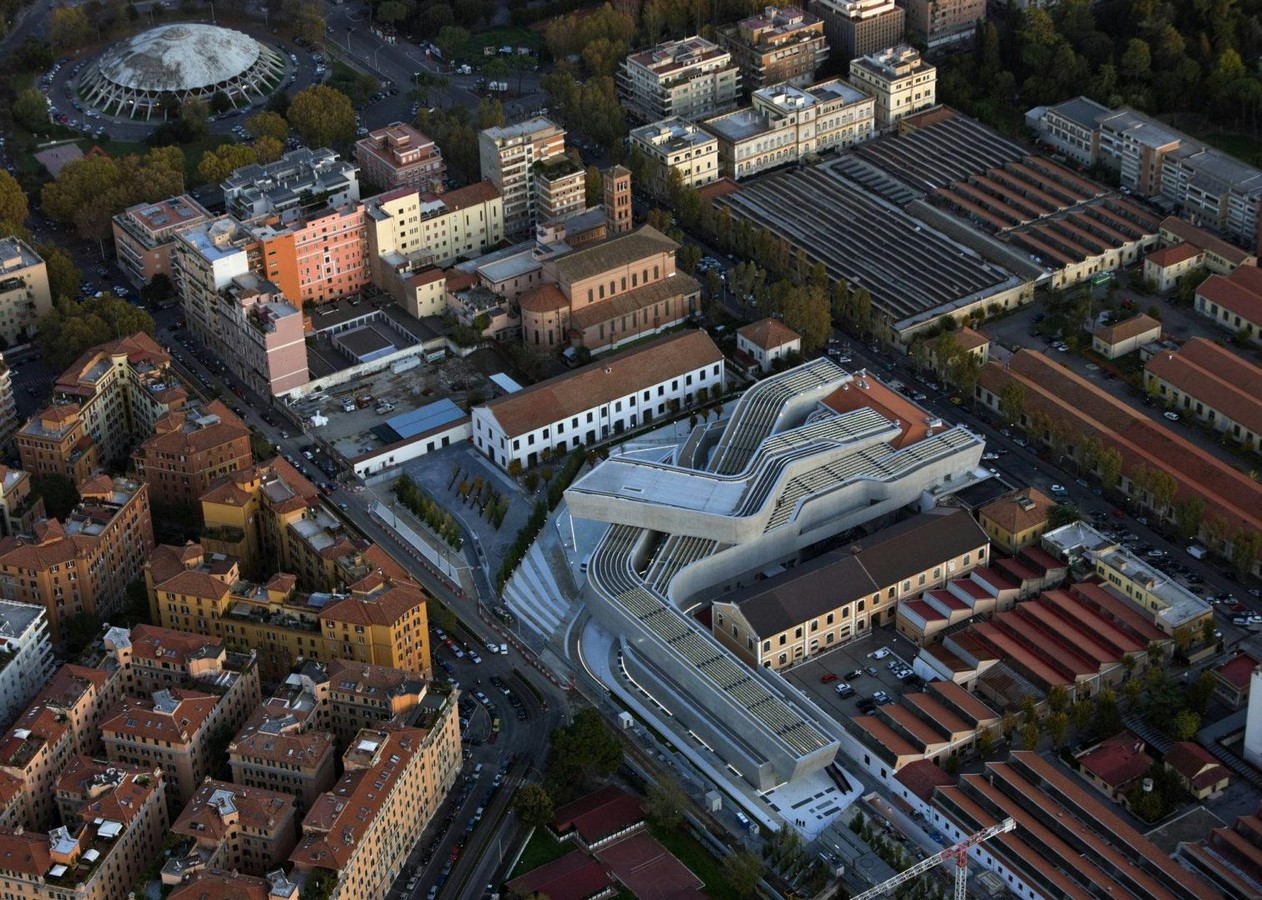
It is impossible to mention contemporary architecture without discussing Zaha Hadid, the ‘Queen of Curves’. Known for the Heydar Aliyev Centre, Guangzhou Opera House, and London Aquatics Centre, she has been a pioneer for contemporary architecture. Her most significant contribution to modern architecture would be Hadid’s (at the time) unconventional form and shape. After the completion of the Vitra Fire Station, the architect was famous for her consistently attention-grabbing, dramatic, and theatrical projects — a prime example of deconstructivism. Another contribution by Zaha is her consistency in her style of work; she was never bound down by her surroundings and refused to attempt to make her work blend in. For example, she ignored the conventional vernacular Italian style surrounding the area for the MAXXI National Museum of 21st Century Arts, and instead chose to create a futuristic, fluid structure. Later, once she had established her personal style, she spearheaded the experimentation with parametric design and encouraged boldness in architecture through distinctive silhouettes and fluid, curvaceous forms.
Zaha Hadid’s contributions to contemporary architecture encouraged architects to break free of the generic designs of the past, a significant aspect of the modern style. She set a leading example of this by responding differently to various sites, cities, and societies, and never allowing a mere style or brand to dictate her choices, always remaining incredibly stylish.
2. Renzo Piano
The Italian Architect/Engineer’s Architectural legacy lives on through his unique works. Primarily interested in building and construction, his work on the Pompidou is a significant pioneer in contemporary architecture. It was made with the ever-changing urban landscape and times in mind, ensuring that it would still respond to each context of the city. The building, situated in the city centre of Paris, features an exoskeleton that reveals its inner workings as part of its aesthetic, exemplifying both functionality and design. It aimed to shatter the concrete ideas of traditional modernism and remind architects that standardisation and conventional construction methods don’t necessarily limit an architect’s ability to discover and innovate.
3. Frank Gehry
The design movement of deconstructivism is incomplete without the input of Frank Gehry. Known as the architect of nonconformity, Gehry played an invaluable, pivotal role when it comes to the shift between methodical regularity and tradition in architecture. His line of thinking broke away from traditional architectural rules and forms, questioning them as well, and paved the way for the deconstructivist movement. The purpose of the movement was to break the ideas of architectural tradition. The main idea, ‘invent the impossible’, rejects the notion of rationality and aesthetics in design. Gehry’s designs were strong impressions of deconstructivism, with curvilinear forms and mix-and-match materials.
His contribution is mainly in terms of thought and ideology. Much like Hadid, his buildings reflected the idea of pushing against what is known and proven repeatedly. For example, he refuses to combine form and function in his works, rejecting the modernist notion of ‘efficiency’. If anything, his buildings are the opposite. Gehry’s structures elevate their surroundings as defining elements of their appearance. In tandem with Hadid, they do not merge with or reflect the environments they are in, but rather redefine them. Consequently, their works stand out the most in these areas and become known landmarks.
an exoskeleton that revealed its inner workings as part of its aesthetic
4. Bjarke Ingels
Bjarke Ingels is known to be a witty, young architect with fresh ideas. His adaptability to diverse cultural and economic influences has made him renowned for his distinctive works. His key idea, Hedonistic Sustainability, is a smart one. In contrast to following the traditional pathways of climate-focused architecture and sustainability, he suggests that architects should seek playful and creative ways to transform infrastructure, producing a side effect of mass leisure.
Ingles’ impact is still growing. He influences how architects think and navigate the field of architecture. His personal ideology can be considered his most significant contribution to contemporary architecture. His idea of architecture is significantly far off from the usual train of thought; ‘Architecture’, he writes, ‘seems entrenched between two equally infertile fronts: Either naively utopian or petrifyingly pragmatic, rather than choosing one over the other. BIG operates in the fertile overlap between the opposites. A pragmatic utopian architecture that takes on the creation of socially, economically and environmentally perfect places as a practical objective.’ His idea of fusing these fronts is influential among young architects, encouraging them to break free from the known norms of architecture and continually experiment.
5. Walter Groipus
The father of Bauhaus, Walter Gropius, is well known for his revolutionary ideology and designs. The school, which helped refine design education by merging all the different branches, was a huge success. The group’s works adopted a modernist approach and were a significant force in that design school. One of the key ideas was that all design—not only for buildings—should be approached in essentially the same way: by conducting a systematic study of the specific needs and problems involved while using modern construction materials and techniques and ignoring previous forms or styles. These principles helped shape and elevate the modernist movement.
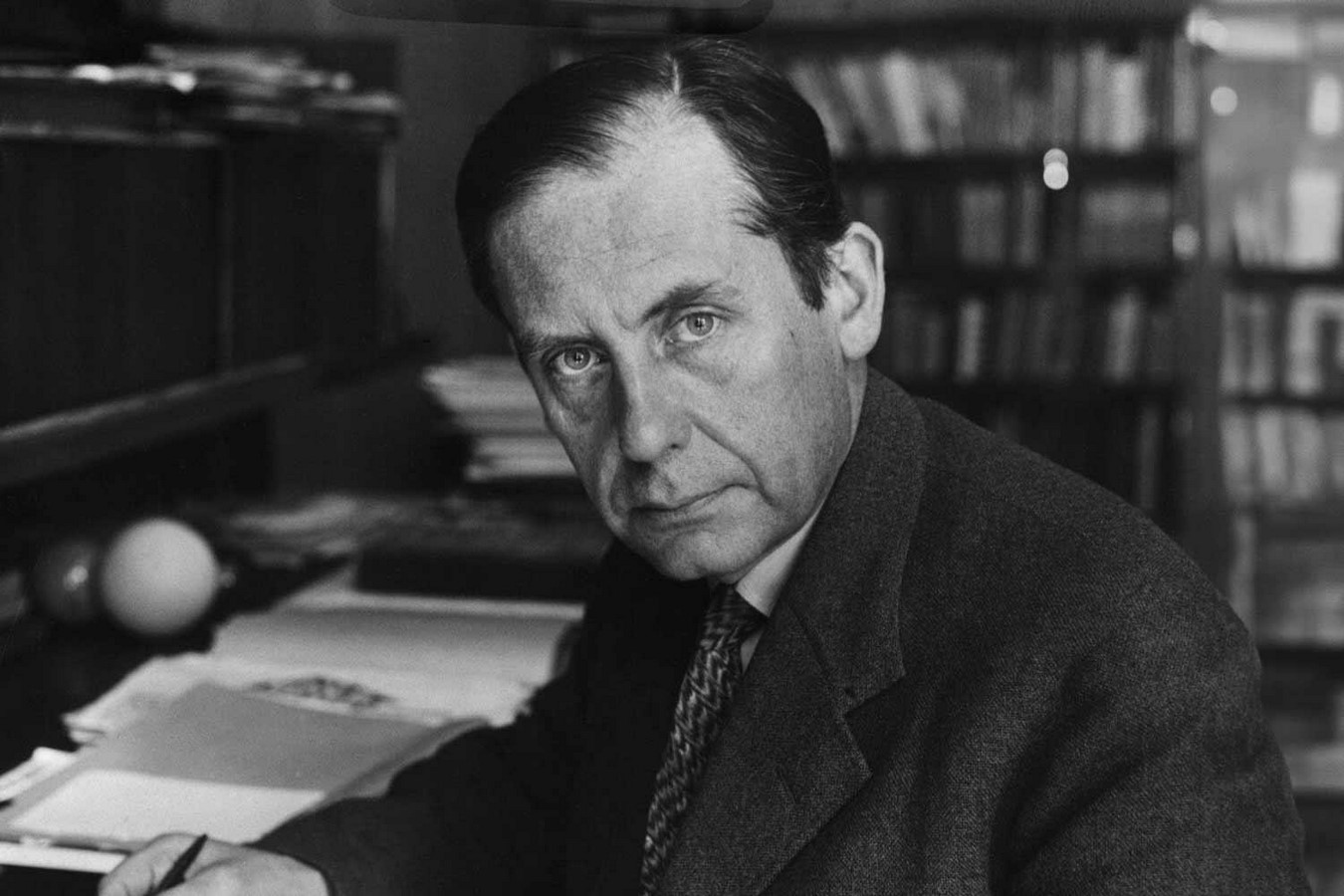
His main contribution to contemporary architecture was his school, the Bauhaus. His vision and rethinking of the way architecture was taught completely changed the way it was taught. His influence through the Bauhaus and his time at Harvard GSD spread modernist ideas. Still, his philosophy of interdisciplinary, experimental and socially engaged architecture set the foundation of what contemporary architecture is today.
All of these architects set an example for contemporary architecture and have a significant influence on the field of design. A noticeable trait in these designers is their tendency to think outside the box and their rebellious nature. If that says one thing — aspiring architects should be bold, defiant, and different!
Reference List:
Grozdanic, L., (2022). How Bjarke Ingels Changed Architecture. Architizer. Available at: https://architizer.com/blog/practice/details/big-branding-bjarke-ingels-message-of-optimism/ [Accessed 15 September 2025].
Heathcote, E., (2025). Bjarke Ingels architecture: a guide to the modern architect. Wallpaper*. Available at: https://www.wallpaper.com/architecture/bjarke-ingels-architecture-guide [Accessed 15 September 2025].
illustrarch Team, (2025). Frank Gehry: Revolutionary Architect Shaping Modern Design and Urban Landscapes. Illustrarch. Available at: https://illustrarch.com/articles/38894-frank-gehry.html [Accessed 15 September 2025].
Keskeys, P., (2016). Unparalleled: How Zaha Changed Architecture. Architizer. Available at: https://architizer.com/blog/practice/details/unparalleled-how-zaha-changed-architecture/ [Accessed 15 September 2025].
Snaptrude, (2023). Renzo Piano: From the Pompidou to the Krause Gateway Center. Snaptrude Blog. Available at: https://www.snaptrude.com/blog/renzo-piano-pompidou-krause-gateway-center [Accessed 15 September 2025].
The Museum of Modern Art (MoMA), (no date). Walter Gropius | MoMA. Available at: https://www.moma.org/artists/2359-walter-gropius#:~:text=His%20essay%2C%20illustrated%20by%20images,influential%3B%20in%20the%20coming%20years%2C [Accessed 15 September 2025].
Wallpaper*, (no date). Frank Gehry [Tag page]. Available at: https://www.wallpaper.com/tag/frank-gehry [Accessed 15 September 2025].
Wallpaper*, (no date). Zaha Hadid: our ultimate guide to an architectural master. Wallpaper*. Available at: https://www.wallpaper.com/architecture/zaha-hadid-ultimate-guide [Accessed 15 September 2025].