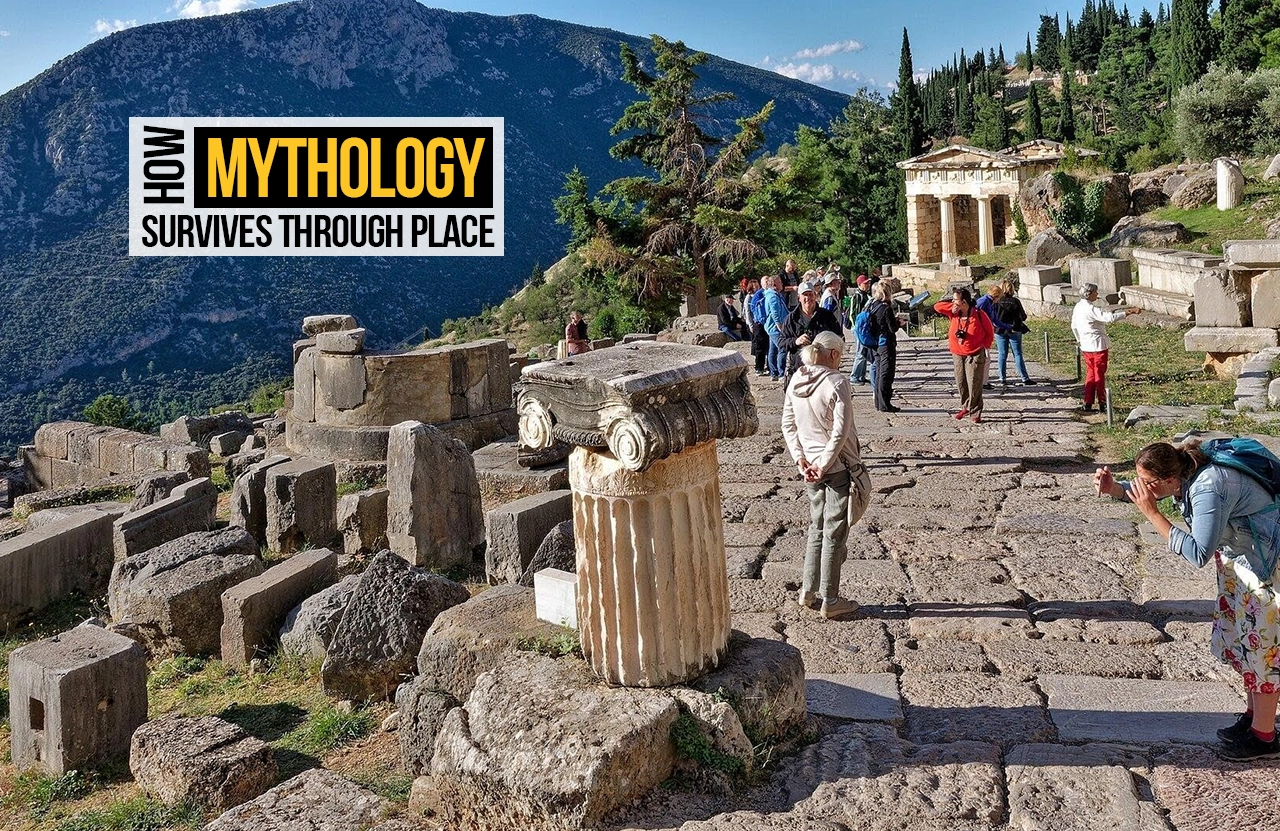
Mythology is often thought to survive through stories. Long after a religion disappears, its gods, heroes, and legends continue to exist through literature, art, and popular culture. In some cases, mythology survives through places. Across the world, people continue to visit temples, sanctuaries, and sacred landscapes associated with belief systems that are no longer actively practised. They travel to ruins dedicated to forgotten gods, walk through sites where rituals have ceased, and stand before structures whose original purpose has long since vanished. Their journeys raise an interesting question. What happens to mythology when belief disappears? More specifically, what happens to the architecture that mythology leaves behind?
The Temple Without a Goddess
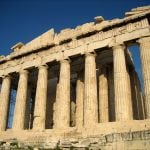
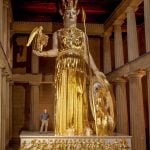
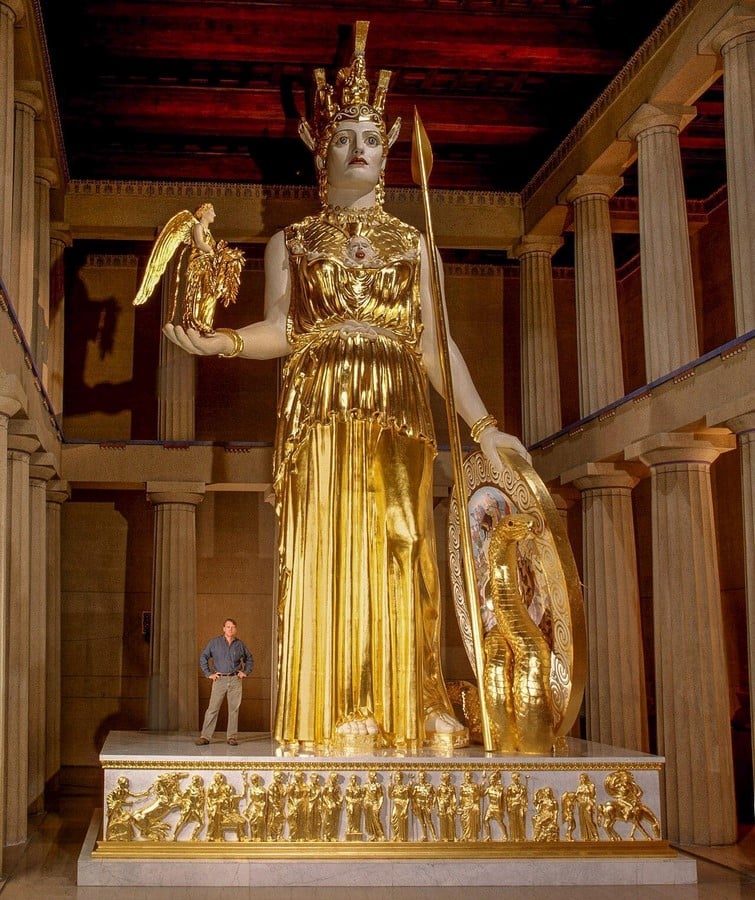
In the present day, the Parthenon is still a temple but it hasn’t had a deity for a very long time. The rituals that brought the temple to life have disappeared, and the goddess the temple was made to honour, no longer worshipped. And yet millions of people continue to visit it every year, photograph its columns and stand before the ruins with a sense of reverence usually saved for active sacred places. At the centre of the structure stood a colossal gold and ivory statue of the goddess Athena, Athena Parthenos, created by Phidias. The statue disappeared long ago, but debates and stories about it exist to this day. Historians believe that the statue has been destroyed by fire, while popular theories revolve around the fact that the statue still exists somewhere in the world.
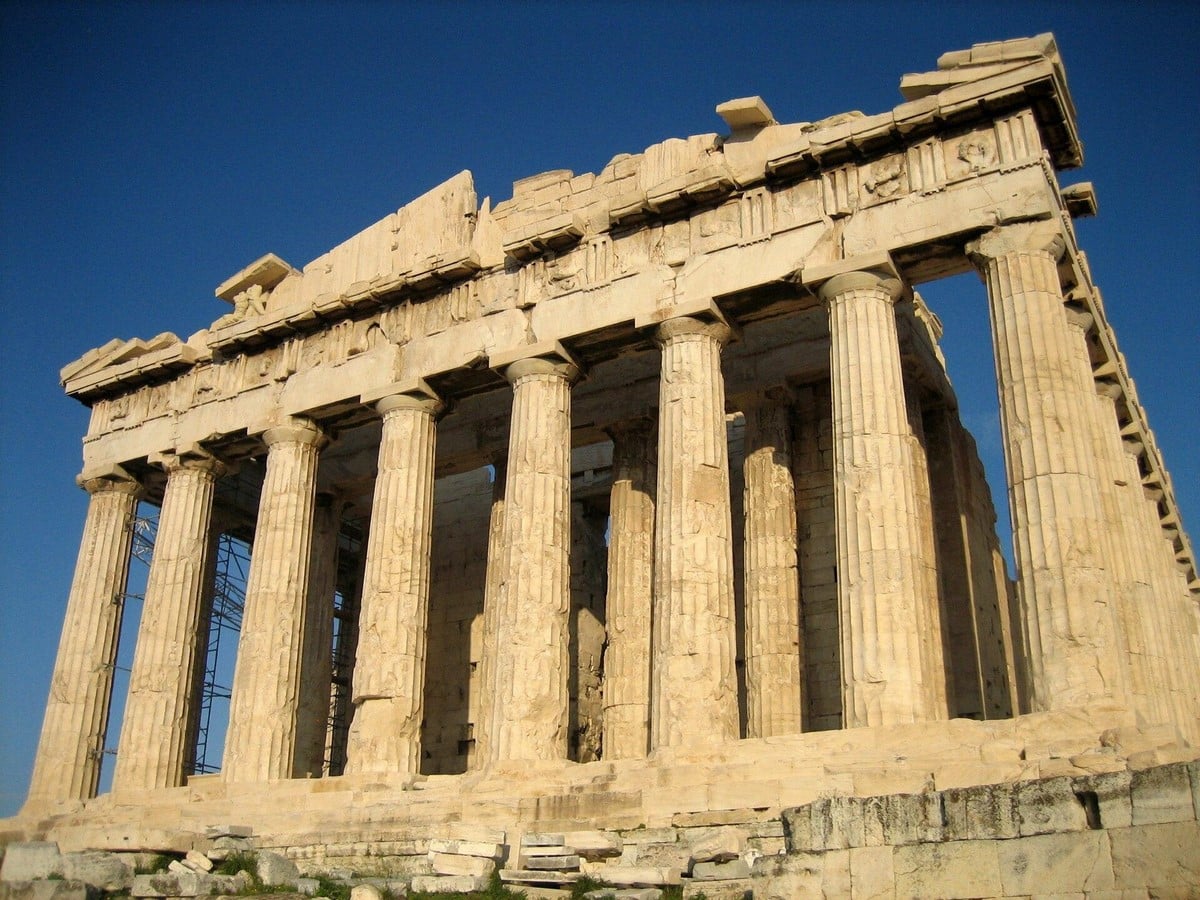
In this manner, even in its absence, this statue proclaims its existence through people’s imagination. Parthenon’s importance no longer depends upon Athena’s presence. The people who come to see don’t come to see Athena anymore. They come to feel the reverent energy enough to make a person feel like they are a part of something bigger than themselves.
The disappearance of Athena Parthenos only strengthens the contradiction. The statue was created to embody the presence of the goddess, yet it has vanished almost completely from the physical world. The Parthenon, despite centuries of damage and transformation, remains standing. If mythology depended solely on physical preservation, the temple should not matter more than the statue. Yet it is the Parthenon that continues to draw millions of visitors every year.
Both the statue and the temple were created for the same goddess and were part of the same sacred setting, yet they survived in different ways. Athena Parthenos survives largely through speculation, while the Parthenon remains a physical destination albeit a ruined one. One exists primarily through memory and imagination; the other continues to anchor those memories to a specific place. Together, they suggest that mythology does not always disappear when belief fades. Instead, it often changes the form through which it survives.
The Landscape After the Oracle
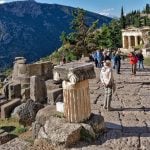
The Greeks used to think of Delphi as the centre of the world, marked by a stone called the omphalos. A lot of important decisions of kings and heroes used to depend on the prophecies given by the Oracle of Delphi, and they used to travel for weeks for these prophecies. A pilgrimage for the future of sorts. The Oracle is silent now, and the site is in ruins as well. And Delphi is most definitely not the centre of the world. Yet people still go and feel the weight of the landscape. Tourists walk along the ruins with cameras instead of questions about their impending future. They still continue to make the journey.
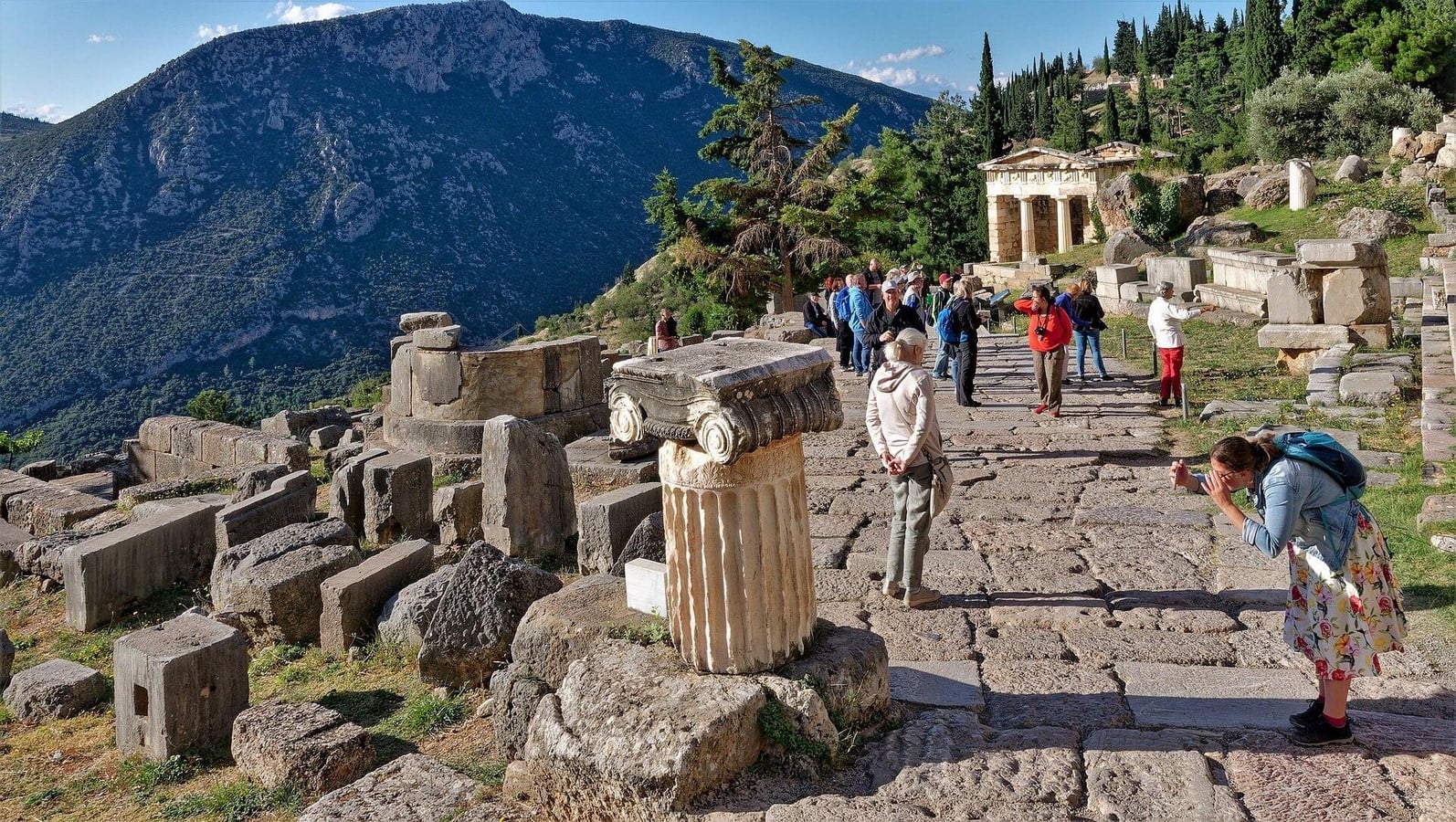
Unlike the Parthenon, Delphi was never a singular structure and what survives there is different from what survives at the Parthenon. It is a sanctuary that sits atop Mount Parnassus. The ruins are only one part of the experience. The climb to the mountain is still there just without the prophecies at the end. The Parthenon remains a recognisable monument that visitors can identify from a distance. Delphi offers no single focal point. Its significance emerges from the relationship between scattered ruins, mountain slopes, and the stories attached to them. If the Parthenon demonstrates how mythology can become attached to a building, Delphi suggests that mythology can become attached to an entire landscape.
Places Where Myths Remain
The Parthenon and Delphi survive in very different ways. One remains in the form of a monumental structure, while the other extends across an entire landscape. Yet both reveal that mythology does not necessarily disappear when belief fades. Instead, it adapts to new forms of survival. Few visitors arrive at the Parthenon intending to honour Athena, just as few travel to Delphi expecting a prophecy. Nevertheless, both sites continue to attract people who feel compelled to experience them for themselves. Their significance can no longer be explained through religion alone. The myths associated with them have become inseparable from the places where they unfolded.
Perhaps this is why certain sacred places endure long after the gods, rituals, and institutions that created them have vanished. Mythology survives not because people continue to believe in it, but because the architecture and landscapes associated with it continue to give those stories a place to exist.
References:
Encyclopaedia Britannica (n.d.) Parthenon. Available at: https://www.britannica.com/topic/Parthenon (Accessed: 20 June 2026)
Encyclopaedia Britannica (n.d.) Delphi. Available at: https://www.britannica.com/place/Delphi-ancient-city-Greece (Accessed: 20 June 2026)
Encyclopaedia Britannica (n.d.) Athena Parthenos. Available at: https://www.britannica.com/topic/Athena-Parthenos (Accessed: 20 June 2026)
Wikimedia Commons (n.d.) Parthenon from west [Photograph]. Available at: https://commons.wikimedia.org/wiki/File:Parthenon_from_west.jpg (Accessed: 20 June 2026)
Wikimedia Commons (n.d.) Athena Parthenos reconstruction [Photograph]. Available at: https://commons.wikimedia.org/wiki/File:Athena_Parthenos_LeQuire.jpg (Accessed: 20 June 2026)
Wikimedia Commons (n.d.) Delphi archaeological site [Photograph]. Available at: https://commons.wikimedia.org/wiki/Category:Ancient_Delphi#/media/File:%22Als_Mittelpunkt_der_Welt%22_galt_Delphi_f%C3%BCr_die_Menschen_der_Antike._01.jpg(Accessed: 20 June 2026)