According to the United Nations, the current world population is 7.6 billion, and is projected to be around 9.8 billion in 2050. As around 55% of people are estimated to live in urban areas, this unprecedented nature of urbanization and reliance on industries and secondary/tertiary occupations marks a significant burden on already depleting natural resources. Urban areas use around 2/3rd of global energy demands and are responsible for 80% of greenhouse gas emissions. This nature of change demands immediate attention in all sectors of our lives.

“Your mind is the knife that cuts the continuum of space and time into neat slices of linear experience”, Deepak Chopra said in 2010.
For far too long, life and all its aspects in the space-time continuum have been understood and practiced as linear. But as Alvin Toffler says, ‘Change is non-linear, it can go backwards, forward, and sideways.’ Change in our times is necessary, and its nature and problems are imminent to be solved. Non-linearity and Circularity, thus, are not anecdotal concepts to ruminate about, but rather a process and product that ought to be inculcated in all aspects of our lives. The simple formula of ‘plan, design, build, demolish, and so on’, and the ‘not my backyard, not my problem’, can no longer exist in our social and spatial dealings. Thus, concepts such as Sustainability, Net-Zero Energy, Green Architecture, and Circular Economy can no longer remain buzzwords, but have to be deep-rooted in the very fiber of any sector’s future growth, much more so the construction industry and architecture. While recent efforts in recycling at the city level, and the demarcation-protection of greens and blues have emerged, the change towards a circular economy in architecture is very gradual.
Circular Economy
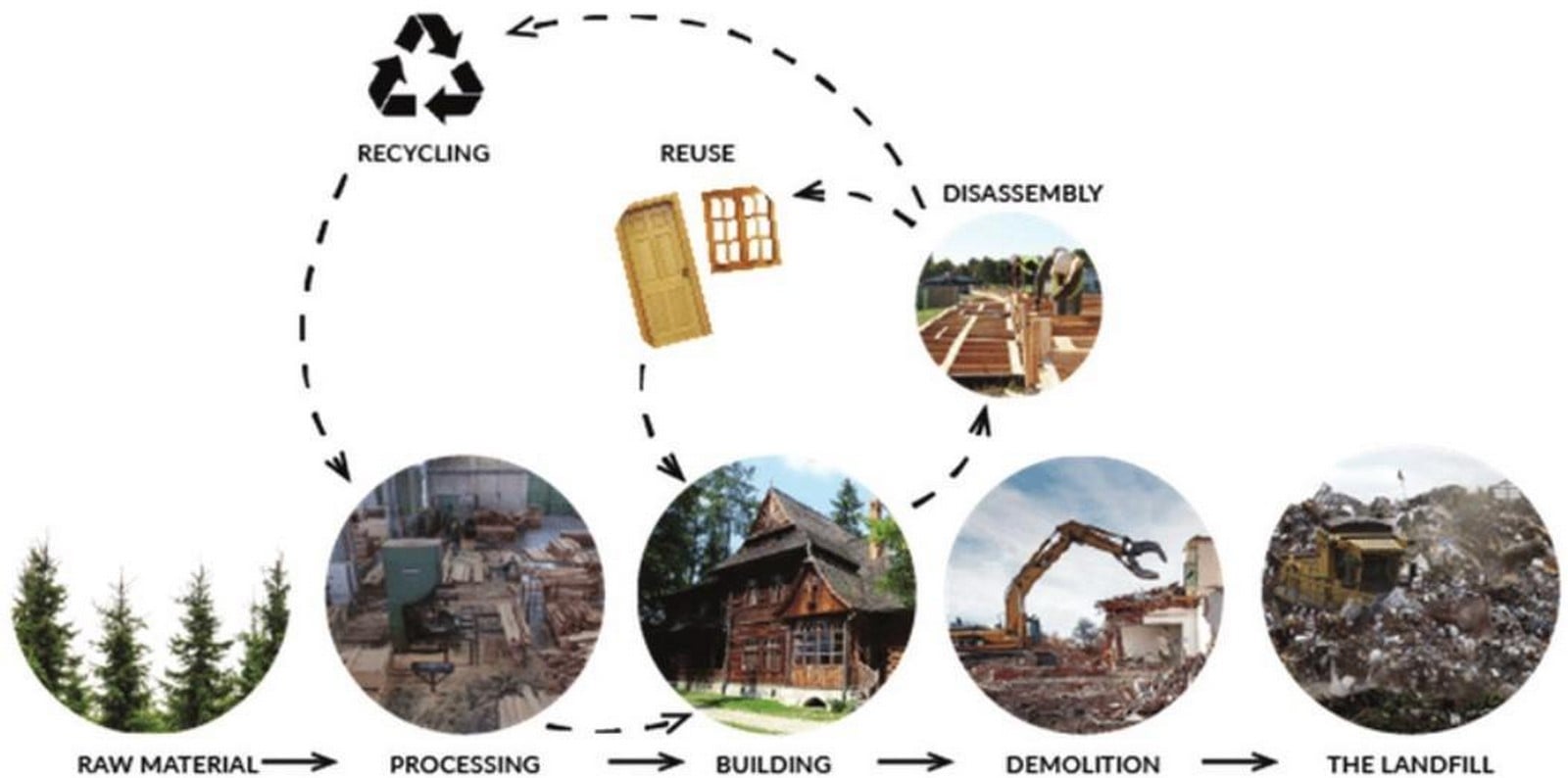
Within the broader framework of sustainability, the circular economy can be understood as a system where energy consumption is reduced, reliance on natural resources is kept under check, and waste generation is looped (Tura et al., 2019). The circular economy first came into existence as an economic model (linear to circular system) (Millar et al., 2019), while environmental concerns have only recently come into consideration (Walmsley et al., 2019; Y.V. Fan et al., 2019). Circular economy can thus be understood as a paradigm shift from single use to circular looped use of resources at all levels, minimizing raw material usage and subsequent output waste, enhancing the value of resources and keeping them in the loop for as long as possible. In the construction industry and architecture, not only does this system approach the built unit level (materials and components), but it also proclaims a symbiotic relationship between the built and natural environment.
Demarcating and Protecting Natural Environments/ Habitats
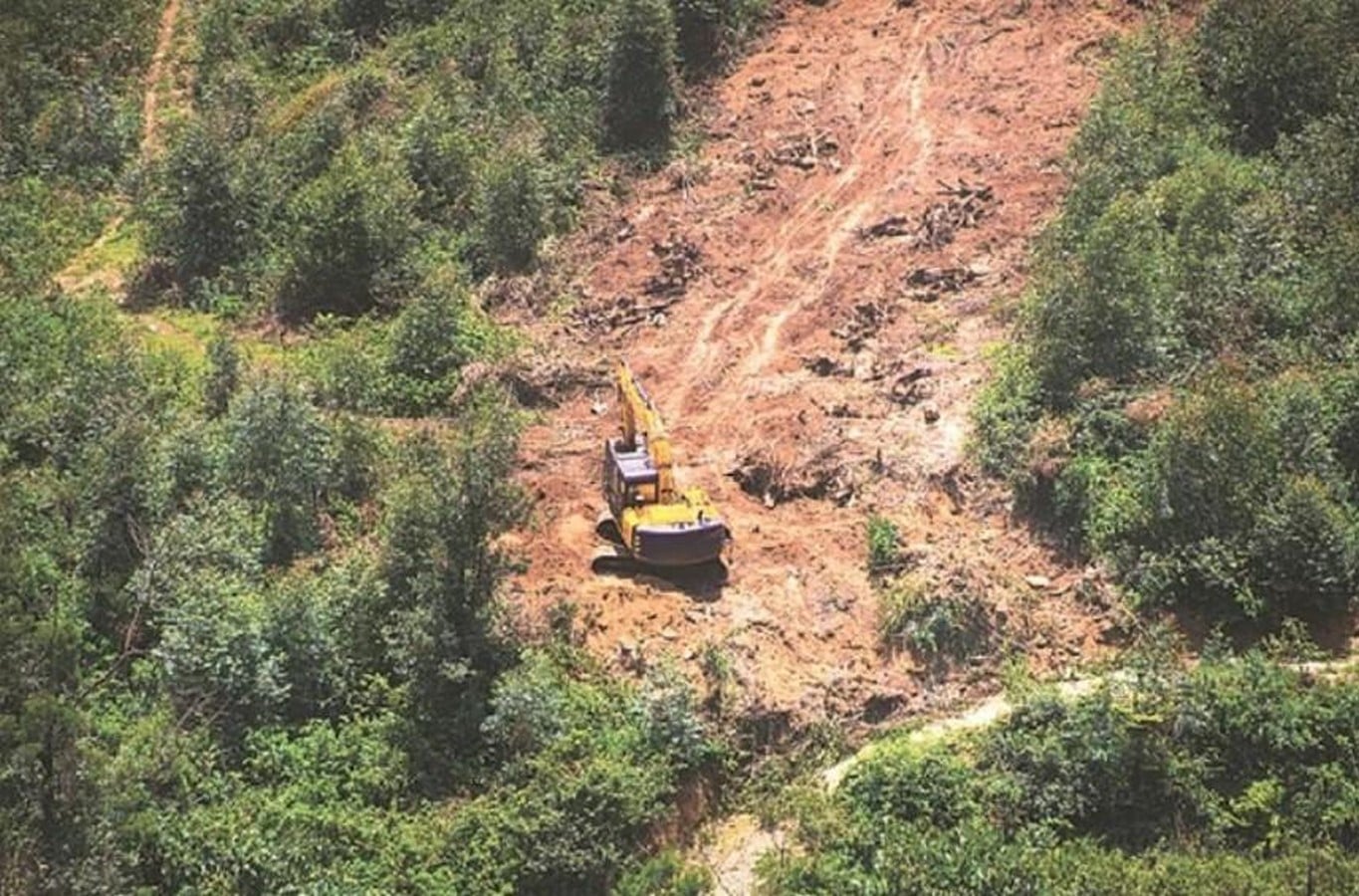
At the city level, it is important to ensure that greens and blues are protected and regulated by law. Protected green areas and buffers to sensitive ecological areas should be cherished and protected, and municipal authorities should ensure no encroachment by the state or the people. Zoning in brownfield areas should guarantee the endurance of old structures and building ages, and buildings should effectively be multipurpose and adaptively reusable.
Designing Building Envelopes with Local Construction Techniques
Local architecture refers to the contextual architecture of a specific location and the inculcation of forms conducive to the topography and climate of the given place. Construction methods have to incorporate the need for ambient comfortable conditions and minimize environmental impact. The ‘one-size fits all’ approach should be rethought, and effective measures to incorporate energy efficiency, low carbon footprint, and building envelopes that can be upcycled, committing to a circular economy should be prioritized.
Design for Disassembly – Upcycling Building Components for Reuse

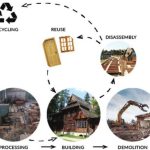
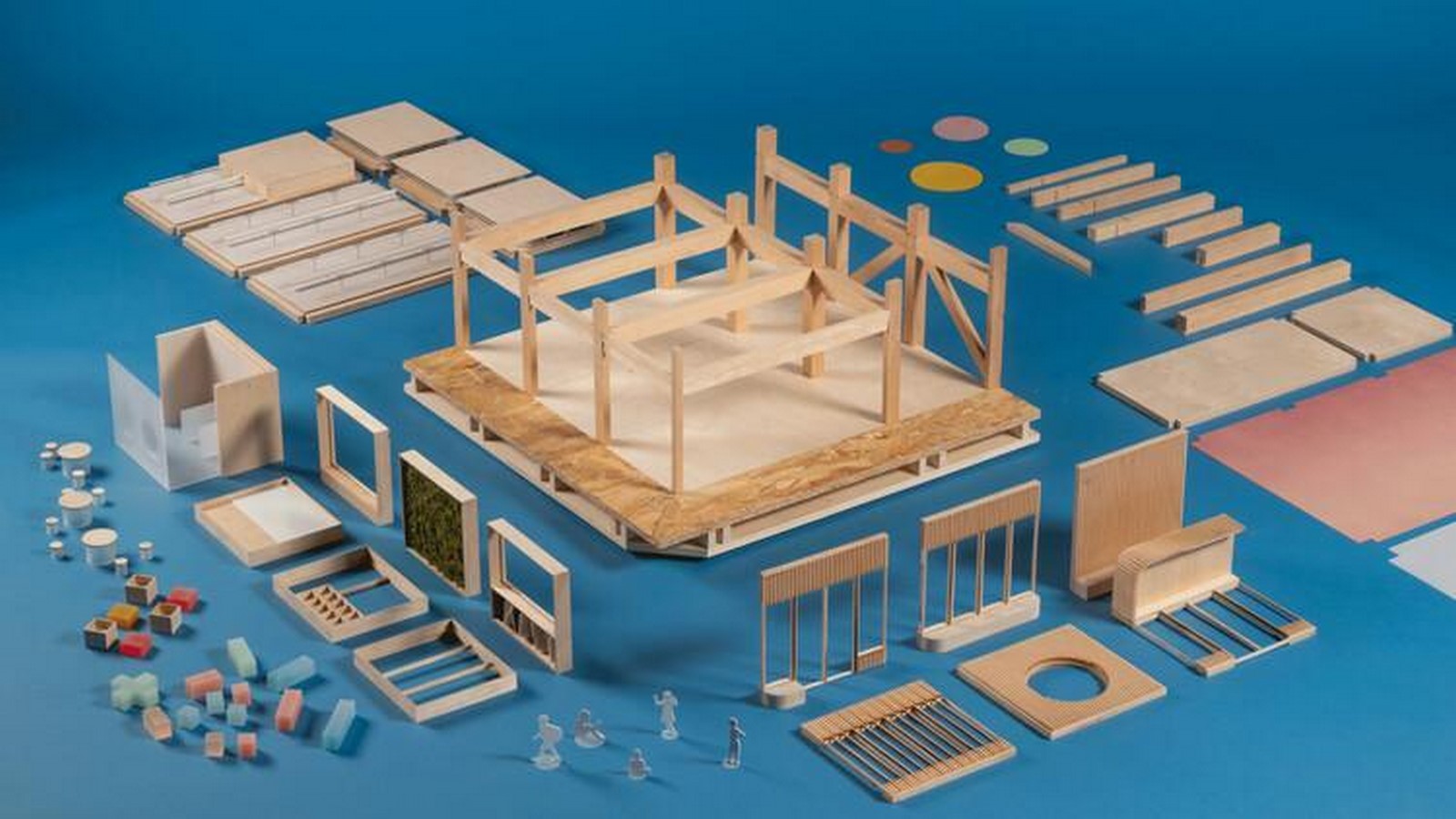
Design for Disassembly’ is the predominant component in the circular economy in the architecture and construction industry. The primary goal is to minimize and even eliminate waste by upcycling the building components and creatively using them in the existing structure, ensuring that these materials, rather than going to landfills, have a positive effect on the environment and gain value. But as of now, upcycling of building components is rare, and recycling is the only environmentally friendly waste management action. In case of new construction, it is important to evaluate the value of the existing structure and opt for adaptive and creative reuse of building components on-site. However, if it is evaluated that the modification and transformation of existing components is more damaging to the environment than the new elements/components, then reuse should be avoided.
Reimagining Building Components as Energy Producers and Effective Waste Management Systems to Reuse and Recycle
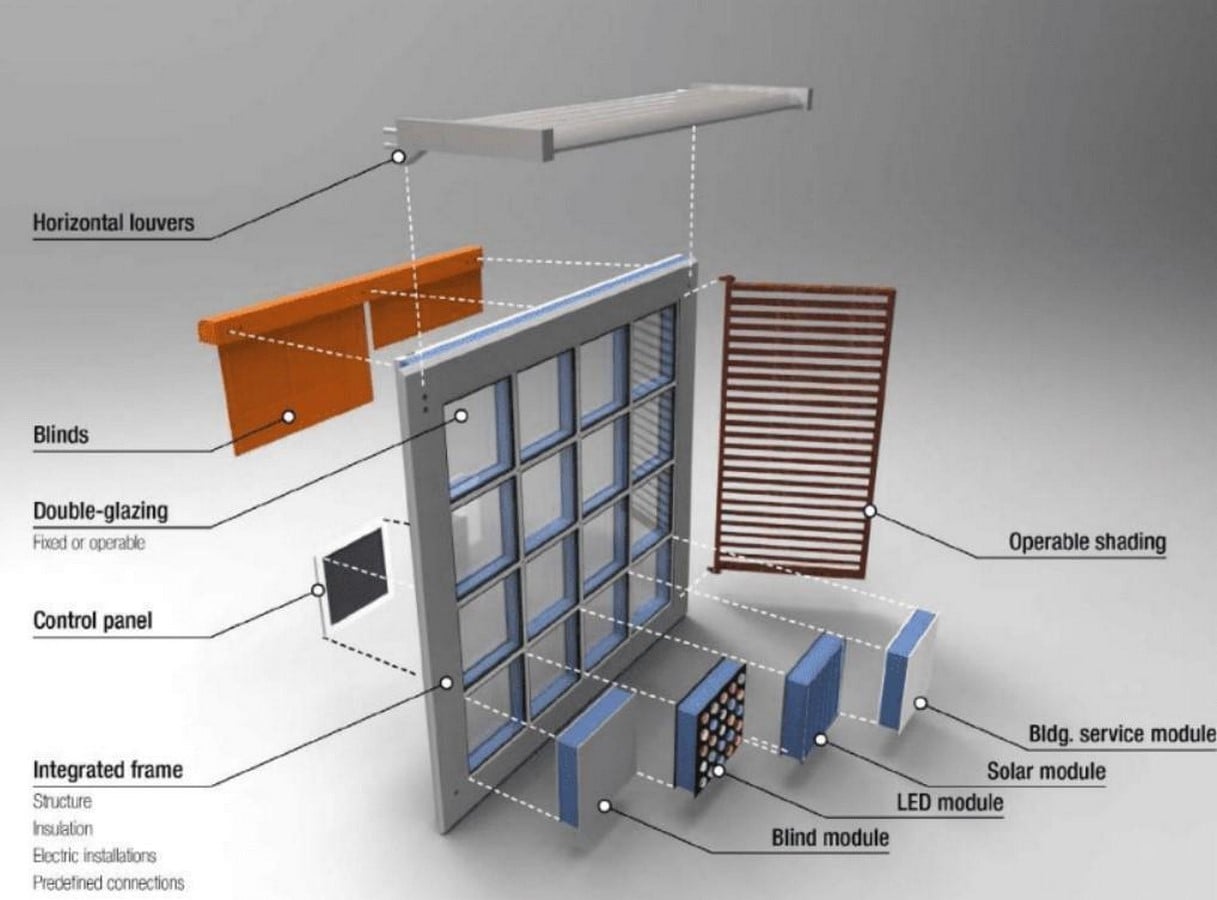
The environmental impact of a building’s lifespan and its components has to be prioritized in the decision-making at the conceptual level. Making a building as energy efficient as possible should be the primary goal of any architectural project. For this, a consciously planned selection of materials for each building component becomes extremely vital. Buildings can have breathing green rooftops, which can be productive greens instead of just decorative greens. Solar walls and panels can be used to ensure energy generation, and the sizes of the building components may be decided based on the availability of the solar panels. Ensuring that grey water is recycled and used in the greens, as well as efficient campus or neighborhood-level waste disposal and recycling, should be incorporated into the design. The idea of a neighborhood and campus has to be imagined, incorporating circular economy principles. Bioswales and drain lines at the neighborhood level could enhance the green aspect of the circular economy in the neighborhood.
Societal and Behavioral Changes

Above all, understanding the circular economy should be ingrained in our behavioral patterns and everyday life. A conscious approach to how one disposes of waste, how one can sort and segregate recyclable waste at home, and minimize/eliminate the waste going to the landfills should be cultivated. Practical seminars and classes explaining the importance of collective action can be organized at the community level by the local government. Municipal authorities should also promote incentives and concrete actions for the incorporation of circular economy strategies. The idea of the circular economy has to reach the household level to ensure that collective action is prioritized in the fight against harming the environment.
Non-linearity is the way forward. Looped iterations of environmentally conscious decisions should be effectively practiced, and changes in the society and the spatial realm at all scales should be implemented. Societal-Spatial practices should ensure that we give our future generations a planet and an ecosystem that is loveable, healthy, and as good as the one received from our ancestors.
Well, the future is green and circular!
References:
Mazur, Łukasz. (2021). Circular economy in housing architecture: methods of implementation. ACTA SCIENTIARUM POLONORUM – Architectura Budownictwo. 20. 65–74. 10.22630/ASPA.2021.20.2.15.
Millar, N., McLaughlin, E., Borger, T., 2019. The circular economy: swings and roundabouts? Ecol. Econ. 158, 11e19.
Rahla, K. M., Mateus, R., & Bragança, L. (2021). Implementing Circular Economy Strategies in Buildings—From Theory to Practice. Applied System Innovation, 4(2), 26.
Tura, N., Hanski, J., Ahola, T., Ståhle, M., Piiparinen, S., Valkokari, P., 2019. Unlocking circular business: a framework of barriers and drivers. J. Clean. Prod. 212, 90e98.
Walmsley, T.G., Ong, B.H., Kleme_s, J.J., Tan, R.R., Varbanov, P.S., 2019. Circular Integration of processes, industries, and economies. Renew. Sustain. Energy Rev. 107, 507e515.
Yee Van Fan, Chew Tin Lee, Jeng Shiun Lim, Jiří Jaromír Klemeš, Phung Thi Kim Le, Cross-disciplinary approaches towards smart, resilient and sustainable circular economy. 2019. Journal of Cleaner Production. Volume 232. Pages 1482-1491, ISSN 0959-6526