As development is constantly undergoing constant development, concerns are increasing about climate change, resource depletion, and degradation of the environment. Due to this, the fields of architecture, engineering, and construction (AEC) industries are facing paradigm shifts. One of the compelling topics is the movement towards a circular construction strategy of circular economy principles. This approach argues for the traditional linear model of ‘take, make and dispose of’ for ‘reduce, reuse, recycle and regenerate’. In this context of sustainability of design, the circular construction model offers a suitable and efficient framework for helping minimize the environmental impact by keeping the wheel of the economy running and creating social value throughout a building’s life span.
Understanding Circular Construction Concept
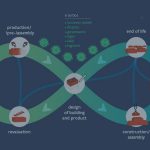
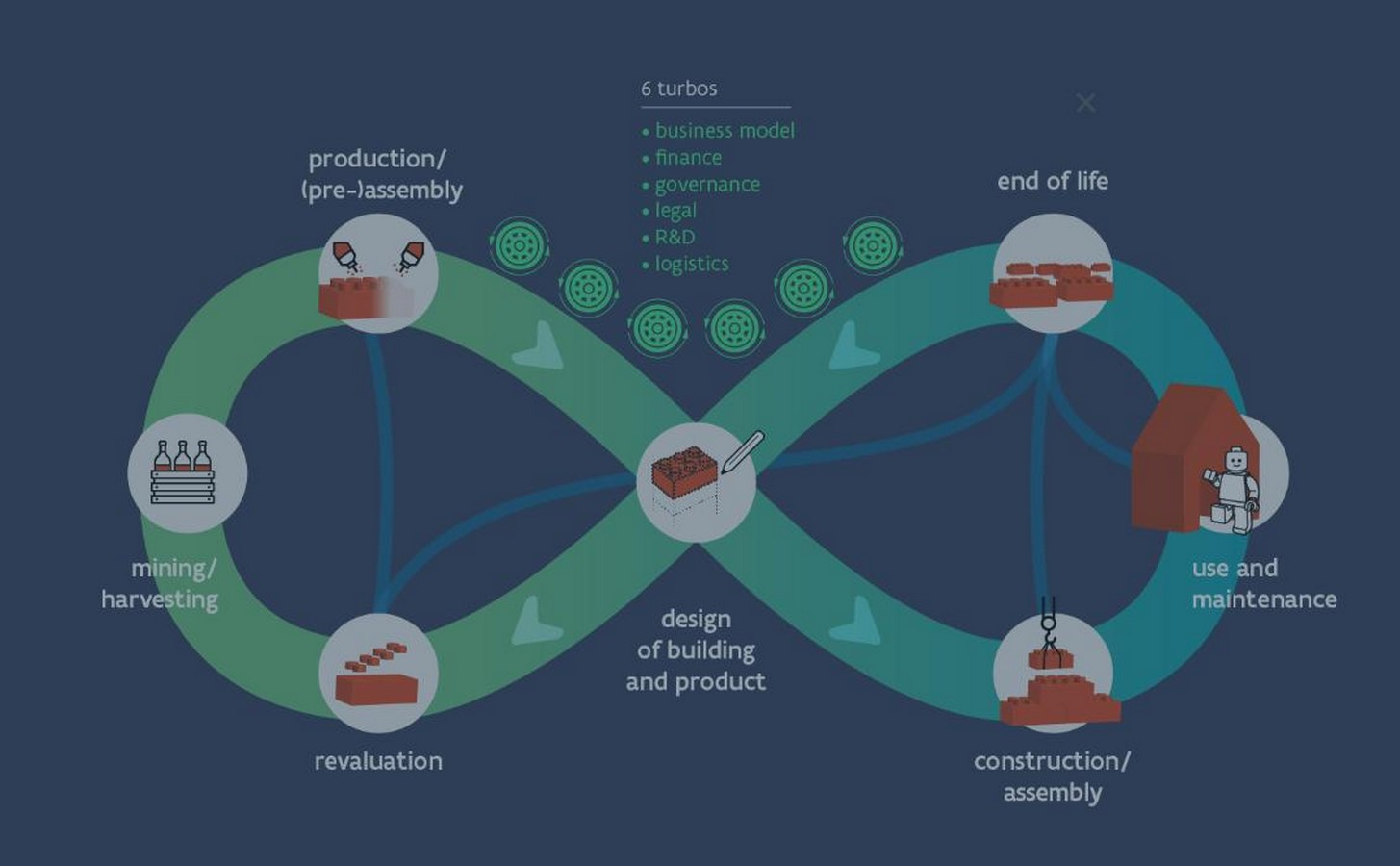
Circular construction is about designing and planning buildings and structures while prioritizing materials and systems that can be reused, repurposed, or recycled by reducing the usage and need for virgin materials. Conventional methods often result in huge waste debris and high energy consumption i.e. carbon emissions, etc. while circular construction empowers longevity, adaptability, and closed-loop material cycles. Some key principles on which circular construction works are – Design for Disassembly i.e. structure design so thoughtfully that its components can be removed and reused for some other purpose. Salvaged material collected from demolition sites or previous projects is reutilized or transformed into high-value products known as up-scaling. The use of modular or prefabricated construction techniques enhances the flexibility of usage and reduces the quantum of waste, allowing parts to be replaced or upgraded with minimum alterations. Life thinking decisions are guided by examples of building and its elements behavior analysis, sourcing and installation, maintenance and end-of-life cases, etc.
Why Circular Construction Matters
40% of global carbon emissions held the construction industry as a cause and counts for over one-third of the world’s waste. This transition to circular strategies signifies the mitigation of environmental burdens. The biggest difficulty faced in this achievement of sustainable design is reducing the reliability of virgin materials and trying to extend the life possible of building elements, circular construction slashes embodied carbon emissions. This step would help to decrease the demand for non-renewable resources and the ecological strain related to it. Ultimately reduction in material costs encourages local economies around repairs, and refurbishment and helps stakeholders invest in secondary or reused-recycled materials. Building as an output becomes more adaptable to changing needs, reducing the need for demolition and reconstruction.
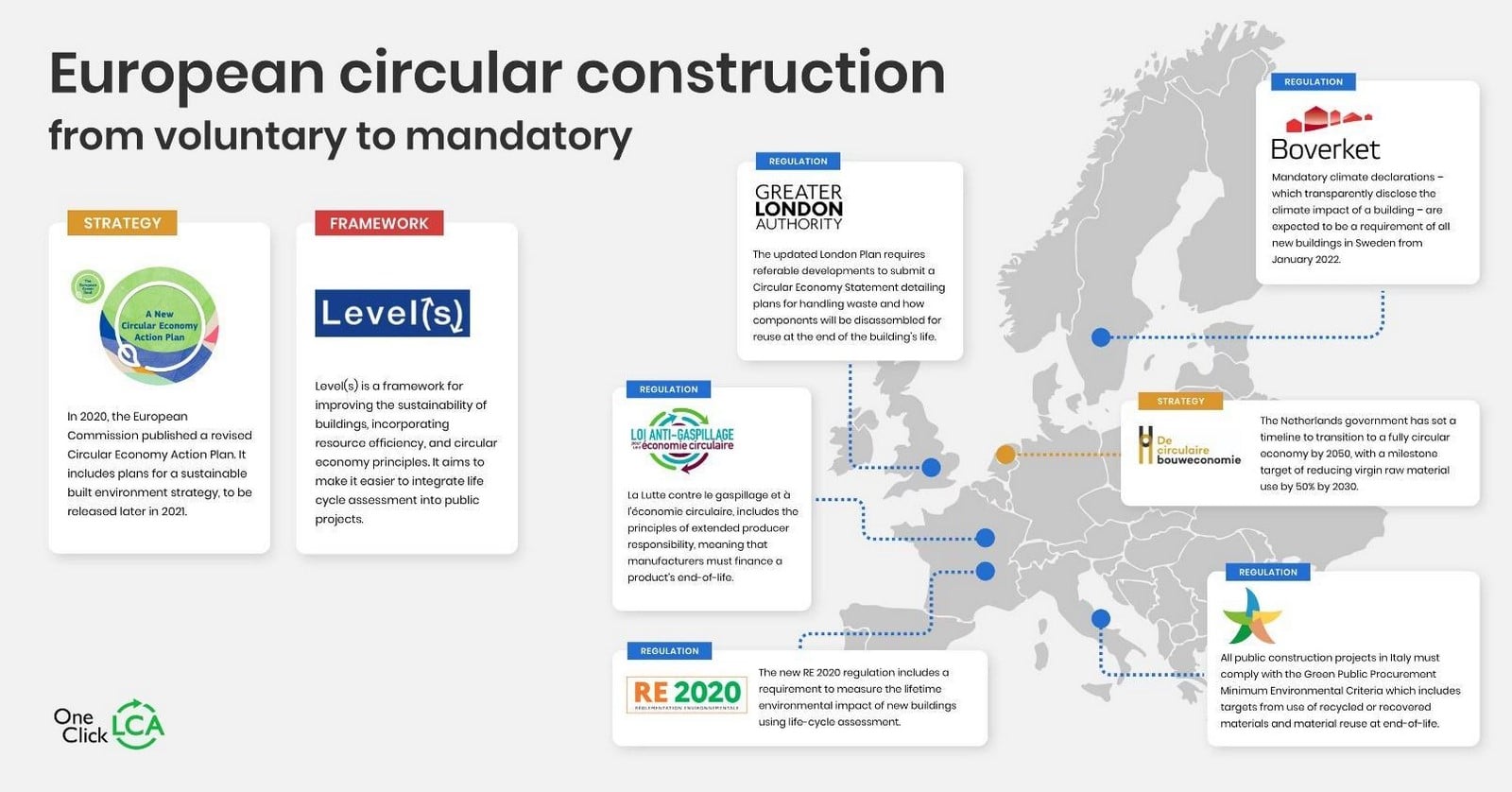
Integrating Circularity into Sustainable Design Strategies
Sustainable design and circular construction are inherently aligned, and their thoughtful integration can amplify the impact of the concept of green buildings. The integration starts with detailed documentation for all building materials used like material origin, composition, recyclability, potential for reuse, and recovery. Adaptability and designing of flexible spaces, non-load-bearing wall-partitions, and modular layouts ensure that it would change according to user requirements and comfort without undergoing any major renovation. Salvaged, reclaimed, and recycled materials should be made a priority in material selection and try to support the sustainable design concept. Local sourcing and bio-based materials like bamboo, mycelium, or rammed earth are renewable and are generally considered with low embodied energy, and aligned with circular design goals. Options for materials and systems choices that are certified under the Cradle-to-Cradle framework, ensuring they meet strict standards for circularity, health, and sustainability.

Challenges and the Way Forward
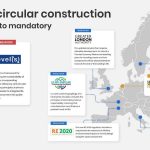
Sustainable design and circular construction having so many advantages are facing several roadblocks due to a lack of standardization in the industry, supply chains being underdeveloped, and a lack of confidence of stakeholders in society. Investors don’t step forward to promote this material nor for market establishment resulting in a lack of availability of secondary material. Building codes and regulations often don’t withstand these materials and technology or strategies of circular construction which is essential for sustainable design. To find ways to overcome this hurdle, a collaboration of every stakeholder whether it be from engineers to contractors or policymakers, etc. is necessary at each step of the workflow. Digital or computer-aided programs like BIM (Building Information Modelling), material databases, and AI-driven techs helping with lifecycle analysis help in spatial planning, tracking, and optimizing circular intervention for a better and sustainable design outcome.
Circular construction may be a fancy concept for now but it’s a need of the future and we as a responsible stakeholder should act upon it. It’s not a trend but an urgent imperative. As climate resilience becomes a central concept for the built environment, circularity offers a ready-made blueprint for the base of future architecture being not only a sustainable design but regenerative asset. By utilizing this concept and strategies in every stage of design and construction, architects and designers can become key agents of change in shaping and guiding the world to be a more resilient, equitable, and resource-conscious future-ready architecture.
Citation:
- Inogen. (2023). Building a Sustainable Future: Understanding Circularity in Construction | Inogen. [online] Available at: https://www.inogenalliance.com/blog-post/building-sustainable-future-understanding-circularity-construction.
- Neuroject. (2024). What is Circular Construction? 2024 Guide – Neuroject. [online] Available at: https://neuroject.com/circular-construction/.
- https://bouwen.vlaanderen-circulair.be (2019). What is it? – Circular Construction – Circular Flanders. [online] Vlaanderen-circulair.be. Available at: https://bouwen.vlaanderen-circulair.be/en/what-is-it [Accessed 15 Apr. 2025].
- Croes, T. (2022). What Is Circular Construction and Why Is It Important | JUUNOO. [online] JUUNOO. Available at: https://juunoo.com/en-eu/what-is-circular-construction-tips-to-start/ [Accessed 15 Apr. 2025].
- oneclicklca.com. (n.d.). An Introduction to Circular Economy principles in construction design. [online] Available at: https://oneclicklca.com/en/resources/articles/an-introduction-to-circular-economy-principles-in-construction-design/.
- Andabaka, A. (2023). Circular Construction Principles: From Theoretical Perspective to Practical Application in Public Procurement. Springer tracts in civil engineering, pp.3–13. doi:https://doi.org/10.1007/978-3-031-45980-1_1.
- Viewpoint | Trimble. (2023). All About Circular Construction. [online] Available at: https://www.viewpoint.com/en-gb/blog/all-about-circular-construction?redirected=y.
- Ellen MacArthur Foundation (n.d.). Circular economy introduction. [online] Ellen MacArthur Foundation. Available at: https://www.ellenmacarthurfoundation.org/topics/circular-economy-introduction/overview.
- BSI. (2022). Circular Economy & Modern Construction: Enhancing Sustainable Built Environment. [online] Available at: https://www.bsigroup.com/en-US/insights-and-media/insights/blogs/circular-economy-modern-construction-boost-sustainable-built-environment [Accessed 15 Apr. 2025].