Architecture is never neutral. It organizes movement, spatial organization, distributes power, and frames social life, which influences how people feel and behave. Yet public conversation revolves around appearance: is it beautiful or ugly? Is it something iconic or the same old generic structure? To truly engage in Critiquing Architecture, we must move beyond aesthetics and ask about the functions, ethics, context, and impact. Critique is not demolition. It is a disciplined way of seeing.
What does it mean to Critique Architecture?
Critiquing Architecture involves evaluating buildings and urban spaces through multiple lenses:
- Spatial performance – Does the building work?
- Social responsibility – Who does it serve or exclude?
- Environmental impact – How does it engage climate and resources?
- Cultural meaning – What narratives does it reinforce?
- Urban contribution – Does it strengthen or weaken the city?
A façade can be visually appealing yet fail socially. On the contrary, a modest structure can quietly transform daily life.
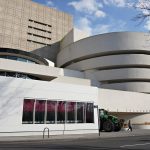
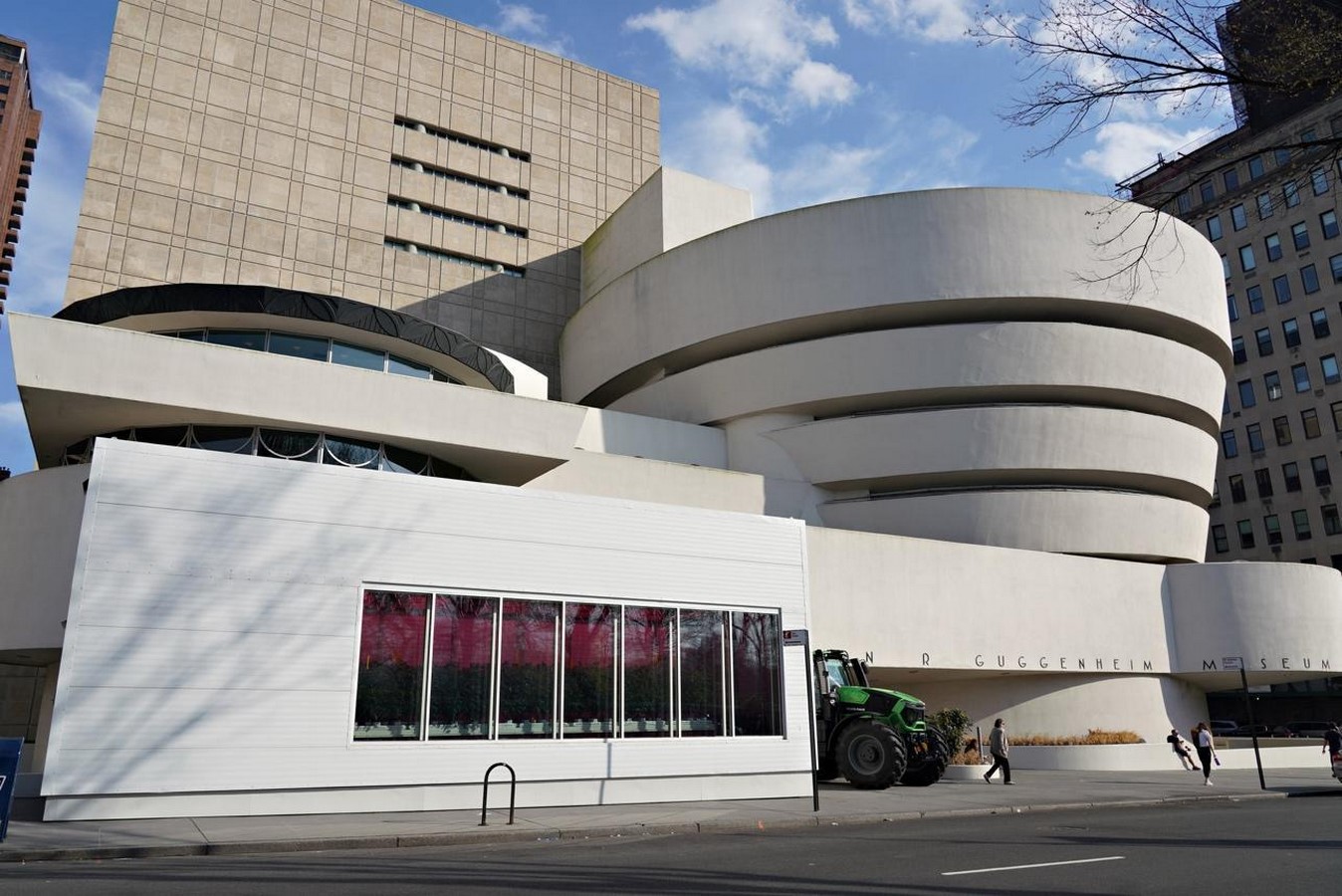
Take the Guggenheim Museum in New York, as shown in fig. 1. For decades, it has been criticized. Critics argue that it looks like an “inverted oatmeal dish,” a “washing machine,” and even a “hot cross bun.” It is one of the most criticized structures in the world of architecture. However, today the Guggenheim is now celebrated for its bold, modern design, proving that unconventional architecture could become a landmark. (Mclaughlin and Waldek, 2024). The debate reveals how architectural criticism is rarely about form alone; it is about values.
Aesthetic Judgment vs Ethical Judgment:
Many buildings become polarizing because critique often begins with taste.
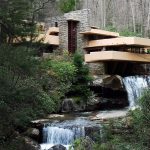
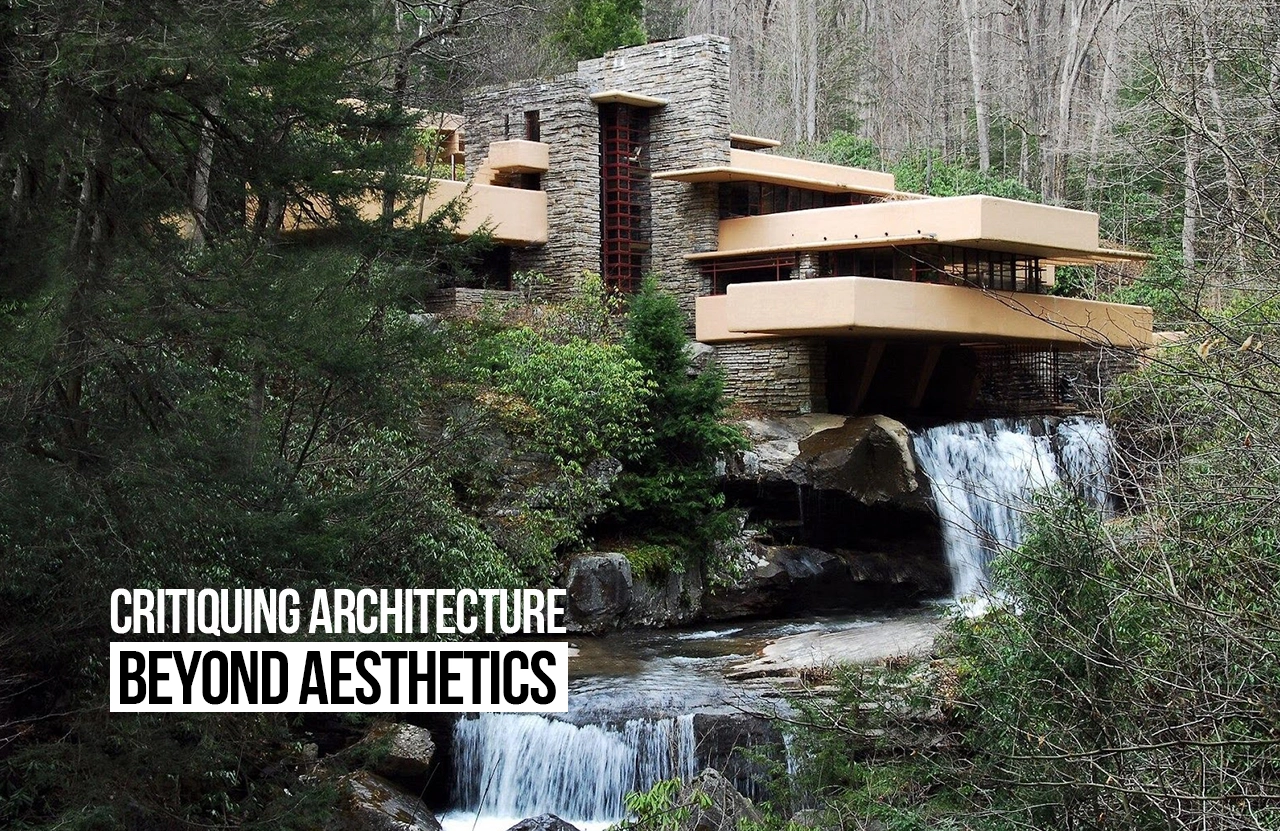
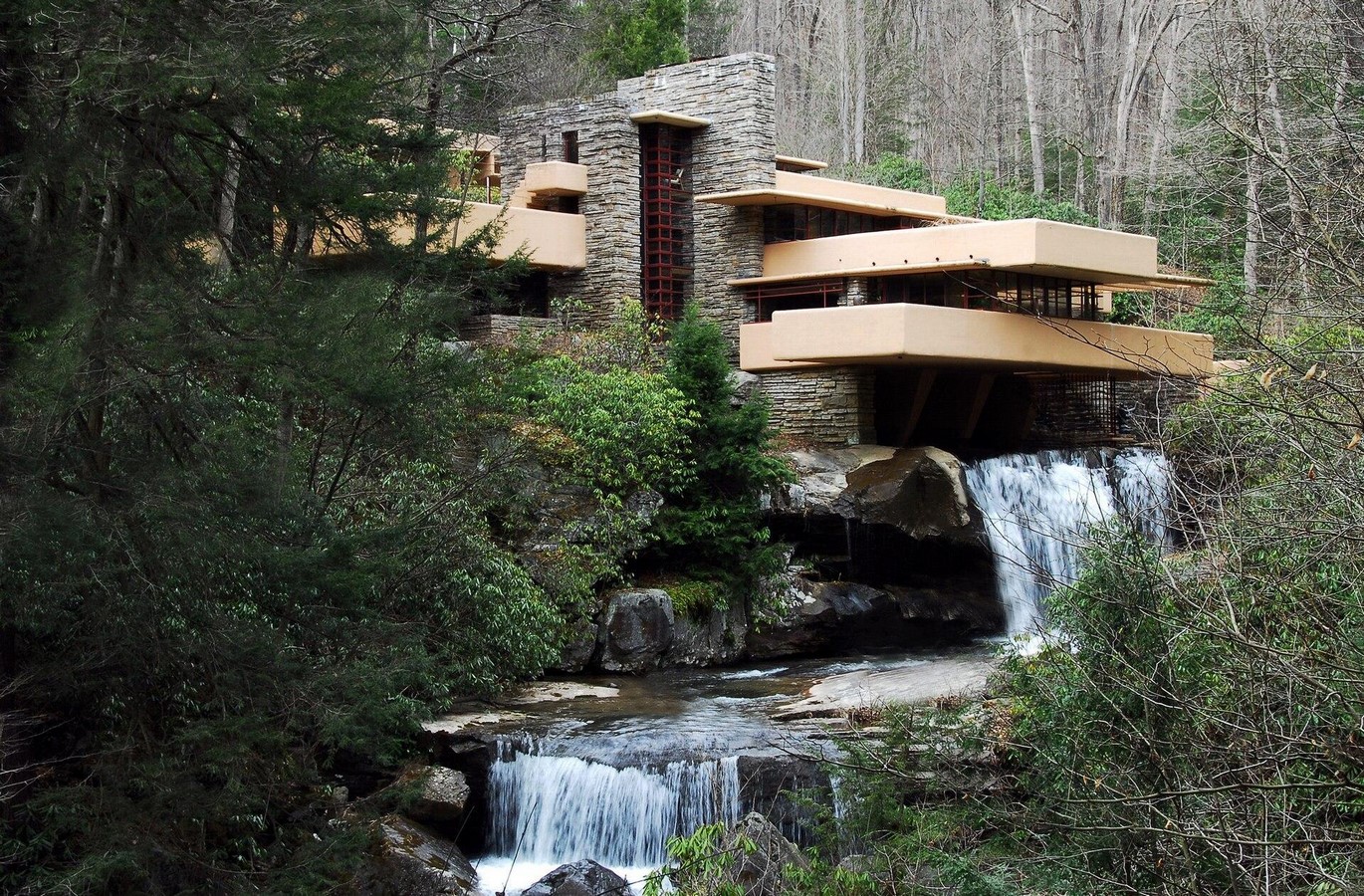
For example, Fallingwater (fig.2) is widely appreciated for its integration of architecture and landscape. It is a perfect blend between the landscape and the building structure; its cantilevered terraces dissolve the boundary between built form and nature. (Jeremy, 2025). However, delving into the deeper critique reveals structural maintenance challenges and questions about long-term sustainability. Because even a masterpiece demands security.
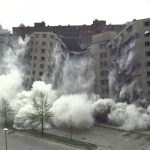
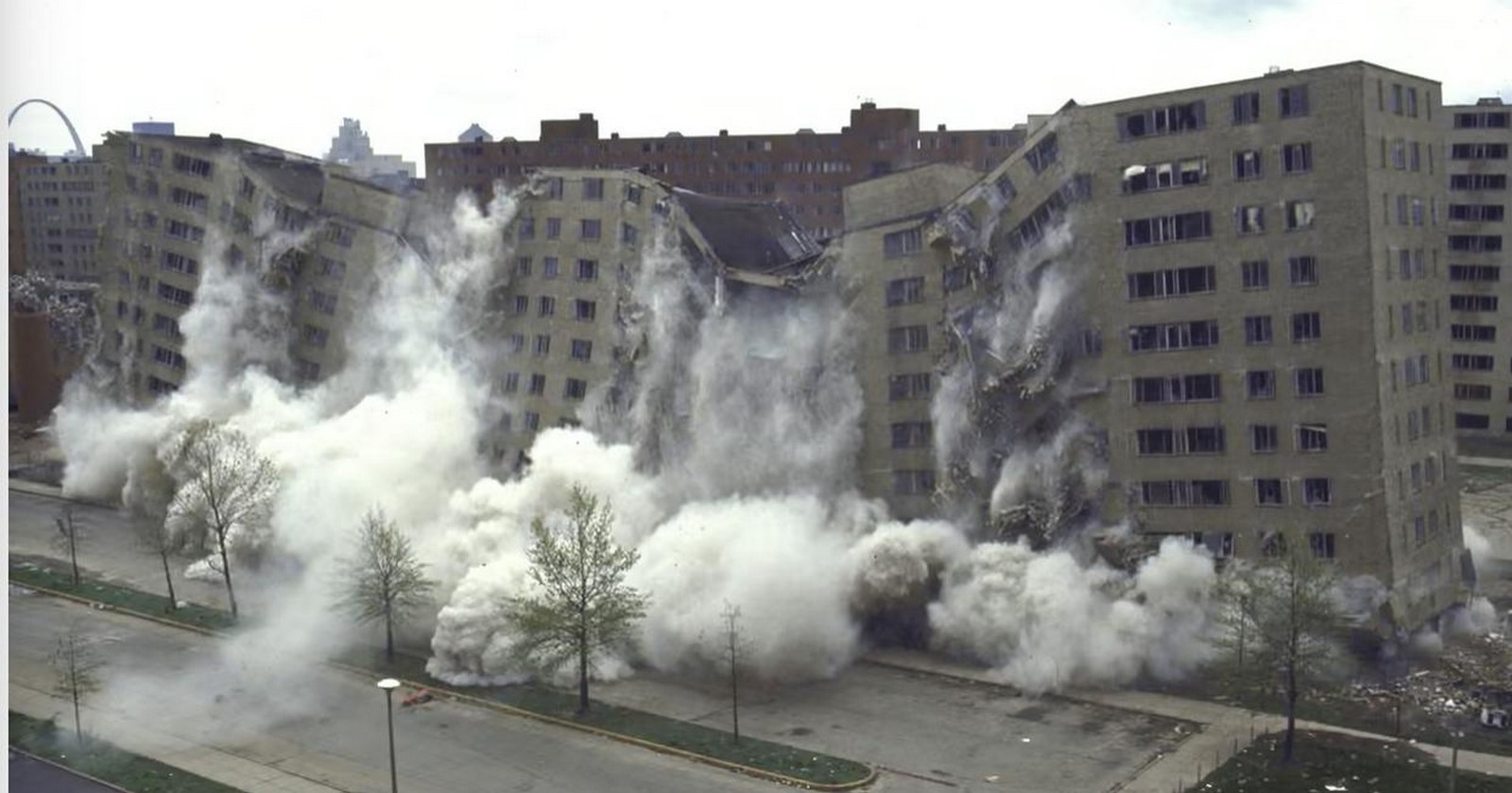
Similarly, the demolition of Pruitt-Igoe (fig.3) is frequently cited as the “death of modernism”. Yet architectural design is not the sole reason for the failure of the project. But economic disinvestment, racial segregation, and policy neglect contributed equally. (Marshall, 2015). Critiquing Architecture means understanding the systems surrounding buildings, not isolating form from politics.
Critique as Urban Responsibility
Critique becomes a civic act as architecture shapes collective life.
Consider contemporary iconic projects such as the Heydar Aliyev Center in Azerbaijan. It is an organic fluid geometry that challenges conventional structural logic, which redefines public space through continuous surfaces. Yet critics question the socio-political context; Can architecture be separated from governance? Should spectacle overshadow transparency? These questions demonstrate that Critiquing Architecture is not about stylistic preference; it is about accountability.
The Role of Context
A building is not just a structure; it is a responsibility towards climate, culture, and city.
An effective critique must reflect on:
- Does the project respond to its site?
- Does it enhance the cultural identity or overshadow it?
- Does it improve spatial experience?
- Does it respond to the climatic conditions?
A glass structure in a hot desert climate might look aesthetic and modern, but does it respond to the harsh climate? Because without a shading strategy or passive cooling, the building will lose its functionality. Therefore, the critique must measure performance over the image.
Critiquing Architecture in the Digital Age
Today, architecture spreads through social media. The influencers in “Instagram city” post dramatic photos which can elevate a structure to a global scale in no time. Which indicates that the Instagrammable city encourages visual consumption rather than spatial understanding. And through this digital representation, it often hides the spatial experience of the structure. Therefore, in this environment, Critiquing Architecture requires patience. It demands visiting, observing, questioning, and researching rather than reacting to a single image.
Methods of Critique
To critique effectively, one may apply:
- Environmental Analysis: Daylight, shading, ventilation, energy performance
- Functional Analysis: Circulation, usability
- Social Analysis: inclusivity, accessibility, community integration
- Historical Significance: continuity or rupture to the context
Why Critique Matters for Designers?
For architects and students, critique is not merely academic. It shapes professional ethics.
Without critique:
- Cities become repetitive
- Environmental consequences are ignored
- Social inequalities are reinforced spatially
With critique:
- Design evolves
- Failures are studied rather than repeated
- Architecture becomes responsive instead of decorative
The Risk of Over-Criticism
However, critique must avoid cynicism. Excessive negativity can affect innovation. Judging experimentation too quickly may discourage architectural evolution.
Brutalism was once widely rejected, but now it is being re-evaluated. Similarly, Postmodernism was once celebrated, but now it is being critically reassessed. Architectural judgment keeps shifting over time. Responsible critique must remain open to reinterpretation. Critiquing Architecture is not about deciding whether a building is aesthetically appealing. But rather it is about examining how architecture functions within broader social, environmental, and political systems. It requires intellectual rigor, contextual awareness, and ethical sensitivity.
Buildings are powerful cultural artifacts. They shape the spatial experience of how people gather, work, heal, and rest. The architectural critique’s responsibility is to recognize that design decision to shape lived realities.
In the era of rapid urban expansion and climate urgency, architectural critique is not an option; it is a necessity. Through careful evaluation, architecture can move from repetition toward responsibility.
Reference List (Harvard Style):
Image.1 Encyclopedia Britannica(N.D.) Frank Lloyd Wright: Guggenheim Museum. Available at: https://www.britannica.com/topic/museum-cultural-institution/Museum-structure-and-operations#/media/1/398814/232732 (Accessed: 28th Feb 2026)
Image.2: Lachrimae72 (2017) Fallingwater at Mill Run, Pennsylvania. Available at: By lachrimae72 – https://pixabay.com/photos/house-in-nature-house-falling-water-2110133/, CC0, https://commons.wikimedia.org/w/index.php?curid=88743190 (Accessed: 1st March 2026)
Image.3: GettyImage (1972) The second stage of demolition of the Pruitt-Igoe complex in April 1972. Available at: https://www.theguardian.com/cities/2015/apr/22/pruitt-igoe-high-rise-urban-america-history-cities (Accessed: 1st March 2026)
Jeremy (2025) Fallingwater by Frank Lloyd Wright is Truly a Sight to See.
Available at: https://www.discovertheburgh.com/fallingwater-house/ (Accessed: 28th Feb 2026)
Marshall.C (2015). Pruitt-Igoe: the troubled high-rise that came to define urban America – a history of cities in 50 buildings, day 21. Available at: https://www.theguardian.com/cities/2015/apr/22/pruitt-igoe-high-rise-urban-america-history-cities (Accessed: 28th Feb 2026)
Mclaughlin.K and Waldek.S (2024) Guggenheim Museum: Available at: https://www.admiddleeast.com/story/guggenheim-museum-9-things-you-didnt-know-about-the-new-york-institution-thats-opening-in-abu-dhabi (Accessed: 28th Feb 2026)
Article themes: Can be added to the TOPIC OF YOUR CHOICE TOPICS.
Please note, these segments are not for all the articles.
Storytelling
| Storytelling: How architecture changed your perspective. | For this writing exercise, you can write on how your perceptions on viewing public places, skyscrapers, community areas, etc. have changed. Please adhere to basic ethics and make sure your essay isn’t personal or an excerpt for your diary! To make the most of this exercise, write a crisp professional essay that lets the architectural community read it feel relatable, intriguing, and nostalgic! You can title this essay as you see fit. |
| Storytelling- The future of architecture. | For this writing exercise, you can write about how you envision the future of architecture. Will it be more sustainable or will it be a repetition of buildings, or will it be straight out of a sci-fi movie. Please adhere to basic ethics and make sure your essay isn’t personal or an excerpt for your diary! To make the most of this exercise, write a crisp professional essay that lets the architectural community read it feel relatable, intriguing, and nostalgic! You can title this essay as you see fit. |
| Storytelling: Human existence without architecture | For this writing exercise, you can write on how human lifestyle would have evolved if architecture wasn’t a part of our world. Please adhere to basic ethics and make sure your essay isn’t personal or an excerpt for your diary! (avoid using first person speech). To make the most of this exercise, write a crisp professional essay that lets the architectural community dive deep into questioning their surroundings and the current architecture! You can title this essay as you see fit.(Focus keyword mentioned in the template guide document). |
| Storytelling: The Impact of Architecture in Our Lives | For this writing exercise, you can write about what you learned in architecture college. How have your presumptions about architecture changed since the first year, and what crucial technical skills did you learn about in college? Please adhere to basic ethics and make sure your essay isnt personal or an excerpt fir for your diary! To make the most of this excercise, write a crisp professional essay that lets the architectural community reading it feel relatable, intrigued and nostalgic! You can title this essay as you see fit. |
| Storytelling: Architecture as a Reflection of Society’s Values | Discuss how buildings and urban planning reveal the social, economic, and political priorities of a society. This could explore how architecture has mirrored movements like sustainability, inclusivity, and technological advancements over time, shaping spaces that respond to changing societal values. |
| Storytelling: How Sustainable Architecture Reimagines Our Future | Focus on how the shift towards sustainable and regenerative design is redefining the future. Highlight innovative green architecture projects, renewable materials, and how these practices address environmental concerns, ultimately shaping eco-conscious urban landscapes. |
| Storytelling: Architecture’s Influence on Daily Routines | Show how thoughtfully designed spaces directly impact our daily lives, from morning routines to workspaces. Touch on ergonomic design, natural lighting, and ventilation’s role in productivity, mental health, and overall well-being, demonstrating the unseen influence of good design. |
| Storytelling: Architecture as a Time Capsule | Explore how buildings and structures can serve as historical records, preserving cultural heritage and societal values. Discuss specific examples of iconic buildings that have stood the test of time, such as the Colosseum or the Taj Mahal. Delve into the significance of architectural preservation and restoration efforts in safeguarding our shared history. |
| Places to visit for the travelling architect [15 Places architects must visit] | Please write an introductory paragraph (about a hundred words) and atleast 3 hi-res images for every place mentioned. Please submit all the images used in a separate ZIP file. Mention the source of every image used in the article. We have a strict policy against plagiarism, make sure your article is original. Please keep the list content in multiples of 5).
Minimum being 10 points. |
| 15 Iconic Projects by firm/architect | Please write an introductory paragraph (about a hundred words) and atleast 3 hi-res images of every project mentioned. Please submit all the images used in a separate ZIP file. Mention the source of every image used in the article. We have a strict policy against plagiarism, make sure your article is original. |
| Firms designing particular category of projects. [Ex. 15 firms designing sustainable projects] | Please write an introductory paragraph (about a hundred words) and atleast 3 hi-res images for every architect mentioned (Including their famous projects). Please submit all the images used in a separate ZIP file. Mention the source of every image used in the article. We have a strict policy against plagiarism, make sure your article is original. |
| Case Studies | [Case Study- Modern] Dividing the article into 3 parts, 1. design (planning, design solutions, design philosophy) 2. Materials/ Construction (special or innovative construction techniques or materials) and 3. Sustainability, curate a informative case study of the given structure. |
| [Case study of conceptual/ unbuilt projects] These upcoming projects are revolutionary and innovative.Emphasize on innovative and new technoilogy used and inspirational design style and solutions. | |
| [Case study of Old/Heritage structures] This case study aims to emphasize on the social and political importance of royal heritage, traditionally in the era it was built and today as important tourist places and its cultural heritage. What impact does this structure have on the urban fabric? What particular style was it built in and how is it relevant to the era it was constructed in? What historical importance does it hold? | |
| Other categories (Narrative architecture, exhibitions, temporary structures, etc) | |
| 10 Reasons why architects must visit -country- | These reasons will be in the form of specific structures, public spaces, museums, innovative architectural marvels, historically important architecture, etc from the country. Please write an introductory paragraph (about a hundred words) and atleast 3 hi-res images for every point mentioned. Please submit all the images used in a separate ZIP file. Mention the source of every image used in the article. We have a strict policy against plagarism, make sure your article is original. |
| Timeline of restoration | (Talk about the timeline of restoration the following structure has been through and what are the steps the person/ firm involved in the process had to take during the process. You can also add the methods of restoration used) |
| Design Guidelines | Include design guidelines/ tips to define a a generic design for a particular building typology. Each guideline should be accompanied by a suitable example to explain the point better. |
| Project in-depth | (Discuss in-depth the overall process the particular project has gone through, this can include the stakeholder, design team, news, reactions to the project proposals, etc and what does the future hold if still under construction) |
| Top Architects | Have you ever wondered how many architects are located in your city/country, so what if we present a list which combines the best architects/designers (On the basis of popularity, scale of projects, number of projects, design sensibility, — you don’t have to put them in a particular order. Include introduction of their design philosophy, examples of their projects. Caption all images and mention all image sources.)The link to find information regarding firms in the given city/country:
{{link}}) |
| Iconic Projects by Sustainable firms | [Iconic Projects by Sustainable firms] Write in detail about how the firm is practicing sustainable architecture. Mention their design philosophy and ideology, contributions in the community of sustainable architecture and influential projects. Please write an introductory paragraph (about a hundred words) and Give a brief description for atleast 5 sustainable projects and their ratings with images. Mention the source of every image used. |
| Iconic Projects by Product designers | Please write an introductory paragraph (about a hundred words) and atleast 3 hi-res images for every project mentioned. Submit all the images used in a separate ZIP file. Mention the source of every image used in the article. We have a strict policy against plagarism, make sure your article is original. |
| List Based Articles | Please write an introductory paragraph (about a hundred words) and add a short description with relevant high resolution images for each point. Give relevant links and basic information.Please keep the list in multiples of 5. Minimum number of the list is 5. |
| Material in Architecture | [Part of a series] History of the material, need, innovations due to material being introduced in construction, famous pioneer structures, use in modern/contemporary architecture, Architects who started working with it, etc |
| Alternative Materials | [Part of a series] Can Architects move to more sustainable alternatives to current construction materials? ‘Alternative materials’ is going to be a series of Articles. Please write an introduction explaing the material, its components, method of production, embodied energy, etc. Mention examples of structures of buildings where the material has been used or could be used. |
| Architecture of Indian Cities or Countries | [Part of a series] Describe Architecture of the country/City through the perspective of an individual. Talk about cultural, social and political dynamics and how demographics and modernization each affect the architecture of the country/city. |
| Book Reviews | [Book Reviews] Basic review of the book – a guide for readers. Emphasize on what readers can take from the book without spoiling the content or plot. Try to write an unbiased article, but make sure you leave your opinion in the end (Conclusion)! Give sources or links wherever possible. |
| Article Reviews | [Article Reviews] Basic review of the article- a guide for architectural journalists. Emphasize onhow the article was written, points of emphasis and priority, how architecture is described, specific style of writing, etc Try to write an unbiased article, but make sure you leave your opinion in the end (Conclusion)! Give sources or links wherever possible. |
| Youtube for Architects | [Movie/ Show Reviews] Basic review of the movie/show(video/podcast)- a guide for viewers. Emphasize on what designers can take from the show or movie without spoiling the content or plot. Try to write an unbiased article, but make sure you leave your opinion in the end (Conclusion)! Give sources or links wherever possible. |
| Movie/ Show Reviews | [Movie/ Show Reviews] Basic review of the movie/show- a guide for viewers. Emphasize on what designers can take from the show or movie without spoiling the content or plot. Try to write an unbiased article, but make sure you leave your opinion in the end (Conclusion)! Give sources or links wherever possible. Please send in 2 show/movie name you would like to write about by WEDNESDAY, of which, one will be assigned to you. This is to avoid clash of content. (If you send an article before discussing the name of movie/show, the article will not be accepted in case of an overlap of content) |
| Interview Reviews | [Interview Review] Basic review of the interview- a crisp report for viewers. Emphasize on what designers can take from the interview. Try to write an unbiased article, but make sure you leave your opinion in the end (Conclusion)! Give sources or links wherever possible. The following interview can be found on Youtube. |
| Walking through the streets of <city> | [Part of a series] A visual description of architecture of the city |
| Lesser known architects / Inspirational architects | [Part of a series] The lesser known celebrities of Architecture, these architects are here because they have managed to rise above others with their unique ideologies, bold designs, and unconventional methods. Mention their struggles, failures and the criticism they faced. Do not forget to emphasize on their works and innovative designs. What sets them apart? What makes them stand out? Try to focus on their achievements and uniqueness as a way to celebrate these lesser known architects. |
| ____ as an Architect | [Part of a series] How does their individuality, speciality, style, translate to architecture. What kind of structures would they design?This article is a part of a series exploring the scenario where a celebrity is an architect, by comparing their personality with existing or conceptual structures and well known architects. |
| Building Typologies | [Part of a series] 10 things to remember while designing for <<Building Typologies>>. Include design guidelines/ tips to define a a generic design for a particular building typology. Each guideline should be accompanied by a suitable example to explain the point better. So, the article must contain 10 design guidelines with 10 examples. |
| 10 things to remember while designing in <<Region/ Climate/ State/ CIty>>. Geographical Regions / Climate / State / City | [Part of a series] Include design guidelines/ tips to define a generic design for a particular area. Each guideline should be accompanied by a suitable example to explain the point better. The article must contain 10 design guidelines with 10 examples. |
| Rethinking the architecture of | [Part of a series] Rethinking design of public architecture- structures that need to be designed contextually and for the user, with more detailed study. Use examples of innovative structures designed particularly for this typology. |
| Urban pollution | [Part of a Series} An investigative research on the causes and extent of urban pollution in the specific city. Data on built- unbuilt ratio, amount of green pockets, popullation, vehicular traffic, migration, industrial structures and overall pollution causing elements can be highlighted to understand the degree of pollution in a given city. How are architects changing this dynamic (through built or conceptual/ theoretical projects)? |
| 10 things to remember when designing <typology> | [Part of a series] Include design guidelines/ tips to define a generic design for the particular building typology. Each guideline should be accompanied by a suitable example to explain the point better. The article must contain 10 design guidelines with 10 examples. Please attach images with each point and mention valid sources for each image used. |
| Storytelling | |
| 10 Things you did not know about architect | [Part of a series] Lesser known facts about the architect/structure/designer/product Give images with each point and mention valid sources for each image used. |
| Architectural theoretician | [Part of a series] How does their individuality, speciality, style, translate to architecture. This article is a part of a series exploring their contribution in architecture,theories, achievements. The article should include an in-depth research of atleast 5 works if available, this may include buildings, books,papers,interviews, etc by the individual. |
| Theory in Architecture | [Part of a series] Architectural Theory is the process of thinking, debating, and writing about architecture.Theory is a design mode that applies the constructs of architectural design to the fact proposed. How does the following theory contribute to architecture. How does their individuality, speciality, style, translate to architecture. The article can be divided into 3 parts it’s past, present and future usage.The article should include an in-depth research of atleast 5 works if available, this may include buildings, books,papers,interviews, etc. |
| Life of an Artist | Discuss the life of the artist, and how has their contribution impacted the world history and perspective of viewing art. Make sure you emphasize on the overall philosophy, along with style, concept, and medium of art they use. The article can be divided into 3 parts- Overview of the artist, Career- Philosophy,style of work and Recognition after death. |
| Sneak Peek : Into the architectural studio | Research about the architectural firm studio- discuss about the firm office design, core values, first and latest work, design process, etc, |
| CELEBRITIES | [List Based-if multiple houses] Please write an introductory paragraph (about a hundred words) and add a short description with relevant high resolution images for each point. Give relevant sources and basic information. |
| Rebuilding the City | Talk about cultural, social and political dynamics and how demographics and modernization each affect the architecture of the Location.Discuss the city’s scenario before and after the war/Disaster |
| Ideology and Philosophy | (Discuss the artist/ designer/ architect’s life, Ideology and Philosophy) |
| MASTER OPTIONS | Please write an introductory paragraph (about a hundred words) and add a short description with relevant high resolution images for each point. Give relevant links and basic information.The list must consist colleges that students can opt for their education |
| BACHELOR OPTIONS | Please write an introductory paragraph (about a hundred words) and add a short description with relevant high resolution images for each point. Give relevant links and basic information. The list must consist colleges that students can opt for their education |
| Lost In Time | [Case Study] Lost in time is a series of articles focusing on cities/ places/ structures that were abandoned/ destroyed due to different aspects. Here the article focuses on the state that the area has been left in, the reason behind the abandonment, what is the condition today, is it funded and preserved and will it be revived in the future. |
| Entrepreneurship and Architecture | Discuss the how the firm/designer/architect has established their practice and how are the succeeding in today’s market. You can divide the article into 3 sections- about the firm/architect/designer, How they have established their practices and the strategy and philosophy. Sources of Information: Articles, Firm websites, Social Media Accounts(study their social interaction pattern), videos. |
| _______as a Career | (The article can be divied into: Introduction to the field, Evolution of the field, career scope, Qualifications needed, skill requirement, Top 3 countries to pursue the field in with salary range, suggest 3 online courses that aspirant can enroll into to understand more about the field or enhance their skills). |
| Sneak Peek : Campus | This article discusses what aspirants must know about the particular college they want to study in. You can cover the following- course provided, extracurricular activities, work scenario, and student environment. Please keep the article as formal as possible. |
| Art movement | The article can be divied into: Introduction to the movement, development, significant personalities, rise and fall of the movement, etc. |
| Podcast for architects | [Podcast Reviews] Emphasize on what listener can learn from the podcast. Try to write an unbiased article, but make sure you leave your opinion in the end (Conclusion)! Give sources or links wherever possible. |
| Story behind the art | Discuss the art’s back story and describe the artist’s imagination. |
| Museums of the World | (Describe the museum in terms of its art, design and architecture features) |
| Travel the world | [Part of a series] Travel the world is a series in which we take the readers and writers across the world. In this article you explore the given topic through the lens of an explorer and not an architect or designer. So gear up, to wear the explorer hat. |
| Building Brands | (This series will explore the fascinating world of brand success and failure, delving into how these brands launched themselves into the market, while adopting to the latest trends) |
| UNESCO World Heritage Sites | Each article will focus on a specific site designated by UNESCO as a World Heritage Site, which is mentioned in the topic mail sent on monday.
Here’s a breakdown of what to include: Focus Keyword: This will be the name of the specific World Heritage Site you’re writing about in that particular article. Outstanding Universal Value (OUV): This is the most critical aspect. Explain why this site is considered to have outstanding cultural or natural significance for humanity. Refer to UNESCO’s documents about the site to find the specific reasons for its designation. Document can be found through- https://whc.unesco.org/en/statesparties/in Criteria: UNESCO uses specific criteria to designate World Heritage Sites. Identify which criteria (cultural, natural, or mixed) apply to the site you’re writing about and explain how the site meets those criteria. You can find information about the criteria on the UNESCO World Heritage Centre website https://whc.unesco.org/en/criteria/. Other Details: Include any additional interesting information about the site, such as its history, cultural significance, geographical location, or unique features. For instances, in the sites which encompass multiple location like- Mountain Railways of India, Hill Forts of Rajasthan, The Architectural Work of Le Corbusier, an Outstanding Contribution to the Modern Movement, Victorian Gothic and Art Deco Ensembles of Mumbai- you can list the name of the works and only describe a few of them, which are unknown in compared to the known sites in the site. Here is a general article structure you can follow: Introduction- Briefly introduce the site and its location Outstanding Universal Value- Explain why UNESCO considers this site so important Criteria- Discuss which UNESCO criteria the site meets and how Other Details- Share any additional interesting facts about the site, encourage exploration Conclusion- Briefly summarize the importance of the site Remember, as the following article needs to be factually correct, please cross-check the information, add relevant images with proper image credits and list of references in the end. |