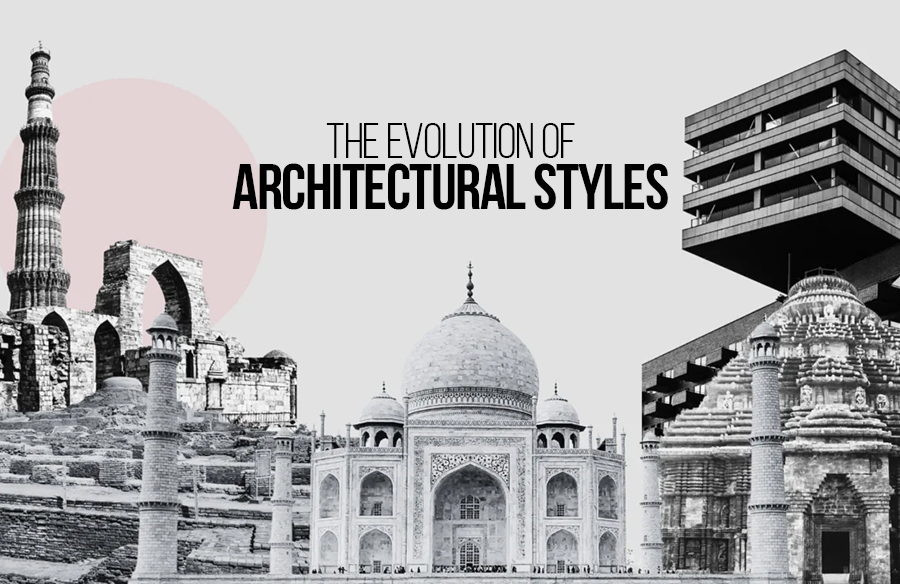
Architecture is an active record of the human past. Architectural styles reflect not only aesthetic choices but also technological advancements, philosophical doctrines, social structures, and climatic adaptations. Each period of architectural history represents a further development of humankind’s growing connection with space, use, and meaning (Kostof, 1995). An understanding of the development of architectural styles provides insight into the values, potential, and ideals of societies throughout history.
Prehistoric and Vernacular Architecture
- Primitive Beginnings
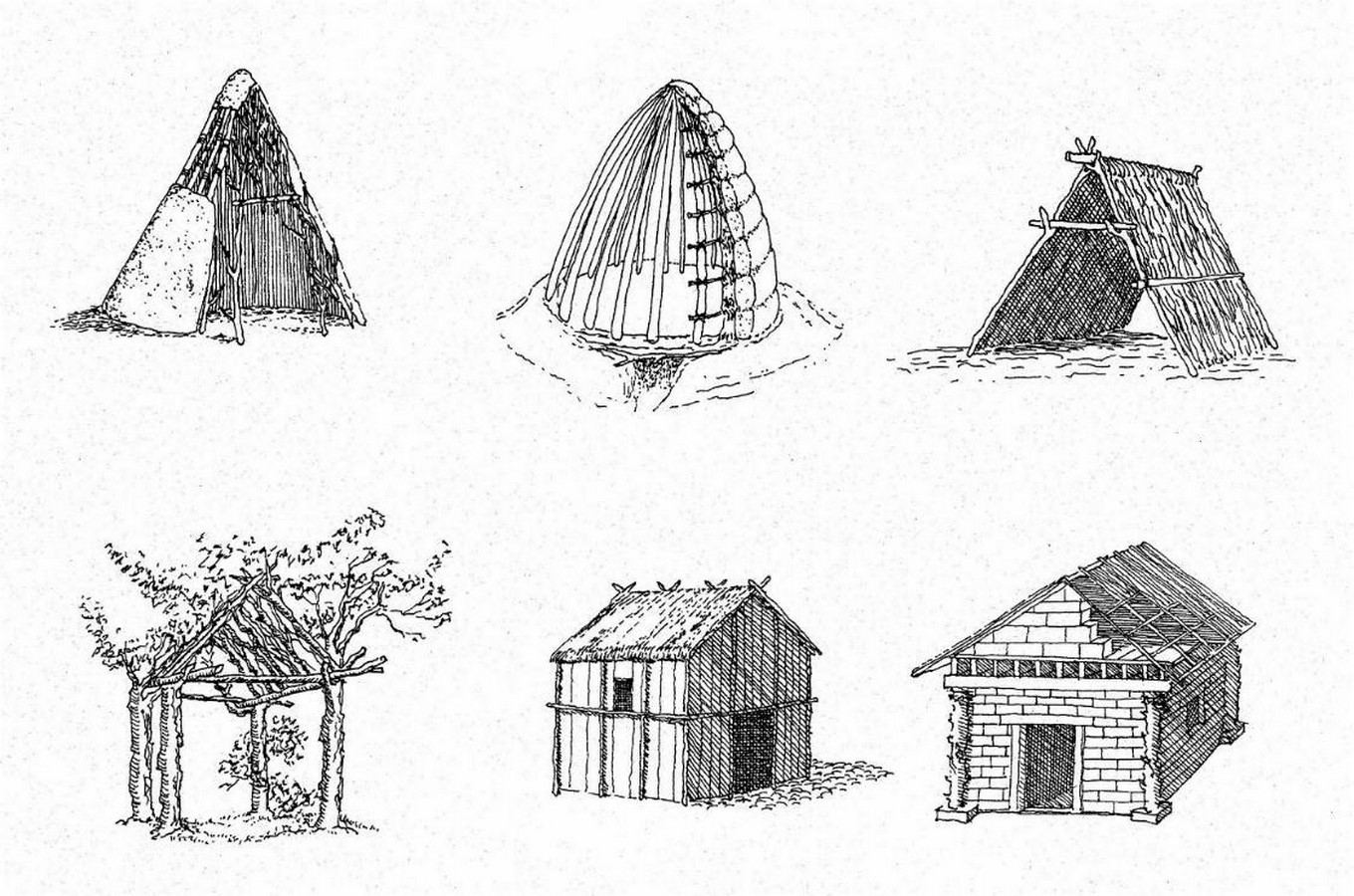
The earliest architecture was necessity-driven—providing shelter from the elements, defence against beasts, and communal living. Prehistoric buildings like the megalithic Stonehenge (c. 3000–2000 BCE) or the Çatalhöyük village in contemporary Turkey (c. 7100 BCE) show early experiments with space, ritual, and permanence (Renfrew, 1973).
- Vernacular Traditions
Vernacular architecture, rooted in local culture and materiality, emerged spontaneously without the involvement of professional designers. Buildings such as igloos, mud houses, or wood houses illustrate how building forms responded to environmental factors and current technologies (Oliver, 2006). This architecture, while poorly documented, represents the backbone of the world’s traditional built environments.

Ancient Architecture: Power and Monumentality
- Egyptian Architecture
Egyptian architecture (c. 3000–1000 BCE) also stressed monumentality and cosmology. The pyramids of Giza, temples of Karnak, and obelisks had religious purposes, indicating control over stone and knowledge about cosmic alignment (Arnold, 2003). Their orthogonal design and axial alignments were the beginnings of formal spatial order.
- Mesopotamian and Persian Contributions
Mesopotamian ziggurats and Persian palaces (e.g., Persepolis) exemplified initial urban planning, mud-brick technologies, and ornamentation innovations. These styles provided the basis for symbolic hierarchy in building design (Curtis, 1996).
- Indus Valley and Ancient Chinese Architecture
The Indus Valley Civilisation (c. 2600–1900 BCE) had sophisticated urban planning—gridded roads, drainage, and modular residences (Kenoyer, 1998). Chinese timber architecture, as seen in early dynastic ages, relied on symmetry, axiality, and hierarchy as the basis of the East Asian architectural order.
Classical Architecture: Harmony and Proportion
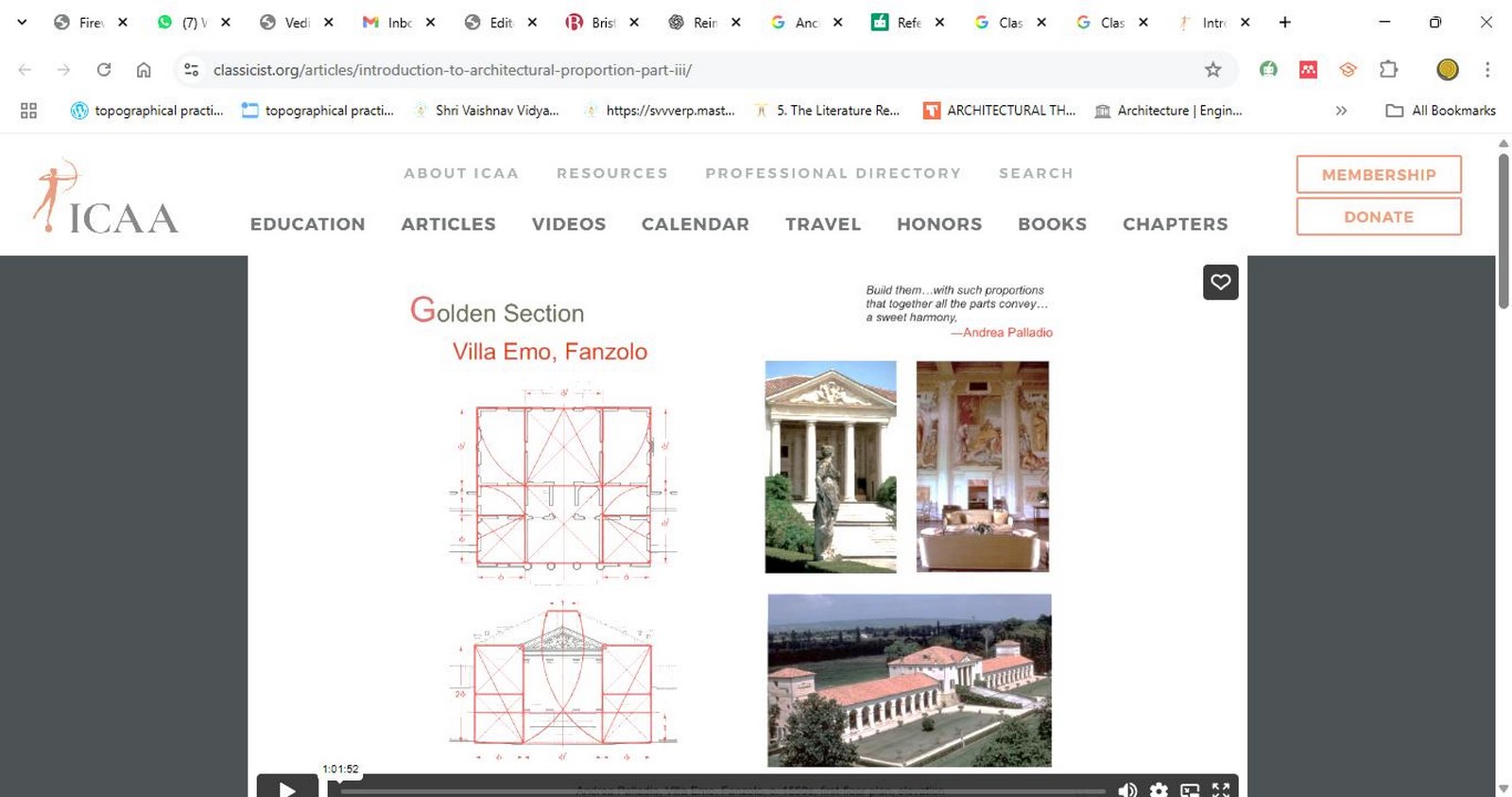
Greek architecture (c. 800–146 BCE) was based on mathematics, proportion, and beauty. Temples like the Parthenon exemplified the Doric, Ionic, and Corinthian orders (Scully, 1989). The focus on human scale and optical correction demonstrates a move toward humanism and rational order.
- Roman Innovation
Roman architecture (c. 509 BCE – 476 CE) built upon Greek precedent with structural brilliance—arches, domes, and vaults. The Colosseum, Pantheon, and extensive aqueducts demonstrate the engineering skill and city vision of the Romans 0
(MacDonald, 1982). Roman cities were grid-like, zoned, and infused with civic architecture such as basilicas and forums.
Medieval Architecture: Symbolism and Spirituality
- Byzantine and Romanesque
The Byzantine style, which originated from the traditions of Eastern Romans, was characterised by centralised domes (e.g., Hagia Sophia) and elaborate mosaics. The Romanesque style (c. 800–1100 CE) in Europe was characterised by heavy masonry, barrel vaults, and round arches, typically constructed for monasteries and pilgrimage churches (Fletcher & Cruickshank, 1996).
- Gothic Architecture
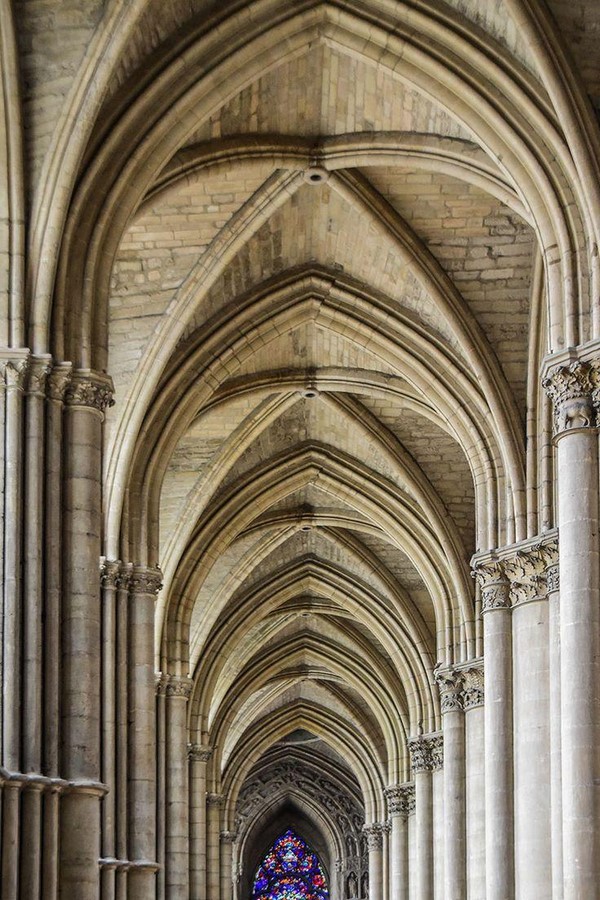
Gothic (c. 1150–1500 CE) added structural innovations such as pointed arches, flying buttresses, and ribbed vaults to achieve soaring verticality. Cathedrals such as Notre-Dame de Paris or Chartres represented transcendence and light through stained glass windows and structural audacity (Frankl, 2000).

Renaissance and Baroque: Rationalism and Theatrics
- Renaissance Architecture
Drawing on classical antiquity, Renaissance architecture (14th–17th century) renewed symmetry, proportion, and geometry. Filippo Brunelleschi, Leon Battista Alberti, and Andrea Palladio, among other architects, brought back the classical orders based on new models of scientific perspective and humanist philosophy (Wittkower, 1998).
- Baroque and Rococo Styles
The Baroque (late 16th–18th century) accepted drama, movement, and ornamentation. Bernini and Borromini manipulated the sequence in space to awe and direct perception. Rococo followed, bringing playfulness and decorative elegance, particularly in interior design (Blunt, 1973).
Neoclassicism and Industrial Revolution: Return and Revolution
- Neoclassicism
Rising in the 18th century, Neoclassicism was a response to Baroque excess. Guided by Enlightenment principles and archaeological excavations, it celebrated reason, simplicity, and harmony, as seen in Étienne-Louis Boullée and Claude-Nicolas Ledoux’s works (Summerson, 1980).
- Industrial Architecture
The Industrial Revolution (late 18th–19th century) provided iron, glass, and steel as building materials. Buildings such as The Crystal Palace (1851) and Eiffel Tower (1889) showcased new spatial possibilities and aesthetic paradigms (Giedion, 1941). The factory and railway station became new building typologies.
Modern Architecture: Function and Form
- Early Modernism
The beginning of the 20th century witnessed a new era of architecture with a departure from ornamentation and traditional styles. The Bauhaus movement, De Stijl, and Constructivism favoured the principles of minimalism, standardisation, and functionalism. Le Corbusier’s “Five Points of Architecture” and Mies van der Rohe’s “less is more” defined the modernist spirit (Frampton, 2007).
- International Style
Characterised in the 1932 MoMA show, International Style promoted universal principles of design—rectangular shapes, open floor plans, and industrial materials. Though blamed for overlooking local context, it initiated international architectural debate (Hitchcock & Johnson, 1932).
Postmodern and Deconstructivist Movements
- Postmodern Architecture
In response to the perceived sterility of modernism, postmodernism (1970s–1990s) brought back historicism, pluralism, and irony. Architects such as Robert Venturi, Michael Graves, and Charles Moore challenged the strict codes of modernism with playfulness of form, symbolism, and context (Jencks, 1977).
- Deconstructivism
Inspired by Derridean philosophy, deconstructivism disassembled classical notions of order, geometry, and composition. Zaha Hadid, Daniel Libeskind, and Peter Eisenman’s works experimented with fragmentation, non-linearity, and visual tension, broadening the vocabulary of form (Tschumi, 1994).
Parametric and Contemporary Styles
- Green and Sustainable Architecture
Modern architecture is an expression of environmental awareness, cultural responsiveness, and material innovation. Practitioners such as Glenn Murcutt, Ken Yeang, and Anupama Kundoo combine tradition with technology to meet the challenges of climate change, energy efficiency, and social justice (Edwards, 2010).
- Digital and Parametric Design
The dawn has brought about parametric design and generative architecture. Software such as Grasshopper, Rhinoceros, and BIM platforms enable unparalleled formal sophistication and performative optimisation. Practices like Zaha Hadid Architects and UNStudio showcase this practice, synthesising art and algorithms.
Globalisation and Regional Identity
Modern architecture also struggles with international homogeneity and the erasure of cultural specificity. As a reaction, movements such as Critical Regionalism (Frampton, 1983) and New Urbanism advocate contextual, inclusive, and place-aware design. The architecture of Balkrishna Doshi, Francis Kéré, and Wang Shu shows how global exchange can be reconciled with local identity.
Conclusion
The development of architectural styles is not linear or homogeneous. It presents a dynamic interaction among socio-cultural values, material developments, technological changes, and environmental reactions. As architecture keeps on addressing 21st-century challenges—climate change, urban disparities, technological upheavals—the lessons of history are as relevant as ever. Understanding the development of architectural evolution introduces a critical, inclusive, and humanist response to the future built environment.
References:
Arnold, D. (2003). The encyclopedia of ancient Egyptian architecture. I.B. Tauris.
Blunt, A. (1973). Baroque and Rococo: Architecture and decoration. Harper & Row.
Curtis, J. (1996). Ancient Persia. Harvard University Press.
Edwards, B. (2010). Rough guide to sustainability: A design primer. RIBA Publishing.
Fletcher, B., & Cruickshank, D. (1996). A history of architecture. Architectural Press.
Frankl, P. (2000). Gothic architecture. Yale University Press.
Frampton, K. (1983). Towards a critical regionalism: Six points for an architecture of resistance. The Anti-Aesthetic, 16-30.
Frampton, K. (2007). Modern architecture: A critical history. Thames & Hudson.
Giedion, S. (1941). Space, time and architecture. Harvard University Press.
Hitchcock, H. R., & Johnson, P. (1932). The international style. W.W. Norton.
Jencks, C. (1977). The language of post-modern architecture. Rizzoli.
Kenoyer, J. M. (1998). Ancient cities of the Indus Valley Civilisation. Oxford University Press.
Kostof, S. (1995). A history of architecture: Settings and rituals. Oxford University Press.
MacDonald, W. L. (1982). The architecture of the Roman Empire. Yale University Press.
Oliver, P. (2006). Built to meet needs: Cultural issues in vernacular architecture. Routledge.
Renfrew, C. (1973). Before civilisation: The radiocarbon revolution and prehistoric Europe. Penguin Books.
Scully, V. (1989). The earth, the temple, and the gods: Greek sacred architecture. Yale University Press.
Summerson, J. (1980). The classical language of architecture. Thames & Hudson.
Tschumi, B. (1994). Event-cities. MIT Press.
Wittkower, R. (1998). Architectural principles in the age of humanism. Academy Editions.
Senapolat. (2019, October 2). Vernaacular Architecture-Prehistorical Architecture from Modern Architecture. A Dose of Architecture. https://senapolat7.wordpress.com/2019/10/01/vernacular-architecture/
Ahmed, T. (2022, March 26). 7 Ancient architecture monuments open a fascinating window to the past. Arch2O.com. https://www.arch2o.com/7-ancient-architecture-monuments-open-a-fascinating-window-to-the-past/
Introduction to architectural Proportion: part III. (n.d.). Institute of Classical Architecture & Art. https://www.classicist.org/articles/introduction-to-architectural-proportion-part-iii/
Kaarwan, T. (n.d.-b). The spiritual symbolism of Gothic architecture. Kaarwan Blogs. https://www.kaarwan.com/blog/architecture/spiritual-symbolism-of-gothic-architecture?id=615
Lesso, R. (2023, February 8). Renaissance vs. Baroque: What Are the Differences? | TheCollector. TheCollector. https://www.thecollector.com/renaissance-vs-baroque-what-are-the-differences/