The Birth of Postmodernism
‘Postmodernism’, or the ‘pomo’ movement, has long been characterised as a radical shift across Western arts and culture, underpinned by a broad scepticism towards the modernist movement’s intellectual values and assumptions. Emerging as early as the late 19th century through to the mid-to-late 20th century (Duignan, 2024), the modern architectural movement had championed both functionalism and minimalism, emphasising function over form (RIBA, 2024). Drawing upon innovations in technology and construction with materials such as glass, steel and concrete, pioneers of the modernist movement included Le Corbusier, known for his ‘Five Points of Architecture’ and Ludwig Mies Van Der Rohe, known for his aphorism: ‘less is more’. The ideals of modern architecture soon became inextricably linked with the idea of the ‘international style’, a depiction of the all too common, simple, volumetric skyscrapers. Before the modernist movement, architecture across countries, even within the West, conveyed a strong sense of individuality – distinct styles and quirks unique to their respective history, culture and context. The modern homogenisation of architecture limited this, underpinning much of the backlash the movement would go on to receive.
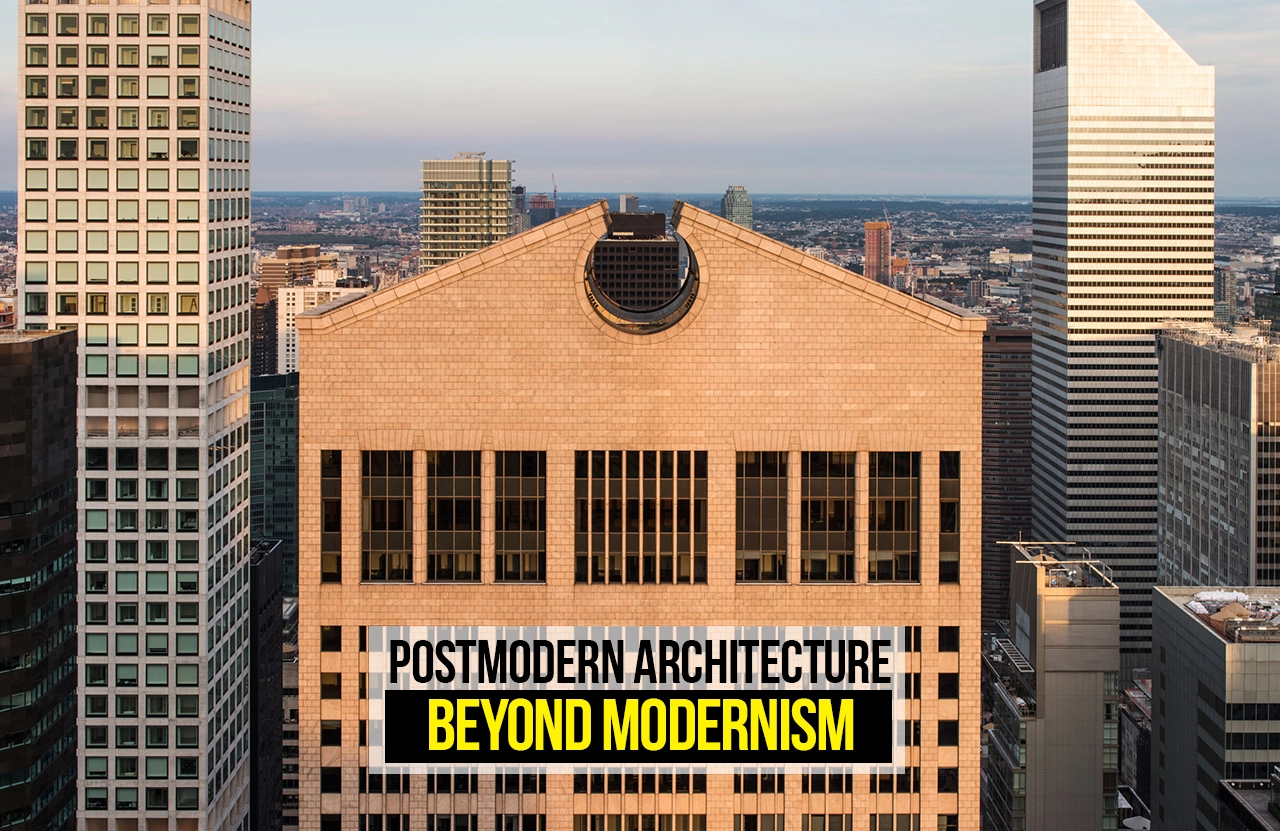
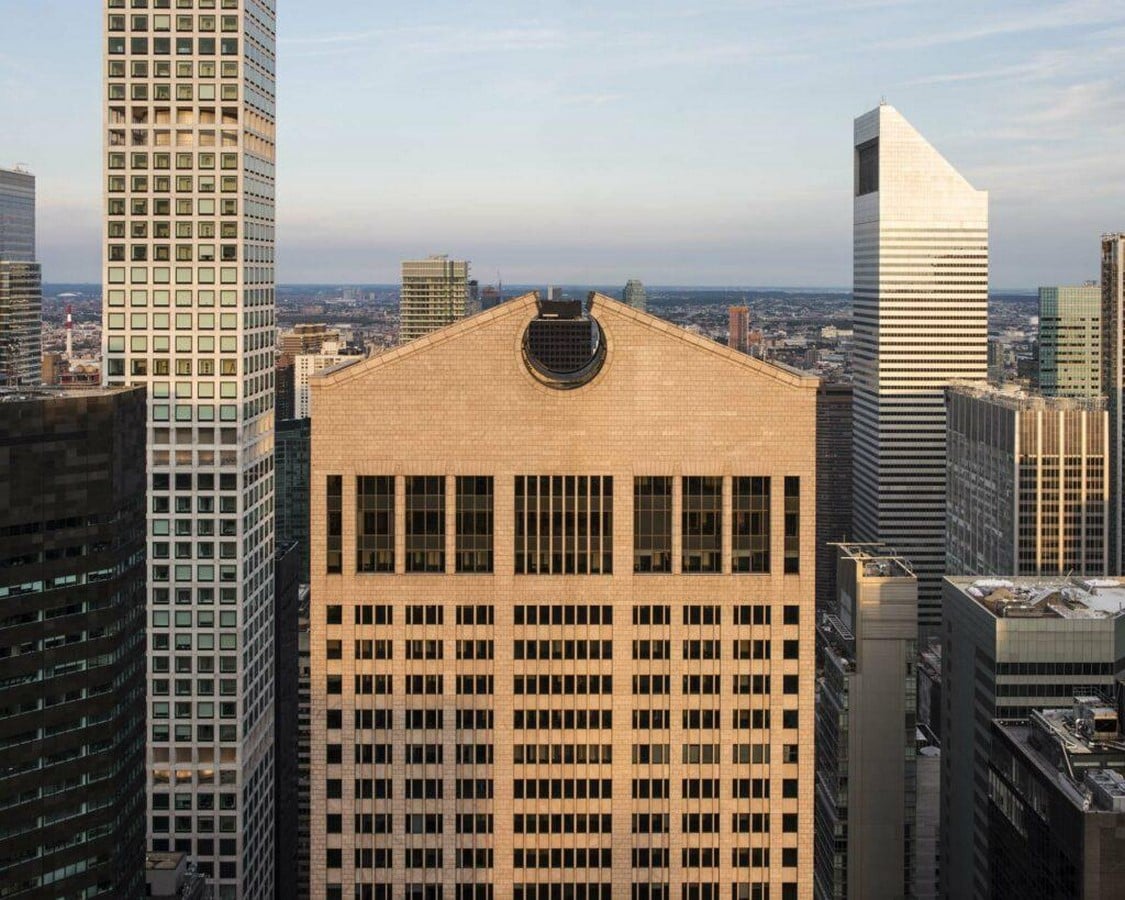
By the end of the twentieth century, modern architecture and its ‘international style’ had begun facing criticism spearheaded by the likes of Jane Jacobs and Robert Venturi. The ‘modern’, formal, architectural language, a once revolutionary idea, had now been diluted to a bland austerity that came to represent industry in the late 20th century (Boardman et al., 2024). In ‘The Death and Life of Great American Cities’, Jacobs critiqued the destruction of the urban coherence that she believed was wrought by the presence of Modernist buildings (Boardman et al., 2024). Similarly, Venturi, in the ‘Complexity and Contradiction in Architecture’, implied that modernist buildings were without meaning, as their puritanical design lacked the irony and complexity that enriched historical architecture (Boardman et al., 2024). Modern architecture, though advanced in technology and construction, for many lacked aesthetics and architectural design. It was this dissatisfaction that ushered postmodernism in. Postmodern architecture appeared to contend with many of the qualms of modern architecture, engaging with rich historical references, ornamentation, and human connection, instead advocating for designs that embraced ambiguity, contradiction, and historical context. A key example of this was the 550 Madison Avenue (formerly the AT&T Building), known for its colossal 116-foot entrance arch and “broken-pediment”, or ‘chippendale crown’. This paid homage to the antique chippendale breakfronts and china cabinets.
Understanding Postmodernism
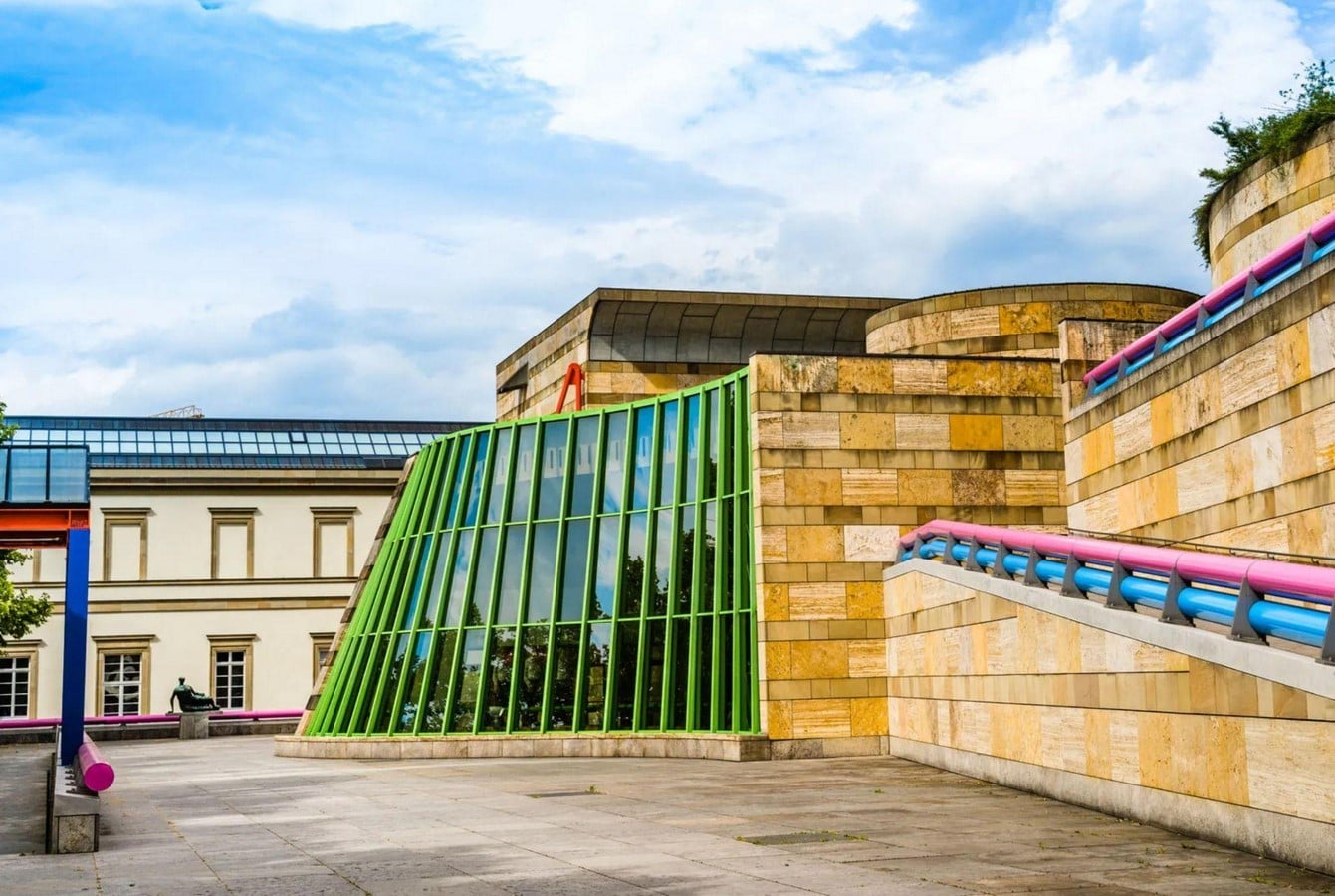
Postmodern architecture soon became inextricably linked with subverting Western ideals of what architecture should look like. A key example of this was the Neue Staatsgalerie, built between 1977 and 1983 by James Stirling. Revelling in its use of colour and tactile materials, Stirling adopted reddish-brown travertine stone, which he contrasted with neon green handrails, bright blue steel structural elements and raw, pink and blue details. Johnson (2025) describes this deliberate clash of materials as facilitating a dialogue between ‘the classical and the contemporary, the refined and the utilitarian, all orchestrated with a master’s eye for composition’. Whilst modern architecture sought to engage with function, then form, postmodern architecture sought to query for whom the function was for. Postmodernism, as a broader philosophy, has been described as the culture of quotations, seeking to deconstruct concepts such as “reality”, “truth” and “humanity” (Palmer 2014). Postmodern architecture more often than not was interpreted in a similar vein. Postmodern architecture was largely interpreted as a rebellion against the modern architectural movement. Whilst many established corporations, in spite of the backlash, continued to commission clean-lined modernist towers to represent their corporate identity (Boardman et al., 2024), postmodern architecture offered a breakaway from this status quo. The formal and minimal language of modernism, reflected in the ‘international style’, was slowly being erased by a seemingly more playful and liberal ‘postmodern language’.
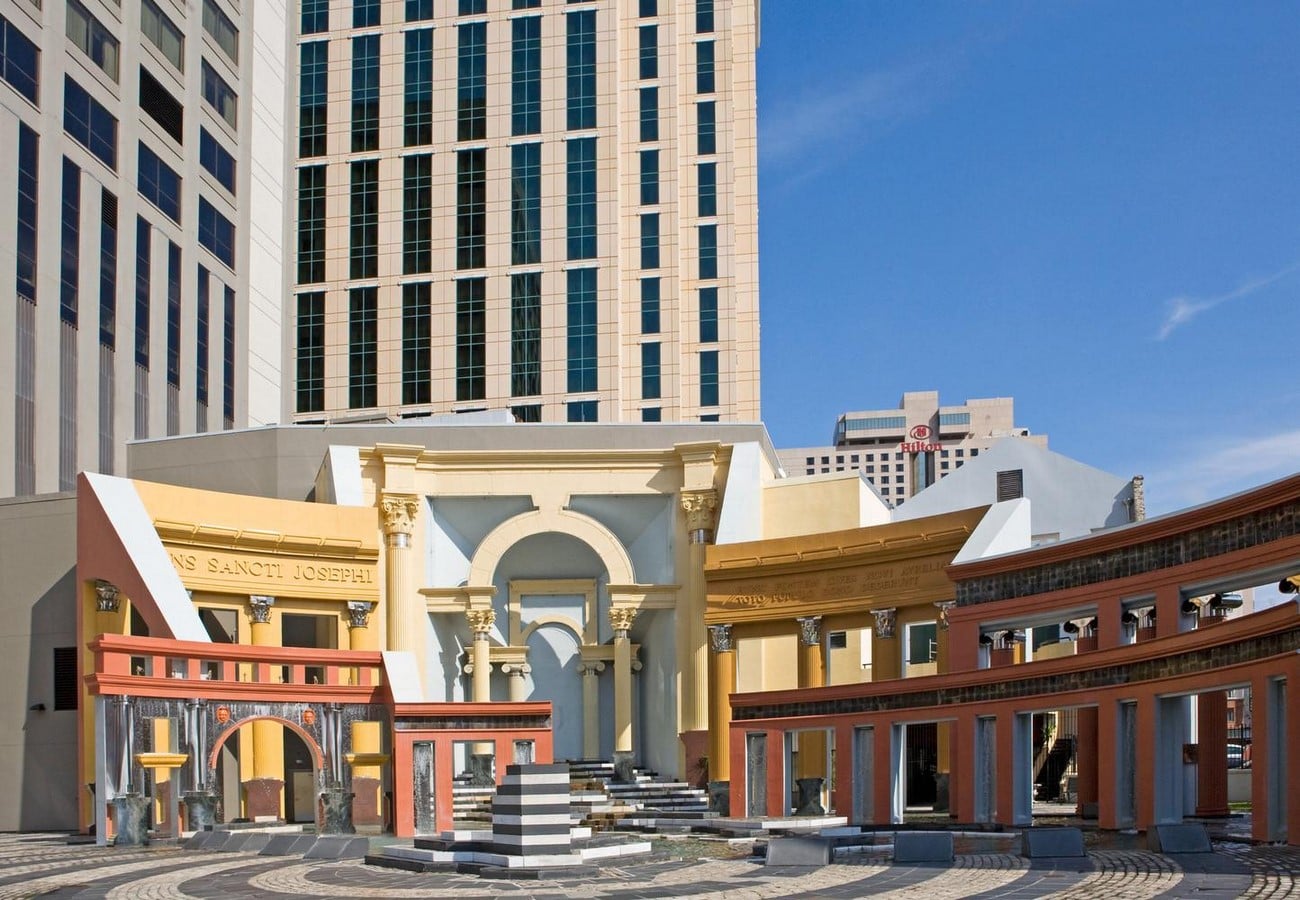
Postmodernism within architecture is often overshadowed by the legacy of architectural modernism. Postmodern architecture, when considered as not only an architectural movement but also an architectural language, can nurture discourse on the context, culture, and ideology of the time, much like modern architecture retelling the story of its relationship with mass media, manufacturing, technology, etc. Whilst movement did indeed emerge initially as a form of backlash against modernism, it was later adopted as a language to convey context, culture and ideology. A key example is Piazza d’Italia (1978) by Charles Moore. Though adopting the language of postmodernism, it wasn’t driven by postmodernism’s broader aims, such as the rejection of modernism, embracing pluralism, or engaging in semiotics. Instead, it utilised classical quotations, playful composition, and colourful materials to create a civic space celebrating the city’s Italian-American community rather than advancing postmodern theory.
Postmodern architecture began by criticising the modernist movement for being overly concerned with the aesthetics of architecture, as opposed to local history, culture, and context of place. Robert Venturi infamously responds to Mies van der Rohe’s aphorism ‘Less is More’ was ‘Less is a Bore’. In doing so, however, postmodern architecture also fell foul of the same trap that modern architecture did – concerning itself with the aesthetics of its architecture, too. This is because, as an inherently visual discipline, the primary way for architectural movements to distinguish themselves is through their visual styles and identities. So whilst narrative surrounding the relationship between the modern and the postmodern would suggest that only one movement communicated aspects of their history, culture and context, the reality is that both just did, just in different ways. In this way, both modernism and postmodernism can be understood as distinct architectural languages to be employed. Whilst they can be considered in relation to one another, considering them both, especially postmodern architecture, independently encourages the exploration of other motivations and uses the postmodern architectural language. Whilst not all postmodern architectural precedents may have sought to engage with the broader political ideologies of the movement, many would have still used elements of the movement as vehicles to express their ideas.
Reference list:
Boardman, J., Morrison, H.S., Middleton, R.D., Scranton, R.L., Hoffmann, H., Watkin, D.J., Zukowsky, J., Martindale, A.H.R., Bloch, R., Rice, D.T., Stern, H., Voyce, A., Milton, H.A., Coffin, D.R., Bush-Brown, A., Timmers, J.J.M., Kemp, M.J., Millikin, S., Cannon-Brookes, P. and Cullican, W. (2024). Western Architecture. In: Encyclopedia Britannica. [online] Available at: https://www.britannica.com/art/Western-architecture [Accessed 21 Jun. 2026].
Duignan, B. (2024). Postmodernism. In: Encyclopedia Britannica. [online] Available at: https://www.britannica.com/topic/postmodernism-philosophy [Accessed 20 Jun. 2026].
Ghisleni, C. (2021). What Is Postmodernism? [online] ArchDaily. Available at: https://www.archdaily.com/964625/what-is-postmodernism [Accessed 22 Jun. 2026].
Jogdand, L. (2025). Modernism and Postmodernism. Criticism and Critical Theory, pp.121–167. doi:https://doi.org/10.1007/978-981-96-9588-1_4.
Johnson, F. (2025). James Stirling Museum Stuttgart: A Deep Dive into Postmodern Architectural Mastery at the Neue Staatsgalerie – Wonderful Museums. [online] Wonderful Museums. Available at: https://www.wonderfulmuseums.com/museum/james-stirling-museum-stuttgart/ [Accessed 29 Jun. 2026].
Palmer, D. (2014). Explainer: What Is postmodernism? [online] The Conversation. Available at: https://theconversation.com/explainer-what-is-postmodernism-20791 [Accessed 21 Jun. 2026].
RIBA (2024). Modernism. [online] Royal Institute of British Architects. Available at: https://www.riba.org/explore/riba-collections/architectural-styles/modernism-movement/ [Accessed 21 Jun. 2026].