Architecture is often discussed through ideas of balance, proportion, and spatial experience. Buildings are expected to create comfort, to organize movement, and to establish a sense of order within the built environment. Yet architecture does not always behave this way. Some buildings generate admiration, while others provoke discomfort. Their forms feel imposing rather than welcoming, their scale difficult to negotiate. In such moments, architecture is no longer experienced as a backdrop to life, but as a presence that confronts the viewer directly.
No other architectural movement has produced this kind of reaction as consistently as Brutalism. Across many cities, large concrete buildings constructed during the mid twentieth century are often described as harsh, oppressive, or even hostile. Their massive forms, exposed surfaces, and deep shadows stand in sharp contrast to the smooth glass towers that dominate contemporary skylines. At the same time, they feel equally distant from historic architecture. Even though earlier buildings were often just as large and massive, they rarely produce the same sense of discomfort. Brutalist buildings, however, are experienced differently, as if the architecture itself carries a certain force.
The name seems to confirm this impression. The word Brutalism appears to suggest brutality. In reality, it originates from the French phrase béton brut, meaning raw concrete. The term does not refer to violence, but to a material condition in which concrete is left exposed rather than covered or refined. Brutalist architecture does not attempt to disguise its construction. Instead, it reveals it.
This distinction is important, because the discomfort these buildings generate does not come from intention but from exposure. Brutalism did not make architecture violent. It made its weight visible. To understand this, it is necessary to look at how architecture has historically dealt with mass, and what changes when those systems begin to shift. What we often perceive as aggression is not something added to architecture, but something that becomes apparent when it is no longer mediated.
Architecture Before Modern Materials: The Age of Mass and Masonry
For most of architectural history, buildings were constructed using materials such as stone, brick, and earth. These materials operate primarily in compression, which means stability depends on thickness and weight. Walls had to be massive in order to carry structural loads, and architecture developed as an expression of solidity and permanence. Castles, temples, cathedrals, palaces, and even early institutional buildings and homes reflect this condition. In many cases, this heaviness was not only structural but intentional. Fortifications and palaces, for instance, relied on thickness for defense and protection, making mass an essential part of both function and expression.
Yet despite this structural mass, historic architecture rarely feels oppressive in the way Brutalism often does. The difference lies not in the structure itself, but in how it is expressed. Ornament, articulation, and craft play a crucial role in mediating the perception of weight. Structural systems such as arches, vaults, and domes do more than carry loads; they organize and distribute forces in ways that are visually legible. Gothic cathedrals such as Notre-Dame or Chartres, for example, rely on immense stone structures, yet their surfaces are layered with detail, rhythm, and light. Elements like flying buttresses extend this logic further, transferring loads outward while making structural forces visible and readable. Rather than enclosing mass, they break it apart, allowing the building to feel lighter despite its scale. Even fortified buildings like the Palazzo Vecchio or the palaces of Rajasthan, though massive in construction, are visually softened through carving, proportion, and surface articulation.
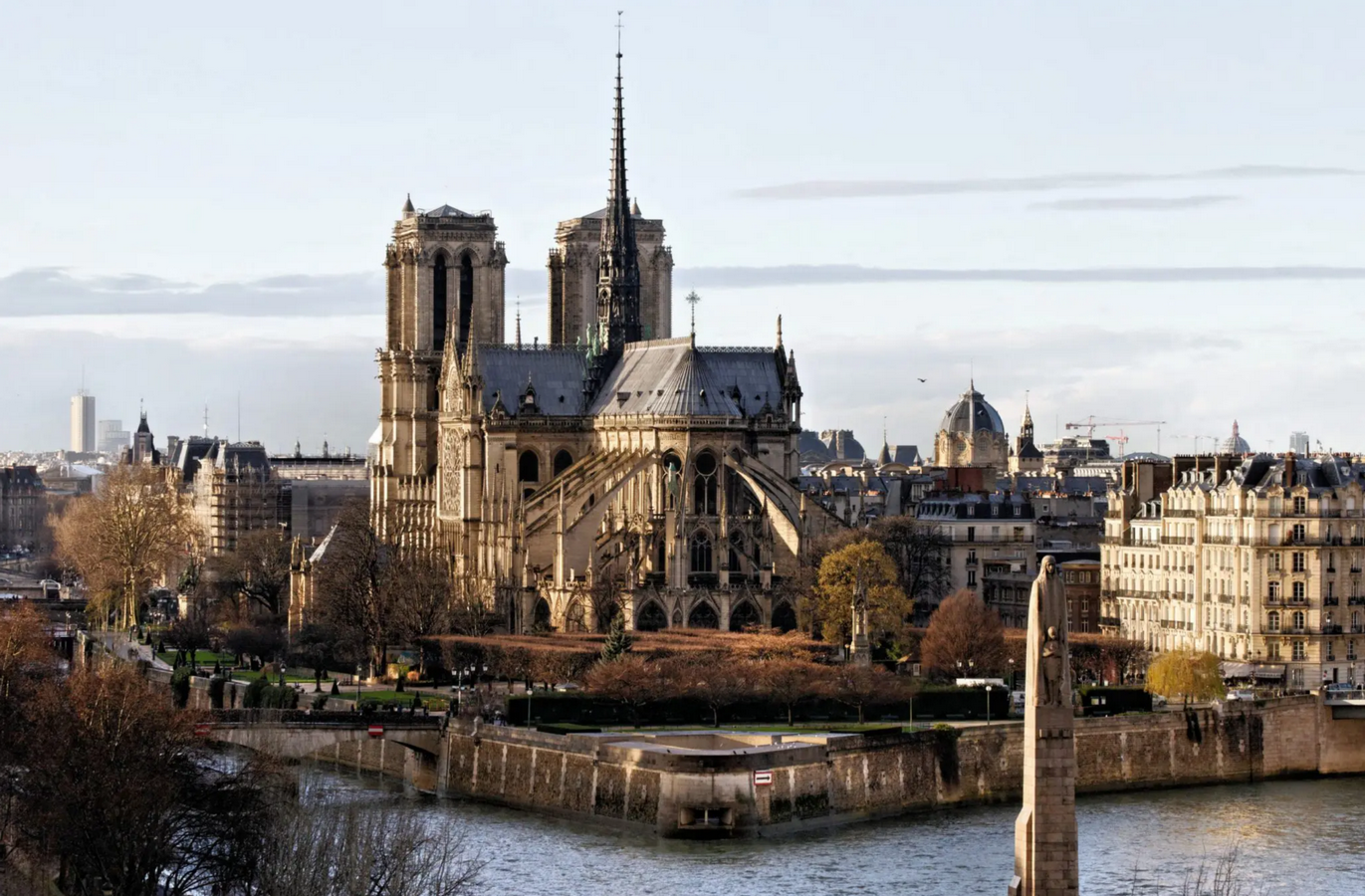
In these buildings, mass is present, but it is not experienced as a single overwhelming volume. Masonry construction is inherently articulated through bonds, joints, and the logic of assembly. Stone and brick are laid in courses, creating patterns and rhythms across the surface. Openings are carved deep into thick walls, producing niches, reveals, and shadow lines that break down the perception of weight. Structural thickness is not removed, but expressed through layers and depth rather than as a continuous solid. The wall becomes something that can be read, not just felt. This articulation reduces the immediacy of mass, allowing the building to appear composed rather than imposing. Architecture, in this sense, has always carried weight, but it has also developed ways of distributing it so that it is not encountered all at once.
Concrete And The Brutalism
The possibilities introduced by concrete become fully realised in Brutalism. Unlike masonry, which relies on assembly, concrete allows architecture to be formed as a continuous material. It can bend, extend, and span in ways that were previously difficult to achieve, allowing for deep cantilevers, large volumes, and uninterrupted surfaces. Structure and enclosure no longer need to be separated or broken into smaller elements. The building can exist as a single condition, where form, material, and construction merge.
This shift changes how architecture is expressed. Earlier systems relied on articulation to make mass legible. Concrete makes that articulation optional. When left exposed, it allows the building to communicate directly through its material, revealing not only how it stands but also how it is organised. Structure, services, and internal functions can begin to appear on the exterior, turning the building into a direct expression of its own construction.
Brutalism emerges when this possibility is pushed to its limits. It does not introduce mass into architecture, because mass has always been present, but rarely this exposed. Instead, it removes the layers that once softened or broke down that mass into readable parts. Structure, material, and construction are no longer filtered through ornament or surface treatment. They are presented directly, often in their rawest form.
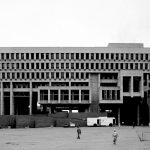
This is why Brutalist buildings often feel immediate and, at times, overwhelming. Their forms project outward, their surfaces remain unfinished, and their structural systems are made visible rather than concealed. Buildings such as Boston City Hall express their internal organisation through their exterior, with projecting volumes corresponding to different functions.
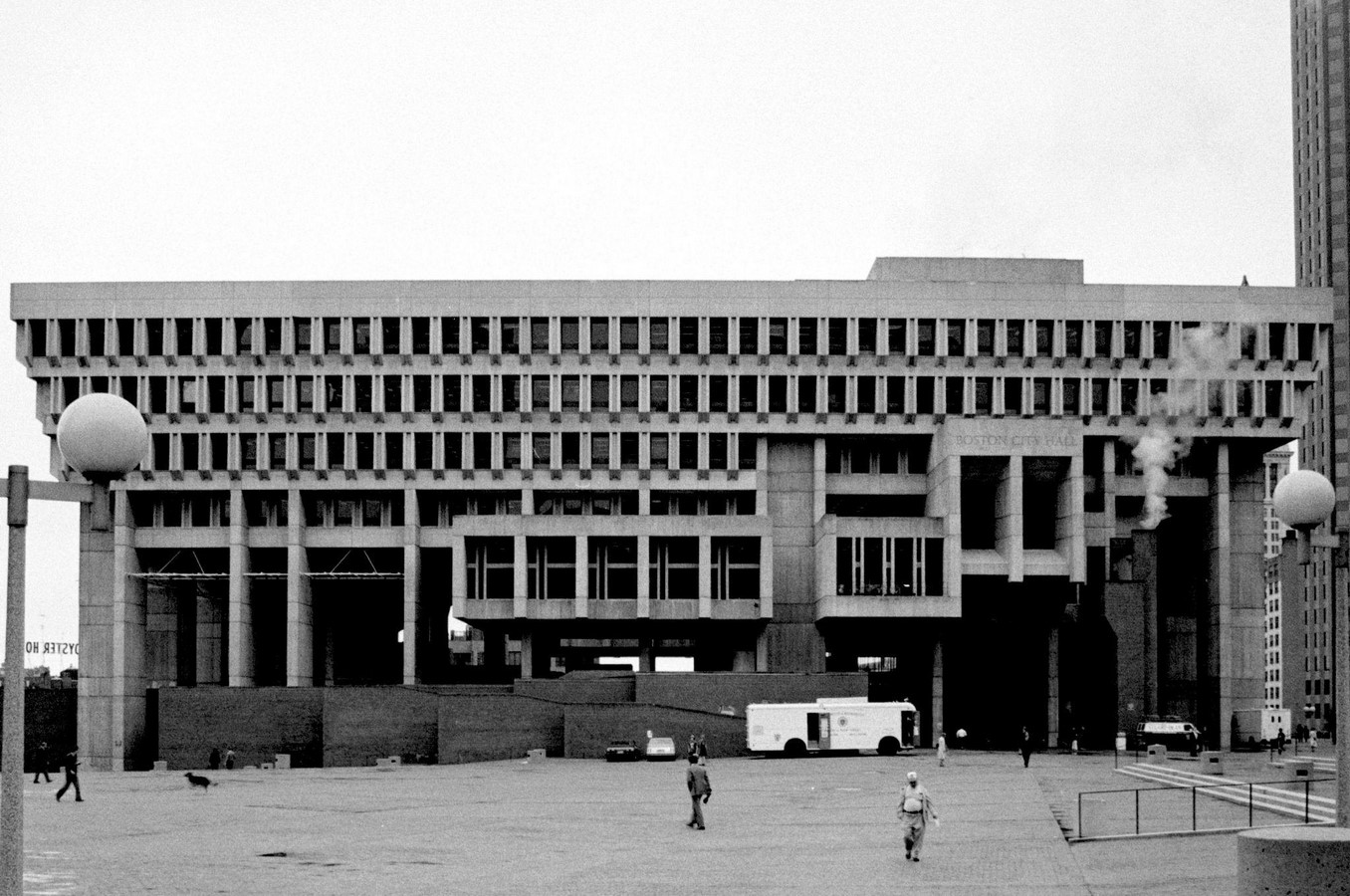
In these buildings, the wall no longer reads as a system of layers, joints, or openings. It is encountered as a single, continuous presence. What was once distributed across bonds, niches, and articulation is now experienced all at once. The architecture does not guide the observer gradually. It confronts immediately.
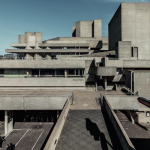
This condition becomes even more pronounced in buildings such as the National Theatre, where stacked concrete volumes, deep overhangs, and heavy projections create an architecture that feels almost geological in its mass. The building does not attempt to reduce or disguise its weight. Instead, it reinforces it, allowing structure, form, and use to become inseparable. The architecture is not composed through surface but through mass itself.
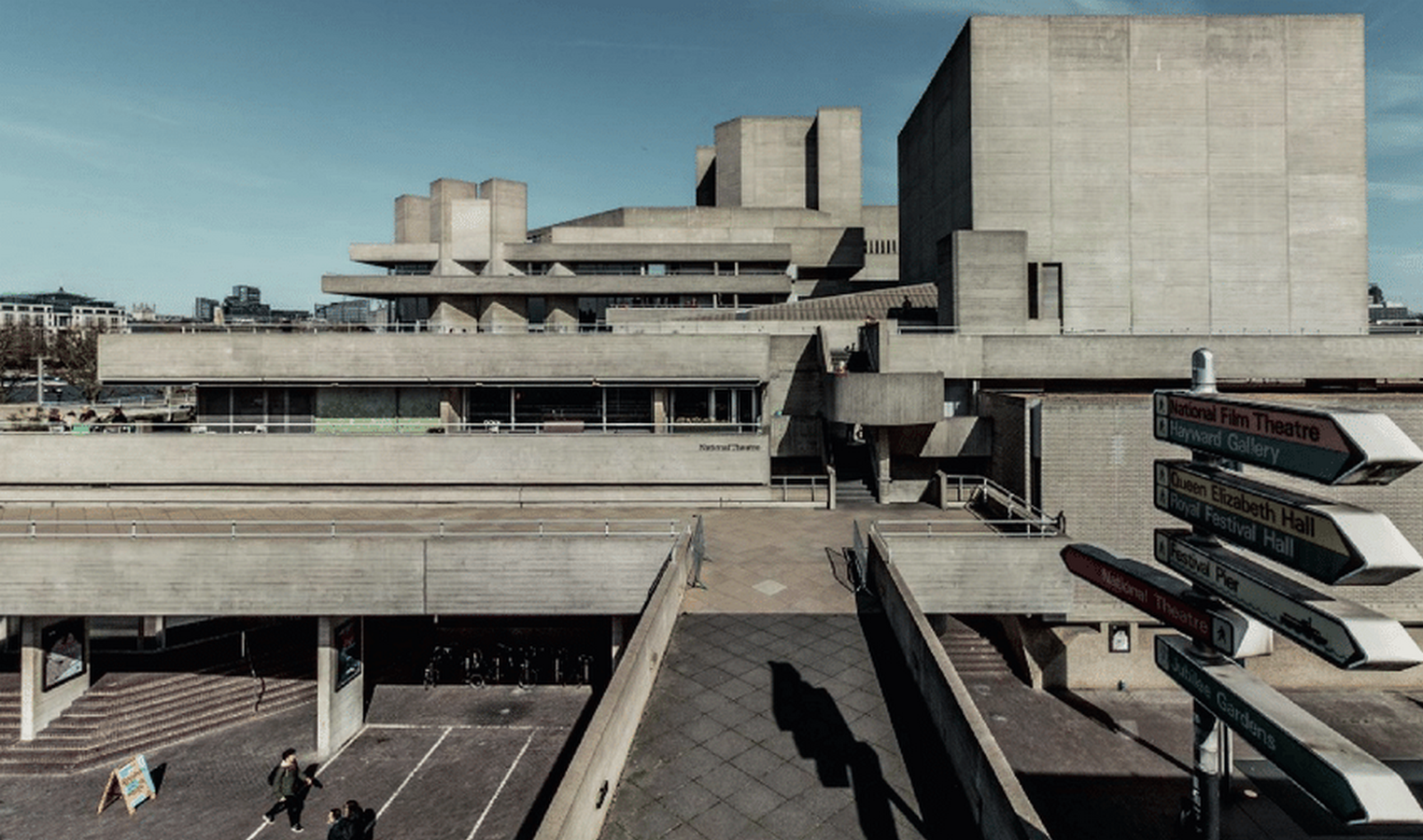
Brutalism therefore represents a moment when architecture becomes unusually direct about its own construction. It reveals how it stands, how it carries load, and how it functions, without relying on layers that soften its presence. This directness is often interpreted as aggression, but it is more accurately a consequence of exposure. Without mediation, the building does not distance itself from the viewer. It confronts them.
The Brutal Exposure
The sense of violence often associated with Brutalist architecture does not come from intention alone. It emerges from how architectural mass is perceived. Buildings are not experienced as structure alone, but through light, scale, material, and surface. In Brutalism, these elements align in a way that intensifies presence rather than moderating it, making the building feel immediate and difficult to negotiate.
Material plays a critical role in this shift. Masonry construction is inherently articulated. Bonds, joints, and courses create a surface that can be read, allowing the eye to measure scale even in monumental buildings. Openings, niches, and depth further break down mass into layers, connecting the building to human proportion. Stone, even when heavy, feels grounded because it reveals how it is assembled and how it relates to the body. The wall is understood through its parts, not encountered as a single condition.
Concrete, when left exposed, operates differently. It is often cast as large, continuous surfaces that do not offer a clear system through which scale can be understood. The marks of formwork may be visible, but they do not function like masonry bonds. The surface reads as a single, uninterrupted plane. As a result, scale becomes ambiguous, and in that ambiguity, the building can feel larger and heavier than it actually is.
Light and colour intensify this condition. Exposed concrete tends toward darker, muted tones that absorb light rather than reflect it. Deep recesses and overhangs create strong shadows that do not articulate the building into parts, but instead reinforce its volume. Surfaces appear heavier, edges become less legible, and the building reads as a continuous mass rather than a composition of elements.
The absence of articulation, the continuity of surface, and the depth of shadow combine to produce an architecture that feels immediate and unyielding. There is little to mediate between the observer and the building. The structure is not broken down into elements that can be read progressively. It is encountered all at once.
Contemporary architecture, in many ways, can be understood as a response to this condition. Rather than allowing mass to be experienced directly, it reintroduces systems that make buildings legible again. Surfaces are broken down through grids, patterns, and layers. Materials are combined or refined to soften their presence. Structure is often separated from enclosure, allowing buildings to appear lighter even when they are not. These approaches do not remove weight, but they change how it is perceived, re-establishing a distance between the observer and the building.
What Brutalism exposes, then, is not a flaw in architecture, but a limit. It shows what happens when the systems that translate mass are removed, and how deeply our perception depends on them. In doing so, it sets the stage for a reconsideration of how architecture can balance material honesty with human experience.
Rethinking the “Violence” of Brutalism
Brutalism occupies a critical position within architectural history. It emerges at a moment when architecture shifts from the articulated mass of masonry to the controlled lightness of contemporary construction. In this transition, it does not reject weight, nor does it attempt to conceal it. Instead, it allows it to be experienced directly.
At the same time, it reflects a period of exploration. Concrete was still a relatively new material in architectural terms, and its possibilities were being tested. Brutalism can be understood as an attempt to engage with this material on its own terms, drawing from the weight and permanence of historic construction while responding to the formal and structural freedom that concrete made possible. It is not simply a stylistic shift, but a moment of experimentation, where architecture begins to align itself more closely with the capabilities of its material.
What is often perceived as violence is not an inherent quality of the architecture, but a response to this condition. Brutalism removes the systems that once mediated mass—ornament, articulation, and layered surfaces—and exposes the building in its most immediate form. Structure, material, and gravity are no longer translated into something comfortable or familiar. They are encountered as they are.
Seen in this way, Brutalism is not an aberration, but a moment of clarity. It reveals how architecture behaves when it stops explaining itself, and how deeply our perception depends on the systems that make buildings legible. The discomfort it produces is not imposed, but uncovered.
References:
Khan, W. (1994) Search for an order: An inquiry into the contemporary direction in Indian architecture. Ahmedabad: Vastu Shilpa Foundation.
Encyclopaedia Britannica (n.d.) Brutalism (architecture). Available at: https://www.britannica.com/art/Brutalism-architecture (Accessed: 25 April 2026).
Royal Institute of British Architects (n.d.) Brutalism movement. Available at: https://www.riba.org/explore/riba-collections/architectural-styles/brutalism-movement/ (Accessed: 25 April 2026).
Washington State Department of Archaeology and Historic Preservation (n.d.) Brutalism architectural style guide. Available at: https://dahp.wa.gov/historic-preservation/historic-buildings/architectural-style-guide/brutalism (Accessed: 25 April 2026).
Architectural Digest (n.d.) Brutalist architecture 101. Available at: https://www.architecturaldigest.com/story/brutalist-architecture-101 (Accessed: 25 April 2026).