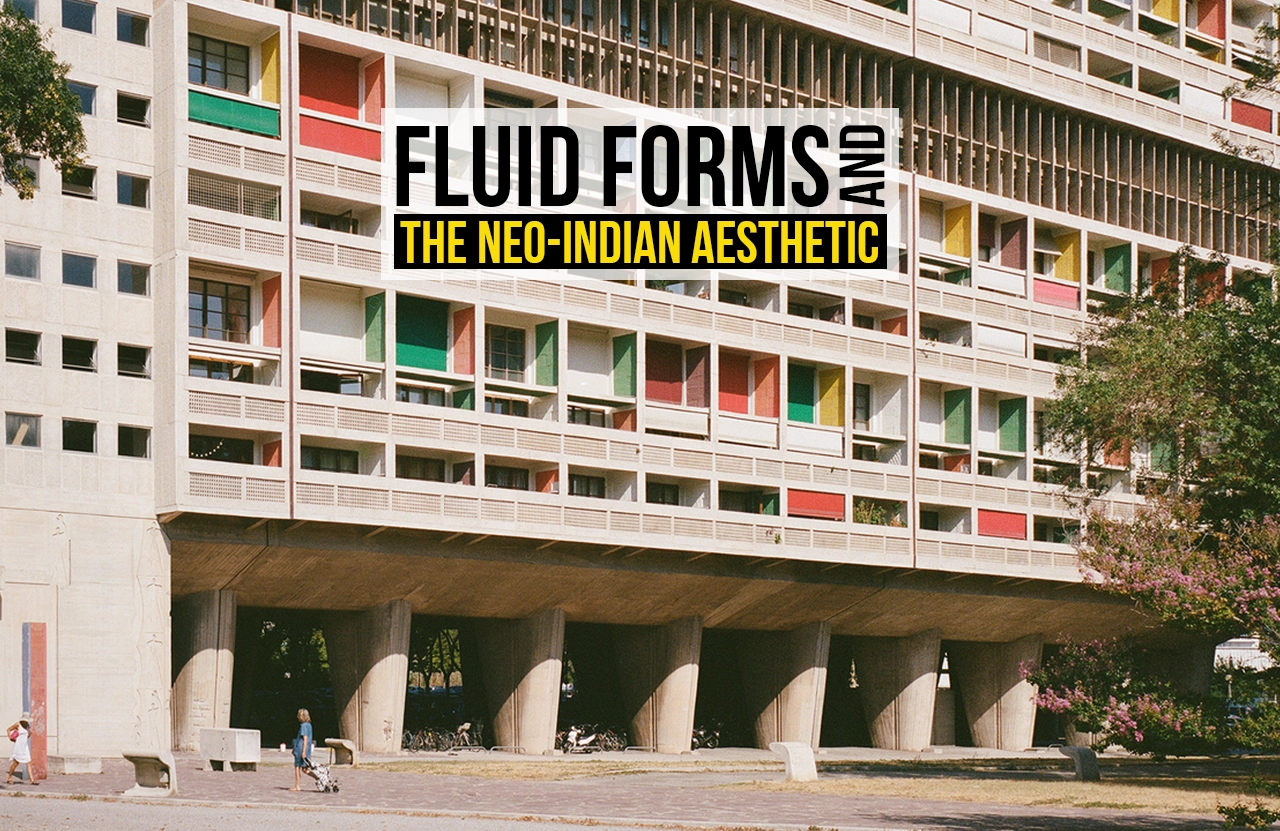
Even if not directly, many people are aware of Le Corbusier’s works and their influence on society. If you have heard of–or better yet, walked through–the city of Chandigarh, then you know that it is, arguably, his most famous work in India. But what exactly is the style of architecture coined by the “father of modern architecture”? And how has the design conversation shifted from his concepts in the mid-20th century to modern day?
How Does Corbusian Architecture Tie into Neo-Indian Aesthetics?
To begin, neo-Indian architecture refers to modern architecture shaped by the nation’s memory, craft, climate, and functionality, rather than a universal, one-size-fits-all design. It is not “Indian looking” nor is it a revival of traditional architecture. Instead, neo-Indian aims to create an organic synthesis of modern functionality and traditional sensitivity (especially regarding material use and spatial planning).
This comes into play with the turn of the century, though it began with post-independence architecture becoming prominent in the 1940s and 50s. Towards the end of the 1900s and the beginning of the 2000s, the neo-Indian aesthetic was at its strongest, with the rise of new technologies and materials helping architects and designers understand people’s needs and draw on traditional examples to create optimal design solutions.
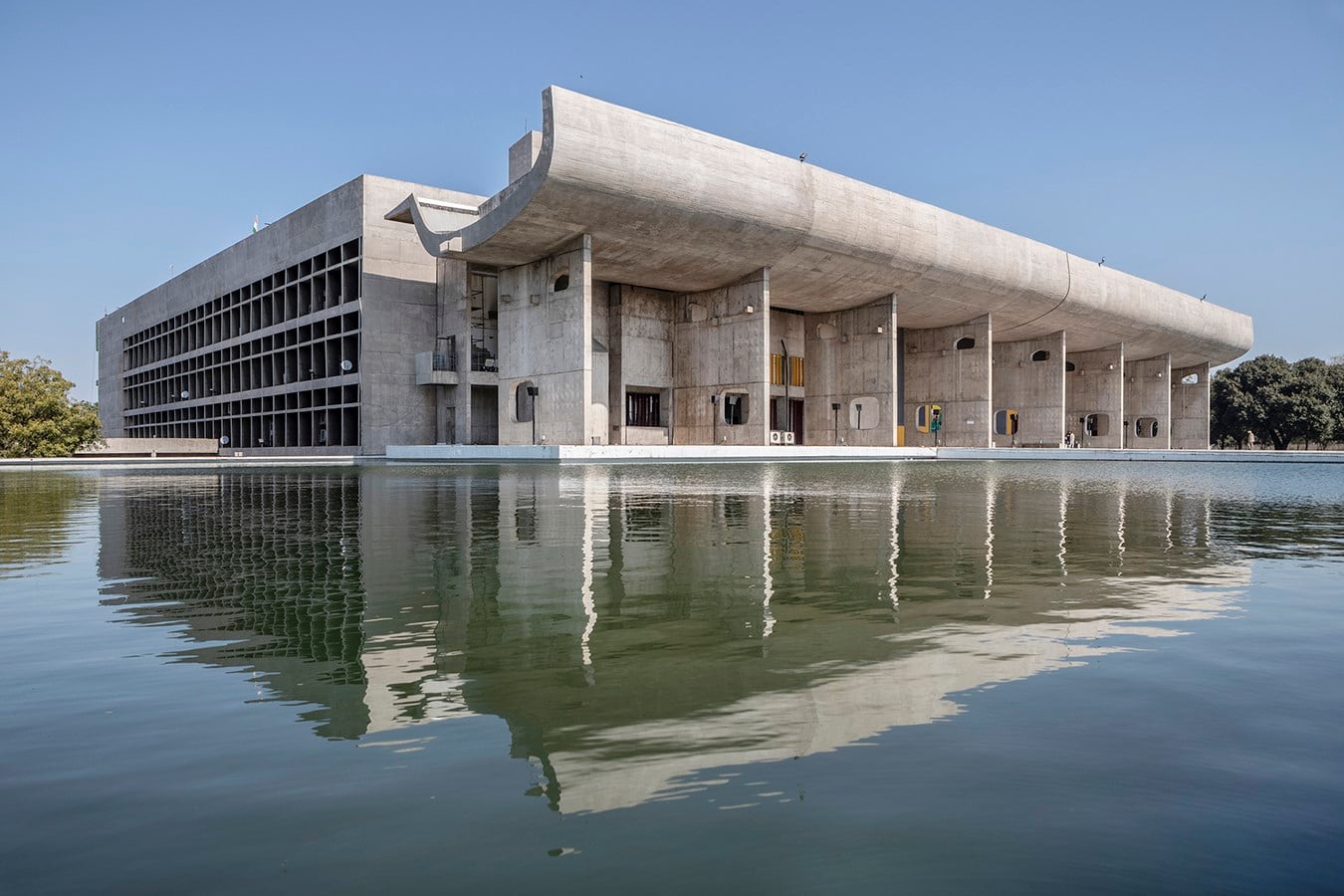
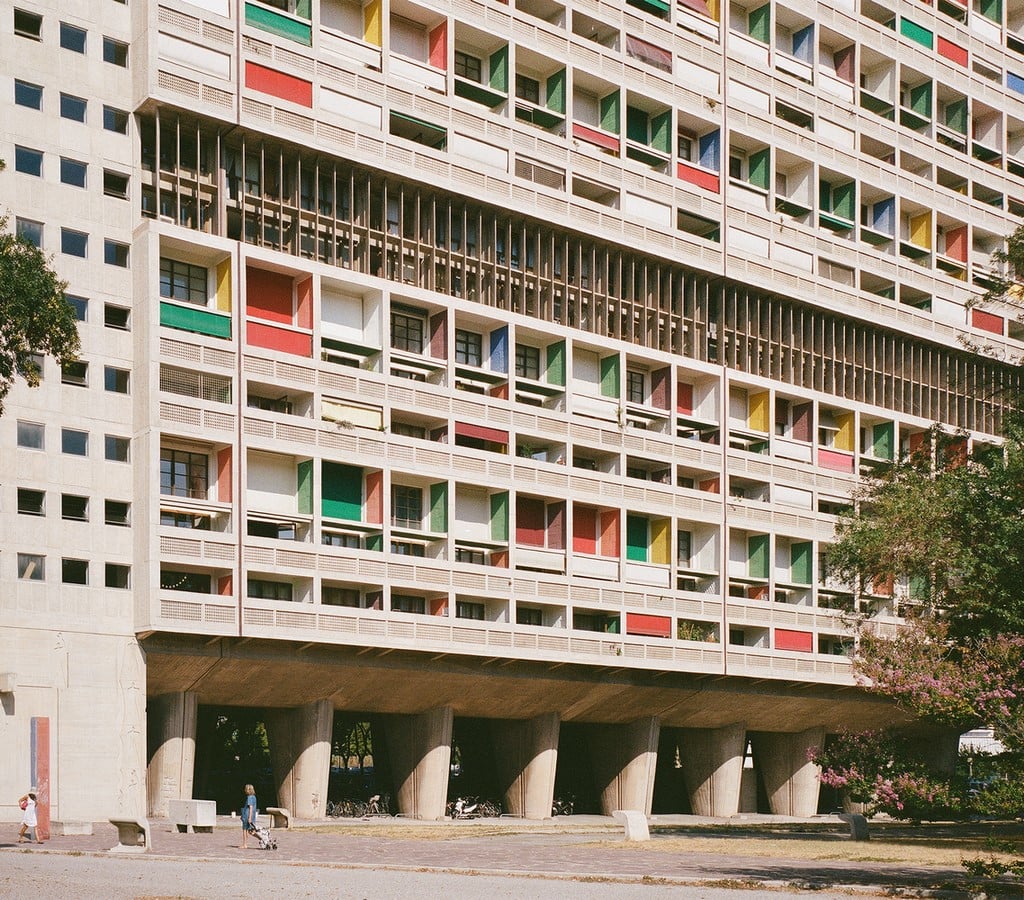
With respect to Corbusian architecture and the modern-day approach, however, there is a noticeable shift away from the former’s rigid and densely packed designs towards more organic, flowing layouts. The neo-Indian aesthetic steps back to observe natural movement in spaces when creating designs, forgoing the cookie-cutter moulds favoured by the Corbusian aesthetic.
Fluid Geometrics in Neo-Indian Aesthetic
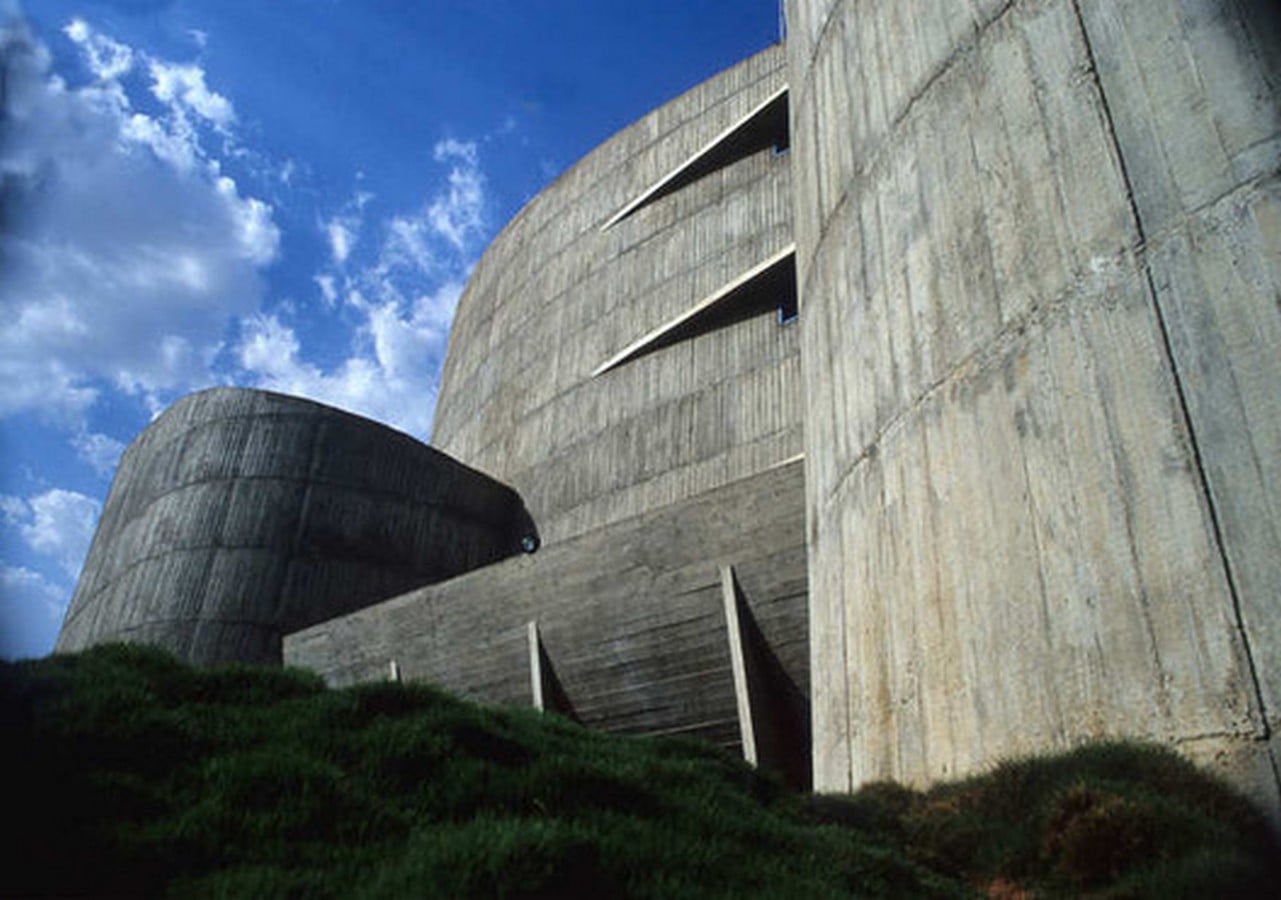
Fluidity in design is not just about making buildings look curvy; it often represents a rejection of high modernism. In this, the design aims to make spaces more continuous and immersive. The use of curves can soften edges and transitions between indoor and outdoor spaces, compress and release movement, and create a sense of flow.
Rather than expressing order through grids and rigid volumes, architects use undulation, folding, and rounded edges to produce a more sensory experience. This does not automatically mean organic or vernacular; sometimes it is a formal strategy, sometimes a climatic one, and sometimes both.
Borrowing from the Traditional Styles
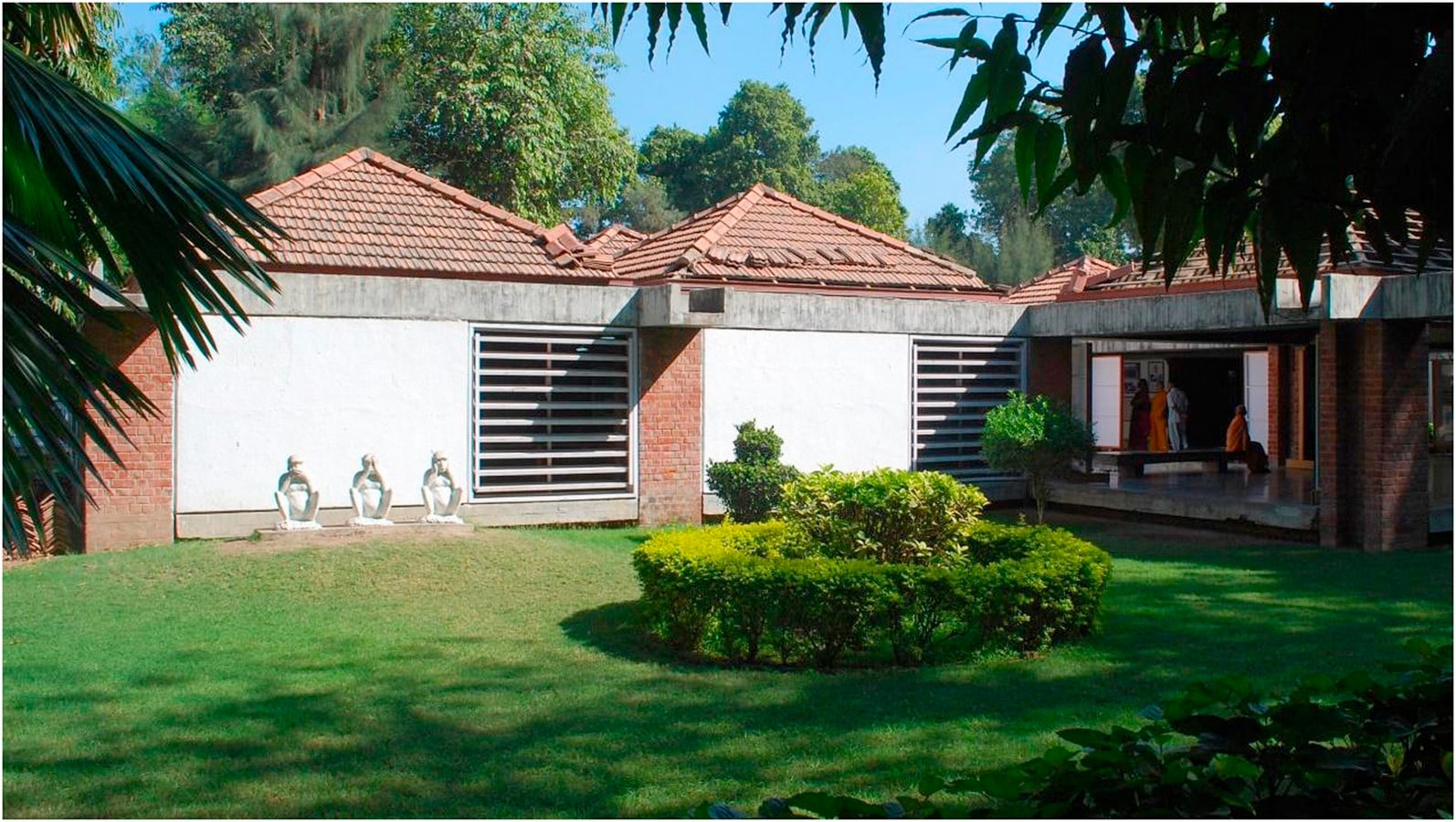
The key idea of the neo-Indian aesthetic is not to replicate historical forms (such as jarokhas, temple ornaments, and chhatris) as mere decoration. Instead, the idea is to extract the fundamental concepts and principles, such as verandahs, courtyards, climatic regulation, natural lighting, shading, and more. This allows an indirect connection to Indian culture, weaving both sentiment and social environment to organise privacy, movement, airflow, and community. The spaces seem familiar while still maintaining their own identity; there is a distinct borrowing of spatial logic rather than simply a visual aesthetic.
The Facade: Use of Materials and Craft
This tendency reflects a renewed respect for how buildings are made, not just how they appear. Tactility matters here: exposed brick, lime plaster, stone, timber, hand-finished surfaces, and custom joinery are used to give architecture depth and specificity. These materials are often chosen not only for beauty but also for durability, climate response, and local availability.
Craft and material intelligence also mean acknowledging that construction knowledge is culturally located. In many projects, architects work with local artisans, masons, and contractors to develop details that are more adaptive than standardised global systems. The result is often an architecture that feels less generic, because its finish and assembly carry traces of local labour and skill.
Critical Regionalism
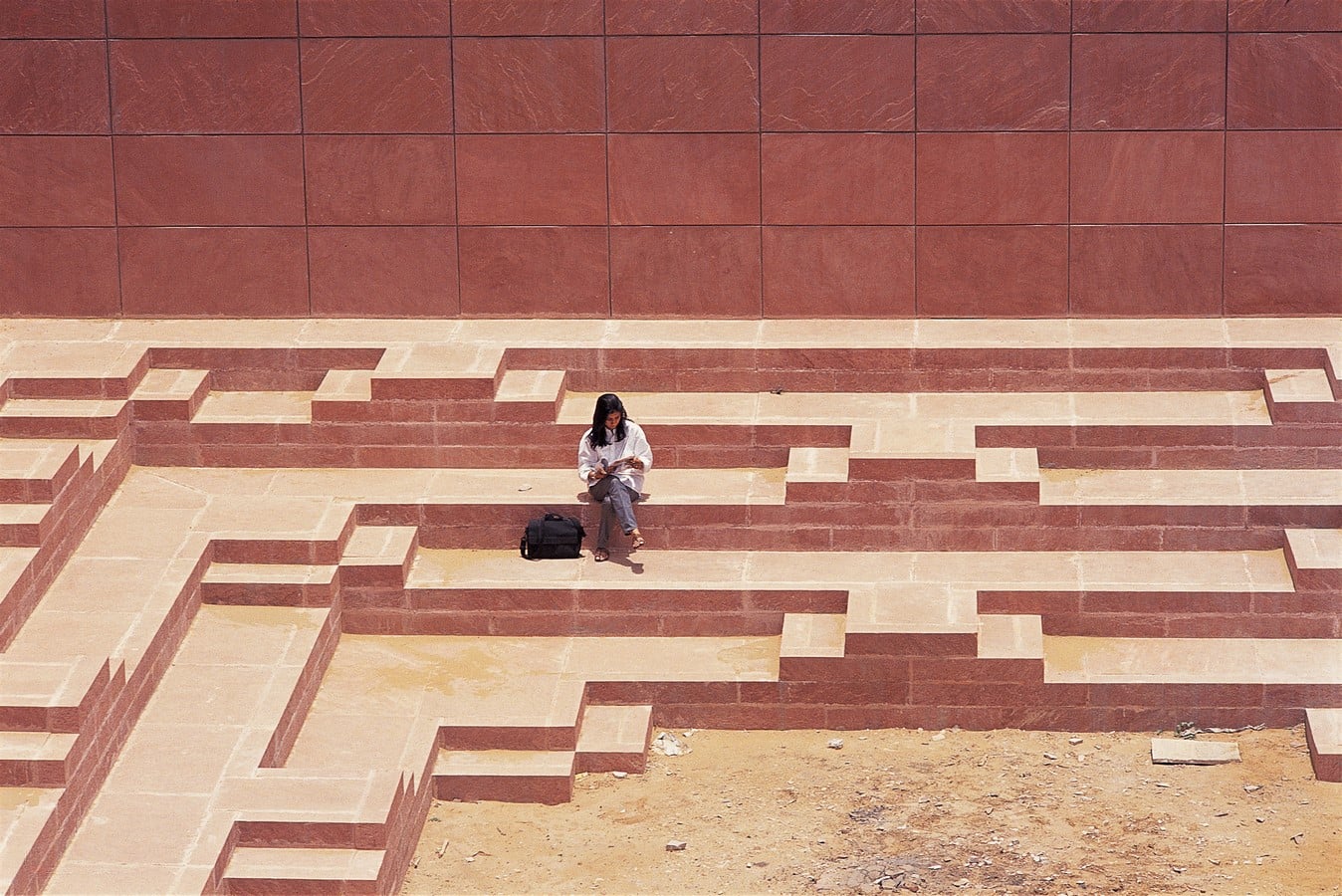
Along with the shift post-independence, another movement began to grow in India: critical regionalism. It involved using the immediate context around the site, treating the environment as a design palette. Critical regionalism is not simply about using local materials. It is about resisting placelessness while still engaging modern life, technology, and global conditions. In India, that often translates into climate-conscious design, passive cooling, shading, porosity, and material choices that reduce dependence on heavy mechanical systems. The design philosophy is rooted in a response to the homogenising effects of globalisation and the universalising tendencies of modernism in architecture and design.
What makes this critical is that it avoids both extremes: it neither idealises a pure past nor accepts global sameness as inevitable. Instead, it asks how a building can belong to its site, culture, and climate while still being current. In that sense, sustainability is not just an add-on; it becomes part of the architectural identity itself.
The Deeper Shift
The overall, broader shift away from Corbusian modernity is not simply stylistic. It is an active choice to put the person first–to design spaces with sensitivity to the users and the environment it surrounds. It is an attempt to make Indian architecture feel less inherited from elsewhere and more responsive to local life, even when it uses contemporary construction methods. In that sense, the neo-Indian direction is less a finished style than a working framework for rethinking what modern Indian architecture can be. It is constantly evolving, growing and adapting to fit the needs of society as we further develop ourselves and our cities.
Corbusian modernism in India offered a strong formal language for a young nation. Still, many contemporary architects are now asking different questions: how does a building live in a hot climate, how does it belong to its place, how does it carry memory without becoming pastiche? That is where critical regionalism, sustainability, and renewed attention to craft come in. By embracing these, one can create long-term design solutions adaptable to the needs of the times. The shift may be contemporary in method, but it is rooted in place.
References:
- Architecture History (n.d.) India – 20th-century architecture. Available at: https://architecture-history.org/schools/INDIA.html (Accessed: 11 July 2026).
- Architectural Review (2016) Modernism and the search for Indian identity. Available at: https://www.architectural-review.com/places/india/modernism-and-the-search-for-indian-identity (Accessed: 11 July 2026).
- Architectural Review (n.d.) Towards an architecture for India. Available at: https://www.architectural-review.com/today/towards-an-architecture-for-india (Accessed: 11 July 2026).
- Architexturez (n.d.) I. 1947–1959: Options after Independence, the Evolution of Contemporary Indian Architecture. Available at: https://architexturez.net/doc/az-cf-123837 (Accessed: 11 July 2026).
- ArchDaily (2023) Finding the Indian in Contemporary Residential Architecture. Available at: https://www.archdaily.com/1000294/what-makes-residential-architecture-indian (Accessed: 11 July 2026).
- ArchDaily (2023) The modernist laboratory of the future: exploring Le Corbusier and Louis Kahn’s architecture in India. Available at: https://www.archdaily.com/1001873/the-modernist-laboratory-of-the-future-exploring-le-corbusier-and-louis-kahns-architecture-in-india (Accessed: 11 July 2026).
- Imogen Indigo Bebbington (n.d.) Social Housing + Modernism. Available at: https://imogen-indigo.com/social-houseing-and-modernism/ (Accessed: 11 July 2026).
- ScienceDirect article (n.d.) [Article on ScienceDirect, PII: S2095263518300530]. Available at: https://www.sciencedirect.com/science/article/pii/S2095263518300530#s0015 (Accessed: 11 July 2026).
- Studio Matrx (2026) Neo-traditional Indian architecture — Where traditional aesthetics meet modern planning and contemporary construction. Available at: https://www.studiomatrx.org/guides/neo-traditional-indian-architecture (Accessed: 11 July 2026).
- The Spaces (2020) Explore Le Corbusier’s modernist metropolis Chandigarh. Available at: https://thespaces.com/explore-le-corbusiers-modernist-metropolis-chandigarh/ (Accessed: 11 July 2026).