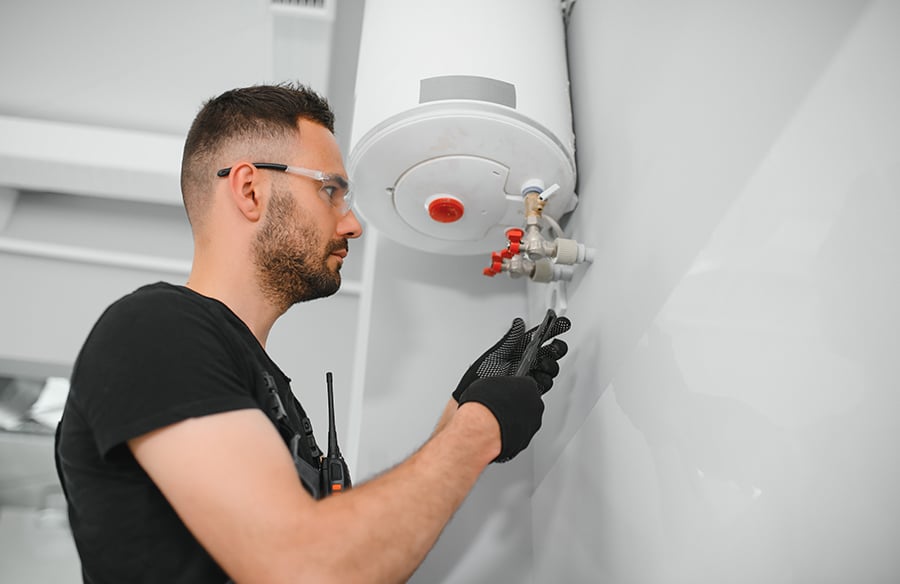
A hot water system does not always stop working without warning. Many units develop smaller problems first, such as fluctuating temperatures, unusual noises, discoloured water or minor leaks.
When these issues appear, homeowners are often faced with an important decision: should the system be repaired, or would replacing it make more sense?
The correct answer depends on more than the cost of the immediate repair. The system’s age, condition, reliability and suitability for the household should all be considered.
Common Signs That a Hot Water System Needs Attention
Some hot water problems are obvious, while others develop gradually.
Warning signs can include:
- Water taking longer than usual to heat
- Hot water running out sooner
- Water temperature changing unexpectedly
- Leaks around the tank, valves or connected pipework
- Banging, rumbling or popping sounds
- Rust-coloured or cloudy hot water
- A pilot light that repeatedly goes out
- Higher energy bills without a clear explanation
- Low hot water pressure
- Water that is excessively hot
These symptoms do not automatically mean the entire system must be replaced. A licensed plumber can inspect the unit and identify whether the problem is with the tank, heating element, thermostat, valve, burner or surrounding plumbing.
When a Repair May Be Reasonable
Repairing a hot water system may be worthwhile when the unit is relatively young and the problem is isolated.
For example, replacing a faulty valve, thermostat or heating component may restore the system without the expense of a full replacement. Repair may also be appropriate when the tank remains structurally sound and the unit has otherwise been reliable.
A repair is more likely to make sense when:
- The system is not particularly old
- The fault can be clearly identified
- Replacement parts remain readily available
- The tank is not leaking or heavily corroded
- The repair cost is reasonable compared with replacement
- The unit still meets the household’s needs
Homeowners should ask whether the proposed repair addresses the underlying issue or only provides a temporary solution.
When Replacement Is Usually the Better Option
Replacement may be more economical when a hot water system is ageing, badly corroded or experiencing repeated problems.
A leaking storage tank is particularly important to investigate. Small amounts of water may be coming from a replaceable valve or fitting, but water leaking from the body of the tank can indicate internal corrosion.
Replacement should also be considered when:
- The system has required several recent repairs
- The tank itself is leaking
- Corrosion is visible around the unit
- Replacement parts are difficult to obtain
- The household regularly runs out of hot water
- The current system is poorly sized
- Repair costs represent a large portion of replacement cost
- The unit has become unreliable
Continuing to repair an unsuitable or deteriorated system can sometimes cost more over time than installing a dependable replacement.
Look Beyond the Immediate Repair Cost
It is understandable for homeowners to focus on the lowest upfront cost, particularly when a hot water problem occurs unexpectedly.
However, a low-cost repair is not necessarily good value when another major fault is likely to appear soon. Similarly, replacing a repairable system may be unnecessary when a straightforward component replacement could provide several more years of reliable use.
A useful comparison should include:
- The cost of the proposed repair
- The estimated remaining life of the system
- The likelihood of additional faults
- The cost of a suitable replacement
- Whether the current system meets demand
- Potential changes to the household
- Warranty coverage for the repair or replacement
A plumber should be able to explain both options rather than automatically recommending the most expensive solution.
Do Not Ignore Small Leaks
Water around a hot water system should never be ignored.
Even a slow leak can damage flooring, walls, cabinetry or nearby stored items. Moisture can also create conditions that encourage mould growth or affect surrounding building materials.
Before inspecting the system, homeowners should keep a safe distance from electrical components and avoid attempting repairs themselves. Gas and electric hot water systems contain pressurised water and energy connections that require appropriate licensing and experience.
For professional assessment of a malfunctioning unit, visit https://bornplumbing.com.au/plumber-canberra/hot-water-systems/.
Consider Whether the Current System Still Suits the Home
A system may still operate but no longer be appropriate for the household.
For example, a small storage tank that suited one or two occupants may struggle after a family grows. Changes to bathrooms, appliances or daily routines can also increase hot water demand.
Replacement creates an opportunity to reconsider:
- Storage capacity
- Recovery time
- Available installation space
- Gas or electricity connections
- Simultaneous use of multiple outlets
- Future household requirements
Simply replacing the old unit with an identical system may recreate the same capacity or performance problems.
Ask for a Clear Explanation
Before approving repairs or replacement, homeowners should understand what has failed and why.
Useful questions include:
- Which component is causing the problem?
- Is the tank itself in good condition?
- How long is the repair expected to last?
- Are replacement parts readily available?
- Is the current system correctly sized?
- What warranty applies to the work?
- Are there signs of other developing faults?
Clear answers allow the homeowner to make an informed decision rather than relying only on the upfront price.
Make the Decision Based on Overall Value
Repairing a hot water system can be a sensible choice when the unit is in good condition and the fault is minor. Replacement may offer better value when the system is old, leaking, unreliable or no longer suitable for the household.
The most important step is having the problem correctly diagnosed. Once the cause, cost and condition of the system are understood, homeowners can choose the option that provides the best balance of reliability, safety and long-term value.