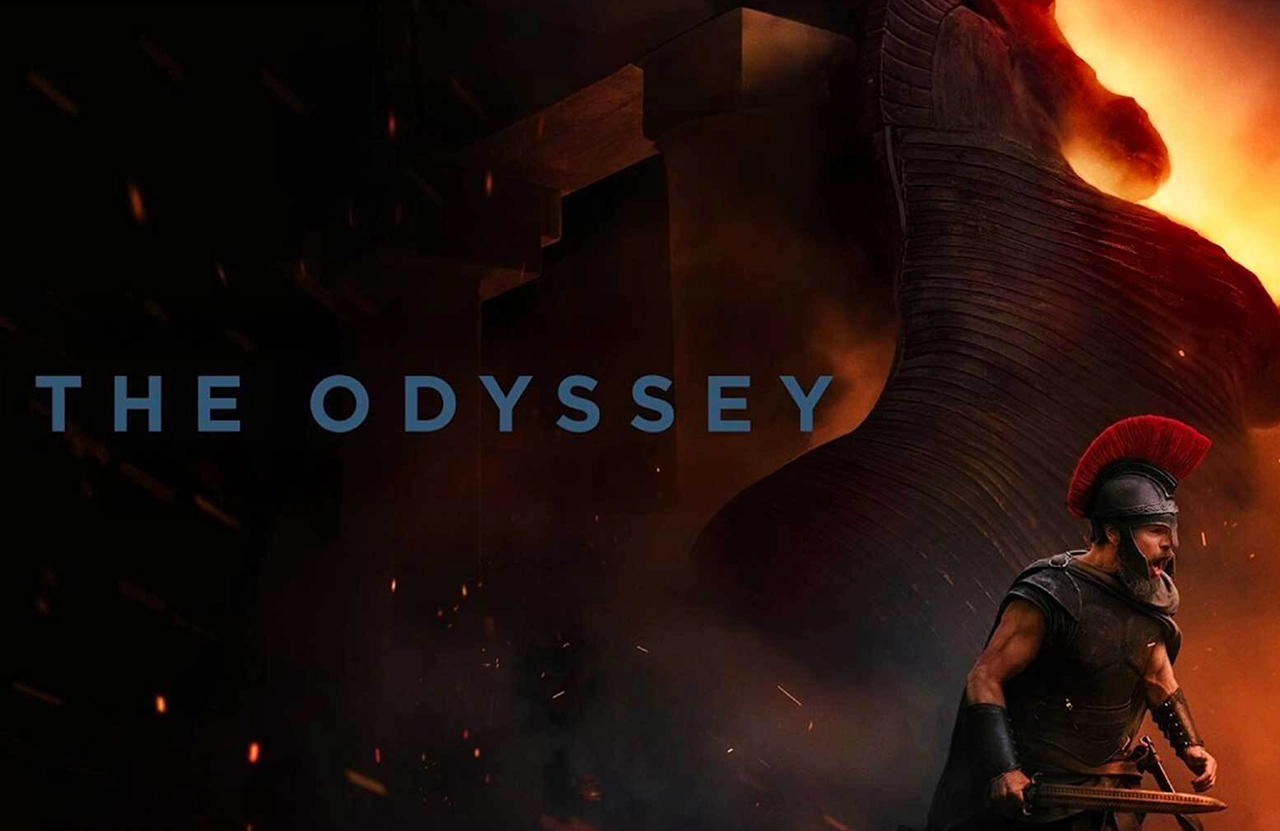
Translating a 3000 year old mythological epic of gods, man and everything in between from flesh-devouring giants, mythical underworld shades and witches with transformative powers- into a visual medium in today’s world without relying on computer-generated graphics is a tricky business. For Christopher Nolan, this was a puzzle. A puzzle he solves with his brilliant team of creative minds, made possible by the Oscar-nominated production designer Ruth De Jong.
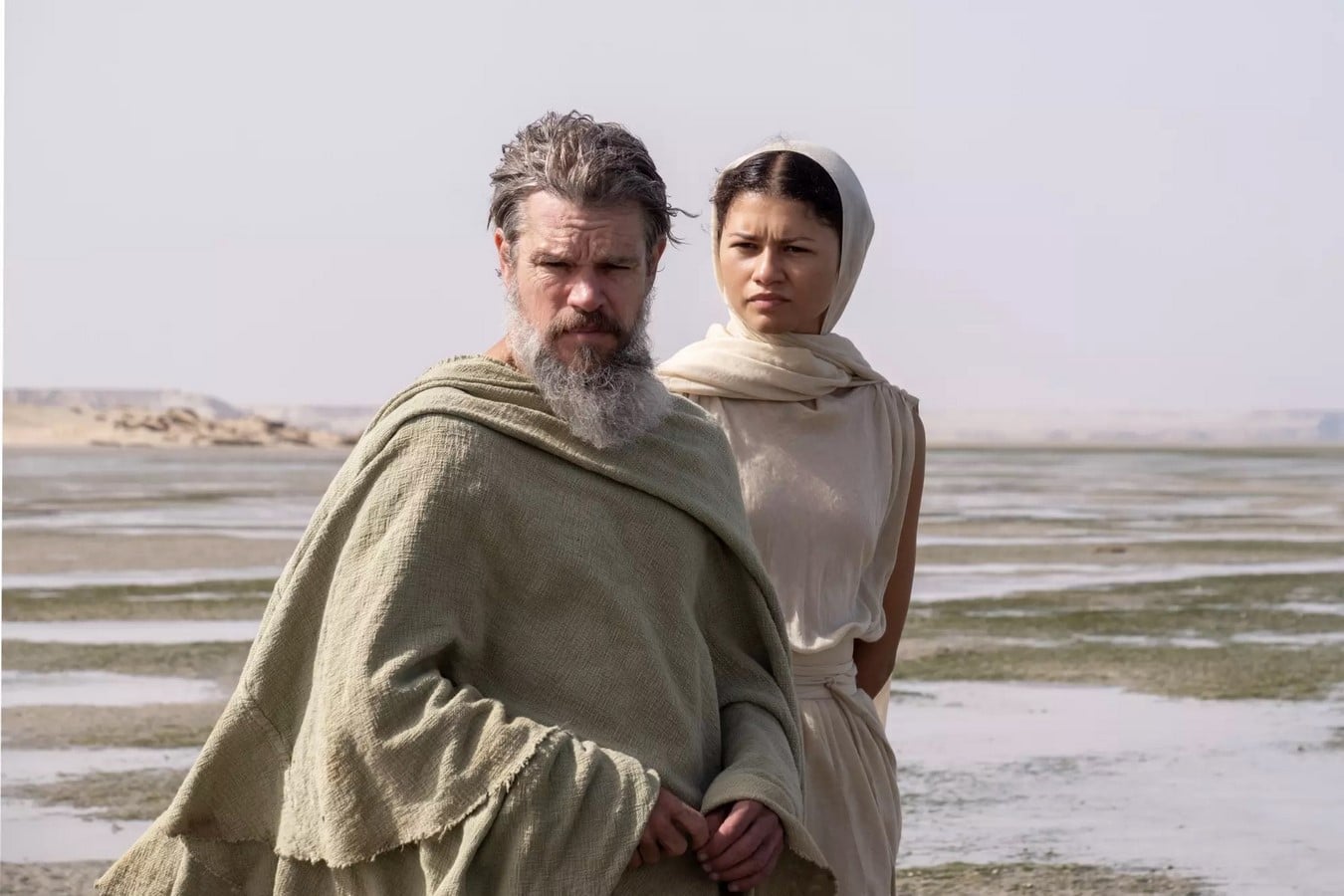
In an era where modern blockbusters construct worlds with limitless imagination inside digital environments, the production of The Odyssey was a radical return to classical spatial design. This was Nolan’s gift to his audience, a realistic visual representation of Homer’s Odyssey, as imagined by him. By pairing Renaissance optical trickery with top-grade architectural coordination, the production team resurrected the Bronze Age that the Odyssey was set in, across six nations, proving that physical weight, real sunlight and spatial scale can create an emotional authenticity that no algorithm can mirror. This holds a special weight, especially in this era of artificial intelligence taking over art.
For the Audience
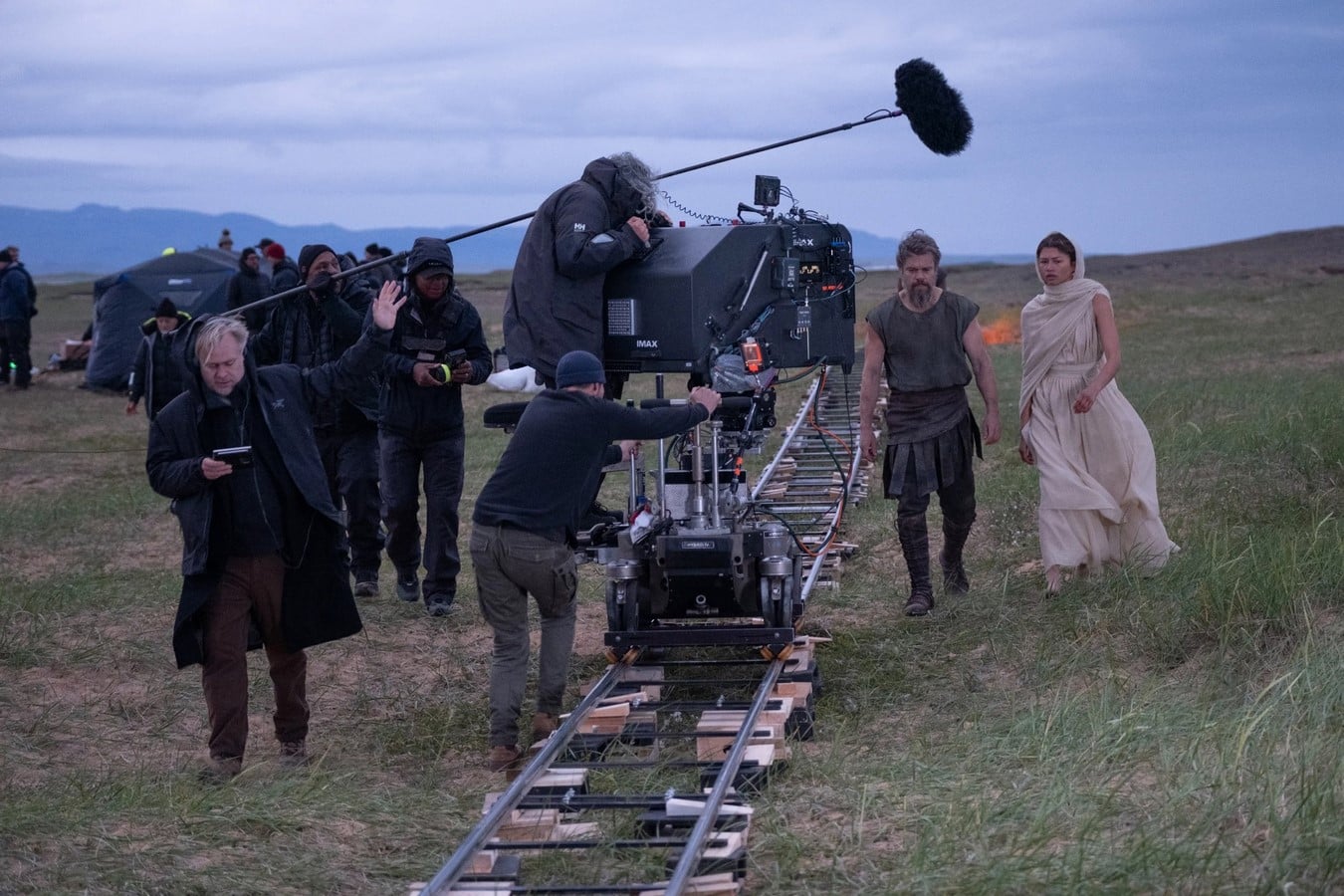
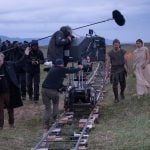
Adapting Homer’s Bronze Age epic required a never-before-seen return to the age of celluloid. Christopher Nolan ran artistic leadership, managing an international enterprise of over 1200 crew members across the distinct landscapes of Greece, Iceland, Morocco, Italy, Scotland and Norway. The team did not rely on a single soundstage build, but instead developed creative solutions to the challenges of this silent movie producing method.
The Odyssey (2026) is the masterpiece of production designer Ruth De Jong, cinematographer Hoyte van Hoytema and long time Nolan-collaborator Math Damon, who led an ensemble cast through gruelling, real-world physical conditions. To keep the audience invested in the narrative without shattering the illusions the epic sets forth, the team rejected digital set extensions, instead choosing to translate real-life physical scenarios into a mythic realm using classical geometric principles, forced perspective and mechanical engineering.
Scale and Geometry
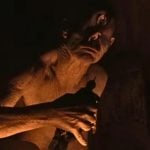
In the Odyssey, Odysseus and his men find themselves trapped inside the lair of Polyphemus, a cave for the 60-foot-tall Cyclops and his herd of sheep. The scene reminds the audience of the crew’s dread upon meeting this giant. Ruth De Jong leads her team to build a towering 60-foot animatronic puppet, inspired by Francisco Goya’s haunting painting and hauled the huge structure directly inside an authentic cave in Greece.
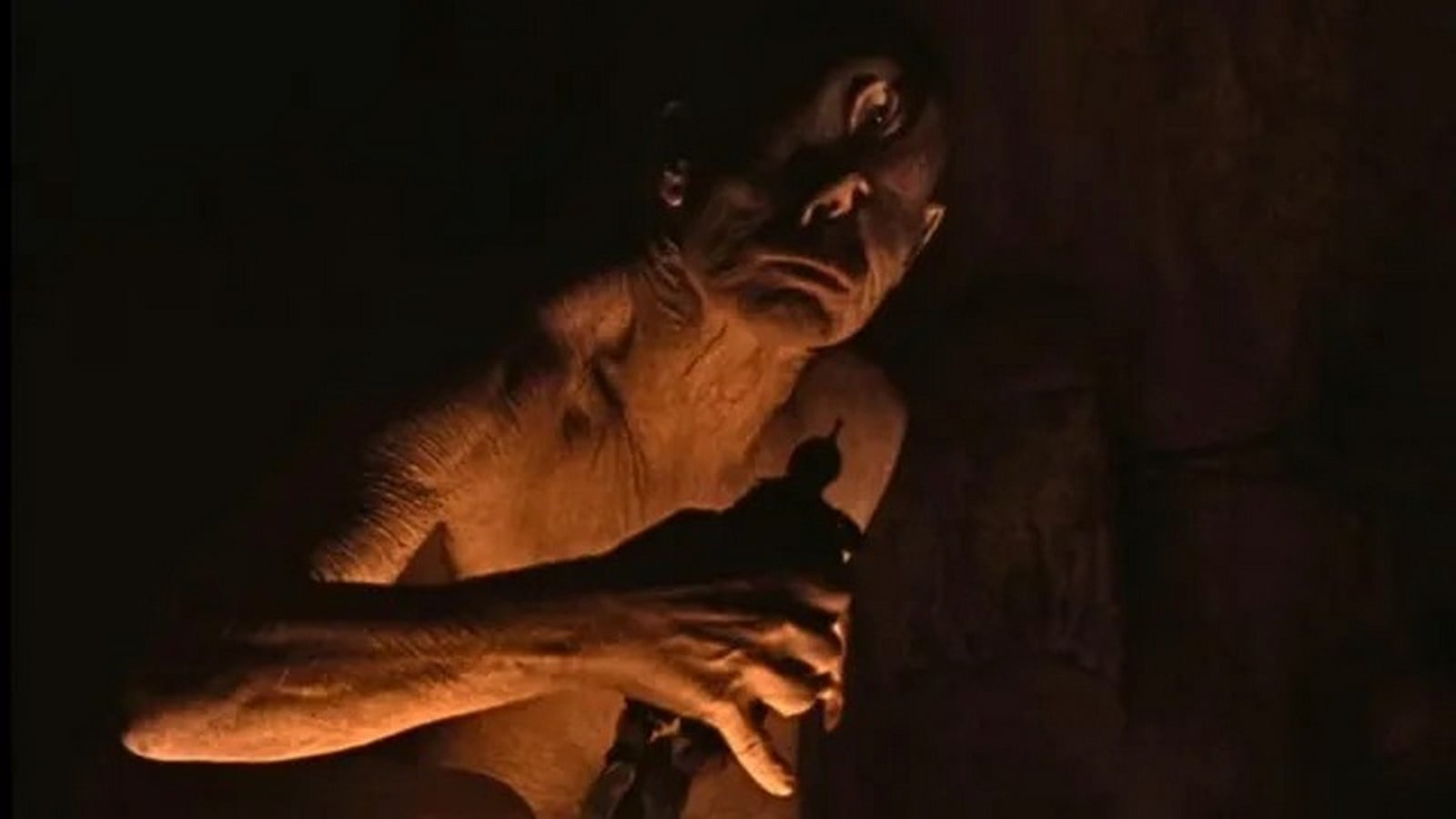
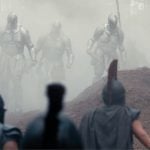
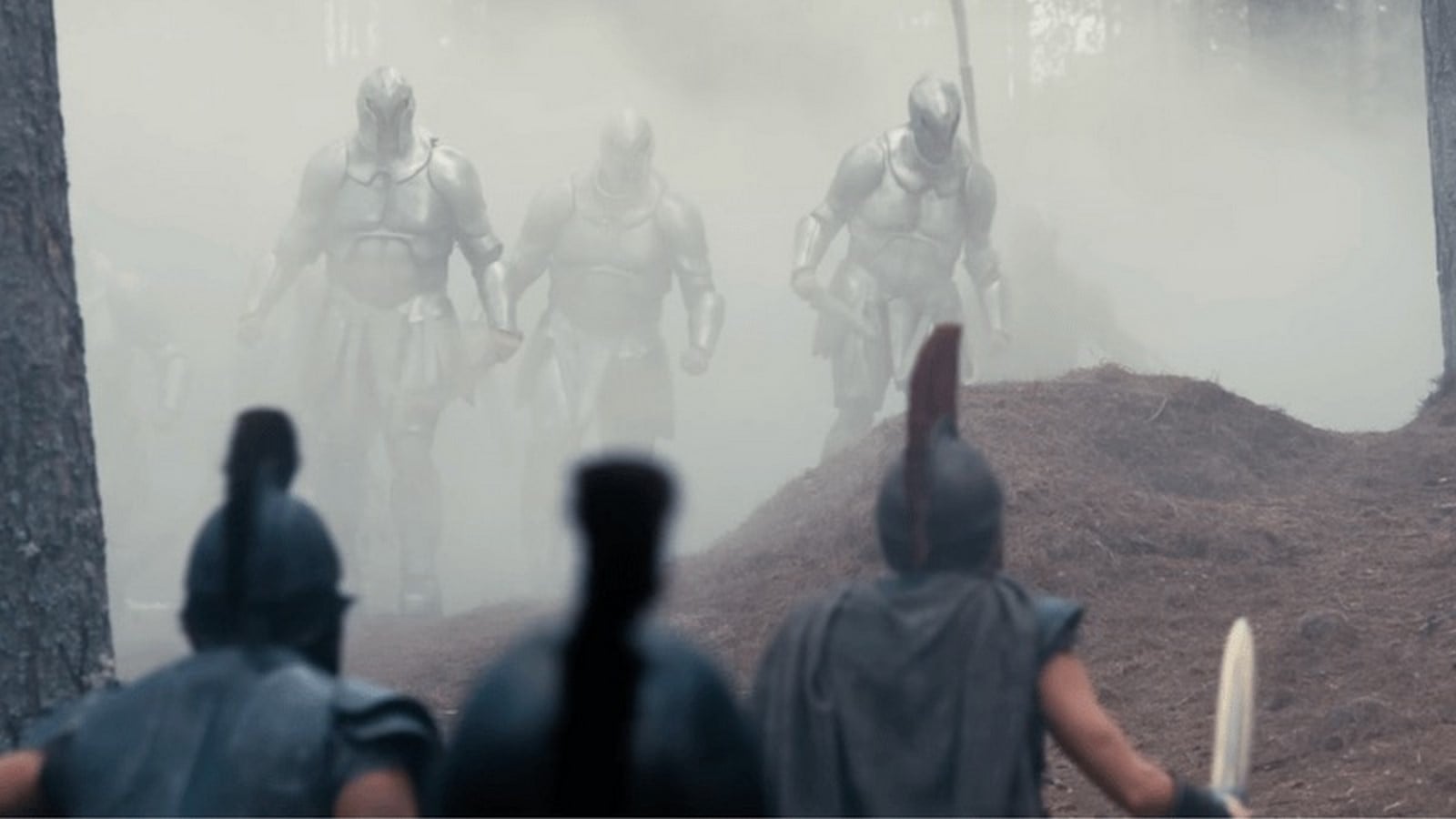
Similar disparities in height were introduced in the scene where Odysseus and his men meet the terrible giant cannibals, the Laestrygonians. This time, they employed a rather clever stunt scaling trick: placing seven-foot-tall actors opposite 4’6” female stunt performer Devyn Dalton, who doubled for Matt Damon. This double disparity in actors’ scale is further amplified by distorted architecture, the lens capturing terrifying yet realistic physical height gaps in real time, smoked in authentic dust, shadows and light reflection.
Hydrodynamics
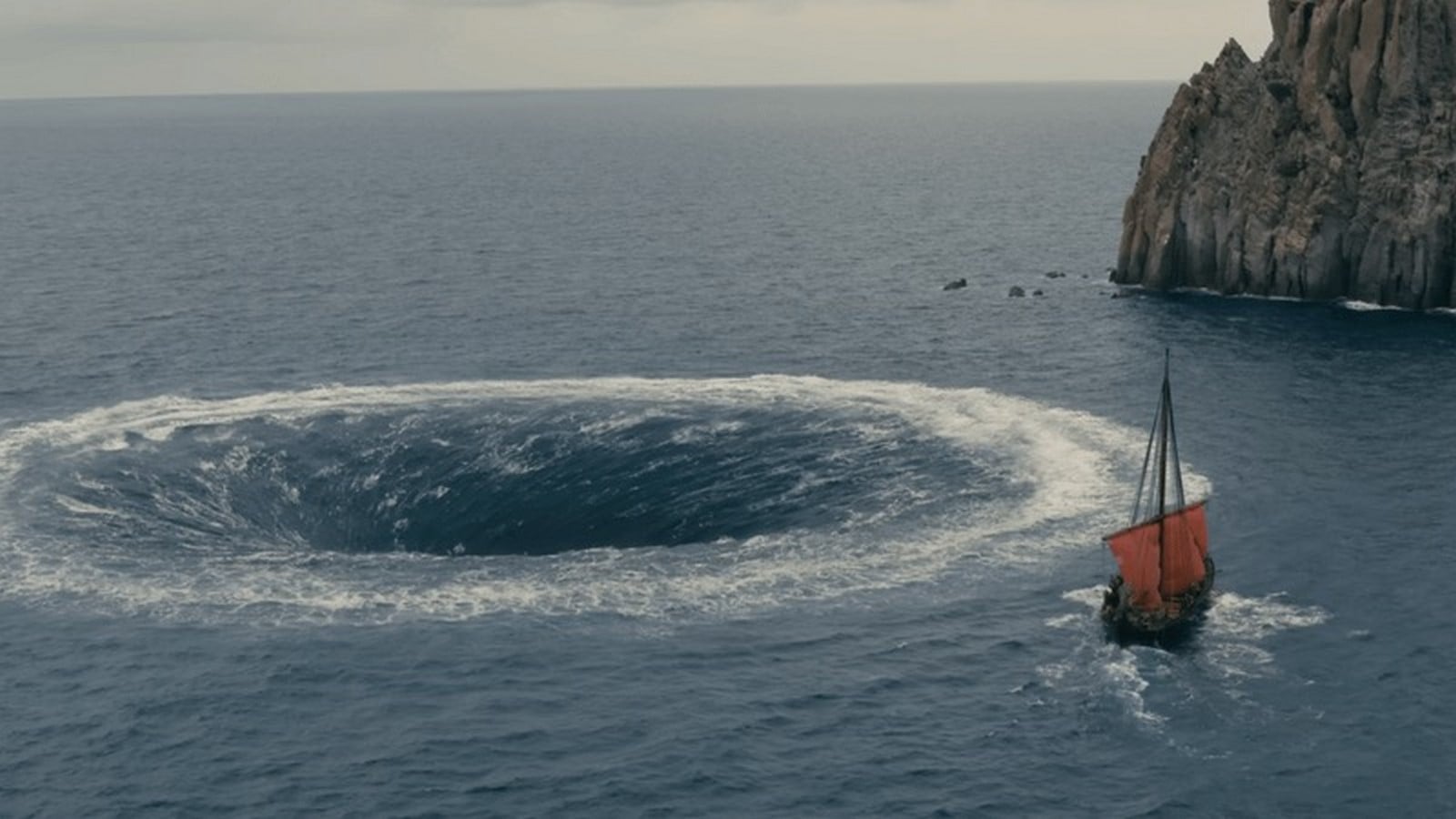
Before the confrontation with the sea monster Charybdis, Odysseus’ crew are threatened by the violent, roaring oceanic vortex. Most Hollywood studios rely on digital water simulations for similar scenes. Nolan and his team took to the open, freezing waters off the coast of Norway. Atop a functional, hand-built Greek galley on a submerged hydraulic gimbal anchored in the real ocean swells. The churning whirlpool was actually stunt drivers on high-powered jet skis circling the galley in tight, rapid formations. The hydrodynamic force of the jet skis whipped a chaotic vortex that battered the ship, in real time, delivering a genuine physical ordeal for the actors.
Perspective Nesting
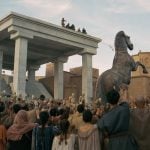
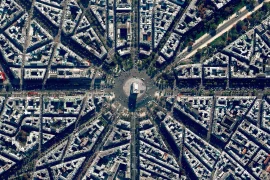
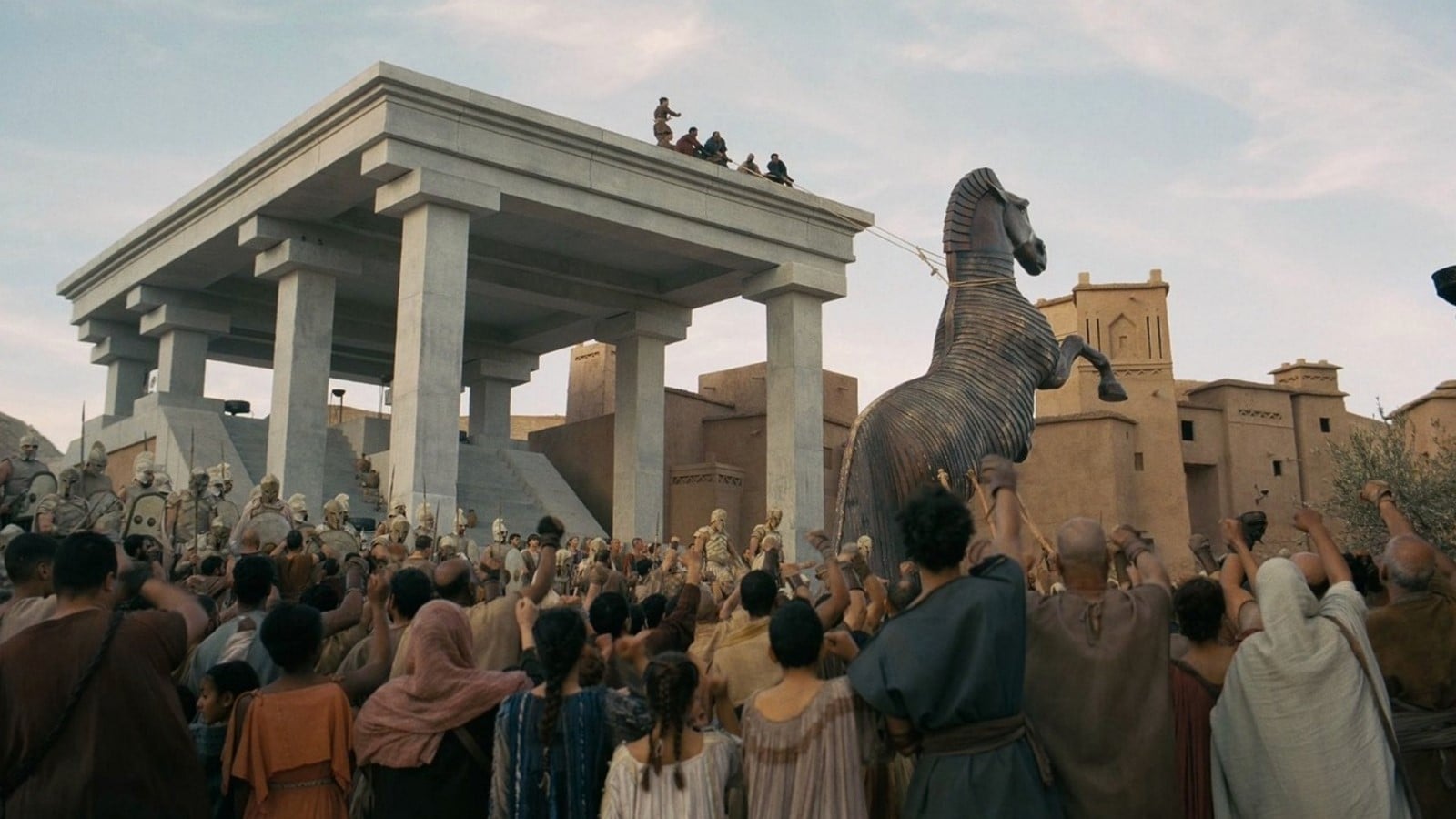
The vast metropolis of Troy, popular for its impenetrable walls, with towering stone gates and high battlements, stretched miles across the horizon. Now considered a UNESCO heritage site, De Jung faced the monumental task of constructing an ancient city that reflected this sprawling metropolis in Morocco, without relying on digital background extensions. She developed the technique called perspective nesting to transform a realistic 200-meter physical build to look like the seven-mile vista of Troy. It involved aligning three distinct spatial layers: foreground, midground and background. Her team physically built about 60 earthen structures that made up the foreground and housed the actors. The midground featured architectural miniatures placed along surrounding desert dunes, and actual ancient settlements sitting miles away on the horizon made up the background. In this manner, a single camera axis captured an endless, multi-mile ancient kingdom, without having to manipulate the frame post-shot.
Animatronics
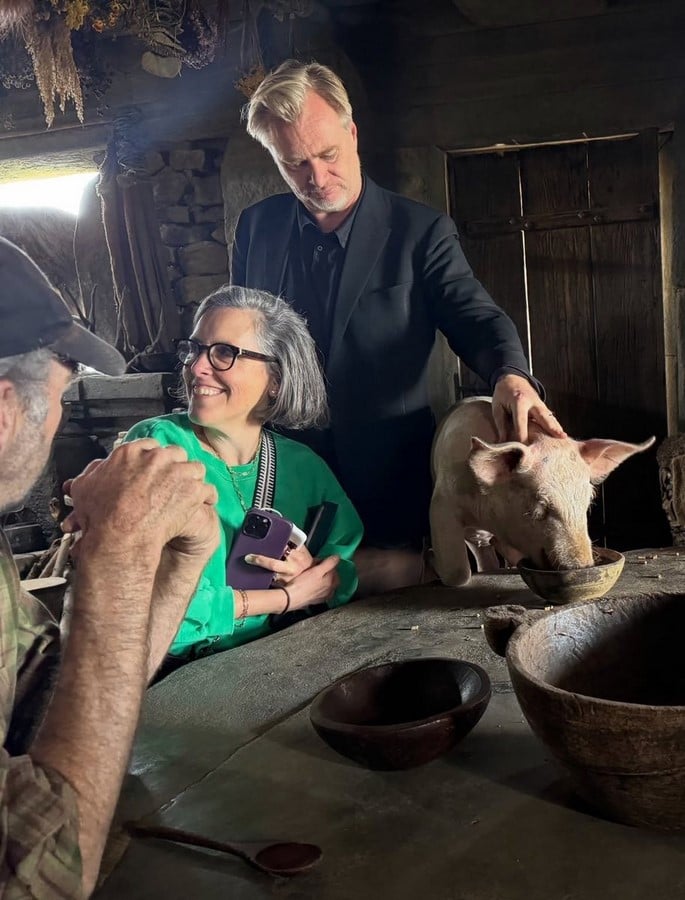
In Circe’s mystical hall, Odysseus’ crew suffers a surreal transformation from human soldiers to squealing swine. For this depiction, Nolan strictly rejected digital body-morphing effects that most studios adopt to achieve similar effects. Instead, the props department engineered fully articulated, highly detailed rubber animatronic pigs that could mimic living muscle movements and facial twitches. The scenes were then orchestrated on set using puppetry, with shifting lighting and tight, controlled camera cuts aiding the final transformation. Mid-action, the actors were replaced by animatronics, capturing the sequences of Circe’s magic on the physical set.
Blimp
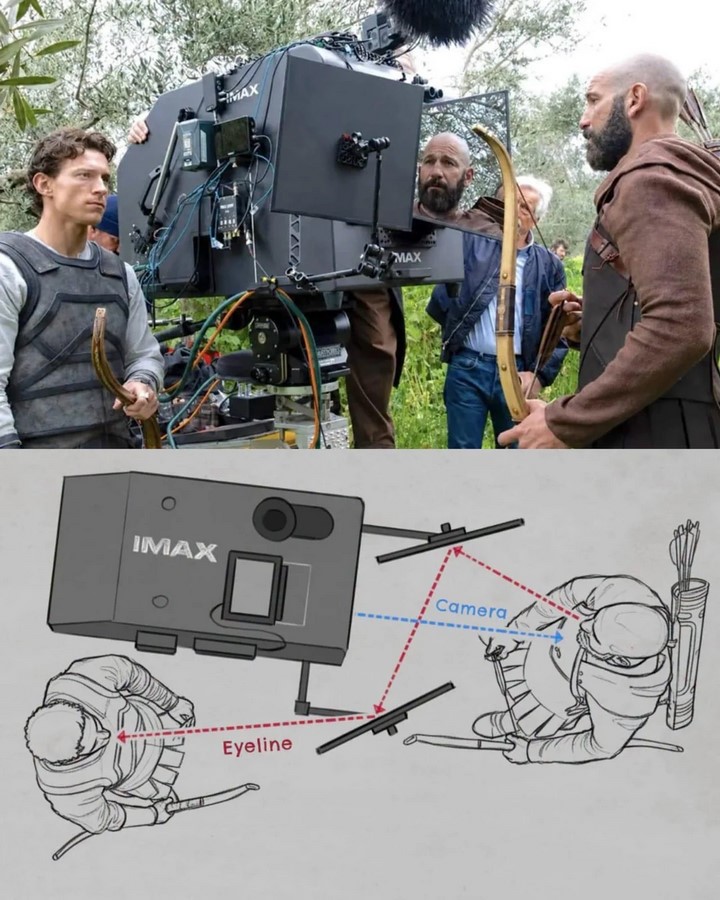
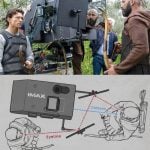
One of the achievements of the film was the use of the 15 perf 65mm IMAX for shooting 100% of the film. The movie benefitted with highest resolution captures and uncropped frames that filled IMAX screens, maximising vertical field of view for majestic landscapes as well as character close-ups. However, one of the challenges remained- for whisper-quiet dialogue scenes inside closed chambers, like within the Trojan horse, the camera’s technical roars echoed. The engineers crafted a specialised, soundproof “blimp”, a soundproof enclosure that weighed about 300 pounds, to overcome the sound of the camera running. This massive engineering submerged the loud noise of the camera, allowing the lens to hover even inches from the actors’ faces while simultaneously capturing the whispered dialogues.
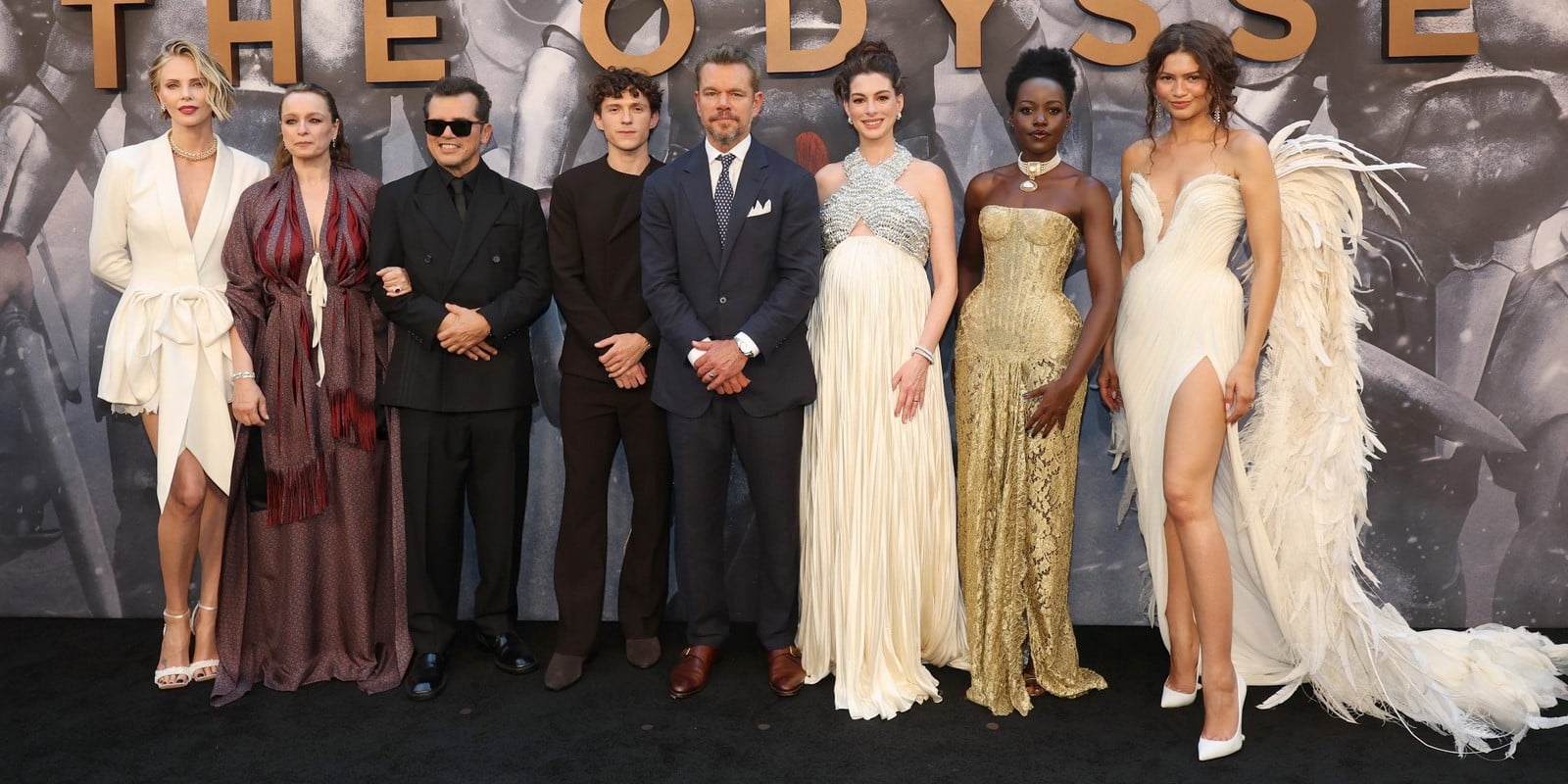
Christopher Nolan’s interpretation of Homer’s 3000-year-old poem is more than a blockbuster adaptation; it is also a profound artistic statement on the preservation of the craft of physical cinema. Tangible architecture, real sunlight, mechanical puppetry and photochemical celluloid reinterpreted the ancient myth through a series of manipulated real-life scenarios- taken from the imaginative mind of Homer and lived by the crew of The Odyssey.
Citation:
MS NOW (2026) How Christopher Nolan filmed ‘The Odyssey’ entirely in IMAX. Available at: https://www.youtube.com/watch?v=fq0JafD-GXU (Accessed: 14 August 2026).
BBC Radio 1 (2026) The Secret Of The Odyssey – with Christopher Nolan, Matt Damon, Anne Hathaway, Tom Holland & Zendaya. Available at: https://www.youtube.com/watch?v=DKql9c7kq4A (Accessed: 14 August 2026).
Anderson, R. (2026) The Making of The Odyssey: Nolan’s 300lb IMAX Camera. Available at: https://www.youtube.com/watch?v=G_IfNYuyEZA (Accessed: 14 August 2026).
Elle Decor (2026) The Odyssey Sets: How Ruth De Jong Crafted Christopher Nolan’s Epic. Available at: https://www.elledecor.com/life-culture/a73169741/the-odyssey-sets-christopher-nolan-ruth-de-jong/ (Accessed: 14 August 2026).
Architectural Digest India (2026) Christopher Nolan’s The Odyssey: 7 films of the auteur where set design reigns supreme. Available at: https://www.architecturaldigest.in/story/christopher-nolans-the-odyssey-7-films-of-the-auteur-where-set-design-reigns-supreme/ (Accessed: 14 August 2026).
Architectural Digest India (2026) The Odyssey: How the Greek epic was filmed across six countries. Available at: https://www.architecturaldigest.in/story/the-odyssey-how-the-greek-epic-was-filmed-across-six-countries-christopher-nolan-movies/ (Accessed: 14 August 2026).