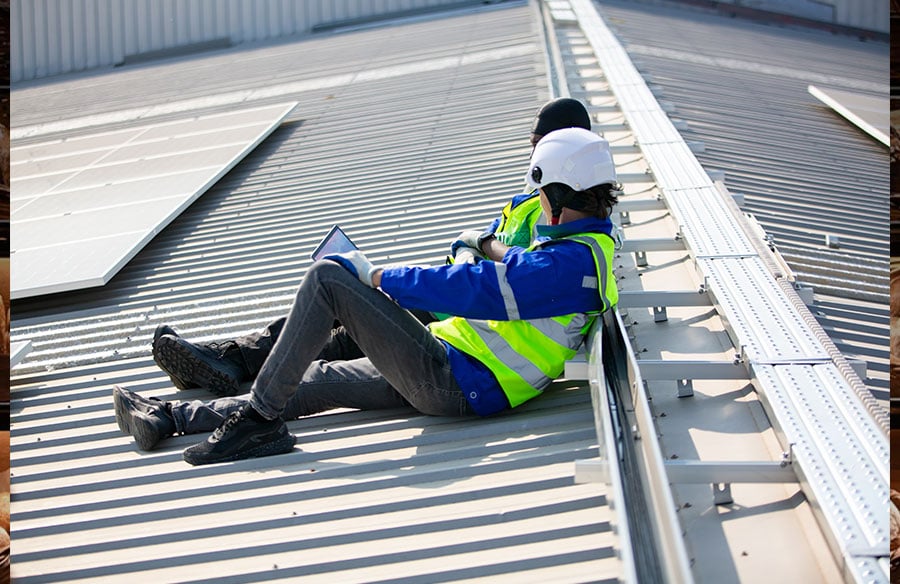
A commercial roof problem can quickly become a serious business concern. A small leak may allow water to spread through insulation, ceilings, walls, electrical systems, inventory, or equipment. Storms can make the situation even worse by damaging membranes, flashing, rooftop equipment, and drainage systems.
When a roofing emergency occurs, acting quickly can help limit the damage and reduce the possibility of a much larger repair project. Water often travels away from the original entry point, meaning the location of an interior stain may not be the actual source of the leak.
What Counts as a Commercial Roofing Emergency?
Not every roofing issue requires immediate emergency service, but certain problems should be addressed as quickly as possible.
Examples include:
- Active roof leaks
- Major storm damage
- Torn roofing membranes
- Large punctures
- Missing roofing materials
- Damaged flashing
- Severe ponding water
- Damage around HVAC equipment
- Exposed insulation or roof decking
An active leak is particularly concerning because continued moisture exposure can damage areas inside the building and potentially interrupt normal business operations.
Why Fast Action Matters
When water enters a commercial building, it doesn’t necessarily remain directly below the damaged area. It can move through insulation and roofing components before appearing on a ceiling or wall.
This means a small water stain could represent a larger problem above it.
Prompt commercial roof repair can help limit:
- Interior water damage
- Insulation damage
- Ceiling damage
- Electrical problems
- Equipment damage
- Inventory losses
- Business interruptions
The sooner the source is identified, the sooner appropriate repairs can begin.
Common Causes of Emergency Roof Damage
Commercial roofs can develop emergency problems for many different reasons.
Severe Weather
High winds, hail, heavy rain, and flying debris can damage roofing materials within a short period. Wind may loosen flashing or roofing materials, while hail can puncture or weaken membranes.
Damaged Flashing
Flashing is used around roof edges, walls, HVAC equipment, vents, and other transitions. If flashing becomes loose or deteriorated, water can find a path into the building.
Membrane Damage
TPO, EPDM, PVC, modified bitumen, and other roofing systems can develop punctures, tears, or seam failures.
Drainage Problems
Clogged drains and scuppers can cause water to accumulate on flat or low-slope roofs. Persistent ponding can place additional stress on roofing materials and contribute to leaks.
Aging Roofing Materials
Older roofing systems can become more vulnerable to weather and everyday wear. Existing weaknesses may become much more serious during a severe storm.
What to Do When a Commercial Roof Starts Leaking
When a leak is discovered, property managers should focus first on protecting people and the building’s contents.
If it is safe to do so:
- Move equipment and inventory away from the affected area.
- Place containers beneath active drips.
- Keep employees away from slippery areas.
- Document visible damage with photographs.
- Note where and when the leak appeared.
- Contact a professional roofing contractor.
Avoid sending untrained employees onto the roof, particularly during wet, windy, or otherwise dangerous conditions.
Emergency Repairs vs. Permanent Repairs
Emergency roofing work is often intended to stabilize the situation and prevent additional damage. Temporary measures may stop or reduce water intrusion until a more comprehensive repair can be completed.
After the immediate problem is controlled, the roof should be inspected to identify the underlying cause.
A permanent repair might involve:
- Replacing damaged membrane
- Repairing seams
- Replacing flashing
- Sealing roof penetrations
- Repairing drainage components
- Replacing damaged insulation
- Repairing or replacing damaged decking
A professional evaluation can determine whether a localized repair is sufficient or whether the roofing system has more widespread deterioration.
Storm Damage Requires a Thorough Inspection
After severe weather, visible damage may only represent part of the problem.
A professional inspection can look for:
- Wind uplift
- Hail impacts
- Membrane punctures
- Damaged seams
- Loose flashing
- Damaged roof edges
- Blocked drains
- Damaged rooftop equipment
Some storm damage may not be obvious from ground level, which is why an inspection can be valuable even when there is no immediate interior leak.
Protecting Business Operations
A roofing emergency can affect more than the building itself. Water intrusion can interfere with inventory, computers, machinery, electrical systems, and customer areas.
For businesses, minimizing downtime is often just as important as repairing the roof.
A responsive roofing professional can help determine the immediate priorities and establish a repair plan based on the condition of the building.
Choosing an Emergency Roofing Contractor
When searching for commercial emergency roof repair, look for a contractor with experience handling urgent commercial roofing problems.
Important factors include:
- Commercial roofing experience
- Emergency response capabilities
- Experience with flat and low-slope roofs
- Knowledge of different membrane systems
- Leak detection experience
- Storm damage expertise
- Proper insurance
- Clear estimates
- Repair and maintenance capabilities
It is also helpful to work with a contractor who can provide both emergency stabilization and permanent repair services.
Preventing Future Roofing Emergencies
Emergency repairs can often be reduced through regular preventative maintenance.
A commercial maintenance program may include:
- Scheduled roof inspections
- Drain and scupper cleaning
- Flashing inspections
- Membrane inspections
- Seam checks
- Rooftop equipment inspections
- Minor repairs
- Storm inspections
Regular maintenance allows property owners to identify weaknesses before they develop into emergency situations.
When Replacement May Be Necessary
Sometimes an emergency reveals that the existing roof is approaching the end of its useful life.
A complete replacement may be considered when:
- Leaks are occurring repeatedly.
- Large areas are deteriorating.
- Repairs are becoming frequent.
- The membrane has widespread damage.
- The roof has significant moisture problems.
- The system is nearing the end of its expected service life.
However, an emergency leak does not automatically mean the entire roof needs to be replaced. A professional inspection should determine whether repair, restoration, or replacement is appropriate.
Conclusion
A commercial roofing emergency can quickly develop into a costly business problem if it isn’t addressed promptly. Leaks, storm damage, punctures, flashing failures, drainage issues, and aging materials can all compromise a commercial roofing system.
The best response is to protect the affected area, document the damage, avoid unsafe roof access, and contact an experienced roofing professional. Once the immediate problem is stabilized, a thorough inspection can determine the cause and identify the appropriate permanent solution.
Whether a business needs urgent leak assistance, storm damage repair, or a more extensive roofing project, fast professional attention can help protect the building and minimize disruption.