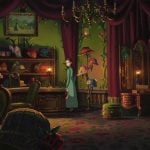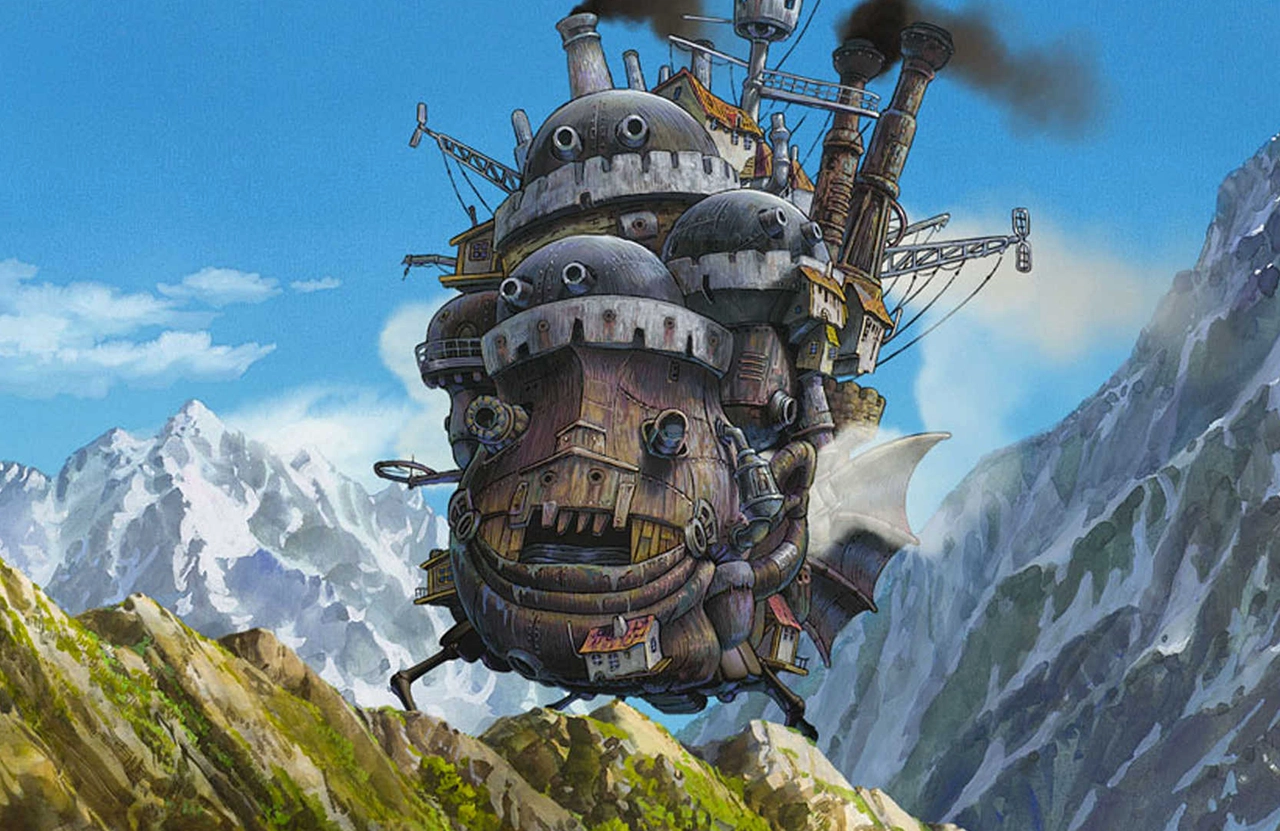
Studio Ghibli’s Howl’s Moving Castle (2004) was directed by Hayao Miyazaki and adapted from Diana Wynne Jones’s novel of the same name. It follows Sophie, a young hat maker who is cursed with old age by the Witch of the Waste, and who, while searching for a way to reverse the spell, ends up living inside the castle of the elusive wizard Howl. This castle is not a conventional structure at all; it is a hulking, mechanical assembly that walks across the countryside on a pair of oversized, birdlike legs, huffing smoke as it goes. Without giving away where the story eventually leads, this review sets out to cover what viewers can generally expect from the film, and then turns to something more specific: what its two central settings, the hat shop Sophie leaves behind and the castle she comes to inhabit, might offer architects and designers who are thinking about space, movement, and the nature of change.
What to Expect
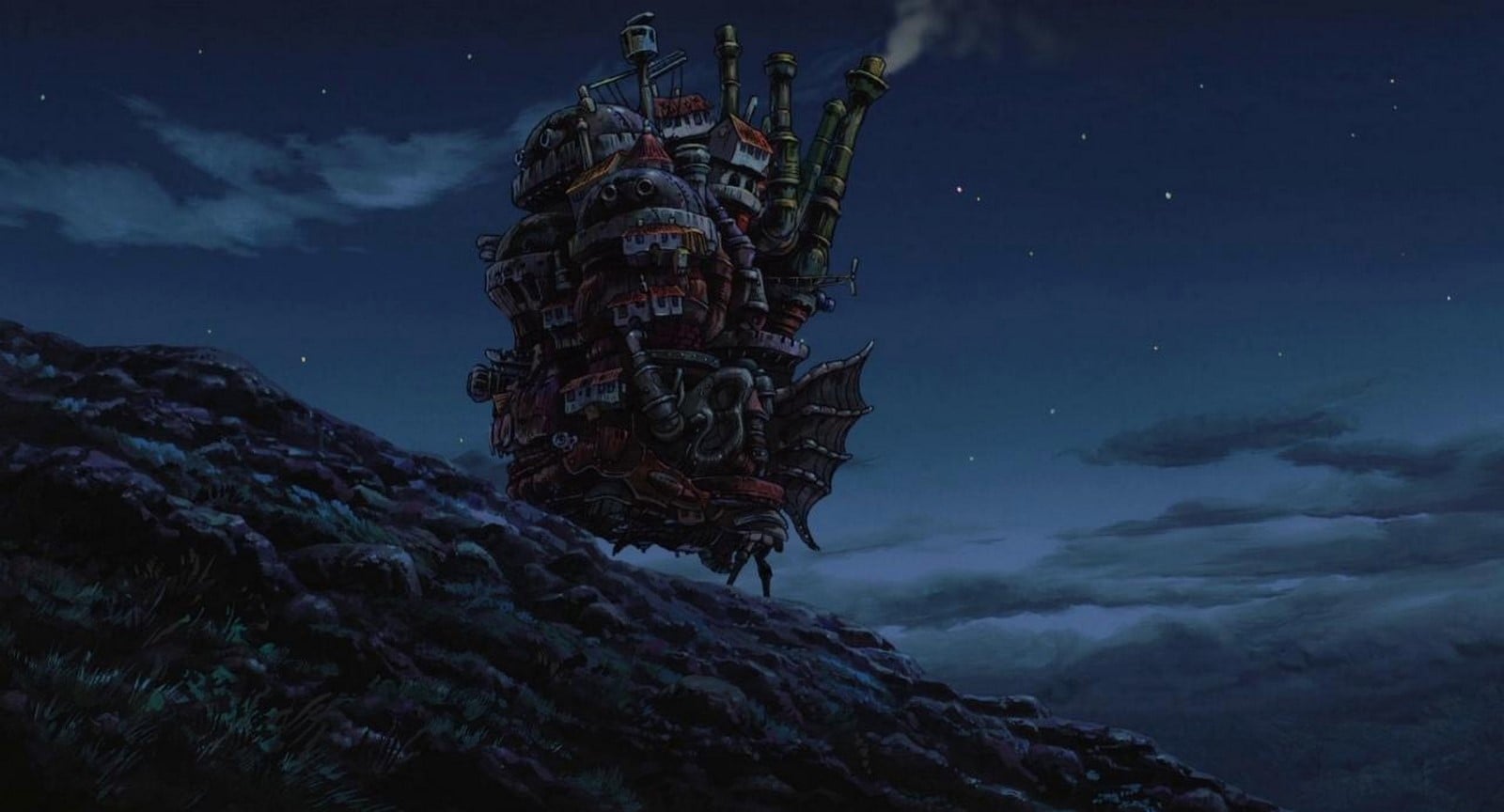
Visually, the film carries all the hallmarks of a Ghibli production, from its hand-painted backdrops to its soft, almost muted colour palette. The pace, too, tends to favour atmosphere well over exposition, and much of the story unfolds gradually through small, domestic moments rather than dramatic plot beats. Cooking breakfast, tidying a cluttered room, or simply watching smoke curl upward from a fireplace all carry as much narrative weight as any single major event. Underneath this fairly quiet register runs a wartime backdrop that, once it surfaces, gives the film considerably more heft than its whimsical premise might initially suggest. On the whole, it rewards a patient viewer more than one chasing narrative twists, since much of its craft lies in how carefully it renders everyday movement and habitation.

The Hat Shop: A Space of Containment
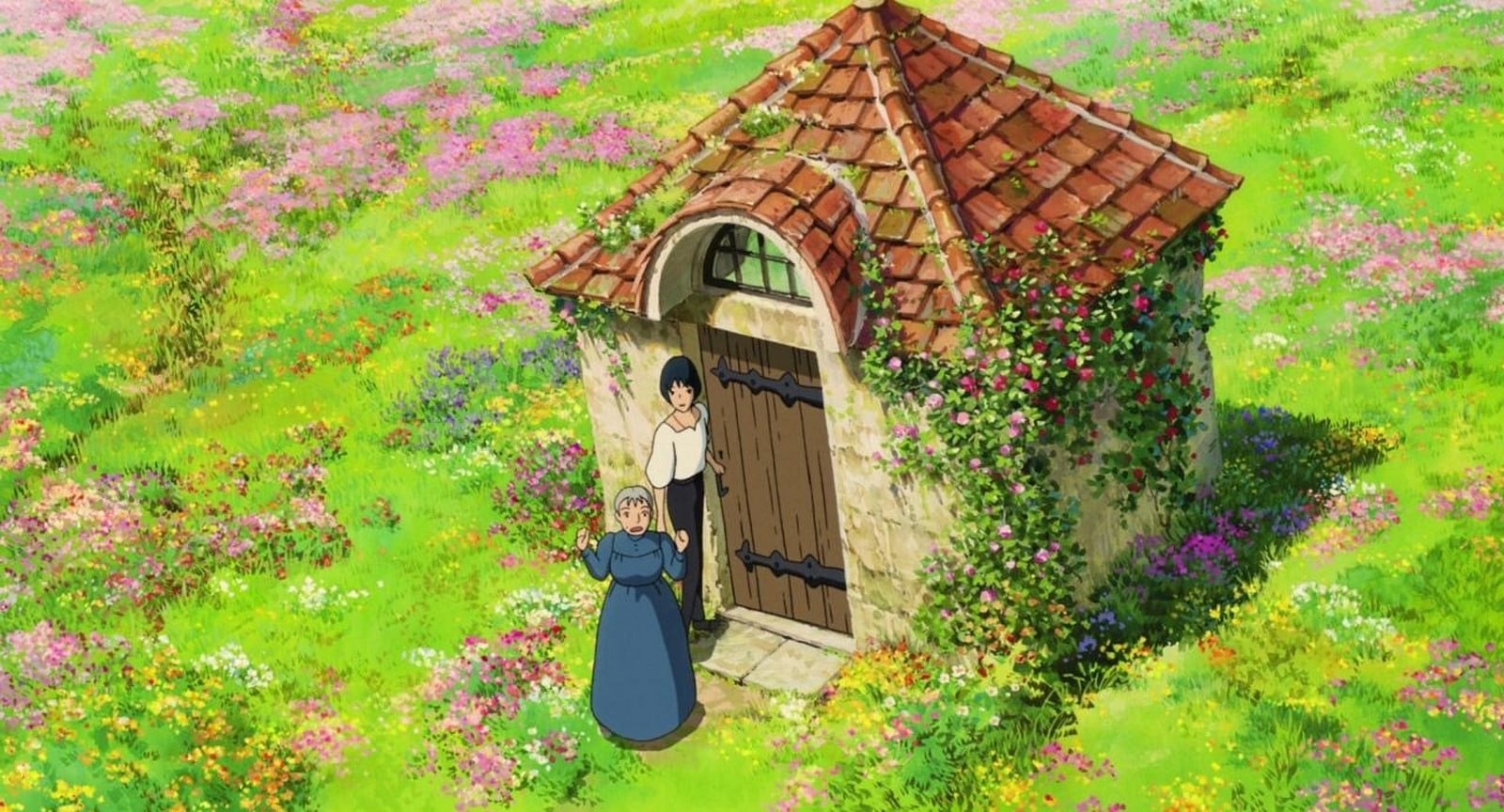
Before the curse takes hold, Sophie’s entire world is bound up in her family’s hat shop, a space that comes across as narrow, orderly, and largely fixed in its arrangement. Her days seem to follow a set path each time: down from her attic room, past neat rows of hats on display, toward a worktable near the window where she shapes and trims new stock. Straight lines and quiet repetition define the shop, and Sophie’s own movement through it mirrors that same rigidity fairly closely. She tends to take the same route day after day, occupy the same corner of the room, and rarely stray far from the counter that separates her from the street just outside.
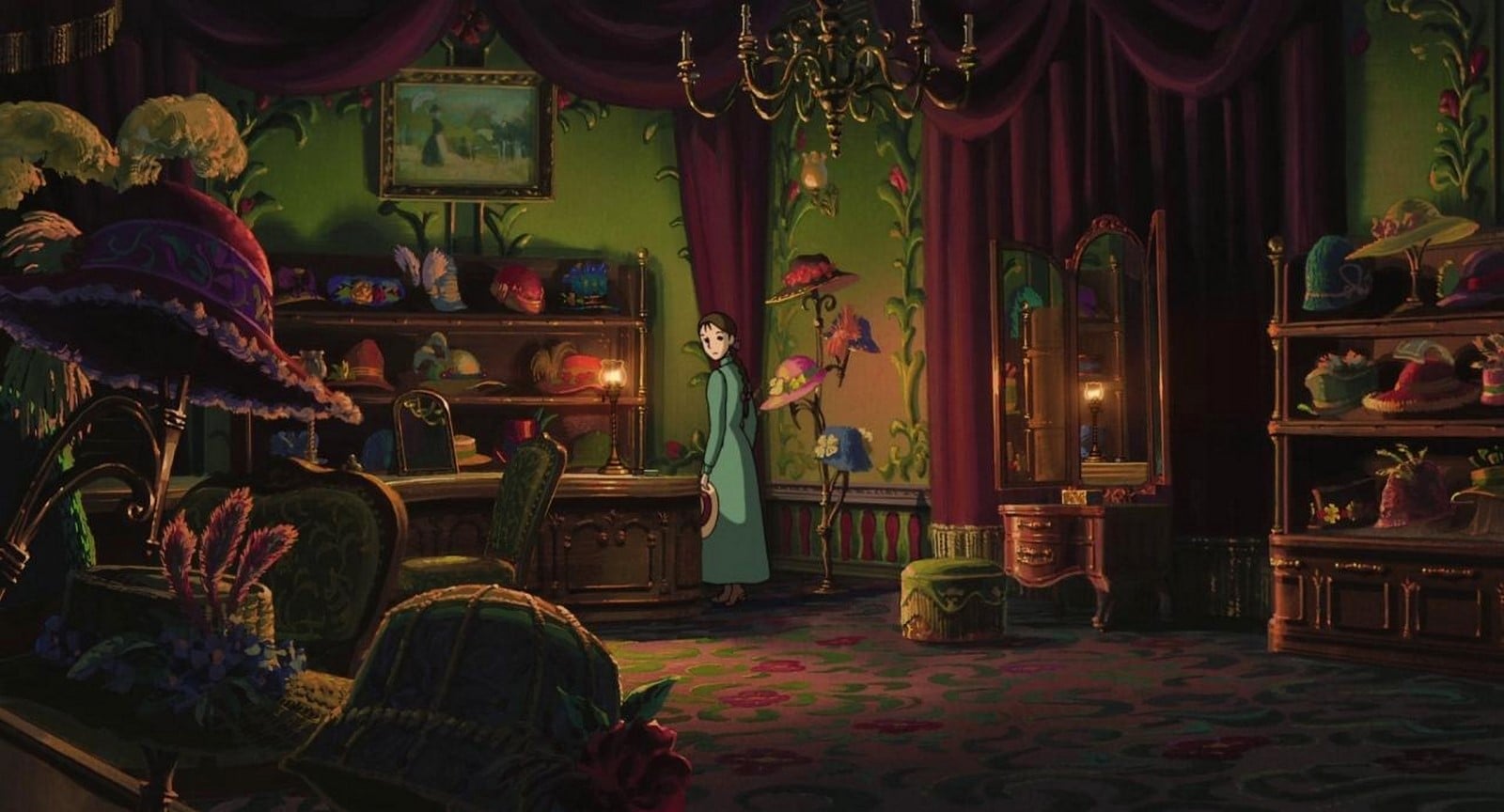
Considered architecturally, this is a space that reveals who Sophie is well before the story itself gets around to it. Its compactness and predictability read less as unpleasant confinement and more as a kind of gentle limitation, one that has simply become routine. The shop’s single ground-floor plan, with a clear separation kept between the workspace and the shopfront, leaves comparatively little room for improvisation or spontaneous use. So when the curse eventually forces Sophie out of this environment, her departure from that fixed, single-path layout ends up feeling like a spatial rupture almost as much as an emotional one.
The Castle: A Space of Constant Reassembly
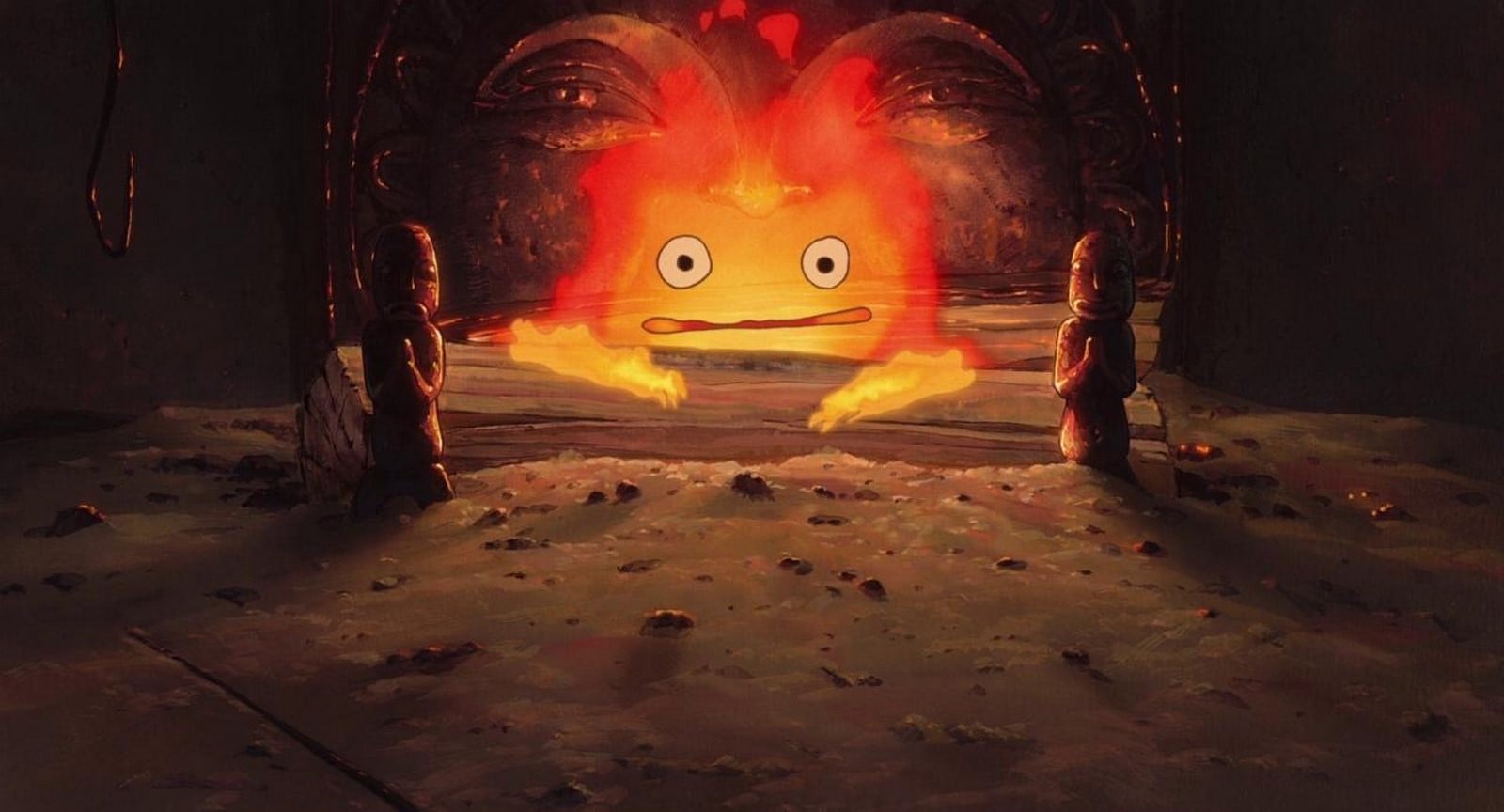
The castle could not stand in starker contrast. Rather than reading as a single coherent building, it comes across as a visible collage of salvaged parts, including turrets, exposed pipework, an old cannon barrel, and cladding that clearly does not match from one section to the next. All of it is held together and, in a sense, animated by Calcifer, the fire demon who lives at its structural and thematic core. Structurally speaking, it really should not work at all, and that is more or less the point being made. The castle reads less like a finished piece of architecture and more like an ongoing act of assembly, something that keeps getting added to and adapted as its inhabitants need it to change.
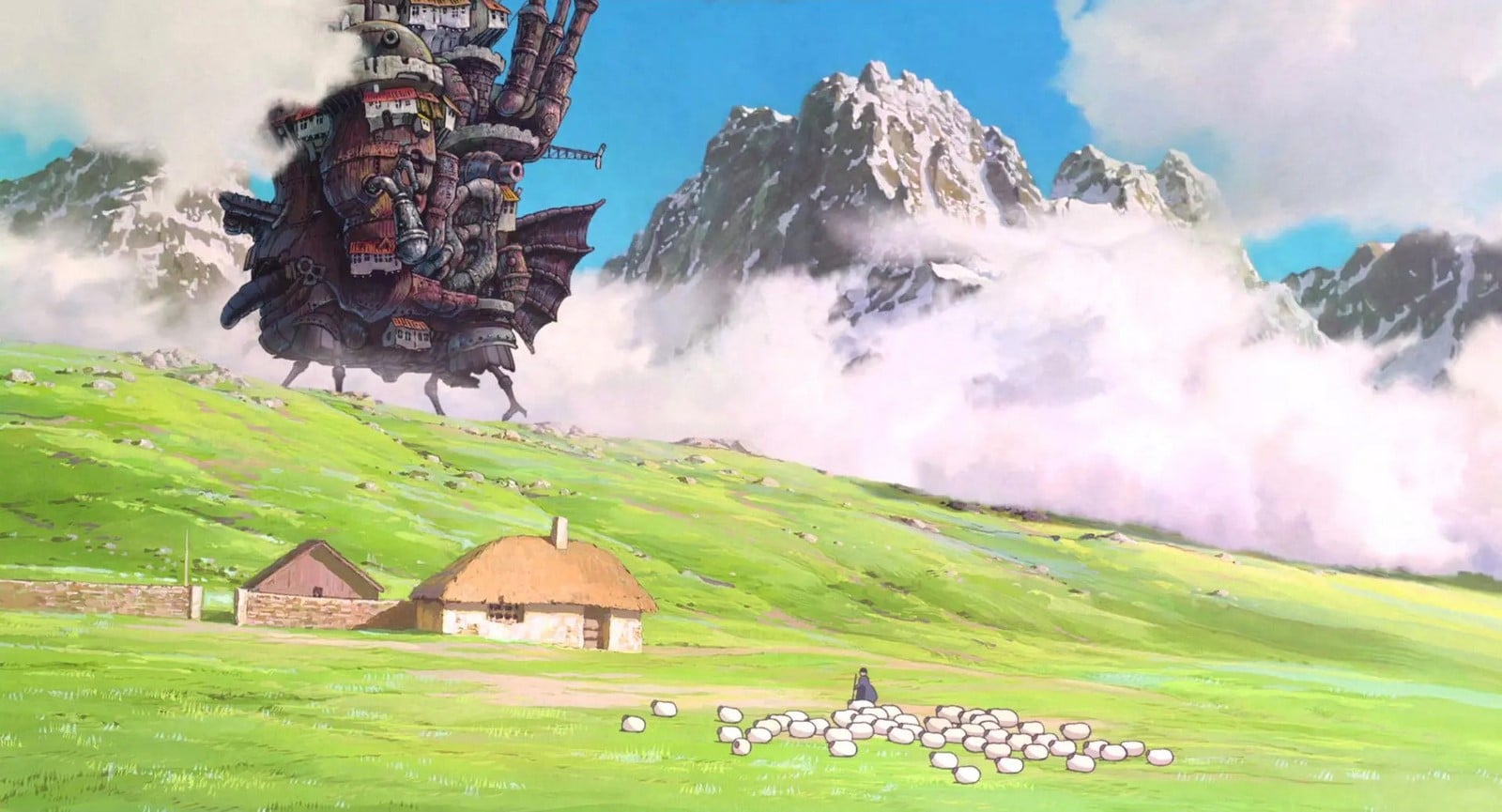
Its most telling architectural device, by some distance, is the door. A small dial fixed beside it allows whoever turns it to choose between several very different destinations, among them Sophie’s old town, Howl’s childhood home, and the royal capital, and each of these is reached through the very same physical threshold. One doorway effectively becomes several elsewhere at once. Movement through the castle is therefore governed not by fixed corridors in the usual sense, but by this portal logic, in which proximity and distance turn into something closer to negotiable—Sophie’s own relationship to the space shifts accordingly. Instead of following one set path as she once did in the shop, she begins moving fluidly between rooms whose functions seem to change depending on who needs what and when. The one constant throughout all of this is the hearth, where Calcifer burns steadily. It functions as an anchor point around which the rest of the structure quietly organises itself, even as everything surrounding it remains in near-constant flux.
Lessons for Architects and Designers
The contrast drawn between these two spaces offers a fairly useful lens for thinking about permanence versus adaptability in design more broadly. The hat shop demonstrates how a fixed, single-use layout can shape behaviour just as easily as it limits it, which serves as a reminder that efficient, orderly plans are not automatically generous ones. The castle, on the other hand, models an architecture built almost entirely out of adaptive reuse, with parts scavenged and reassembled rather than designed from a blank slate, patched together in response to immediate need rather than any overarching masterplan. There is a genuine lesson here for anyone working with retrofitted or incremental buildings: cohesion does not require uniformity to feel convincing.
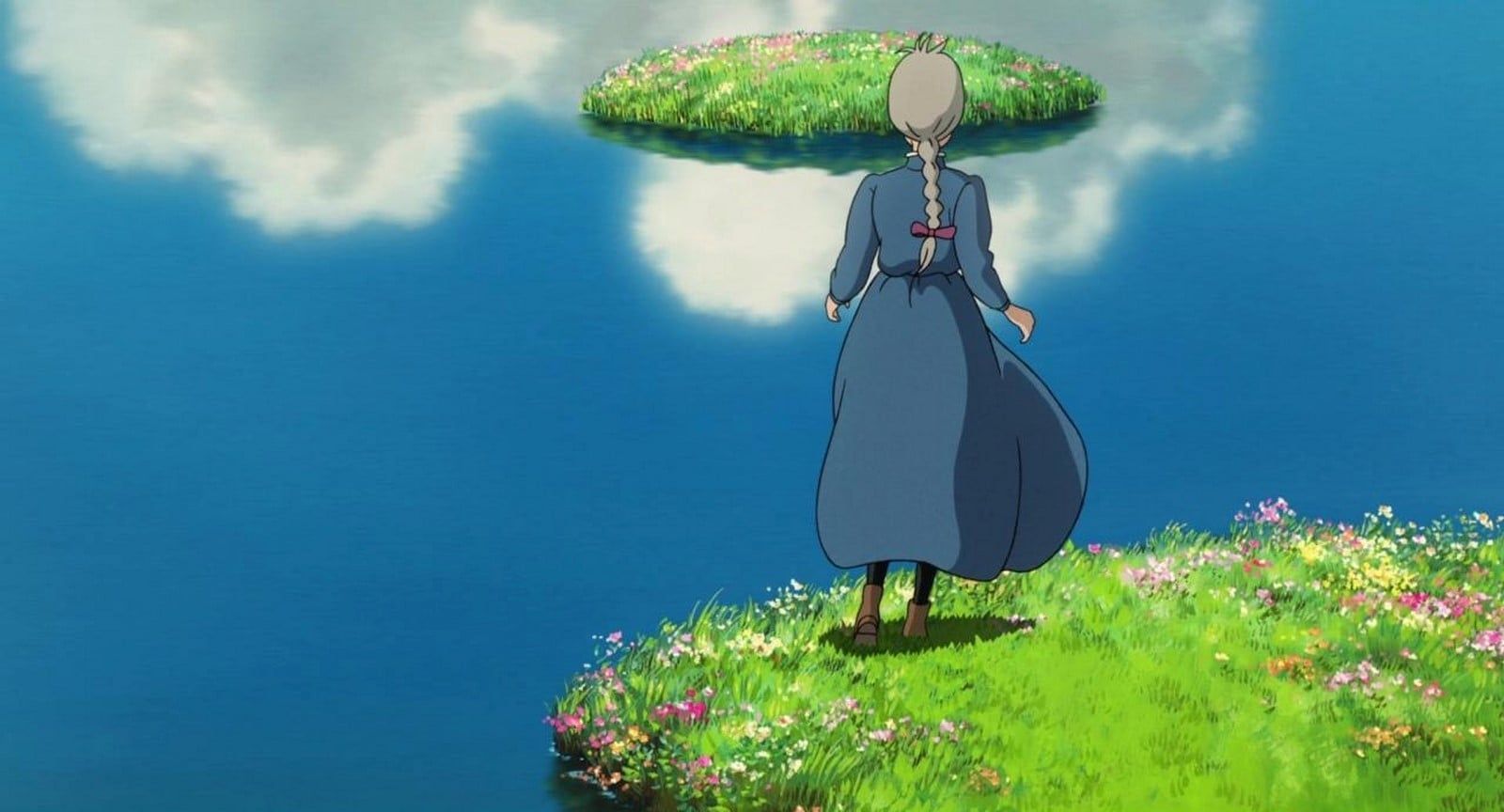
The multi-destination door is arguably the film’s most inventive spatial idea, and it carries real resonance for wayfinding and threshold design more generally: a single point of access can serve radically different contexts, distinguished by little more than a small, legible interface. Calcifer’s hearth, functioning as a fixed core within an otherwise shifting shell, echoes a fairly familiar planning principle, too: that a building, however unpredictable its edges might become, often still needs one stable point around which everything else can be organised.
Howl’s Moving Castle is not really built for viewers chasing a tightly plotted story, and its slower stretches will not suit everyone equally. That said, for anyone drawn to how buildings can express character, memory, and change, it offers considerably more to think about than most films that set out to tackle architecture directly. This is a film worth recommending, particularly to designers curious about adaptive reuse and non-linear spatial storytelling, since the castle alone makes the watch worthwhile, chaotic legs and all.
References:
- Animation Screencaps (n.d.) Howl’s Moving Castle (2004). Available at: https://animationscreencaps.com/howls-moving-castle-2004/page/14 (Accessed: 15 August 2026).
- Film Grab (2020) Howl’s Moving Castle. Available at: https://film-grab.com/2020/05/04/howls-moving-castle/ (Accessed: 15 August 2026).
- Howl’s Moving Castle (2004) Directed by Hayao Miyazaki [Film]. Japan: Studio Ghibli.