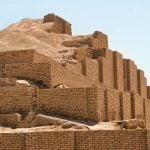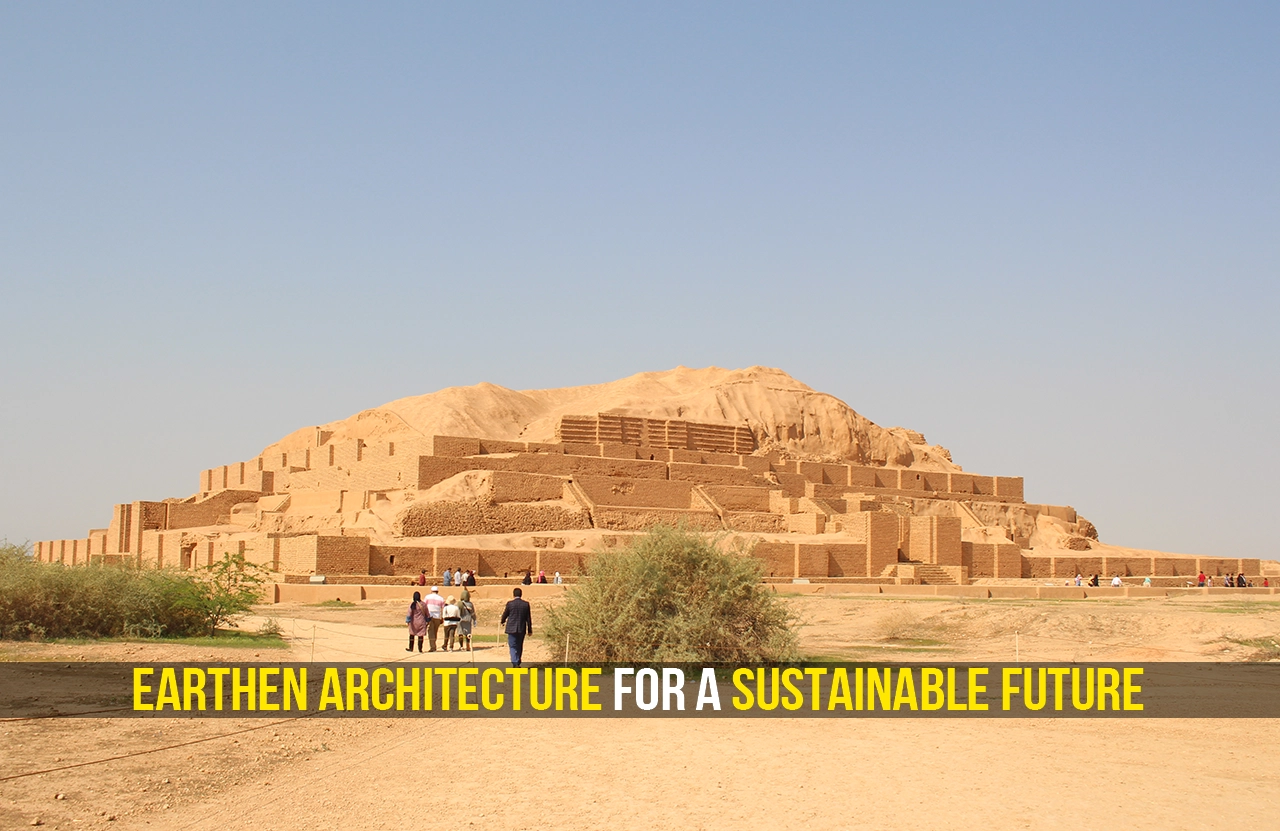
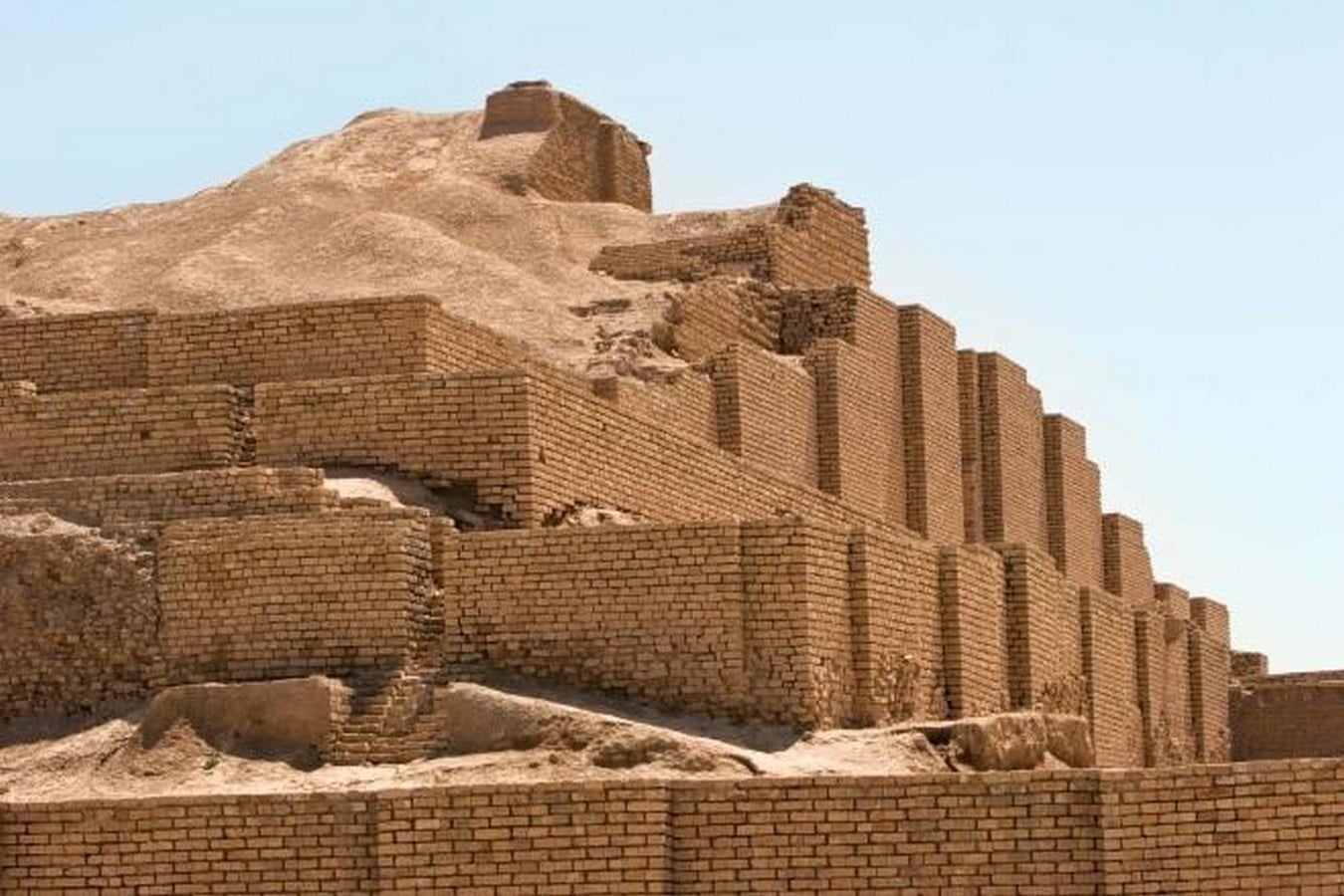
For about 10,000 years, humankind has been using the earth to build structures for shelter and commercial purposes. Earth consists of particles and minerals – mainly clay, silt, and sand that make it the building material it was and is. Since earth is a ubiquitous material that can appear raw when used, people assume the building is weak and fragile. But this notion is negated by the ruins of structures-built ages ago, which still stand, thereby showing the durability of this material, derived from the land we traverse. The same land we are born from, live on, and return to.
Earthen architecture and sustainability go hand in hand; the definition of sustainability is to allow for the needs of the present generation without compromising the needs of future generations or leaving them in a handicapped world, and the use of earth does just that.
Construction materials in the present
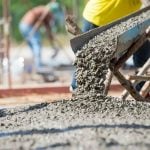
Concrete is widely used as a construction material owing to its advantages, but its production and use have caused significant environmental damage. The most harmful of them is the high carbon emissions during the energy – intensive production of cement, which is approximately 8% in the global pool of CO2 discharge. This emission has been continuously causing repelling effects towards climate change and the overall increase in global temperatures. Since concrete is a composite material, it requires the extraction of other raw materials, such as limestone and clay. This extraction creates an imbalance in the ecosystem, contributing to the displacement of many species and their potential extinction.
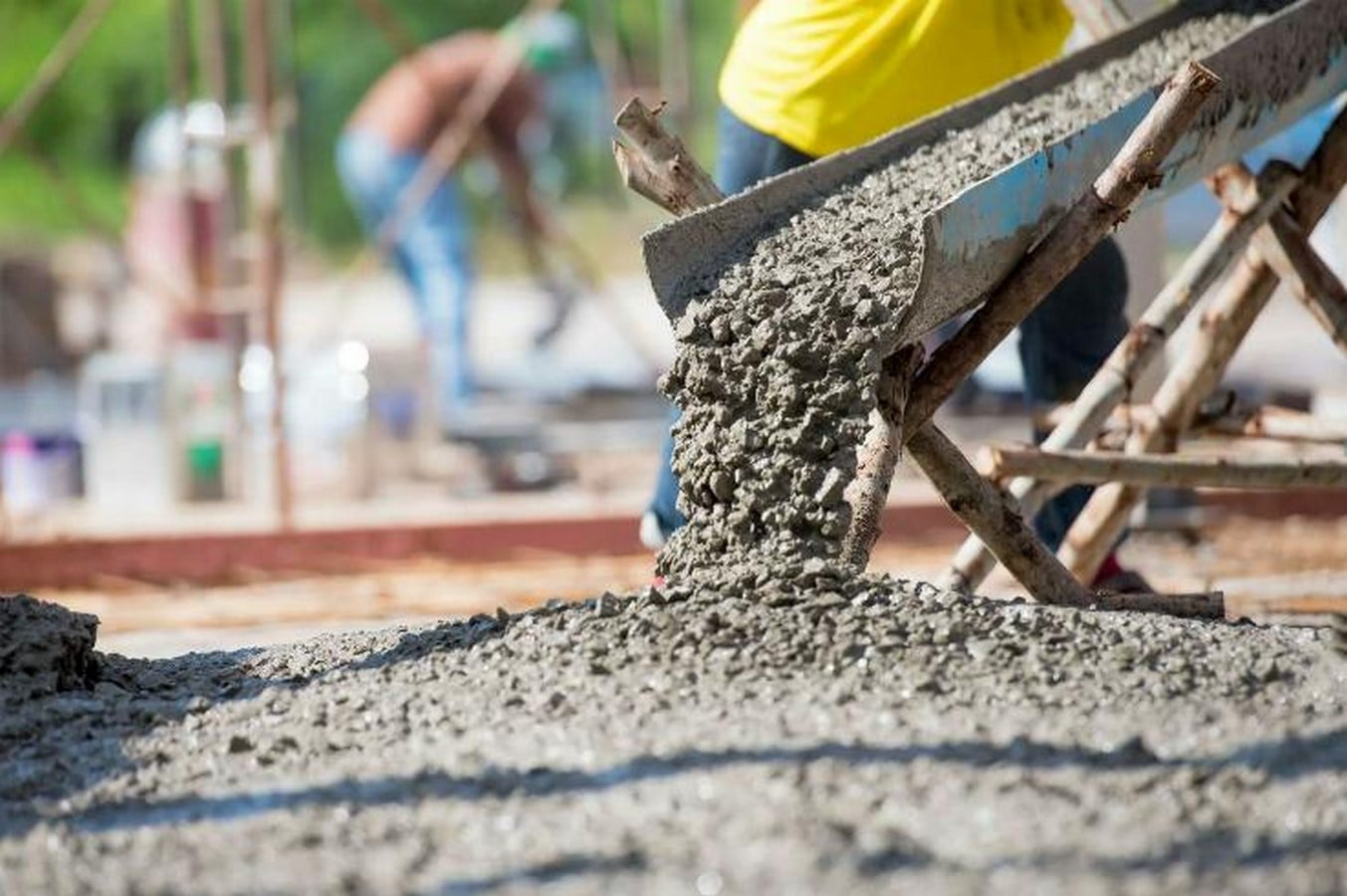
Along with these drawbacks, there is the generation of byproducts – dust and sludge, ready to pollute air and water. Another material that is in common use and has similar adverse effects is Glass, which again, releases tons of greenhouse gases. Alternatively, the integration of earthen architecture does not emit any toxic substances or gases into our atmosphere, restoring its health.
Why is earthen architecture a great choice even in modern times?
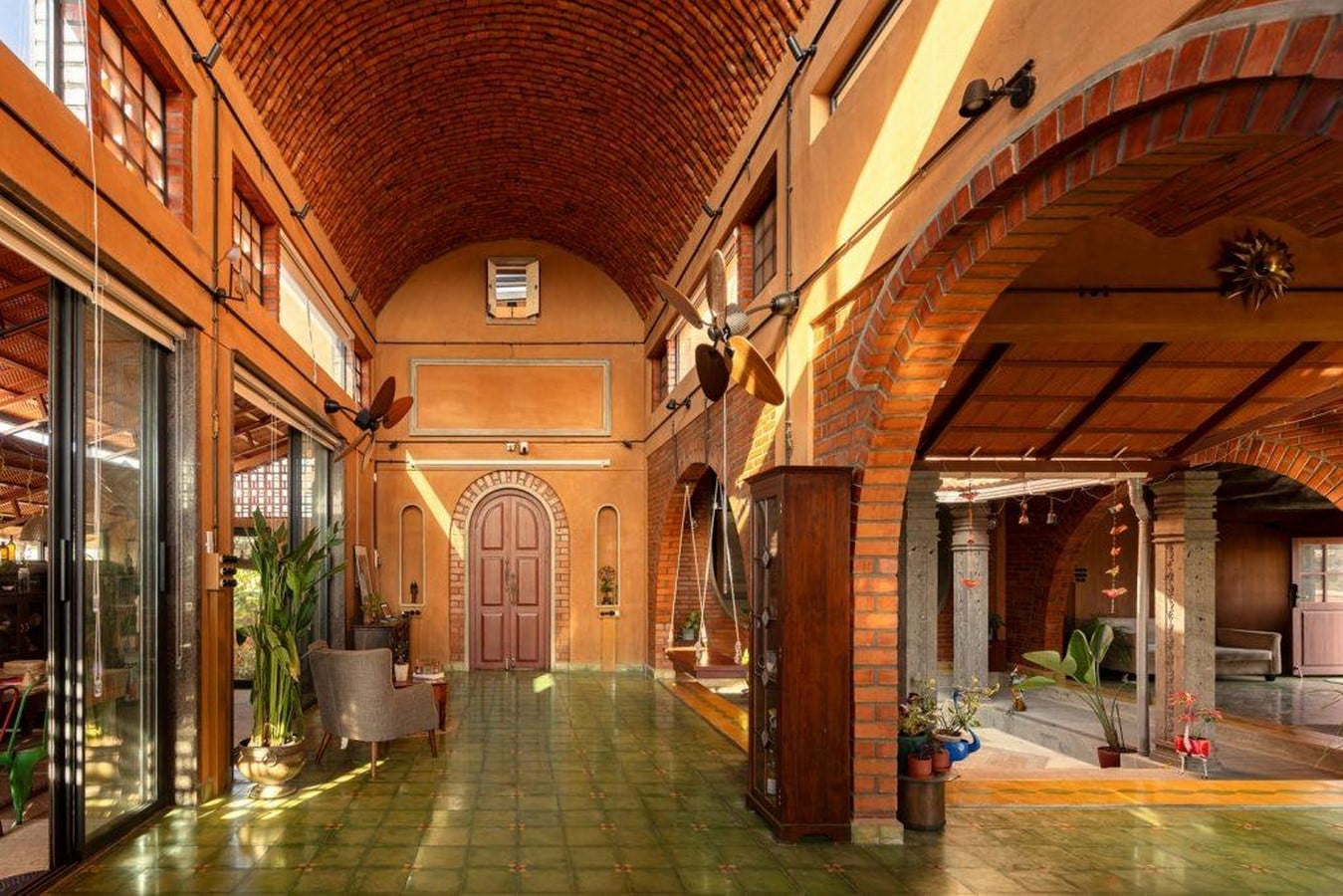
One must have experienced how cool it is when inside a building made primarily of earth, which is due to the earth’s phenomenal property of thermal regulation. It keeps the structure cool during summer and retains heat during winter, facilitating a comfortable indoor temperature throughout the year. This quality, in turn, reduces the dependency on energy for AC, coolers, or heaters. The use of the earth also reduces the carbon footprint, making it an effective lifelong investment towards the environment. Adding to the investment but towards your pocket is the fact that earth is an economically viable and long-lasting material (when maintained properly), which, if designed with and executed in an accurate manner, could develop into a visually appealing structure comprising natural colours and texture. Another reason for its integration is its health benefit – earth is non-toxic and fights off the growth of moulds, providing a cleaner indoor atmosphere. Using earth also portrays to society that its cultural heritage still sustains and revives traditional techniques of construction.
Earthen architecture practices
Earth can be used in various forms to build structures. Cob, a mixture of clay, sand, and straw, is used to create walls with hands without the need for bricks, making the process more tangible and hands-on. This mixture could be further used to cover a framework, typically made of bamboo, which makes for a sturdier structure and is called the wattle and daub method, with the latter being the cob. A more conventional form of earth is the adobe brick, a mixture similar to that of cob but with silt and a higher quantity of water. This mixture, which is poured into molds of wood of the desired size, is left to dry naturally. As it loses moisture, it gains strength and can be laid in bond patterns like normal kiln-based bricks. If gravel and silt are introduced to the mixture of cob, the result could be used to build rammed-earth walls. In this technique, a wooden formwork of the preferred width and height is worked out. The mixture of moist clay is then compacted manually or by the use of machinery, layer by layer.
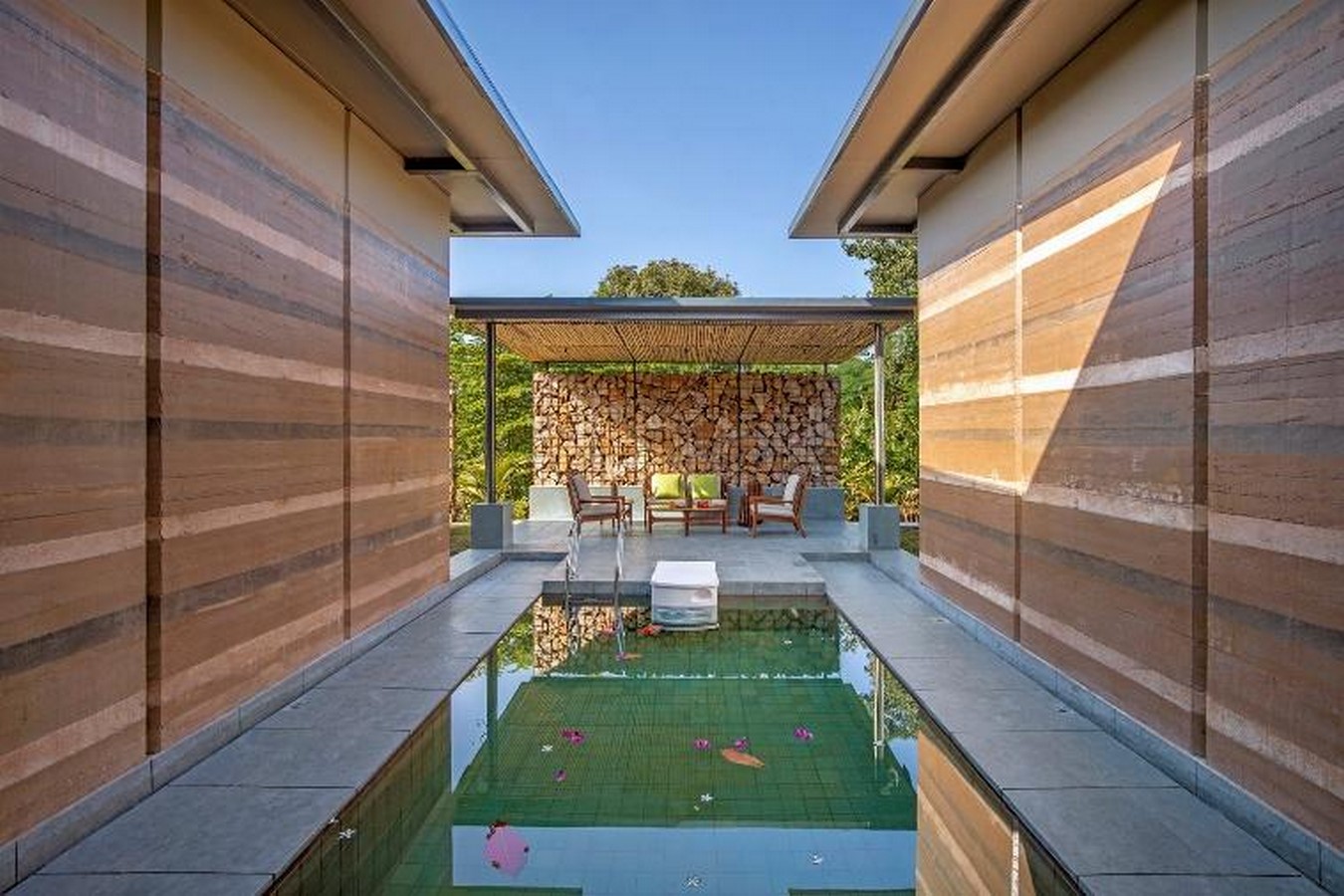
Once the required height is achieved, it is left to dry and gain stability, after which the formwork is removed and used to build the next stretch of walls. All these methods involve no energy consumption and could be taught to labourers and masons in a few practical sessions. Structures as high as 2-3 stories could be built with just earth; for buildings beyond 3 stories, durable materials could be integrated with earth.
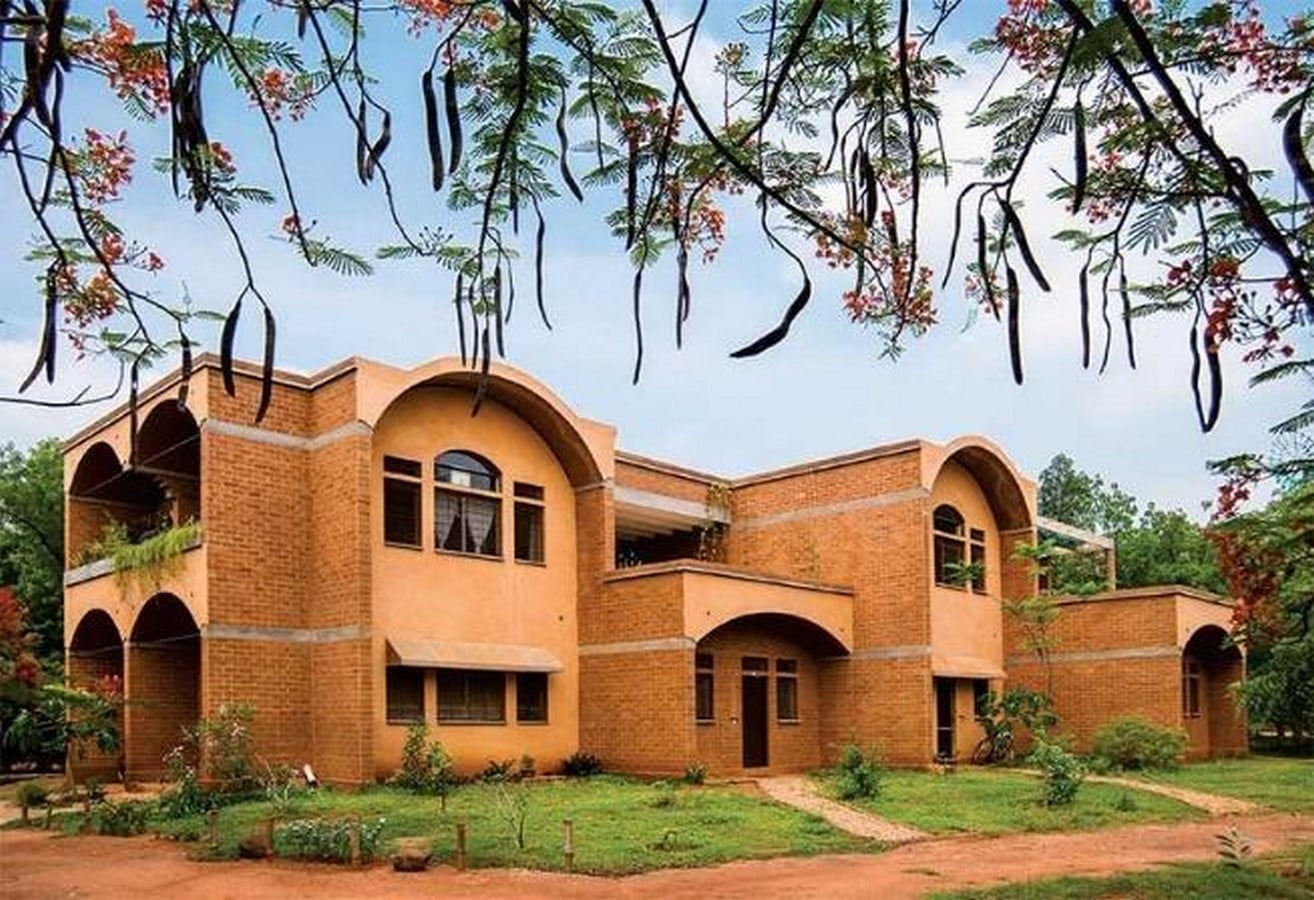
Research into Earthen architecture is prevalent in many parts of the world. In India, the Auroville Earth Institute stands out as a centre that educates people from both the architectural and non–architectural worlds to build with earth. They emphasize the use of Compressed Stabilized Earth Bricks (CSEB) and have used them in the construction of their town.
Just as animals, humans too are meant to live in harmony with nature. With evolution, the Industrial Revolution, and technological advancement, we have lost our connection to nature and its elements. This has resulted in major physical and mental deterioration in our health as well as that of our planet. To reverse this effect, we need to go close to nature or bring nature to us. Using earth in construction is not just another sustainable practice but an important necessity, and should be adopted by law across various countries
References
- Barker (2026). Sustainable Architecture. [online]. (Last updated 2026). Available at: https://www.barker-associates.co.uk/service/architecture/what-is-sustainable-architecture/ [Accessed 13 May 2026].
- UC Berkeley (2025). Earthen architecture explained in 101 seconds | 101 in 101. [YouTube video]. Available at: https://www.youtube.com/watch?v=HO2ttm4Oir8 [Accessed 13 May 2026].
- Insight Architecture (2026). A Short History of Earthen Architecture. [online]. (Last updated 2026). Available at: https://www.insight-architecture.com/future-now-exhibition/short-history-earthen-architecture [Accessed 13 May 2026].
- Ankitha Gattupalli (2022). The Science Behind the Resilience of Earth Architecture. [online]. (Last updated 24 December 2022). Available at https://www.archdaily.com/990660/the-science-behind-the-resilience-of-earth-architecture [Accessed 13 May 2026].
- The Nito Project (2018). Building with Mud: A Continuum. [YouTube video]. Available at: https://www.youtube.com/watch?v=5El1PjkYSQ4 [Accessed 13 May 2026].
- Wikipedia (2013). History of construction. [online]. (Last updated 2013). Available at: https://engineering.rowan.edu/_docs/civilenvironmental/cee-materials-reading-assignment.pdf [Accessed 13 May 2026].
- Mannlee Building Materials (2025). Types of Building Materials. [online]. (Last updated June 2025). Available at: https://www.mannleecw.com/types-of-building-materials/#elementor-toc__heading-anchor-1 [Accessed 13 May 2026].
- Converge (2023). Environmental impacts of concrete construction and manufacturing. [online]. (Last updated June 2025). Available at: https://www.converge.io/blog/environmental-impacts-of-concrete [Accessed 21 May 2023].
- The Guardian (2026 ‘We can learn from the old’: how architects are returning to the earth to build homes for the future. [online]. (Last updated February 2026). Available at: https://www.theguardian.com/environment/2026/feb/05/architects-rammed-earth-buildings-homes-future [Accessed 21 May 2023].
- Maduabum, A. (2024). AN INSIGHT INTO THE HISTORY OF EARTHEN ARCHITECTURE. International Research Journal of Modernization in Engineering Technology and Science. Pg – 2369