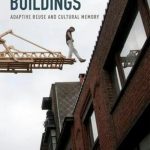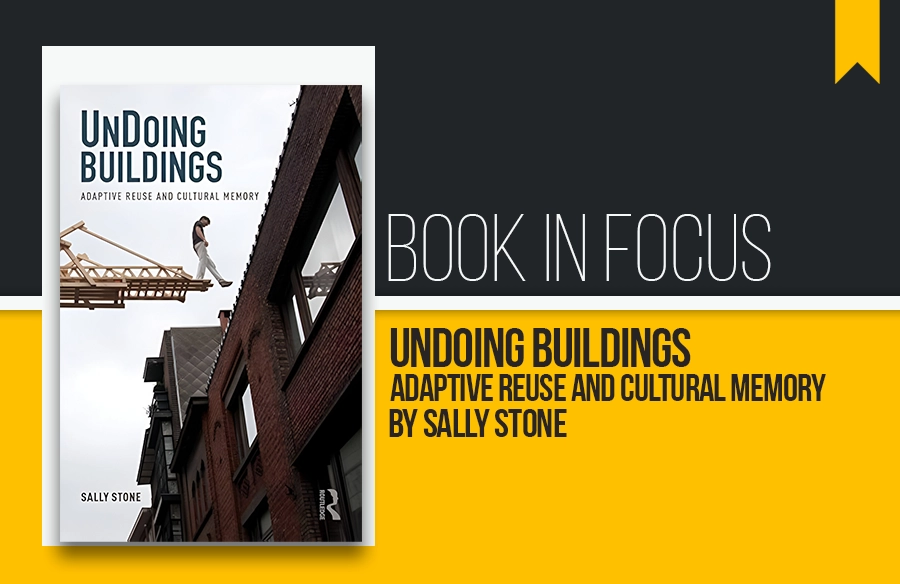
Undoing Buildings: Adaptive Reuse and Cultural Memory talks about the most crucial challenges faced in the society of the 21st century: How can we make use of the large stock of older buildings that no longer fulfil their initial purpose?
An in-depth study of adaptive reuse defines the practice as a progressive and environmentally conscious approach to architecture and urban development, rather than being considered a fallback option whenever new constructions are not feasible.
About the Author
Sally Stone began her academic journey at Manchester Polytechnic in the 1980s, where she pursued her Master’s in Interior Design under the influence of Postmodernist theory and contextualism. In later years, she completed her PhD at the University of Westminster and played a crucial role in establishing Interior Architecture as a legitimate subject of study. Sally Stone is now a professor of adaptive reuse and pedagogical innovation at the Manchester School of Architecture. She has dedicated over thirty years to designing, formulating ideas and writing about building reuse at the Manchester School of Architecture.

Sally Stone’s major work includes nine books, which are co-authored with Graeme Brooker, along with several papers and presentations, that are all aimed at advancing the theoretical thinking about building adaptation. The “Continuity in Architecture” atelier at Manchester School of Architecture is a studio dedicated to designing new buildings and interventions within existing structures, which has been led by Stone since the mid-1990s.
What Inspired the Book
The motivation for writing this book has emerged from Stone’s course of experience in the architectural culture of 1980s Manchester, where the finite opportunities for building new structures drove the architects and designers to evolve the city from the inside out. Recognising the need for a new form of urban development, this contextual approach was inspired by the city’s grand Victorian industrial past, leading to what Stone called ‘a sort of humility’. An accumulation and synthesis of ideas has been represented in this book, which has been a part of Stone’s life for many years. She identifies the twin global issues of population growth and urbanisation, which position the remodelling of structures for modern occupation as a progressive method of approach to these challenges, which has been addressed in the book.
Stone writes this book to relate “stories, concepts, beliefs and opinions”, while some of these ideas affirm existing perspectives, others are more groundbreaking, yet all are united by their integrity and relevance. Her inspirations have also taken shape from the exposure to the Post
modernist theories and contextualism, distinctly the work of thinkers like Rowe and Koetter, Rossi, Derrida, and Stirling. In the 1980s, Manchester’s architectural community was attuned to this contextual approach, where the huge Victorian brick warehouses were remodelled, reshaped and reordered with their value to the history and culture of the city, which was never questioned.
Inside the Book
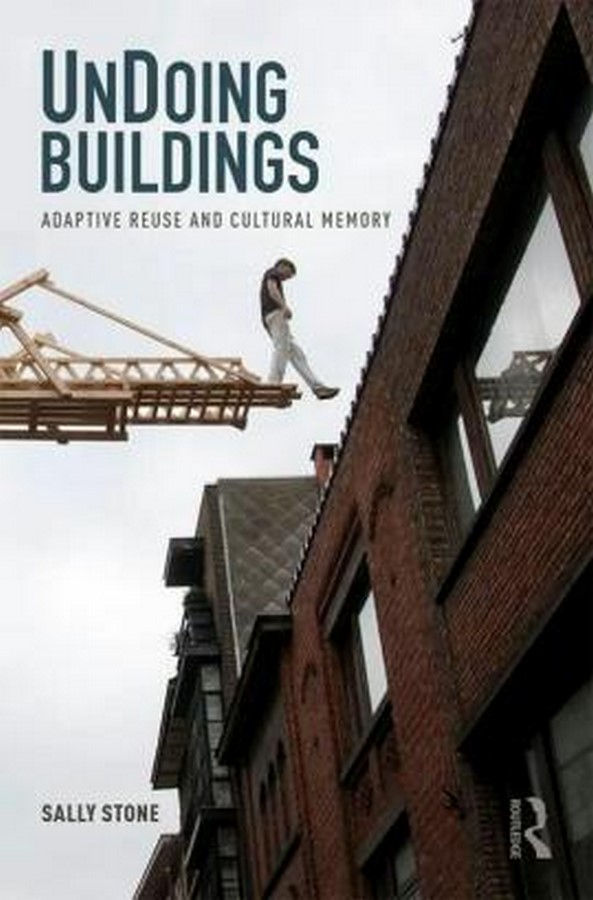
The structure of the book consists of fourteen chapters, which go from broader philosophical and historical discussions to specific case studies and reflections on practice. These chapters discuss topics like “Reading and Recognition: Landmarks of Memory,” “Site Specific Art: Unintentional Monuments,” “The Problem of Obsolete Buildings,” and “Smartness and the Impact of the Digital”.
Stone has an interdisciplinary method to examine how architects, artists and conservators approach the existing structures to showcase the rich possibilities inherent in adaptive reuse. The book consists of an exploration of some major themes, such as:
Buildings as Living Entities: Stone places an argument saying buildings are not just static objects, but are dynamic entities that are capable of transforming. She draws on Louis Kahn’s observations that buildings, when freed from their original functions, is when they reveal their true spirit.
Environmental Imperative: The book underlines how adaptive reuse is an environmental necessity and not just an architectural choice. In the industrialised countries, the building sector has reported about 50% of the total CO2 emissions, with 20% alone coming from material production and transportation.
Cultural Memory and Continuity: Stone has placed the concept of adaptive reuse as a bridge connecting the past and future, allowing societies to retain “a sense of continuity with the past as a way of creating the future”. Existing structures are the storehouse of collective memories, which incorporate the cultural DNA of the societies that built them.
“Remember, Reveal, Construct” Philosophy: Stone introduces this phrase as a guiding principle for adaptive reuse projects. This approach inspires the practitioners to understand and remember the prevailing condition initially, and then disclose the hidden qualities and potential, and ultimately construct new elements that respect both past and future requirements.
The book consists of vast case studies and references to projects by renowned architects like Carlos Scarpa, Herzog & de Meuron’s Tate Modern, and several site-specific art installations that demonstrate unique approaches to working with existing structures.
What Readers Can Gain
Environmental Awareness: Readers develop a deeper understanding of resource efficiency and sustainable development, supported by adaptive reuse, specifically in the building sector’s contribution to the global emissions of CO2.
Theoretical Framework: This book lays out comprehensive tools for interpreting why certain buildings matter to communities and how interventions bring balance between preserving and contemporary needs.
Interdisciplinary Perspective: Stone studies how the different disciplines of architecture, art, and conservation approach the existing structures, which provides the readers with a rich palette of strategies and methods.
Practical Methodology: A practical framework is provided through the philosophy of “Remember, Reveal, Construct”, through which the readers can apply to their own adaptive reuse projects. Historical Context: The book offers a deep grounding in the theoretical and historical progress of adaptive reuse, from Viollet-le-Duc’s restoration work to the digital interventions of the modern world.
A Critical Assessment
“UnDoing Buildings: Adaptive Reuse and Cultural Memory” stands as a notable contribution to the architectural discourse at a time when environmental concerns and heritage preservation have been moved from border issues to central challenges in the built environment. Stone’s approach in this book weaves together the theory, history and practice to produce a text that reaches out to various audiences while sustaining the scholarly rigour.
The key advantage of the book lies in its interdisciplinary methodology. Stone reveals rich possibilities inherent in adaptive reuse, along with acknowledging its complexities by studying the perspective of artists, architects and conservators towards existing buildings. Her personal narrative builds on authenticity and profundity, specifically in the “Motivation” section, which traces her intellectual journey from student to a recognised expert.
Stone’s environmental reasoning is particularly captivating and timely. Her statistics regarding the contribution of the building sector to CO2 emissions provide a vital context for why adaptive reuse needs to shift from being an optional practice to an essential practice. The “Remember, Reveal, Construct” philosophy provides a practical framework that balances the value of heritage with contemporary needs.
However, the book occasionally experiences the consequences of its encyclopedic aim. A few chapters are tangentially connected to the central thesis, and the substantial case studies, also informative, are slightly overwhelming with their theoretical arguments. Furthermore, while Stone places a strong environmental and cultural case for adaptive reuse, the book can gain more through discussion of the economic and regulatory barriers that often hinder such projects in practice.
The book would have benefited more from visual materials to illustrate the concepts, considering the visual nature of the subject matter. Although the writing style is generally accessible, some sections contain a significant amount of background knowledge in architectural theory.
Looking past these minor limitations, the book “Undoing Buildings” successfully positions its primary objective of adaptive reuse as a sophisticated, environmentally responsible, and culturally enhancing approach to architecture. Stone’s work yields both practical guidance and an intellectual framework to address the pressing challenges faced by the built environment. This book is an essential read for people involved in shaping the future of our cities and structures, providing both instructions and inspirations, in order to create a sustainable architectural future through mindful engagement with the existing architectural heritage.
References:
Ash Sakula Architects (2020) ‘Ash Sakula’s Adaptable Neighbourhoods featured in Sally Stone’s new book “UnDoing Buildings”. Available at:
https://www.ashsak.com/journal/undoing-buildings-adaptable-nieghbourhoods (Accessed: 20 October 2025).
Manchester School of Architecture (2019) ‘UnDoing Buildings: Adaptive Reuse and Cultural Memory’. Available at: https://www.msa.ac.uk/research/project/119/ (Accessed: 20 October 2025).
Stone, S. (2019). UnDoing Buildings: Adaptive Reuse and Cultural Memory. London: Routledge. Available at: https://www.routledge.com/UnDoing-Buildings-Adaptive-Reuse-and-Cultural Memory/Stone/p/book/9781138226630.