You know how some movies just have a world you can feel? It’s not just the actors or the story, but the very spaces they inhabit. Everything, from the buildings to the furniture, feels as though it were intentionally placed there. The film Gattaca is a prime example of this. What is most powerful about it is how it uses architecture and design to tell its story. The buildings are not just backdrops; they are a physical manifestation of a society obsessed with perfection and genetic control.
The movie presents a world that looks flawless but feels utterly soulless. The architecture in Gattaca isn’t just beautiful, it’s chilling. It’s a key to understanding the film’s core message.
The Unflinching Materiality of a Designed World
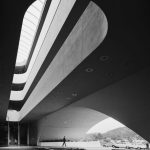
The first impression of Gattaca’s world is defined by its architectural weight and materiality. The film deliberately avoids the sleek, hyper-modern aesthetics of many science fiction films, instead anchoring its visual identity in the robust, unyielding language of Brutalist and Mid-Century Modern design. This is a deliberate choice, as the structures’ raw concrete, monolithic forms, and rigid geometric shapes visually reinforce the society’s core philosophy: a social order built on an immutable genetic destiny. The architecture feels permanent, solid, and unforgiving, much like the system it represents. In this world, buildings are not just living places; they are institutions that impose their presence, dwarfing the human figures within them and underscoring the individual’s powerlessness against an all-encompassing system. The coolness of the concrete and the hard echo of footsteps on stone floors are not just sensory details; they are a constant reminder of the cold, impersonal nature of this world.
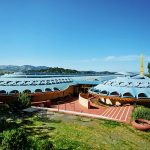
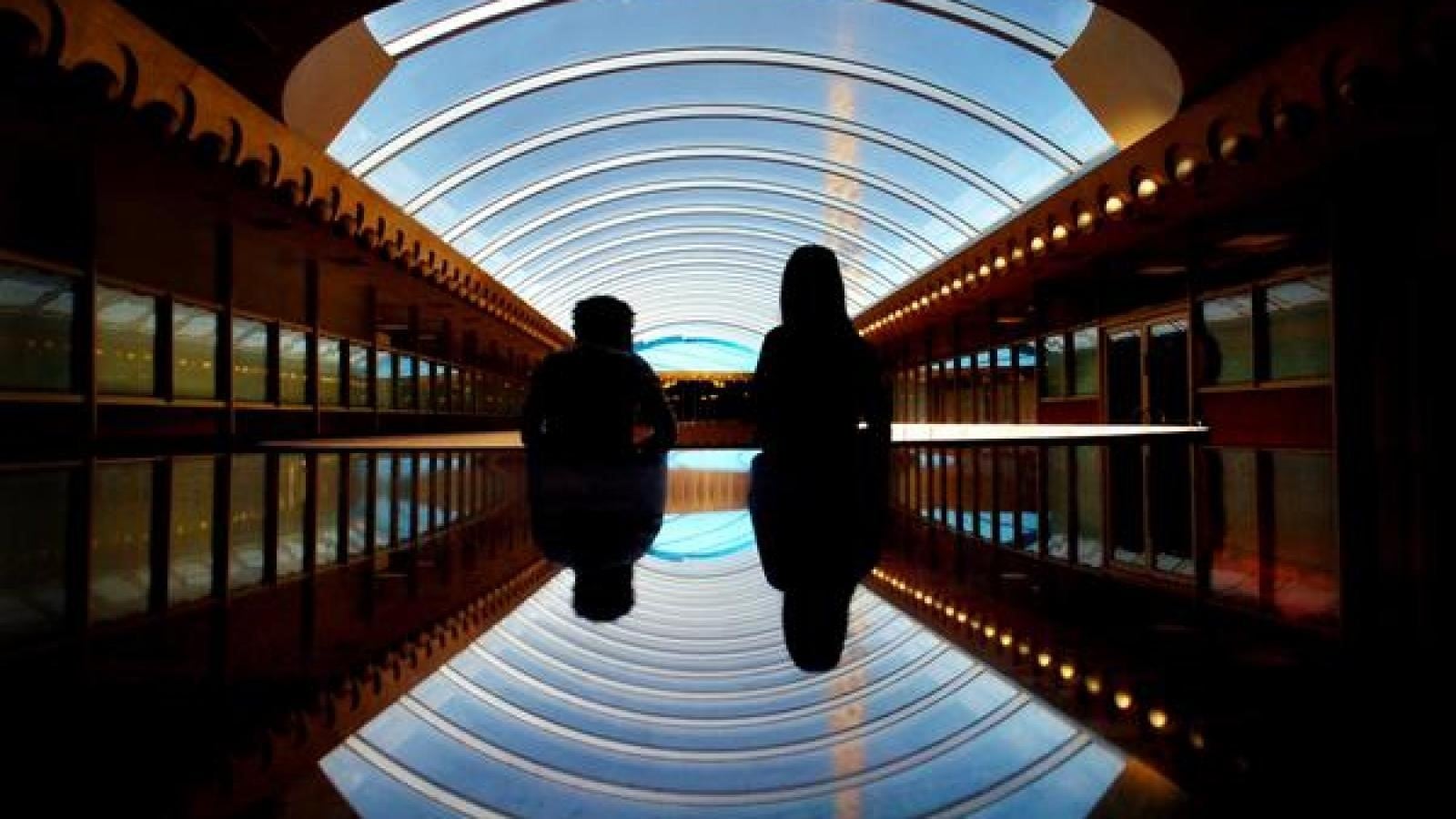
A key part of this world is the deliberate use of Frank Lloyd Wright‘s Marin County Civic Centre. This masterpiece of architecture is expertly repurposed, transforming from its original intent of public harmony into a symbol of a vast, impersonal bureaucracy. The Civic Centre’s long, curving corridors and repetitive arches become a physical manifestation of a seemingly perfect and inescapable system. The sense of grandeur is chillingly detached; the very floors beneath one’s feet and the ceilings overhead feel both immense and cold. The building’s aesthetic, with its light-filled atriums, creates a sense of transparent oversight, as if everyone is always in view. Its consistent and logical structure suggests a world where a pre-written code governs all, making the spaces themselves feel predictable and unyielding. For designers, this serves as a powerful lesson on how an architect’s original intent can be subverted for a different narrative, and how a design’s inherent qualities can be recontextualised for a new purpose.

The Geometry of a Flawless Existence
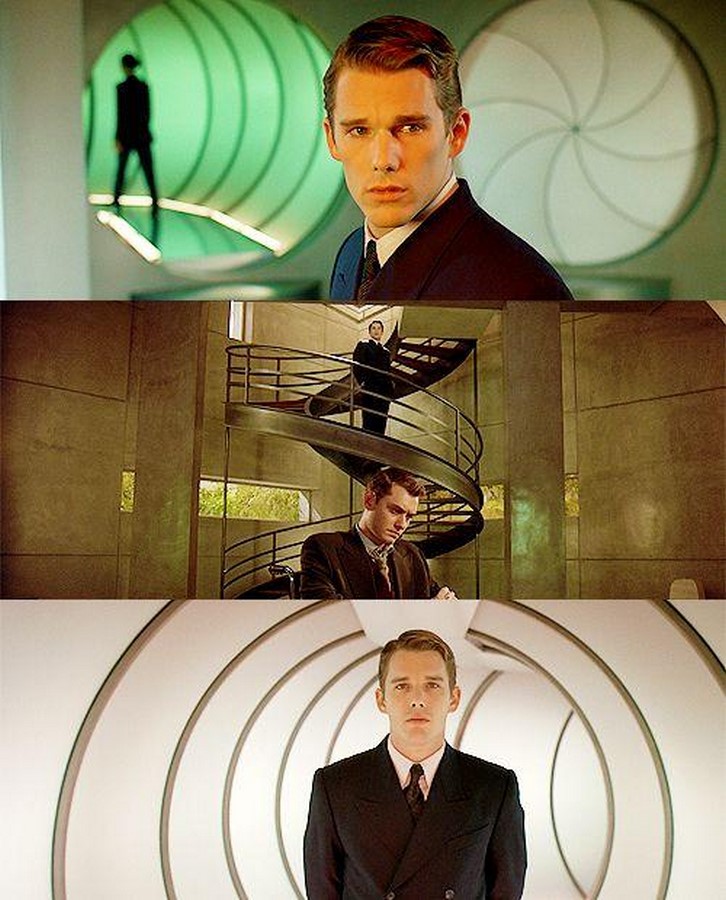
Beyond the physicality of the buildings, the film’s entire visual language is a study in precision and order. An unwavering commitment to symmetry and repetitive patterns defines almost every shot. From the perfectly aligned workstations to the long, balanced hallways, the meticulous composition communicates a world where everything has its designated place. This visual discipline is not mere style; it is a profound reflection of society’s fixation on genetic perfection. The Gattaca world, as seen through the camera’s lens, is utterly without visual flaws. It leaves no room for randomness or disarray, a direct parallel to the eradication of genetic imperfections. The repetitive nature of the architecture and the symmetrical framing leave no visual room for deviation, reinforcing the societal expectation of genetic and social conformity. This is a profound architectural lesson in how visual repetition can reinforce ideology without a single word of dialogue.
This obsession with geometry makes the spaces feel inherently controlled. The regularity of the patterns becomes a constant, silent reminder of the societal pressure to conform. For a designer, it demonstrates how repetitive elements can evoke both grandeur and a suffocating uniformity. It is an important lesson in the power of visual repetition to subtly communicate an oppressive ideology. The very layout of the spaces, with their clean lines and precise angles, serves as a visual framework for a society that leaves no room for the messy, unpredictable nature of genuine human life. The meticulous attention to these details is what makes the world of Gattaca feel both beautiful and unsettling.

The Architecture of Duality: Light, Shadow, and Human Will
The film’s design also uses the non-physical elements of a space to tell its story. Lighting, in particular, serves as a powerful narrative tool, visually articulating the duality of life in this genetically stratified world. Public and official spaces, such as the Gattaca Corporation headquarters, are often bathed in a cool, uniform, and almost clinical light. This lighting scheme highlights the supposed transparency and flawlessness of the system, leaving no dark corners for secrets. The bright, sterile environment makes the world appear rational, logical, and fully exposed to scrutiny, much like a biological specimen under a microscope. This is a masterclass in how light hierarchy can be manipulated to define the ethical boundaries of a space.
In stark contrast, scenes of a more private or hidden nature are often cast in deep shadow or filtered through Venetian blinds. The strong interplay of light and shadow, known as chiaroscuro, visually represents the protagonist’s dual existence, a public, ‘valid’ self and a hidden, ‘invalid’ one. These shadows become a sanctuary, a place where a person’s true, flawed humanity can exist away from the harsh, judging light of society. The careful use of lighting turns an ordinary room into a metaphor for a person’s inner struggle, highlighting how a designer can use ambient conditions to communicate a sense of vulnerability or safety. The contrasting aural environments, the hushed echo of public spaces versus the more intimate, unfiltered sounds of private rooms, further enhances this duality.
The Scale of Individuality
The scale of the architecture in Gattaca is used to great effect to comment on the role of the individual. The monumental buildings, with their vast atriums and long corridors, are designed to make the human figures appear small and insignificant. This purposeful sense of scale communicates the sheer power of the system against which the protagonist struggles. The human form is dwarfed by the architecture, a visual representation of the individual’s humility in the face of an all-encompassing genetic destiny. It is a powerful reminder that in this world, an individual’s life and aspirations are minuscule in the grand design of the social order. This lesson is fundamental for designers: scale is not merely a technical consideration but an emotional one, used to communicate power dynamics and human feelings of being overwhelmed or empowered.
However, the film also subtly presents spaces that, while still architecturally cold, are scaled for more intimate human actions. These more modestly scaled interiors, such as an apartment or a small room, serve as sites of genuine, if desperate, human effort and connection. The design of the larger world is a grand, unfeeling spectacle, but within its cold framework, moments of human resilience and warmth exist in smaller, more contained volumes. These spaces highlight the central conflict between the vast, impersonal architecture of society and the small, defiant acts of the human spirit. The careful consideration of scale and proportion teaches a powerful lesson on how different environments can be used to tell different parts of the same story.
A Reflection on Design and Human Will
Gattaca stands as an extraordinary example of how film design can transcend mere aesthetics to become a fundamental component of the narrative. The Gattaca architecture, with its Brutalist forms, the institutional presence of the Marin County Civic Centre, the pervasive symmetry, and sterile minimalism, collectively crafts a world that is both visually compelling and profoundly unsettling. The filmmakers did not merely create a set; they constructed a visual argument, showing a world that appears flawless but is deeply flawed at its core.
The design of the film serves as a powerful reminder that architecture is never neutral; it always carries the imprint of the values and philosophies it serves. The film expertly demonstrates how a design that prioritises ultimate order and efficiency can, paradoxically, result in a profoundly dehumanising experience. While the precision and discipline in the design are admirable from a purely aesthetic standpoint, their narrative purpose is to highlight a chilling vision of a society where the individual is secondary to a genetic ideal. Gattaca leaves a lasting impression because its meticulously crafted world feels so chillingly plausible, making a powerful statement that true design, when divorced from human empathy, can become a cage rather than a sanctuary.
References:
https://en.wikipedia.org/wiki/Marin_County_Civic_Center
https://en.wikipedia.org/wiki/Brutalist_architecture
https://franklloydwright.org/site/marin-county-civic-center/