Rear Window (1954) by Alfred Hitchcock is a thriller and one of his classic films in which he explores Architecture and Human Nature in a very imaginative way. The story unfolds within the set of a Greenwich Village apartment complex building, out into a courtyard, turning those limits into a stage for themes that are symbols of human nature such as voyeurism, loneliness, and curiosity. The film is so engaging because of its successful use of space and how the lives of characters intersect. For such clever plot and evocative atmosphere, the audience has given 8/.5/10 reviews, and it’s a must-watch for anyone who likes suspense thrillers or films in which architecture plays a role in the story.
The Architectural Setting: Large Windows, Courtyard Space, Facades, and Accessibility
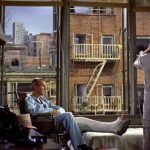
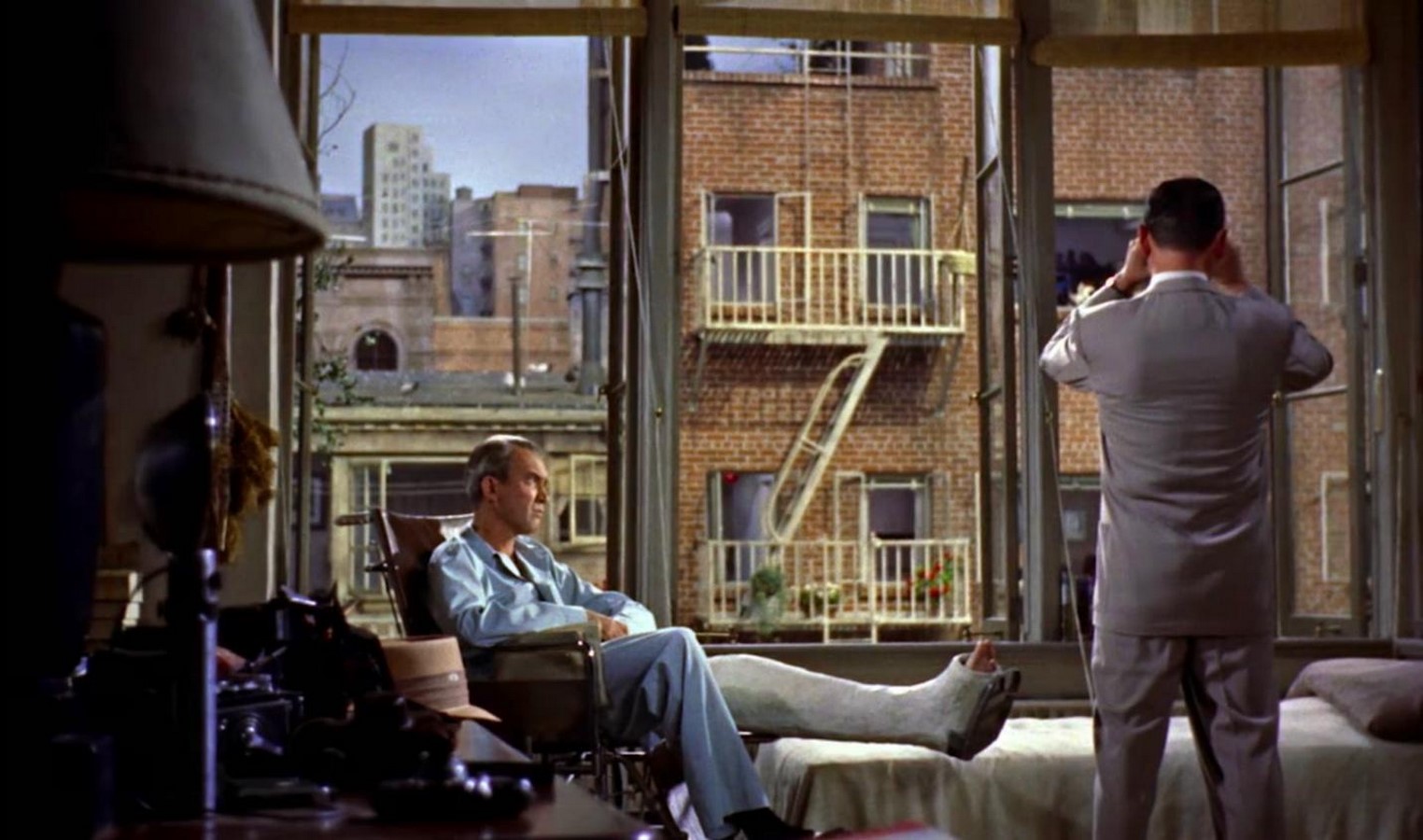
The movie begins with a slow pan across the Greenwich Village apartment building, with a central courtyard that has surrounding connected brick buildings that reflect the architecture of New York City in 1950. The courtyard is essentially a half-shared space—giving people privacy, but with few means to interact with one another. With gardens and paths, it is a miniature haven amidst the crowds of the city, with fresh air to boot, as well as a place to relax. The building also has large openings which permit plenty of light within and diffuse divisions between the public and private spaces. Their simple clean design is a reflection of the post-war modern style’s focus on openness and functionality. These windows also allow people to look in on each other’s lives, giving them a restrained sense of community from what they are all able to see.
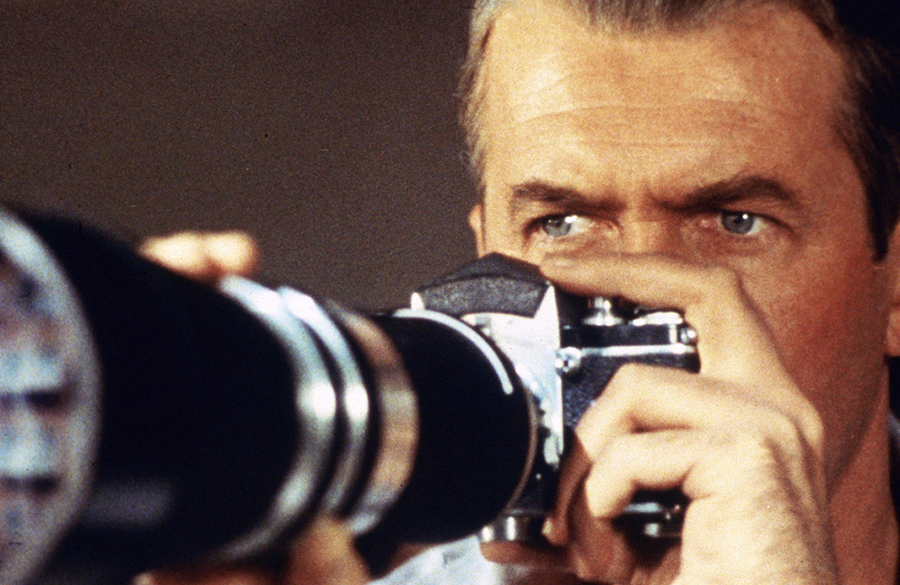
The brick exterior of the building, typical of Greenwich Village, expresses the sense of strength and beauty with simple, functional shapes, eschewing unnecessary ornament. These courtyard-facing facade elevations then contribute to the sense of exposure, transforming the building itself into a human drama theater and in keeping with the film’s preoccupation with seeing. As Jean Douchet suggests, the protagonist, L.B. “JeffJefferies, produces his own cinema by looking out of his apartment window, a screen, upon which the neighborhood is the film itself. The fragmented lives are separated by the autonomous windows into vignettes that Jeff assembles into a story, duplicating the experience of the onlooker viewing Rear Window. This spatial structure positions the building as the key framing device to comprehend space, with Jeff as spectator and his window serving as a cinema frame.
Wheelchair accessibility was also neglected in 1950s buildings, as seen in the way that Jeff is trapped in his apartment.Most buildings during that era had narrow doors (28–30 inches), high thresholds, and steep stairs, which constituted mobility barriers. Existing standards, themselves necessitated by the Americans with Disabilities Act (ADA), would be retrofitted with zero-step entrances, doorway widths expanded to 32 inches, hallway widths to 36 inches, and ramps at a slope of 1:12. Braille controls and auditory signals in lifts would serve as vertical access. Retrofitting the rear window building structure through ramps to courtyard entrances and opening doorframes would create easy access, re-inventing its outdated structure to accommodate contemporary inclusivity, giving everyone easy access to the social life in the courtyard.
Modern Technologies Enhancing Accessibility
Technological advancements offer numerous opportunities to transform spaces into more inclusive and user-friendly environments, particularly when reimagining a film’s setting. Modern furniture designs, such as voice-activated doors integrated with various systems, provide hands-free entry, a significant benefit for individuals with limited mobility. Smart sensors and locks enhance security without sacrificing convenience.
Mobility can be further revolutionized with AI-powered wheelchairs capable of mapping and navigating complex spaces autonomously, while AR applications can guide residents or visitors with clear wayfinding support. Within apartments, voice-controlled devices for lighting, thermostats, and other appliances minimize physical effort. The building itself can incorporate smart windows with adjustable tinting and voice-activated elevators, contributing to comfort and privacy.
Collectively, these innovations transcend mere convenience, fostering a more accessible, adaptive, and dignified living environment for everyone within the building.
Human Psychology and Architectural Influence
Alfred Hitchcock’s Rear Window explores human psychology, particularly the impulse to observe others, using its architectural setting. The film amplifies this voyeuristic tendency through the male gaze, which interacts with the design of large windows and courtyard facades. This setup fosters “social curiosity,” a psychological drive to understand the lives of others, a drive intensified in urban environments where close proximity heightens awareness of neighbors.
Jeff’s apartment window acts as a “movie screen,” as Douchet suggests, allowing him to construct narratives from his neighbors’ lives. This mirrors the audience’s own act of watching the film, creating a meta-analysis of spectatorship that implicates viewers in Jeff’s voyeurism and raises ethical questions about privacy and objectification.
The confined setting evokes cabin fever, where restricted movement fuels restlessness and hyper-awareness. Jeff’s fixation on his neighbors serves as a coping mechanism for boredom and isolation, a dynamic often studied in environmental psychology. The large windows amplify this by providing constant visual stimuli, blurring the lines between private and public spaces. The courtyard, in turn, creates a “defensible space” effect, fostering both security and vulnerability, which influences trust, suspicion, and connection among residents.
Despite his well-traveled lifestyle, Jeff identifies closely with his Greenwich Village home, viewing it as a thriving, interconnected community of middle-class and bohemian neighbors. He contrasts this space with the high-class Park Avenue world of his girlfriend, Lisa, whom he perceives as an outsider unable to fully integrate into his neighborhood’s dynamic. However, even within his own apartment, Jeff feels uneasy, desperate to return to his window to observe without participating, much like a film viewer. The actions unfolding outside his window dictate his sense of identification, highlighting the dual nature of Greenwich Village as both a comforting home and a separate, observable space.
In my opinion, Rear Window is a masterful film that integrates architecture and psychology effortlessly. The courtyard, big windows, and era-specific facades not only narrate the story but also amplify universal human desires, making the movie universally attractive across generations.Refitting the building with accessibility features and integrating technologies like voice command systems would maintain its vintage charm but welcome contemporary audiences as well. Equilibrium between technology and simplicity is the central approach not to overwhelm the users. Hitchcock’s genius lies in transforming a single location into a psychological and architectural playground, making Rear Window a compelling study of space, mind, and human nature.

Reference:
- https://www.rogerebert.com/reviews/great-movie-rear-window-1954
- https://www.theguardian.com/film/filmblog/2012/jul/25/my-favourite-hitchcock-rear-window
- https://philosophyinfilm.com/2021/07/15/architecture-of-gazing-in-rear-window/