
Most people pass through their day without noticing it; the walls, windows, and spaces pulling the strings of their mood, energy, and even their body clock. Architecture is often perceived as merely a background element in everyday life, but it truly acts as the director. From the first glimmer of morning light to the last shadow before sleep, the built environment subtly and discreetly writes the narrative of our day.

Now, picture a simulation: two identical lives, two identical people.
Only one difference: the design of the world around them.
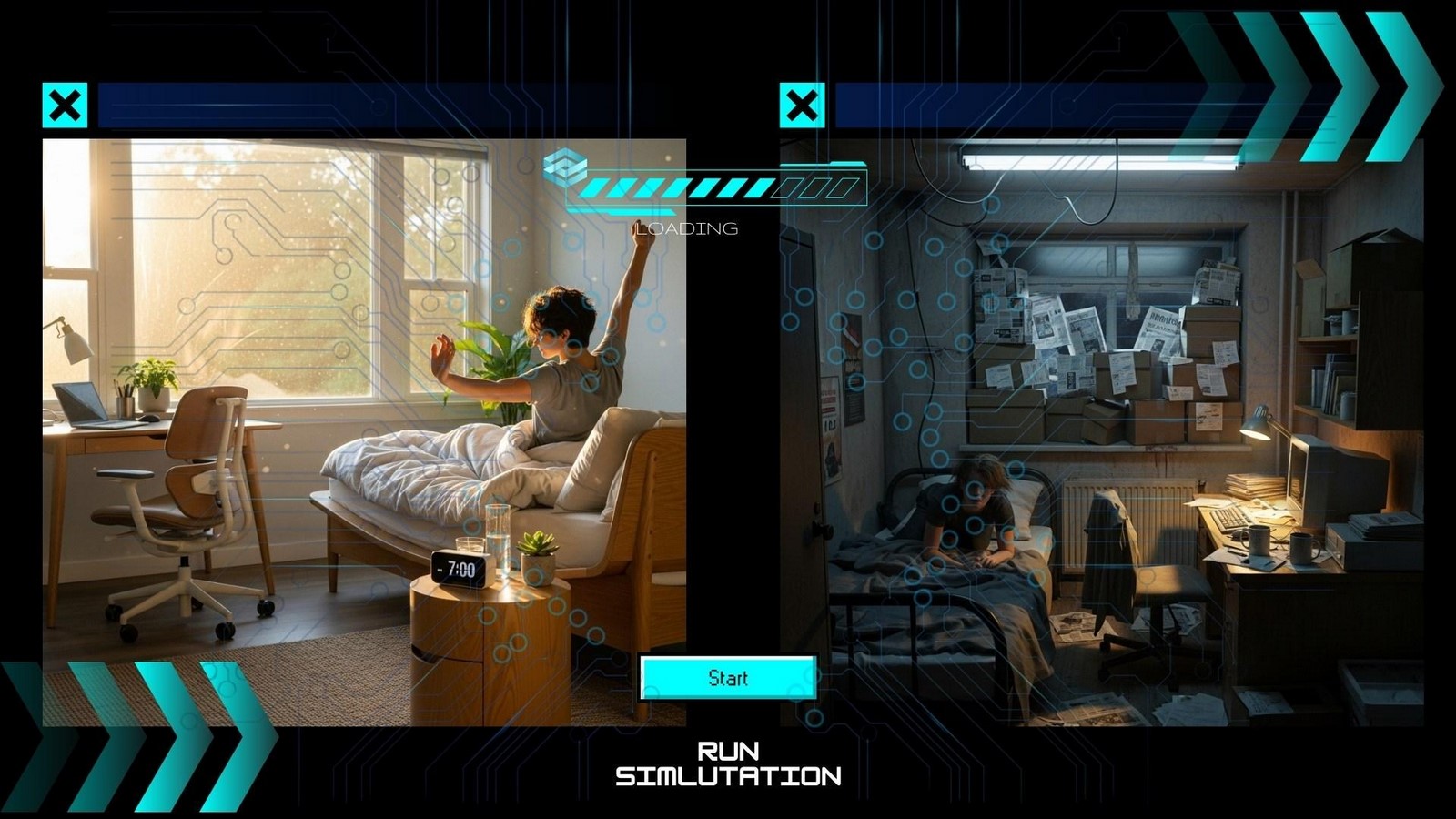
In the first world, mornings begin in a sunlit bedroom where natural light gradually floods the space, signalling the body to wake up gently. A well-placed window allows for ventilation, bringing in a soft breeze. Furniture follows ergonomic principles, making every movement effortless.
In the second world, the same morning begins in a poorly lit room, where fluorescent light flickers on suddenly, jolting the senses. The air feels heavy due to an obstructed window, the bed is cramped, and the workspace is awkwardly arranged. The body wakes up irritated, the mind already resenting the day.
By noon, the difference between these worlds becomes evident. One person is alert, productive, and focused, while the other is fatigued and distracted. The reason being? Not personality. Not coffee. Architecture.
Architecture Runs Your Day
Welcome to a life-sized simulator where the built environment is the operating system. You don’t see the code, but you surely feel the outputs: steadier mornings, faster decisions, easier focus (or the opposite). Every surface, every ray of sunlight is a setting in this experiment. The mechanics are simple: Natural lighting sets your body clock, ventilation sets your clarity, ergonomic design sets your comfort and energy.
Align all three, and you’ll reap rewards: higher productivity, calmer mental health, and improved overall well-being. Knock them out of sync, and you lose points: headaches, irritability, slow thinking, and now everything is 20% harder than it actually should be.
Properly designed spaces feel like low-dormancy life. The hallway is just wide enough to pass without awkward steps. The staircase you choose unconsciously because it’s washed over with daylight. The desk that reaches your elbows, not your wrists, so typing feels effortless. This is the unseen influence of good design; so your mind can focus on what matters.
Invisible Controls You Can Never Unsee
Light is the master clock.
Natural lighting is the boss of your daily rhythm. When daylight arrives where you need it (across a kitchen counter in the morning, blessing your desk by midday, softening into the room by evening), your circadian rhythm receives cues. Alertness comes naturally; stress goes away without effort. Balanced daylight turns rooms from two-dimensional surfaces into spaces with depth and warmth.
Air is the clarity gear.
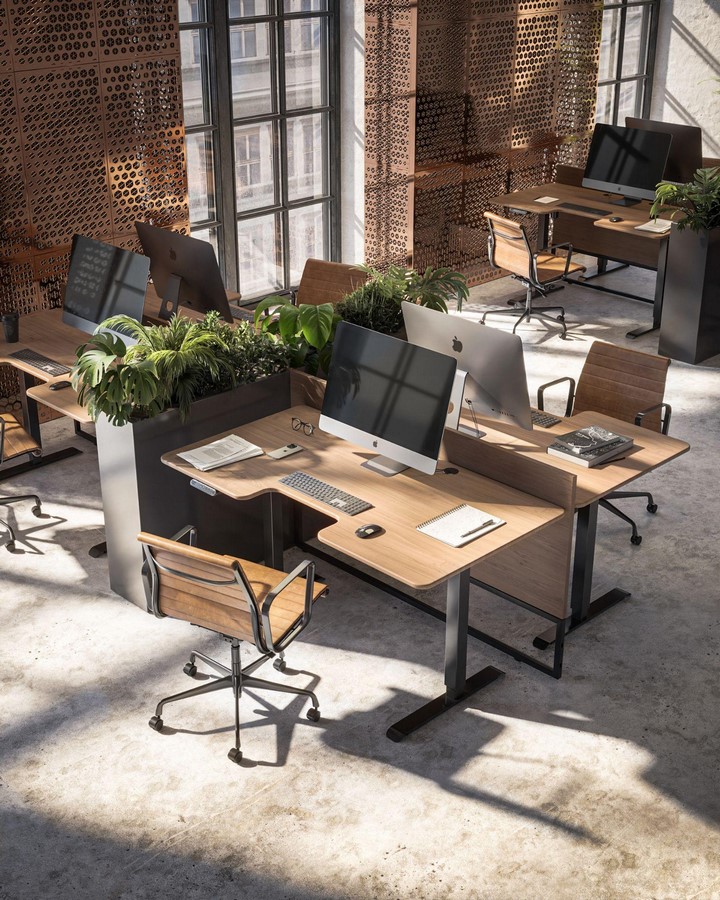
The ventilation you barely notice is doing the most. Picture a space where fresh air enters through operable windows and shaded openings, creating a refreshing atmosphere. Efficient HVAC systems ensure a perfect balance of oxygen and low CO₂ levels, making every moment indoors feel revitalizing. Fresh air helps prevent cognitive dips and maintains focus. It’s the difference between powering through and feeling like your brain’s buffering.
Ergonomics as body-language template.
Ergonomic design is part choreography, part physics. The right counter height for your reach. Screens at eye level. Chairs that support your pelvis so your spine stands straight. Enough space between the table and the couch so that access isn’t a problem, etc. When these align, your body stops straining, freeing up mental bandwidth for sharper thinking.
Materials, acoustics, and layout as mood settings.
Warm textures ground you. Soft finishes keep background noise in check. Clear visuals let you navigate without disorientation. Navigation becomes an instinct, not an effort.
When It Goes Wrong
Here’s where the simulation takes an unexpected turn.
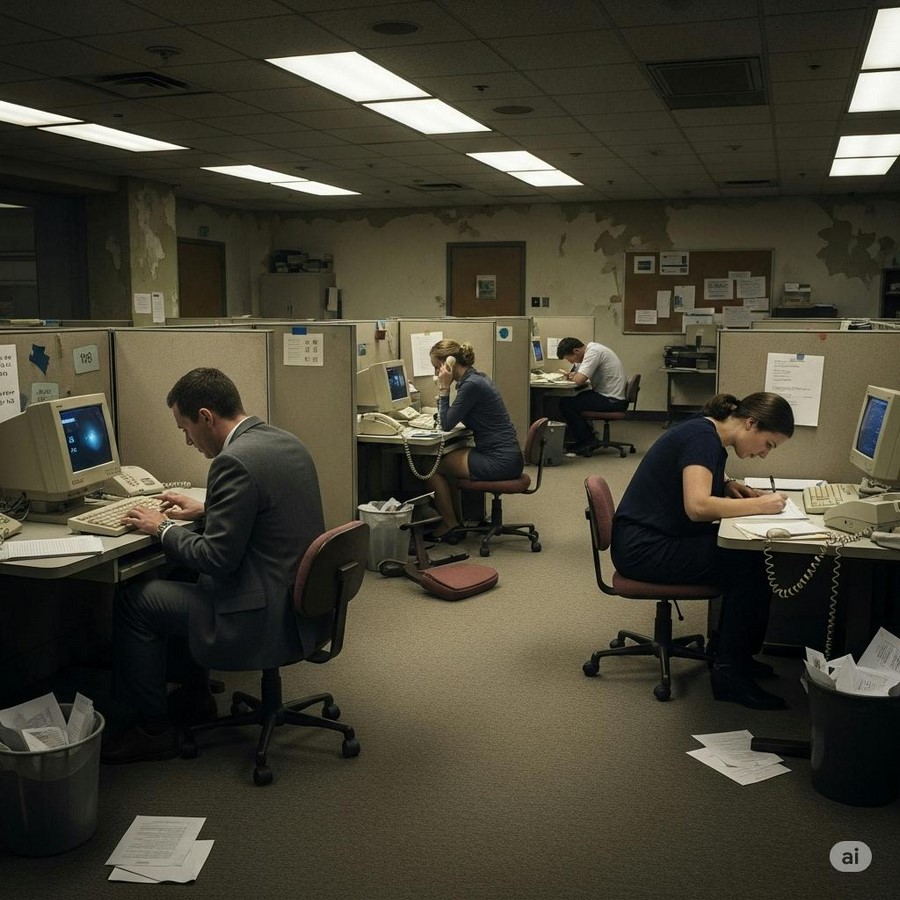
The light shifts off its sweet angle. Suddenly, your laptop glares like a mirror. You tilt it, adjust the blinds. Now it’s too dim, so your eyes strain. Natural lighting, once your ally, is now a traitor.
Air disappears next. A closed door breaks the wind flow, or the HVAC operates too slowly. The air turns stale. Thinking feels like a chore. You reread the same sentence, but nothing seems to be entering your brain, and you start blaming yourself instead of the ventilation.
Ergonomics misaligns, too. Your chair is suddenly lower than it should be. The desk edge digs into your forearms. By mid-morning, your posture collapses. Your patience shortens. The “ergonomic design” you relied on has turned into an irritation factory.
Acoustics pile on. That pleasant hum becomes full-volume chatter. Hard surfaces reflect every noise back at you, and focus fades.
Individually, none of these disruptions seems catastrophic. Collectively, they ruin your to-do list and drain your mental health. Your productivity drops, and not because you worked less, but because the environment demanded more energy for the same output.
Patching It Up: Good Design Self-Heals
In a well-designed space, recovery is simple: Customize the light, angle desks, bounce daylight off matte walls, and use layered lighting so daylight dominates but is glare-free. Let the air circulate. Open windows on opposite sides of the room, adjust the vents, and use fans to create a gentle airflow. Reset the ergonomics. Adjusting a chair or raising a screen in just two minutes can save hours of discomfort. Soften the sound. Rugs, plants, felt panels; all lower noise without taking away the vibrancy. Play with the layout. Keep essential tools within reach, and paths smart and functional so movement feels effortless.
Great design not only embraces change but also incorporates resilience, ensuring it can thrive even when it is disrupted.
Easter Eggs In Great Spaces
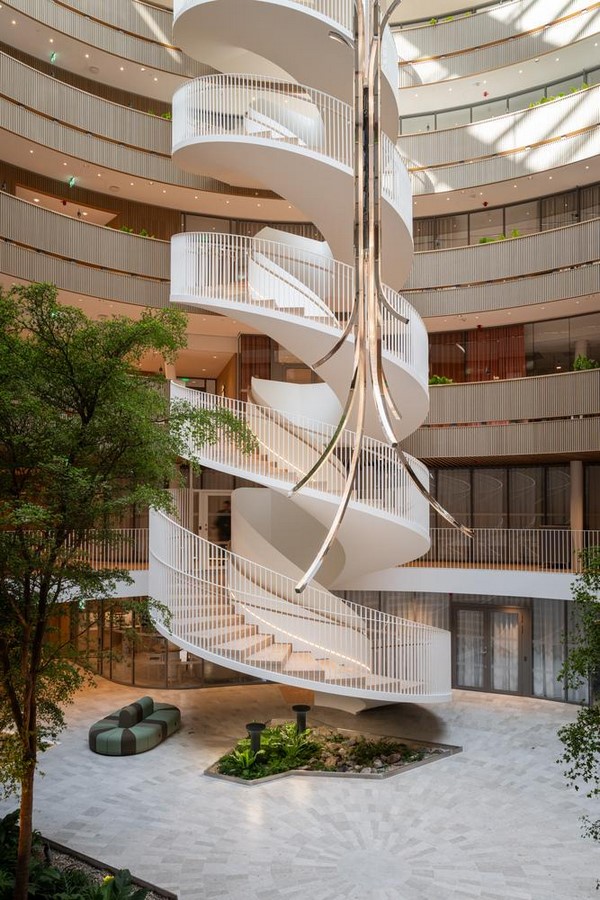
- The staircase you always tend to take is often flooded with daylight, with landings that rest you midway.
- The desk you like working on offers depth and visual variety, giving your brain little breaks.
- The kitchen you love cooking in excels in ergonomic layout, perfect ventilation, and reachable storage.
- The lounge that everyone wants to rot in has warm lighting, comfortable seating, and shared visual anchors.
Along with being just nice-to-haves, they’re also essential elements when spaces are intentionally designed with a focus on what truly matters to people.
The Ultimate Revelation
The simulation pattern is obvious.
When natural lighting supports your body’s rhythm, ventilation keeps you calm and focused, and ergonomic design fulfills your body’s needs, daily life runs smoothly. You achieve better productivity, stable mental health, and stronger overall well-being, all without trying harder.
Turn it all around, and the same space can slowly derail your day. Design isn’t neutral. It’s either quietly helping or quietly destroying.
Architecture doesn’t just shelter us; it also shapes our daily routines. Well-designed spaces impact various aspects of our daily lives, influencing how we wake up, concentrate at work, and relax in the evening. Research has demonstrated that exposure to natural light, the use of ergonomic furniture, and proper ventilation can significantly enhance our attention, mood, and overall well-being (Edwards & Torcellini, 2002). When these elements come together effectively, the design of a space supports our daily routines, reducing mental fatigue and making our lives more fluid and enjoyable.
References:
Boubekri, M., Cheung, I.N., Reid, K.J., Wang, C.H. & Zee, P.C., 2014. Impact of windows and daylight exposure on overall health and sleep quality of office workers. Journal of Clinical Sleep Medicine, 10(6), pp.603–611. Available at: https://pmc.ncbi.nlm.nih.gov/articles/PMC4031400/
Kalakoski, V., Mäkelä, M., & Oksa, J., 2020. Effects of a cognitive ergonomics workplace intervention on cognitive performance. BMC Psychology, 8(1), pp.1–10. Available at: https://bmcpsychology.biomedcentral.com/articles/10.1186/s40359-019-0349-1
Kuramochi, H., Hashimoto, S. & Tanaka, T., 2023. Meta-analysis of the effect of ventilation on intellectual performance. Environmental Health Perspectives, 131(3), 037001. Available at: https://pmc.ncbi.nlm.nih.gov/articles/PMC10139101/
Harvard T.H. Chan School of Public Health, 2021. Impacts of indoor air quality on cognitive function. Available at: https://healthybuildings.hsph.harvard.edu/impacts-of-indoor-air-quality-on-cognitive-function/
Young, A.S., Martinez, C., & Liang, F., 2024. Home indoor air quality and cognitive function over one year. Science of the Total Environment, 834, 155409. Available at: https://www.sciencedirect.com/science/article/abs/pii/S0360132324003937
ResearchGate, 2012. Literature review of the effects of natural light on building occupants. Available at: https://www.researchgate.net/publication/237781634_Literature_Review_of_the_Effects_of_Natural_Light_on_Building_Occupants