Sustainability is a concept that expands its horizons every day. Every field is now working towards making itself and its products sustainable. Architecture is one of the leading industries working daily to create the designs, processes, and use after occupancy, as sustainable as possible. The carbon footprint generated by the construction industry is quite harmful and dangerous and therefore to minimize it, several actions have been considered. These actions include reducing embodied energy, green construction methods, green building materials, and energy efficiency.
Sustainable and regenerative design is making its way into the industry and making significant changes. Sustainable architecture seeks to minimize the negative environmental impact of buildings through improved efficiency and moderation in the use of materials, energy, development space, and the ecosystem at large. Regenerative architecture is engaging the natural world as the medium for and generator of architecture. Living systems on the site become the building blocks of the structure built in harmony with the overall ecosystem. These practices are helping in minimizing the carbon footprint generated and thus being the face of the future.
Sustainability can be achieved through changes in building materials, passive techniques for daylighting, cooling, heating and implementing energy conserving habits and tools.
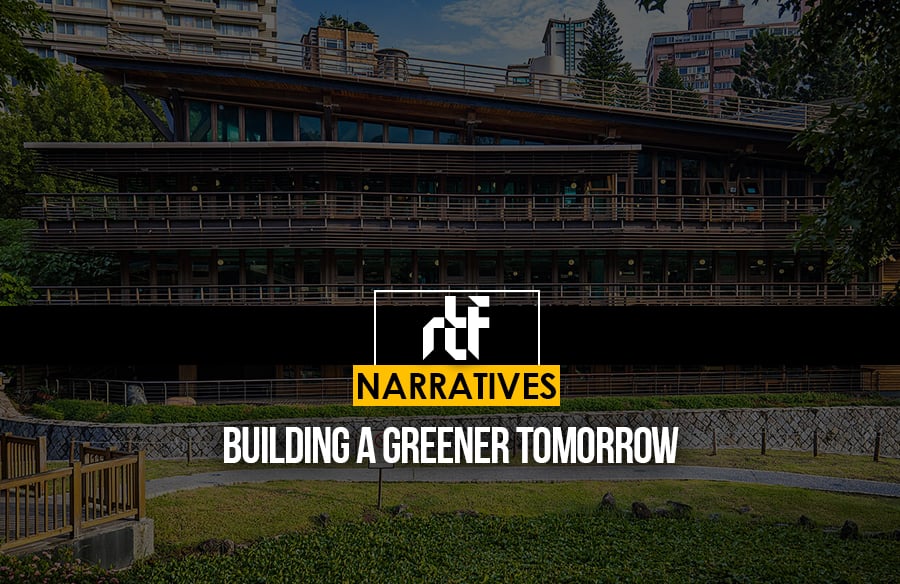
A great example of this is Beitou Library in Taiwan.

This is a public library built in a subtropical climate, responding to its every change every summer and maintaining human comfort while being in harmony with nature. It does so effortlessly with the help of passive tools like French windows abundantly used and strategically placed to increase the air flow within the structure which also minimizes the use of artificial systems. A wooden balcony built along the library on both the floors minimizes the heat gained by the UV rays thus maintaining thermal comfort inside. The roof also plays an important role in making the library green. Its sloped geometry drains all the rainwater it receives which is then in turn used in toilet flushes and for irrigation purposes. Part of the roof has also solar panels installed which can store up to 16KW worth of power. The sustainability of the structure is also seen in the use of building materials. The smart selection of wood as the main building material reduces heat released and absorbed, is recyclable and eco friendly. To make the structure less harmful to the environment, eco-friendly paint was used on the interiors surfaces which released 0 toxins into the air.
Regenerative architecture rather than just decreasing the impact of a project on the environment, they are designed to restore resources and help in reversing the damage on the ecology around the project. Regenerative designs have a more holistic approach than sustainable architecture.
Regenerative designs suggest methods to replenish the materials used during and after the construction while making the building net zero carbon. Regenerative designs think of the building as a part of a larger system so as it is incorporated in the environment harmoniously rather than just creating something contrasting and imposing it on a landscape.
A good example of regeneration is seen in Low Impact Living Affordable Community (LILAC) in the UK.
This community comprises 20 houses built around each other, part of a community, these houses are built from natural materials like straw, timber and lime. This whole community is carbon negative, that is it generates more energy than it uses with the help of solar panels attached on the roofs of every house. The community gives back the energy that it creates. The community is built on a demolished school site, that is a brown site. It has reused land for its construction.

Practices like these have helped in giving back to society more than it has taken. The rate at which pollution, global warming has been hurting ecology, these design methods have repeatedly proven to be a savior. In the future, when the resources are predicted to be more depleted, protecting and preventing their extinction has become a need of today. These methods not only sustain through the times but also regenerate and help nature. In the future, more and more architects should implement materials that reduce cost, are naturally and locally available, passive techniques that decrease the use of mechanical systems, and systems to generate on-site energy. The designs should be a part of the landscape and not a disturbance imposed on a site. By doing this, the future looks like a peaceful place to be a part of. A future where greenery is not just a concept but a reality. A future where architecture is seen more than tall buildings expanding the “urban jungle” but structures as breathing spaces which give back more to society and help in making the world greener. Sustainable Architecture is rapidly now becoming the only way to design and build and is expanding its horizon Everyday.