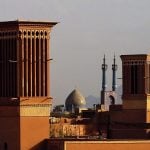
Marco Polo in 1272, after a visit to Persia (City of Yazd) wrote “Yazd is a good and noble city and has a great amount of trade.” Here, obviously just referring to the vocation of Persians and a flourishing silk trade of the region, Marco misses to observe the distinct architecture and mechanics of day-to-day life of the city and how it shapes its “good trade”. Now referred to as “The city of Wind-catchers (Badgirs)”, since every house there has one to adapt within an arid hot climate, Yazd remains a city of distinct desert colour residences. Its long and wide span houses are only reachable through narrow urban streets half shaded by the houses they lead to. Urban fabric of the city works in such a way that water canals (Qanats) are provided for each house thus solving water scarcity. The houses have their own distinct spaces designed one for summer and the other for winter, basements themselves are used for residential purpose and a courtyard in middle houses a waterbody working as cooling agent during summer. Each component in residence and this group of many components make the city habitable, even trade-important besides being in a desert.
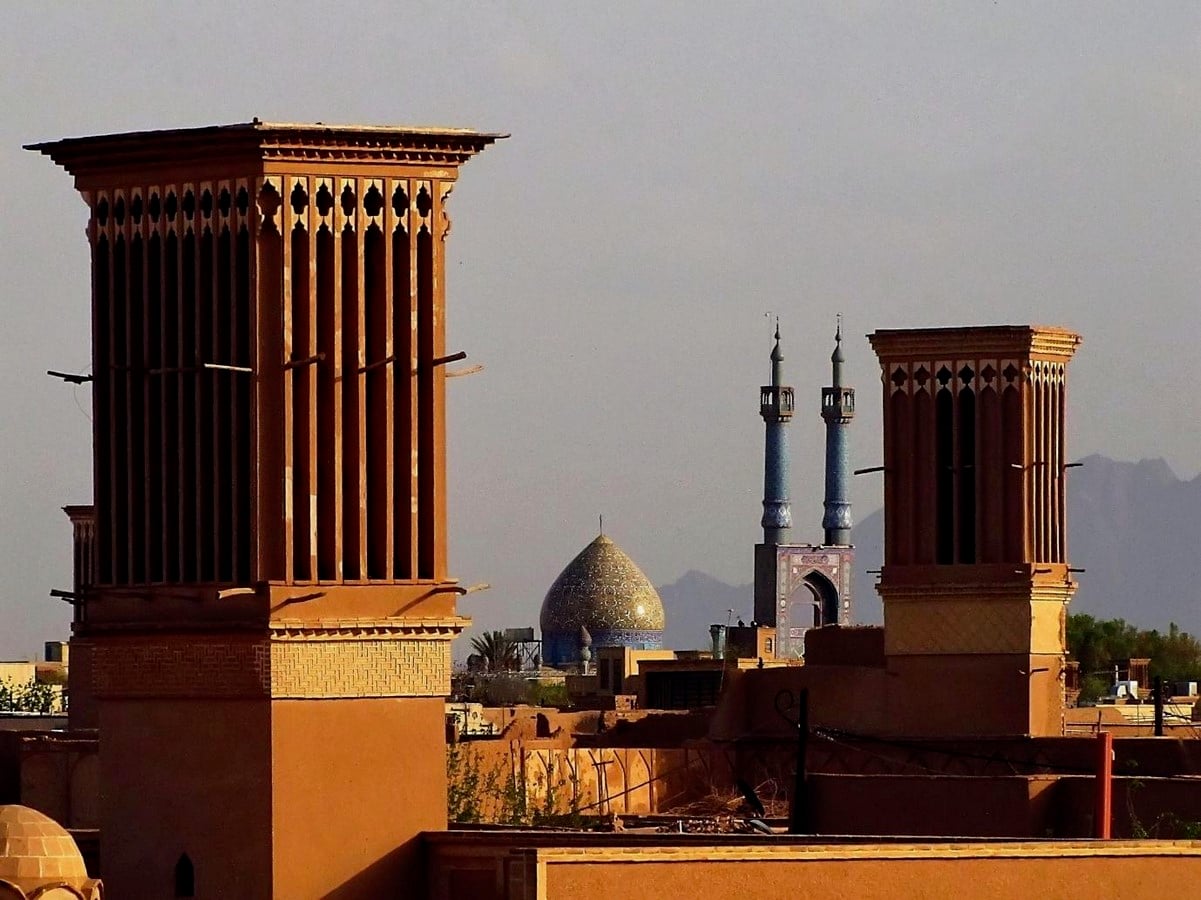
This example of Yazd and the design of its built form; both houses, and the entire city, at its core defines two things that make up architecture i.e. Response to the natural climate, and Creation of a microclimate.
Climate and Built form.
The entire existence of built forms can be traced back to the fact that humans tried quite early on to adapt themselves in their climatic environment. Need for shade and security led to very first act of building houses and community. Every technological advancement from there on has been to fulfill the need even further, whether it be shifting from mud houses to ornamental or ornamental to plain concrete.
Built forms since the dawn of civilization have been a product of their climatic environment created by Sun, Rain, Wind, Snow, et al. Looking back on it, built forms in both cold and hot climatic regions fall back to their own natural environment for design elements. Greeks and Romans exercised their freedom of being in not-an-extreme climate and made technological advances in marble and concrete along with utilizing their local materials. Persians and South Asians fell back to their natural state of mud, bricks, and wood while Nordic architecture makes use of natural stone and wood. This commonality between the two extremes testifies that the local materials of a region are enough to overcome the climatic environment and has been since before they were recorded. Similarly, Assyrians and Babylonians, since they experienced torrential rainfall, designed their towns and palaces in elevated platforms to avoid flooding and insects.
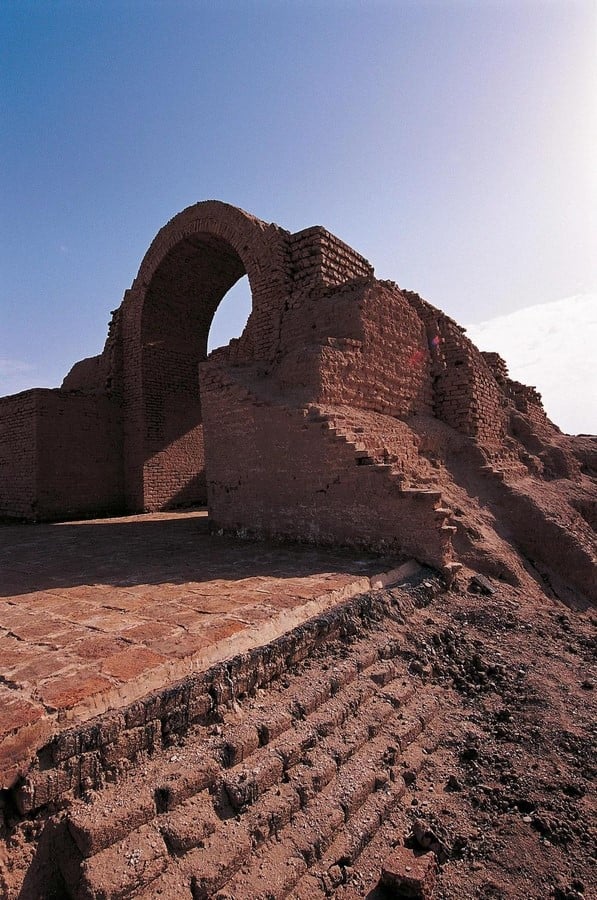
In the example of Yazd City itself, it dealt with desert dryness by using the natural palette of its earth which strengthened it to being “a living testimony to intelligent use of limited available resources in the desert for survival.”1 Every name that the city is tied to; both now, and when Marco Polo experienced it, is the direct product of the architecture and the materials used in the construction of its built form. The long winding shaded streets worked as perfect trade route for silk then. And the Pistachio trees that were planted for shade and air dryness reduction are so abundant in the region that Yazd is now world’s third largest pistachio exporter. Clearly, the identity of a place whether they be historic or contemporary, is the consequences of its climate.
Creation of a microclimate
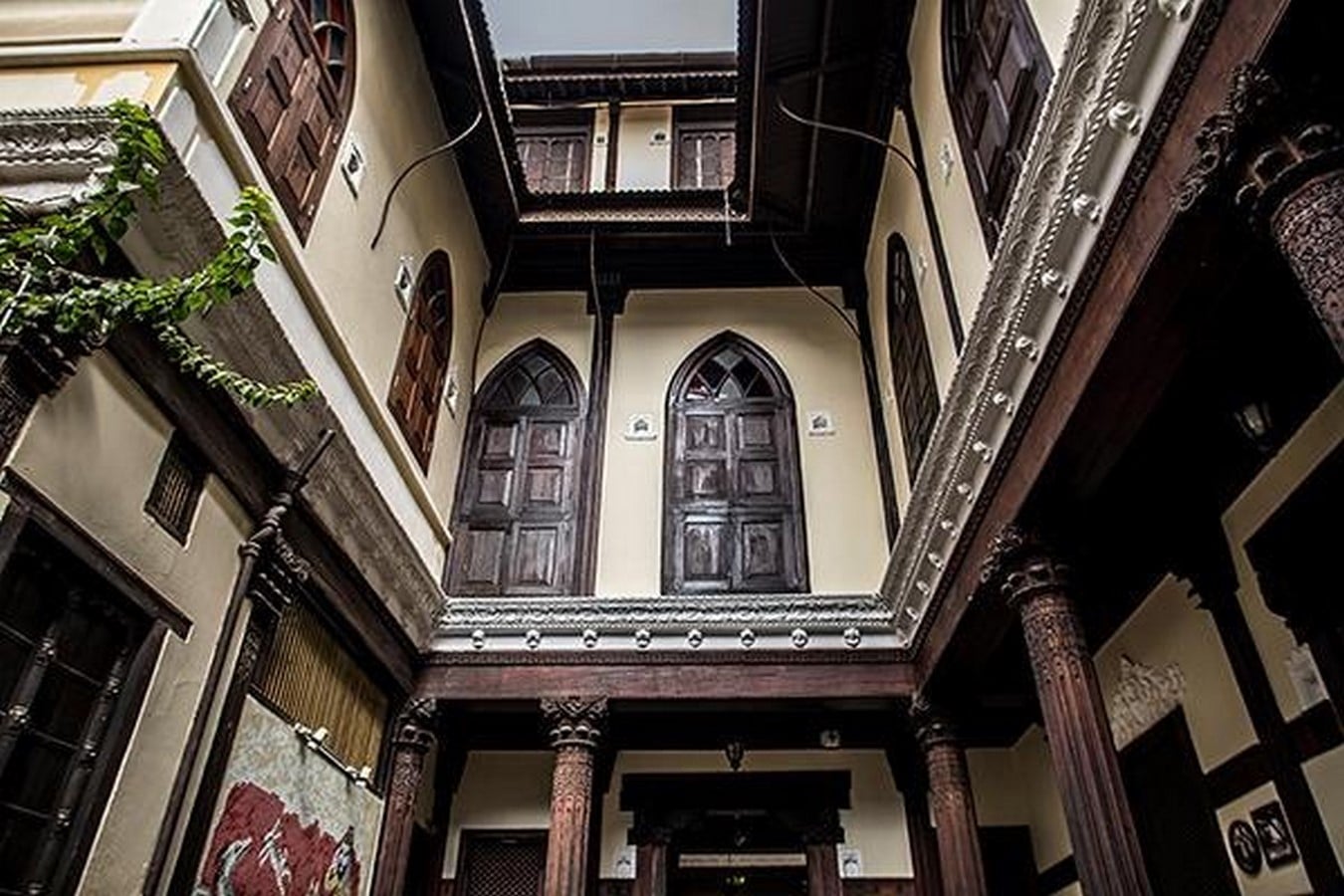
Microclimate quite basically, is a simulation of a climatic condition for a particular built form whether they be houses, a colony or an entire city. The concept of microclimate though never studied as it is now, has always been prevalent in historical context. There was no need to study it as an amazing idea of its own because where there is climate adaptation, there certainly also is climate manipulation.
Built forms in any climatic condition (if they are built to respond to the climate) have also been incorporated with elements that create a microclimate, not as an afterthought but as one of the major components. A house in a tropical climate always has a water body in the southern direction to absorb the extreme heat while houses in frigid climate always have low ceilinged rooms to maintain warmth inside. Centuries’ old unnamed concept that “microclimate” was, is now a common word in design practises.
Microclimate in recent trends
Only in the later years of last century, and now, is Microclimate theorized as an important design element. When the International style of architecture first emerged in 1920s as a universal design, later bringing in Modernism, it also stopped defining architecture as being a product of its environment. While finding a constant, universal style in built forms, the science behind architecture got left hidden in between concrete structures. These blocks connected with rough asphalt streets created a microenvironment of its own now studied as “Urban heat island”. So, with this replacement of building science and the consequences of it, Modernism has now successfully sold the idea of maintaining microclimate as a new, next best thing, completely disregarding the actual climate a building is built on. Even when trying to build around a climatic environment, structures have failed miserably to adapt to their natural surroundings. This is the consequence of climate responsiveness as an afterthought.
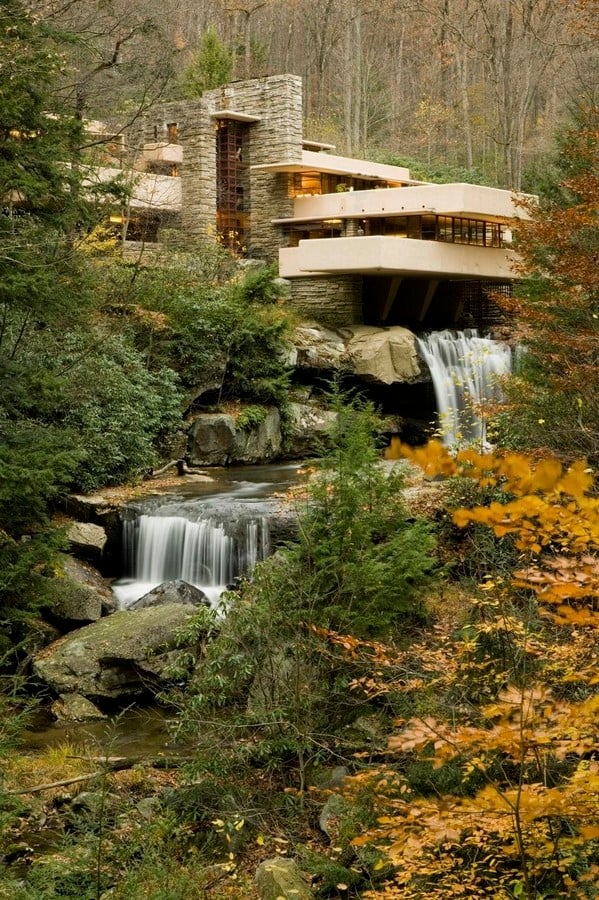
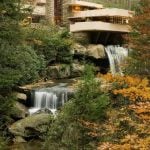
Falling Water; a built form designed to integrate its environment, gets named “seven-bucket building” from its owner himself due to many roof leaks. Roof top garden: a concept that Corbusier introduced in Villa Savoy, outwardly philosophizing the idea of “giving green back to nature” now leaves the building leaking each autumn. And this here, is the consequence of introducing microclimate as an aesthetic and not a response to its environment.
A building form can be designed to house a beautiful water body inside. A functional pool in the entrance, or even with a biophilic concept. But what good is a water body built to maintain microclimate inside a house when its local climate is drought inducing, when its natural surrounding actively tries to eliminate it?
Climate responsive futuristic design
Although this in no way is a critique to the trend, the ultimate design philosophy of recent years shows focus on creating a microclimate while the actual climate keeps affecting design elements, often rendering passive design elements useless. Rapid urbanization, reckless design, and a universal design technique; both in form of material and elements, have churned out individual built forms. A built form used to mean vast space not many years ago, and so did microclimate. Now, it has just become a way to maintain climate of one space or one building.
While many turn a blind eye to the long-term effect, there have been solutions used to incorporate habitability of both houses and city. Example of a climate maintenance in an urban climate can be seen in Medellin, the second largest city of Colombia which in 2016 started its “green corridor” programme to respond to urban heat effect it was facing. The programme included planting more than 880,000 trees by 2021. As a result, while reducing heat, it has significantly improved air quality and brought back wildlife to the city. A lot of urban designing projects around the world have also started leaving out at least 15% of the total area for green space in hopes of climate conditioning.
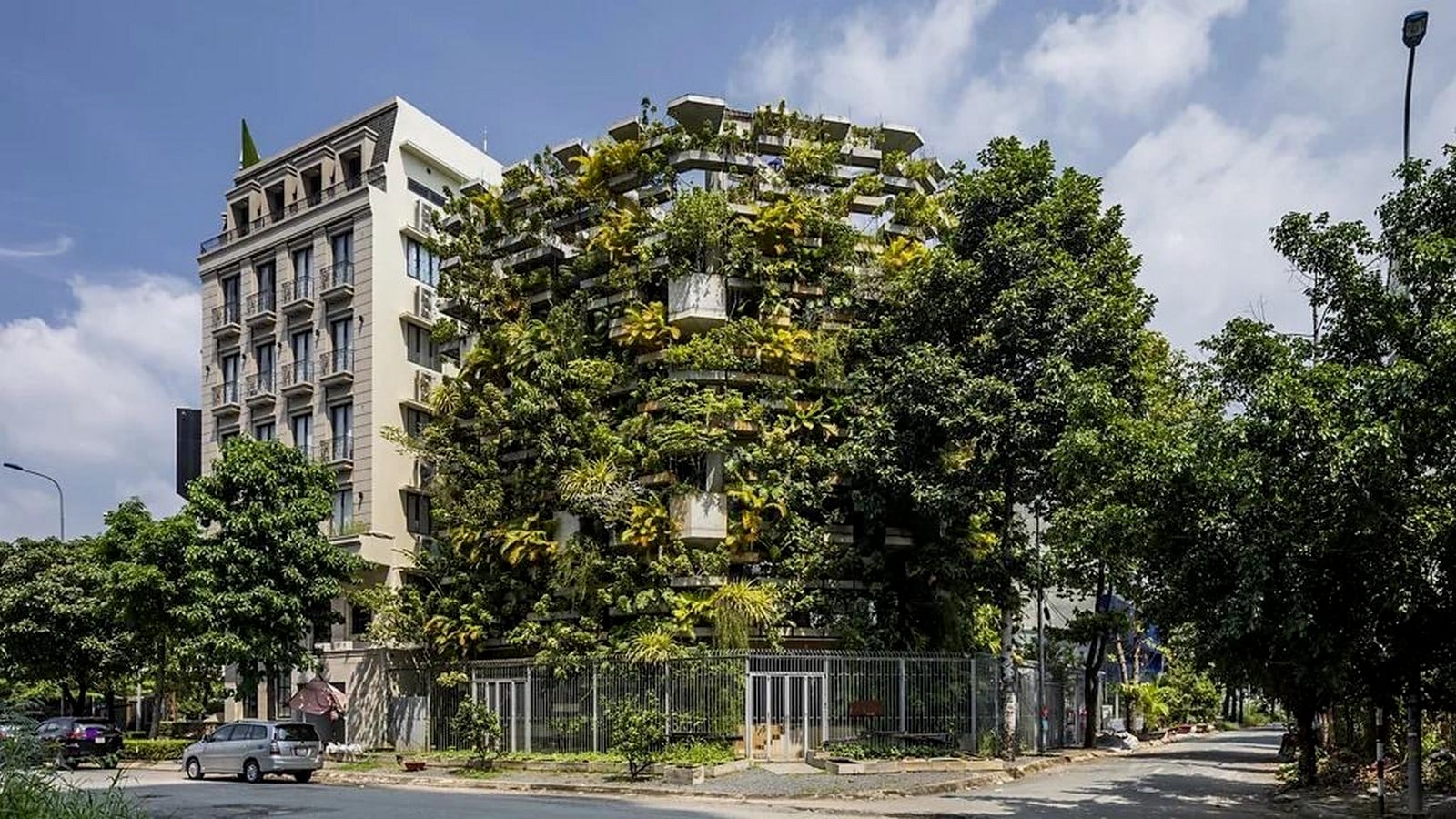
Where now the common misconception of a sustainable built form is greenery laden rooftops and facade, the ones who understood their climate enough to respond against, utilize and even create a microenvironment made their built forms sustain long enough that they are the living case studies to learn from. Water sprouts (Dhungedharas) of Newari settlements of Nepal still function alongside its steeped geography. Hawa Mahal in Jaipur, Rajasthan still attracts tourists with its cool interior in the middle of Rajasthan‘s harsh heat. Also, City of Yazd (for the last mention in here) is the living example of how a city built in accordance with its climate sustains not just with its built form but also in its identity.
A concluding takeaway from this is that no matter how many technological advances are made, no matter the joy of having flying cars or making the surface of moon habitable in the near future, the concept of futuristic architecture should be in understanding the climatic environment first, designing in accordance with it, and introducing microclimate that is in no way a threat to the natural one.
Bibliography:
Andrade, M. G. (2023, 09 23). Feature: BBC. Retrieved from BBC: https://www.bbc.com/future/article/20230922-how-medellin-is-beating-the-heat-with-green-corridors
Ghadiali, J. (1959). Retrieved from architexturez: https://architexturez.net/doc/az-cf-168632
Historic city of Yazd. (n.d.). Retrieved from UNESCO World Heritage Convention: https://whc.unesco.org/en/list/1544/
Medina, A. P. (2025, October 7). 7 Contemporary Architecture Fails From Around the World. Retrieved from Architectural Digest: https://www.architecturaldigest.com/story/contemporary-architecture-fails-from-around-the-world
References:
https://www.slideshare.net/slideshow/green-building-yazd-citypdf/257358828
https://www.bluentcad.com/blog/international-style-architecture