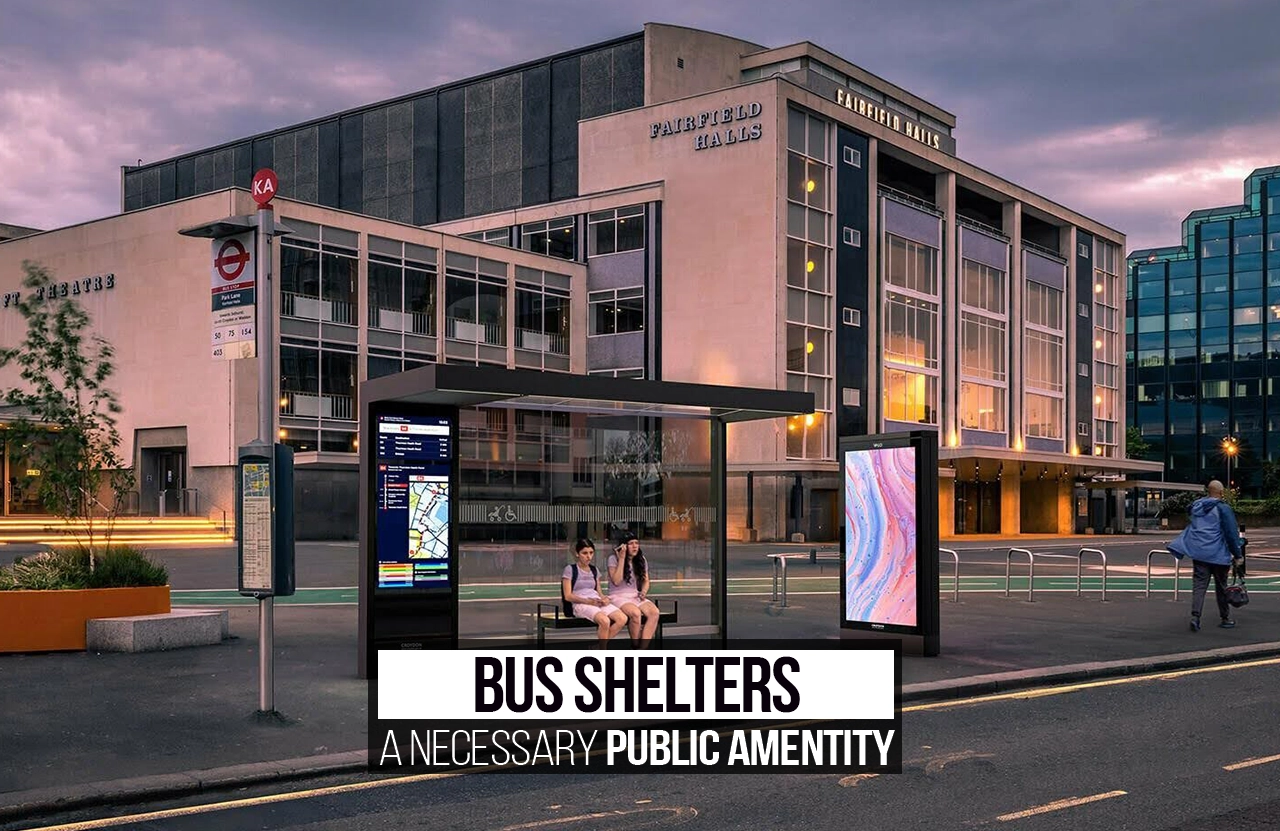
Bus shelters are a necessary component of civic infrastructure. A public amenity is just that, for the public. So what happens when bus shelter designs are not prioritised or neglected in the name of “public safety?” The communities suffer. Those reliant on this form of public transportation get the short end of the stick. When a lot of the world is so focused on cars for transportation, public buses, and therefore their users, are pushed aside. It shows where our society’s attention lies, and it’s not good.
Elemental Protection
A great testament to bus shelter design is the ability to protect the users from the elements. Whether it be a form of precipitation or the shining sun itself, protection should be non-negotiable. As a public amenity, it should be available to everyone. Shelter designs in the past did not always provide shade or a roof-like cover. Sometimes there is nothing but a small sign to denote a bus stop. In warmer climates, shade is important, and in cooler regions, protection from rain or snow can be a concern. People who rely on public transit should not be forced to experience the elements while waiting for their rides.
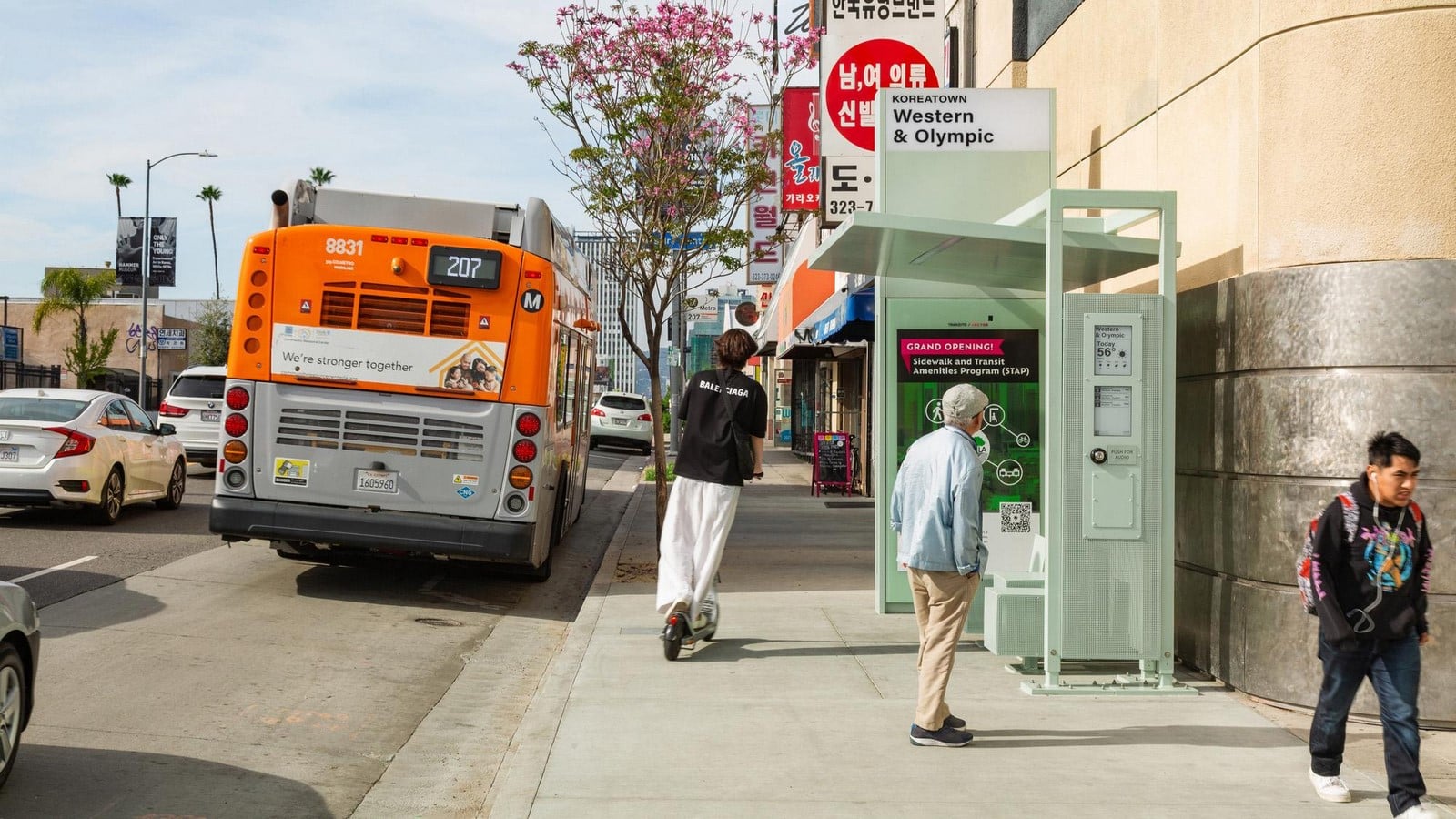
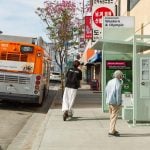
In cities like Los Angeles, where the weather is very warm, reprieve from the shade can be a health issue, and the need for it will only grow as climate change worsens. The firm Skidmore, Owings & Merrill knows this and created a series of modular bus shelters for the city. They use heat-absorbing materials like steel frames and perforated aluminium painted in a light green colour, embodying the style of California Modernism. The bus shelter’s modular nature allows it to adapt to existing spaces in the city, while serving communities and helping provide better transit equity.
Accessibility
In terms of a public amenity like a bus shelter, accessibility can have two separate meanings. The first is regarding location. Some areas of cities will not have a proportionate number of bus stop locations in relation to the number of people who rely on public transportation. Unfortunately, this can often occur in neighbourhoods that may need it the most. This includes underserved communities that need better accessibility for transit options, especially if they don’t own a car or cannot drive.
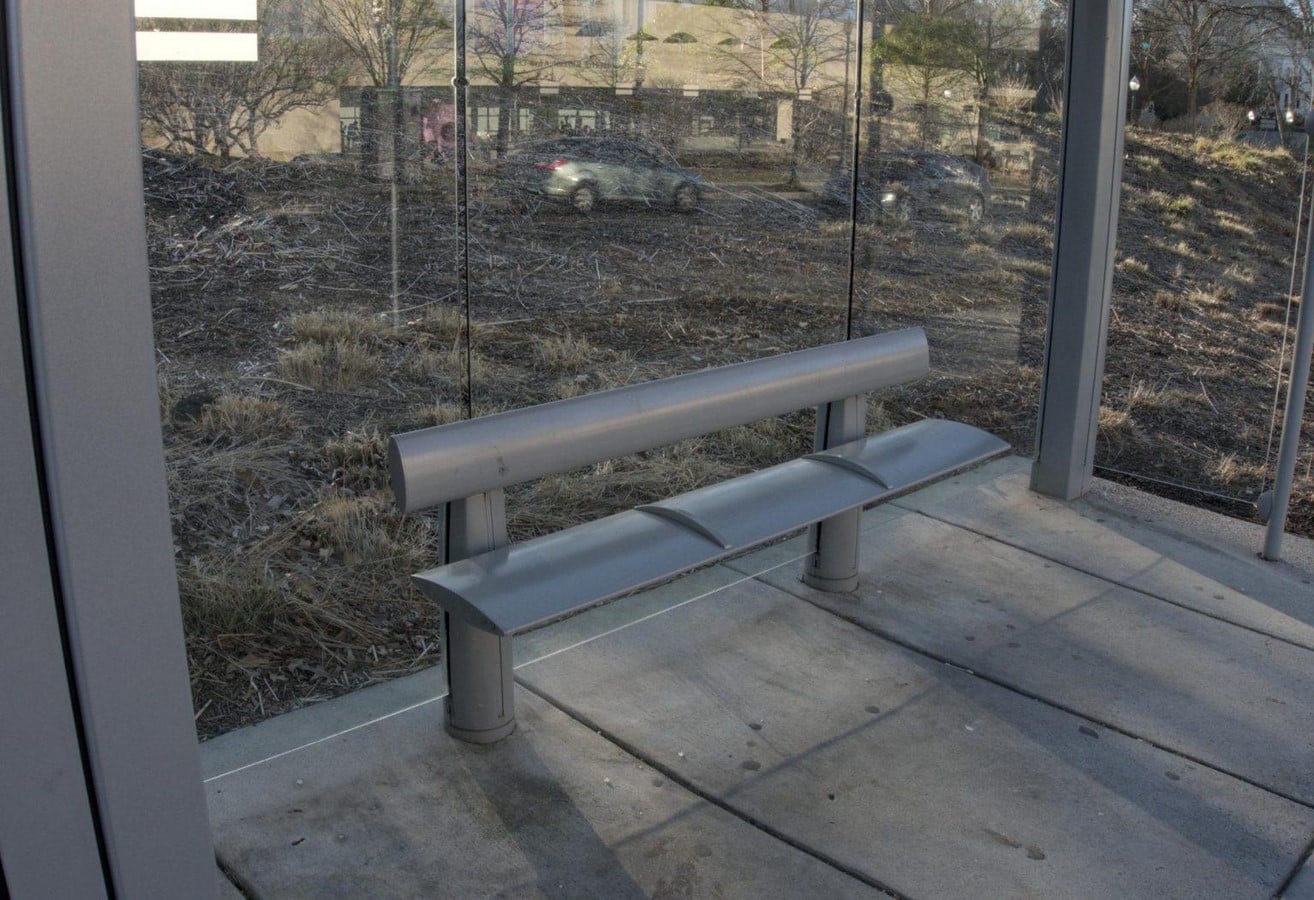
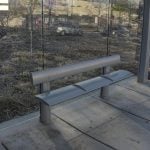
The second definition of accessibility can be applied to the elderly or people with disabilities. Some people are unable to stand for prolonged periods of time. This can include using a public amenity, like a bus stop. Another factor of seating can include what’s called “hostile architecture.” This is any architectural element that can deter the use of public spaces. The most common example is on benches, where armrests or other design elements can divide the seats, making it uncomfortable or even impossible to sleep on. However, sometimes these pieces can make the spaces more unusable for everyone.
Information
A possibly overlooked aspect of bus shelters as a public amenity is their potential to be seen as hubs of information. From old-school signage to more modern digital incorporations, bus shelters have the opportunity to be a fountain of knowledge. It’s obviously important to understand certain transportation routes and where the bus will go, but with updated technology, this experience can be improved. And classic non-digital signage can be a great way for the community to engage with each other, from flyers describing local events to scalable maps that allow citizens and newcomers to understand the city.
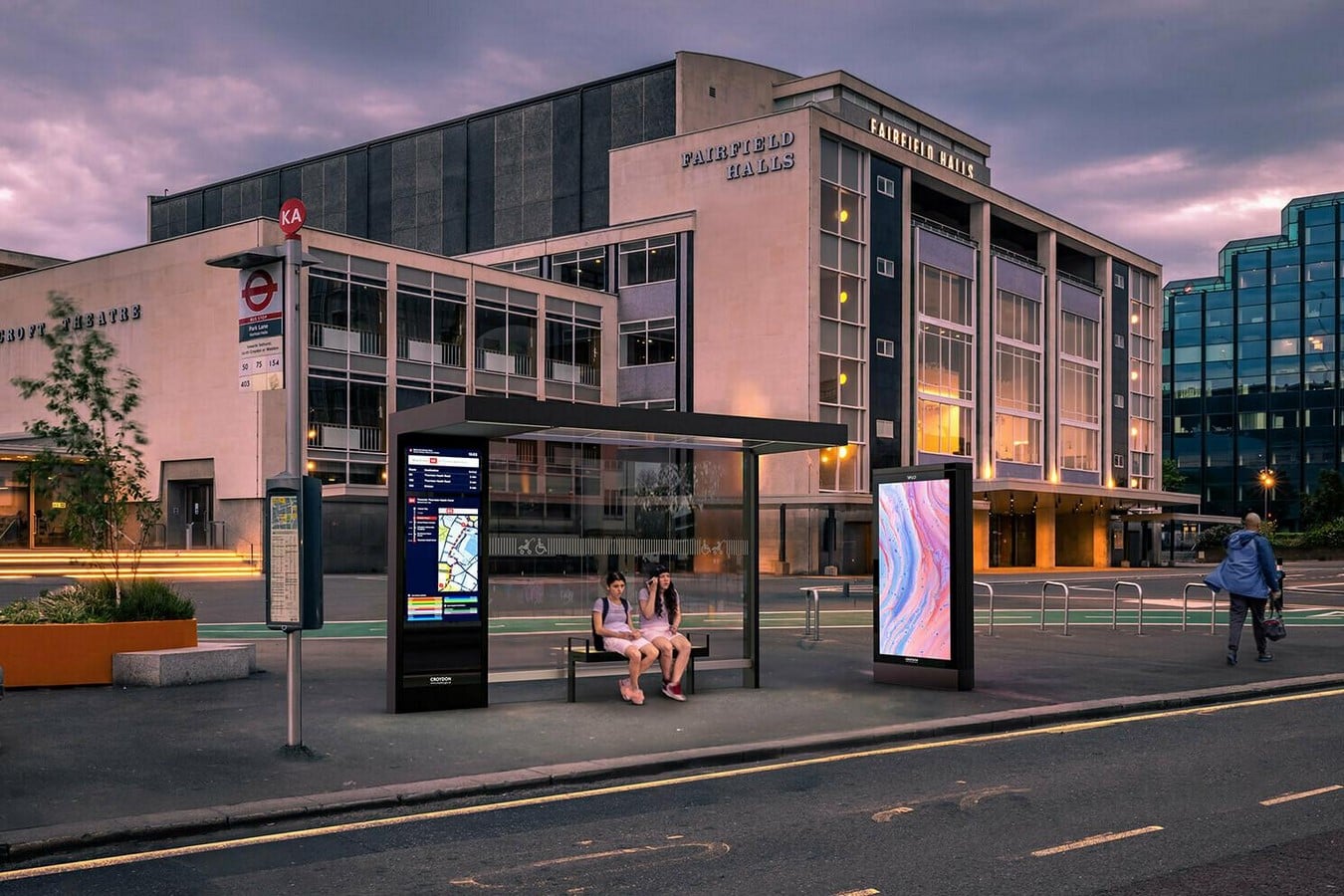
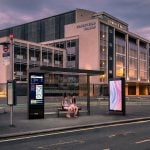
A great example of incorporating technology into bus shelters is the prototype by Grimshaw. The design for the public amenity is simple, described as a “kit of parts” that allows for easy installation and functionality. The materials are durable and meant to be long-lasting, but if the digital screens need to be replaced, they can be unplugged and upgraded easily. The technology is only on one side of the shelter, to maximise transparency of the glass for light and safety. There is also a second freestanding advertising totem that can be installed. The information on the screens can vary, but it provides important data like wayfinding, travel updates, and air and noise quality monitoring. The shelter also includes public Wi-Fi and CCTV for security purposes.
Community
Lastly, a bus shelter can be a public amenity that helps create a sense of community for its residents. Through its structure, whether in an artistic shape or covered in art like posters or graffiti, the small but mighty shelter can be a place citizens can recognise and feel a sense of community. With digital or old-school paper flyers and notices, they can also become a central hub of information or wayfinding throughout the city. Bus shelters are a small, often overlooked typology that can have a greater impact on their users than one might think.
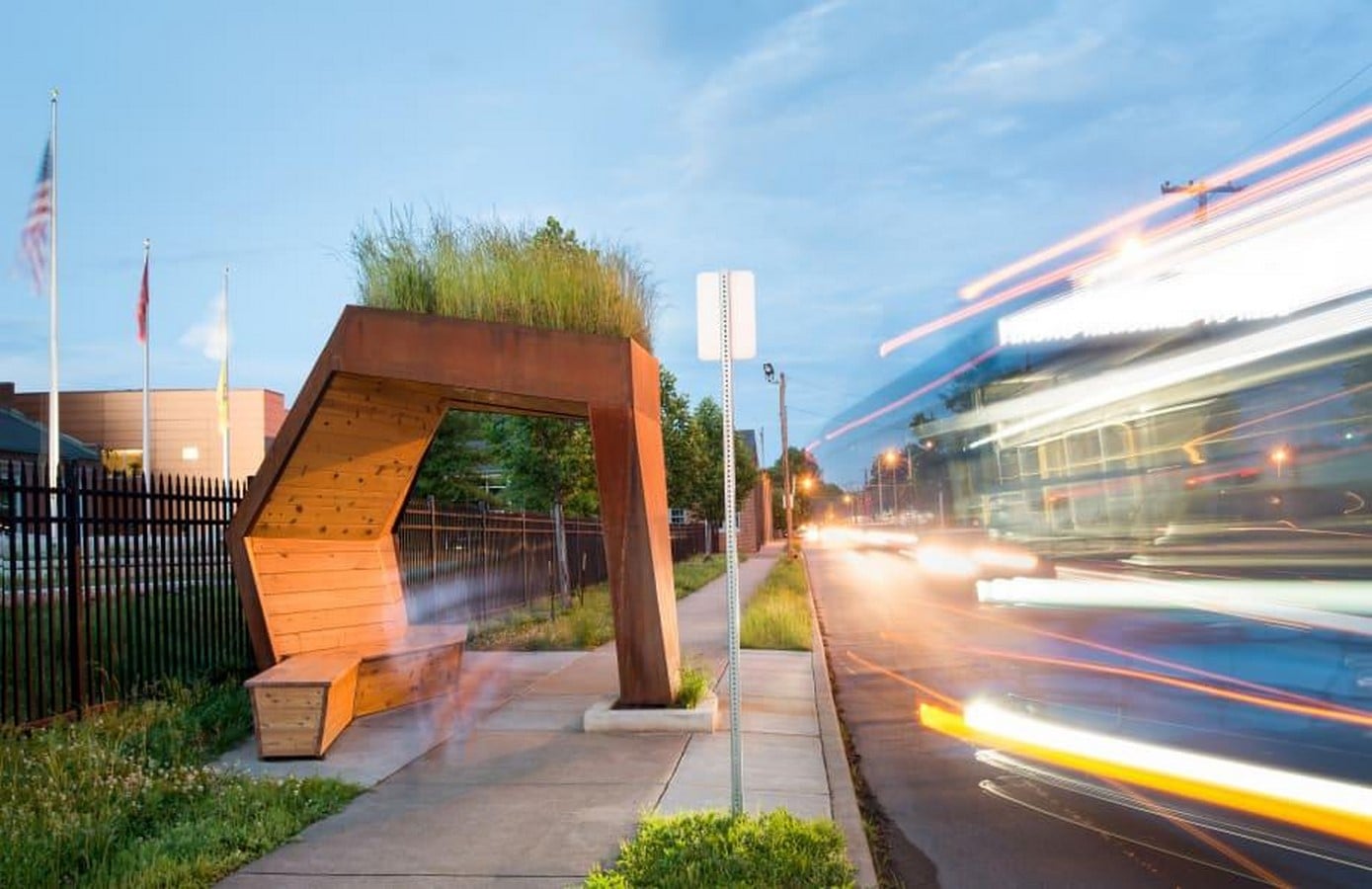
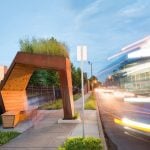
In Louisville, Kentucky, there is a bus shelter designed by Luckett & Farley outside the Kentucky Center for African American Heritage. The design for the public amenity began when the architect rode the local buses and spoke with community members about what they needed. The city itself is a heat island, getting very hot in the summer months. So the open design of this structure allows air to flow through while providing shade simultaneously. A green roof helps cool the space down and captures water to aid in stormwater management. The geometric form of the bus stop is structural, adding an art element that boosts community morale.
A Necessary Public Amentity
A bus shelter is not a trivial, but rather a necessary public amenity. These places serve their communities in more than one way. A single stop for those reliant on public transportation can be so much more than a quick detour. It’s a shelter from the elements, a place of rest, a hub of information, and sometimes even art itself. Travelling can be made much easier and enjoyable if only bus shelters became more of a priority for all who use them.
Reference List:
Grimshaw (2022). Prototype Smart Cities Bus Shelter. [online] Grimshaw. Available at: https://grimshaw.global/projects/industrial-design/prototype-smart-cities-bus-shelter/ [Accessed 7 Jun. 2026].
Lindgren, B. (2020). How to Design an Equitable Bus Shelter. [online] Metro Magazine. Available at: https://www.metro-magazine.com/blogposts/designing-an-equitable-bus-shelter [Accessed 7 Jun. 2026].
Skidmore, Owings & Merrill (2025). Award-Winning Bus Shelters Signal Equitable, Climate-Resilient Future for Los Angeles. [online] SOM. Available at: https://www.som.com/news/la-bus-shelter-press-release/ [Accessed 7 Jun. 2026].