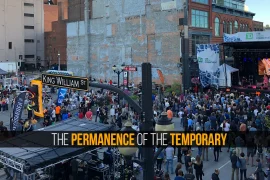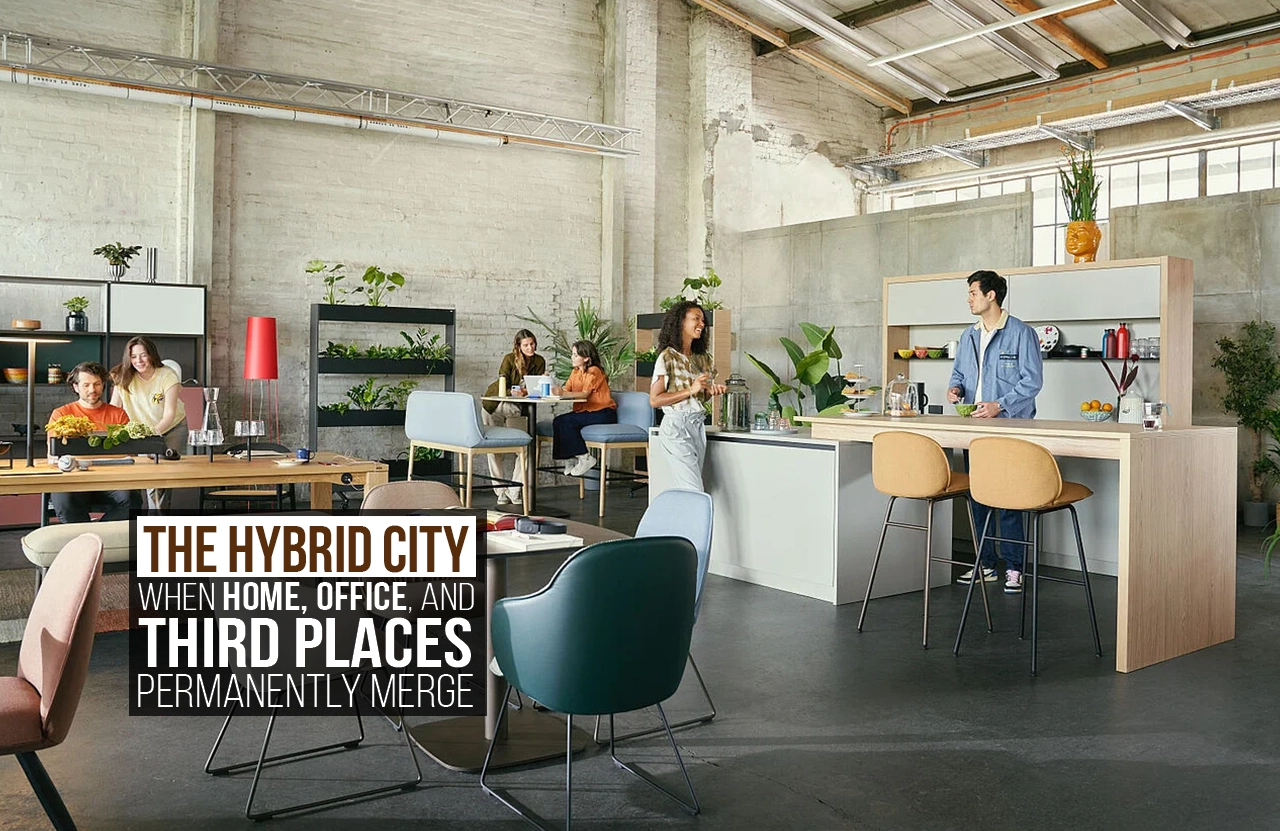
For much of history, life has been organised into a simple sequence of spaces – home, work, and everything in between. It became routine: waking up in one place, travelling to another for work, and elsewhere to eat, shop, or relax. The city has always depended on a clearly defined movement assigning spatial functions to different places.
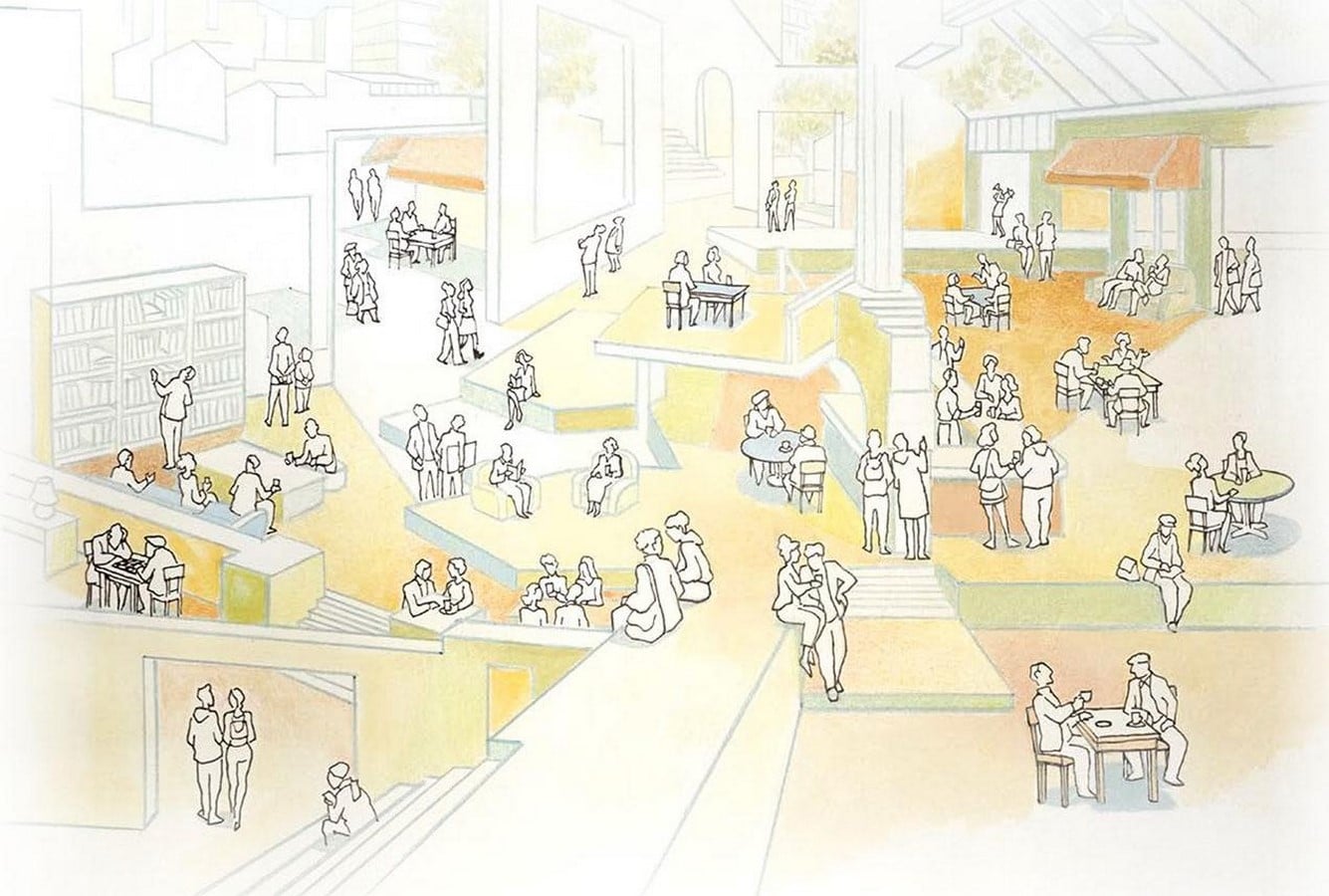
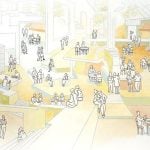
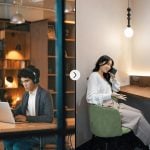
But we are beginning to see that relationship slowly change. The rise of remote and hybrid work culture has made that boundary between where we live versus where we work difficult to define. A dining table becomes someone’s desk in the morning, or a window-side table at a café becomes a desk or a meeting table. Adapting to this change, we see a rise in co-working spaces in each neighbourhood, rather than just in business districts. What is emerging is not just a new way of working, but a new way of filling the city.
The hybrid city is a city in which living, working and socialising are no longer necessarily tied to separate places.
From a City of Separation to a City of Overlap
The modern city we know today is shaped largely around functional separation. Residential areas, commercial districts, offices, institutions and recreational spaces have traditionally occupied different parts of the urban landscape. This separation made sense when work required people to be in one specific physical location, and commuting was an unavoidable part of everyday life.
The office was a destination; our home was where we returned, and a café, park, library or community centre existed somewhere between the two.
Digital connectivity has disrupted this relationship. The workplace is no longer necessarily a single address. For many working professionals, a laptop and internet connection are enough to make spaces temporarily productive.
With the development of digital connectivity, this equation has been disrupted. The workplace can be any place with a computer connected to the internet.
The COVID-19 pandemic contributed greatly to this change. An increasing amount of research into remote working and urban spaces demonstrates how people play around with different mixes of home, office, and alternative workspaces. Thus, a 2024 study exploring remote working in Beijing showed that 11.27% of employees preferred to work in third places such as cafes and other commercial spaces. Urban density and proximity to public transportation are some of the factors of importance.(Li et al., 2024)
The Rise of the Third Place
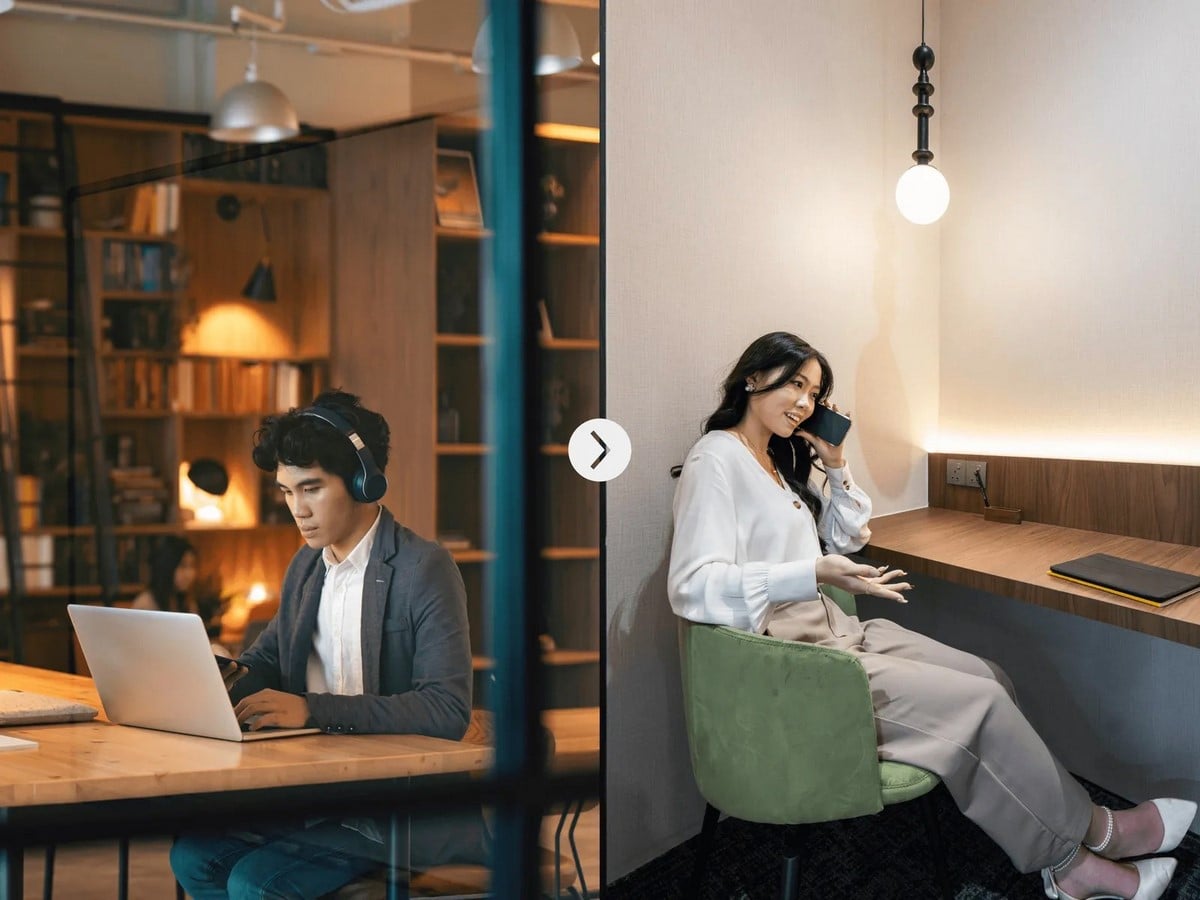
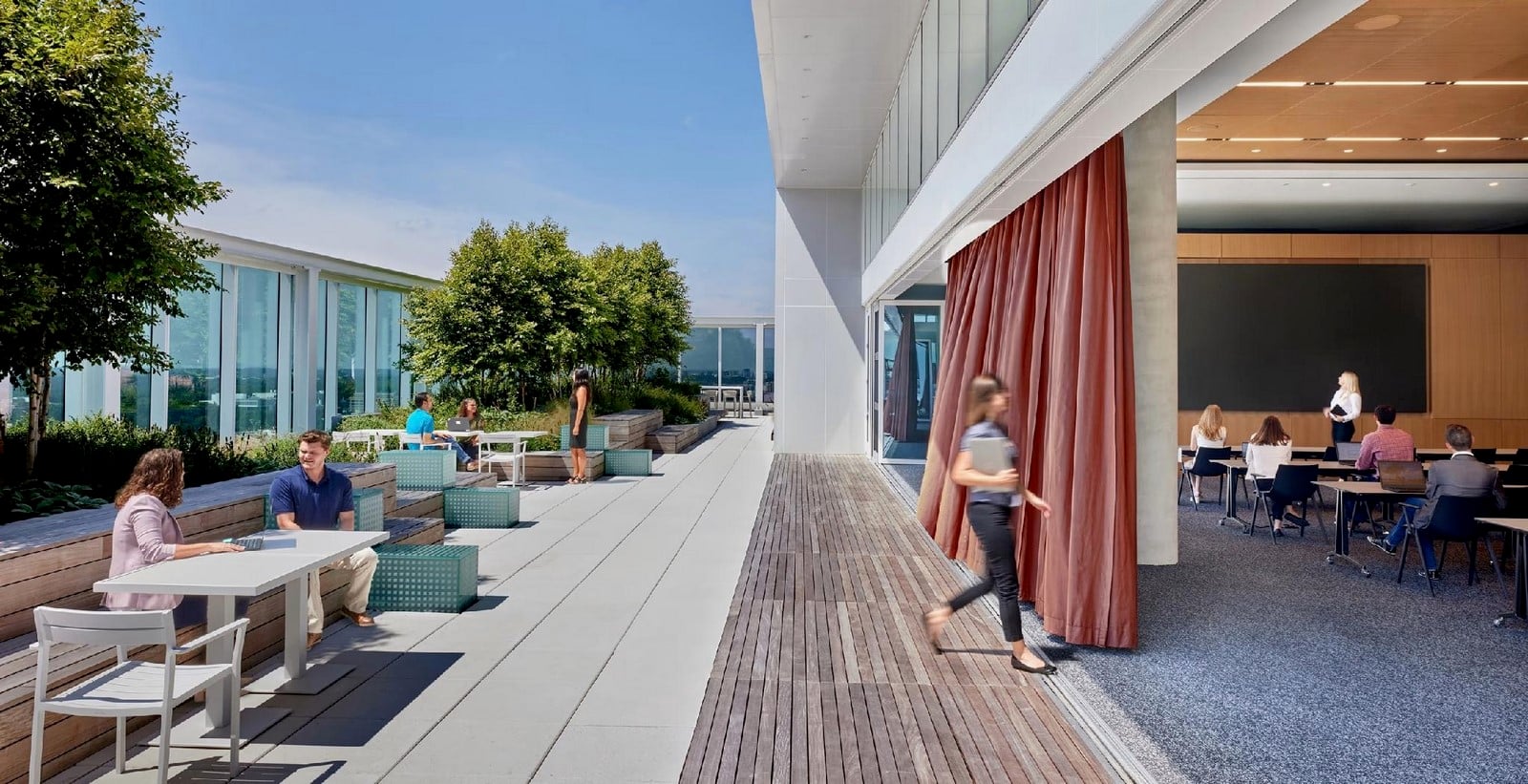
Between home and the traditional workplace lies an increasingly important category of space: the third place. The term, associated with sociologist Ray Oldenburg’s work, describes informal environments outside the home and workplace where people gather and interact. Cafés, libraries, parks and community spaces are conventional examples. But the contemporary third place is becoming something more complex.
It could be a place for working, meeting, or spending many hours without needing to be a member of any particular organization. It could even be a place for meeting people whom one would never have met otherwise.
In a 2026 study of remote workers in Australia, it emerged that although home and employers’ offices were the predominant places of work, 51% of the respondents had worked at another place, such as cafes, libraries, and co-working spaces. Libraries, according to the study, were appreciated for their quietness, affordability, and community feel. This suggests that the future of work may not simply be a choice between home or office. There is an expanding middle ground. And that middle ground matters to architecture because it changes what we expect from public and semi-public spaces. (Wakeling et al., 2026)
Hybrid architecture does not always require completely new building types. Instead, it can involve designing existing spaces so that they accommodate several forms of occupation throughout the day.
A library can support reading, studying, remote work and community events; a community centre can host workshops during the day and social activities at night; a public plaza can become a place for informal meetings, outdoor working, performances or simply sitting. The building becomes less about prescribing a single activity and more about allowing different activities to coexist.
In other words, putting desks into a building does not automatically create a successful hybrid space.
The social environment matters just as much as the workstation.
What Happens to the Office?
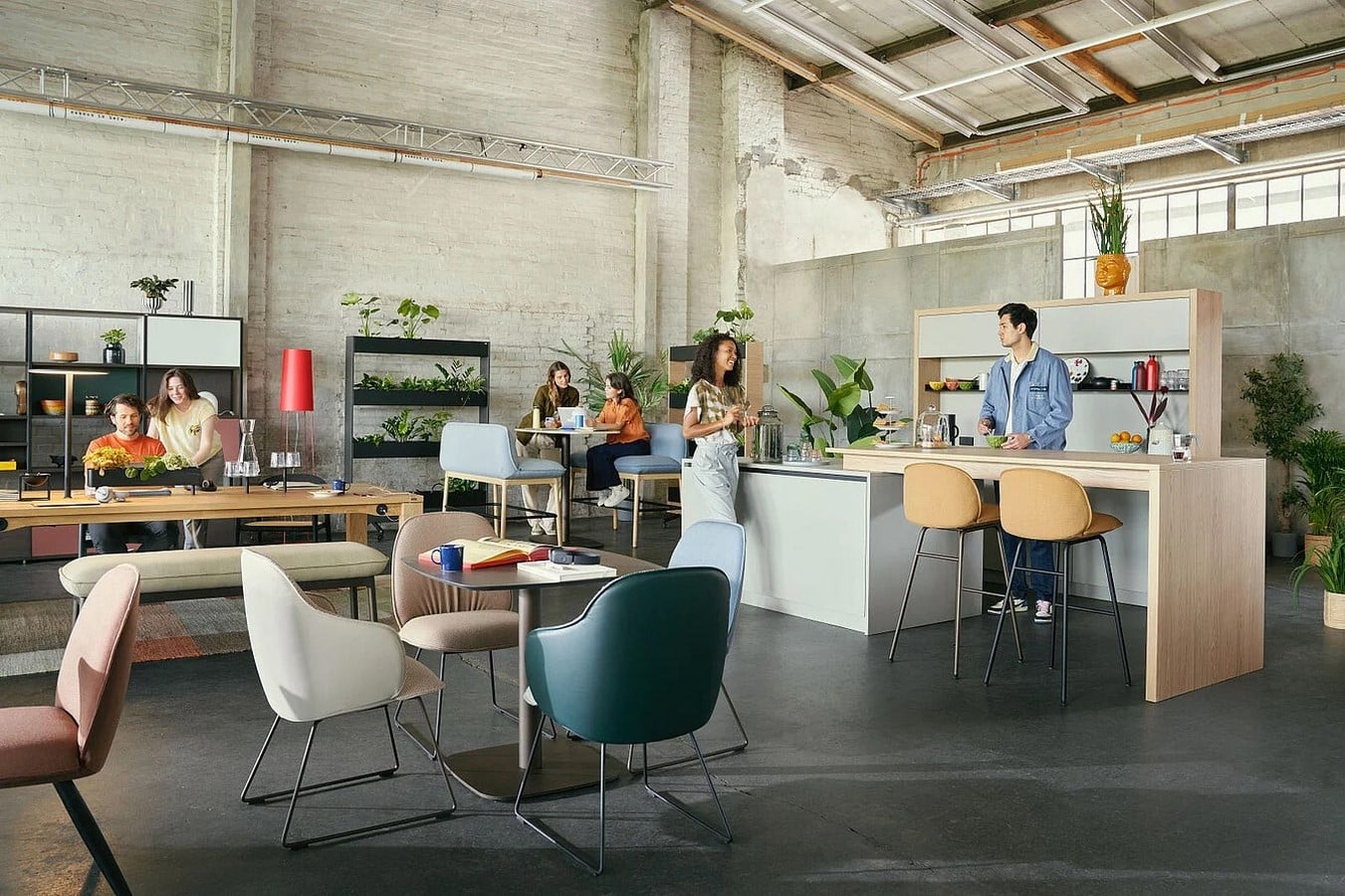
This doesn’t necessarily mean that the office disappears. In fact, the office may become more important precisely because people are no longer there all the time.
When routine individual tasks can happen anywhere, the purpose of the office begins to shift towards things that are harder to produce digitally: collaboration, mentorship, social interaction, collective identity and spontaneous encounters. The office becomes less of a place where everyone is required to sit from nine to five and more of a place people choose to come together.
As architects, we must aim to answer this question: ‘What can this place offer that people cannot get by working somewhere else?’
Architecture for a City Without Fixed Functions
This presents an intriguing dilemma for architects. Buildings for many years have been classified based on their main use, such as residential, commercial, institutional, or recreational.
But what do you do when a building does not have one defining use? Is there hope for a future design of buildings which will be less defined in terms of their use?
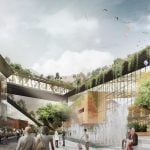
The ground floor of the building could have a café, coworking space, and community room. A residential building would have coworking spaces. A library can have meeting rooms and spaces for socializing.
A public square can have markets, performances, places for working and recreation. The critical point is not necessarily that all buildings will be multifunctional. Rather, buildings will be adaptable to changes.(Abbiasov et al., 2024)
The City After the Commute
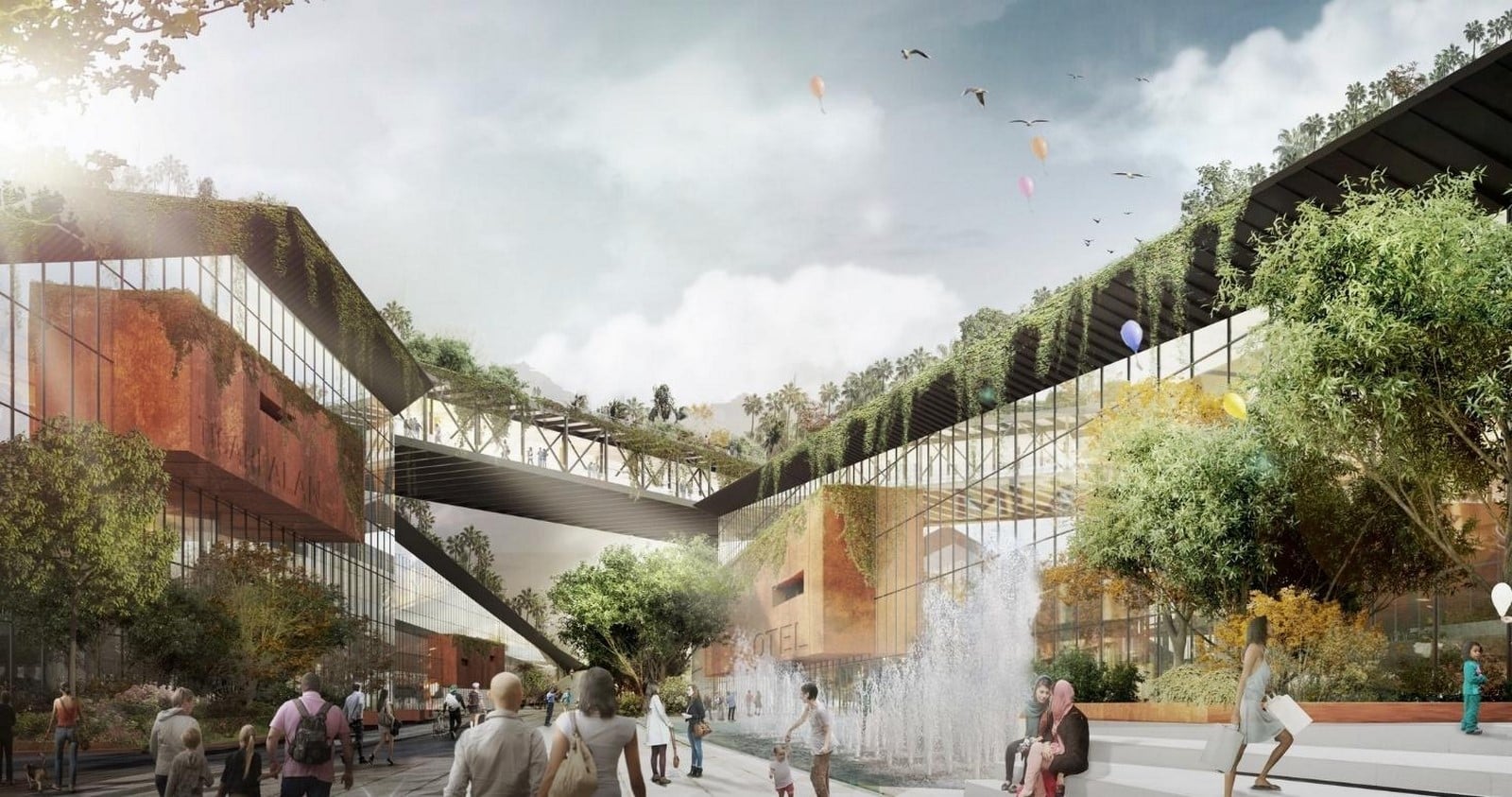
By far the most interesting question about the hybrid city is not whether offices will vanish. They likely won’t.
The key issue is whether commutes should continue to be the organizing principle of cities. Cities have always been planned based on the premise that millions of individuals must travel from residential zones to business hubs every day for work purposes. However, the concept of hybrid work negates such an idea. This notion implies that employment could be distributed, that neighbourhoods could be productive, and that spaces usually reserved for leisure could be used for work as well.
There is a risk in believing that having everything close always results in the creation of a better city.
If one can work, entertain oneself, shop, and socialize at home, one would have less reason to relate to the urban environment beyond the doorstep. The same technology which frees one from having to commute might alienate one from the urban world.
Thus, a hybrid city should not imply that everything happens at home. Nor should it imply that everything happens in 15 minutes. On the contrary, it should imply more options. Options to work from home, walk to the neighbourhood workspace, work from the library, meet someone at the café, or go into the city if necessary.
Yet the objective is not to reduce mobility. The value of cities lies in the fact that people move within them and meet strangers, discover new things, and encounter new experiences. Choice rather than obligation becomes the priority.
What matters is to live in a city where one can work from home when concentration is needed, go to a neighbourhood hub when community matters, come to the office when collaborative efforts are required, and go downtown because one wants to – and not just because of the obligation to do so. That may ultimately be the promise of the Hybrid City.
Not a city where everything happens everywhere, but a city where the boundaries between living, working and socialising become more flexible.
It’s for these reasons that the design of the city itself must be flexible. The city of the future may not be one that is determined by where we choose to work. It could be determined by how many places we are free to work, to meet, to stop and to belong. Perhaps the real shift here is the shift away from a city of destinations toward a city of possibilities.
References:
Abbiasov, T., Heine, C., Sabouri, S., Salazar-Miranda, A., Santi, P., Glaeser, E., Ratti, C., 2024. The 15-minute city quantified using human mobility data. Nature Human Behaviour 2024 8:3 8, 445–455. https://doi.org/10.1038/s41562-023-01770-y
Li, W., Zhang, E., Long, Y., 2024. Unveiling fine-scale urban third places for remote work using mobile phone big data. Sustain. Cities Soc. 103, 105258. https://doi.org/10.1016/J.SCS.2024.105258
Wakeling, S., Hider, P., Chan, X.W., Xerri, M.J., 2026. Libraries as a ‘Third Place’ for Remote Workers: A Survey of Australian Workplace Preferences. Public Library Quarterly. https://doi.org/10.1080/01616846.2026.2667109