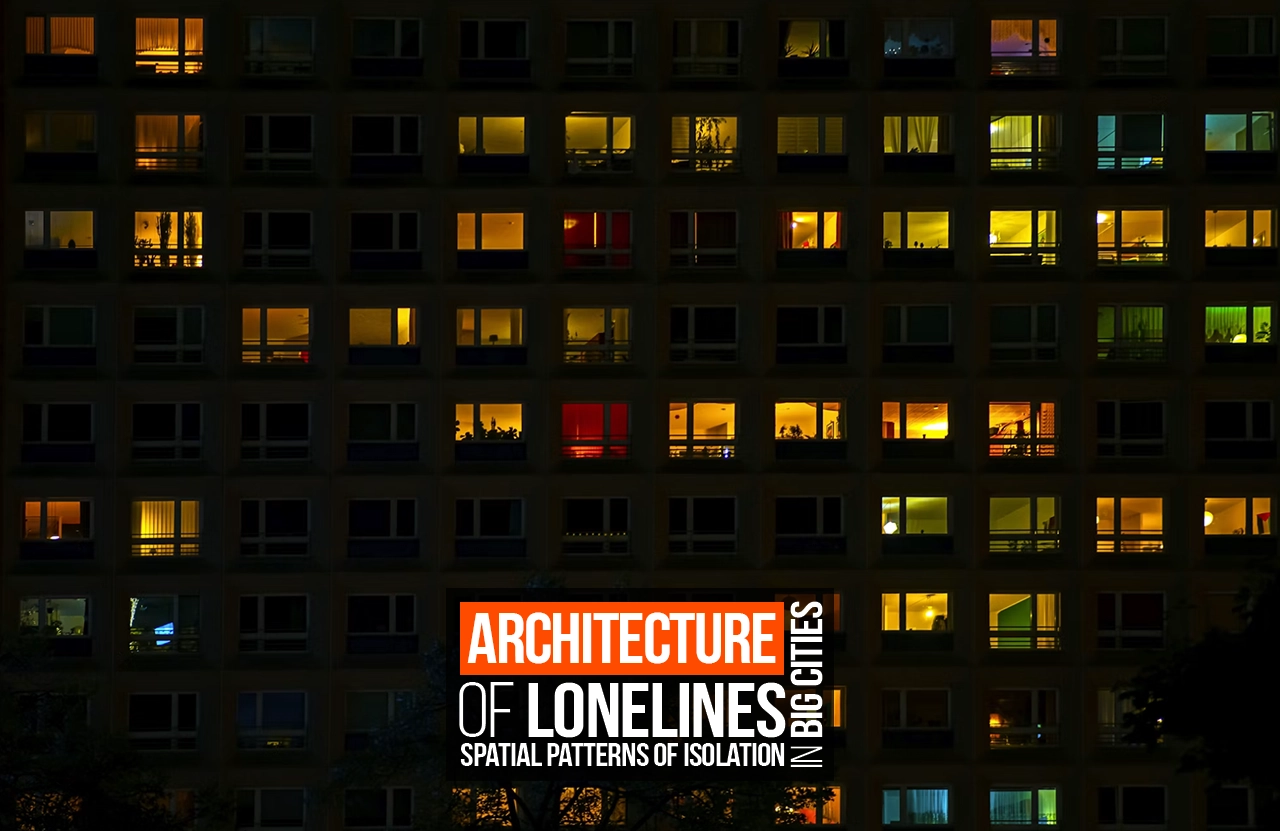
At night, big cities can look almost overflowing with life: apartment windows glow above busy roads, trains carry strangers shoulder to shoulder, and cafés remain busy long after sunset. And yet, for someone returning home, none of these encounters necessarily becomes a connection.
Research on urban loneliness suggests that the environments in which people live, move and meet can shape opportunities for social interaction (University of Sydney, 2023; TSA, 2025).
This raises an architectural question: what happens when a city brings people physically close but keeps their lives spatially separate?
Its spatial patterns may reveal an architecture of loneliness – beginning at home and extending into the city.
The First Divide
The first spatial patterns of isolation can emerge at the most intimate scale: the home.
A dwelling may efficiently accommodate one or several people, yet its ability to support social life depends on more than the number of occupants.
A University of Sydney review notes that small homes can restrict residents’ ability to host others, while poor housing conditions may further limit opportunities for connection (University of Sydney, 2023).
The issue, however, is not simply small apartments or high density. Studies on urban living suggest that neighbourhood cohesion and the quality of the physical environment can mediate the relationship between built form and loneliness (Ochnik et al., 2024).
There is also something more ordinary at play: the gradual disappearance of reasons to step outside ourselves. When everything needed for daily life can happen within the same private boundary, the home can become not just a place to return to, but a world that asks very little of us beyond its walls.
A home can protect privacy without becoming socially isolating; the concern begins when privacy becomes its only spatial relationship. When every dwelling functions as a complete, self-contained unit, fewer opportunities remain for everyday encounters to spill beyond its threshold.
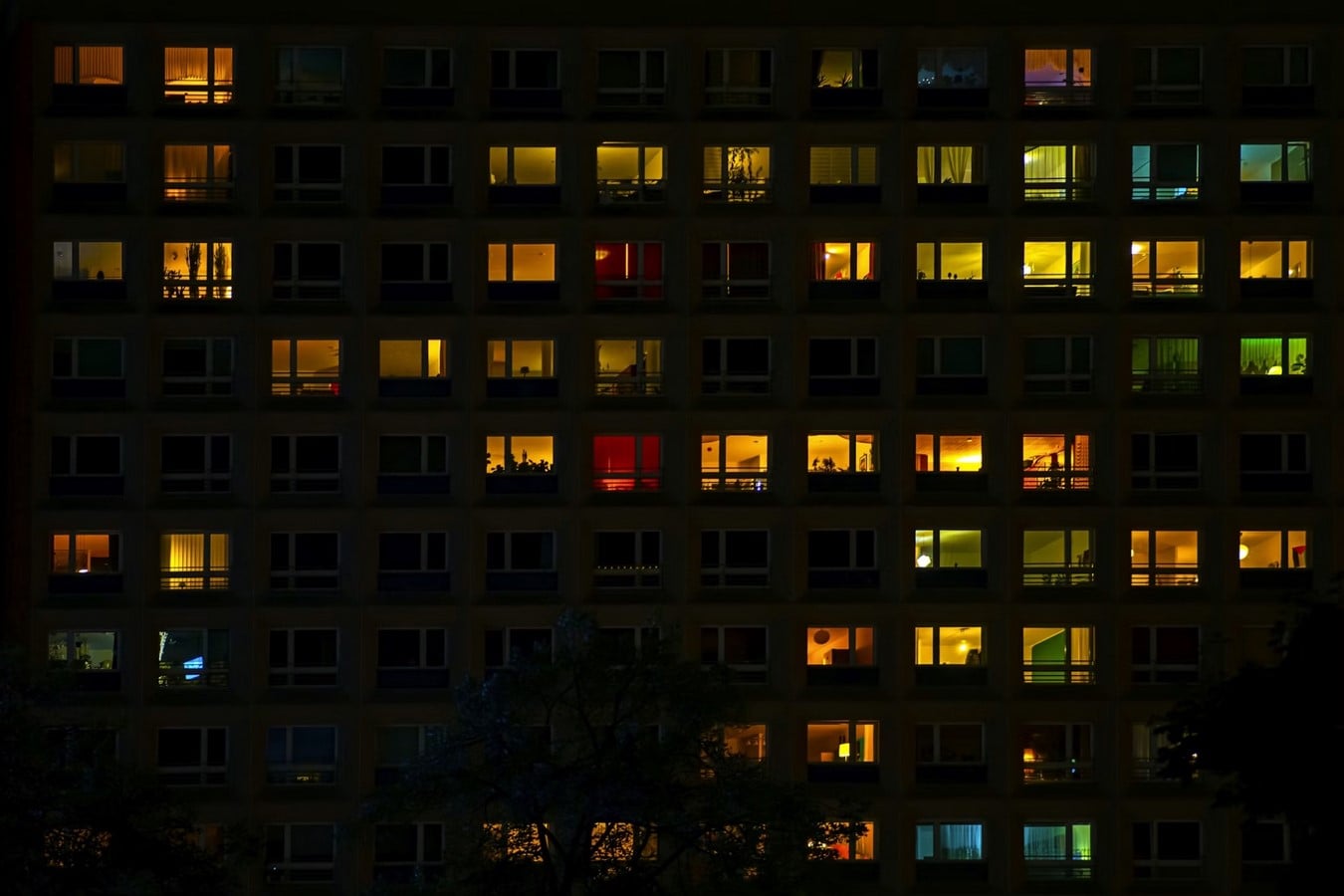
Parallel Lives
Leaving the home does not necessarily mean entering a shared social world. You may recognise the person who lives across the corridor, pass the same security guard every morning, or see the same neighbours from your balcony, and still remain strangers. The spaces between homes can quietly turn these parallel lives into separate ones.
This is where spatial patterns begin to matter beyond the dwelling itself. A gated entrance, a compound wall, a road that is difficult to cross, or amenities placed far from where people live can shape not only where people go, but whom they are likely to encounter.
A study based in Beijing found that greater physical isolation, longer distances and limited access to amenities were associated with weaker social bonds (Lu et al., 2025), suggesting that physical separation can gradually become social separation.
Perhaps this is why simply stepping outside does not always make us feel part of a larger community. The neighbourhood may bring us into proximity with others without creating meaningful opportunities to engage with them. And beyond these residential boundaries lies another question: what happens when we enter spaces meant to be shared?
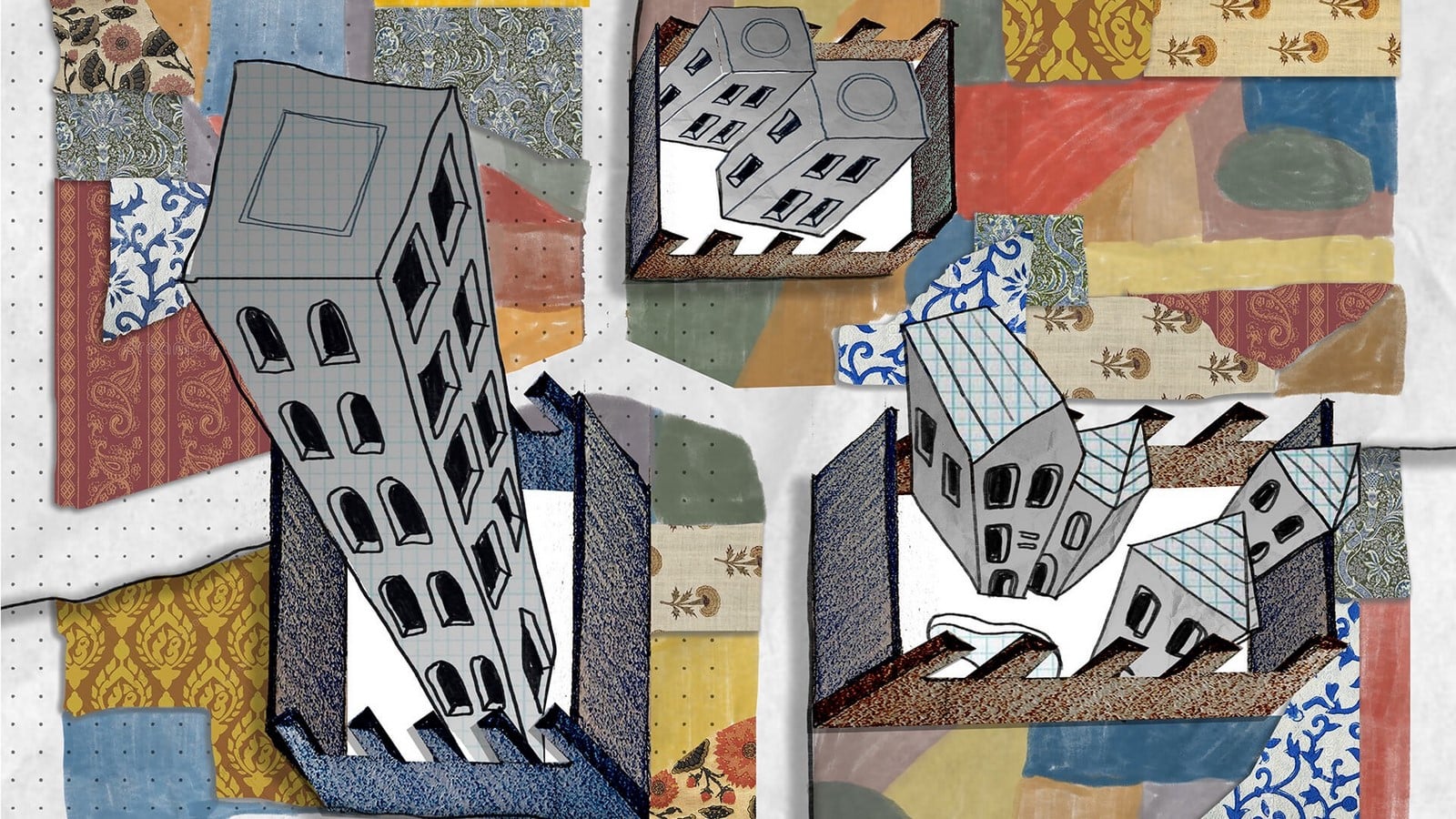
A Fading Presence
The places where the city asks us to be together – the plaza, the park, the pavement, the café terrace – have increasingly become spaces where urban life feels organised more around movement than presence.
We move between homes, workplaces, cars, metros and commercial spaces, constantly navigating traffic, noise, screens and schedules, with little room to pause or follow an unexpected impulse.
For example, in Indian cities, streets that once functioned as places to congregate, celebrate and interact have increasingly been crowded out by vehicular movement (Dutt, 2016).
Research on Ahmedabad similarly shows how street vending can turn ordinary streets into active social spaces, while their removal can diminish that everyday vibrancy (Deore and Lathia, 2019).
The issue, then, is not simply that public spaces are absent, but that our spatial patterns increasingly decide where we are allowed to stop, linger and belong.
This leaves us with a larger concern: what happens when a city leaves us fewer places to simply be.
A city may continue to grow, move and function efficiently, yet something fundamental begins to erode when there is increasingly little space for people to inhabit it on their own terms.
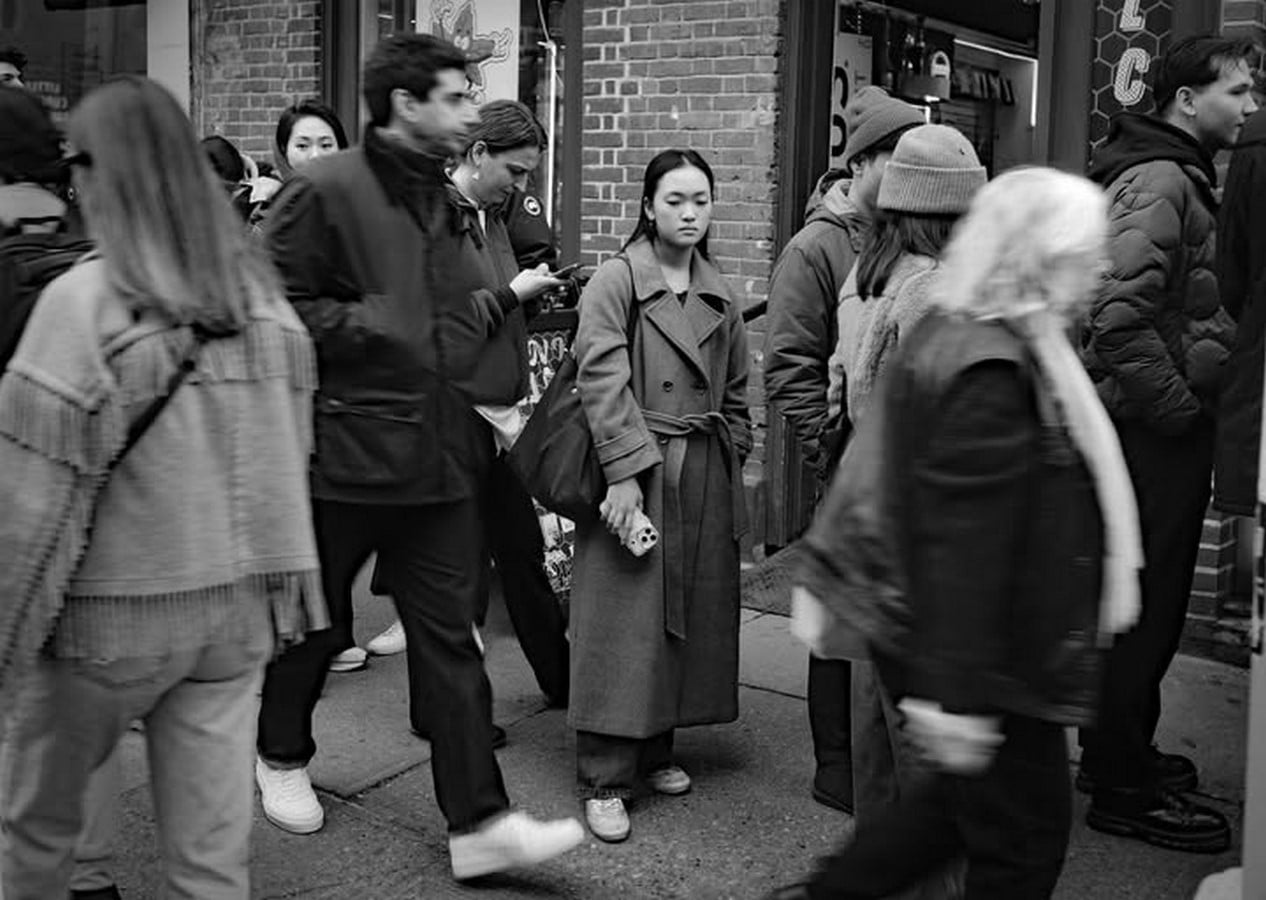
The Density Paradox
Urban density is often treated as a measure of how much a city can hold. But the experience of density depends on its spatial patterns – how that population is distributed, connected and separated across space.
As housing costs rise and everyday life becomes increasingly shaped by time and financial pressures, physical proximity does not necessarily translate into social connection. This practical constraint complicates the theoretical assumption that proximity naturally produces connection.
A city can place many people within the same neighbourhood while simultaneously separating the places where they live, work, rest and socialise.
Rising housing costs can push residents farther from jobs and established social networks, while long commutes and fragmented neighbourhoods consume the time and energy needed to sustain relationships.
The result is not a lack of people, but a peculiar urban condition: a city that brings more people into closer physical proximity while making sustained connection harder to maintain.
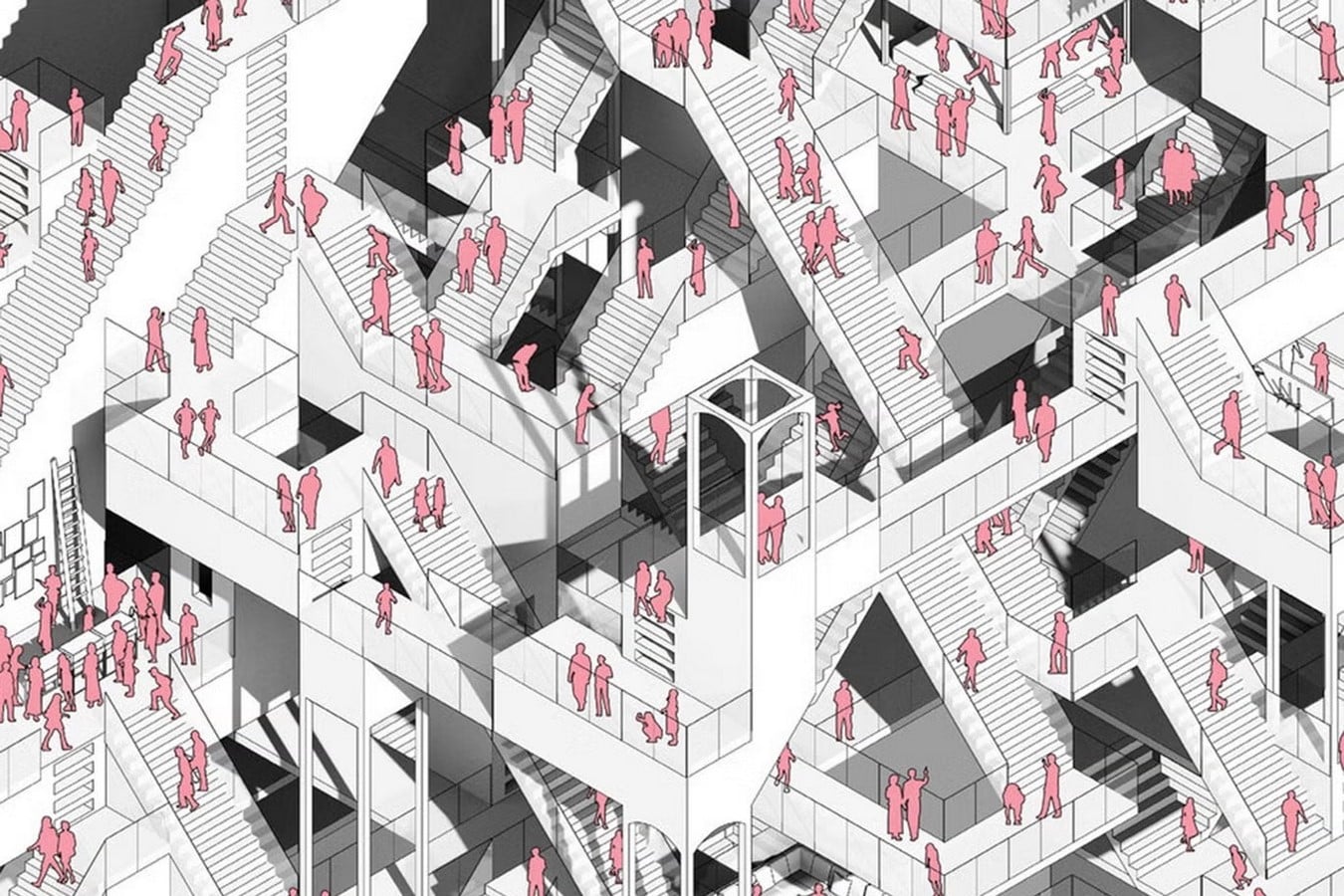
Collective Blind Spots
Big cities thus bring thousands of people within arm’s reach and still leave their lives spatially separate. This is not simply an architectural failure.
The spatial patterns of isolation we experience are also shaped by planning priorities, housing markets, transport systems and economic pressures that determine what gets built, where it is built and who can afford to stay there.
When land is valued primarily through its financial return, mobility through efficiency and urban space through its capacity to accommodate growth, the less measurable needs of everyday social life unfortunately become a secondary concern.
None of this means that architects can design loneliness away, or that every space should demand interaction. But it does mean that the spaces between private life, work, movement and public life matter more than ever.
The challenge is therefore not simply to make cities denser, faster or more efficient, but to ask what those measures of progress leave out: if a city can bring us closer together while making us feel further apart, what exactly are we building?
References:
TSA. (2025). Isolated in the City: How Architecture Mitigates Urban Loneliness – TSA. [online] Available at: https://torontosocietyofarchitects.ca/events/isolated-in-the-city-how-architecture-mitigates-urban-loneliness/ [Accessed 17 Aug. 2026].
BIG | Bjarke Ingels Group. (n.d.). [online] big.dk. Available at: https://big.dk/projects/8-house-2021 [Accessed 17 Aug. 2026].
Leslie (2025). The Hidden Architecture of Loneliness: How Urban Design Shapes Our Social Worlds. [online] Medium. Perspective Matters. Available at: https://medium.com/perspective-matters/the-hidden-architecture-of-loneliness-how-urban-design-shapes-our-social-worlds-291e332db77f [Accessed 17 Aug. 2026].
Tampere University. (2026). How architecture can help tackle loneliness | Tampere University. [online] Available at: https://www.tuni.fi/en/tau/news-and-events/how-architecture-can-help-tackle-loneliness [Accessed 17 Aug. 2026].
Mitra, A. (2025). Urban Loneliness: We remain isolated in big cities. [online] Medium. Available at: https://medium.com/@aditeemitra2329/urban-loneliness-we-remain-isolated-in-big-cities-8ba1d4136c20 [Accessed 17 Aug. 2026].
Bergefurt, L., Kemperman, A., van den Berg, P., Borgers, A., van der Waerden, P., Oosterhuis, G. and Hommel, M. (2019). Loneliness and Life Satisfaction Explained by Public-Space Use and Mobility Patterns. International Journal of Environmental Research and Public Health, 16(21), p.4282. doi:10.3390/ijerph16214282.
Preparing to download … (2026). [online] Nih.gov. Available at: https://pmc.ncbi.nlm.nih.gov/articles/PMC6862387/pdf/ijerph-16-04282.pdf [Accessed 17 Aug. 2026].
Lonely by Design: How Urban Planning Can Intensify Social Isolation. (n.d.). [online] www.planetizen.com. Available at: https://www.planetizen.com/news/2023/01/121328-lonely-design-how-urban-planning-can-intensify-social-isolation [Accessed 17 Aug. 2026].
Marshall, C. (2015). Pruitt-Igoe: the troubled high-rise that came to define urban America – a history of cities in 50 buildings, day 21. [online] the Guardian. The Guardian. Available at: https://www.theguardian.com/cities/2015/apr/22/pruitt-igoe-high-rise-urban-america-history-cities [Accessed 17 Aug. 2026].
UK Biobank. (2025). Associations of neighbourhood housing density with loneliness and social isolation: a cross-sectional study using UK Biobank data – UK Biobank. [online] Available at: https://www.ukbiobank.ac.uk/publications/associations-of-neighbourhood-housing-density-with-loneliness-and-social-isolation-a-cross-sectional-study-using-uk-biobank-data/?utm_source=chatgpt.com [Accessed 17 Aug. 2026].
Bi, X., Jian, Y.I., Villani, C., Leung, K.Y. and Siu, K.W.M. (2025). How public open spaces co-construct solitary experiences in densely populated urban environments. Health & Place, [online] 97, p.103596. doi:10.1016/j.healthplace.2025.103596.
Sones, M., Fuller, D., Kestens, Y., Thierry, B. and Winters, M. (2025). Evaluating the protective effect of public open space on social connectedness: evidence from a natural experiment cohort study in three Canadian cities. Health & Place, [online] 96, p.103541. doi:10.1016/j.healthplace.2025.103541.
Haas, T. (2024). Thematic and Conceptual Paper Decoding Urban Loneliness: Exploring an Emerging Concept. [online] doi:10.32474/SJPBS.2024.08.000284.
Ali, S. and George, A. (2022). Redressing urban isolation: A multi-city case study in India. Journal of Urban Management. doi:10.1016/j.jum.2022.04.006.
Hedayatnezhad Kashi, S.M., Khakzand, M. and Sharifi, A. (2026). A multidimensional spatial analysis of the relationship between the built environment and loneliness: evidence from Tehran, Iran. GeoJournal, 91(4). doi:10.1007/s10708-026-11688-3.
The University of Sydney (2023). The cities we create lead to isolation and loneliness. [online] The University of Sydney. Available at: https://www.sydney.edu.au/news-opinion/news/2023/02/02/the-cities-we-create-lead-to-isolation-and-loneliness.html [Accessed 18 Aug. 2026].
Bailey, D. (2025). How are cultural spaces in cities tackling the loneliness epidemic? [online] World Cities Culture Forum. Available at: https://worldcitiescultureforum.com/2025/09/24/loneliness-in-cities/ [Accessed 18 Aug. 2026].
Dominika Ochnik, Bartłomiej Buława, Nagel, P., Marek Gachowski and Marcin Budziński (2024). Urbanization, loneliness and mental health model – A cross-sectional network analysis with a representative sample. Scientific Reports, [online] 14(1). doi:10.1038/s41598-024-76813-z.
Yoon, S. and Kwon, K. (2024). Spatial Distribution and Influencing Factors of Single-Person Households with Social Isolation in Seoul, South Korea. Sustainability, [online] 16(3), p.1280. doi:10.3390/su16031280.
Mdpi.com. (2026). [online] Available at: https://www.mdpi.com/2071-1050/17/5/2327 [Accessed 18 Aug. 2026].
Lu, P., Xia, F., Yan, J., Shen, J. and Hui, E.C.M. (2025). Physical isolation is durably affecting the relationship between social bonds and economic inequality. Discover Cities, 2(1). doi:10.1007/s44327-025-00085-z.
Müürisepp, K., Manninen, M., Bernelius, V., Tammaru, T., Toivonen, T. and Järv, O. (2025). Spatial Integration or Isolation? Capturing the Rhythms of Daily Lives Across Neighbourhoods in Helsinki Using Mobile Phone Data. Population, Space and Place, 31(3). doi:10.1002/psp.70029.
Marchigiani, E. and Bonfantini, B. (2022). Urban Transition and the Return of Neighbourhood Planning. Questioning the Proximity Syndrome and the 15-Minute City. Sustainability, 14(9), p.5468. doi:10.3390/su14095468.
PEINHARDT, K. (2023). Sociability: Public Spaces as an Antidote to Isolation. [online] www.pps.org. Available at: https://www.pps.org/article/sociability-public-spaces-as-an-antidote-to-isolation [Accessed 18 Aug. 2026].
Peinhardt, K. (2023). Uses & Activities: How to Create Multi-Purpose Places. [online] www.pps.org. Available at: https://www.pps.org/article/uses-activities [Accessed 18 Aug. 2026].
5.3 Spatial planning and mental well-being: How to reduce social isolation and loneliness in urban environments – Estonian Human Development Report 2023. (2023). [online] Estonian Human Development Report 2023 – Mental Health and Well-Being. Available at: https://2023.inimareng.ee/en/5-3-spatial-planning-and-mental-well-being-how-to-reduce-social-isolation-and-loneliness-in-urban-environments/ [Accessed 18 Aug. 2026].
Jha, R. (2025). The Urban Density Debate: India’s Story. [online] orfonline.org. OBSERVER RESEARCH FOUNDATION ( ORF ). Available at: https://www.orfonline.org/research/the-urban-density-debate-india-s-story [Accessed 18 Aug. 2026].
Avtar, R., Ahmad, S., Rahman, Md.M., Alsulamy, S., Meraj, G., Sethi, M., Singh, C.K. and Kharrazi, A. (2025). Impact of urban density on human well-being and sustainable development in Delhi, India. Scientific Reports, [online] 15(1). doi:10.1038/s41598-025-16033-1.
Dutt, F. (2016). Reclaiming Public Realm to Improve Human Health and Environment in Indian Cities. [online] Academia.edu. Available at: https://www.academia.edu/91236895/Reclaiming_Public_Realm_to_Improve_Human_Health_and_Environment_in_Indian_Cities [Accessed 22 Aug. 2026].
Deore, P. and Lathia, S. (2019). Streets as Public Spaces: Lessons from Street Vending in Ahmedabad, India. Urban Planning, 4(2), p.138. doi:10.17645/up.v4i2.2058.