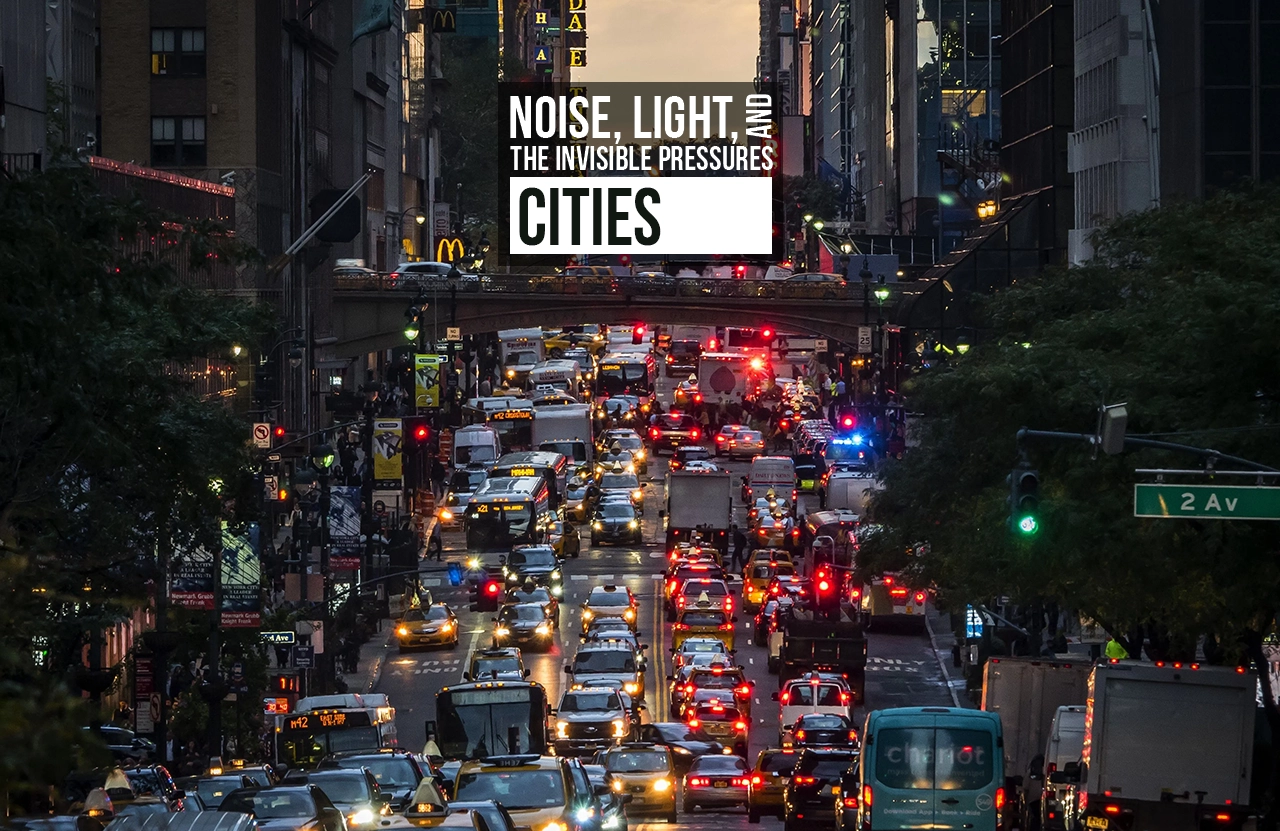
Cities can be described as moulded on what can be seen. Streets, facades, people, skylines. However, there are forces that influence urban life that are not exactly visual. They come as an ever-present buzz, as a bright flash of lightning, as a shiver more than any sound. Noise and light are not common features of glossy master plans, but are pressing all too silently against the body daily. They influence sleep, attention, memory, and even the time people spend in a location. These hidden pressures are a more complicated narrative of the process of urban design, administration, and experience.
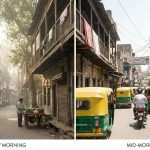
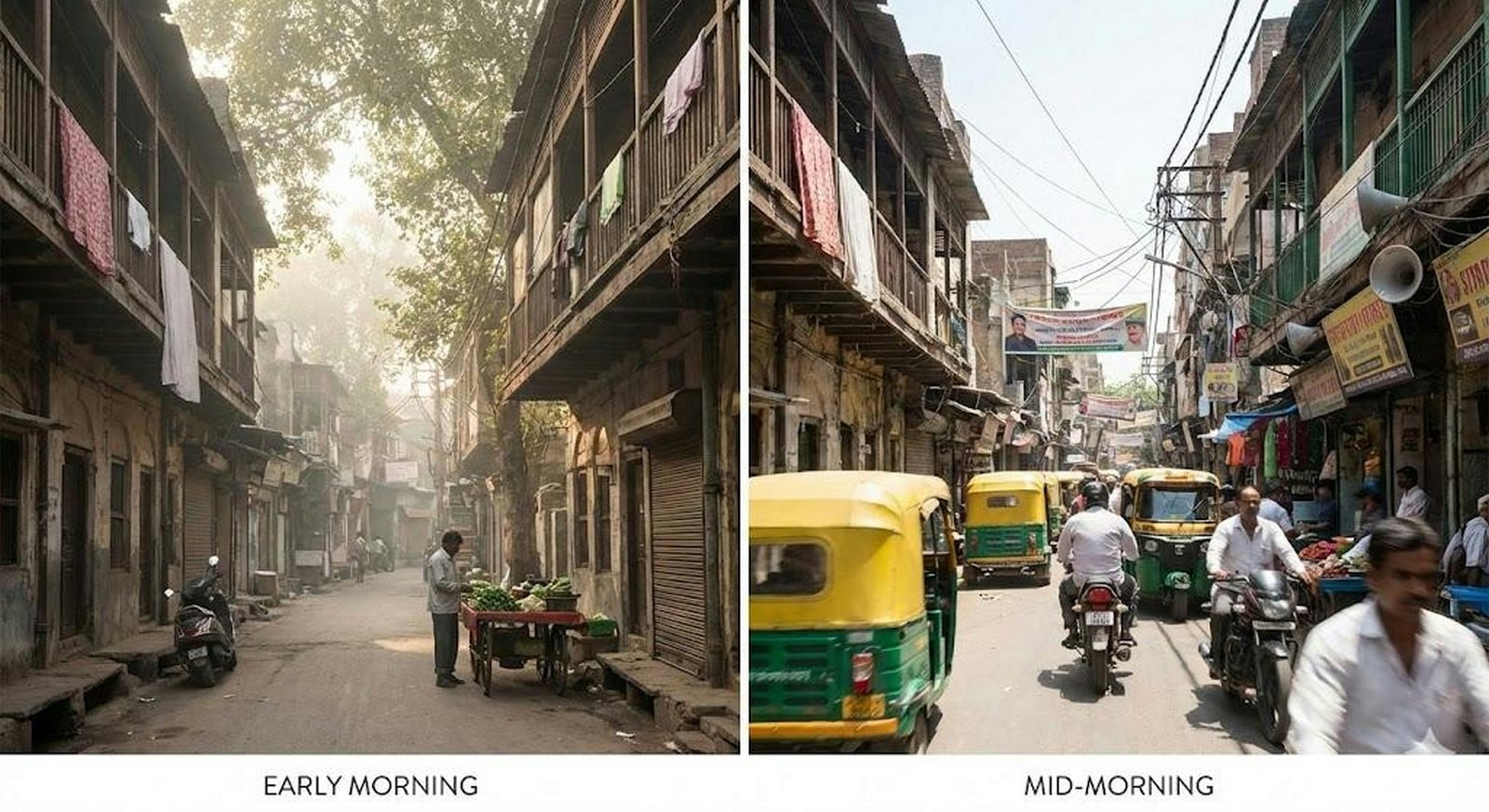
Enter an elderly neighbourhood street in Delhi very early in the morning. The city is cooled down momentarily before the stores begin. The shriek of some vegetable-seller makes his way along the lane. The sound of a scooter is heard, followed by another silence. Instead of harsh sunlight, there is soft filtered light, carried into the buildings by balconies, trees and linens above. This brief opening of the street presents what it could be. By mid-morning, the scales are reversed. Horns stack over one another. The noise of the loudspeakers of the local temples or stores competes. The light of day is bouncing off glass, metal shutters, and concrete, and the brightness is harsh and does not provide relief. The street does not differ in shape, yet its feeling is fully different.
In the urban areas, noise has been regarded as a by-product of expansion. Traffic, building, commerce, jubilance. They are socially justified each. But upon piling one above the other without control, they form an atmosphere of total alertness. There is no fading of sound in crowded neighbourhoods such as Karol Bagh or Chandni Chowk. It bounces on small exteriors and hangs low wires. What starts out as a motion turns to strain. Inhabitants respond to it by increasing their own volume. Screaming TVs, screaming dialogues, screaming horns. Noise not only becomes an issue, but it also becomes a coping strategy.
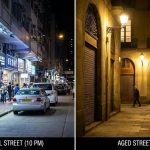
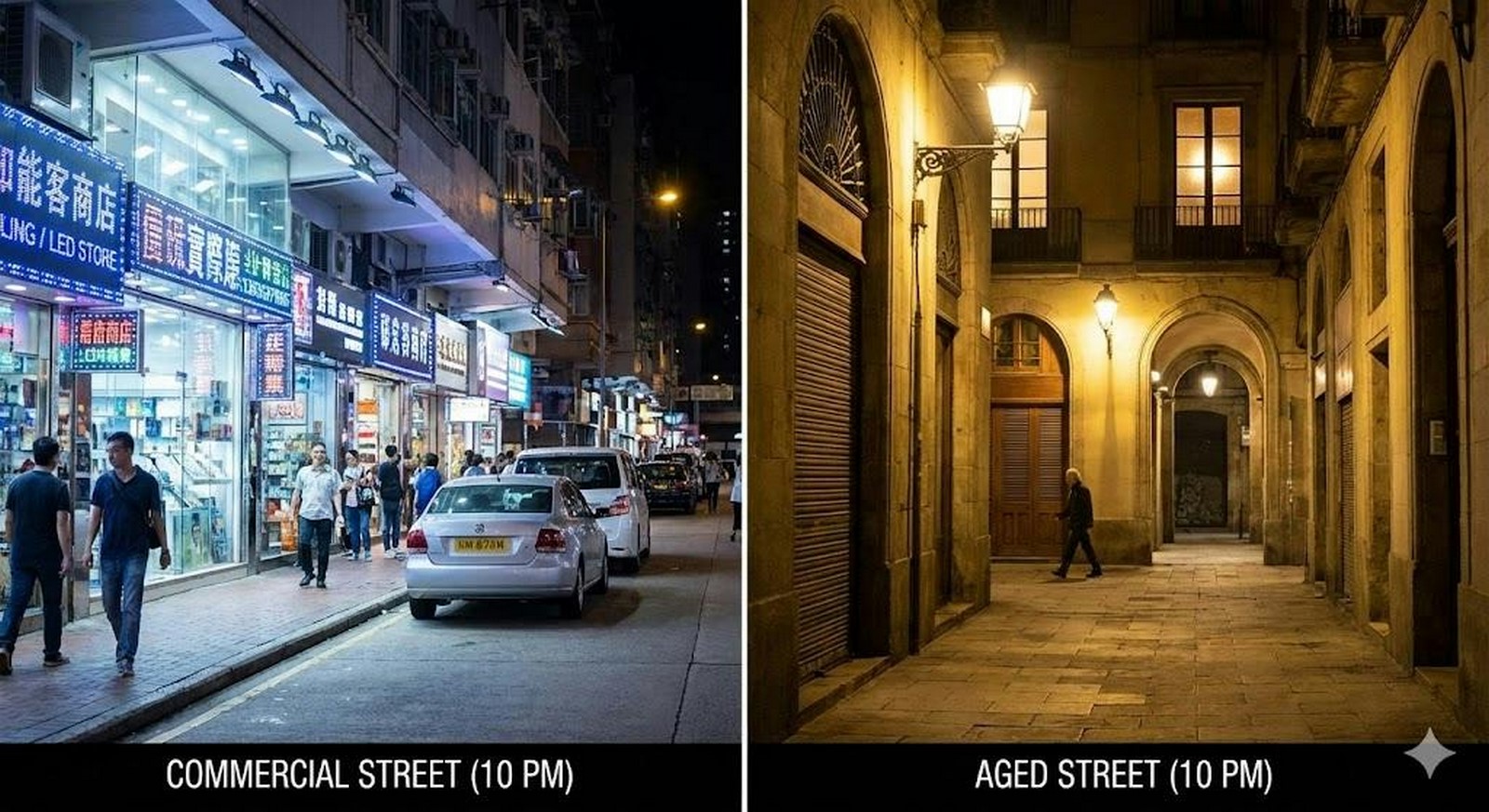
The same happens to light. Artificial lighting prolongs the working hours and gives a feeling of safety, yet surplus lighting flattens the night. Environments in commercial streets have flooded facades of commercial streets with LED signage, which consists of white and blue colours. The brightness of the shopfronts at 10 pm does not differ in relation to the same time at 7 pm. The body is not given any message to slow down. The aged street filmed used to depend upon diffuse pools of warm light. Doors, street lamps, windows. Shadows were permitted to exist. Those shades produced order and repose. Their extinction is inconspicuous, yet its impact on sleep and psychology is significant.
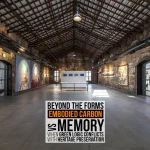
Historic buildings provide hints at another version of relations to these forces. Enter a fortress such as Tughlaqabad or some of the less crowded areas of the Red Fort. The stone walls are thick and absorb the sound instead of reverberating. Gradients of light are separated in courtyards. There is no brightness always. It follows the sun, and time is marked by shadows. They were not some silent and dark spaces, but were calculated. Noise had distance. Light had direction. Architecture had served as a mediator between the city and the body.
Contemporary cities tend to eliminate such filters in the name of efficiency. Large streets are more concerned with speed than noise. Glass towers, which are reflections of light, do not care about the street below. The sounds are pumped up in the open areas to announce that they are in action, and silence is taken to be a failure. However, there are a few neighbourhood streets that tend to counter this logic. Traffic noise is still mitigated in older areas of South Delhi by tree-lined avenues. Inward-looking houses and narrow lanes in the pols in Ahmedabad minimise glare and echo. The areas demonstrate that comfort does not mean getting rid of urban energy, but working on it.
Uneven distribution of the pressure of cities is the invisible force. People who are residing in the vicinity of the highways, flyovers or commercial strips receive more noise and light as compared to the gated enclave. These pressures differ among children, residents of the streets, the elderly, street vendors, and night shift workers. A child who attempts to study on a busy road is learning in a distracting environment as a norm. A seller who is hit by a floodlit sign loses the feeling of the day ending. They are not individual inconveniences. There are inequalities in space created in the city.
The technological solutions are often based on technological fixes. Silence barriers, coloured glass, grimmer streetlights. These are remedies for symptoms but not relationships. The more profound question is the way in which cities determine the things that should be listened to and seen. Why can the noise of traffic be accepted as something unavoidable, but the noise of talking be called a nuisance? Why do we praise commercial lighting and despise the dark? These are not only design preferences but also values.
To rethink cities, it is necessary to be interested in thresholds. The margin between street and home. The passing from night to day. The time when action must become less intense and not more intense. It is the urban design that takes into consideration these thresholds, which produces places in which the body can rest without retreating wholly. Small interventions matter. Trees that absorb sound. Constructing glare-reducing setbacks. Laws that do not kill street life by limiting the use of lights at night. Planning which acknowledges silence and blackness as assets, and not nothing.
Noise and light are hard to write about since both leave no marks on the maps. But they can remember better than most material mouldings. Human beings could not forget the street where no one could sleep. The room in which the light was never switched off. The park where there was just a muting of the sound till we could hear birds again. These experiences determine the way that cities are loved or suffered.
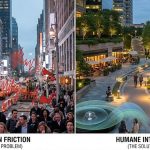
Cities are never going to be anything but rough. Density is the cause of friction, and friction is the cause of energy. It is not about how to decrease city calm but how to make the intensity humane. This is: can noise be stacked, or can it be layered? Can light lead as well as subdue. Does urban living provide such relieving moments without having to escape?
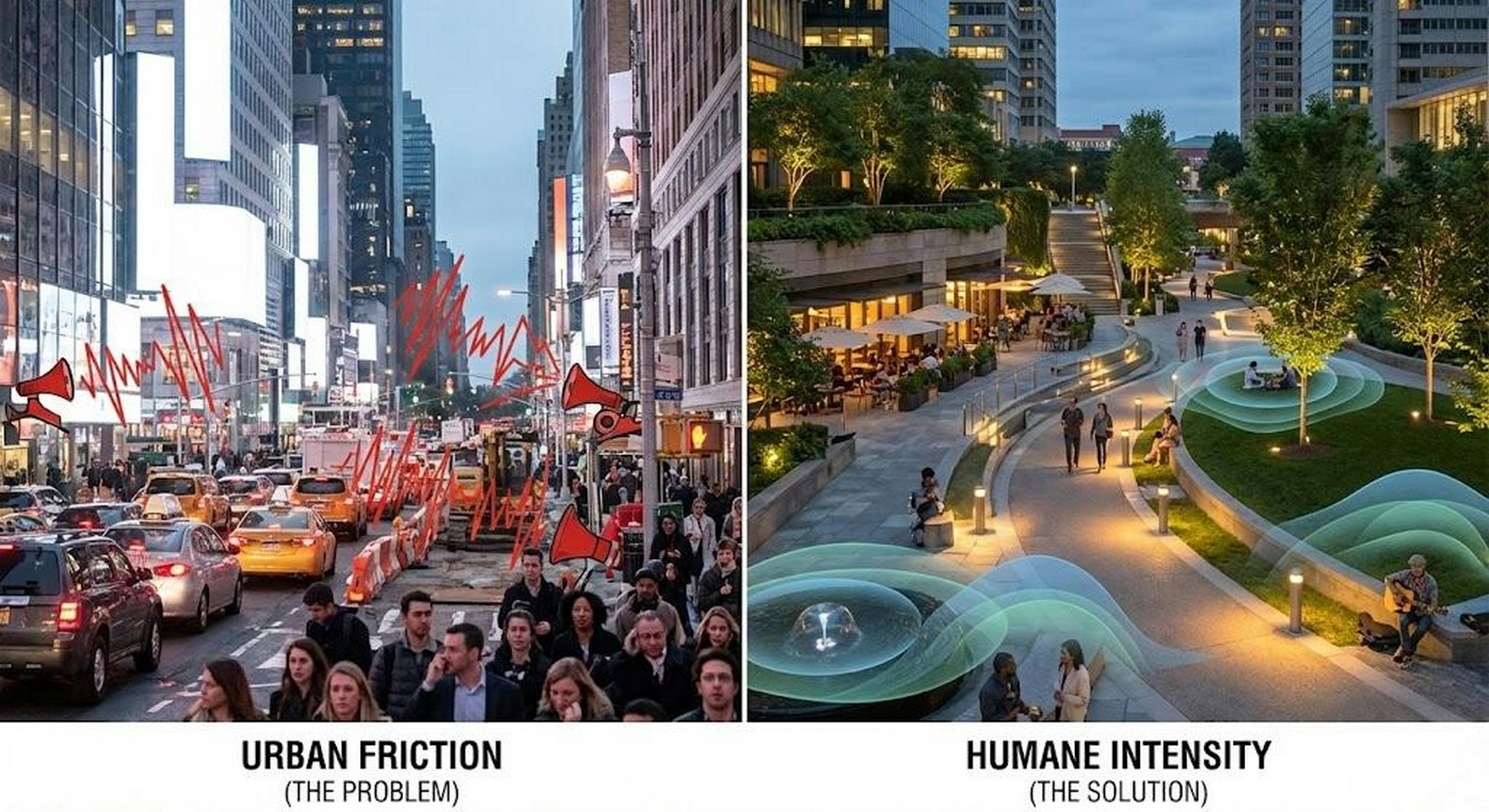
When strolling in a city at night, what sounds can be heard when the traffic has stopped? At noon, when you stand upon a street, whether the light falls, and where it is. What elements of the city enable the body to breathe, and what holds it erect? When cities keep becoming noisier and increasingly warmer, who is going to sleep, and who learns to live without it? And what sort of future is being constructed in which even the most influential buildings of urban life are the ones that are invisible?