Where Walls Whisper
If you’ve ever walked through a city that seems to breathe, you’ll know what I mean when I say Agartala feels alive. Its walls seem to hold talks between the past and the present, between the royal and the commonplace, between rain and red earth, not simply in the commotion of its bazaars or the hum of autorickshaws.
When you think about architectural wonders in India, you would not immediately think of Agartala, the capital of Tripura. Perhaps that’s why it’s so endearing. It’s a city that wants to show you around, not try to impress you.
The First Steps
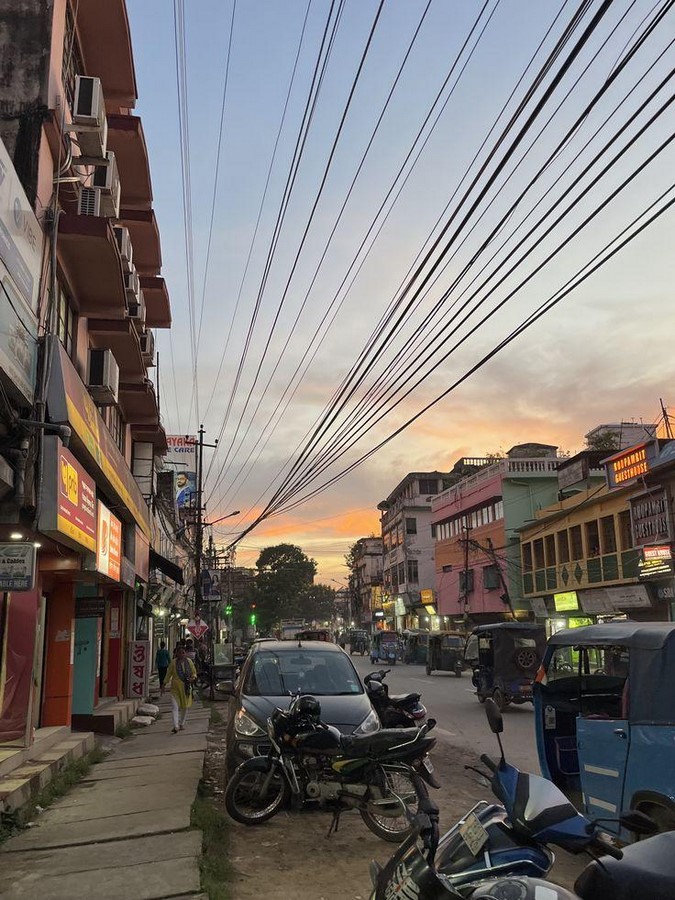
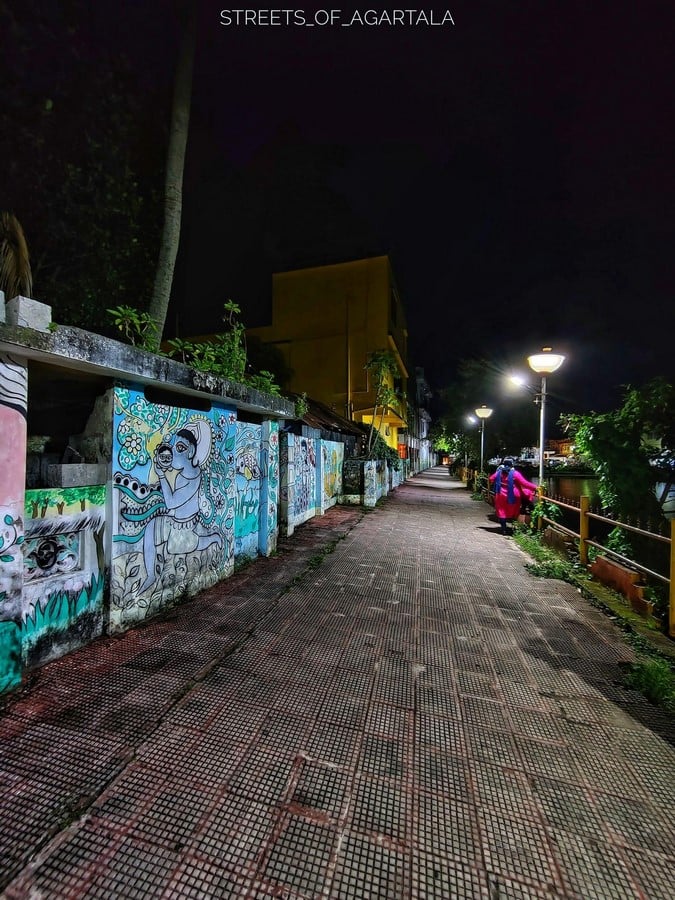
You can sense the rhythm as soon as you walk along any street in Agartala. The dampness that turns sunlight into gold lingers in the air. Everybody is selling something, whether it’s fruits arranged in pyramids, betel leaf mounds, or vibrant umbrellas. Behind them are facades of fading green and pale yellow homes with their shutters open. These streets have an air of honesty. Buildings are just there to accommodate life as it flows out onto the walkways; they are not vying for attention. The paint is uneven, the eaves are wide, and the verandas are deep. Everything in this place is made to breathe, so if you look attentively, you can practically read the climate in the architecture.
The Royal Heart: Ujjayanta Palace
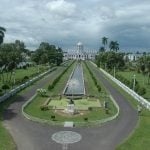
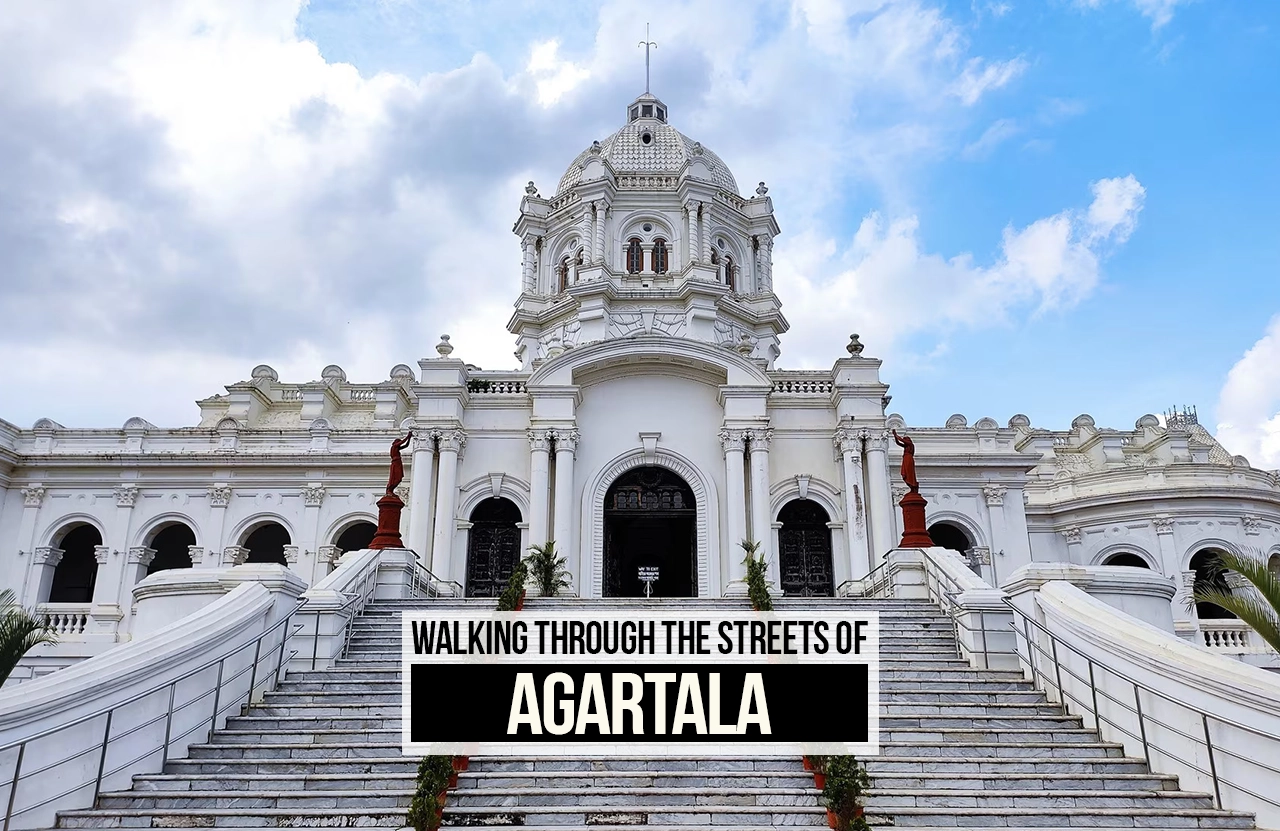
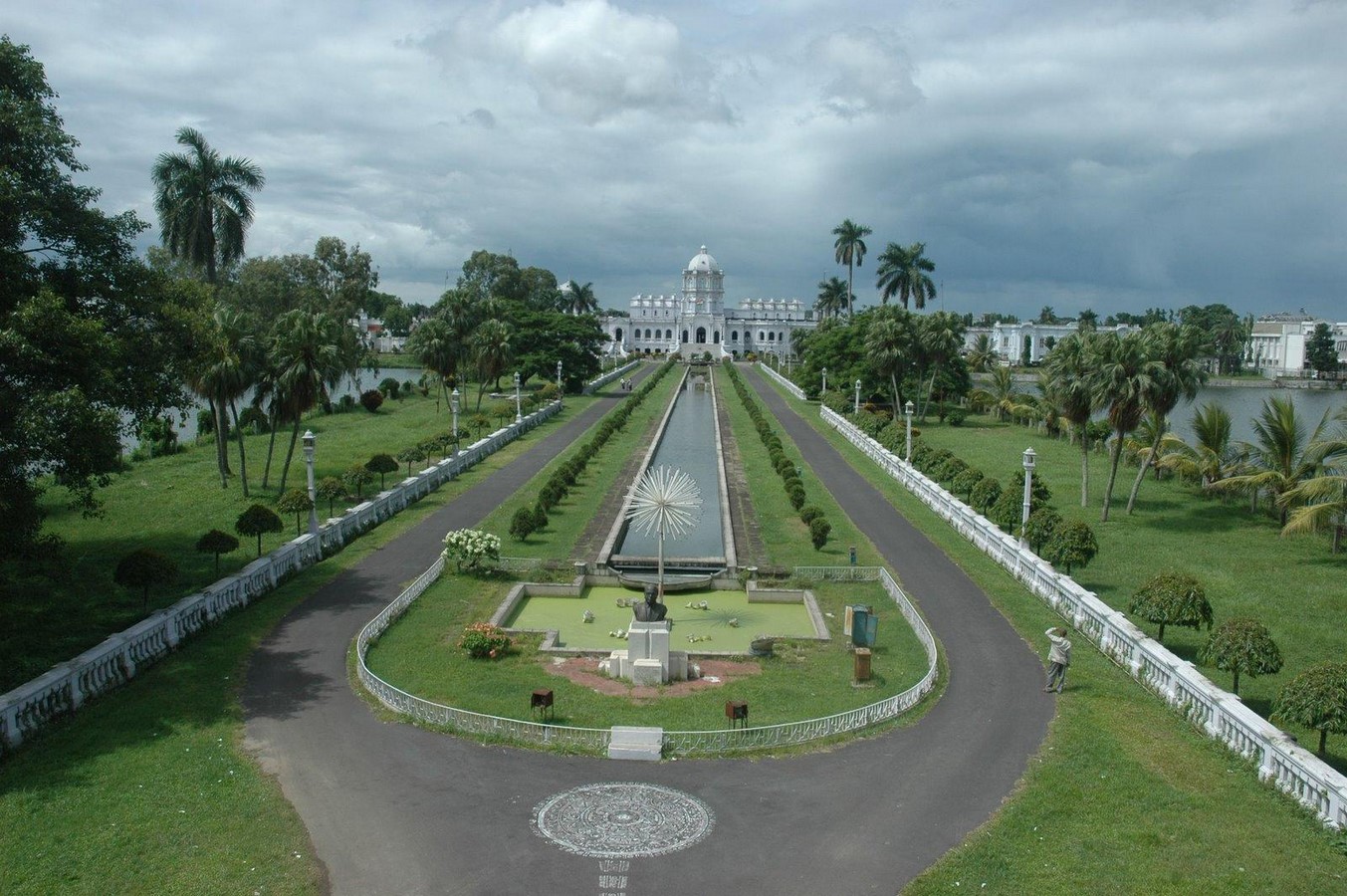
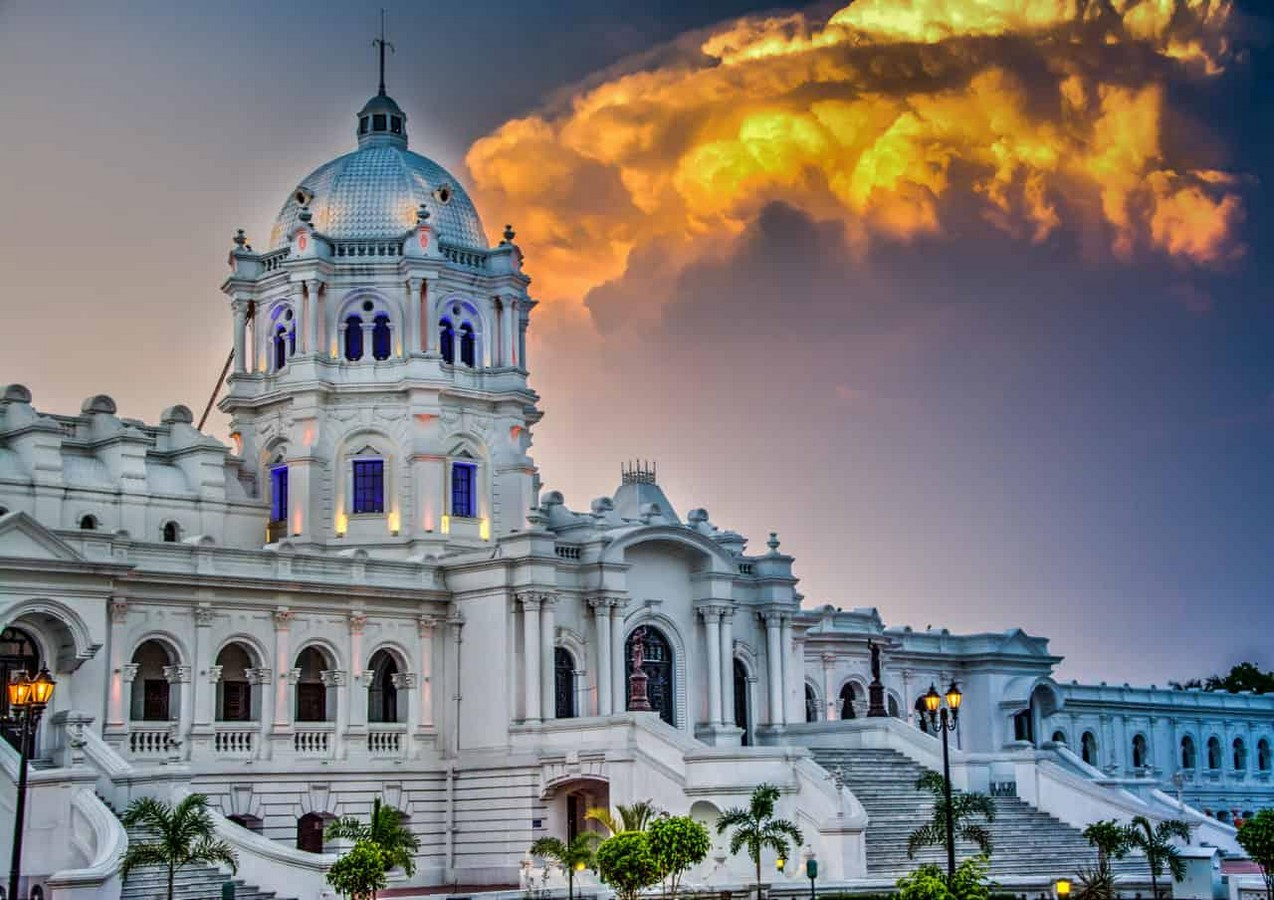
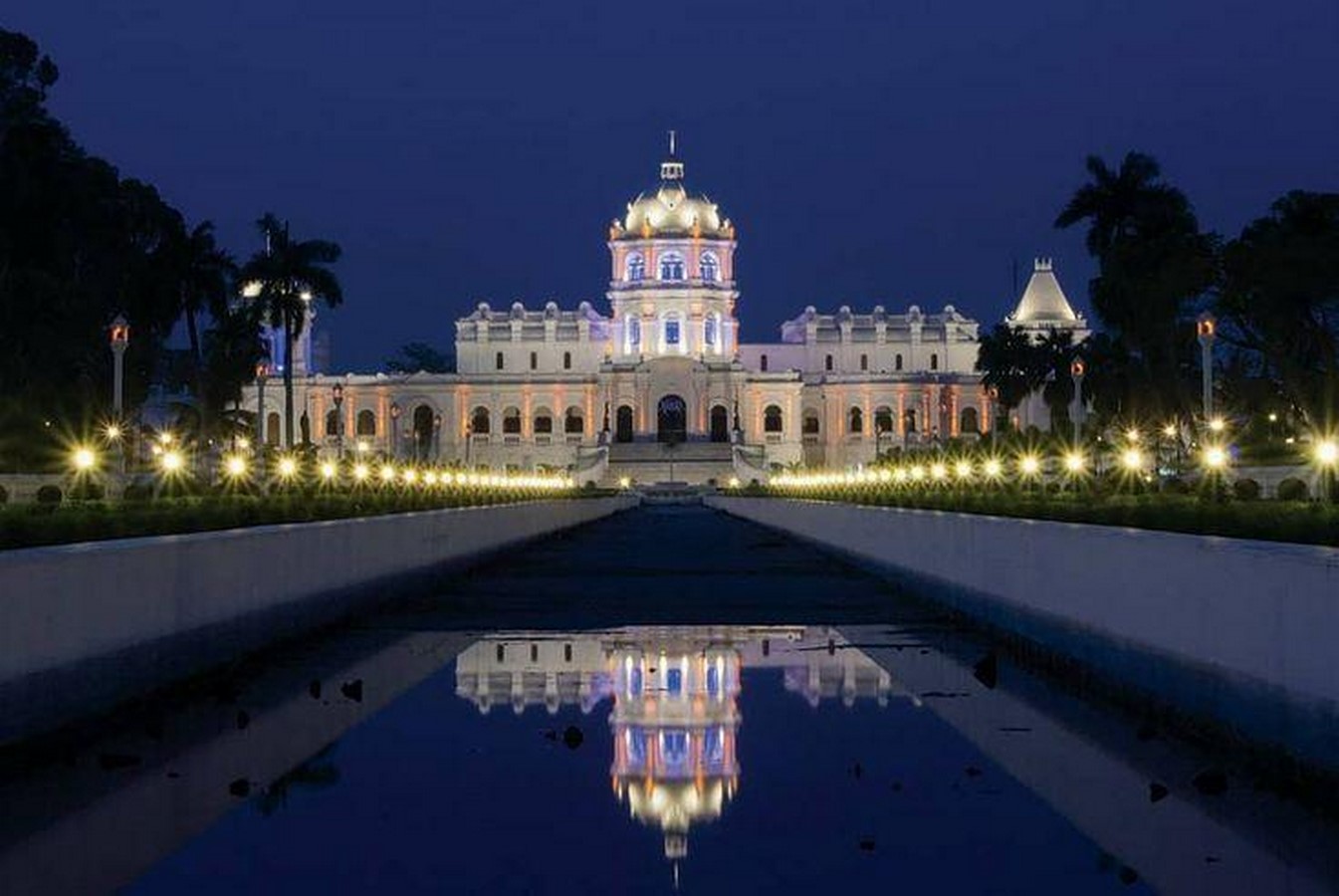
The chaos will diminish if you keep walking. Ahead, the white domes of the Ujjayanta Palace emerge like a mirage as the road broadens and trees create a soft canopy overhead. It’s hard to resist the urge to pause. The Tripura State Museum, an Indo-Saracenic masterpiece, is housed within this building, which was constructed in 1901 by Maharaja Radha Kishore Manikya and originally served as a royal residence.
The palace stands grandly yet strangely inviting; it feels regal yet approachable, possessing a poetic quality. Aside from the occasional leaf or the ripples caused by fish, the twin ponds on either side perfectly reflect the domes. As you approach, the intricate details, such as the Corinthian columns, lattice balconies, and the curved arches that blend elements of British architecture with Mughal courts, become more apparent.
As you turn around, life suddenly returns to normal outside the palace gates. Children shout, buses honk, and vendors bargain. The charm of Agartala lies in the inseparable connection between history and everyday life.
Where Faith Meets the Street: The Temples
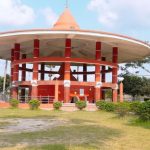
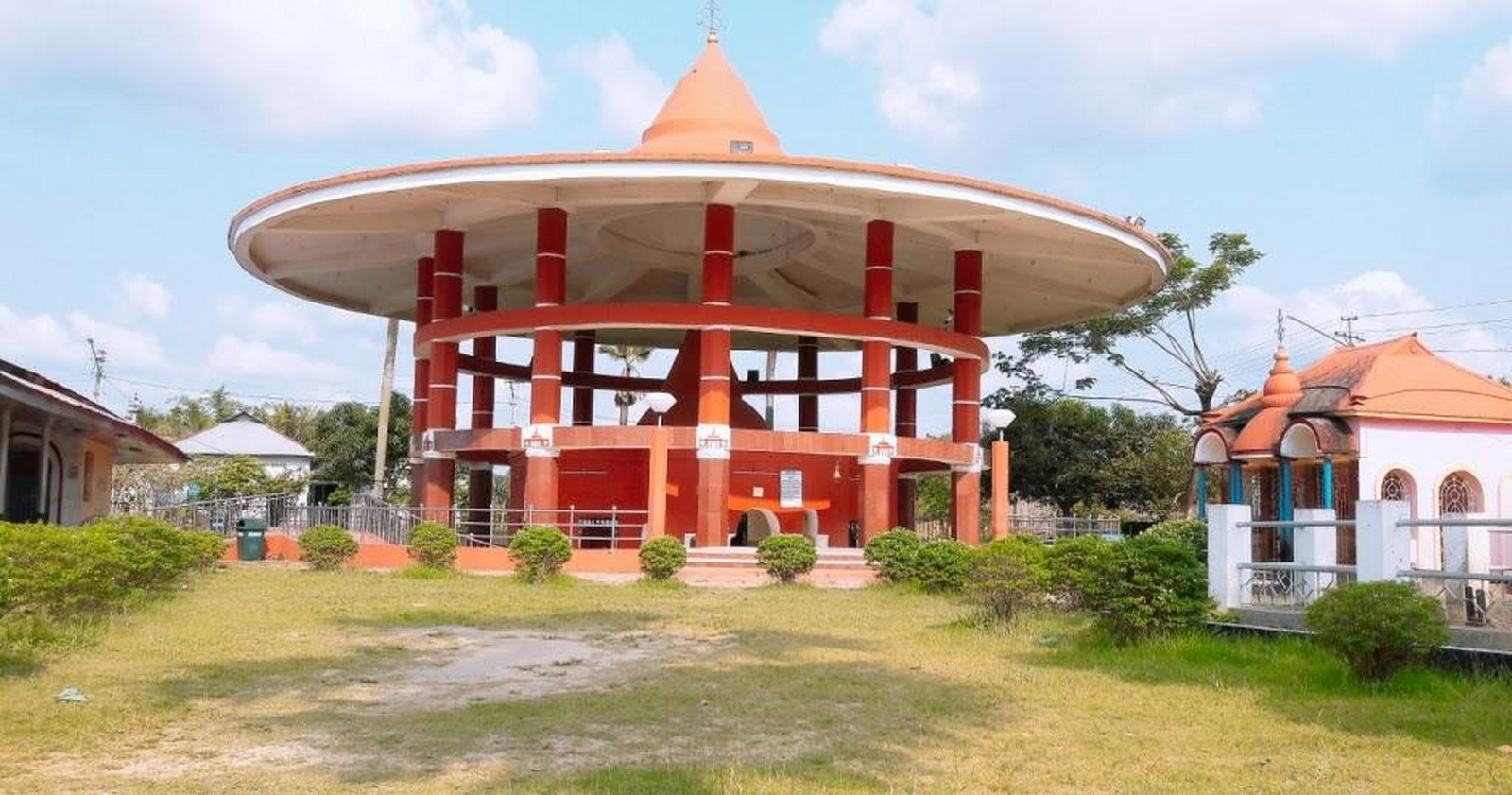
The soundscape shifts again a few turns away, filled with whispers of chants, ringing bells, and the scent of incense. One of the city’s oldest buildings is the Chaturdasha Temple, a small hut-shaped structure with a roof that gradually curves like a bamboo thatch, painted in a gentle ochre. It was constructed in the 18th century.
The temple is alive with activity, not isolated from life. Vendors sell flowers, coconuts, and small earthen lanterns at its gates. Beneath the sprawling banyan trees, elderly men engage in conversation while children sprint barefoot across the courtyard.
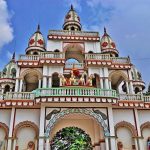
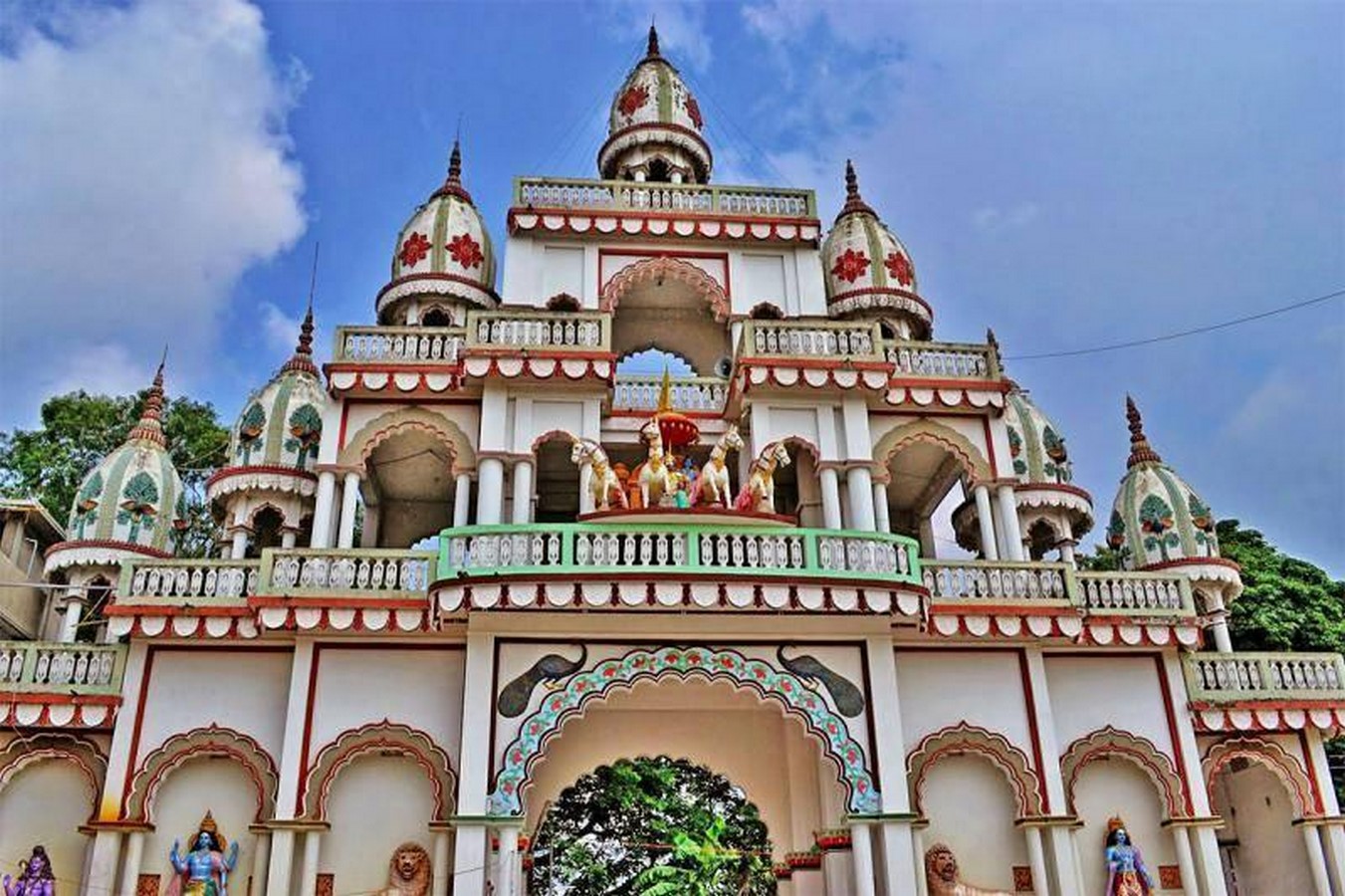
Next is the Jagannath Temple, notable for its exquisite arches and vibrant orange dome. From the outside, it appears almost geometric, characterized by clean lines and symmetrical shapes. Yet, upon closer inspection, one can appreciate the hand-carved embellishments that reflect the human touch. These temples can be seen as symbols of community and belonging rather than mere displays of grandeur. Like punctuation in a lengthy discourse, they seamlessly blend into the backdrop of daily life.
Vernacular Poetry in the Ordinary Architecture
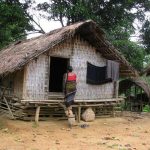
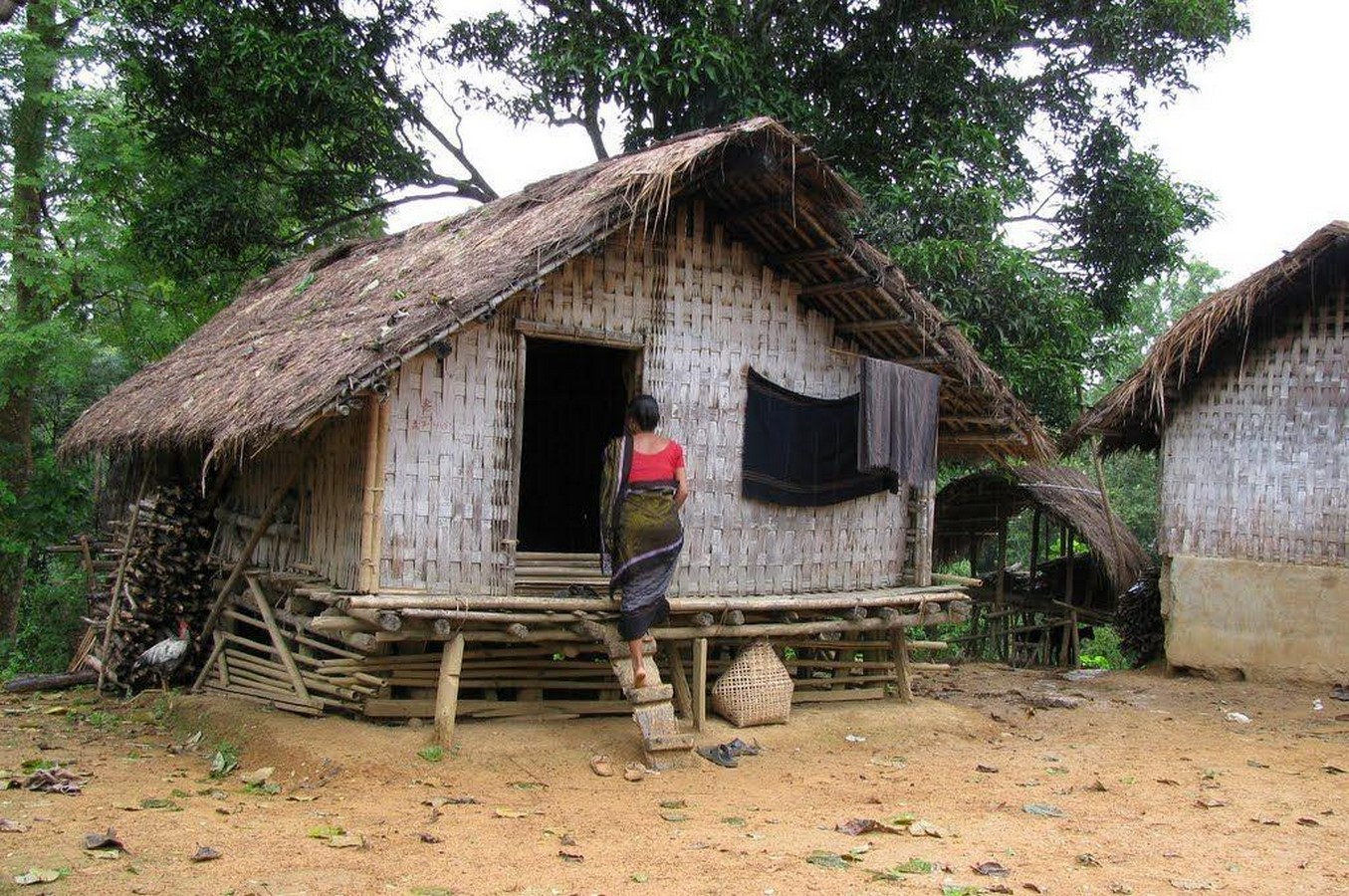
The true charm of Agartala, away from the monuments, is found in its more subdued alleys, where houses still retain the charm of thatched roofs and bamboo walls.
The traditional Tong Ghar homes of Tripura are elevated on stilts and constructed from lightweight materials like bamboo, mud, and thatch that are ideal for the area’s moist soil and frequent rainfall. Although many have been replaced with brick-and-plaster equivalents, their essential features, high plinths, wide verandas, and slanted roofs that allow monsoon water to flow down easily, remain. If you walk by one of these houses in the rain, you’ll see why they’re constructed that way: the raindrops miss you by an inch when they fall off the edge. The air is gloomy and cold inside, with a subtle earthy fragrance. These homes speak the language of the climate rather than simply existing in it.
Deep balconies, wooden louvers, and painted railings that attempt to maintain that feeling of closeness are examples of that impact, even in more recent buildings. This simplicity has a subtle charm.
A City of Contrasts
As you become accustomed to the tranquility of the old world, Agartala surprises you. You suddenly find yourself in the heart of a busy business street just a few blocks away. Coffee shops are bustling with college students, billboards flash vibrant advertisements, and glass façades gleam in the sunlight.
This contrast doesn’t feel jarring. Instead, it seems as if the city has seamlessly integrated a new verse into its ongoing poem. In Agartala, modern and traditional architecture coexist rather than replace one another. A concrete office may stand next to a bamboo-screened home, and a minimalist café might share a boundary wall with a charming 1930s house featuring decorative grilles. Despite the changing skyline, the human scale remains a prominent feature.
The important aspect is that even the new feels familiar. A porch, ledge, or shady spot where someone sits, drinks tea, and observes the street is always present.
When Architecture Becomes a Feeling
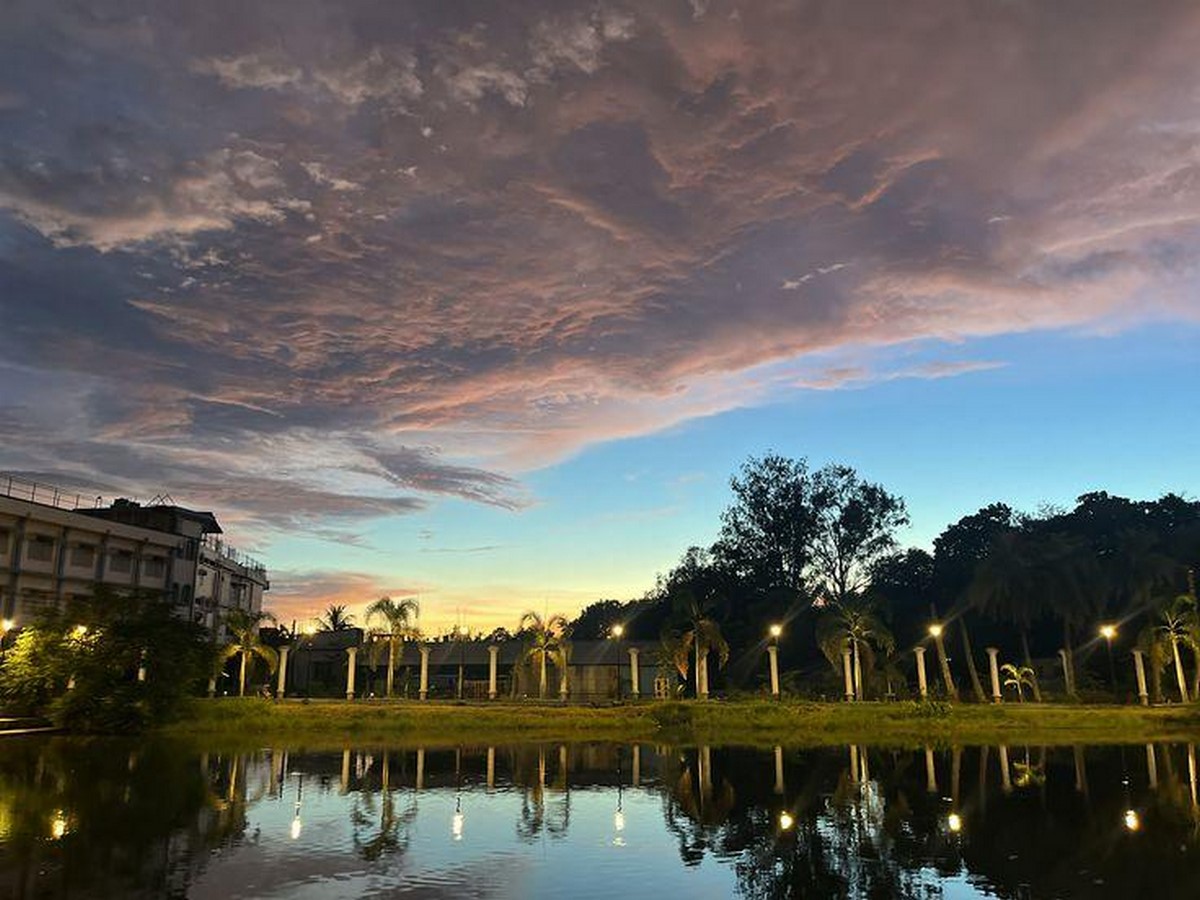
As you explore Agartala, you begin to realize that its architecture emphasizes moments rather than monuments. It’s in the sound of your footsteps echoing beneath the arches of a gateway, the reflection of the sky in the palace pond after a rain, the scent of damp soil wafting from bamboo dwellings, and the gentle flicker of temple lamps in the evening.
In this city, buildings offer their beauty without demanding attention. Each street feels like a phrase coming to life, while every junction serves as a comma, inviting you to pause and take it all in.
The concept of a city that walks alongside you, rather than overpowering you, imparts a distinctly human quality.
The vibrant colors of Agartala, crimson laterite, white lime, green moss, and silver rain, tell a unique story. The homes embody a peaceful narrative, the temples serve as expressions of prayer, and the palace stands as a testament to its grandeur. Here, architecture fosters conversation rather than exerting power. The verandas engage with passersby, the courtyards reach toward the sky, and the structures communicate with the trees. One of the most important lessons to take away from this city is that architecture is something we coexist with, not just something we build.
A Final Turn
Agartala undergoes a beautiful transformation as the sun sets. The white domes of Ujjayanta turn golden in the fading light. The air fills with the fragrance of jasmine and rain. One by one, the streetlights turn on, casting gentle halos that illuminate the damp road. Nearby, someone chuckles while a temple bell chimes in the distance.
In the midst of the street, you pause for a moment to take it all in: the colors, the sounds, and the stillness that exists within the activity.
As you wander through Agartala, you come to realize that its architecture is more than just what meets the eye. It’s the dance of shadows on ancient walls, the chilly marble beneath your feet, and the warmth of wood under your hands.
You don’t visit Agartala merely to see the city; something deeper comes to greet you.
References:
Bhattacharjee, S. (2015). Temple architecture in Tripura: A cultural analysis. NEHU Journal, 13(2), 41–56.
Bhaumik, S. (2019). Ujjayanta Palace and the politics of heritage in Tripura. Economic and Political Weekly, 54(4), 52–58.
Chakraborty, R. (2014). Royal architecture of Tripura: A study on Ujjayanta Palace. International Journal of Tourism and Heritage Studies, 2(1), 31–39.
Choudhury, K. (2021). Living streets and everyday spaces in Tripura’s capital city. Studies in Urban Anthropology, 8(2), 59–74.
Debbarma, L., & Purkayastha, S. (2023). Vernacular architecture of Tripura: A climatic and cultural response. Global Journal for Research Analysis, 12(4), 25–28.
Majumder, R. (2020). The syncretic traditions of Jagannath worship in Tripura. Journal of South Asian Cultural Studies, 6(3), 78–91.
Nongkynrih, A. (2017). Bamboo architecture in Northeast India: Tradition and resilience. Indian Journal of Traditional Knowledge, 16(1), 85–92.
Roy, D. (2012). Changing urban morphology of Agartala: A historical perspective. Journal of North East India Studies, 2(1), 112–123.