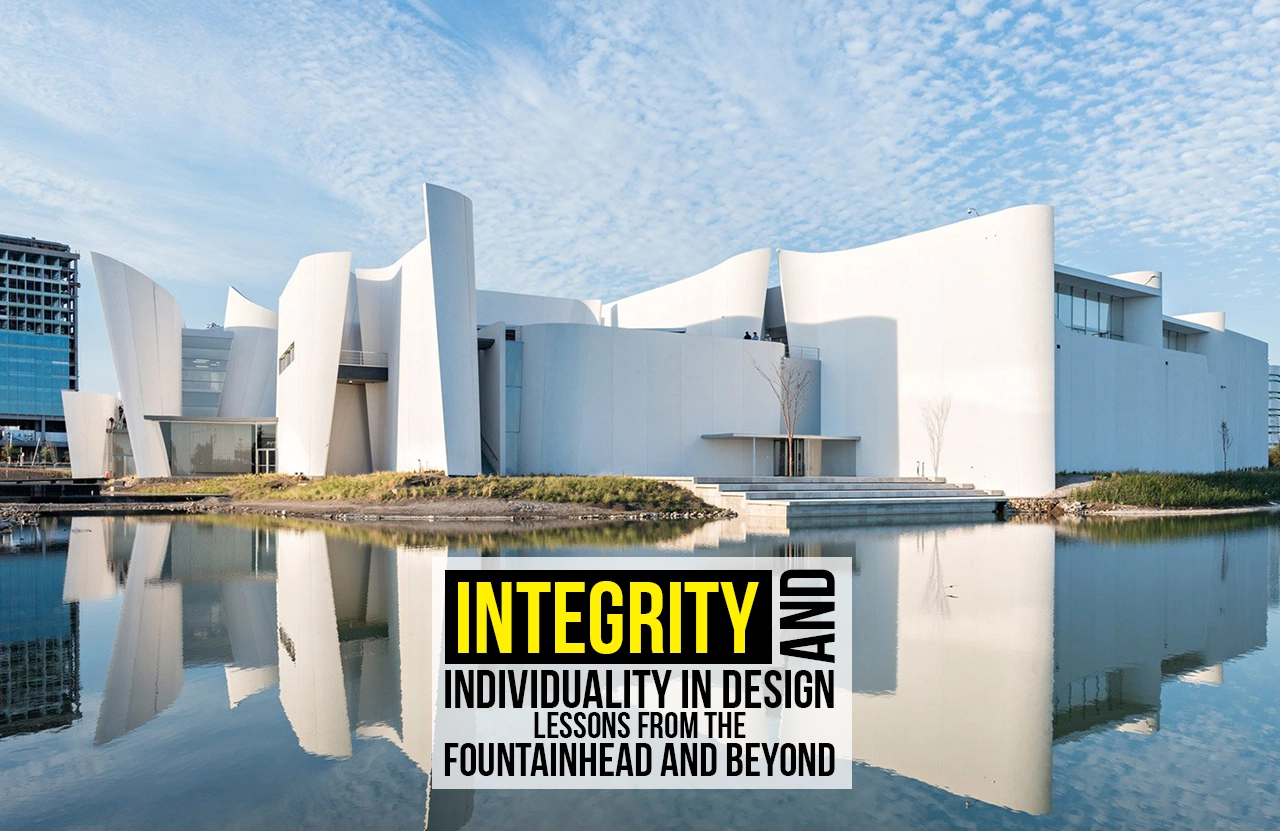
In every designer’s career comes a point where the idea of purity and simplicity is questioned by the complexities of the world. The idea that, at one point, was pure, without hesitation, is suddenly burdened with expectations and the layers that come from clients, commercial demands, brand guidelines, or trends in society. Somewhere amidst the chaos, there is a silent battle and negotiation in our minds : to what degree of the design still belongs to a designer, and how much of it has been influenced through various perspectives and opinions? The struggle to be true versus relevant to the world is not new; this was at the heart of the exploration of Ayn Rand’s The Fountainhead with the character of Howard Roark, the architect who chose to act in integrity and was not focused on being accepted but rather acknowledging the greatness of creativity over conformity.
Rand’s ideology has always been polarizing; however, it is in Rand’s exploration of Roark that we are left with valid and authentic messages: What does it mean to act with integrity in design? If this is the case, what does it mean today, when collaboration and compromise have been embraced in every design opportunity?

Integrity as Alignment, Not Isolation
In The Fountainhead, the depth of Roark’s integrity is extreme; he’d destroy his own building rather than ever allow it to no longer be his. His perception of integrity is exaggerated and almost triggering, but there is a layer behind this which is relatable to almost everywhere, which is the sentiment of being very attached to something before the materialistic aspects of the world starts interfering and messing with it. But the lesson here is not just the ability of Roark to refuse, which questions his integrity, but it’s the trait of Roark’s clarity. Integrity is not at all about refusing; it’s about standing true to what you believe and building it against all odds.
For a designer, these facts are the morals of their career; it matters when we are all restrained and resisted from adding or fearing failing in the idea we develop. This alignment is the invisible attribute between the idea and the material form, as a quiet discipline to use your best judgment that “this feels right” (even when it is the more difficult judgment to make).
Integrity, in today’s world, is an expensive concept, one that goes beyond one’s self. Integrity is not about isolation or arrogance; it is about awareness and clarity. It includes factoring in the empathy it takes to hear out a client, effort in becoming aware of the context, and one’s responsibility to the planet. This is where integrity takes on a form of consciousness: a constant reminder that for good design, there must be good intention.
Architects Peter Zumthor and Bijoy Jain are a great example of the concept of quiet integrity. Thor’s work in architecture remains timeless not by following trends, but because of the ability to stay grounded in honesty to its purpose, to material, to craft, and to silence. Their buildings are not conventionally loud, but they breathe and earn their presence. Though Integrity has also evolved and has constantly been redefined through time.
Individuality as Essence, Not Ego
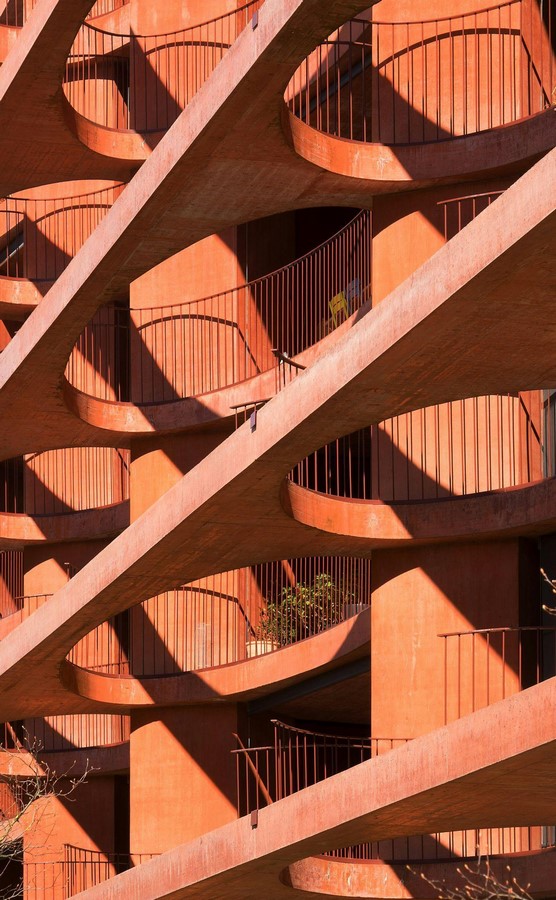
Like Integrity, Individuality is often misunderstood. Individuality is not about being extremely unique; rather, it is about being self-aware. In The Fountainhead, Roark’s individuality is extreme in that it is a position of non-conformity. But here we are today, where individuality is not about defiance, but it’s about depth. In simple words, individuality helps categorise the difference between being different to being authentic.
Every designer has their way of marking their intangible presence in a space: either their rhythm is reading a space, framing light, or engaging proportions. This rhythm, with consistency, becomes a designer’s signature or style. One can see a designer’s individuality in their approach to problem-solving and design decisions and not just in completed and realized aesthetic. Honest individuality does not underestimate the power of collaboration; rather, it becomes more robust and fuels it. Individuality allows a designer to work within collaborative systems while continuing to engage with their individuality.
In reality, individuality is quite visible and apparent. It is found in the way you present a thought, the clarity of your sketches, or the way your design interacts with people and place. It lies in recognising when to add a bit of your signature and when to withdraw. The more rooted your individuality is, your work tends to be universal.
As young designers, we are often under pressure to be very different, and in this journey, we tend to forget the value of being honest. However, they are intertwined. True individuality in design comes through integrity, from knowing yourself to design in convention rather than comparison. When integrity is the foundation of your individuality, the result is a body of work that becomes relatable and not only original.

Beyond The Fountainhead: The Evolving Meaning of Integrity
The fountain head gave us the perspective that integrity is all about balance rather than compromise. During the era of Rand, he may not have anticipated contemporary factors to factor in collaboration, sustainability, inclusivity, and culture in the same pages of creativity. In the present day world, to hold integrity, one must understand that these factors co-exist and we find our way through them, and still stand strong on our intent.
Our profession calls for more ethical depth than visual conviction. The role of an architect is more than just aesthetics: It is more about creating impact and purpose. We are designing behaviours, communities, and memories.. It is to design honestly, so that spaces can remain true to the humans who occupy them and the planet providing for them.
Integrity gives a sense of direction to individuality, while individuality gives integrity a sense of identity. Cohesively, they create a base for design that matters: for design that breathes and is lived in rather than design that is pleasing and agreed upon. For every Architect and Designer, achieving this balance is a unique journey. In some projects, you may need to stand stronger to your ground, whereas in few others you may need to listen more than take charge. It is of the essence to understand that listening or sacrifice is not losing. Each compromise or cut back made in design with complete self-awareness is an act of integrity. Every design that holds integrity definitely holds a sense of individuality.
In conclusion, The Fountainhead is not a manifesto; it is a mirror. It shows that architecture, while reflecting its purpose and environment, also reflects the architect. Integrity in design today means conscience, clarity, and compassion : it does not mean disconnecting from reality. Shoma points out that when individuality is grounded, it is not seen as rebellious, but as a gentle, lasting, and deeply human form of authorship.
In the end, the most honest designers are the ones catching trends or standing apart for attention; they are the ones who, years later, they still feel whole and still feel true.