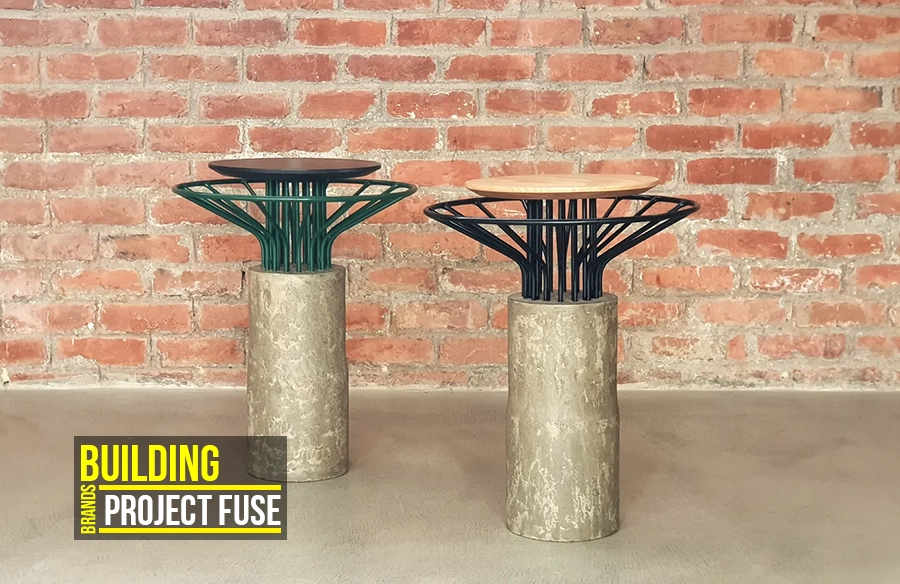
Project Fuse arrived in 2020 with a deceptively simple proposition: that a piece of furniture could carry a philosophy. Founded in New Delhi by designer Aniruddh Ghosh, this young Indian product design studio did not promise to reinvent the chair. Instead, Project Fuse bet on something far more radical – that the story behind an object matters as much as the object itself. What exactly are we buying when we buy furniture?
The Name
Project Fuse launched in a peculiar moment to start any consumer brand, let alone one built on craft and tactility. As lockdowns forced the world indoors, a studio focused on handmade furniture found its moment. Aniruddh Ghosh established Project Fuse not as a showroom exercise in luxury, but as a working design studio with a 12,000 square-foot manufacturing workshop in south Delhi, staffed by carpenters, metalsmiths, upholsterers, painters, and craftsmen (Project Fuse, 2024).
The brand’s name is itself a manifesto. To ‘fuse’ is to combine disparate materials into a coherent whole – wood, acrylic, concrete, resin, terrazzo, and cane treated not as interchangeable commodities but as living languages with their own grammar. Crucially, Project Fuse operates entirely within India: sourcing materials locally, manufacturing in-house, and refusing to import raw materials from abroad (Project Fuse, 2024).
Local-First
There is something quietly provocative about a contemporary Indian design brand that isn’t trying to look European. Project Fuse embraces its geography without exoticising it. The studio describes its Indian identity as ‘passionate, open, joyful’ – qualities that emerge from within the process itself, not imposed as decorative motifs (Project Fuse, 2024). This is the difference between cultural performance and cultural authenticity. When a brand builds its furniture in the same city where it was conceived, with materials sourced from within the same country, the object carries a traceable lineage – and that lineage is becoming increasingly rare, and increasingly desirable.
In-Between
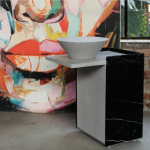
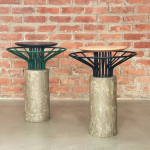
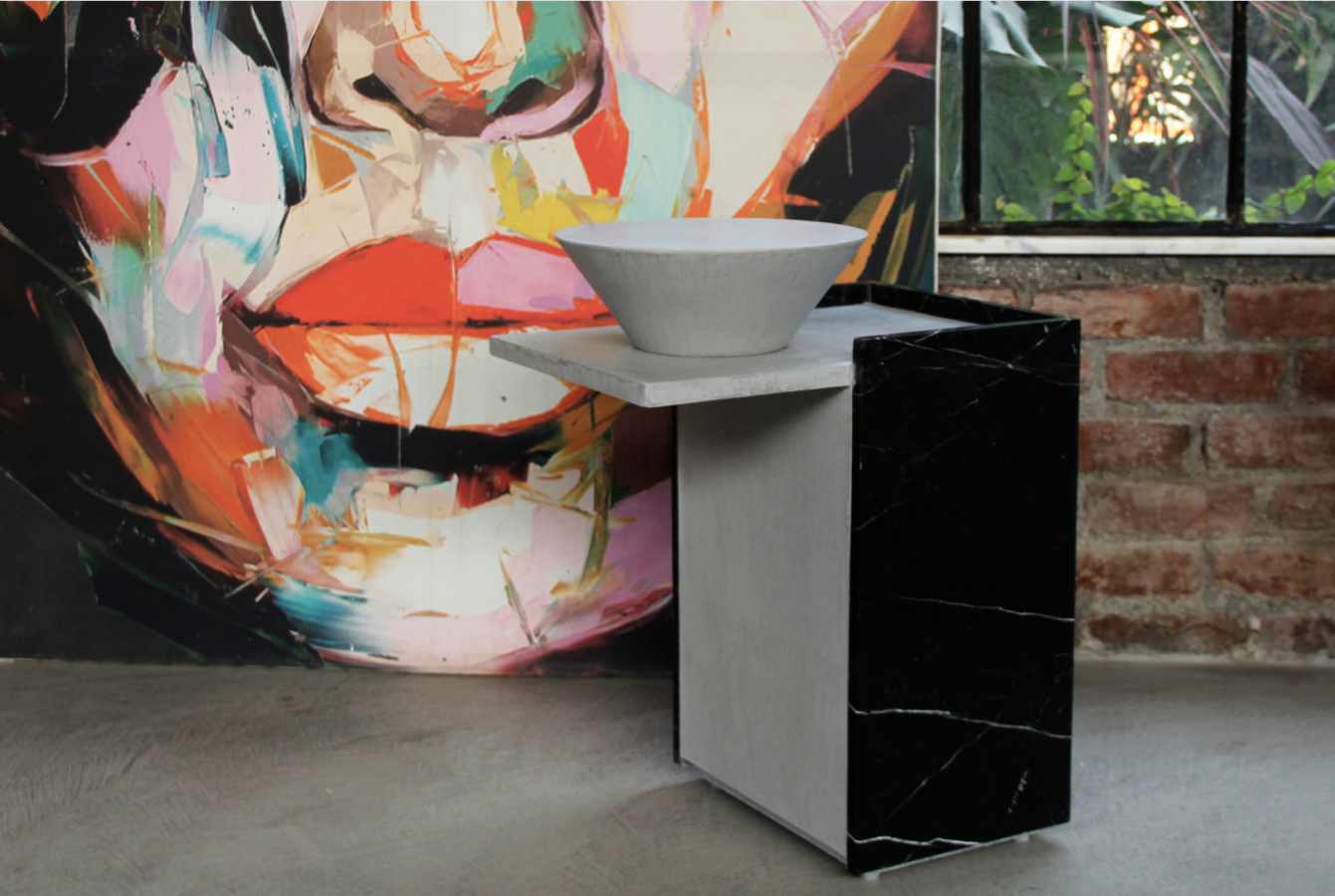
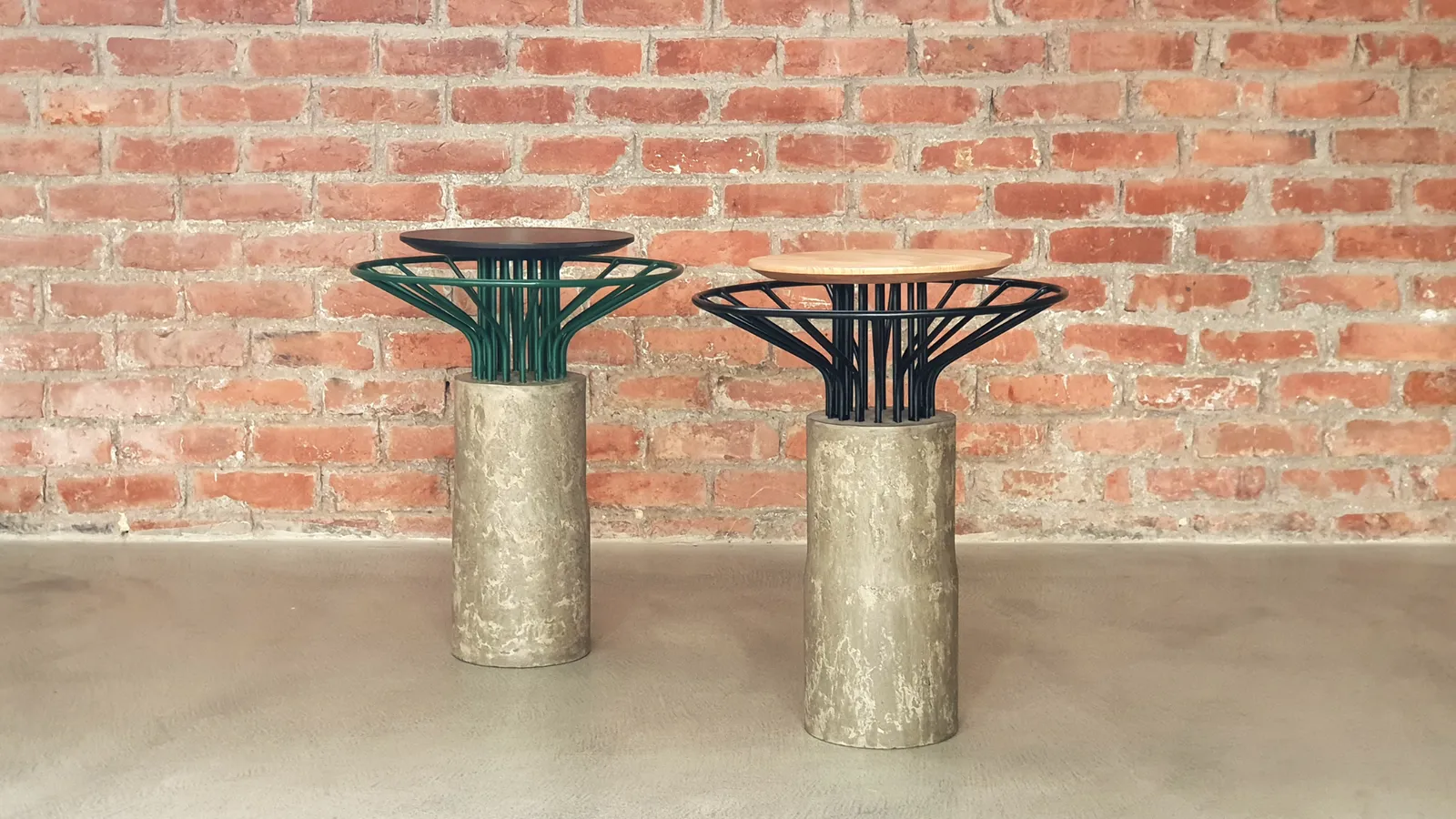
Project Fuse’s current collection centres on occasional tables – Bloom, Host, Bent, Concentrico, Pillar – alongside seating such as the Cube sofa (Project Fuse, 2024). On the surface, this is a narrow product range. But the occasional table exists in the margins of a room: it holds a glass, supports a book, marks the edge of a conversation. Project Fuse has identified the overlooked object as its primary canvas, and that was genius.
Each piece demonstrates the studio’s commitment to fusing contrasting materials into a single coherent form: terrazzo on a cane-framed base, concrete meeting wood, resin embedded with colour. The results reward close attention – surfaces that shift under different light, forms that feel inevitable rather than imposed. The design process is deliberately analogue: sketches first, scaled models second, prototypes third, with computer modelling as a support tool rather than a primary instrument. This is disciplined resistance to the speed at which the digital design world operates.
Affordability
Project Fuse’s stated commitment to making ‘good design accessible to as many people as possible’ is one of its most underexamined propositions (Project Fuse, 2024). In the global design market, this claim is made frequently and honoured rarely. For Project Fuse, operating entirely within the Indian manufacturing ecosystem with locally sourced materials, the economics of accessibility are structurally more achievable than they would be for a European studio attempting the same. The ambition to produce objects that are ‘useful, affordable, and desirable’ simultaneously isn’t a marketing slogan – it’s a constraint that shapes every design decision.
What Fuse Actually Sells
It would be reductive to describe Project Fuse as a furniture company. More precisely, it is a studio that sells a set of beliefs about the relationship between objects, materials, and the people who live alongside them. Its core value proposition rests on three pillars: material intelligence, craft integrity, and accessible elegance. Together, anchored to a genuinely local manufacturing practice, they form a more coherent and credible identity than most design brands manage to construct.
The decision to manufacture everything in-house at the south Delhi workshop isn’t merely a logistical preference; it is a brand statement of considerable force. In a market where ‘designed in’ and ‘made in’ are routinely decoupled, Project Fuse insists on collapsing that distinction entirely. The artisan – the carpenter, the metalsmith, the upholsterer – is not a subcontractor hidden behind a brand façade. At Project Fuse, the artisan is the brand (Project Fuse, 2024).
Selling a World-View
Here is the central and most provocative truth about Project Fuse: in 2025, it is almost impossible to design a truly innovative piece of furniture. The chair has been designed. The table has been designed. Every formal permutation of the occasional table has, at some level, been explored. What remains – what is still genuinely available as territory – is meaning. And meaning is precisely what Project Fuse is in the business of making.
Project Fuse sells the belief that the handmade object is an act of resistance: against disposability, against the anonymity of mass production, against the globalised supply chains that have made furniture indistinguishable from geography. It sells a vision of contemporary India that is neither the clichéd exoticism marketed abroad nor the hollow imitation of Western design culture that dominates much of the domestic market (Project Fuse, 2024). Project Fuse sells an attitude: that where you make something matters as much as what you make.
The Risk
There is a structural vulnerability in the story-led brand model that Project Fuse has adopted. When a brand’s value proposition is anchored as much in its narrative as in its products, that narrative must remain credible over time. Scaling a handmade, artisan-led studio without compromising the very qualities that define it is one of the most difficult challenges in design entrepreneurship. As Project Fuse grows, the pressure to standardise, automate, and outsource will intensify. The brand’s long-term success depends not on whether it can maintain its current scale, but on whether it can define, in advance, the precise points at which growth would compromise integrity. And that is not a design problem at all.
References:
Project Fuse (2024). About the Studio. projectfuse.in/studio.html.