Khamir Craft Resource Centre is a charitable organisation situated in the Kachchh district of Gujarat, India. It was founded in 2005 with the primary objective of endorsing and safeguarding the traditional crafts and artisanal expertise specific to the Kachchh region.
The physical location of Khamir is in Kukma, Bhuj, which is approximately 10 kilometres away from the city centre. The centre is surrounded by open lands, characterised by gentle contours in the topography. The region experiences varying climates throughout the year, with temperatures reaching as high as 31 degrees Celsius during the summer months while dropping to an average of 12 degrees Celsius in winter.

The site area occupied by Khamir Craft Resource Centre spans approximately 8,093.71 square meters. Annually, the centre attracts around 11,000 visitors, who come to explore and appreciate the traditional crafts and artistic endeavours showcased at the facility.
Craft serves as a means of self-sufficiency in the Kutch region, which faces various natural challenges. Each community within the region possesses distinct craftsmanship skills. The Meghwals and Sodhas excel in weaving and embroidery, the Khatris specialise in block-printing and fabric dyeing, the Multani Lohars are skilled in creating copper-plated bells, and the Sonis is known for their exquisite silverware and jewellery, among many others. Kutch is renowned for its exceptional traditional craftsmanship, representing some of the finest in the country.
In 2001, Kutch was struck by a devastating earthquake. The aftermath of the disaster resulted in the loss of homes and familiar surroundings and significantly impacted the local crafts community. There was a genuine concern that the rich layers of traditional knowledge could be eroded. It was during this critical period that the concept of Khamir Craft Resource Centre was conceived. In 2005, the centre was established as a platform dedicated to promoting and ensuring the sustainable development of crafts, heritage, and cultural ecology in Kutch.
Architect Neelkanth Chhaya collaborated with the Hunnarshala Foundation to address the challenges of constructing in a fragile ecological context while maintaining the familiar spatial environment necessary for skill engagement and craftsmanship. Together, they embarked on this endeavour to preserve and nurture the cultural legacy of Kutch through the establishment of the Khamir Craft Resource Centre.
Khamir Craft Resource Centre has several key objectives
- Craft Promotion: Khamir actively promotes and showcases the cultural heritage of the Kachchh region by organising exhibitions, craft fairs, and cultural events. Through these initiatives, they raise awareness and appreciation for traditional crafts produced by local artisans.
- Skill Development: Khamir conducts training programs and workshops to enhance the skills of artisans and craftsmen. They collaborate with experts and master craftsmen to provide technical support, guidance in design, and assistance in product development.
- Design Innovation: Khamir encourages innovation and contemporary design within traditional crafts. They facilitate collaborations between artisans and designers, fostering the creation of new craft products that maintain the essence of traditional techniques while appealing to modern markets.
- Market Access: Khamir supports artisans in accessing both local and international markets. They assist with product development, branding, and marketing strategies. Additionally, they establish connections with potential buyers and exporters, expanding market opportunities for artisans.
- Community Development: Khamir works closely with the local community to improve the socio-economic conditions of artisans and their families. They provide support in areas such as healthcare, education, infrastructure development, and capacity building, contributing to the overall well-being and development of the community.
-
The Design Concept
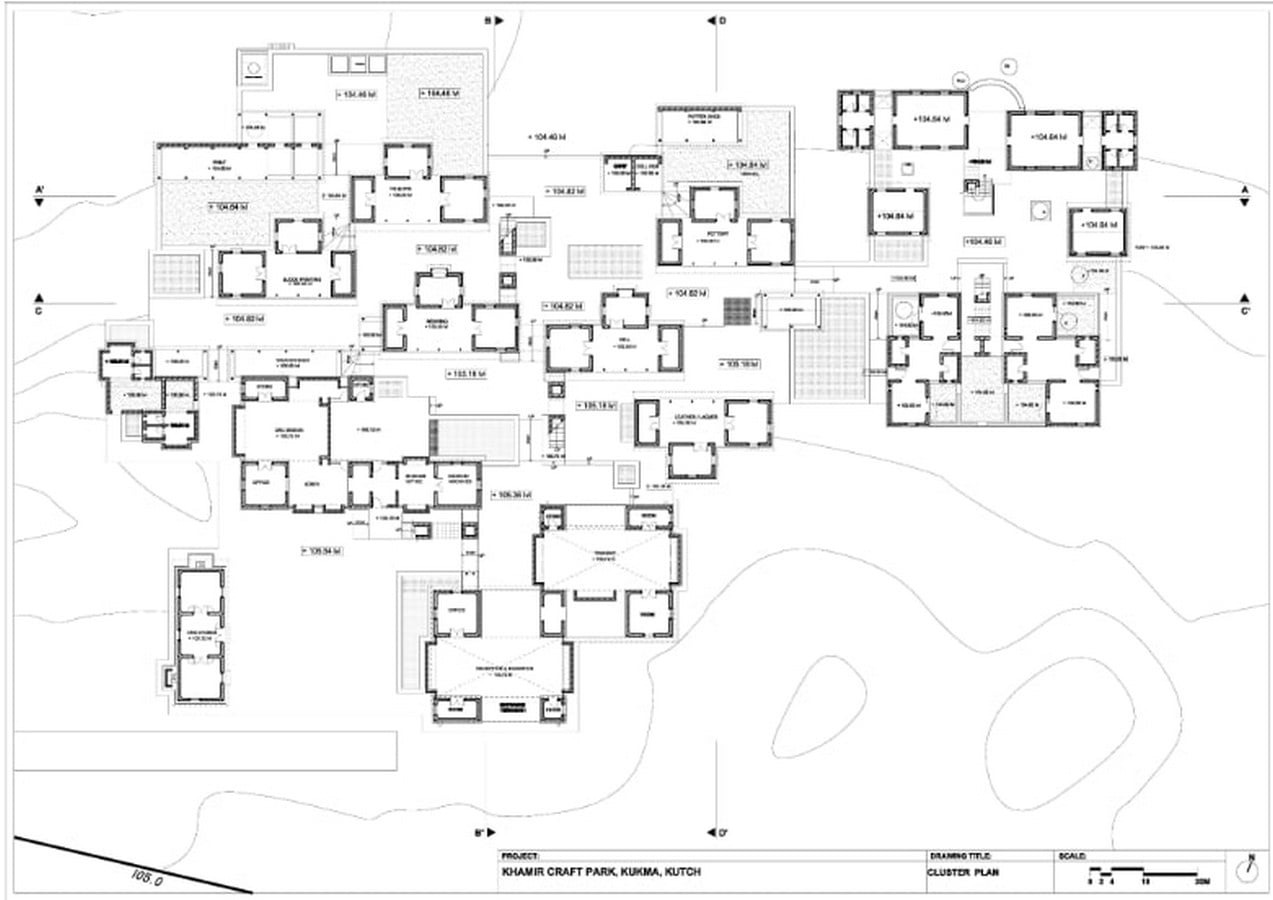
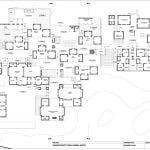
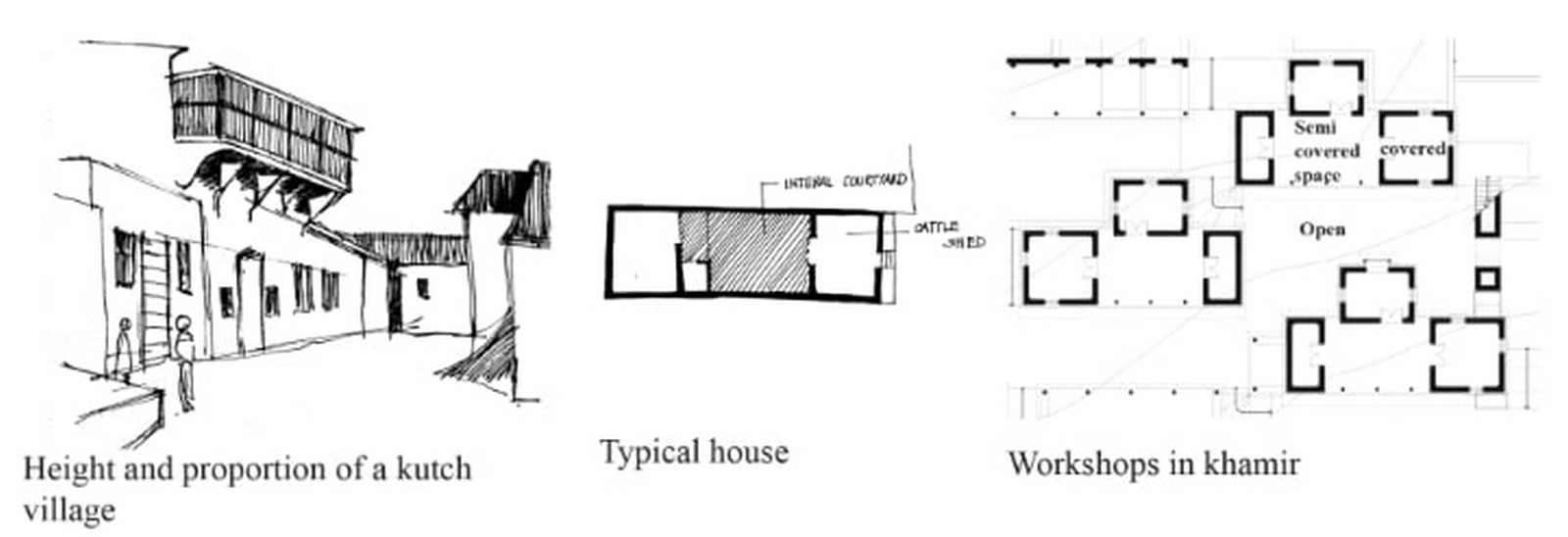
The design concept of Khamir Craft Resource Centre was inspired by the local streetscape and village pattern that existed before the earthquake in Kutch. The facility was planned to encompass a 2500 sq m area dedicated to promoting crafts. The layout of the centre drew inspiration from the Y-shaped branching of streets in the area, which formed interconnected pathways at regular intervals.
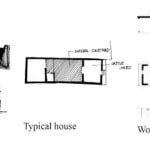
This design concept aimed to recreate the sense of a village settlement, where houses were characterised by internal courtyards. These courtyards either served as entrance courtyards, open to the sky and situated at the entrance of the house, or as internal courtyards that connected various spaces within the house. By incorporating this design approach, Khamir aimed to evoke a familiar and harmonious environment for visitors and artisans alike.
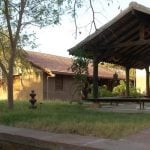
The architectural design of Khamir Craft Resource Centre serves as a cultural representation of the people of Kutch. Local materials and appropriate construction techniques are utilised, resulting in finished surfaces that receive and reflect a familiar light. The mud walls, when moistened, release a recognisable fragrance, while the thick rammed earth absorbs the sounds of working tools. Taking into account the seismic zone, the buildings are supported by sturdy plinths. The rammed earth walls rise from these plinths, showcasing visible layers of construction, adding vibrancy and scale to the landscape. In certain areas, the walls are plastered with a mixture of mud and dried cow dung, ensuring comfortable coolness within the interiors.
The Khamir Crafts Resource Centre serves as a sanctuary for artisans and embodies a thoughtfully planned economic model aimed at supporting, sustaining, and nurturing diverse craft forms by facilitating interactions. The workspaces, designed as raised plinths called “otlas,” provide a sense of belonging for artisans. Adjacent to these workspaces are quiet and protected rooms, often used as storage for raw materials and tools, spaces for research and development, or small display areas for finished products. The infrastructure at Khamir is designed to actively engage in craft technique development, documentation, material usage, skill training and enhancement, sales, marketing, and other essential operations.
Architecture Structure
The architectural structure of Khamir Craft Resource Centre combines both columnar and planar elements. The columns and walls form the foundational structure, embodying a concept of simplicity and pattern.
The complex consists primarily of three main forms: the workshop area, administration building, and residential spaces. These forms are predominantly repetitive, with the exception of the toilets and certain sections of the administration building.
Approximately 70% of the total area is dedicated to open spaces, serving as circulation areas and workshop zones. These open areas facilitate various activities and are utilised more frequently than enclosed built structures.
The incorporation of voids within the design helps organise the surrounding spaces and is essential for creating a functional layout. These voids also allow for circulation paths, permitting the entry of light and air throughout the complex.
As the buildings ascend, the architectural approach deviates from conventional methods. A modern and lightweight steel construction is introduced, providing a spacious volume above the sturdy walls. The steel frame supports a double-layered roof adorned with fired clay Mangalore tiles. A noteworthy innovation within the project, accomplished in collaboration with the Hunnarshala Foundation, is the inclusion of wattle and daub panels as infills between the timber and steel frames.
Overall, Khamir Craft Resource Centre plays a crucial role in preserving and promoting traditional crafts in the Kachchh region. By creating sustainable livelihood opportunities for artisans and fostering cultural pride, Khamir contributes to the safeguarding of intangible heritage and the holistic development of local communities.
References:
Khamir Craft Resource Centre, bhuj (2020) The_Prototype. Available at: https://architecturecasestudies.wordpress.com/2020/04/15/khamir-craft-resource-centre-bhuj/
Matter (2020) Site visit: Khamir Craft Resource Centre, MATTER. Available at: https://thinkmatter.in/2019/05/15/khamir/