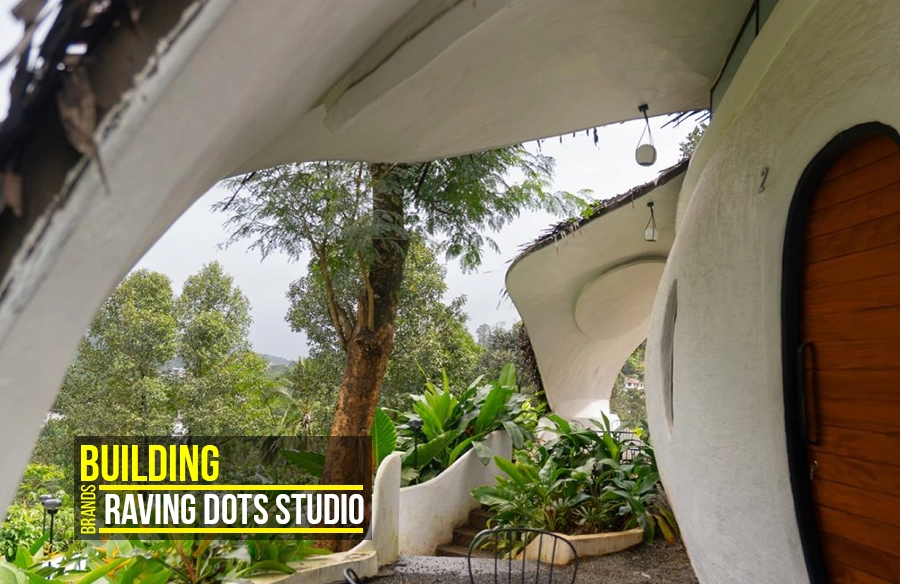
On the Malabar Coast is the historic city of Kozhikode, where the urban image is being heavily influenced by modern and contemporary design. Amidst these practitioners stands Raving Dots Studio, a sustainability-advocating team led by Ar. Rohit B. Anandan. While contemporary design addresses the immediate market demands of today, the team at Raving Dots Studio is at least half a decade ahead of its time in their thinking. Driven by a devoted commitment to efficiency and sustainability across all layers of architecture, the team bridges between the vernacular and current practices in architecture with the futuristic.
Where Zaha Meets Baker
The studio adopts the disruptive philosophy of “Computational Vernacular”, a hybrid and powerful blend of digital tools and local design. “Think Zaha meets Baker”, says Ar. Rohit B. Anandan, when asked to elaborate on it. Think of the combination of algorithmic and parametric workability of digital tools like Rhino and Grasshopper applied with local, vernacular design methods, like the use of local materials, passive design strategies, and finally, reflection of the aesthetic style. The result is a space of its own unique identity, where the algorithmic fluidity and computational freedom in Zaha Hadid’s parametric forms, which usually demands high-carbon materials like glass and steel, meets vernacular know-hows in the low- impact, earth-bound ethics of Laurie Baker.
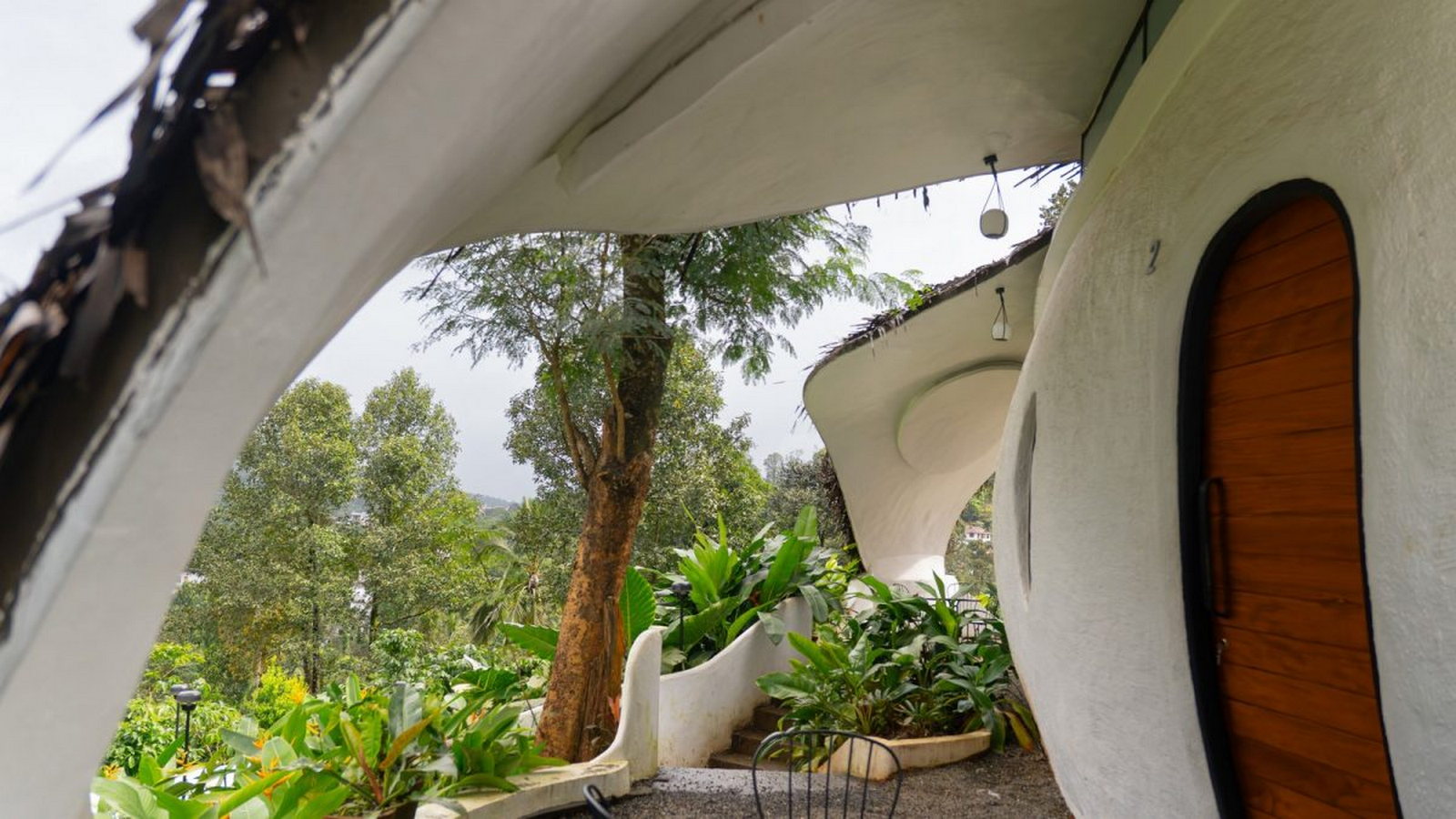
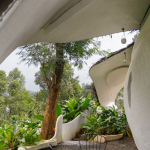
The result is the best of both worlds, breaking the box-like structures of vernacular architecture to organic, flowing forms of the futuristic. This balance of complex geometry and real-time physics challenges the rigid boundaries of the traditional rectangular definitions of space efficiency. The biomorphic, curving volumes are reminiscent of nature-inspired Gaudí-esque forms. Where Gaudi takes nature to define the shapes and forms, Raving Dots Studio uses it to set context for an interconnected system, proving that futuristic forms need not require a massive carbon footprint.
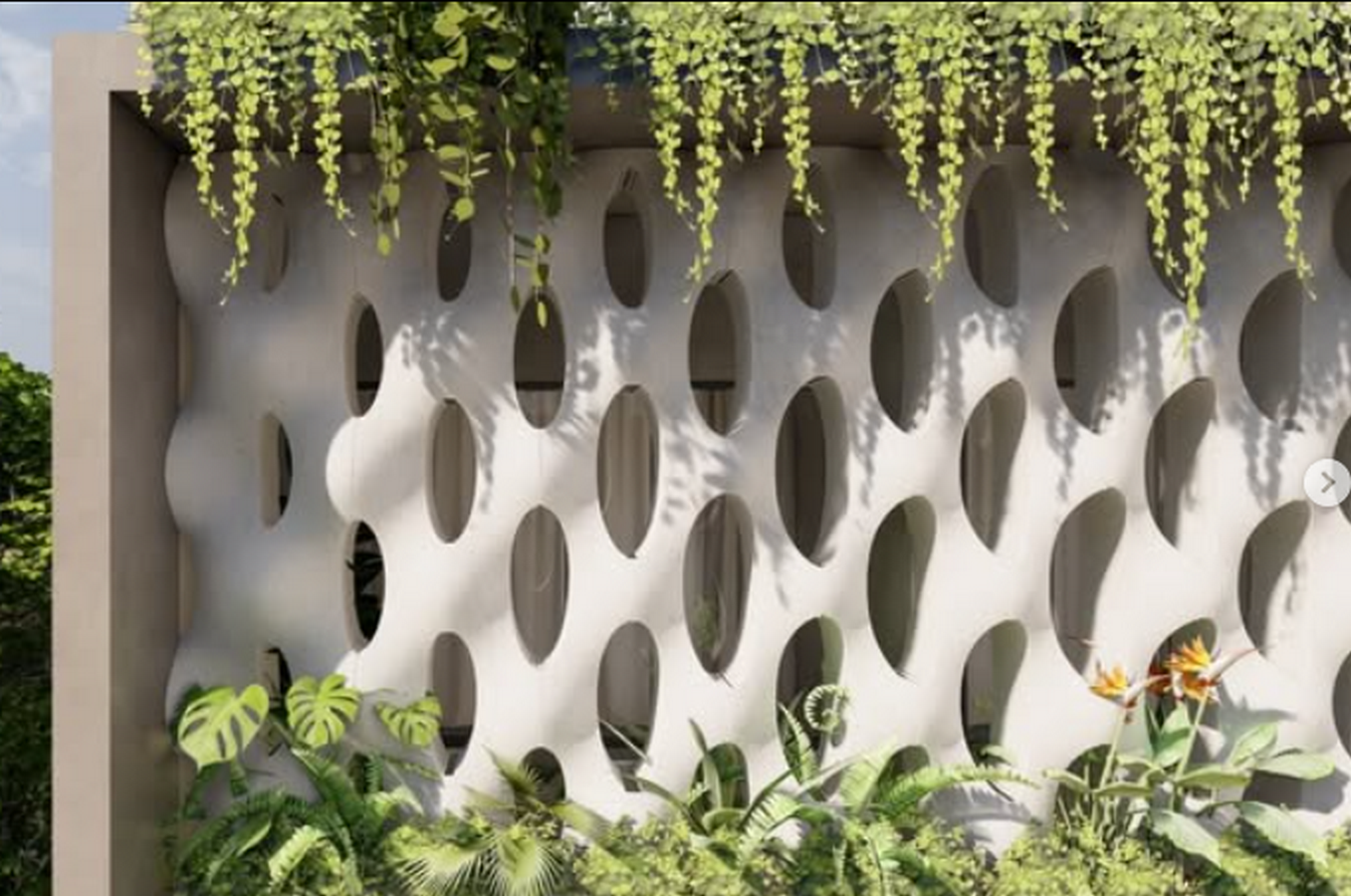
The Project Ecosystem
Through this signature process, the forms are guided by mathematics and environmental parameters to generate hundreds of iterations, of which the optimal solution is chosen to function in absolute harmony as a system. In this parametric workflow, the factors chosen are context-driven and range from optimised solar radiation exposure, efficient structural loading and material use to framing ideal vantage points. These factors mould the structure towards its final form that sits ever so lightly, enveloped in its landscape. From unique topological signature, soil characteristics, microclimate and sometimes, even the existing urban skyline, an exhaustive data-driven diagnostic process results in completely unique design solutions.
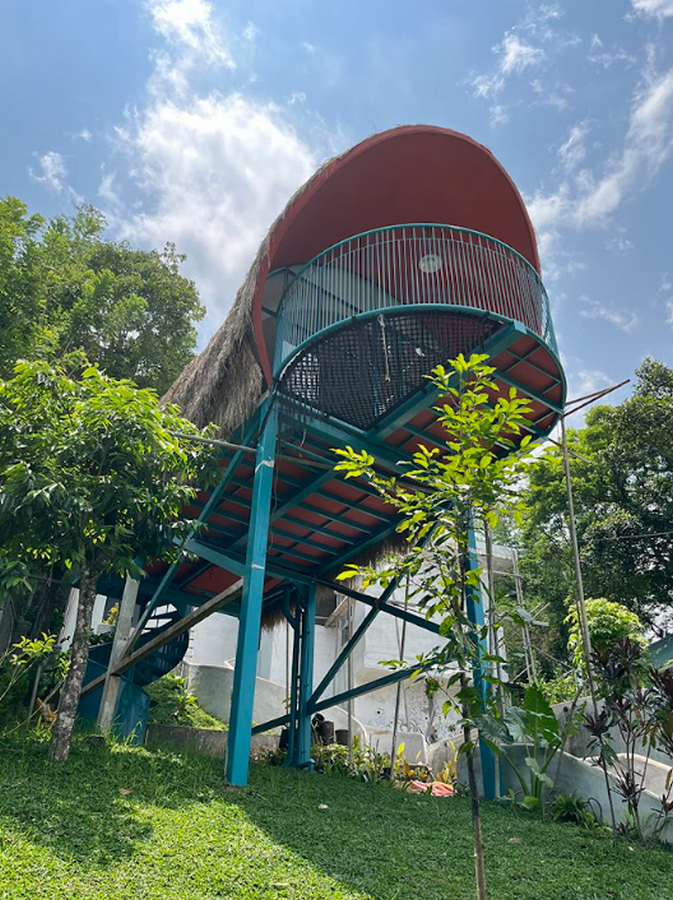
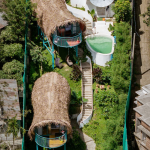
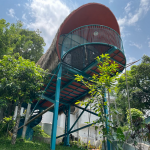
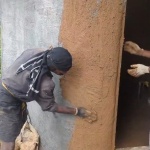
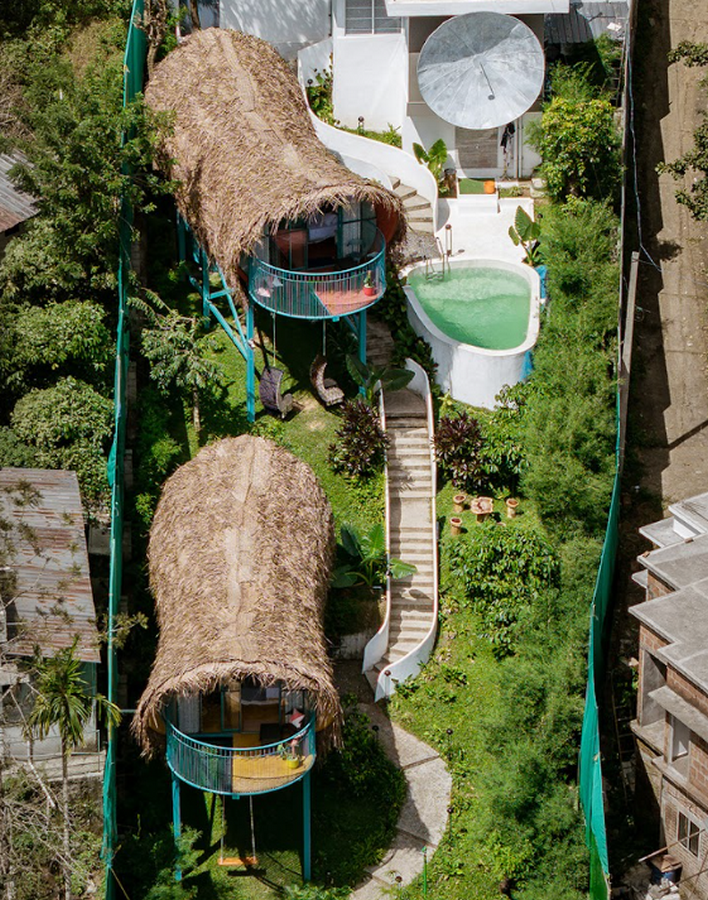
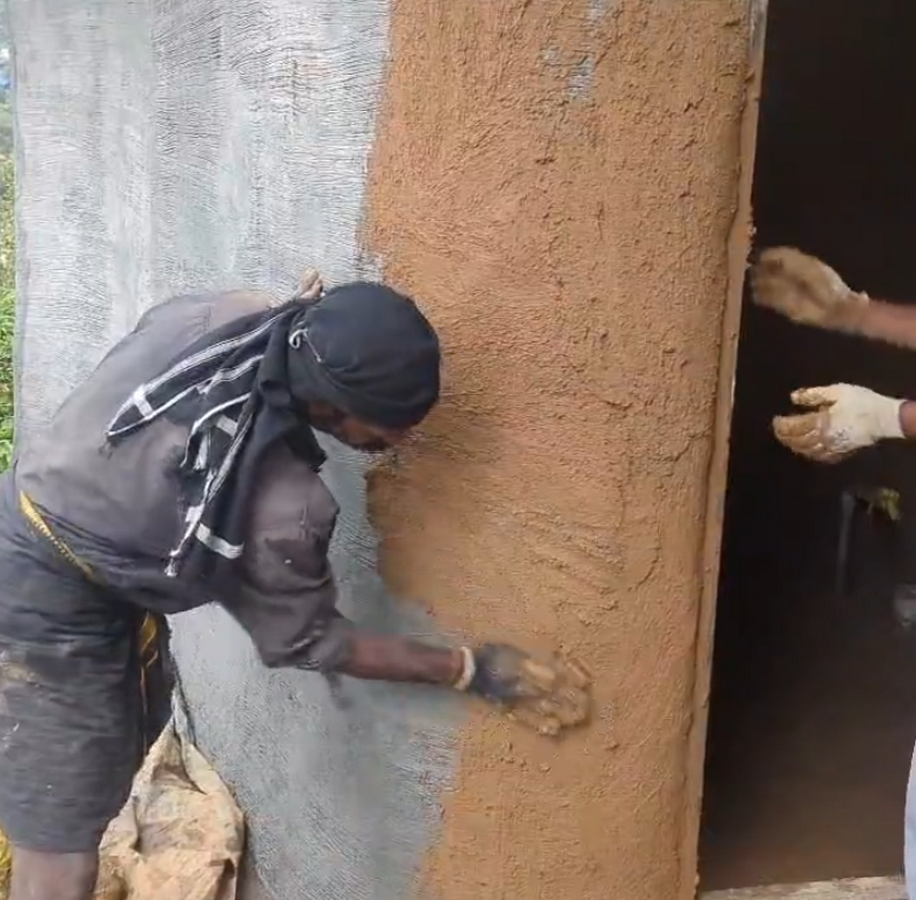
Yet, for all the digital complexity, Raving Dots Studio returns to the roots, set in the local realities. In the process of translating these digital solutions to the site, they developed a profound teaching-learning relationship for the curious minds on site. During the execution of their acclaimed Earth’s Embrace eco retreat, local craftsmen were unfamiliar with working with ferrocrete systems, making the on-site translation of design careful and patience-challenging. While the design team provided the mathematical geometry for the thin-shell ferrocrete curves, the local artisans brought a deep, intuitive understanding of local material behaviour under intense tropical heat and moisture. Numerous drawings and details were developed by the team in efforts to bridge the gap between the computational and vernacular. The finished parametric shells with breathable mud plasters, lime washes and local furniture reflect the original design statement of the biomorphic shells.
The Horizon for Raving Dots Studio
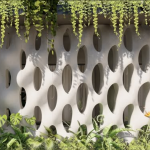
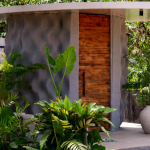
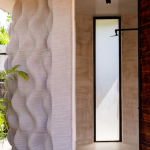
The practice is driven by an institutional curiosity to remain technologically progressive through time, expanding its exploratory limbs towards advanced construction techniques and bio-based materials. Their most recent breakthrough is a collaborative effort with Konface, Thrissur, in developing a prototype outdoor toilet unit with the robotic fabrication technique of 3D concrete printing (3DCP). Moving beyond traditional rectilinear layouts for spatial efficiency, the project balances multiple parameters to develop an organic, club-shaped footprint that optimises the volume for maximum spatial utility. Clear distinction of functional zones in the washroom unit is achieved along with a sculptural identity from the non-linear wall, laid precisely using 3DCP technology.
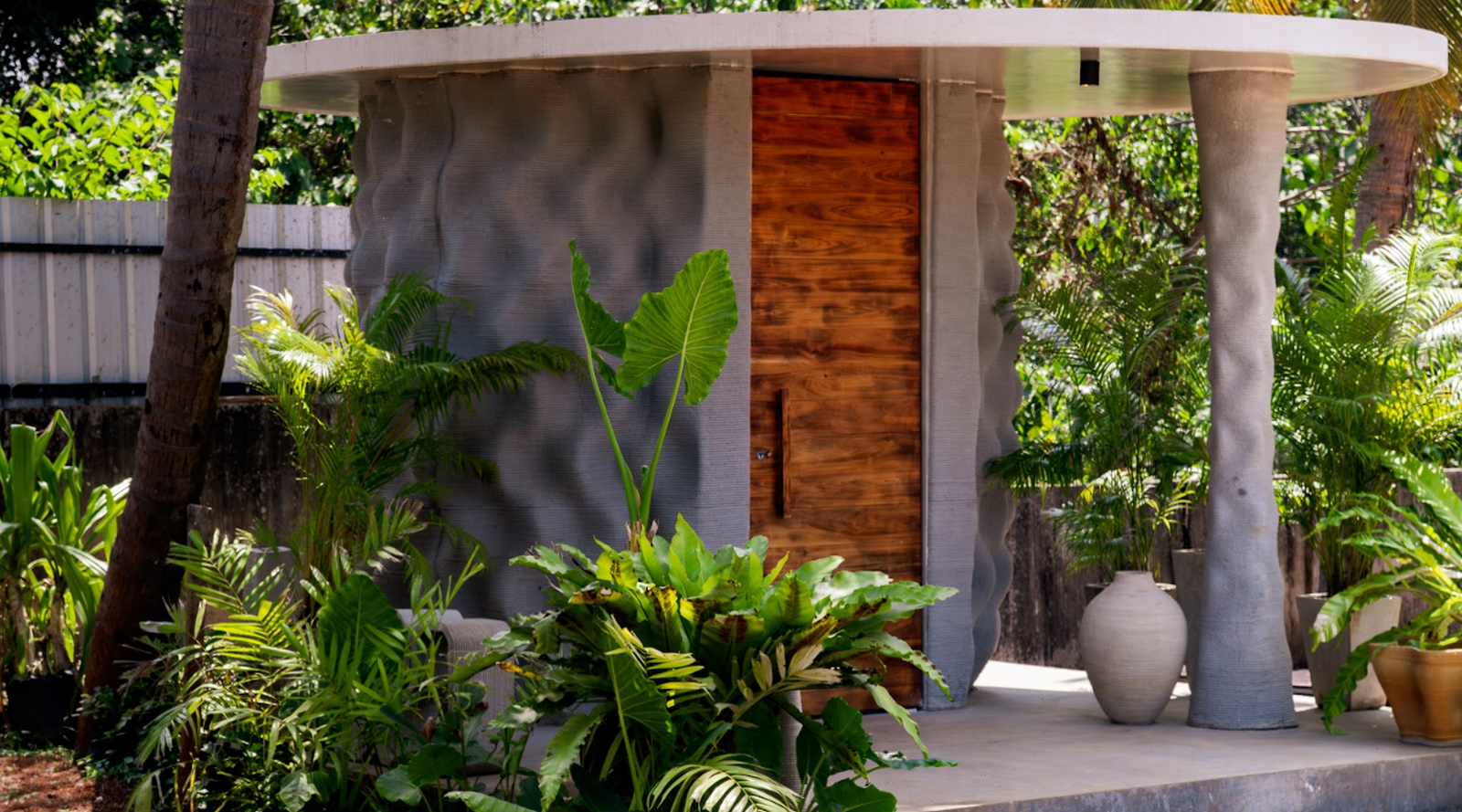
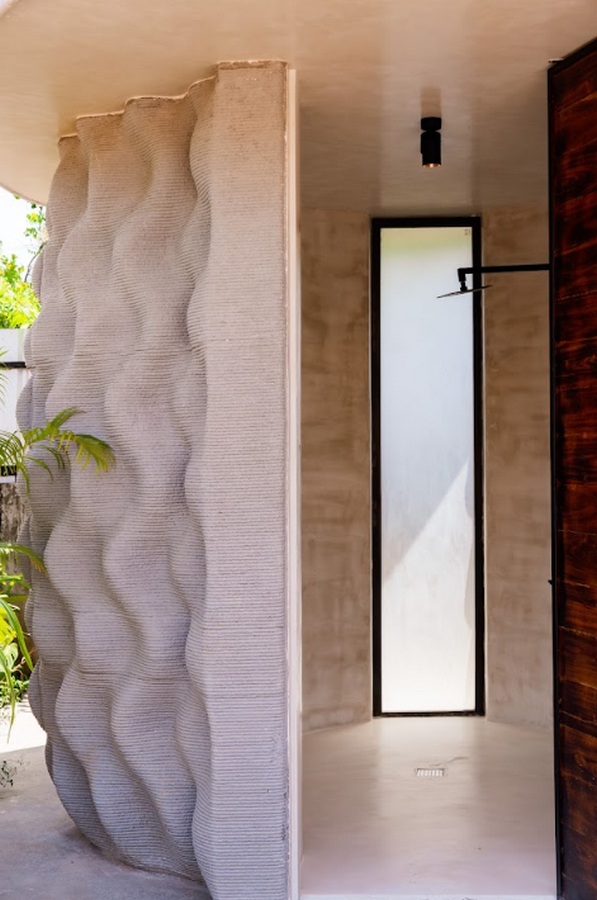
The entire module, printed and completed in a record time of 12 days, was finished with steel-framed windows, timber panelled doors and seamless interior finishes. The resulting embodied energy assessment demonstrates a substantial reduction by preferring 3DCP over conventional brick masonry. This breakthrough is a compelling testament to the speed, scalability and modular potential of 3DCP. Future explorations include crossing the challenges of printing horizontal structurally yielding forms to make roofs and exploring construction with bamboo and bio-based materials, like working with mycelium.
Ultimately, Raving Dots Studio establishes its brand value by working fluidly, inspired by the past, expecting the future and applying in the present, simultaneously. They advocate through demonstration that computational optimisation and architectural experimentation’ can translate directly into tangible energy and financial benefits for the end user. Their practice delivers custom architectural solutions that are rooted in rich context and are universally innovative. Computational vernacular offers an inspiring and actionable blueprint for today’s urgent climate shifts, proving that future design also walks the seam between the vernacular and parametric workflows.
Citations:
Thomas, N. and Anandan, R.B. (2026) ‘Building Brands: Raving Dots Studio ’.