Architecture has always evolved alongside the tools through which it is conceived and represented. From hand sketches and drafting tables to computer-aided design, each technological shift has gradually influenced how architects think about space, structure, and construction. Today, another transformation is emerging through the growing use of Building Information Modeling (BIM). In many architecture offices, BIM is still introduced primarily as a software platform, a digital environment used to create three-dimensional models and produce drawings more efficiently than traditional drafting methods. Within this interpretation, BIM appears to be simply the next step in the evolution of architectural technology, replacing CAD in much the same way CAD once replaced hand drafting.
Yet this view captures only part of what BIM represents. While BIM certainly relies on software, its deeper significance lies in how it transforms the way architects think about buildings, information, and decision-making. Rather than functioning only as a modelling environment, BIM introduces a way of understanding buildings as interconnected systems of information where geometry, materials, construction logic, performance data, and operational knowledge become linked within a structured environment. Seen in this light, BIM represents more than a technological shift. It reflects a broader transformation in architectural thinking, where designing a building increasingly involves organizing knowledge about how that building will exist, perform, and evolve over time.
From Drawing Buildings to Structuring Information
For much of architectural history, drawings served as the primary medium through which buildings were imagined and communicated. Plans, sections, and elevations translated spatial ideas into graphical instructions that could be interpreted by builders and engineers. Through these drawings, architects described geometry, proportions, and construction relationships, allowing complex spatial concepts to be conveyed through a coordinated set of representations.
Even as digital tools replaced manual drafting, the fundamental logic remained largely unchanged. Computer-aided design accelerated the production of drawings and improved precision, yet architecture continued to be understood primarily through a collection of representations describing a building from multiple viewpoints. The drawing remained the central instrument through which architectural ideas were organized and communicated.
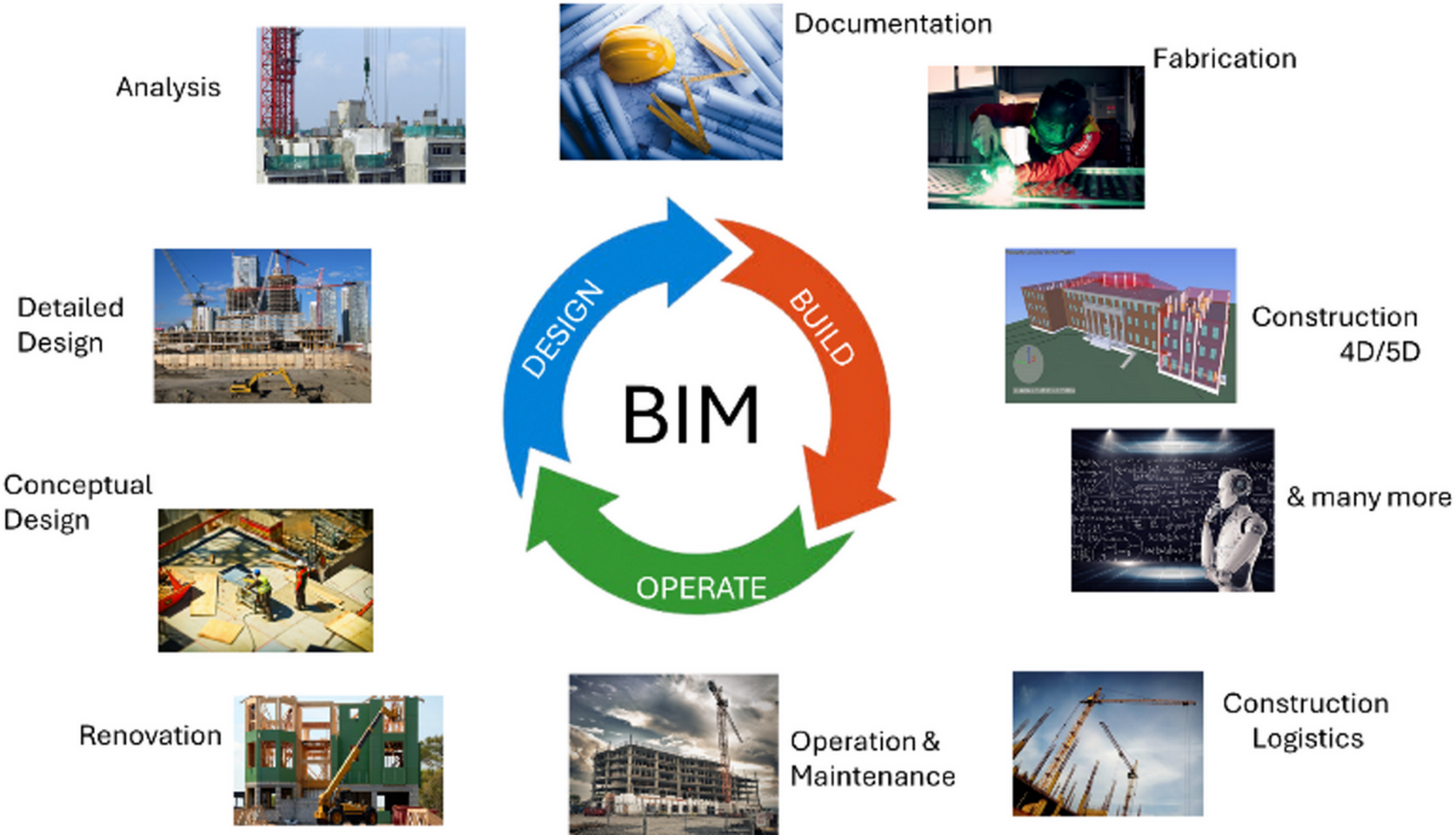
Building Information Modeling introduces a different perspective. Instead of treating drawings as the primary output, BIM organizes the building as a system of information where architectural elements exist within a structured digital environment. Geometry becomes linked with material properties, spatial relationships, and technical data, allowing the building to be understood as an interconnected framework rather than a set of separate drawings. In this context, drawings emerge as representations derived from a deeper informational structure, and the act of designing gradually shifts toward organizing how knowledge about the building is structured, interpreted, and connected. Architecture, therefore, begins to operate not only as spatial composition but also as an evolving knowledge system.
BIM as a Framework for Architectural Decision-Making
Beyond representation, BIM introduces a different context for architectural decision-making. Traditionally, design processes unfolded in stages where architects first explored spatial ideas and formal concepts, while technical considerations were introduced gradually as the project developed. Structural systems, environmental performance, and construction logic often entered the conversation later, once the architectural direction had already taken shape.
BIM allows these dimensions to become part of the design process much earlier. Because the building model contains structured information about components and their relationships, architects can evaluate how spatial ideas interact with material systems, environmental conditions, and operational requirements while the project is still evolving. Creative exploration and technical evaluation, therefore, begin to operate together rather than as separate stages.
This shift does not replace architectural intuition but expands the knowledge available during design. Architects can move between conceptual thinking and analytical insight, testing possibilities while understanding their broader implications. In this sense, BIM functions as a decision-making framework embedded within architectural thinking, where ideas are shaped not only by spatial imagination but also by information about how the building will perform and function in the real world.
The Architect in a Data-Rich Environment
As buildings become increasingly complex, the role of the architect continues to evolve. Contemporary projects involve intricate structural systems, environmental technologies, energy performance requirements, and advanced construction processes. Navigating these layers requires architects to engage with a broader field of information that extends beyond traditional spatial design.
Within BIM environments, architects often operate at the center of this informational landscape. The digital model becomes a shared reference where knowledge about structure, environmental performance, construction systems, and building operations can intersect. Instead of existing as separate streams of expertise, these layers of information begin to interact within a common framework.
In this context, the architect’s responsibility expands beyond shaping form alone. Architects must interpret, organize, and synthesize information coming from multiple sources while maintaining the coherence of the architectural idea. Spatial clarity, technical performance, and construction logic must be considered together rather than as independent concerns.
This transformation does not diminish the importance of architectural authorship. Instead, it broadens what authorship means in contemporary practice. The architect becomes responsible not only for shaping spatial experience but also for structuring the informational relationships that allow the building to function as an integrated system. Rather than acting solely as a designer of objects, the architect increasingly becomes a coordinator of intelligence within the building process.
BIM and the Lifecycle of Buildings
Another important dimension of BIM lies in how it connects architectural design with the long-term life of buildings. Traditionally, architectural documentation was primarily concerned with the construction phase. Once a building was completed, drawings were often archived and rarely consulted again unless renovations or repairs were required.
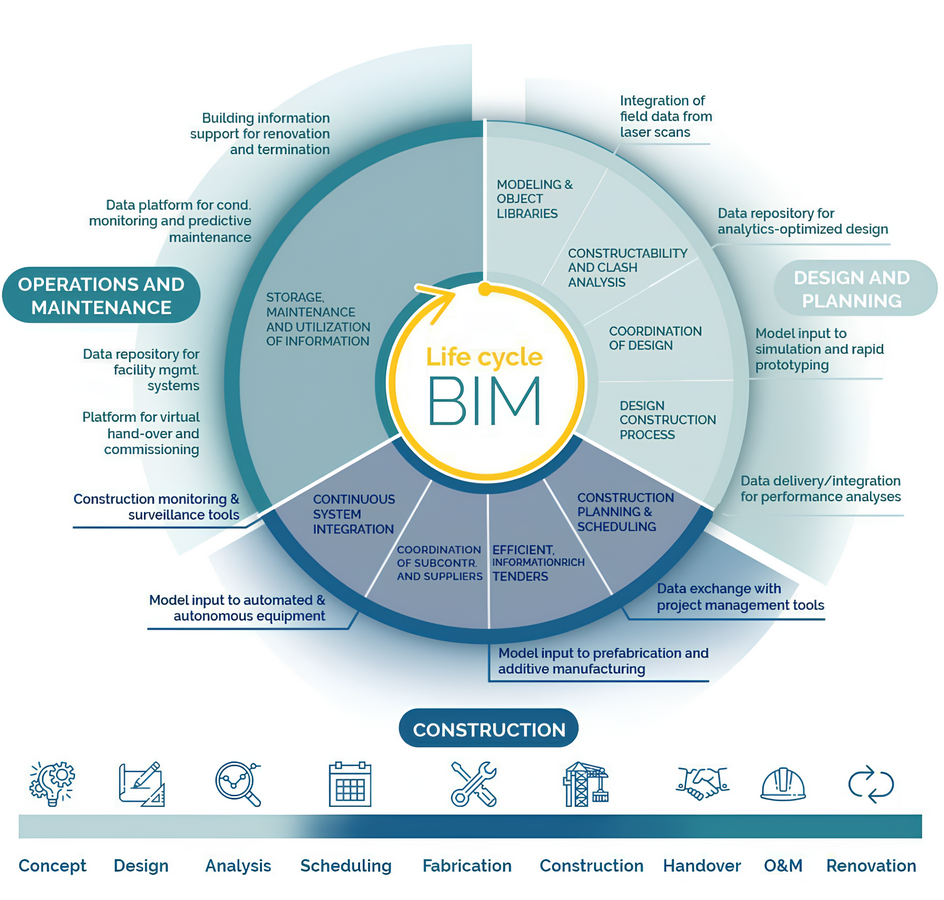
BIM introduces the possibility of extending architectural information far beyond the moment of construction. Because the building model can contain data about materials, systems, and spatial organization, it has the potential to remain useful throughout the building’s lifecycle. Facility managers may use BIM models to understand how building systems are organized, plan maintenance activities, or locate components when upgrades and repairs are needed. Information about materials, equipment, and environmental systems can be accessed directly from the model, allowing operational decisions to be informed by the same data that guided the design.
This lifecycle perspective changes how architecture can be understood. Buildings are no longer seen only as finished objects represented by construction drawings, but as systems whose information can continue to evolve over time. In this sense, BIM connects architectural thinking with long-term performance, adaptability, and maintenance, expanding the role of design decisions beyond the moment of construction.
BIM Beyond Software: Misconceptions and Fragmented Adoption
Despite these possibilities, BIM is often misunderstood within architectural practice. In many firms, the technology is still approached primarily as a modelling tool used to produce coordinated drawings. While this approach may improve efficiency, it does not fully engage with the deeper implications of BIM.
When BIM is treated merely as software, its potential to transform architectural thinking remains limited. Architects may create detailed digital models while continuing to approach design through conceptual frameworks shaped by earlier representational methods. The model becomes a digital version of drawings rather than a structured system of information.
Another challenge lies in the uneven adoption of BIM across the building industry. While some architectural offices have begun working within BIM environments, other participants in the construction process may still rely on traditional workflows. Structural engineers, service consultants, contractors, and project managers often operate through separate software platforms or conventional drawing-based coordination. When only part of the design team works within BIM, the model cannot function as the shared information environment it is intended to be.
For BIM to realize its full potential, collaboration across the entire project ecosystem becomes essential. The value of the system emerges not simply from modelling geometry but from connecting knowledge across disciplines. When architecture, structure, services, and construction processes interact within the same informational framework, BIM begins to function as more than a digital drafting tool. It becomes a platform through which complex building knowledge can be organized, interpreted, and coordinated.
Rethinking Architecture in an Information Age
The growing presence of BIM reflects a broader transformation within architecture. Buildings today operate within complex networks of environmental performance, technological systems, and long-term operational demands. Designing within such conditions requires architects to think beyond geometry and representation, engaging with how information about a building is structured and connected.
In this context, BIM represents more than a modelling environment. It introduces a framework in which spatial ideas, technical systems, and operational knowledge can be understood as part of a single informational structure. Architecture, therefore, begins to extend beyond the production of drawings toward the organization of knowledge about how buildings are conceived, constructed, and sustained over time.
For architects, the challenge is not simply learning new software but adapting to a different intellectual position. Designing increasingly involves navigating relationships between space, data, performance, and lifecycle thinking. At the same time, this transformation cannot be carried out by architects alone. Engineers, structural designers, MEP consultants, project managers, contractors, and facility managers must also engage with BIM as part of a shared system of knowledge. Only when the entire chain of participants works within a connected informational framework can the full potential of BIM be realized.
Seen in this light, BIM represents a broader cultural shift within the building industry. It reflects a move toward a more integrated understanding of architecture, where design, technology, and information operate together rather than in isolation.