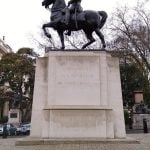
For centuries, the architectural brief for a public monument was simple permanence, heroism, and all about heights, something which was used as a symbolic representation or celebration of an individual or an historic event. In various areas in London and across the world, this philosophy is etched into the skyline. For example, the Duke of York column to the Crimean War Memorial, these monuments played an important part from the point of view of heritage, streetscape, and function as an open-air museum showcasing imperial stability.
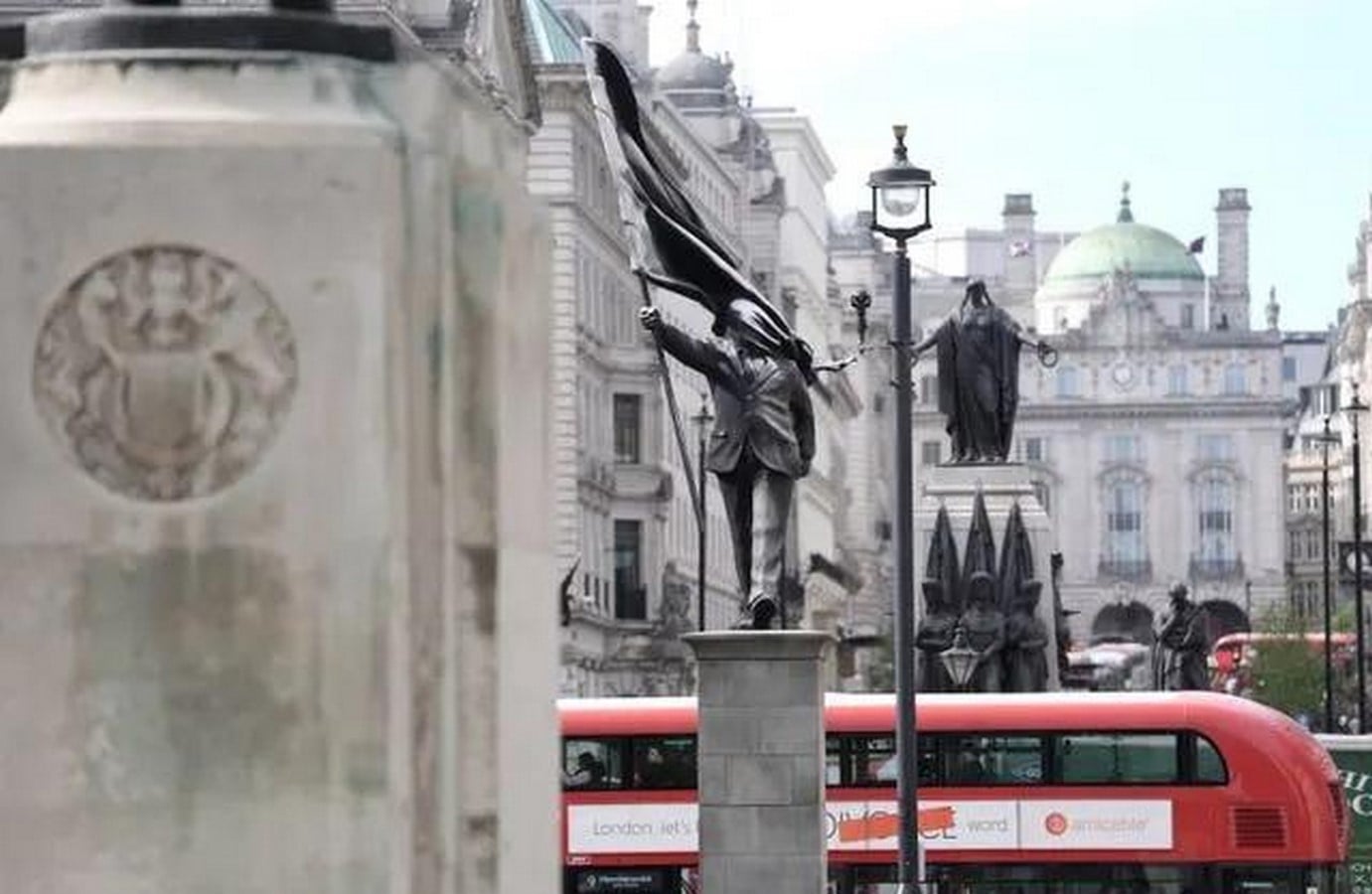
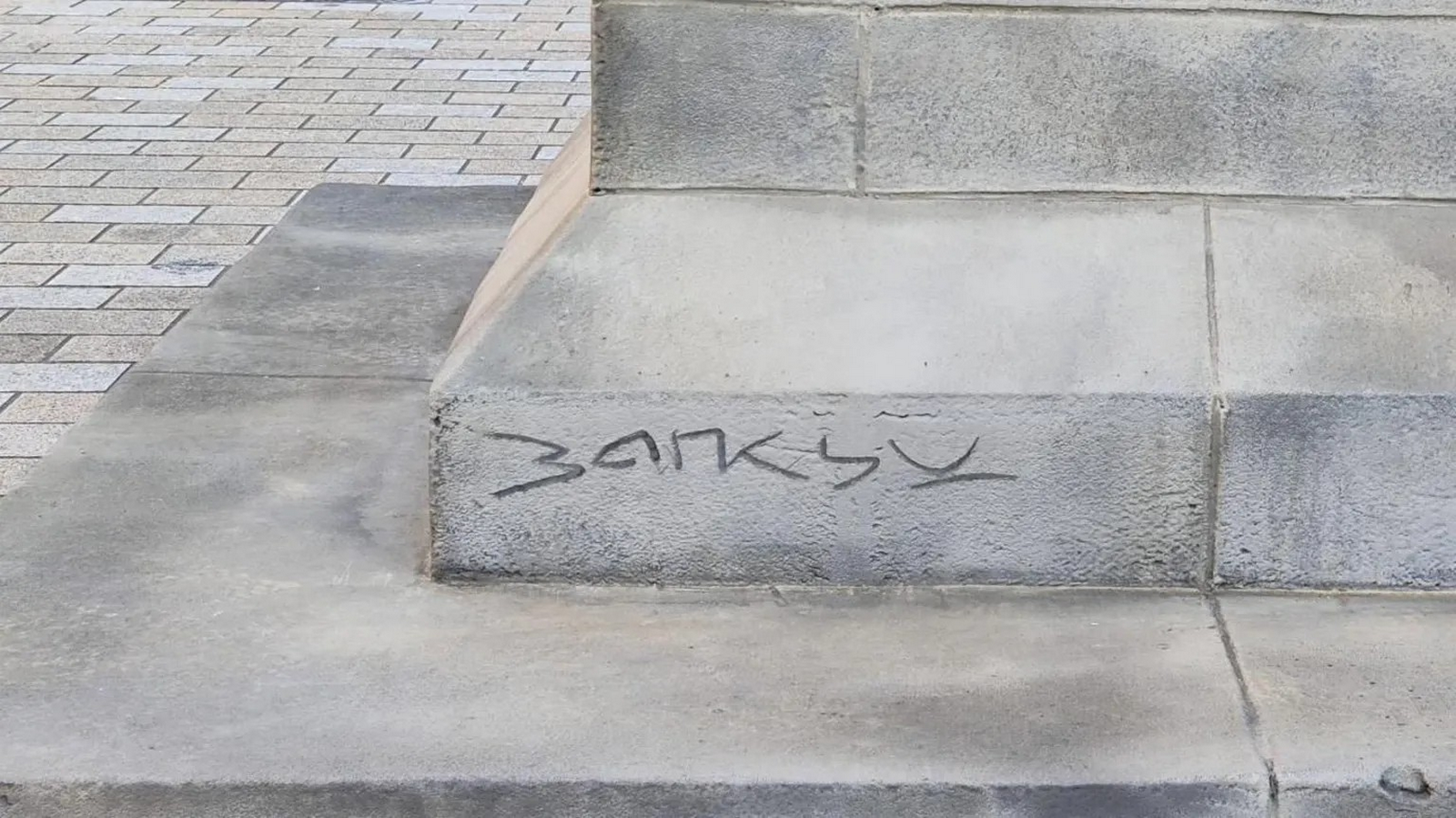
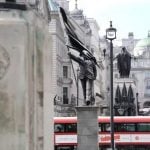
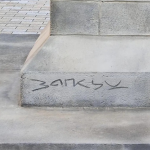
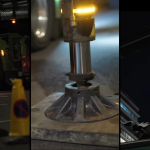
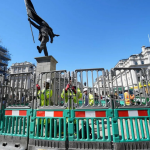
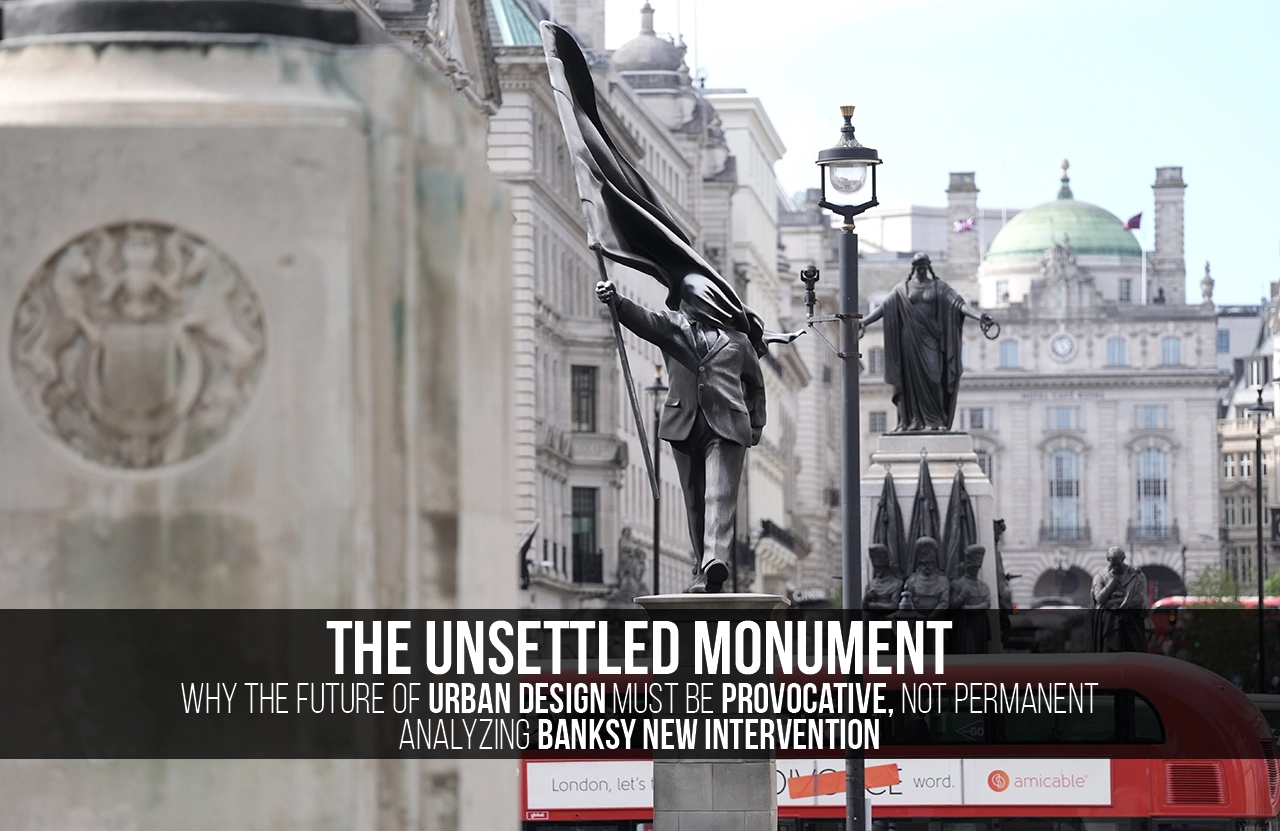
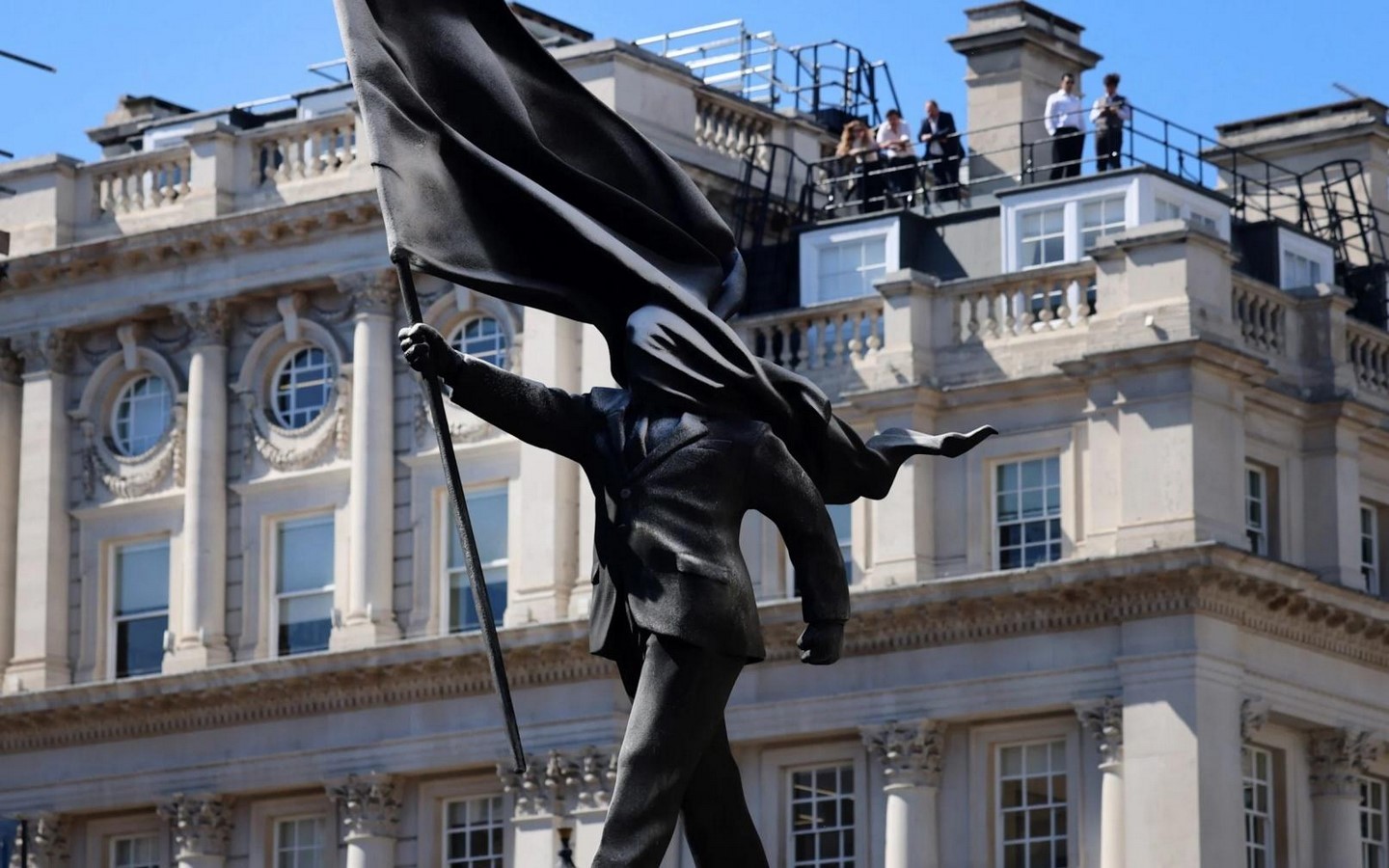
However, on April 29, 2026, the skyline was punctured by the addition of an unknown statue, which appeared overnight, gaining public attention. Banksy’s “Blinded by the flag” or “The suited void” made an overnight appearance on Waterloo Street in London. This life-size bronze statue of a man in a business suit is a modern symbol of power. It captures a man who is mid-stride as he is about to walk off the plinth. His entire face is covered with the fabric of the flag he’s carrying for us as an intellectual. This modern intervention is not just an overnight prank but a profound critique of how we can design monuments based on current events or realities into our public space and how it can act as a blueprint for more such unsettled monuments in the future.
For us as designers, this intervention can be labeled as Blind Patriotism, serving as a case study in spatial value, narrative materiality, and the power of pause in high velocity urban corridors.
The Architecture of Gap
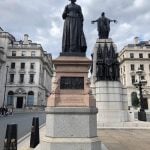
Back in the days, Waterloo Place was designed by John Nash as a grand, processional gateway from the width of the pavement to the placement of the plinth, which represents hierarchy and imperial stability. It is a space designed for transit and ceremony and not for lingering. Taking this into consideration, Banksy’s choice of his statue’s location was quite strategic. As he mentioned on social media, he decided to use this spot because there was a gap between the existing statue of King Edward VII and Florence Nightingale. In urban planning, a gap is often seen as a failure in the grid or planning, which is later filled in by using planters, bins, or benches.
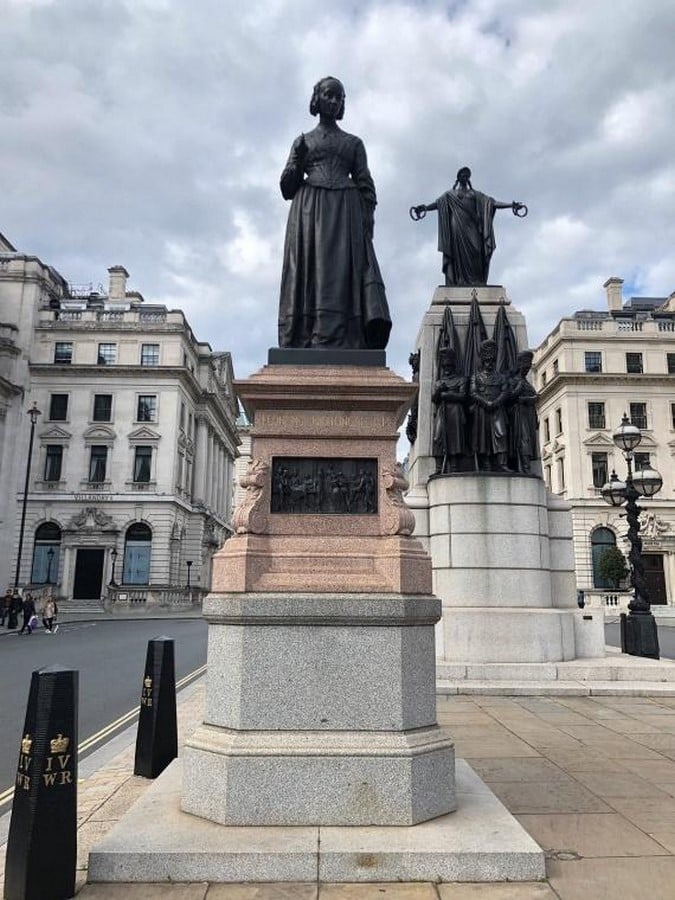
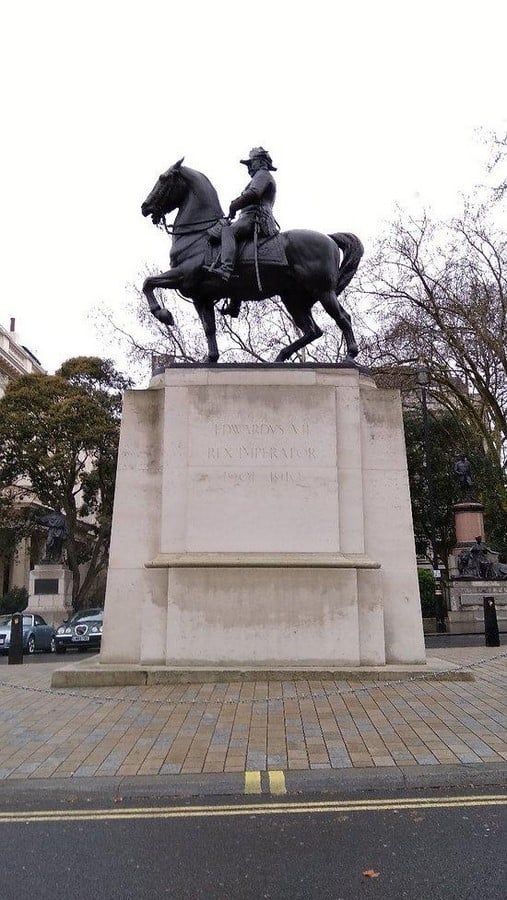
However, Banksy utilized this space as a narrative opportunity. By placing a falling man statue on a street filled with heroic figures, he created a friction. While the surrounding statues celebrate the past, Banksy’s statue represents the future, which feels uncertain, providing a brutal check of current reality. For future designers, this is an important lesson that our public squares should consist of such spaces that act as a public platform for voices and artists. We often focus on Grand Square or facades, but Banksy forces us to think about the potential of liminal spaces. He proves that the most impactful narrative shifts occur not by replacing the old monument but by using the interstitial voids between them.
In my opinion, there is no concept of a finished city. If one considers a city to be completely designed, it means, in a way, its dead. As it won’t leave any gap where actual conversation would take place, or provide any space for the artist to make a statement.
Mimetic Subversion – The art of hiding in plain sight
From a design perspective, the statue’s materiality is a master class in contextual friction. The figure and its base are rendered in a resin that mimics the weathered patina of the surrounding 19th-century bronze and granite. This is what we might call narrative camouflage. By adopting the formal language of the surroundings, the elevated plinth, and the traditional sculptural form, the structure immediately bypasses the city’s immediate visual aesthetics. So from a distance, it appears to belong to the site’s heritage and doesn’t look like graffiti, and can be mistaken as an officially commissioned statute or monument, bypassing immediate public attention because of the metal filter. It is only upon closer inspection that subversion is revealed.
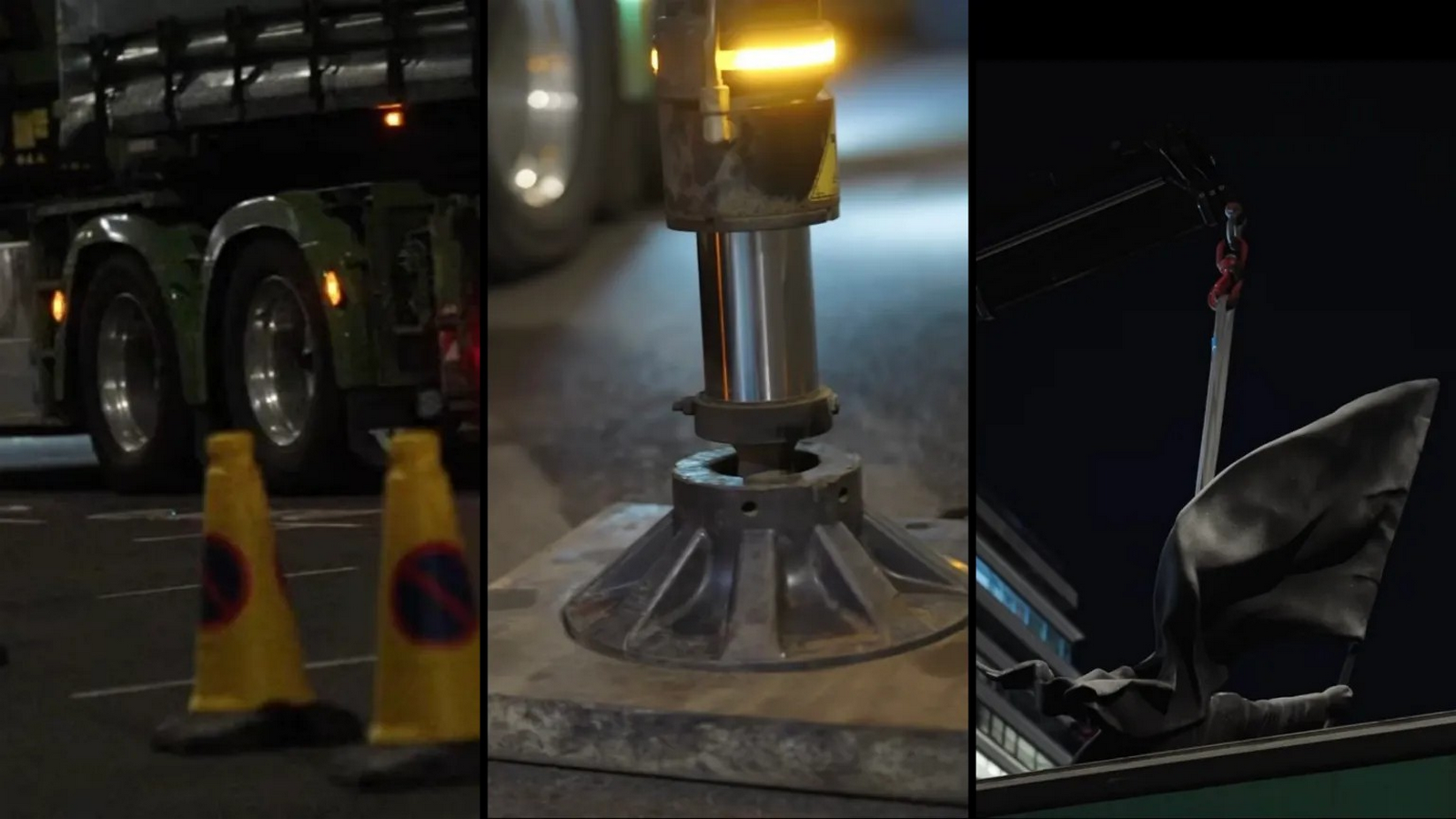
For modern designers, working in heritage-sensitive zones is a critical lesson. Contextualism doesn’t have to mean submission. By speaking the aesthetic language of the surrounding monuments, the artist gains the authority of the site only to use that authority to challenge the very power structures the architecture was built to celebrate.
The Custodial Mandate: From Vandalism to Stewardship
Perhaps the interesting aspect of this event is the reaction of the authorities. In decades past, a Banksy would be scrubbed away by morning. In 2026, Westminster Council immediately erected safety barriers to protect the workers and the crowds. The city has been forced into an unwilling stewardship because the art has immense cultural and financial value; the state, in a way, is protecting the very artwork that is mocking it. This historic shift in urban governance has seen cultural capital and public engagement now outweigh the rigid mandates of the Criminal Damage Act.
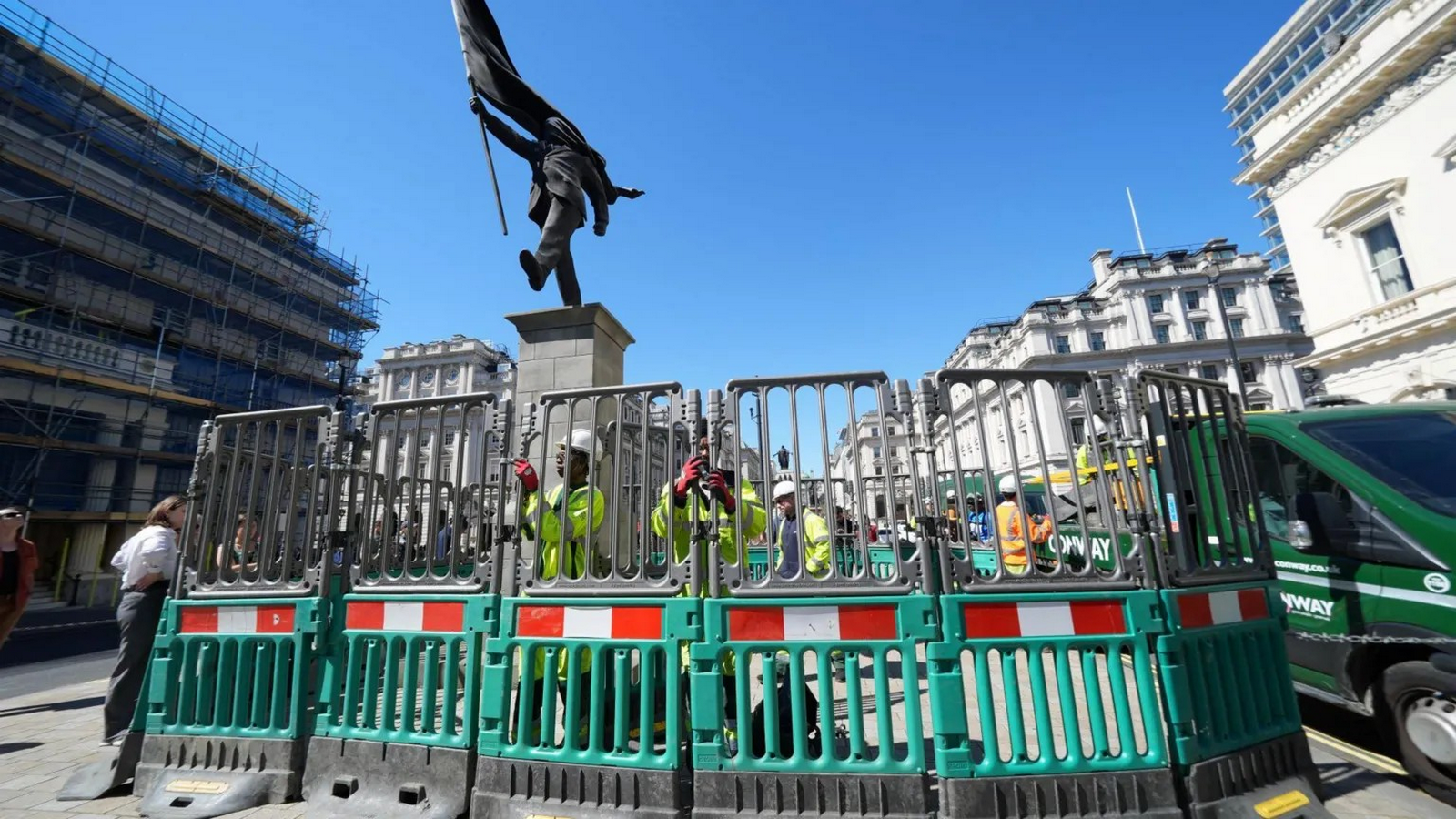
For urban planners, street art is the purest form of Tactical urbanism. It is fast, reversible, and provides immediate data on how people interact with a space. Permanent urban redevelopments require years of environmental impact studies and public consultations. Banksy’s installation achieved immediate global impact through strategic evasion. This “pop-up” monumentality challenges our traditional views of the planning process. It suggests that our cities benefit from “Agile Architecture”—temporary installations that allow for a more responsive public discourse. If thousands of people gather around a traffic island to view an unauthorized statue, it tells the planner more about the social potential of that “dead space” than any theoretical study ever could.
The “Social Condenser” in a High-Speed City
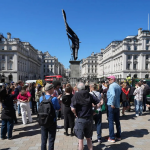
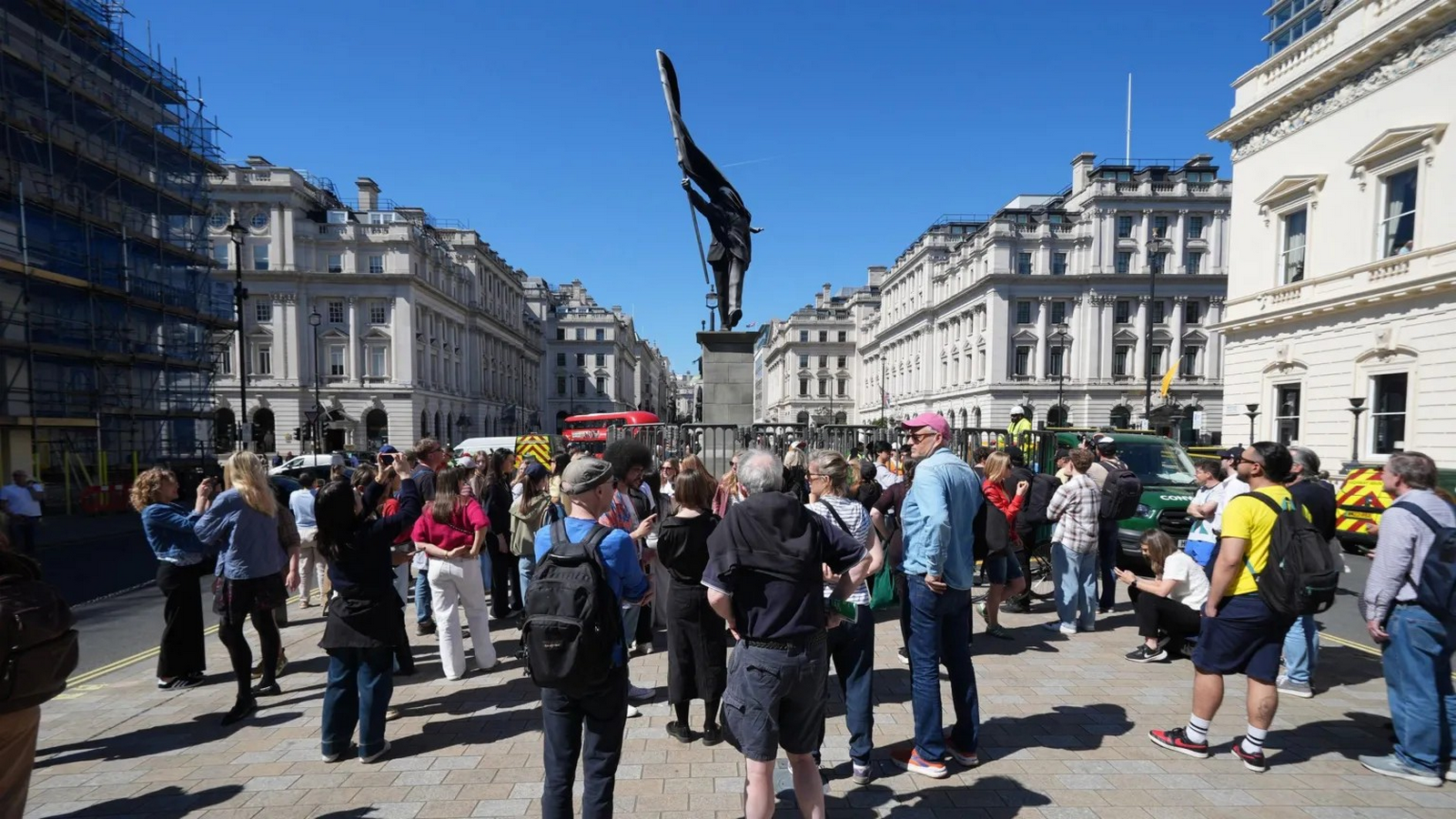
Architecture is fundamentally about how bodies move through space. Since the statue’s appearance, the pedestrian flow of Waterloo Place has been drastically shifted. What was once a high-speed corridor for tourists walking between Piccadilly Circus and The Mall has become a place of deliberate pause, which is much needed in urban spaces.
The statue has created a “social condenser” in the middle of a traffic island. People are no longer just passing by; they are circling, photographing, and debating about the same. This is a reminder that the most effective way to change how a city functions is not always through massive infrastructure projects, but through cultural catalysts like urban interventions and artwork, or graffiti that change the psychological value of a space.
Street Art as Heritage Activation
Urban planners often treat Heritage Conservation as an act of freezing a site in time. This can lead to a “museumification” of the city, where historic districts become sterile and disconnected from modern life.
Banksy’s intervention suggests an alternative: Heritage Activation. By adding a new, provocative layer to the historical palimpsest of Waterloo Place, he makes the 19th-century monuments relevant again. He forces a dialogue across centuries, asking if the blindness of the modern figure is a continuation of the history represented in the bronze statues nearby. For planners, this underscores the importance of allowing for evolutionary layers in the city, ensuring that history is not just preserved, but actively interrogated and discussed.
The Architect’s New Canvas
Banksy’s 2026 statue is more than an artwork or graffiti; it is a profound piece of urban criticism. It reminds the architect that our role should extend beyond the technical aspect into the sociopolitical scenario of a place.
The key takeaway is that the city is never “finished.” This leaves a gap for a living, breathing conversation. By embracing the ephemeral and the provocative, we can design cities that don’t just house people, but actually speak to them and resonate with them. Banksy didn’t just add a statue to London; he redesigned the way we perceive one of its most historic corridors, proving that in the realm of urban design, a well-placed question is often more powerful than a permanent answer.
Reference List:
Garnsworthy, J. (2026). Banksy claims new statue in central London. [online] Yahoo News. Available at: https://uk.news.yahoo.com/banksy-claims-statue-central-london-140028833.html [Accessed 3 May 2026].
Foster, A. (2026). Banksy confirms he is behind new statue in central London. [online] 30 Apr. Available at: https://www.bbc.com/news/articles/c5y9wlnwl85o.
Horton, H. (2026). Banksy confirms he is behind statue which appeared overnight in central London. [online] The Irish Times. Available at: https://www.irishtimes.com/world/uk/2026/04/30/banksy-confirms-he-is-behind-statue-which-appeared-overnight-in-central-london/ [Accessed 3 May 2026].