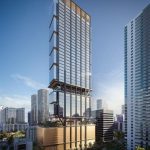
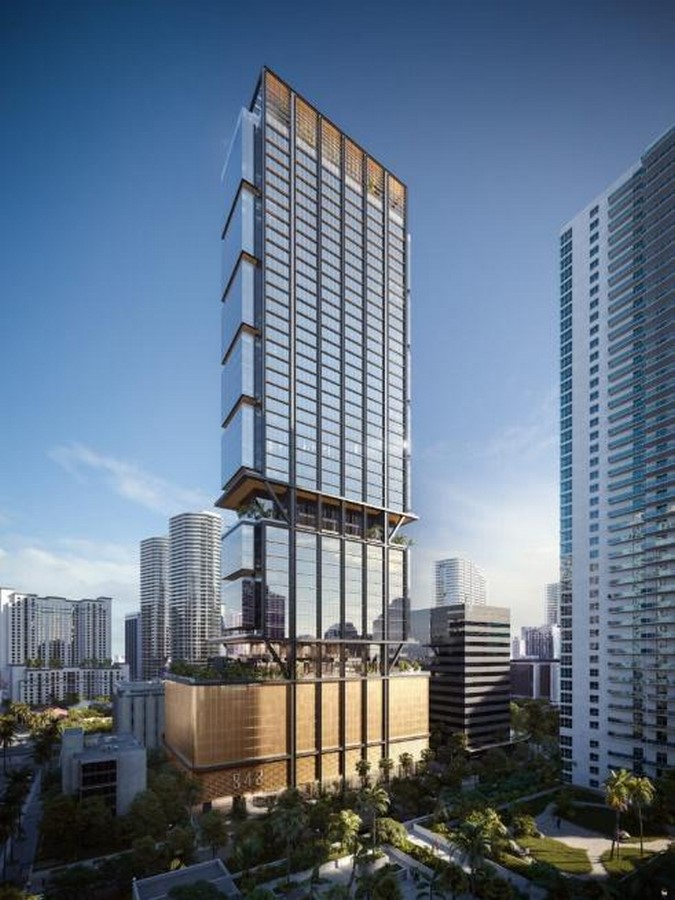
For a long time, modern cities have often been symbolized by their glass skyscrapers. The tall, still-standing towers of steel and glass represent modernism, progress, wealth, and high-tech engineering strategies. Despite their current representation, these ‘modern’ buildings often seem inefficient due to rising global temperatures and soaring energy costs. These shining structures do serve the best forms, but eventually act like giant greenhouses that trap heat and require a massive amount of electricity to keep them cool with air conditioning.
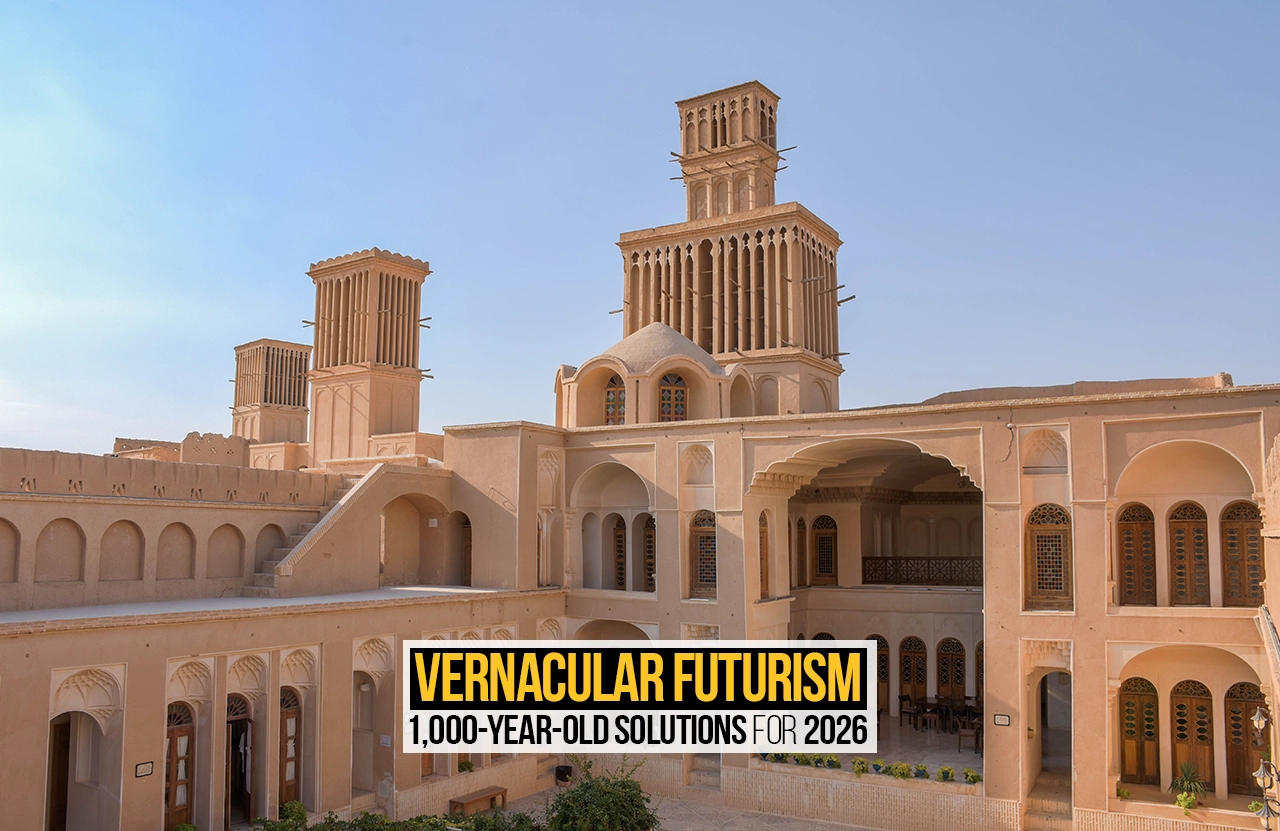
As an architect, one looks forward to making cities the most sustainable in 2026. During the current environmental scenario of 2026, one of the best sustainable options might not come from high technology and laboratories but from the heritage of the ancient past. As a designer, one should be able to understand how ancestors lived and managed in extreme climates without a single watt of electricity. The use of traditional and indigenous methods to solve modern environmental problems is often termed Vernacular Futurism. A practice that should be somehow adapted by designers, where one can find “low-tech “solutions to “high-tech” energy crises. (Emekci,2021)
The Problem with the “Glass Box”
Modern architectural designs often depend on the “active” systems. In any case of requirement, whether it’s too hot or it’s too dark , we rely on either turning on the AC for it or turning on the lights for it . However, this requires a constant flow of energy within the building that impacts the carbon emissions of the building. Whereas in traditional vernacular architecture, the requirements of an individual depend upon the “passive” systems . These buildings are designed strategically to work with nature rather than against it.
Dominant cities in terms of architectural design, such as Dubai , New York, Singapore, and many more, are effectively ‘Climate-Blind’ due to glass box designs. These designs, despite being in different geographical divisions whether a desert or a tundra , share a common way of thought process put in design , which has led to massive energy drain. As we pass through 2026, we strive for “Net-Zero ”carbon emission in the design market, where the HVAC (Heating, Ventilation, and Air Conditioning ) system has become a liability to the designers. (n.a.,2025)
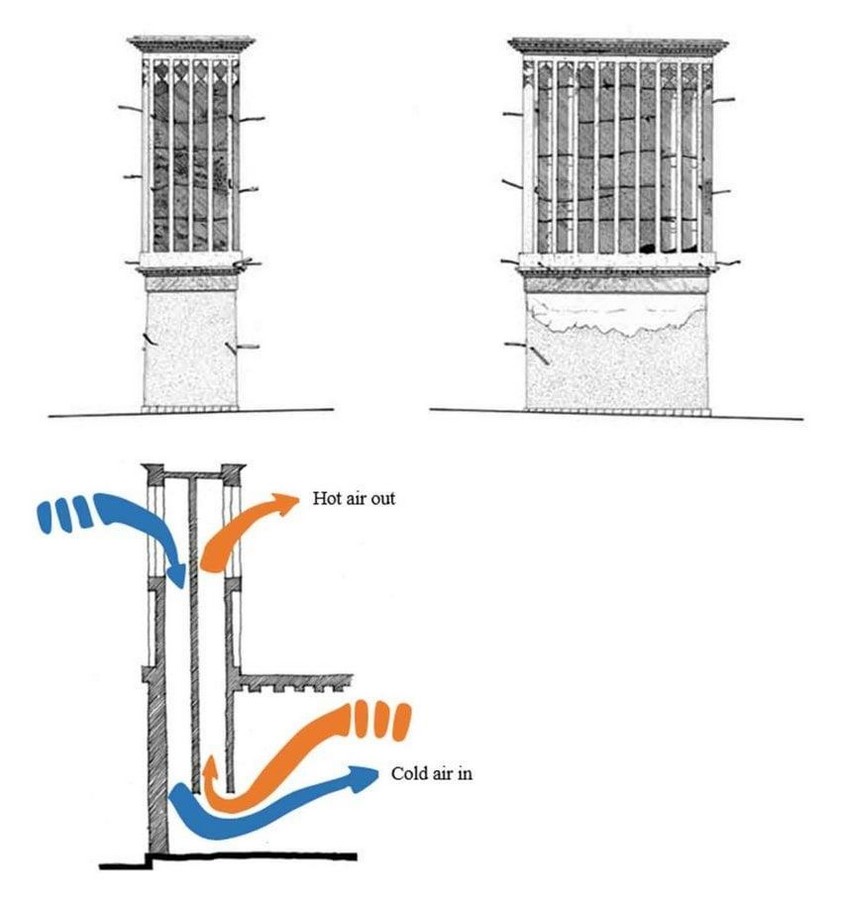
The Windcatchers of Persia
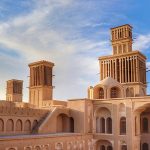
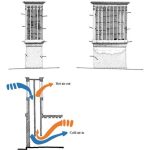
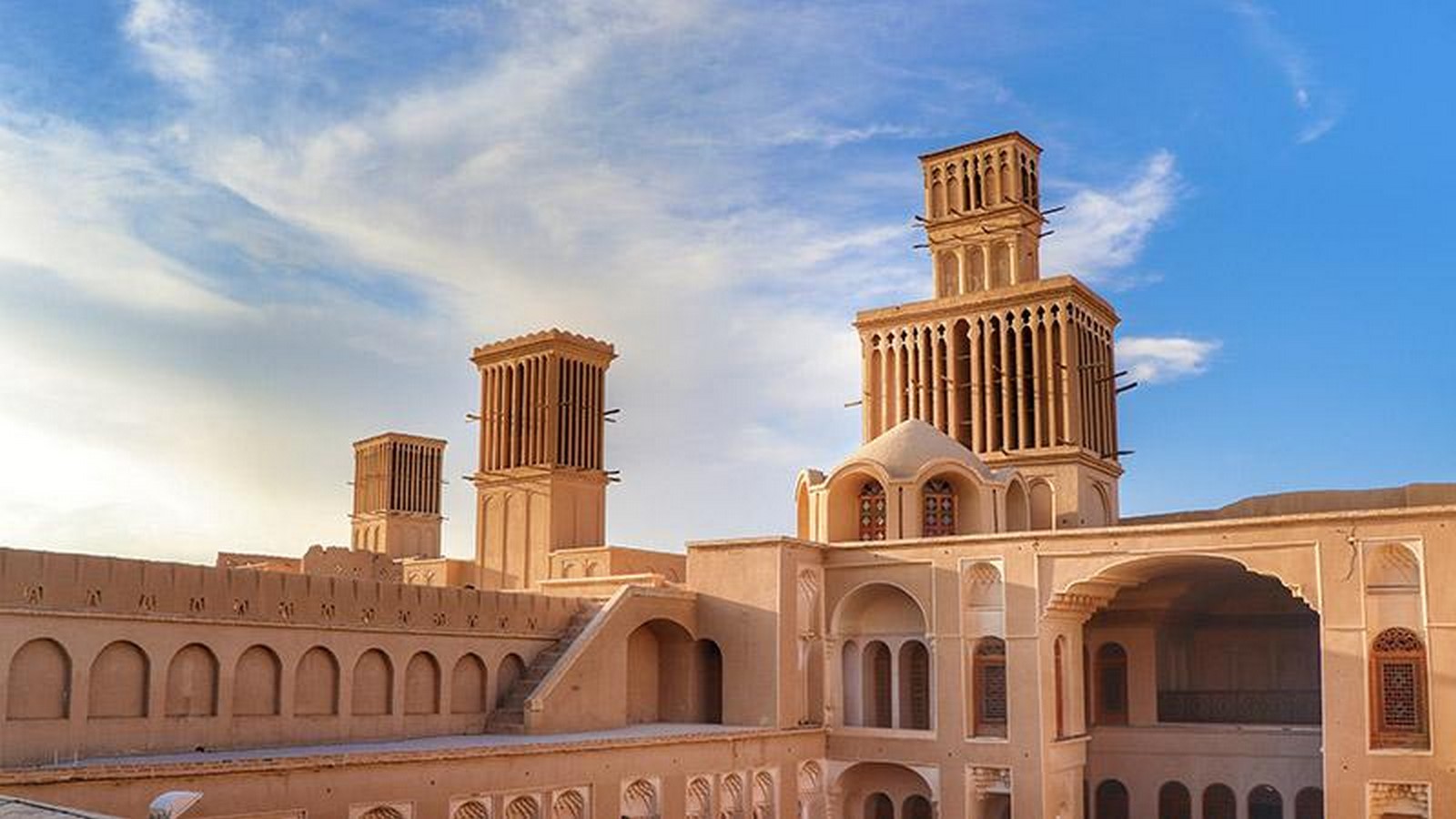
Long before when electricity had no trace in the world , the people of ancient Persia (modern day Iran) had strategically mastered the art of staying cool and comforted during extreme hot times in the middle of desert by inventing the Badgir or “windcatcher”. This windcatcher is a tall chimney like structure that sits on the top a house or building and has opening at the top that catch even the slightest breeze of air. The tower directs the cool air downwards the building towards the living spaces . Simultaneously it pulls out the hot air that rises from the building from the other side of the tower. However sometimes this towers was placed over the underground water channels that were called Qanats . As the wind passed over the water, it was cooled through evaporation, acting as a natural, zero-energy air conditioner.( Stouhi,2021)
Architects today can interpret this technique by placing “solar chimneys” and “natural ventilation” shafts into modern buildings . By understanding the physics of air pressure and the rise of heat , one can reduce the reliance on the mechanical fans , the ACs and the compressors by 30-50% .
The Stepwells of India
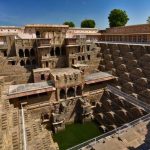
In the arid regions of India, including regions like Rajasthan and Gujarat, water is considered to be more precious than gold . During the 5th and 19th centuries, Baories, also known as stepwells, were designed by Indians. These stepwells were not just wells but massive, subterranean architectural marvel . Baories were designed to be deep, multi-storeyed trenches or pits where people would descend hundreds of steps to reach the water table. Due to a deep design built by digging earth downwards , the temperature down inside was often observed to be near 5°C to 10°C cooler than the surface. These stepwells were built by shaded thick stone walls . These wells not only served the purpose of storing water in a hot climate but also acted as public cooling centres and community hubs during the hottest days in the region. (Singh,n.a)
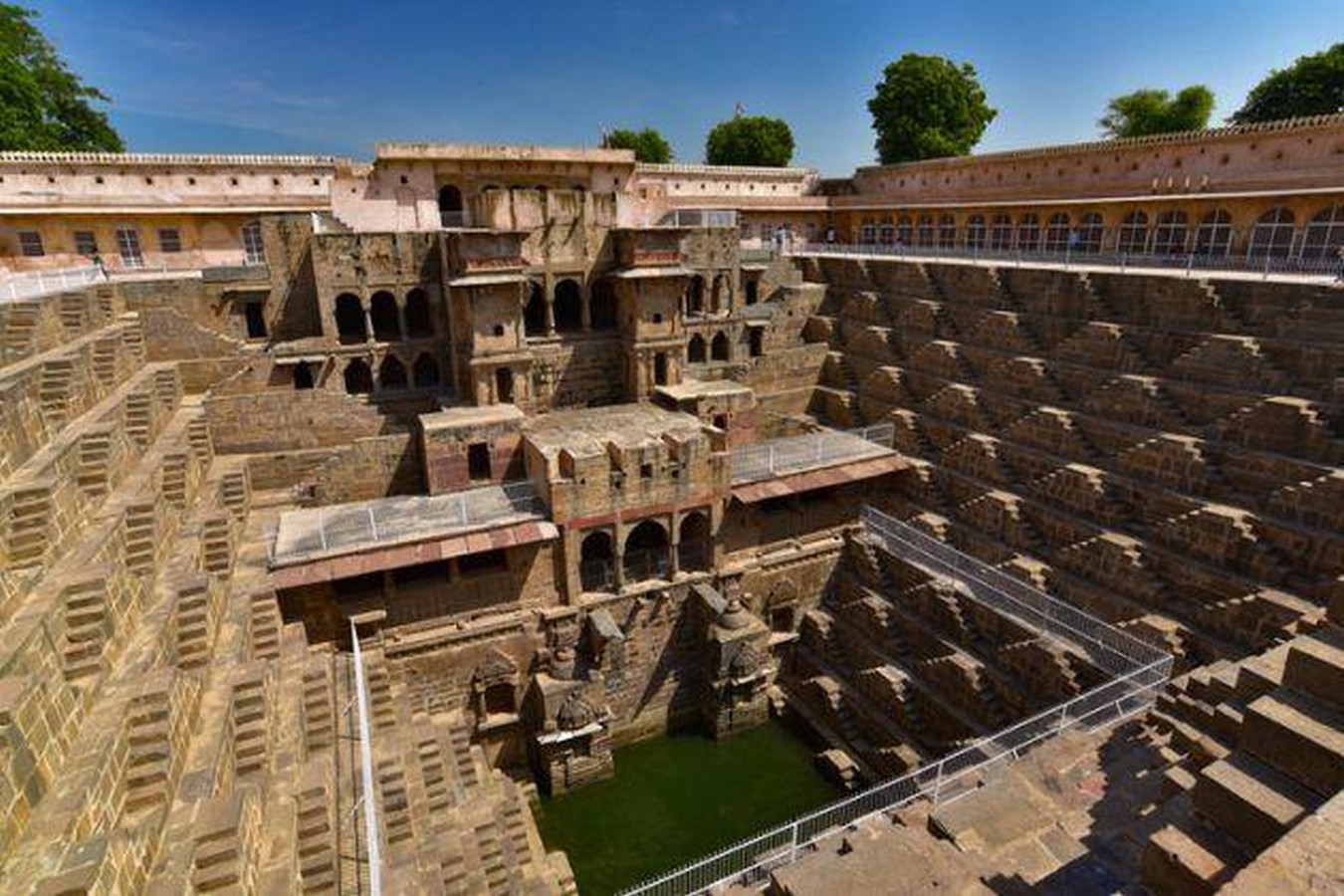
Implementing this underground design strategy can automatically reduce the use of cooling and heating devices. Architects should look into the revival of “earth – sheltered” architecture by undesigning partially underground buildings and utilising thermal mass, i.e., thick walls made from stone or earth to make the buildings cool in the summer and warm in the winter . In this case, the Earth itself is a giant battery that acts as a temperature regulator .
Passive Cooling vs. Modern HVAC
Vernacular Futurism should be the future of architecture for which comparison between the modern HVAC systems and traditional energy methods is necessary . The modern HVAC system uses grid dependent electricity for the energy sources which requires high maintenance due to mechanical parts break . These modern systems have durability for barely 15-20 years where high amount of carbon emission is produced . However in contrast , the vernacular systems uses the physics of natural elements such as wind , gravity , evaporation etc. which provide durability for centuries along with low maintenance due to static structures. These natura passive strategies are almost zero percent carbon producer.
Modern HVAC systems uses chemical refrigerants such as HFCs that are thousands times more potent as greenhouse gases than CO2. While ancient methods might not bring a room down to a crisp 18°C in a heatwave, but they provide a “thermal comfort” that is sustainable for the planet.
Scaling the Past for the Future
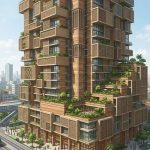
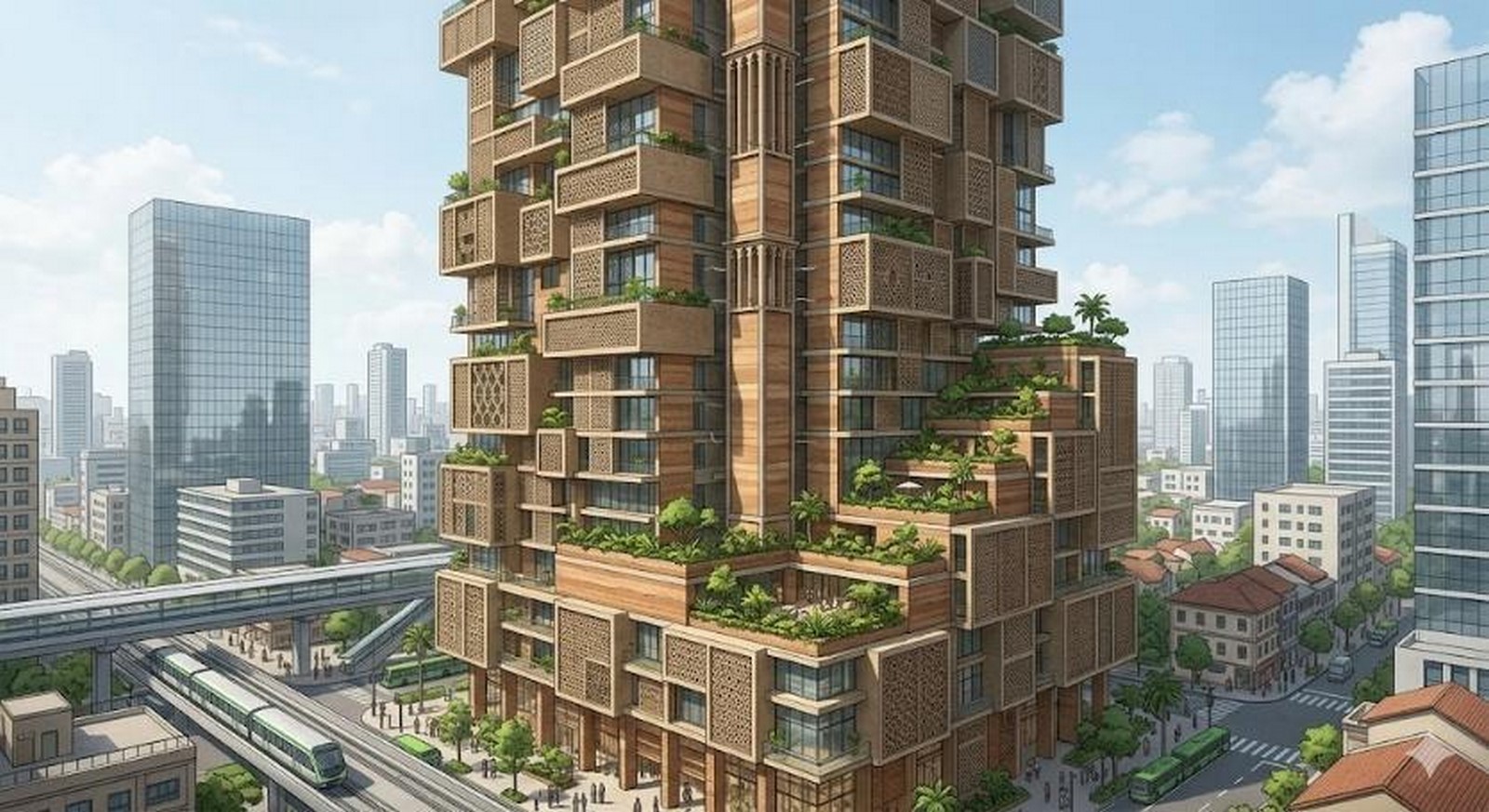
The challenge for the architects in 2026 is not just to design mud huts and house more than 8 billion people in ancient ruins. The goal of vernacular Futurism should be to hybridize. For instance, considering a 50 -storey skyscraper in a tropical setup instead of being wrapped in flat glass follows passive techniques . Vertical windcatchers are built into the core to provide fresh and natural air . Deep balconies, also known as “Jali “screens inspired by Islamic architecture, provide shade by simultaneously allowing wind to pass through. Instead of glass work , the use of thermal mass such as “Hempcrete” or rammed earth would absorb the heat during the day and release it at night .
By combining the intelligence of the past with the materials of the future, one can create buildings that are resilient. If the power grid goes down during a heatwave, a “modern” glass building becomes a death trap, whereas a “vernacularly inspired” building remains habitable and escape from that heatwave.
Reference List:
(Emekci,2021) https://www.researchgate.net/publication/352744381_Sustainability_in_Architecture_Low-tech_or_High-tech
(n.a.,2025) https://www.macglassglobal.com/blog/the-impact-of-glass-processing-on-building-energy-efficiency#:~:text=Low%2DEmissivity%20(Low%2DE)%20coatings%20are%20a%20significant,ecological%20impact%20(Glass%20Processing).
(Stouhi,2021) https://www.archdaily.com/971216/what-is-a-traditional-windcatcher
(Singh,n.a) https://speakinghistory.org/2024/10/30/stepwells-as-climate-change-adaptation-strategy-in-early-medieval-india/