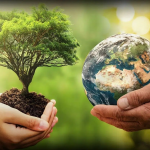
Mother Nature, embodied by the Earth, was bestowed with beautiful dense forest-lands that reached approximately half of the land area, along with other very important landscapes such as deserts, glaciers, savannas, and steppes. These unswayed landscapes, in their original state, aided resilient, intact, and flourishing ecosystems. These ecosystems have provided the Earth with life, and their proficiency culminated in the existence of innumerable forms of biodiversity, each conferring wonderful biological amenities. But eventually, humans discovered the practices of agriculture and plantation as means of food. They further took over these lands for their use, initially in a harmless manner, but gradually it arrived at such an extent that it has started disturbing natural ecosystems.
This article briefly discusses the impacts of agriculture and human influences on weakening ecosystems, and further explores ways of reviving healthy ecosystems through various novel practices, especially from the perspective of landscape architecture and design.
Disruption of Ecology
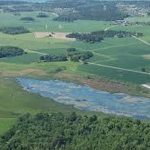
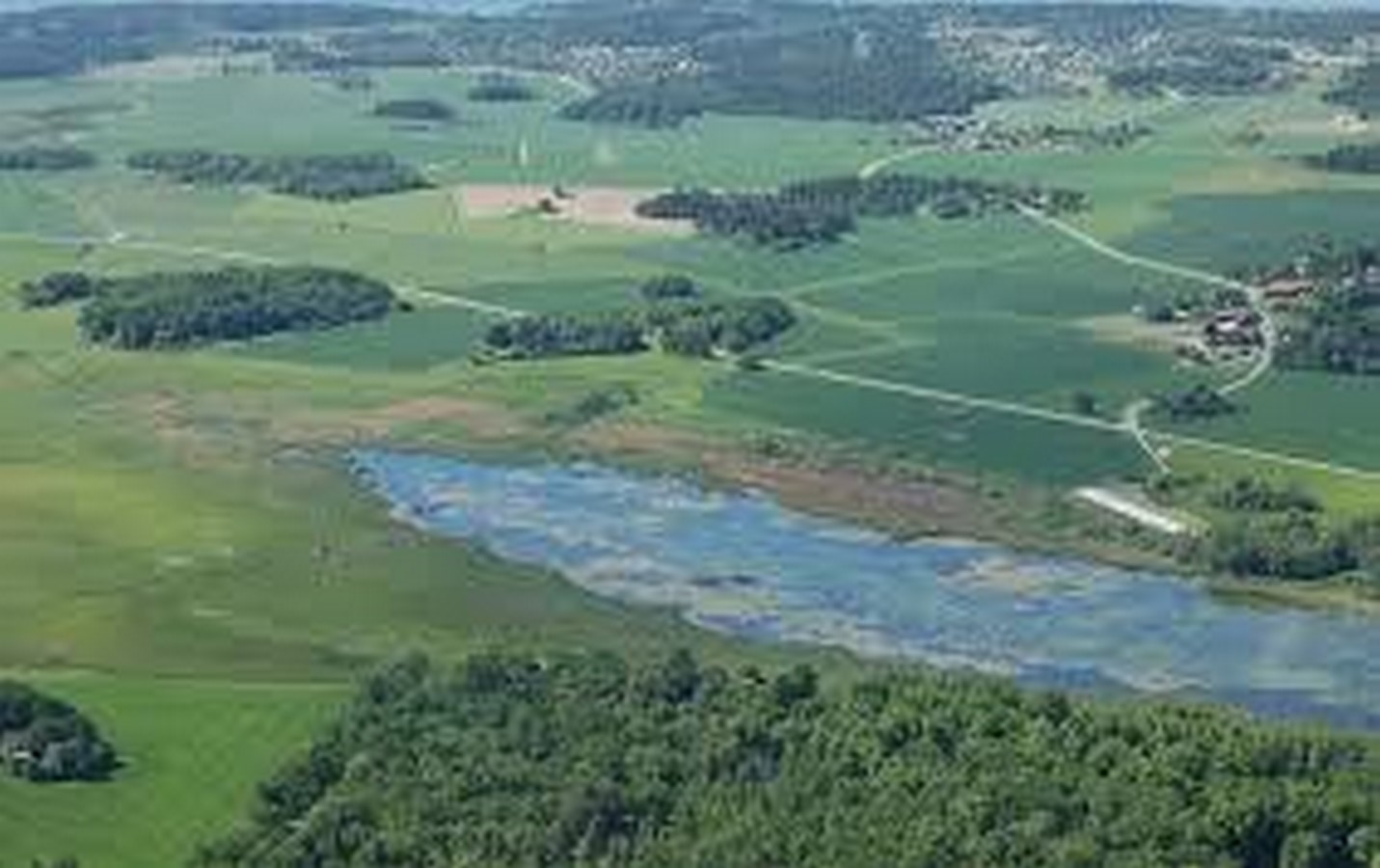
Over 40% of the land area is utilised for agricultural means and practices. Agriculture is the way humans feed themselves; however, it is causing serious disruptions to ecology and the environment. Humans have depleted forests for agricultural purposes for ages, such that it has likely permanently disguised forest landscapes into plain croplands. Forest and natural landscapes hold greater importance, and the conversion of these lands into croplands is one of the foremost ways that has led to the weakening of ecosystems. Intensive and continuous engagement of land for agriculture does not allow it to regenerate and prevents natural ecosystems from recovering. Moreover, the human population has reached beyond the Earth’s carrying capacity, leading to obvious exploitation of resources. Previously, this was not the case; with a sustainable population, lands used for agriculture were given enough time to regrow naturally, and forests were not permanently eliminated but followed a cycle of use and regeneration. This agricultural dominance has led to an imbalance in natural ecosystems.
Additionally, humans have extensively consumed fossil resources, pushing them toward exhaustion. Energy has become a major survival factor next to food, and just as feeding requirements negatively impact the environment, energy demands have done the same. Approximately 1100 gigatonnes of carbon, above the 2200 gigatonnes of natural pre-industrial levels, have been released into the atmosphere. As a result, the world suffers from the adversities of global warming, climate change, and the destruction of natural ecosystems, and this burden continues to grow with ongoing emissions.
Consequences and Impacts of Ecological Imbalance
The other misfortune suffered by natural environments, resulting from human activities in modern times, is the disconnection of ecosystems. Building natural parks, bio-reserves, and plantations of trees is a major step towards environmental conservation; however, the formation of isolated “islands” of ecosystems and natural areas is not helping in the way it should. Biodiversity must be allowed to flourish without strict demarcated boundaries. Long, stretched corridors are requisite for this purpose and for the upliftment of the environment.
This carbon needs to be sequestered in order to restore nature to its initial conditions and reset the defaults of the ecosystem. The creation of major carbon sinks is a difficult but highly favourable solution. Afforestation can act as a sink for up to 100 to 300 gigatonnes, and the soil beneath can uphold an approximately equal amount. This would certainly help, but it must be noted that these are maximum limits. Achieving this would demand very high levels of worldwide effort, implemented simultaneously across the globe—something that is not impossible, but extremely challenging. Even then, it may not completely accomplish the intended goals.
How Landscaping can Help
Conservationists, activists, and other eco-conscious researchers have eventually identified some benchmark solutions to address these concerns. Landscaping can be the way forward, including various tactics of afforestation, agroforestry, or ecological revival.
Calculations and data reveal the facts that almost half of the world’s land area is required to be afforested, which would imply compromising with agriculture, as it is the foremost factor of land use. It seems quite unrealistic. Moreover, agroforestry can be a solution, an intermix of crops with forest covers rather than widespread croplands.
Existing landscapes around the globe remain stagnant in the growth of ecology. Ecology is hindered, which needs to be reversed. There are afforestation and plantation steps carried out, but it is not just planting or greening the landscapes that does any good. It must be understood that natural ecosystems need to be healthier, not just abundant. Quantity is not the key; it is better to focus on quality.
Turning deserts green is neither sustainable nor sustainable. Every ecosystem has its own uniqueness, features, and characteristics that do not need to be altered. So, it is highly necessary to rethink landscaping—it matters a lot. Landscaping or landscape designing is not just about gardening or design like architecture; it involves ecology as a key role. Understanding ecology and its natural way of existence is necessary.
Building large croplands in particular places and turning everything green elsewhere, or expanding urban landscapes, is just adding to the chaos. Humans are a part of nature; nature is not part of any…inclusivity for human vicinity. Mere inclusion of a few greener areas in a larger mosaic of urban and agricultural landscapes is fruitless. It is not about claiming our personal share of land and surviving.
Nature and the environment have a huge impact on our survival and wellness. Landscapes must be such that they favour ecology and nature, and along with that, include humans as a variable part. Humans, like other animals, are also important creatures of nature.
The human environment needs to align with natural landscapes and follow the region’s balanced ecological system. A major transformation in landscapes is required in order to fulfil climate goals and revive Earth’s initial setup.
Hence, landscaping becomes a significant driver on this path—landscaping in a manner that follows ecology at its best and includes other necessary features. Agroforestry is one such approach, integrating agricultural practices within forest landscapes. Similarly, urban landscapes also need to be designed with ecological perspectives in mind.
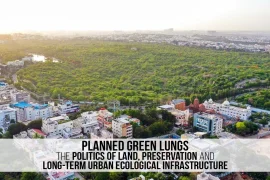
Landscapes must not be devoid of biodiversity. Vegetation and wildlife should not be patchy across regions; rather, they need to be an inclusive part of it. The level of designing space at a larger scale must involve thoughtful landscaping that collaborates with wildlife habitats, human or urban areas, with varied native vegetation, and explores natural harmony.
Reference:
Intergovernmental Science-Policy Platform on Biodiversity and Ecosystem Services (2019) Global assessment report on biodiversity and ecosystem services. Bonn: IPBES.
Millennium Ecosystem Assessment (2005) Ecosystems and human well-being: Synthesis. Washington, DC: Island Press.
E.O. Wilson (1988) Biodiversity. Washington, DC: National Academy Press.
Intergovernmental Panel on Climate Change (2021) Climate Change 2021: The Physical Science Basis. Cambridge: Cambridge University Press.
Food and Agriculture Organization (2020) Global Forest Resources Assessment 2020. Rome: FAO.
Lal, Rattan (2004) ‘Soil carbon sequestration impacts on global climate change and food security’, Science, 304(5677), pp. 1623–1627.
Food and Agriculture Organization (2015) Agroforestry for landscape restoration. Rome: FAO.
Jose, Shibu (2009) ‘Agroforestry for ecosystem services and environmental benefits’, Agroforestry Systems, 76(1), pp. 1–10.
World Bank (2018) Growing greener: Agriculture and climate change. Washington, DC: World Bank.
Ian McHarg (1969) Design with Nature. New York: Natural History Press.