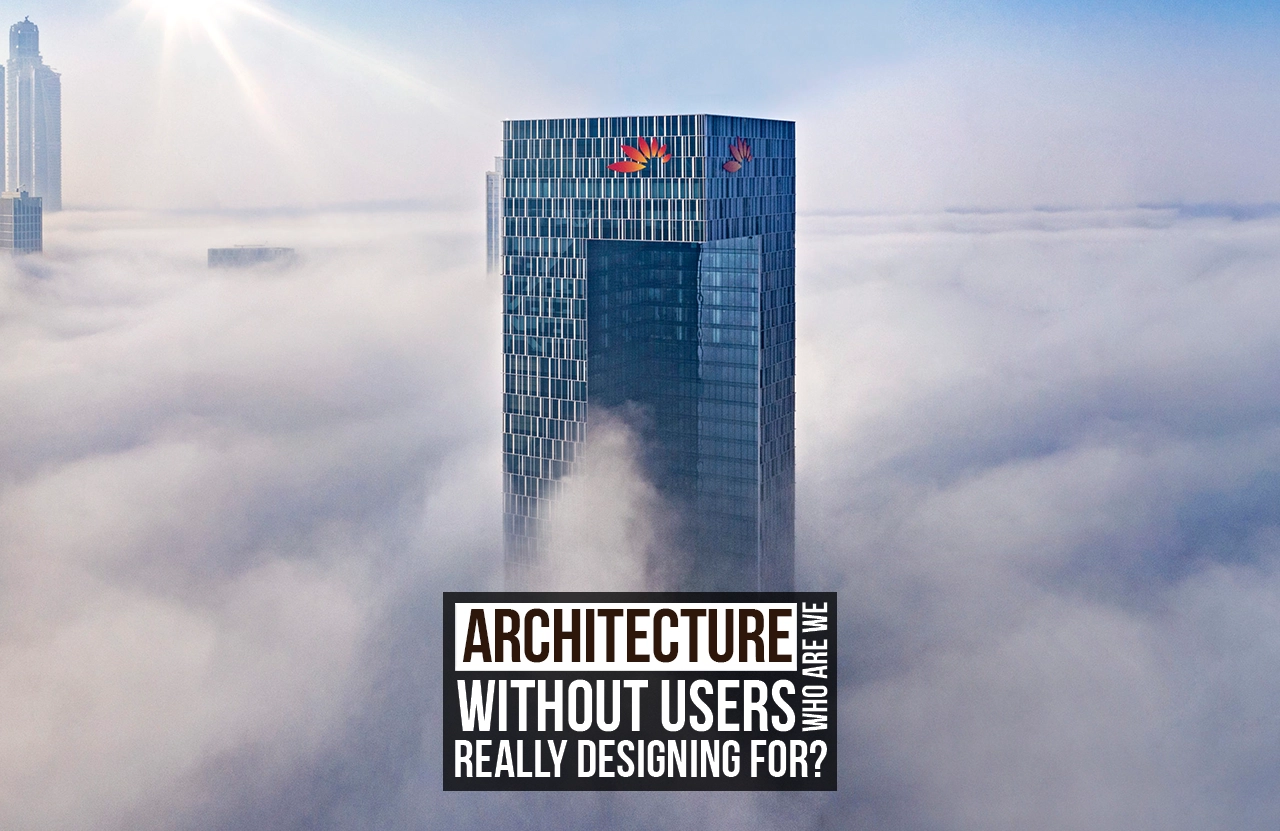
Architecture frequently claims to be “user-centered,” yet the reality of contemporary practice suggests otherwise. While design briefs emphasize comfort, accessibility, and experience, many buildings are shaped more by economic pressures, aesthetics, and regulatory frameworks than by the needs of people who actually live in them.
In rapidly developing urban cities such as Dubai, Mumbai, London, and New York, this contradiction becomes particularly visible. Buildings are delivered as polished objects, technically advanced and visually flashy, yet they often fail to respond to everyday patterns of use. The gap between design intention and lived experience is not incidental; it is embedded within the systems that produce architecture.
This raises a question on how architects design: who are we really designing for?
The Commissioning Problem: Clients and the Missing Occupant
What moves people furthest from real influence begins right in how projects get approved. Usually, the one paying for construction isn’t the one who will live there. Developers design for market appeal, corporations for efficiency, and governments for political visibility.
As Gutman (1988) argues, architects operate within a system where the client’s priorities rarely align with those of the end user. Because of this misalignment, features that market well, such as finishes and branding, often take precedence over aspects that improve everyday life, including ventilation, storage, and acoustic comfort (Imrie, 2003).
Post-occupancy studies further highlight this issue. Buildings are rarely evaluated after completion, and user feedback is seldom reintegrated into future projects (Preiser and Vischer, 2005). As a result, architecture lacks a feedback loop, limiting its ability to learn from real use.
The Critical Apparatus Designing for the Image
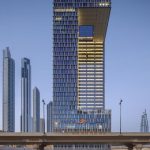
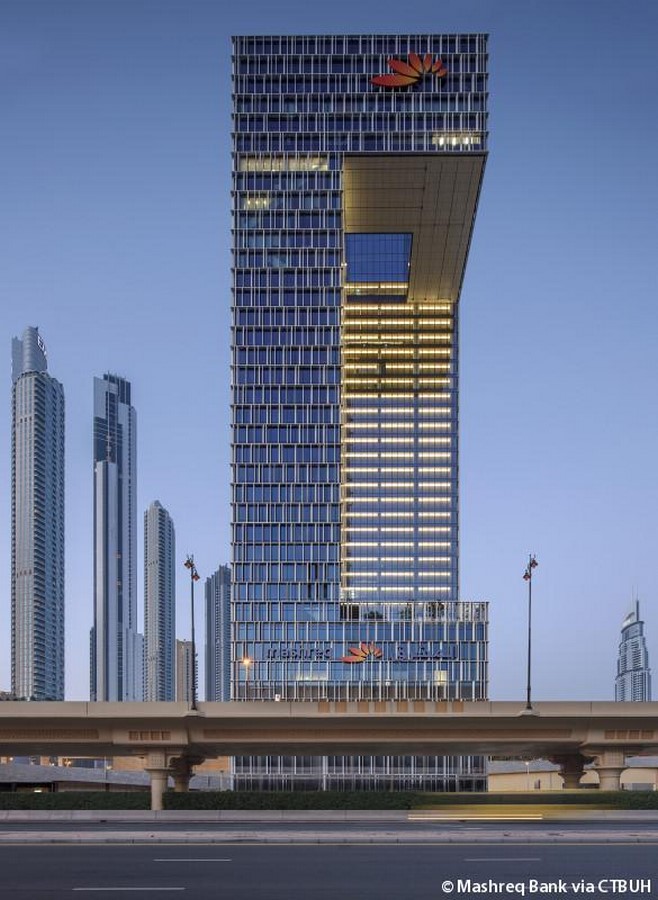
Beyond commissioning, architectural culture itself reinforces this disconnect. Recognition systems, awards, publications, and exhibitions prioritize visual and conceptual innovation over function and user satisfaction. (See fig.1)
As Cuff (1991) says, for architects to judge worth among themselves. Some structures serve people quietly without praise. Others catch attention through bold looks, rising fast in status.
Photography plays a key role in this dynamic. Through selective shots, structures appear untouched by people, upkeep, or change (Sudjic, 2005). Because of how they’re shown, what people think, and how experts decide, shifts slowly. Design choices start chasing visuals instead of real daily use. What you see ends up guiding what gets built. Picture wins out over function, so aesthetics starts calling the shots. When appearance pulls ahead, space must follow.
Architects and Their Professional Beliefs
One reason lies in how architects are still seen as lone inventors. Tied closely to art through time, the field grew up celebrating personal vision and fresh ideas (Saint, 1983).
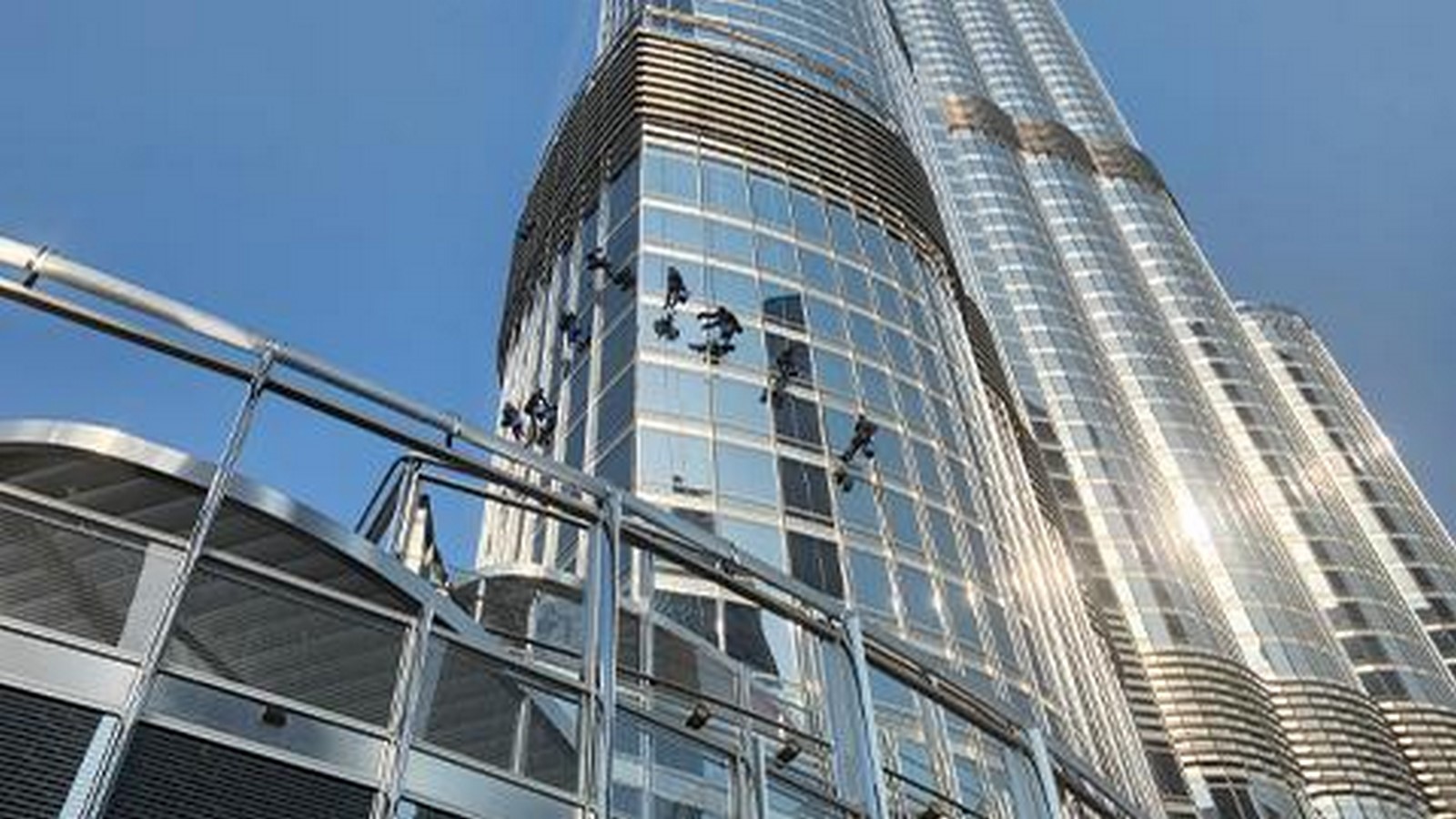
Buildings like these tend to value clear ideas more than flexibility. Though praised by critics, they sometimes fail when faced with changing demands from people who use them. As shown in Fig. 2, maintenance workers are suspended by rope systems to clean the façade, revealing how design decisions can overlook operational realities and place disproportionate risk on those who sustain the building.
Buildings start to shout when star architects take center stage. According to Sklair (2017), appealing designs act like trophies of wealth, putting the architect’s name above function. Here, form grabs attention while people inside fade into the background.
The Property Market and Buildings as Assets
Skyscrapers today serve less as homes and more as assets traded like stocks. Value climbs not because people love living there, but due to zip codes and investor trends pulling prices up. Location matters most; comfort rarely counts.
Most times, quiet spaces get ignored because they don’t attract attention on listings. Buildings adapt poorly over time since quick appeal matters more than lasting design. What helps people live better often lacks financial reward, so it rarely gets built. Aesthetics beat function when profits shape decisions.
Gentrification efforts tend to highlight profit and appearance, while brushing aside what current residents require (Minton, 2009). Because of this shift, buildings start speaking more about money than about people’s everyday lives.
Design That Overlooks Real Life
The consequences of excluding users are rarely immediate but become visible over time, as occupants begin to adapt spaces to meet their own needs. Circulation routes are informally redefined, unused areas are repurposed, and environmental conditions are adjusted through improvised interventions.
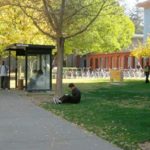
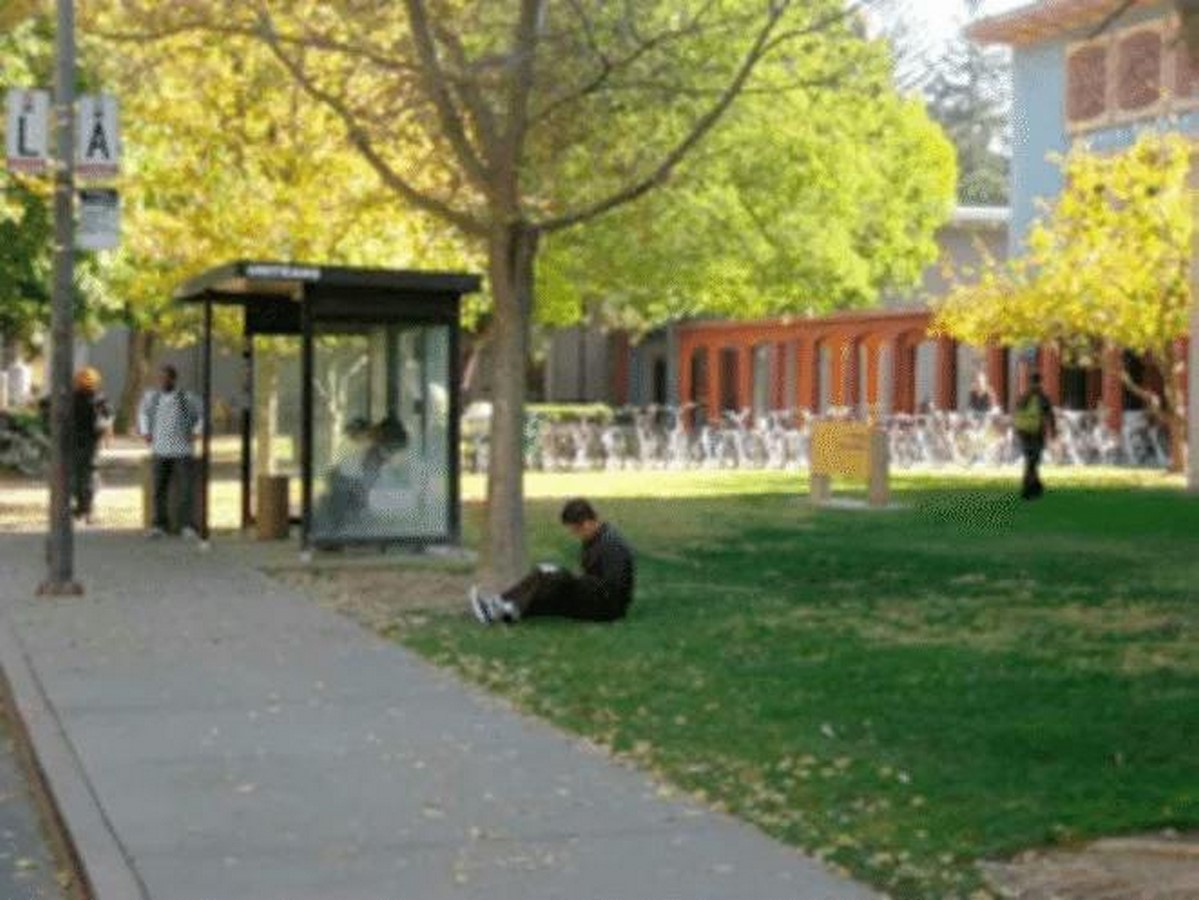
In many urban cities, people are frequently observed occupying edges, steps, or shaded thresholds rather than designated seating areas, as shown in fig 4. What appears as informal or unintended use is often a direct response to spatial shortcomings. Users pull toward comfort, shade, and accessibility even when these qualities are absent from the original design.
These everyday adaptations reveal a fundamental gap between design intention and lived reality: spaces function not as they are designed, but as they are used.
Post-occupancy evaluation research consistently identifies this mismatch, demonstrating that buildings frequently underperform once occupied (Bordass and Leaman, 2005; Leaman et al., 2010). In this sense, design adapts as users reshape spaces through daily use.
Towards an Architecture Focused on Users
Fixing this isn’t about quick fixes but shifting how things are built.
Post-occupancy evaluation offers a key tool, allowing architects to understand how buildings perform in real conditions. Studies have shown that integrating user feedback leads to improved design outcomes and long-term efficiency (Hay et al., 2017).
When people help shape designs, choices fit their needs better, spaces grow flexible, and react quicker (Sanoff, 2000).
Studies into air quality inside buildings show how much people matter when designing spaces. Ventilation, temperature control, and lights shape well-being, work output, and even vibes (Allen et al., 2016; Kim and de Dear, 2012; Frontczak et al., 2012).
Turns out, making things work well for people isn’t just fair, it makes them work.
Still, architecture insists it works for people, even when those people get left out of how things are made. Shaped by money demands, field norms, plus what looks good on paper, buildings start favoring appearance over actual use. Spaces begin acting more like photos than lived-in spots, despite claims they serve daily life.
What if design focused less on looks, more on living? Change starts when architects stop guessing what people need. Proof matters now, not just ideas. Working together with users shapes better outcomes. Time reveals whether solutions work. Experience counts more than image every time.
For now, buildings carry a quiet flaw, looking finished while waiting for people to make them work.
Reference List:
Allen, J.G. et al. (2016) ‘Associations of cognitive function with indoor environmental quality’, Environmental Health Perspectives. Available at: https://dash.harvard.edu/server/api/core/bitstreams/6b1b9a30-f291-40f6-94be-990b77a1ff0d/content. [Accessed on 11th April 2026]
Bordass, B. and Leaman, A. (2005) ‘Making feedback and post-occupancy evaluation routine’, Building Research & Information. Available at: https://doi.org/10.1080/09613210500162016. [Accessed on 11th April 2026]
Cuff, D. (1991). Architecture: The Story of Practice. Available at: https://www.scribd.com/document/1000695293/Architecture-the-Story-of-Practice-Dana-Cuff [Accessed on 11th April 2026]
Fig.1 Contemporary Building. Source: Mashreq Bank (2020). Available at: https://www.skyscrapercenter.com/dubai/mashreq-bank-headquarters/15693 [Accessed on 12th April 2026]
Fig.2 Maintenance. Source Spider Access (2024). Available at: https://spider-access.com/burj-khalifa-high-level-cleaning/ [Accessed on 12th April 2026]
Fig.3Lack of Seating Space. Source: Francis M (2010). Available at: https://www.researchgate.net/figure/There-is-a-lack-of-seating-in-some-areas-of-campus-such-at-some-Unitrans-bus-stops_fig12_283326472 [Accessed on 12th April 2026]
Frontczak, M. et al. (2012) ‘Occupant satisfaction and building design’, Building and Environment, 50. Available at: https://backend.orbit.dtu.dk/ws/files/130111252/HB_2012_Frontczak_Wargocki_et_al_full_paper_vs._5_final_1_MODIFIED.pdf. [Accessed on 11th April 2026]
Glaeser, E. (2011). Triumph of the City. London: Macmillan. Available at: https://www.jstor.org/stable/26162585?seq=4. [Accessed on 12th April 2026]
Gutman, R. (1988). Architectural Practice: A Critical View. New York: Available at: https://www.academia.edu/12125622/Architecture_from_the_outside_in. [Accessed on 12th April 2026]
Hay, R., Bradbury, S. and Samuel, F. (2017) ‘Pathways to post-occupancy evaluation’, RIBA Journal. Available at: https://www.ribaj.com [Accessed on 11th April 2026]
Imrie, R. (2003) ‘Architects’ conceptions of the human body’, Environment and Planning D. Available at:
https://www.researchgate.net/publication/260049643_Architects’_Conceptions_of_the_Human_Body/link/5f0db2e4458515129998c28b/download?_tp=eyJjb250ZXh0Ijp7ImZpcnN0UGFnZSI6InB1YmxpY2F0aW9uIiwicGFnZSI6InB1YmxpY2F0aW9uIn19. [Accessed on 11th April 2026]
Kim, J. and de Dear, R. (2012) ‘Nonlinear relationships between IEQ and satisfaction’, Building and Environment. Available at: https://www.researchgate.net/publication/257171760_Nonlinear_relationships_between_individual_IEQ_factors_and_overall_workspace_satisfaction. [Accessed on 12th April 2026]
Leaman, A. et al. (2010) ‘Building evaluation: practice and principles’, Building Research & Information. Available at: https://doi.org/10.1080/09613218.2010.495217 [Accessed on 12th April 2026]
Minton, A. (2009). Ground Control. London: Penguin. [Accessed on 12th April 2026]
Sanoff, H. (2000) . Community Participation Methods in Design and Planning. New York: Wiley. Available at: https://www.academia.edu/30915765/Community_Participation_Methods_in_Design_and_Planning_H_Sanoff [Accessed on 12th April 2026]
Saint, A. (1983). The Image of the Architect. Yale University Press. [Accessed on 12th April 2026]
Sklair, L. (2017). The Icon Project. Available at: https://www.academia.edu/62938138/Leslie_Sklair_2017_The_Icon_Project_Architecture_Cities_and_Capitalist_Globalization_New_York_Oxford_University_Press. [Accessed on 12th April 2026]
Sudjic, D. (2005) The Edifice Complex.Allen Lane. Available at: https://books.google.ae/books?hl=en&lr=&id=dkMWqPgjvFIC&oi=fnd&pg=PT4&dq=Sudjic,+D.+(2005)+The+Edifice+Complex&ots=w_bs_rq1cU&sig=e2OHUyTW3QCKDQLDS_BUIpalQUQ&redir_esc=y#v=onepage&q=Sudjic%2C%20D.%20(2005)%20The%20Edifice%20Complex&f=false. [Accessed on 12th April 2026]
Preiser, W.F.E. and Vischer, J.C. (2005). Assessing Building Performance. Elsevier. https://www.academia.edu/10407279/ASSESSING_BUILDING_PERFORMANCE_ITS_EVOLUTION_FROM_POST_OCCUPANCY_EVALUATION. [Accessed on 12th April 2026]
Fig 1: Ghosh. P (2020) Chandigarh- A City for the People. Available at: https://khalsachronicle.substack.com/p/le-corbusiers-chandigarh (Accessed on 15 March 2026)
Fig 2: Noir, (1986) The Berlin Wall. Available at: https://commons.wikimedia.org/w/index.php?curid=1402275 (Accessed on 15 March 2026)
Fig 3: Archdaily (2023) Esplanada dos Ministérios – Brasília,(Year 1960) Available at: https://www.archdaily.com/995055/brasilia-architecture-guide-16-projects-to-understand-the-scale-of-the-brazilian-capital (Accessed on 15 March 2026)
Foucault, M. (1977) Discipline and Punish: The Birth of the Prison. Available at: https://monoskop.org/images/4/43/Foucault_Michel_Discipline_and_Punish_The_Birth_of_the_Prison_1977_1995.pdf (Accessed: 12 March 2026).
Holston, J. (1989) The Modernist City: An Anthropological Critique of Brasília. Available at: https://www.researchgate.net/publication/264754219_The_Modernist_City_Holston (Accessed: 12 March 2026).
Prakash, V. (2002). Chandigarh’s Le Corbusier: The Struggle for Modernity in Postcolonial India. Seattle: University of Washington Press. Uploaded by Tsuki Koon Nov 05, 2021 Available at: https://www.scribd.com/document/537471791/Chandigarhs-Le-Corbusier-by-Vikramaditya-Prakash-Z-lib-org (Accessed: 12 March 2026).
Till, J. (2005) ‘The Negotiation of Hope’, in Architecture and Participation. London: Spon Press. Available at: https://jeremytill.s3.amazonaws.com/uploads/post/attachment/19/2005_The_Negotiation_of_Hope.pdf (Accessed: 13 March 2026).
Vale, L. (2008) . Architecture, Power and National Identity. Available at: https://sites.dwrl.utexas.edu/visualrhetoric/wp-content/uploads/sites/25/2016/03/Vale-Capitol-and-Capital.pdf (Accessed: 13 March 2026).
Zariwala, A (2026) “To what extent does the 1947 Partition’s sociopolitical and cultural consequences affect India and Pakistan’s urban structure, social cohesion, and architectural identities”? Available at: https://docs.google.com/document/d/1-8Yu7LZUGAqyVBdKxeXpluGtXeovZomH/edit?usp=share_link&ouid=106902731231622980474&rtpof=true&sd=true (Accessed: 13 March 2026).