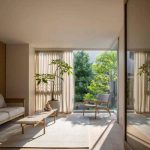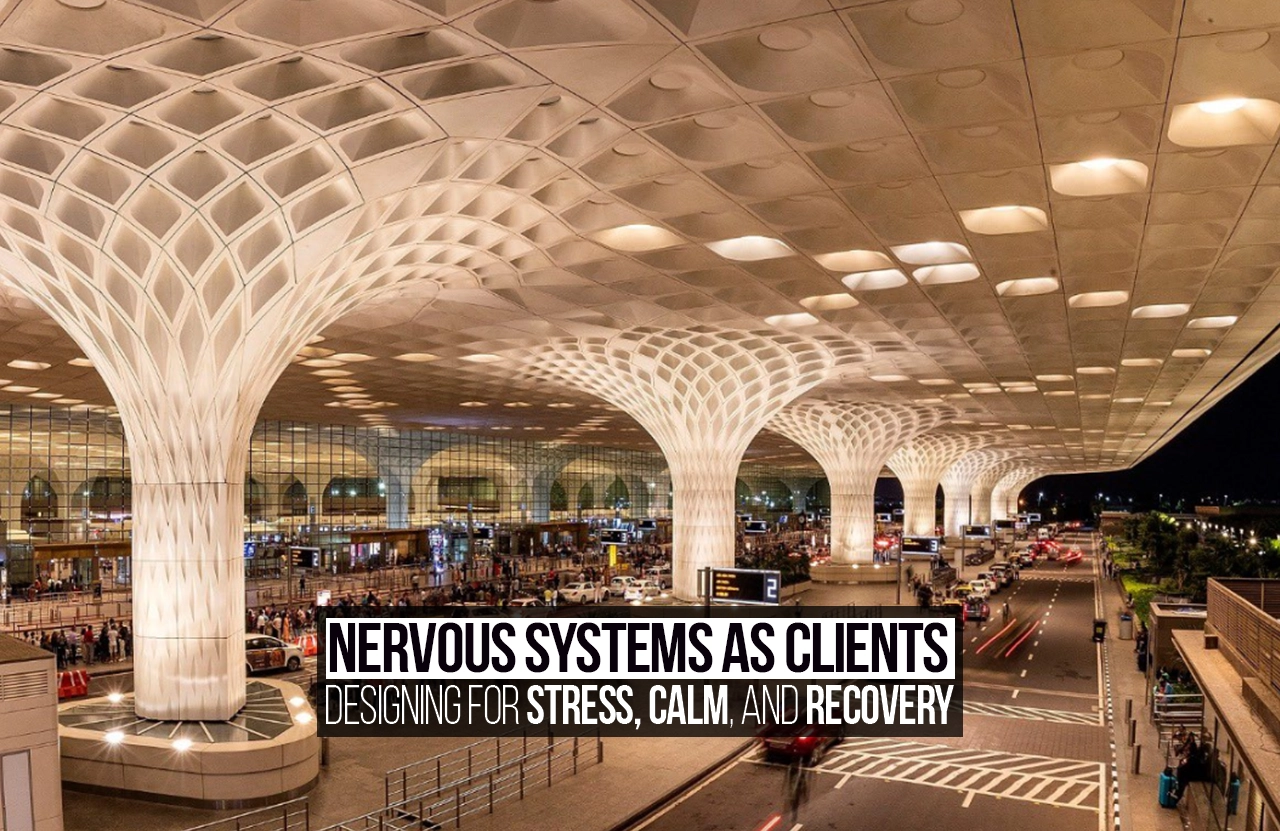
Today, we live in a deeply unsettling world wherein every other person is suffering from various forms of chronic stress and anxiety. Someone might be fearing for the security of their job from AI and its advancements, while another would be struggling with low wages and financial issues. Everyday phenomena like congestion, noise, crowding, and constant digital stimulation elevate stress and reduce cognitive capacity.
During such times, it is empirical that we, as architects, focus on what is in our hands to fight this grave global scenario. If architecture has the power to shape us, it becomes our duty as architects to step up and create designs for our clients which are not only functional or aesthetic but also contribute to their mental well-being and recovery from the urban pressures which they face on a daily basis.
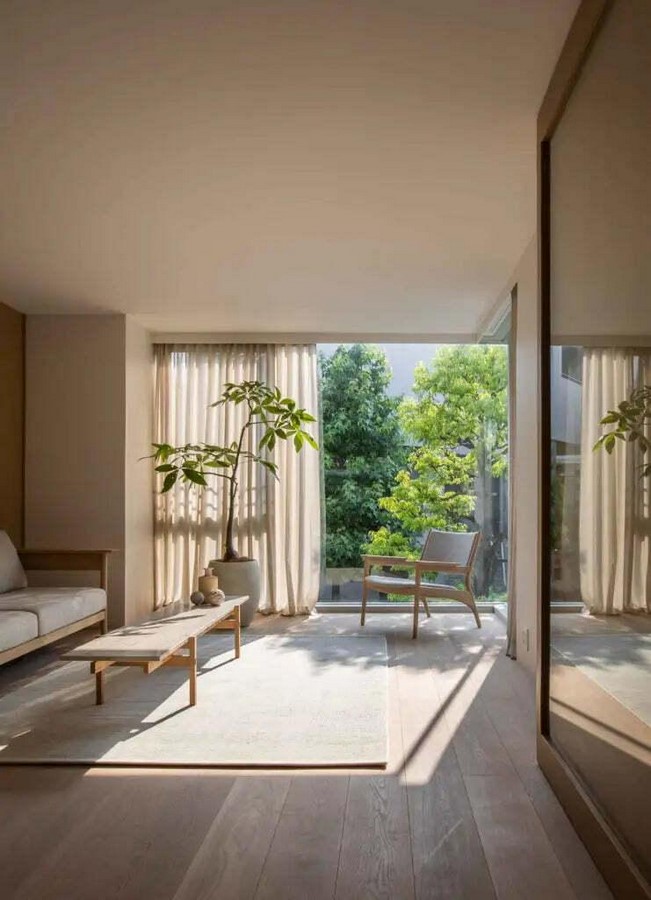
For a long time, the relation between architecture and mental well-being has been studied, and homes have been thought of, at least ideally, as sanctuaries for peace offering not just shelter but even mental and physical recovery from the day’s work. The presence of a place which a man can call ‘home’ enables him to fight his battles throughout his day, so he can return to his home at night to rest and recuperate and then be ready to face the grunt again the next day. In this sense, architects must understand their clients’ daily routines, habits, struggles, and in essence their nervous system, which would enable them to design homes for their clients which are accommodating of their needs and help them relax and recover well.
The Science behind the Restorative Nature of Spaces.
The nervous system in the human body is a complex unit of organs and nerves running in smooth co-ordination to maintain a balance of reaction to stimulus that the outer world provides to the body. To provide a brief overview, the sympathetic nervous system is responsible for producing hormones like adrenaline and cortisol in our body, which assist the body in stressful conditions, giving it the power to ‘fight or flight’. The parasympathetic nervous system, on the other hand, is responsible for the production of nor-adrenaline hormone which assists the body in a relaxed state of mind, helping it focus on recovery, digestion and other such activities.
Theories by Roger Ulrich (Stress Reduction Theory) and Rachel Kaplan (Attention Restoration Theory) have formed the scientific base proving the restorative function of spaces and architecture because they have shown how views of nature, ample daylight, neutral colours, soft gently flowing elements etcetra, accelerate recovery in patients by nearly 10%, by acting directly on the stimulation of the parasympathetic nervous system triggering rest and recovery.
For architects, these should translate into spatial strategies like planning of built masses such that they revolve around natural elements and bring as much nature and light into the building as possible, including elements which are soothing to the senses in the interiors, and making informed use of colours.
Real-world applications
Over the past two decades or so, healthcare architecture has seen great evolution with the integration of evidence-based design (EBD). It prioritizes environmental factors and spatial quality controls in the design of hospitals or care centres, and even office and workspaces where high intensity of work is expected. EBD suggests acoustic treatment to patient rooms for protection from harsh exterior sounds, openings of these rooms to frame natural elements like trees and flowing water, single patient rooms to avoid any discomfort or fear arising from the company of strangers and many more. Nowadays, architects who are given the freedom often avoid rigid institutional layouts for healthcare facilities and workplaces and instead, adopt plans wherein the built mass curves around anchoring natural elements like trees or courtyards, creating softer spatial sequences and flow of spaces which reduce anxiety and promotes porosity in the built to let in as much nature as possible. These design principles could also be applied to educational campuses, making schools and colleges more friendly and relaxing for the students and teachers working there.
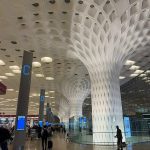
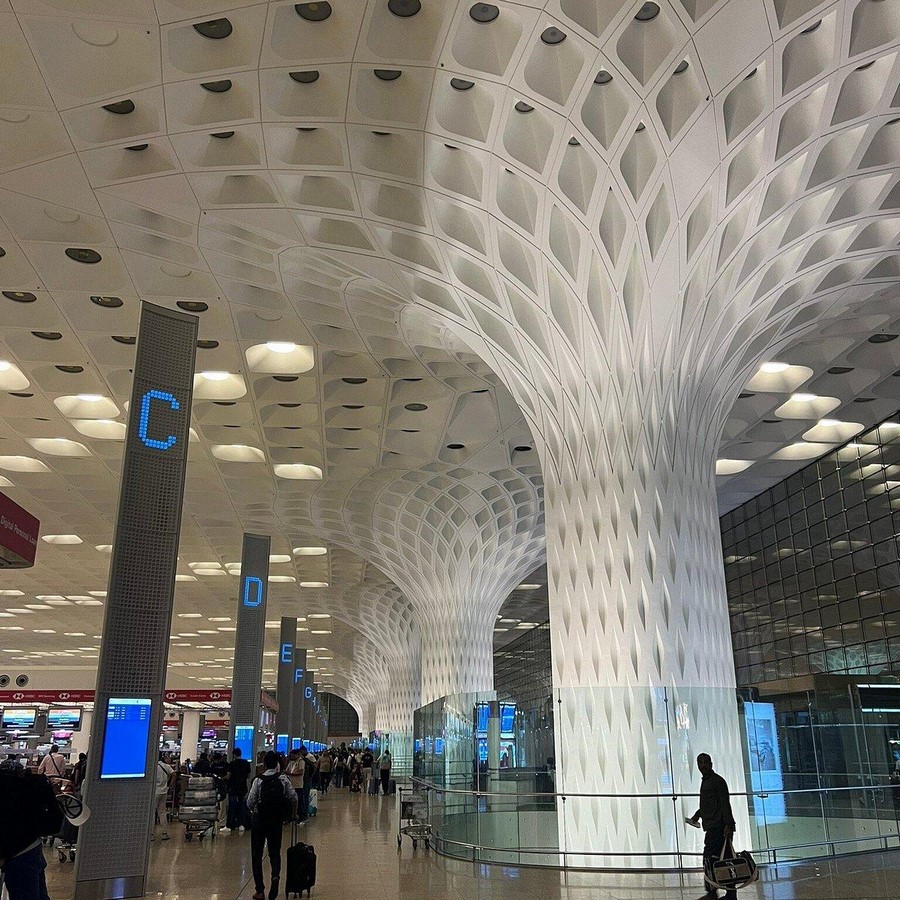
A key strategy in designing for nervous systems is biophilic design, popularized by scholars like Stephen Kellert and Elizabeth Calabrese. ‘Biophilia’ describes humanity’s innate affinity for nature and natural processes. In architectural terms, biophilic design could take both direct and indirect forms. Direct experiences include direct access to natural elements like gardens, water features and daylight in design. Indirect forms of this design include materials that imitate natural materials found in nature, patterns which are found in nature, or even spatial arrangement which is organic and evokes a feeling of a natural environment. A great example for this could be the famous design of the Mumbai T2 terminal airport, wherein a pattern has been used, which indirectly resembles the shape of the feather of a peacock and they have been rendered pure white. The design all-together evokes calm and ease due to its neutral colour and repetitive biophilic pattern.
Further, if we talk about the dense urban settlements, architects can translate these principles into real life solutions like vertical gardens, shaded terraces, skylights, artificial courts and landscaped spaces, and optimizing ventilation and light via the best possible orientation of openings.
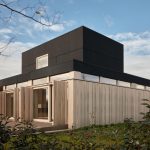
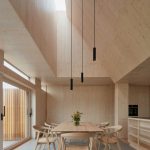
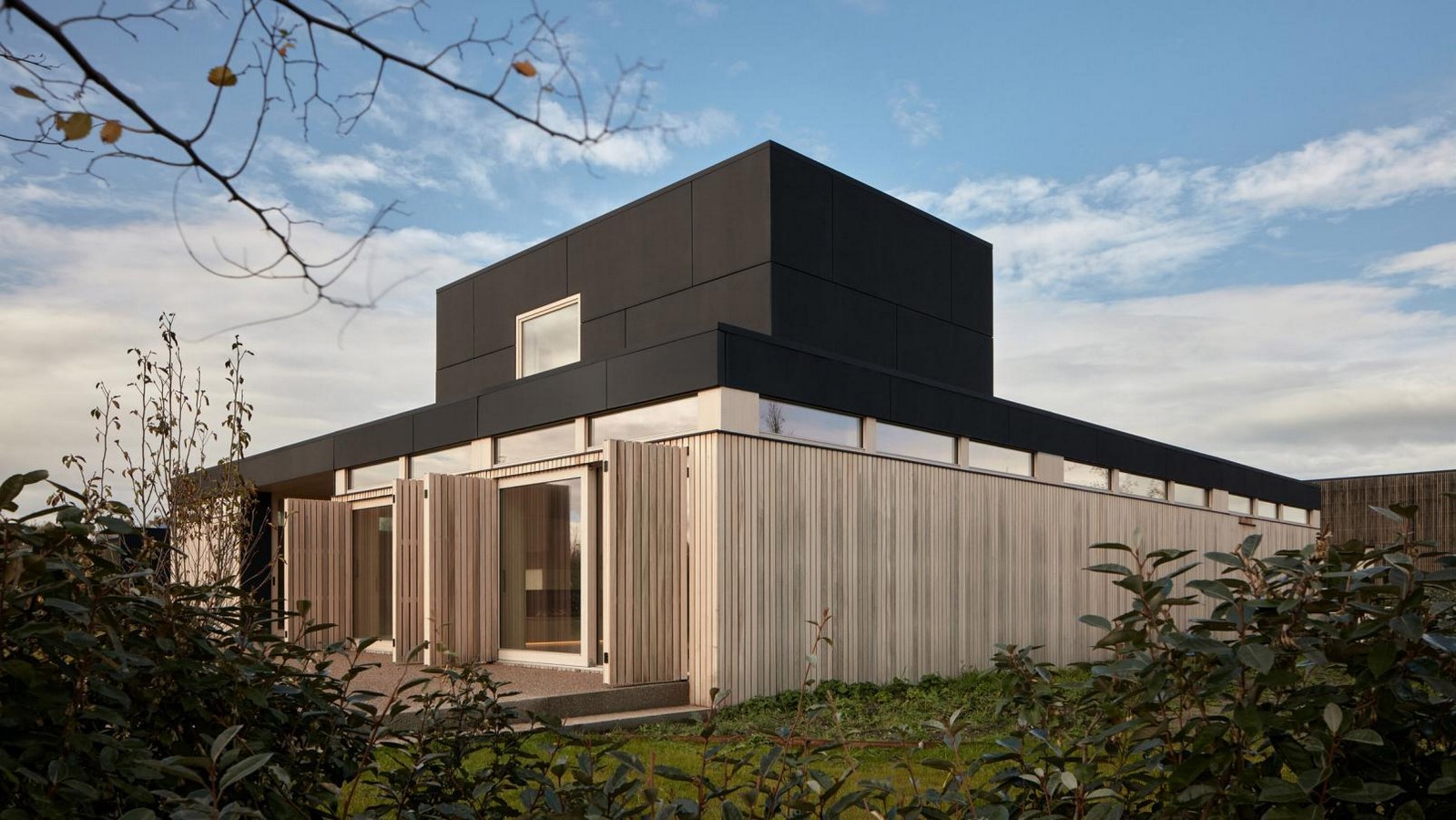
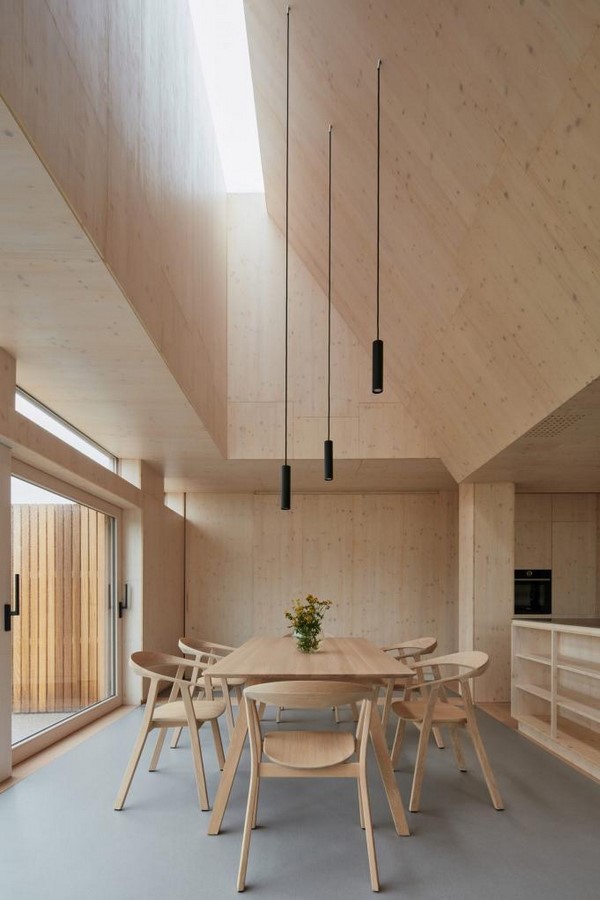
The Warm Nest Cancer Care Centre, in Belgium, is a compelling example to discuss in this scenario. It is designed by Archekta and Ark-Shelter, and consists of modular, wood-lined spaces arranged around a series of courts. Rather than presenting itself as a healthcare institution, the building resembles a sequence of intimate pavilions connected through gardens and sun-lit circulation paths. Natural materials, skylights, and soft spatial transitions create an atmosphere that supports both privacy and social interaction. Patients can move between communal areas and quiet retreats depending on their emotional needs.
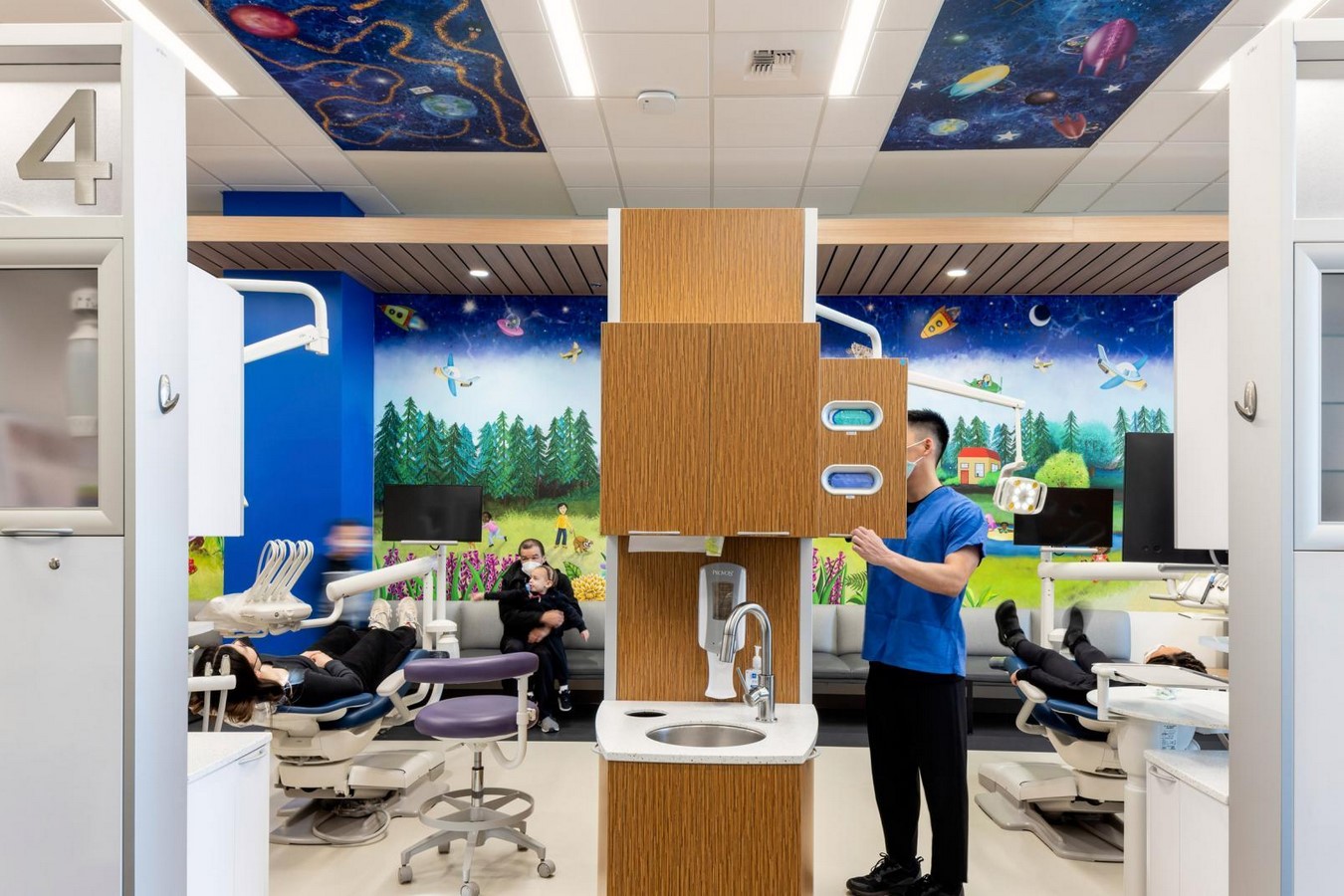
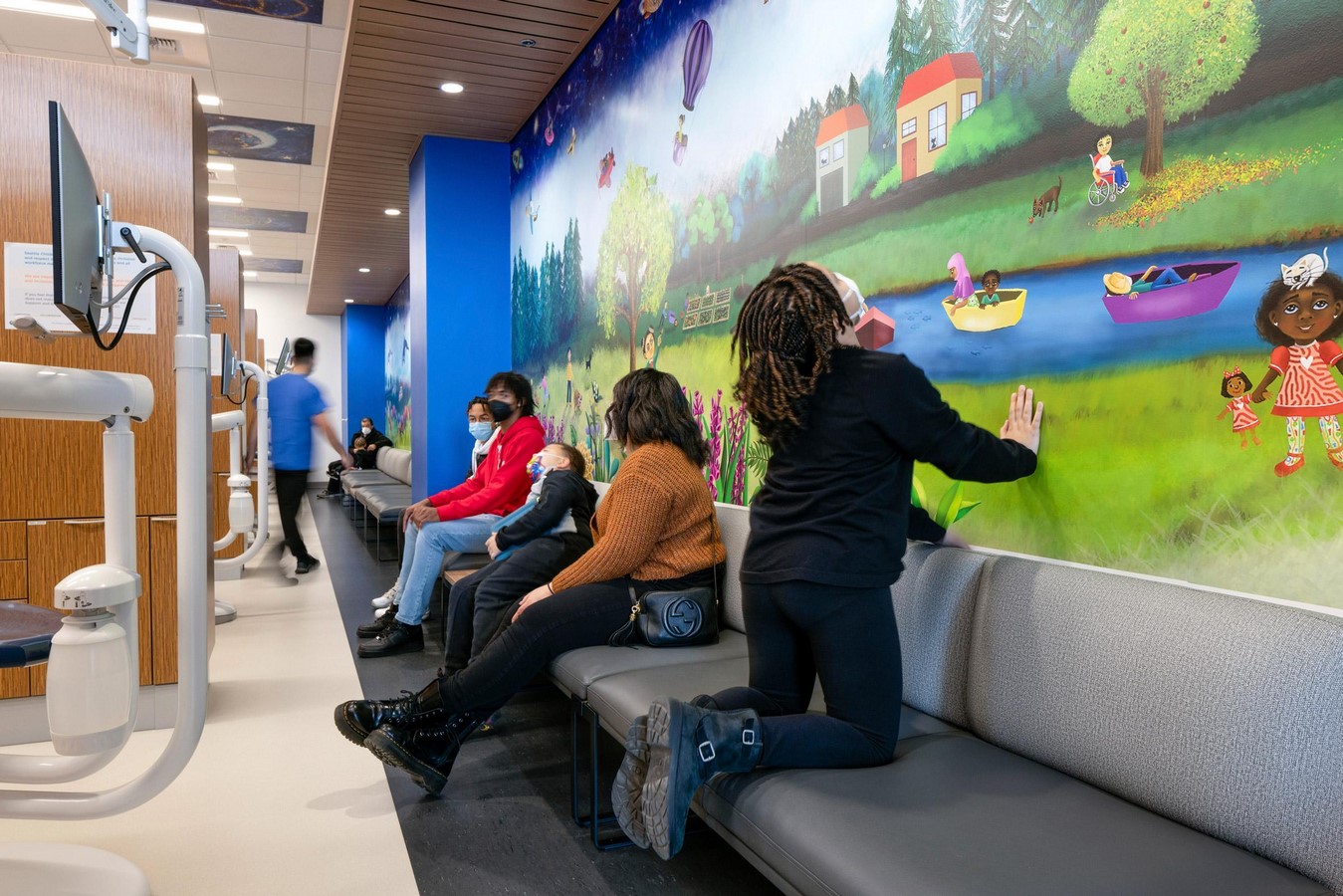
Similarly, the Odessa Brown Children’s Clinic in Seattle, designed by NBBJ, integrates murals, warm wood surfaces, and outdoor play spaces to reduce anxiety among young patients. The design acknowledges that emotional comfort is a critical component of pediatric healthcare. These projects move beyond functional efficiency towards environments that actively support psychological recovery.
The Urban Scale: Designing ‘Calm’ in Cities
Restorative architecture is not limited to individual buildings. At the scale of the city, urban design decisions can significantly influence the stress levels of citizens. Pedestrian- friendly streets, tree-lined boulevards, and accessible, daily gathering-friendly public parks provide moments of respite within the dense urban settlements. It is important for the people of the city to slow down and cherish spaces, interact socially and reconnect with nature, for their well-being. Even a shaded space, with ample seating, outside a good food spot can become an instant success in terms of being able to attract people to gather and interact. This is in essence a play with the nervous systems of groups of people. Waterfront plazas are another great way to create calm, soothing spaces where people can come to pause and relax. We all have seen live examples of this type of architecture. The Marine Drive and the Bandra Bandstand in Mumbai and the Sabarmati Riverfront in Ahmedabad could be prime examples of this. In this sense, the design of public spaces, when done with the right intention, can become a form of collective mental health infrastructure, boosting the overall health of the area and the people it serves.
All of this boils down to the conclusion that when architecture is practised with intent and care for the users for whom it is being proposed, it transforms into an act of greater good and fulfills purpose beyond just its functionality and aesthetic. It is important for the architects of the new generation to understand that designing for optimum light, ventilation, connection with nature, sustainability and comfort of the end user are all non-negotiable features of a good design and must be second nature to you.
Keep yourself in the position of the end user and ask this question before taking any design decision –
‘What would this space feel like to me and my body and senses?’
References:
- Kaplan & Kaplan; Environmental preference and restoration: (How) are they related? (2003) https://www.sciencedirect.com/science/article/abs/pii/S0272494402001111
- The Effectiveness of Biophilic Design as an Architectural Strategy (preprint). https://www.research-archive.org/index.php/rars/preprint/download/1401/2031/1760
- Ulrich, R. S. (implied foundational work in reviews); Architecture and mental health wellbeing versus mental ill-health: a systematic review (2023). https://pmc.ncbi.nlm.nih.gov/articles/PMC10479927/
- Archekta & Ark-shelter; Warm Nest cancer care centre (Dezeen, 2023). https://www.dezeen.com/2023/04/12/warm-nest-cancer-care-archekta-ark-shelter/
- Various projects; NBBJ architecture (Dezeen tag page). https://www.dezeen.com/tag/nbbj/