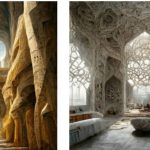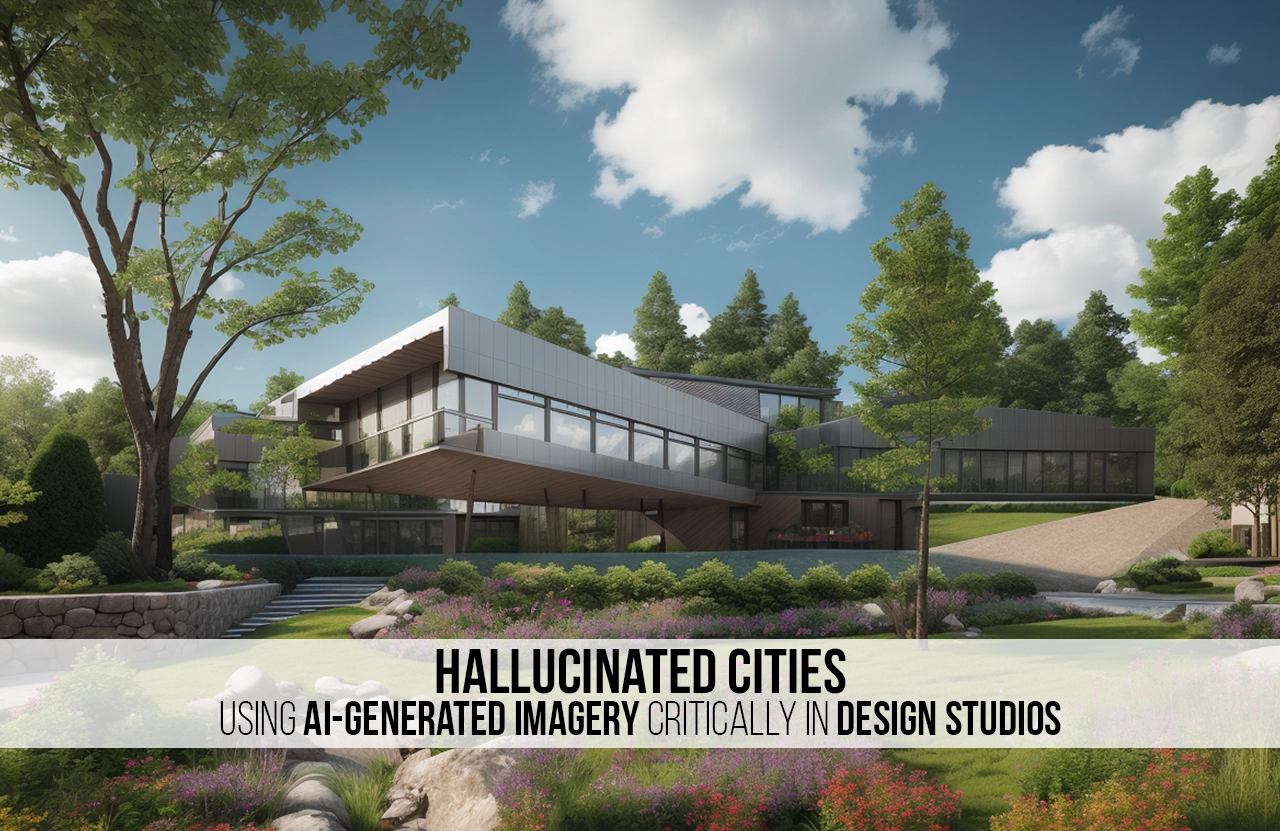
What if one’s surroundings could be reshaped in the blink of an eye? Colour combinations decided, technical details taken care of, and conceptual iterations finalised in a render. While all of this sounds like too much of an ordeal, Artificial intelligence is perceived to have this ability. Large Language Models (LLM) are those programs said to move hand in hand with the way an architect processes large volumes of data, and ideas reflecting values, cultures, intentions, etc., all in one built or planned environment. Hallucinated cities are a result of a pattern that artificial intelligence uses.
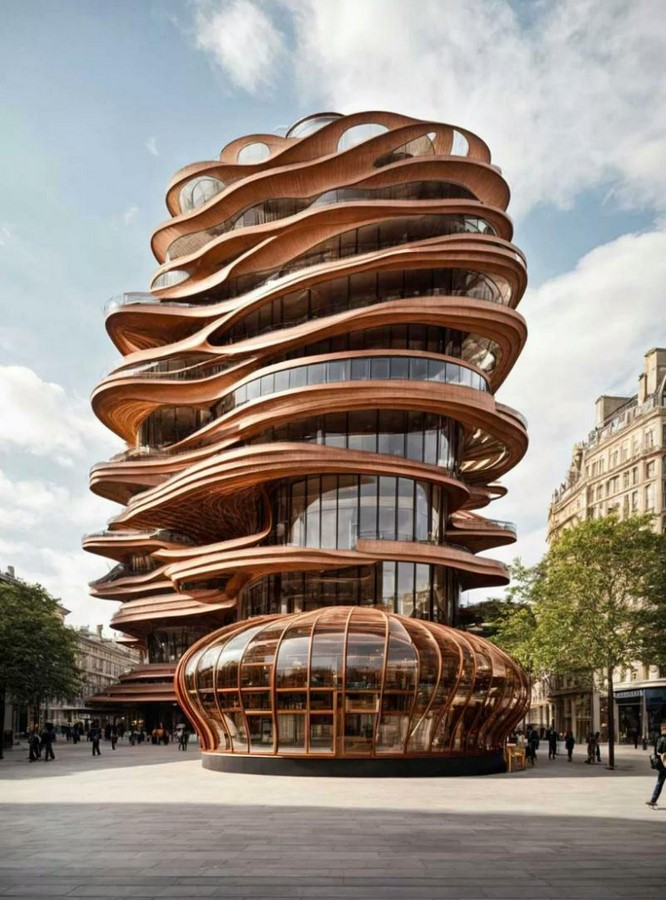
Take, for example, a child who’s taught the alphabet for the first time and the many arrangements of the letters to form multiple words. The child has also begun to memorise the words and recognise which syllables go together. But here’s the catch: the meaning of each word isn’t conveyed to them. Generative AI works similarly to that. Large language models function like machines that fill in the blanks of a sentence (one’s prompt). So it isn’t that the answer is essentially right all the time. It relies on statistics to make up the answer. In fact, this is where hallucinated cities can be the response to a prompt that you fed into the system, where the response sounds highly possible but isn’t accurate in a number of ways. (Laubheimer, 2025)
AI or Artificial Intelligence rendering uses machine learning algorithms to increase the speed at which photorealistic images and animations are generated. In reference to the human brain, neural networks are responsible for mimicking the pattern recognition process and understanding data. As these systems process large volumes of training data, the very same data will include information that could range from sarcastic remarks online, mistakes, opinions, mixed with a good amount of information too. But this cannot be accepted as highly authentic. (Tisi Mendes da Veiga and Longhi, 2024) (Betsky, 2026)
Finding Balance Between Design Choices and Resorting to Hallucinated Cities
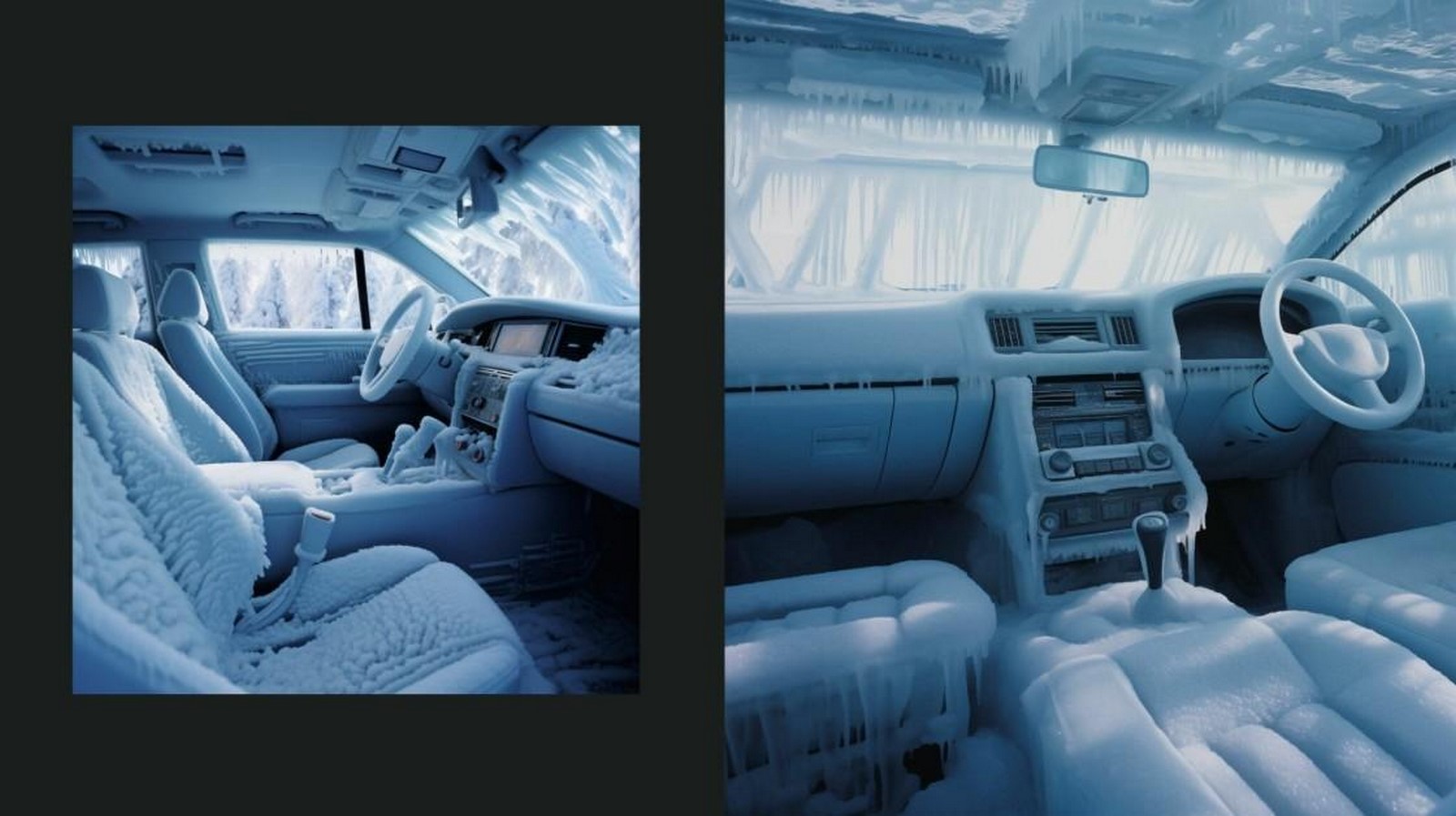
It’s important to understand that AI has its limits. So, while it may offer a range of possibilities for designing a space, product, or entire structure based on your prompt, understanding the practicality of the outcome also matters.
The ways in which design studios make use of AI are vast. For example:
1) Visualisation:
Generative AI is used as an ideation tool, generating a range of concepts that match the original brief. In a design studio that caters to a number of projects in hand.
2) Storyboarding:
Storyboarding in movie-making incorporates multiple styles of shots, narratives, camera angles, characters, and environments. In a fast-paced setting, generative AI saves time spent generating content and opens up opportunities for further discussion and refinement. (Holloway, 2024)
Why Human Intervention Matters to Avoiding Hallucinated Cities
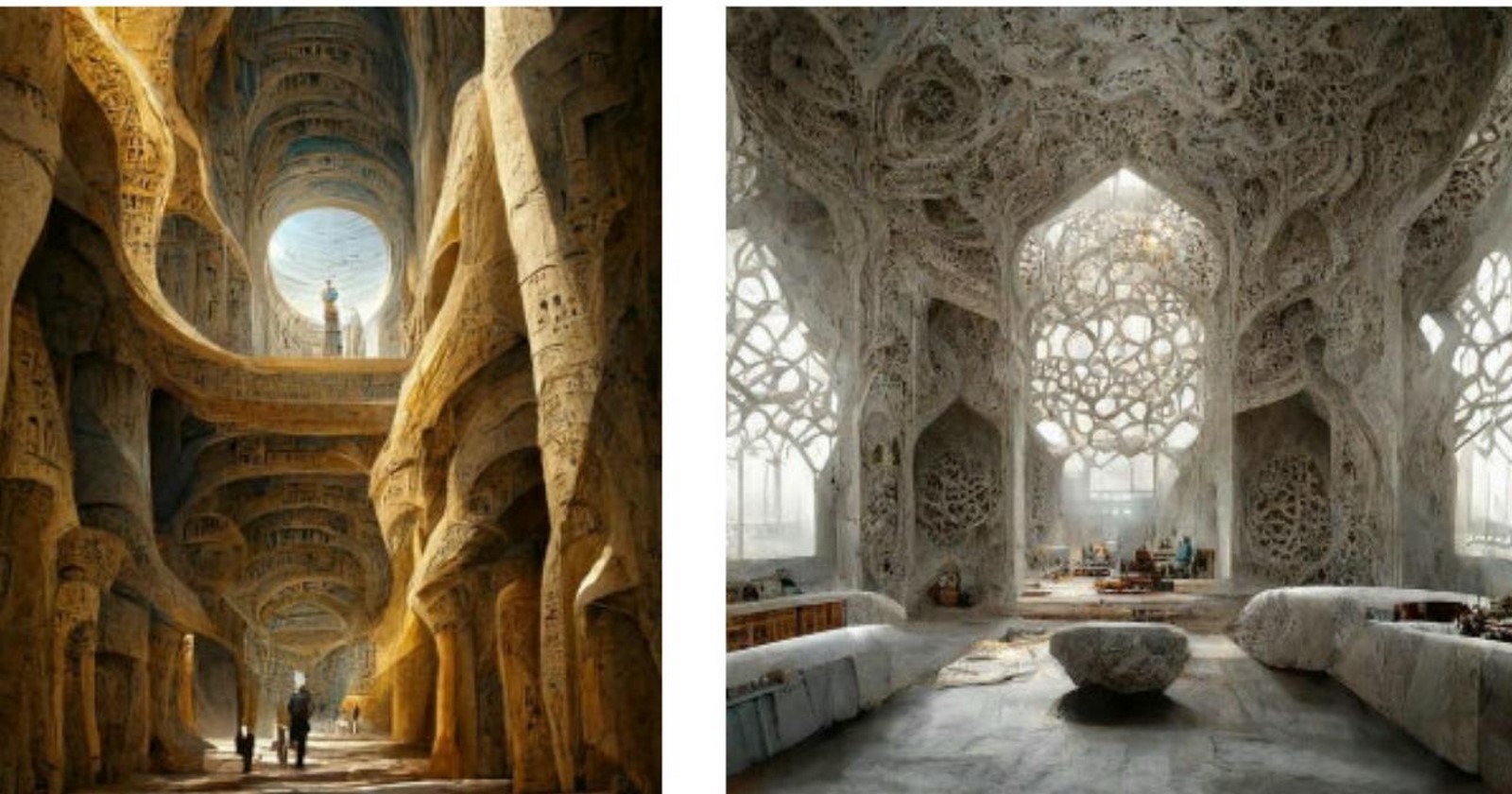
It is rightly said that AI opens up the range of possibilities for how a design can be carried out. But it isn’t entirely possible to replace the emotional factor involved in the human process of creation. It’s wonderful to look at AI as only a tool that can enhance, rather than replace. It helps to picture AI in the following way:
The design process is one filled with intense levels of ideation, discussion, technical details, and a balance between aesthetics and function, to name a few. Currently, generating images to support one’s design prompts serves as an ideation tool, allowing one to quickly scan a set of design concepts. But it can tend to fall short in producing imagery that captures the exact human eye for detail in traditional building methods or specific minute details, resulting in hallucinated cities or hallucinated forms that seem possible but are factually incorrect.
Though AI tools provide imagery that may seem consistent with each element, they can also include incorrect information in hallucinatory forms. While they offer only the tip of the iceberg in terms of possibilities, it’s important to cross-check the minute details before blindly using the generated output. Effectively putting a prompt into the system helps the generated image resemble your intent to the extent possible. A simple sentence may leave too much to chance for the system. Providing an apt context, overall concept, colour combinations, mood, composition, camera angle, subject, environment, and so many more will help it to input as much detail as it can read. (Magazine, 2025)
Illusion Behind Generative AI
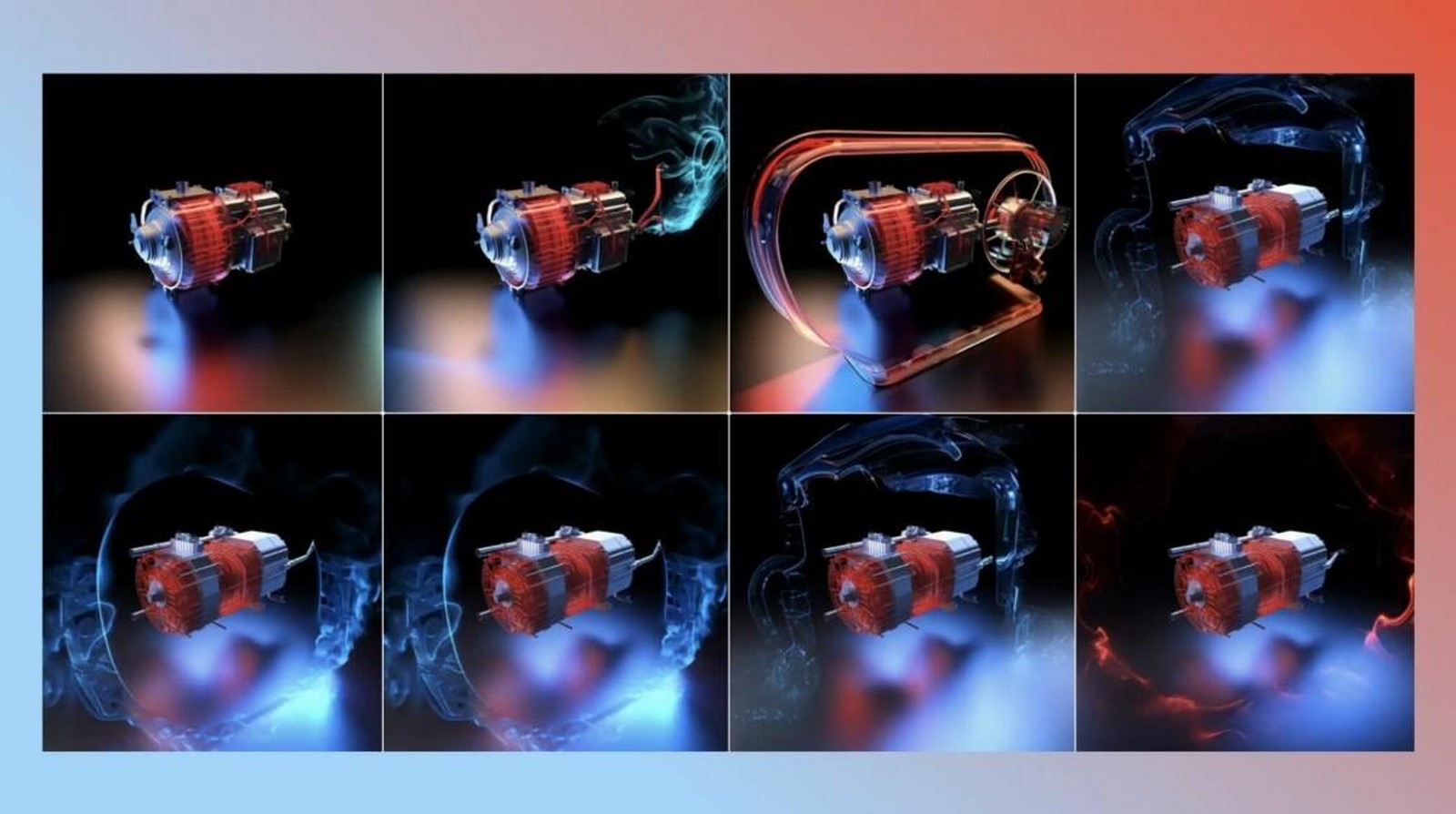
Image generators predict pixels. So, when it comes to the dimensions of spaces or the true size of furniture, it may resort to generating an image that looks plausible but might contain elements that are otherwise too large for a room, chairs placed amidst circulation spaces, or window placements that may be climatically inaccurate. (Magazine, 2025)
Moreover, the trial-and-error process of reiterating an image to project the designer’s mental image into the AI system can sometimes turn into a nightmare, leading to a time-consuming affair, whereas a designer might otherwise have direct control over the chosen element to be reiterated or repositioned. Thus, by analysing the stages at which AI tools can be used in the design process, these moments can be avoided, facilitating a smooth balance between human input and artificial intelligence. (Eloy, 2024)
Artificial intelligence image generation has certainly begun to reshape productivity, strategies, etc. However, it is very important to look beyond the visual appeal of the design image it produces and to assess whether its practicality is taken into account or can be further refined to meet those needs as well. As noted earlier, it can definitely be used to enhance a design while ensuring the prompt remains as detailed and thorough as possible.
- Articles
Citations for Journal Articles accessed on a website or database:
Tisi Mendes da Veiga, B. and Longhi, F. (2024). Assessing the use of AI-generated images in architecture: An experience with an architectural firm. SIGraDi 2024 Biodigital Intelligent Systems, [online] (10.52842/conf.sigradi.2024.1319). doi:https://doi.org/10.52842/conf.sigradi.2024.1319.
Yu, W.F. (2025). AI as a co-creator and a design material: Transforming the design process. Design Studies, 97(101303), pp.101303–101303. doi:https://doi.org/10.1016/j.destud.2025.101303.
- Online sources
Citations for websites:
Laubheimer, P. (2025). AI Hallucinations: What Designers Need to Know. [online] Nielsen Norman Group. Available at: https://www.nngroup.com/articles/ai-hallucinations/.
Admin (2023). AI Image Generators: Their Potential and Impact in Creative Work – Synapsys. [online] Synapsys. Available at: https://www.synapsys.co.nz/ai-image-generators-their-potential-and-controversies-in-creative-work/.
Betsky, A. (2026). When Architecture Starts Hallucinating. [online] Architect Magazine. Available at: https://www.architectmagazine.com/technology/when-architecture-starts-hallucinating/ [Accessed 12 Mar. 2026].
Booth, B., Donohew, J., Wlezien, C. and Wu, W. (2024). Generative AI fuels creative physical product design but is no magic wand. [online] McKinsey & Company. Available at: https://www.mckinsey.com/capabilities/tech-and-ai/our-insights/generative-ai-fuels-creative-physical-product-design-but-is-no-magic-wand.
Eloy, R. (2024). How AI rendering is revolutionizing architecture design. [online] Chaos.com. Available at: https://blog.chaos.com/how-ai-rendering-is-revolutionizing-architecture-design.
Holloway, L. (2024). How design agencies are using AI. [online] Rawww. Available at: https://rawww.com/how-design-agencies-are-using-ai/ [Accessed 12 Mar. 2026].
Imersian (2026). AI Image Generation Looks Incredible. But It Doesn’t Actually Help You Furnish a Room. [online] Medium. Available at: https://medium.com/imersian/ai-image-generation-looks-incredible-but-it-doesnt-actually-help-you-furnish-a-room-5e2afbce5605 [Accessed 13 Mar. 2026].
Laubheimer, P. (2025).
AI Hallucinations: What Designers Need to Know. [online] Nielsen Norman Group. Available at: https://www.nngroup.com/articles/ai-hallucinations/.
Magazine, U. (2025). The Real Impact of AI on Designers’ Day-To-Day and Interfaces: What Still Matters. [online] Medium. Available at: https://uxmag.medium.com/the-real-impact-of-ai-on-designers-day-to-day-and-interfaces-what-still-matters-f9162c199cdf.
Redazione (2019). Architectural Hallucinations – IFDM. [online] IFDM. Available at: https://ifdm.design/2019/10/11/architectural-hallucinations/ [Accessed 12 Mar. 2026].
Images/visual mediums
Citations for images/photographs – Print or Online:
Eloy, R. (2024). How AI rendering is revolutionizing architecture design. [online] Chaos.com. Available at: https://blog.chaos.com/how-ai-rendering-is-revolutionizing-architecture-design.
Holloway, L. (2024). How design agencies are using AI. [online] Rawww. Available at: https://rawww.com/how-design-agencies-are-using-ai/ [Accessed 12 Mar. 2026].
Hegazy, M. and Saleh, A. (2023). Evolution of AI role in architectural design: between parametric exploration and machine hallucination. MSA Engineering Journal, 2(2), pp.262–288. doi:https://doi.org/10.21608/msaeng.2023.291873.