The world today is ruled by speed. Everyone around us is running, chasing behind big goals. The fast city life is the new normal. There is always rush, chaos, and traffic everywhere. Even with remote working, there is constant pressure. There are rapid facilities, but quite stressful. Urbanism made city life faster with the increase of metros, flyovers, and expressways, but it didn’t make it easier. As a result, the people living in fast cities have been constantly battling fatigue, cognitive issues, social isolation, and environmental detachment. The architectural response to this is the concept of “slow experiences,” which are spaces intentionally created to slow down our pace, enhance perception, and bring back sensory awareness.
The need for slow spaces in fast cities
Intentional planning emphasizes mobility and density. Mobility and density are given top priority in modern planning. Buildings are optimised for efficiency, public areas for crowd control, and streets for throughput. However, infrastructure and human perception function differently. The human mind uses rhythm, repetition, variation, and pauses to process its surroundings. Without breaks, experience becomes hazy.
When all actions in the city are condensed into technology, the city becomes a place that can be seen but not felt. Psychologists call this a sensory compression effect, where our brains ignore certain details simply because they don’t provide depth in experience. That’s why people often report being tired even after a day of sitting at a desk without doing anything physically demanding it’s an attention fatigue. Architects and designers can help in overcoming this situation by using transitional spaces, tactile materiality, environmental gradients (light, temperature, sound), walking-scale spatial sequences, etc.
Sensory Infrastructure for fast cities
Sensory design is the deliberate design of the experience of space via the five senses plus bodily design. Instead of designing spaces as objects, it designs spaces as atmospheres. A slow space does not work as a beautiful object in photographs, but it works as an object because it feels inhabitable, so the body relaxes before the mind figures out the space. Fast cities tend to be noisy cities. Designing for slow experiences would mean creating spaces with natural or white noise instead of city noise to reduce the cognitive issues and bring back sensory awareness.
Example: Stepwells (Baoris)
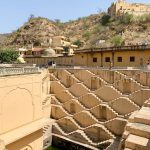
Ancient Indian stepwells, such as the Adalaj Stepwell in Gujarat or the Chand Baori Stepwell in Rajasthan, represent a slow architecture. As you go down into the stepwell, the air temperature goes down, the light is dimmer, and the city noise is replaced by the sound of your own footsteps and your own reflections off the water.
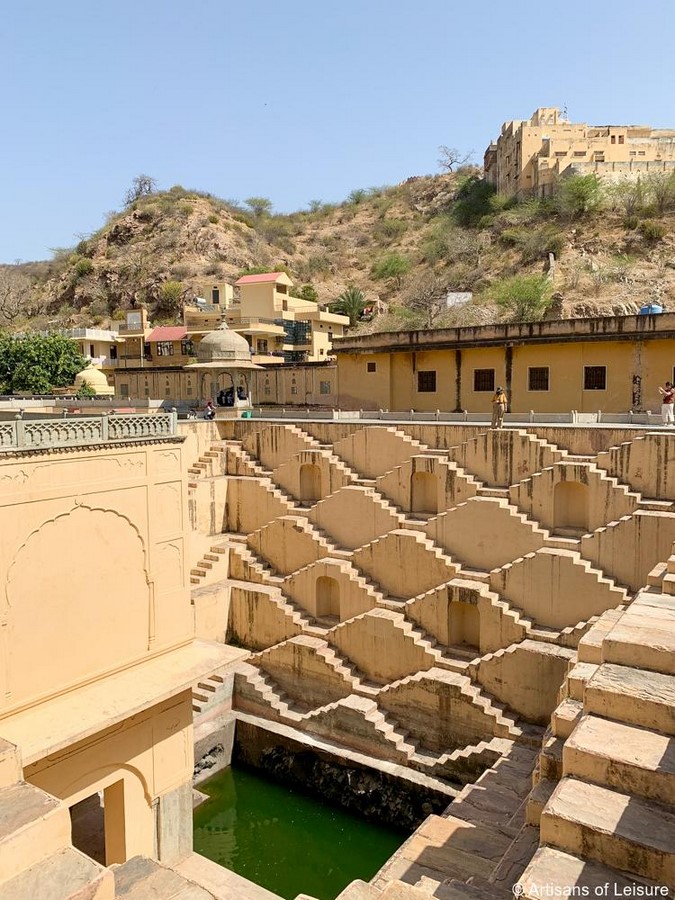
While we may not be building step wells today, modern architectural styles are making use of underground floors, masonry, and inner courtyards to offer similar sensory shifts in our current commercial centers. The Jawahar Kala Kendra building in Jaipur employs high walls and a series of interlinked inner courtyards to create a quiet, contemplative space that feels like a mile away from the traffic in the city.
Friction spaces in fast cities
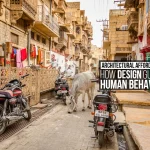
In an urban setting, friction refers to roadside activities such as parked vehicles, pedestrians, and non-motorized vehicles, among others, that affect smooth movement and, in effect, reduce the current capacities of the roads, a phenomenon common in developing cities. Such friction may contribute to a reduction in capacities by as much as 26% under restricted width. The goal of efficiency seeks to eliminate such frictions, but slow design puts them back in, in important ways. It might be a staircase with a view, instead of an out-of-sight elevator, or a path in a park that circles trees rather than cutting through them.
Example: Lodhi Gardens, Delhi
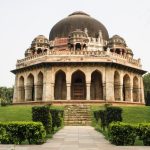
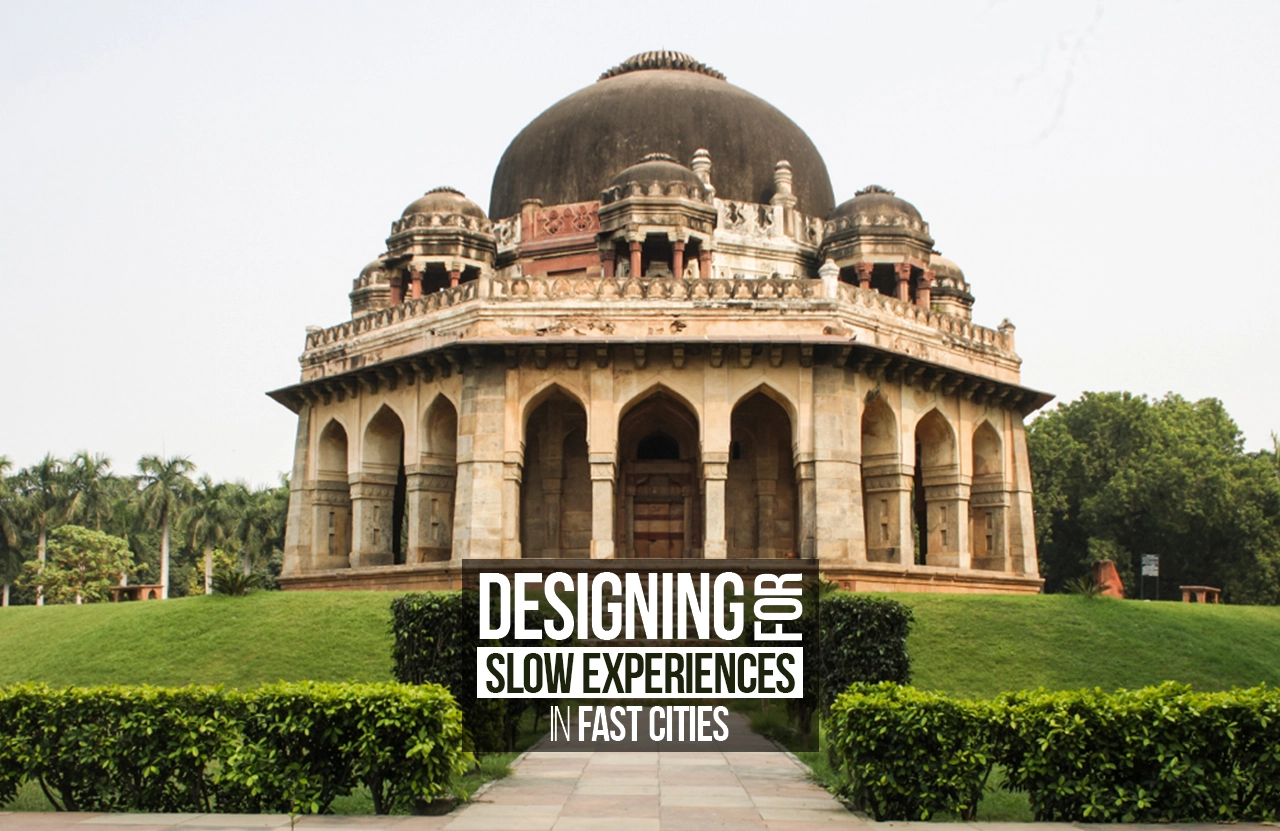
Amidst the national capital, Lodhi Gardens has been a crucial slow design intervention because, unlike straight-line pedestrian spaces. The 15th-century tombs make one change their pace, lift their gaze, walk around, and take in the scale of things historically. The “friction” here is checking out the view and the history and thus having a slower pace than the pedestrian outside on the sidewalk.
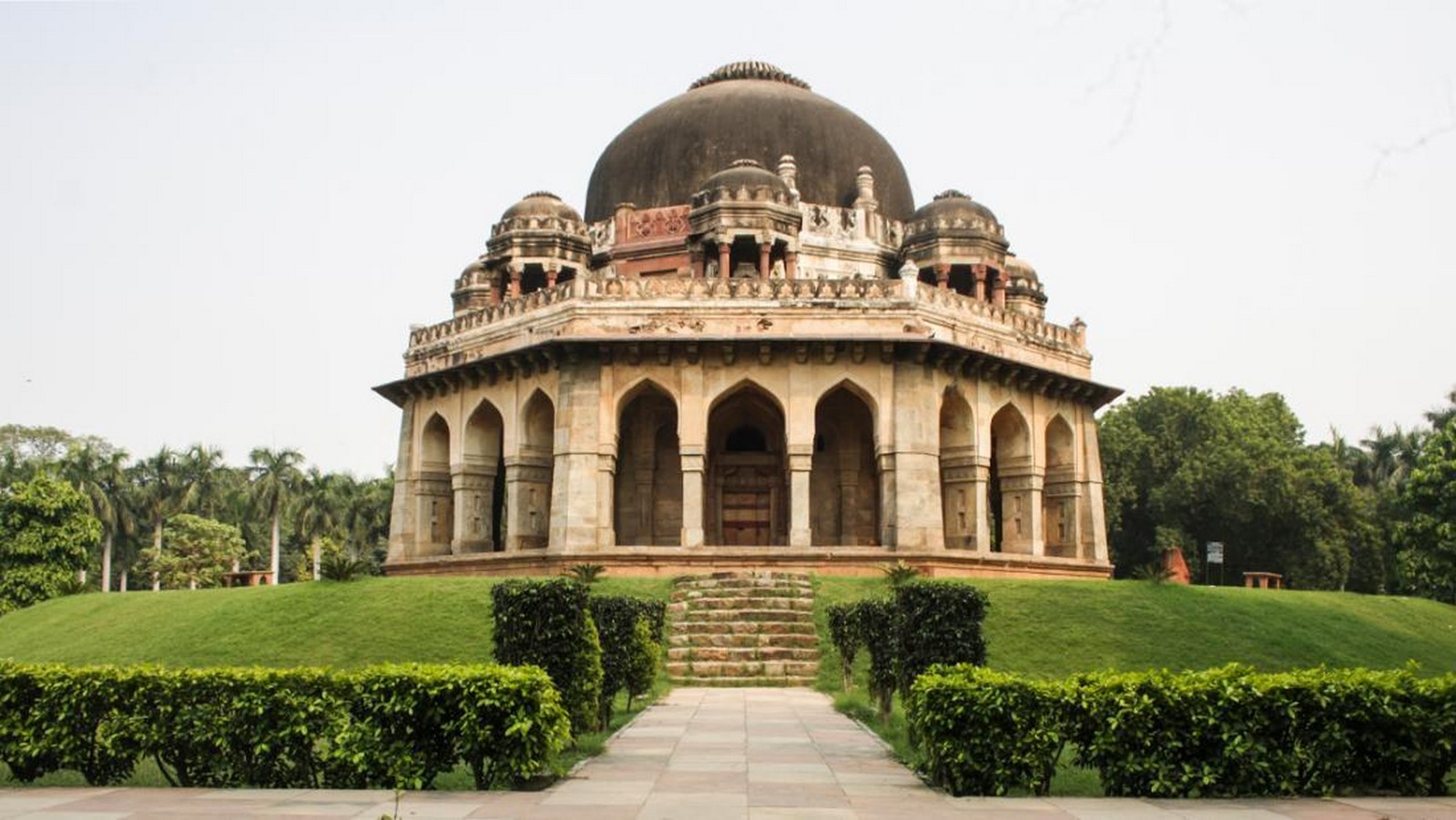
Slow Experience as Health Infrastructure in fast cities
In recent times, architects and city planners understand that public space is not just a decorative necessity, but rather a preventative health measure. Contemplative space reduces stress, improves focus, and increases social bonding in a population. In densely populated Indian cities, people have little space, and therefore, public space becomes their living room.
The success of temple courtyards, mosque forecourts, gurudwara langar halls, and monastery complexes can entirely be worked out on the back of this principle that they manage time, not space. They offer the individual a temporary reprieve from economic and digital speed.
The future of urban design will be shaped not by faster transport or faster buildings, but by whether we keep cities alive for the human mind. We need fast transport, and we will never need fast experience.
There are no expensive materials needed or large land availability required to consider slow experiences. India’s own urban heritage carries the solution with layered thresholds, walkable scale, shaded edges, social seating, and contextual pauses. The problem facing modern architects is not one of invention, but translation.
A city that has succeeded, therefore, is not the one whose processes are all speedy.
It is the kind of experience where a person can stop as they wish, without any incentive to continue.