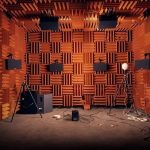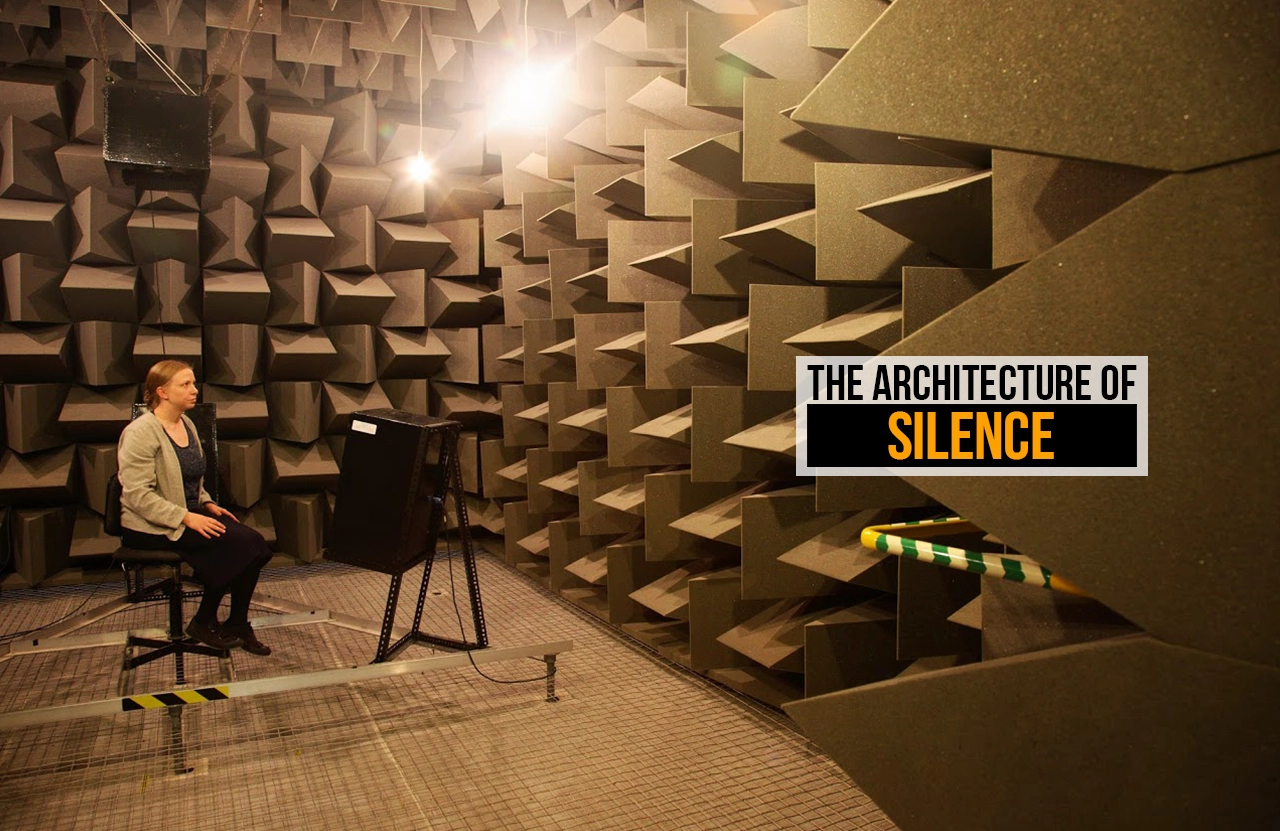
In architecture, professionals manipulate sound through volume, material density, and geometry to create pleasant auditory environments, such as concert halls, theatres, and libraries. In Minneapolis, Minnesota, a space exists that challenges the fundamental relationship between architecture and acoustics. The Anechoic Chamber at Orfield Laboratories is not just a quiet room—it is a marvel of architecture and engineering, designed to achieve complete negation of sound. It holds the Guinness World Record for the “quietest place on earth” with an astonishing background noise level of -24.9 dBA. This place is also an exceptional example of subtractive design and structural isolation. The approximate nominal dimensions of the chamber are as follows: 12’ x 10’ x 7-4.”
Structural Isolation: The Box-in-a-Box Typology
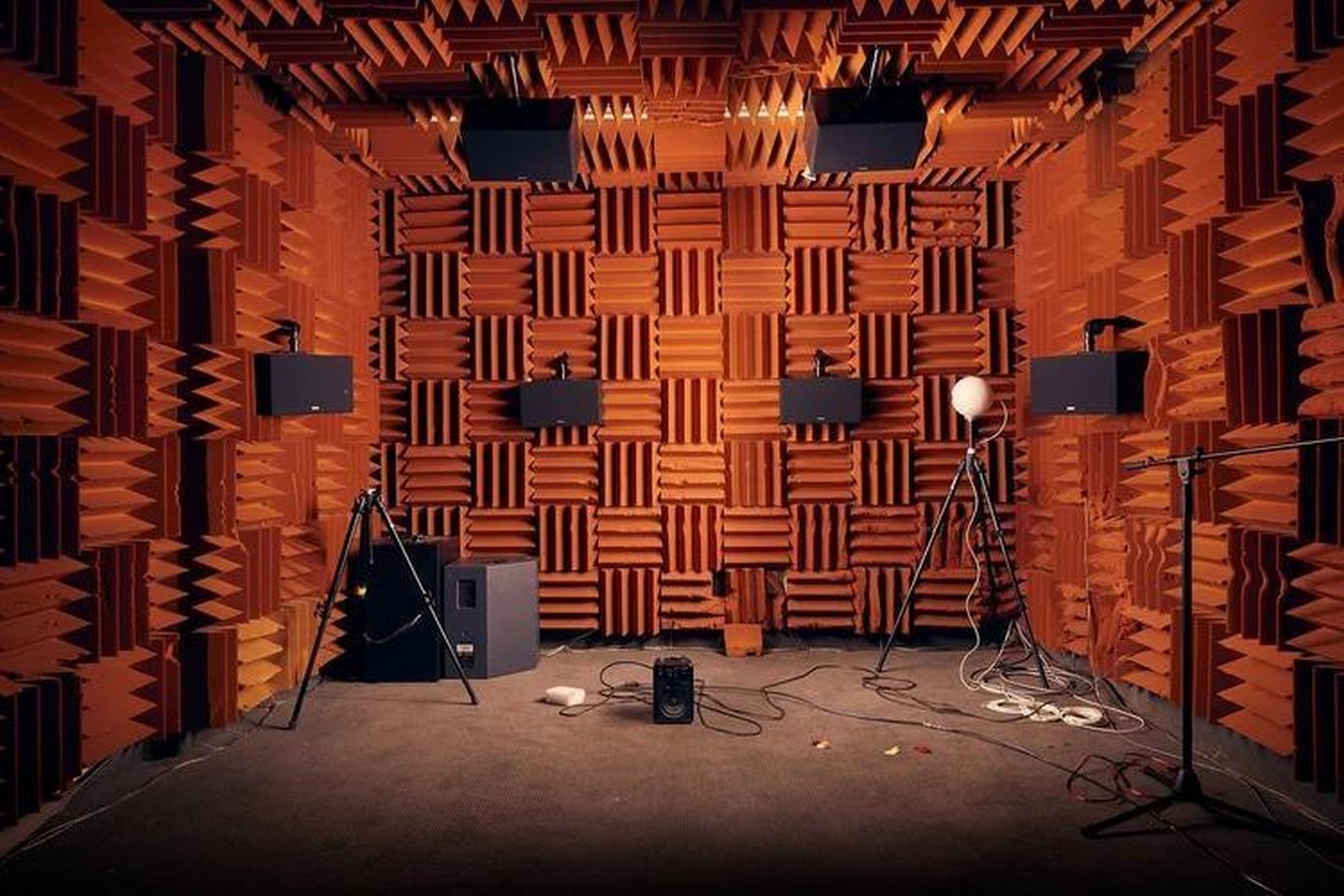
To achieve a noise level far below the threshold of human hearing (0 dB), the architecture must first be able to conquer the transmission of external sound. Orfield Laboratory utilises a “room within a room” construction methodology, a sophisticated form of structural decoupling.
The outer envelope consists of double walls of concrete and masonry roughly 12 inches thick, which provide the necessary mass to block low-frequency urban noise from the surrounding city. Inside this heavy shell sits a smaller independent steel chamber. Crucially, this inner room does not rest on the building’s foundation. Instead, it is suspended on vibration-damping steel springs. The use of this insulation method eliminates a structured path for vibrations transmitted through a structure, thus preventing kinetic energy created by the movement of vehicles or Mechanical systems from being converted to acoustic energy.
Materiality and Geometry: The Acoustic Wedges
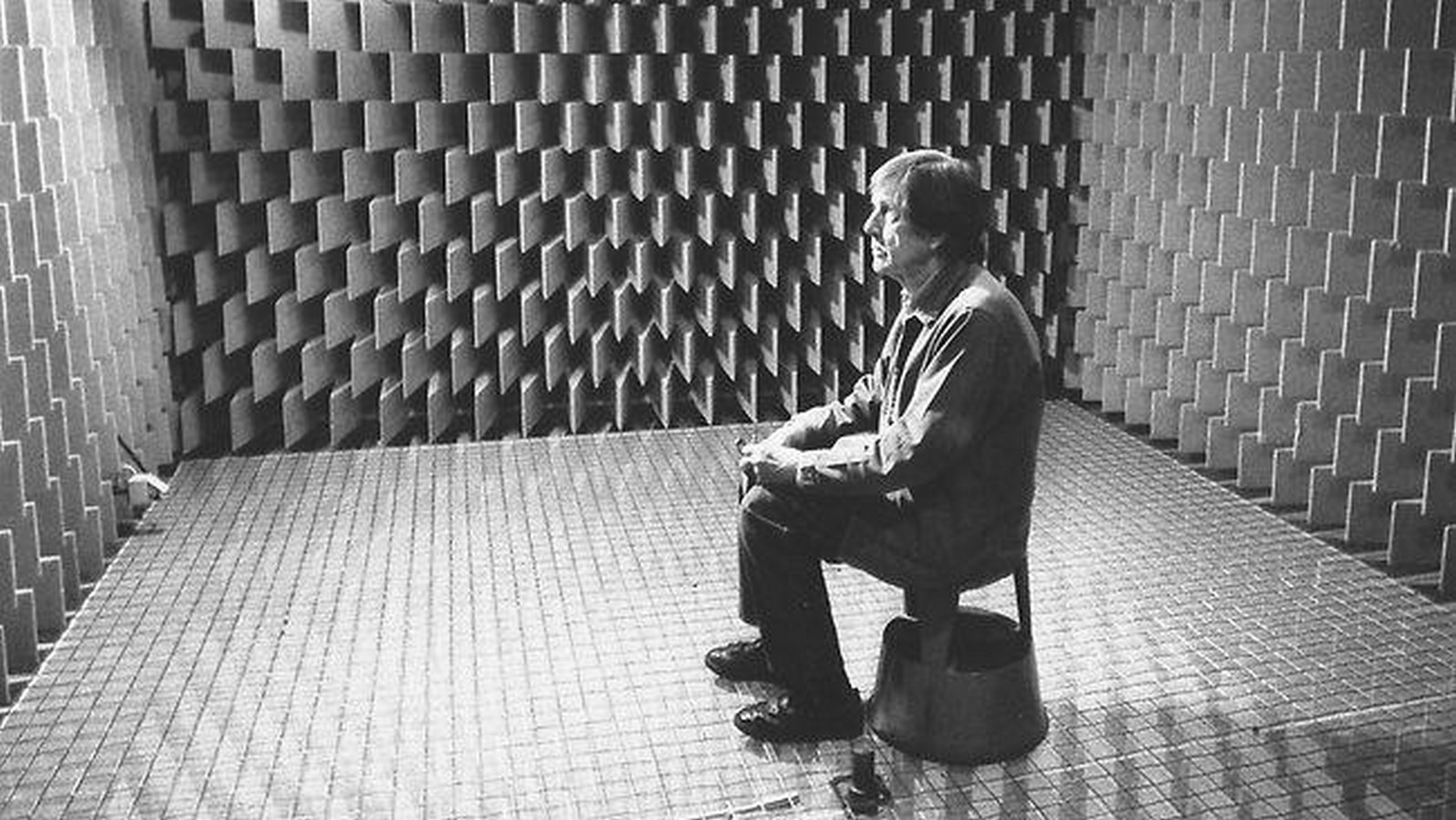
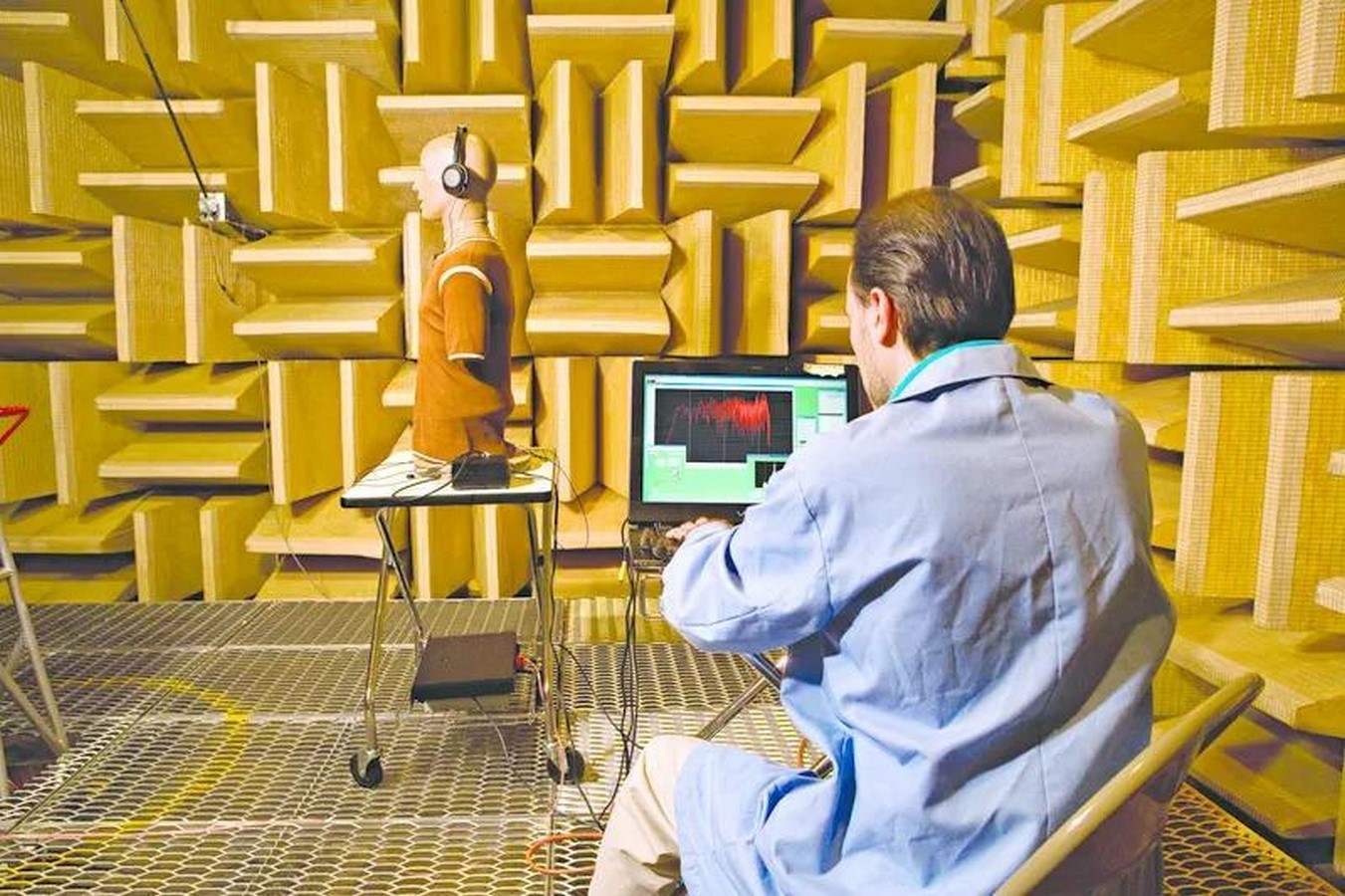
While the concrete shell handles sound isolation, the interior finishes handle sound absorption. The visual identity of the chamber is defined by 3.3-foot-deep fibreglass acoustic wedges that line the walls, ceiling, and floor.
From an architectural perspective, the geometry is functional, not aesthetic. When a sound wave strikes a flat wall, it reflects into the room. When a sound wave hits these wedges, it is deflected inward to the centre of the fibreglass, then bounces deeper into the material until the acoustic energy dissipates as minute amounts of heat.
To maintain this “free field” condition, there is no solid floor. Occupants walk on a suspended, tensioned steel mesh trampoline that is acoustically transparent, floating above the floor wedges to prevent even footprint reflections.
Applications: Beyond the Silence
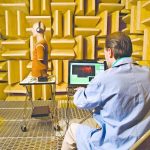
This chamber is primarily designed as a high-precision instrument for acoustic analysis and product development due to the fact that it has no background noise. As a result, it can measure sound emissions that would otherwise be too quiet to be detected in other testing environments.
The spectrum of applications covers both the commercial industry, where companies such as Harley Davidson and Whirlpool create tailored sound signatures for their motorcycles and appliances, as well as in medicine, specifically in evaluating the acoustic performance of implanted heart valves and hearing aids.
Beyond industrial engineering, the chamber functions as a unique psychological simulator for NASA, offering a sensory deprivation environment to test astronaut durability, while also providing a perfect “free field” for calibrating high-fidelity audio equipment without the interference of room reverberation.
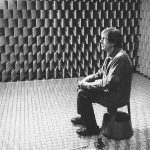
Many people long for absolute silence, imagining it as the ultimate sanctuary. Yet too much quiet can feel unsettling. In the Orfield Chamber, the longest anyone has lasted is just 45 minutes.
In perfect silence, you become aware of internal sounds—your heartbeat, lungs, and stomach. With no outside noise, your body’s sounds dominate, which can be disorienting enough to make standing difficult; most people must sit to endure the experience.
References-
(No date) The quietest room on earth | sound acoustic solutions. Available at: https://www.soundacousticsolutions.com/blog/2018/04/05/the-quietest-room-on-earth/ (Accessed: 27 November 2025).
Guinness World Records (2023) Quietest place, Guinness World Records. Available at: https://www.guinnessworldrecords.com/world-records/quietest-place (Accessed: 27 November 2025).
Anechoic chamber (no date) Orfield Laboratories, Inc. Available at: https://www.orfieldlabs.com/labs/anechoic-chamber (Accessed: 27 November 2025).