How Cities Finally Started Building for Everyone

For more than a decade, the housing story across the world has been a grim loop: skyrocketing rents, stalled construction, slow approvals, and a middle class squeezed between aspiration and reality. But in 2025, something extraordinary will happen. A set of powerful forces, falling interest rates, new financial incentives, aggressive zoning reforms, and rapid shifts in architectural thinking, converge to create the most favourable environment for attainable market-rate housing in over twenty years.
For the first time in recent memory, the question is no longer “Can we fix housing?” It is, “Why didn’t we build like this sooner?”
Cities from Minneapolis to Melbourne, Tokyo to Barcelona, Hyderabad to Toronto are discovering a shared truth: attainable housing is not the outcome of one policy or one innovation, it is the product of alignment.

The Economic Reset
The global construction slowdown of 2023-2024 created a vacuum. Housing pipelines stalled, financing dried up, and developers retreated. But entering 2025, central banks across major economies initiated targeted policy easing U.S. Federal Reserve rate cuts, ECB adjustments, Reserve Bank of India easing, Australia’s stabilised bond climate, creating a ripple effect across the housing ecosystem.
Lower interest rates did three things simultaneously:
Developers returned
Financing became feasible again. Market-rate housing, which had been squeezed by high borrowing costs, now made economic sense.
Middle-income buyers re-entered the market
Mortgage approvals increased, monthly payments fell, and the long-ignored “missing middle” finally had an entry point.
New-build housing became attractive
Developers could compete with resale markets again, particularly in growing mid-rise segments.
This economic pivot is not a housing boom, it is a housing rebalancing, a system correcting its unsustainable extremes.

The Zoning Revolution
Cities across the world have begun rewriting their zoning laws to unlock desperately needed housing supply. Minneapolis became the first major U.S. city to eliminate single-family zoning altogether, opening the door for duplexes and triplexes in every neighbourhood, a shift that has already expanded missing-middle housing under the Minneapolis 2040 Plan. Auckland followed with an ambitious Urban Density Plan that allows three-storey buildings across most residential zones, increasing the city’s housing supply by over 50% in just five years.
Across Europe and Asia, similar reforms are reshaping urban form. Barcelona’s Superblock model reorganises neighbourhoods around walkability while enabling mid-rise, mixed-income housing along key transit corridors. Tokyo remains the global benchmark for flexible zoning, where commercial and residential uses blend seamlessly to support a wide range of market-rate housing types. In India, cities like Hyderabad, Ahmedabad, and Mumbai have revised FAR norms and introduced transit-oriented density incentives, accelerating redevelopment and encouraging mid-rise mixed-use living across rapidly growing urban centres.
Housing Treated as Infrastructure
A major philosophical shift defines 2025: cities now treat housing as infrastructure, not a luxury or amenity, but a system as essential as transport, water, or power. This mindset unlocks a new policy toolbox: tax incentives for developers meeting affordability targets, fast-track approvals in cities like Toronto, Singapore, and Copenhagen, and adaptive reuse credits that convert declining office and retail spaces into housing, co-living, or micro-cluster apartments.
Public–private partnerships further accelerate development, with governments sharing land or financing to reduce risk and speed up construction. Together, these tools mirror historical moments when cities expanded transit lines or built ports and sewer systems. In 2025, housing finally joins that category, treated as critical infrastructure shaping the future of urban life.
Architectural Evolution
Economics and policy may unlock supply, but design determines its quality.
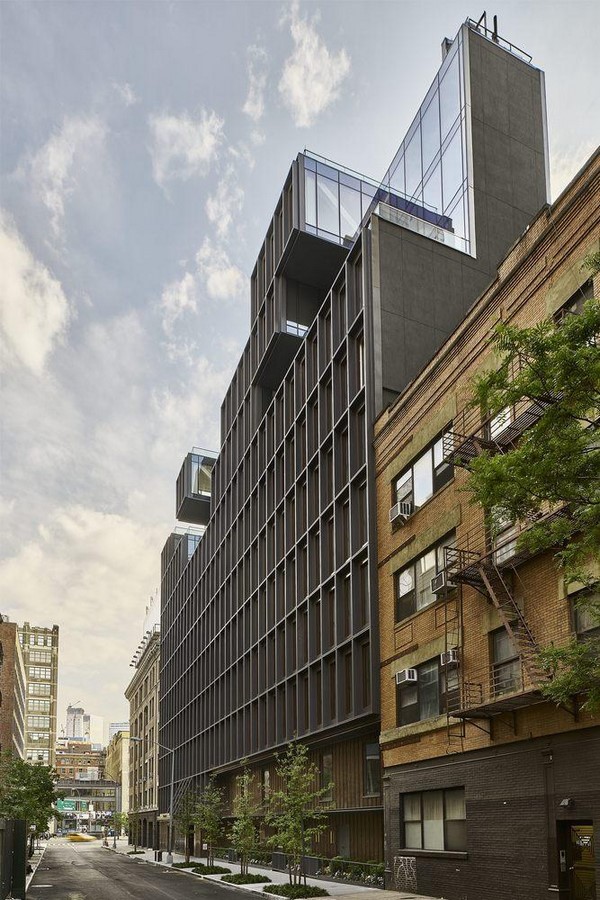
In 2025, architects around the world shift from “more” to “smart”, from high-cost towers toward lean luxury, modularity, and context-first housing.
Lean luxury is redefining the attainable home in 2025. Instead of size, the focus is on efficiency, comfort, and intelligent design: 450–700 sq ft layouts with flexible partitions, built-in work-from-home nooks, smart storage, and daylight-first planning supported by cross-ventilation. Balconies and compact outdoor spaces replace oversized living rooms, while low maintenance and minimal eco-fees keep long-term costs manageable.

CLT and Prefabrication Move From Boutique to Mainstream
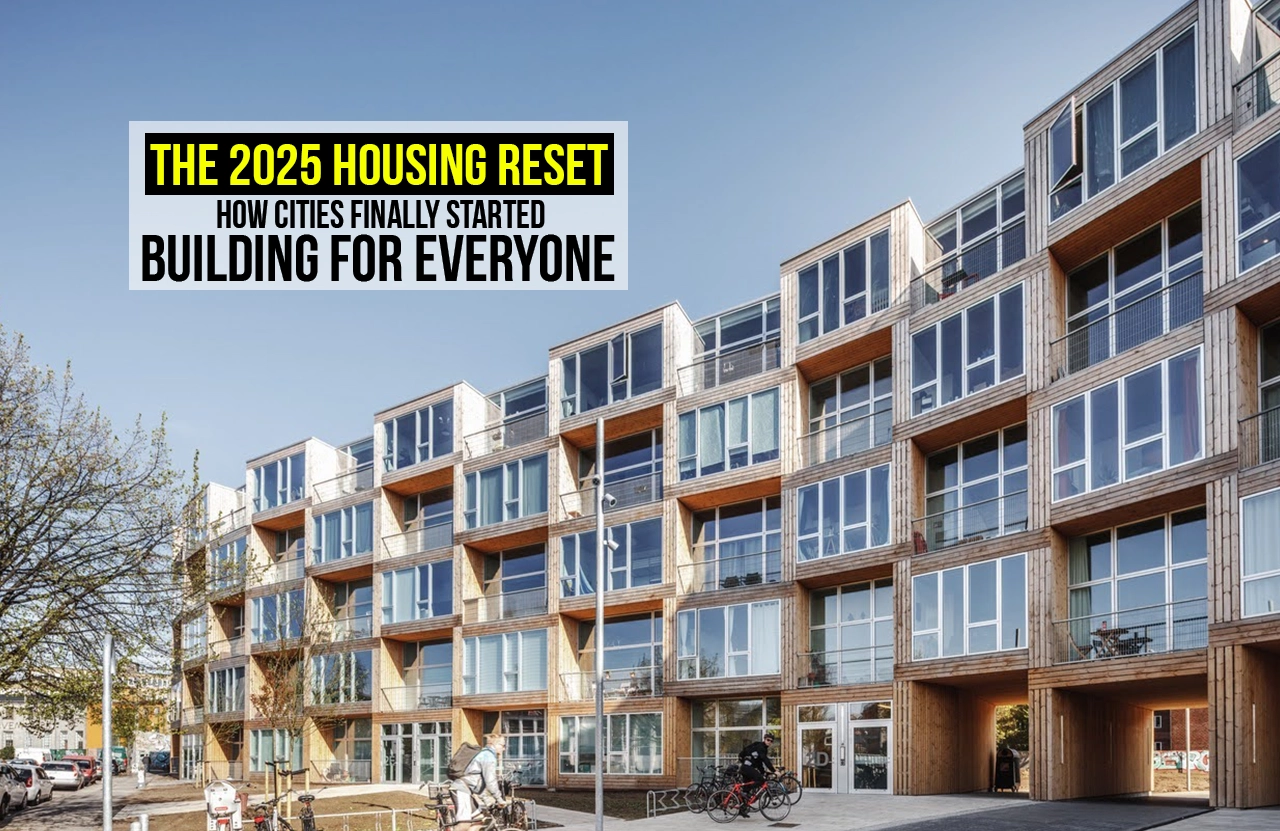
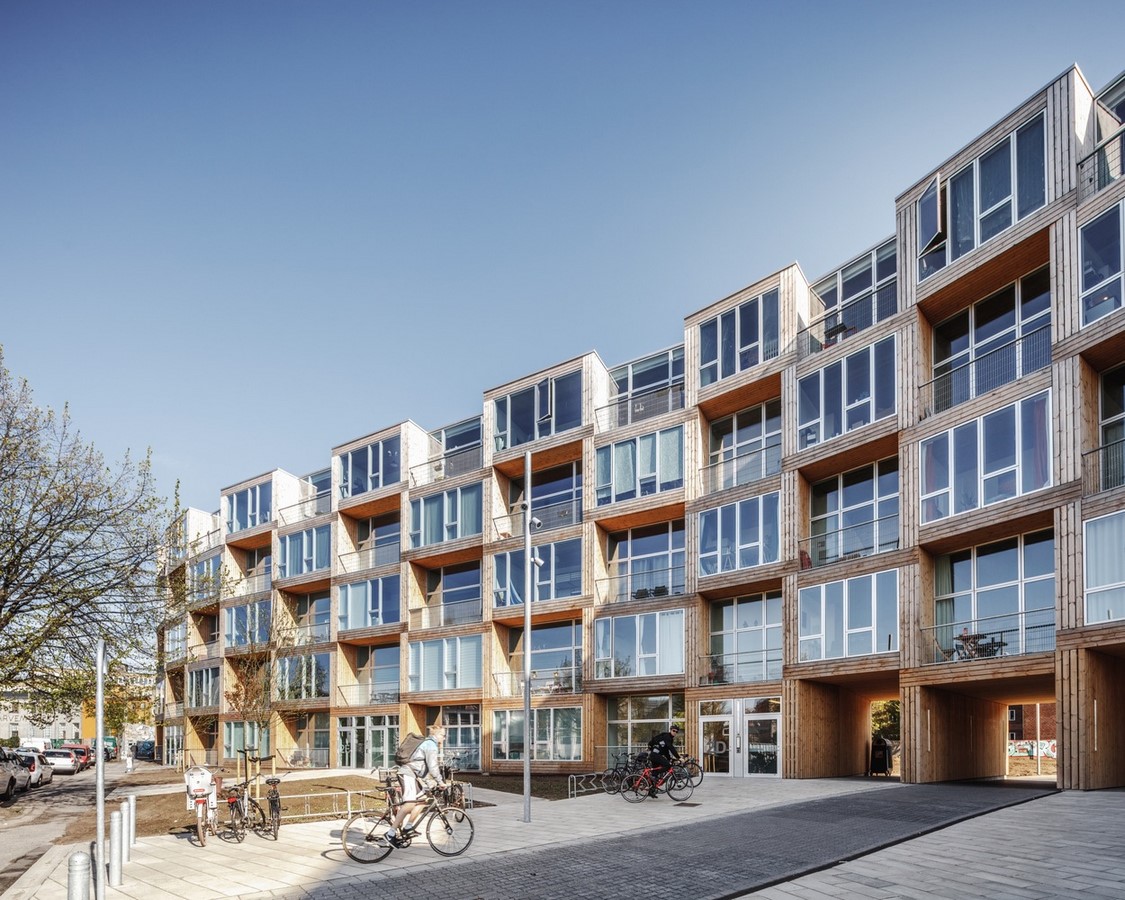
Cross-laminated timber (CLT) and prefabricated construction are reshaping the economics of housing by cutting construction time, labour costs, carbon emissions, and material waste. More importantly, they make mid-rise, mid-market housing financially viable at scale.
Projects across Japan, Finland, Australia, and emerging developments in India already show 15–25% cost savings, proving that modern, sustainable materials can directly support attainable housing without compromising quality or speed.

The Rise of Micro-Clusters
Instead of shrinking homes into micro-units, architects are shifting toward housing clusters, small, well-designed residences arranged around shared courtyards, community gardens, and micro-plazas. These developments integrate hybrid communal spaces that blend laundry, lounge, and coworking functions, along with semi-private outdoor areas that support social interaction without sacrificing privacy.
Inspired by Barcelona’s superblocks, Copenhagen’s cohousing, and Tokyo’s laneway architecture, these micro-clusters create affordability without sacrificing humanity.
The New Urban Starter Home
Across continents, the “starter home” has been completely redefined. Today’s middle-class buyer prioritises proximity to transit, efficient layouts, low maintenance, high-quality shared amenities, eco-conscious materials, flexible spaces, and affordability achieved through thoughtful design rather than cost-cutting.
Developers who overlook these expectations are losing the 2025 buyer, while those who embrace them are seeing projects sell out faster than at any point since 2010.
Architecture’s Role: Designing the Attainable Future
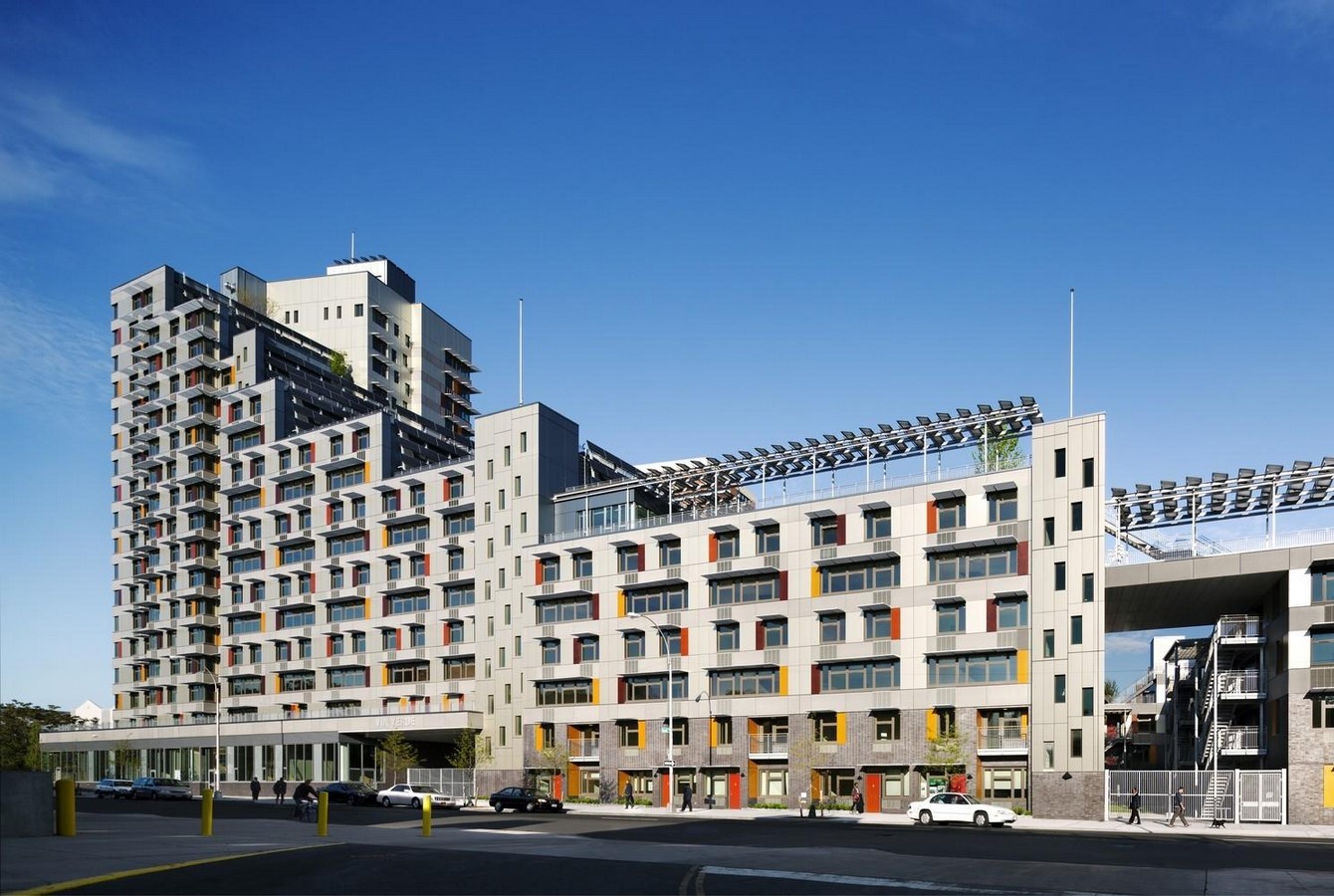
Policy may open the door, but architecture determines how people actually live. In 2025, architects are challenged to design at the intersection of affordability, density, sustainability, beauty, flexibility, and speed, a rare alignment that demands both creativity and restraint.
This isn’t a return to low-cost housing; it marks the rise of intelligent housing: homes that respect budgets, uphold dignity, and elevate daily life. In this new era, architects become crucial translators between policy and people, transforming zoning reforms, incentives, and economic shifts into meaningful, livable spaces for the next generation.

What 2025-2030 Will Look Like
The changes set in motion in 2025 will reshape the urban landscape in the years ahead. Secondary cities will emerge as new housing capitals, 15-minute neighbourhoods will become a global planning norm, and adaptive reuse districts will replace outdated office parks. Mid-rise housing will overtake high-rise models, while construction robotics and modular factories dramatically accelerate supply. Most importantly, design equity will replace design excess.
The real transformation lies in this: market-rate housing will no longer feel like a compromise. It will become a well-designed, well-balanced product, one that finally aligns affordability with true livability.
Housing, At Last
2025 isn’t a miracle year, it’s simply the first time in decades that economics, politics, and architecture are finally aligned. Cities are no longer promising housing; they’re actively building it. This marks a new chapter in which attainable market-rate homes are neither a privilege nor a distant aspiration, but a priority shaped by thoughtful, intelligent design.
The future of housing is no longer an idea on paper.
It is, at last, under construction.
References:
“Affordable Housing.” OECD, 2025, www.oecd.org/en/publications/society-at-a-glance-2024_918d8db3-en/full-report/affordable-housing_1a2ec30f.html.
Bank, European Central. “Economic Bulletin Issue 1, 2025.” European Central Bank, 13 Feb. 2025, www.ecb.europa.eu/press/economic-bulletin/html/eb202501.en.html.
Ministry for the Environment. “National Policy Statement on Urban Development.” Ministry for the Environment, 27 Jan. 2022, environment.govt.nz/acts-and-regulations/national-policy-statements/national-policy-statement-urban-development/.
Minneapolis 2040 -the City’s Comprehensive Plan Done Right, Growth Can Help Our City Become a Healthy, Sustainable, and Thriving Place for All.
National Transit Oriented Development (TOD) Policy.
“RBI Monetary Policy Update – April 2025.” Hsbc.co.in, 2025, www.assetmanagement.hsbc.co.in/en/mutual-funds/news-and-insights/rbi-monetary-policy-update-april-2025. Accessed 8 Dec. 2025.
“TOKYO 2024 -TMG.” 都庁総合英語サイト, 2024, www.english.metro.tokyo.lg.jp/w/000-101-000829.
UN Habitat. “World Cities Report 2024.” Unhabitat.org, 2024, unhabitat.org/wcr/.
“Welcome to Superilles | Superilles.” Barcelona.cat, 2025, ajuntament.barcelona.cat/superilles/en.