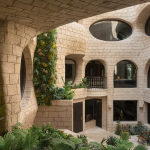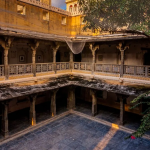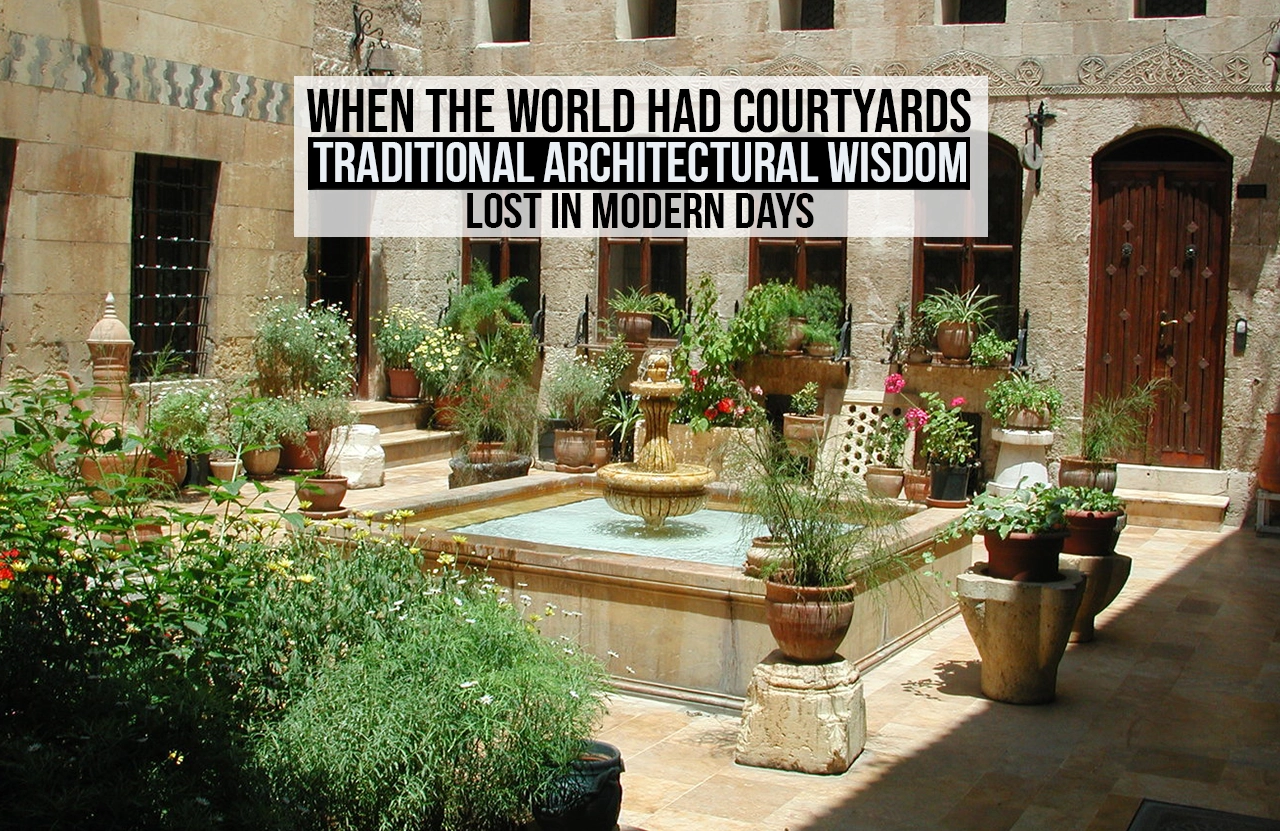
The world’s earliest dwellings, found in India, China, the Mediterranean, Japan, the Middle East, Africa, and Latin America, all featured an open space at their center: the courtyard. It was where light entered, air circulated, communities bonded, and the rituals of daily living unfolded. The courtyard was the heart of the home. Yet within barely a century, this universal architectural feature has disappeared. Today, we inhabit sealed buildings that prioritize construction efficiency over comfort, profitability over psychology, and privacy over community. The result is a society surrounded by modern aesthetes, yet starved of connection to nature, to others, and to ourselves.
A Collective Intuition Across Civilizations
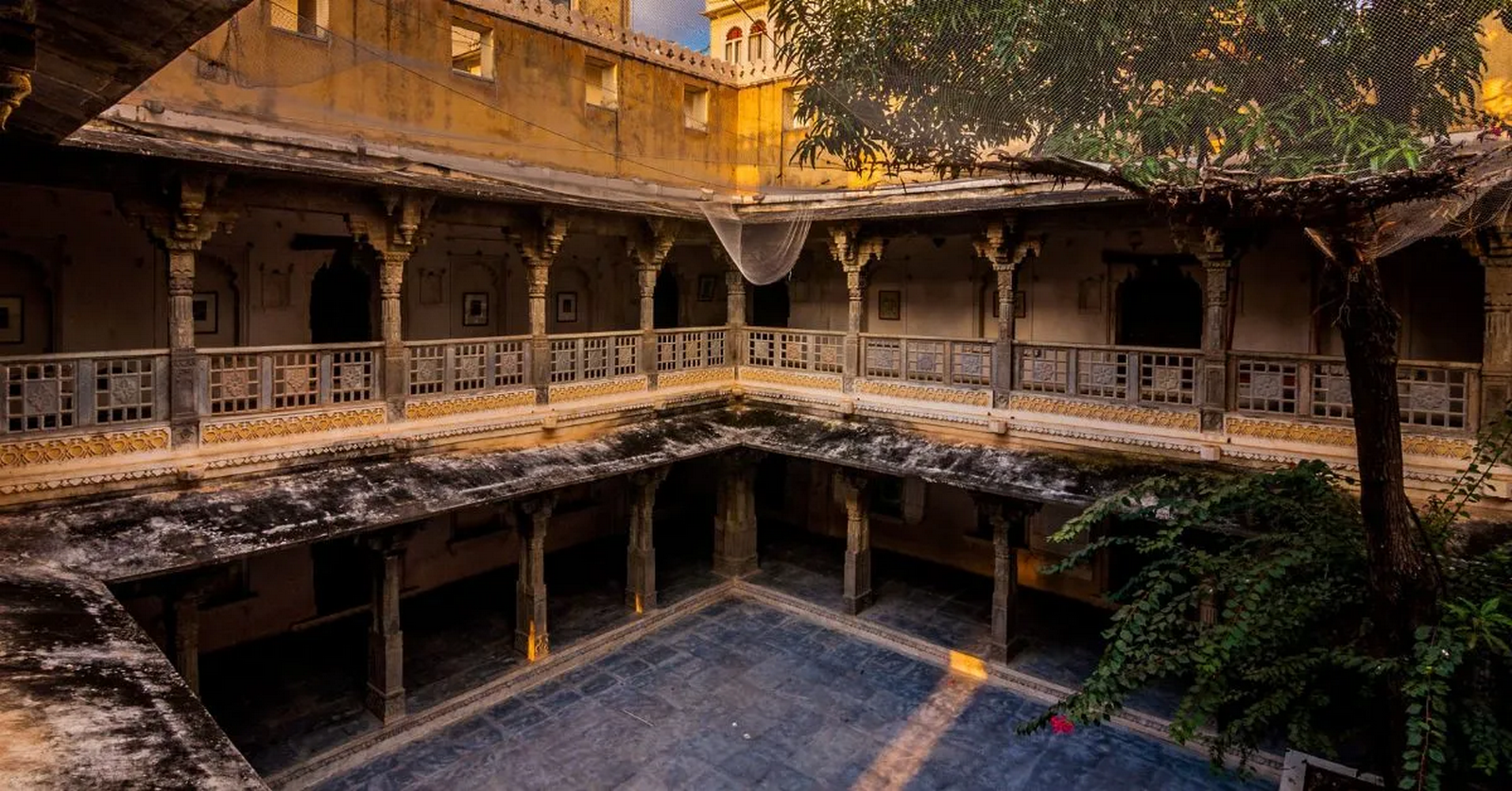
Long before architecture was formalized as a profession, its principles emerged from observation and lived experiences. Civilizations separated by oceans and centuries arrived at strikingly similar conclusions: sunlight, airflow, greenery, and communal gathering spaces were essential to human well-being. Courtyards also shaped daily rituals and social rhythms across cultures. In India, the aangan was where meals were prepared, ceremonies took place, and elders spent their evenings. In the Mediterranean, the peristyle was animated by communal dining and seasonal gatherings. In the Middle East, the inward-facing courtyard protected families from harsh desert winds while allowing women and children to experience open air in privacy. These were the spatial foundations of community life. Different cultures gave this understanding different names:
- Vastu Shastra (India) emphasized the flow of energy through spatial orientation and an open central space.
- Feng Shui (China) sought balance and harmony between the built form and natural forces.
- Tsubo-niwa and Engawa (Japan) softened the threshold between indoors and outdoors.
- In Africa, courtyards are used for water harvesting and climate moderation.
- Peristyle (Roman world & Mediterranean) placed daily life around light and air.
- Mashrabiya and shaded courtyards (Middle East) cooled desert homes while preserving privacy.
These approaches differed in aesthetic expression, yet shared an identical motive: architecture must breathe with nature to support the human spirit.
Courtyards: The Original Sustainability
What we now label as “green architecture,” “biophilic design,” “passive cooling,” and “wellness spaces” is, in truth, a reinvention of ancient spatial logic. Despite being rooted in ancient intuition, the climatic intelligence of courtyards is supported today by measurable environmental data. Studies of traditional homes in hot–dry regions such as Rajasthan, Yazd, Cairo, and the Mediterranean consistently demonstrate how courtyard geometry creates a microclimate through shading, evaporative cooling, and controlled air movement. The ratio between height and width determines how much solar radiation enters, allowing the space to stay several degrees cooler during afternoons.
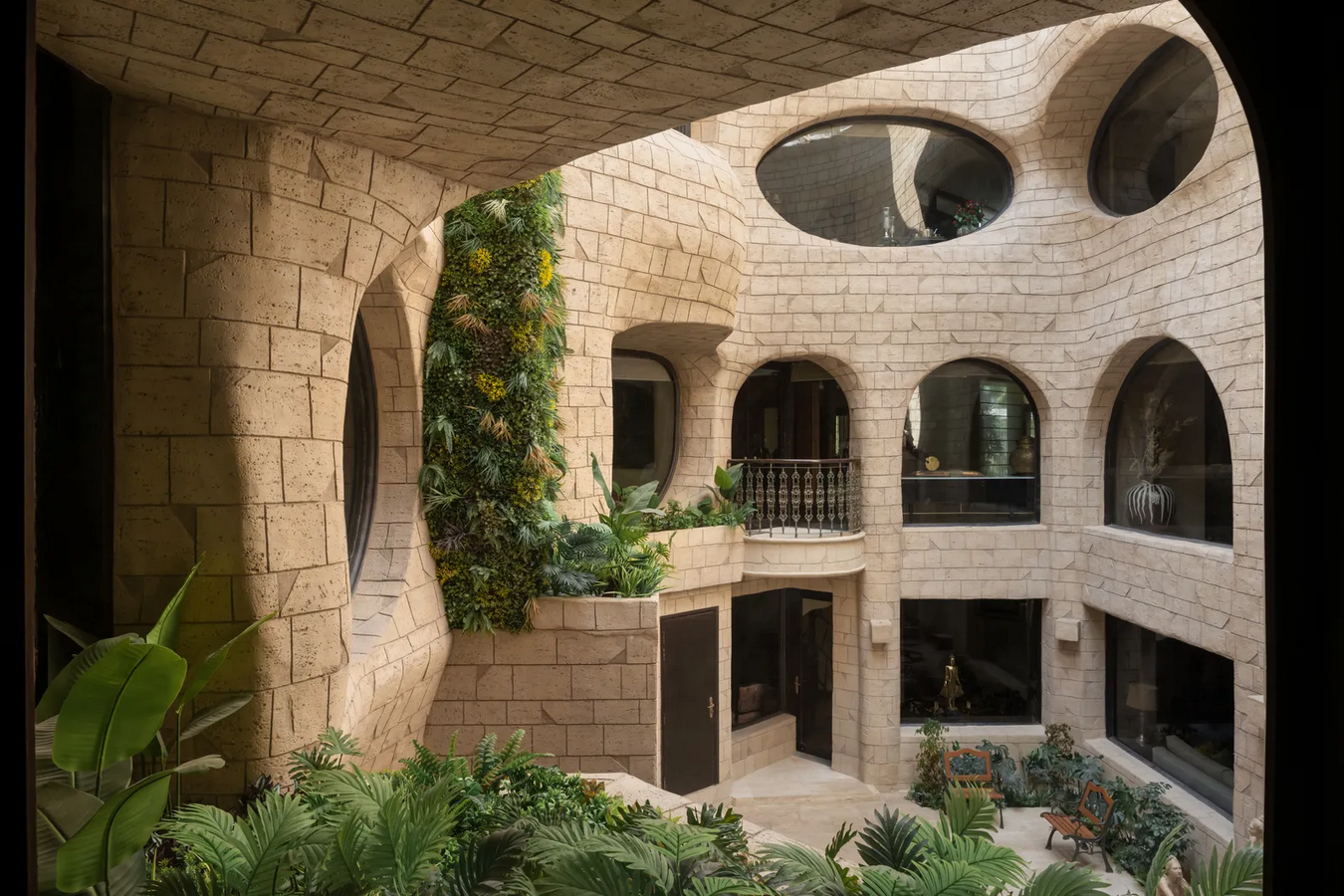
The courtyard acted as a thermal buffer, reducing indoor temperature swings and lowering dependence on mechanical cooling long before air-conditioning existed. Courtyards provided ventilation without machines, daylighting without electricity, a cool microclimate in extreme heat, and a safe social space without leaving home. They introduced a psychological pause into daily life, a space that encouraged the mind to breathe and recentre.
The Vanishing of the Courtyard
Courtyards did not disappear because they became irrelevant. They disappeared because the economy changed. As cities expanded and land values rose, homes began shrinking and rising vertically. Every square foot became monetized. A central open space, non-sellable and non-rentable, was reclassified as a “wasted area”. Corridors replaced verandas. Lift shafts replaced sky wells. Windows became smaller because glass costs money. Balconies shrank because every square meter was a profit.
In the chase to build more, we built without asking “What makes a home livable?” We now have climate-controlled interiors, yet lack fresh air. We have twenty-four hours of artificial lighting, but no sun. We live closer to more people than ever, yet we feel alone.
The Human Cost of Architectural Efficiency
The psychological and social effects of eliminating natural space from domestic life cannot be overstated. The courtyard stitched families and neighborhoods together organically. It allowed children to play freely, elders to observe life without exertion, individuals to rest without isolation, and communities to remain interconnected across generations.
Modern cities, however, leave very little room for such spaces. As apartment blocks grow vertically and plot sizes shrink horizontally, developers often prioritize “sellable area” over environmental logic. The disappearance of internal voids has contributed to the rise of heat-trapping, air-conditioned buildings that consume disproportionate energy. In a warming world, this cycle is unsustainable. Reintroducing courtyards, as atriums, sky wells, community terraces, or even narrow light shafts, offers more than nostalgia. It is a realistic, climate-responsive strategy that can restore comfort, reduce energy use, and rebuild the social fabric that dense cities have gradually eroded. The absence of such communal breathing spaces has contributed to declining social interaction, rising loneliness and isolation, leading to anxiety and sensory fatigue. Detachment from climate and seasons, and a loss of place-based cultural identity. We have replaced spontaneous connection with scheduled “quality time,” and nature with purchasable experiences, gyms, meditation apps, wellness retreats, and curated outdoor activities.
The Future May Lie Behind Us
As the world turns urgently toward sustainability, biophilic design, and mental well-being, the question we ought to ask is not “What is the latest technology?” but “What solutions did our ancestors already discover?”
We can reintroduce courtyards, whether as sky wells, atriums, community terraces, pocket gardens, or shared green courtyards in dense housing. It is a blueprint for healthier cities. A humane built environment does not need to abandon modernity; it needs to integrate memory. If the last century was defined by maximizing space efficiency, the coming one may be defined by maximizing quality of life.
Because architecture, at its most meaningful, nourishes the mind, shapes relationships, and replenishes the human spirit.
A world that remembers courtyards will embrace connection.