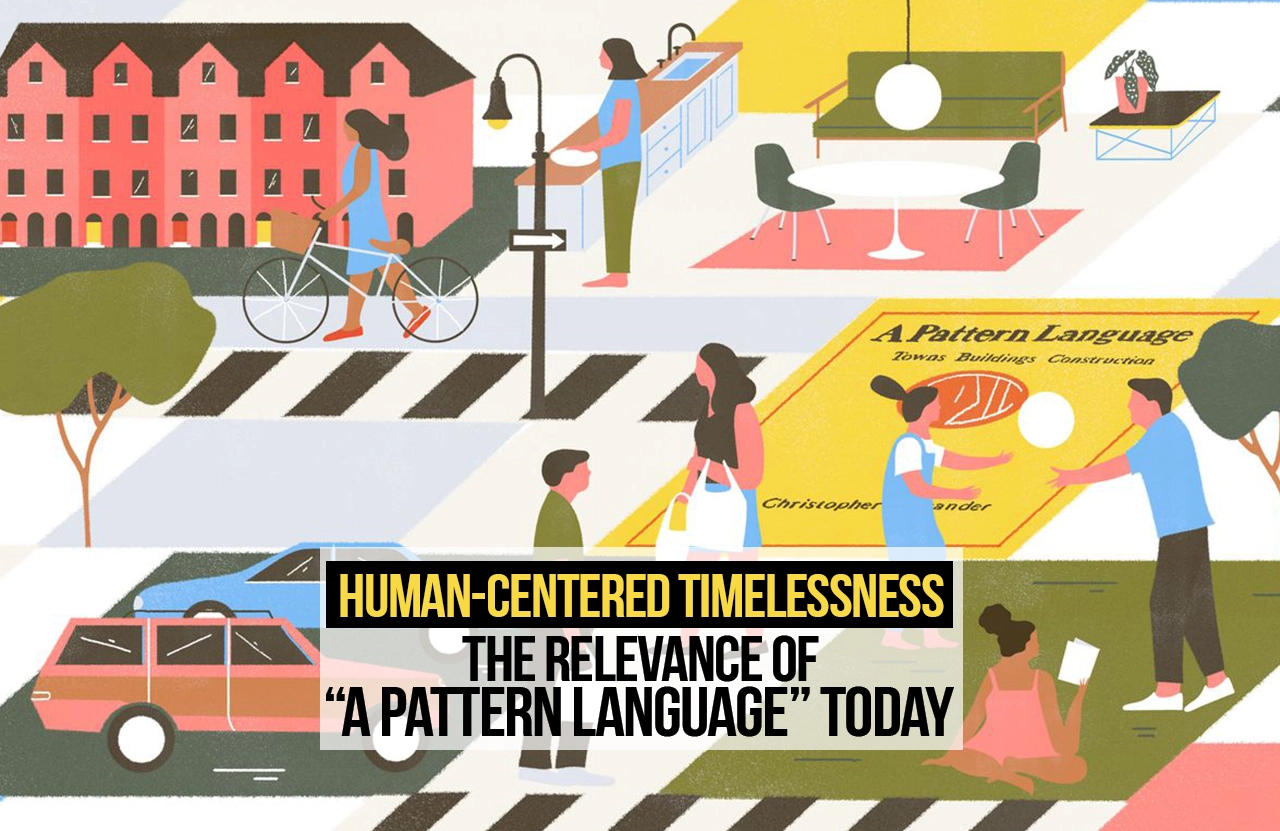
When Christopher Alexander, along with Sara Ishikawa and Murray Silverstein, published A Pattern Language in 1977, they proposed something that architecture had long forgotten: that the built environment must grow out of human behaviour, not abstract form.
The book offered not a singular style but a system of understanding, 253 interconnected patterns that ranged from the scale of regions to the proximity of furniture. Together, they formed a vocabulary for places that support human life, emotionally, socially, and ecologically.
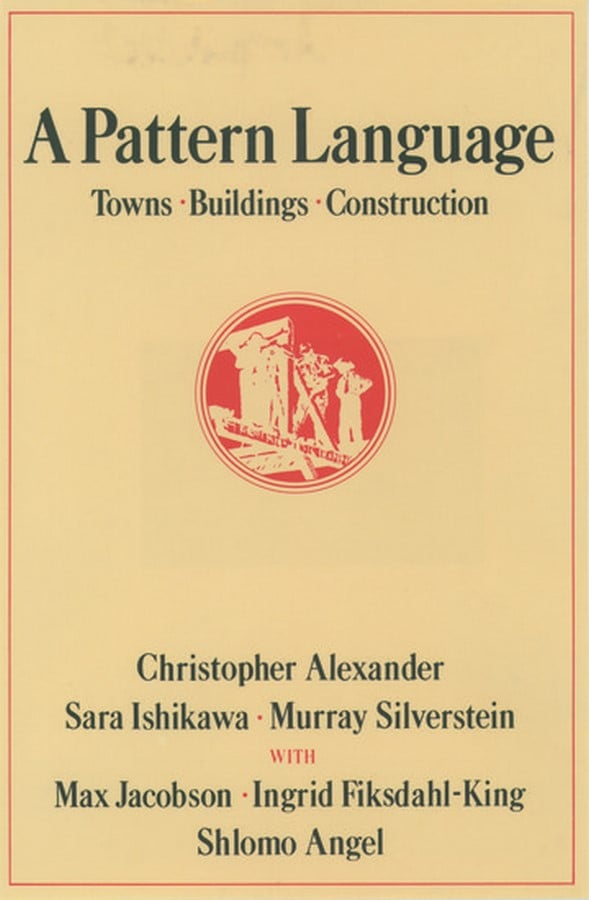
Nearly half a century later, when algorithms design cities, and buildings often serve the eye more than the body, A Pattern Language reads less like an artifact and more like a manual that was never truly implemented.
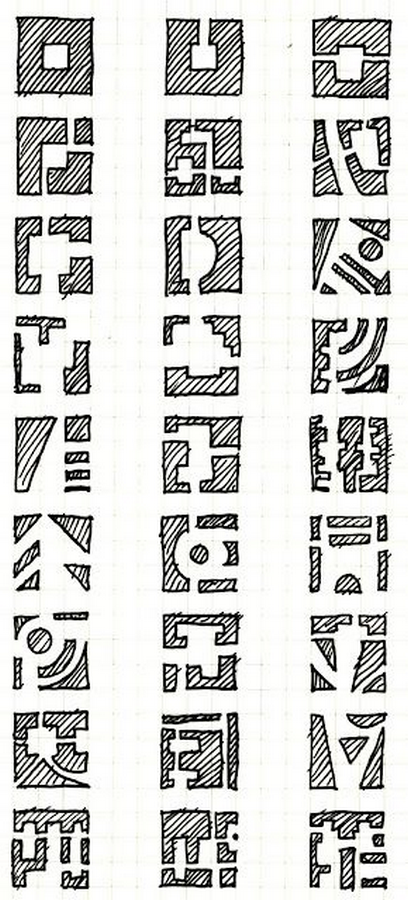
Alexander’s “language” operates much like a linguistic system, with each pattern acting as a word that gains meaning through combination.
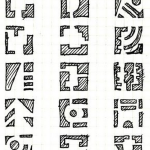
For example, the pattern “Courtyards Which Live” (Pattern 115) only works when complemented by “Opening to the Street” (Pattern 122) or “Common Land” (Pattern 67). It is this relational logic that gives the book its strength. Rather than prescribing form, it articulates relationships between people and place, between space and activity.
The book’s structure, from regional patterns like “City Country Fingers” to micro-scale ones like “Things from Your Life”, reminds designers that spatial well-being is cumulative. The livability of a city depends as much on urban fabric as on the smallest domestic gestures.
This systems-based approach was decades ahead of its time. Long before the term human-centered design became a buzzword, Alexander had already mapped its grammar.
From Counterculture to Contemporary Urbanism
When it first appeared, A Pattern Language was a countercultural manifesto. The 1970s architectural establishment was absorbed by late modernism, formal purity, technological optimism, and top-down planning. Alexander, in contrast, proposed a bottom-up design shaped by observation and participation.
His insistence that “people should design their own houses, streets, and communities” positioned architecture as a shared process between its users and practitioners, not a professional monopoly. This participatory ethos aligns closely with today’s movements in urbanisation based on communal designs, tactical interventions, and even open-source design frameworks.
The enduring appeal of the book lies in this flexibility. Its patterns are not tied to an aesthetic but to behaviours. Whether in a medieval village or a contemporary coworking hub, the patterns that support comfort, connection, and adaptability remain consistent. We live in an era of constant innovations, but some long-lived ideals are fundamentally durable in any context, one of them being that design is effective only when it aligns with the lived patterns of daily life.
Enduring Principles in a Digital Age
To understand A Pattern Language today, it has to be read not as an instruction manual but as a methodology for resilience.
Several of its patterns anticipate challenges now central to 21st-century design:
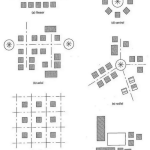
Pattern 37: House Cluster encourages small, semi-autonomous clusters around shared spaces, echoing today’s co-housing and mixed-use neighbourhood models.
Pattern 111: Half-Hidden Garden finds new life in biophilic and therapeutic design, emphasizing semi-private green areas that balance exposure and retreat.
Pattern 138: Sleeping to the East discusses bedroom orientation and the psychological/circadian benefits of morning light.
Pattern 160: Building Edge advocates for human-scaled transitions between buildings and streets, an idea now central to active frontage and pedestrian-first planning.
In essence, many contemporary frameworks, from New Urbanism to placemaking, biophilic design, and sustainable urban morphologies, can trace intellectual lineage to Alexander’s approach. The book prefigured an integrated understanding of ecology, social behaviour, and spatial form that is only now becoming mainstream.
Critique and the Question of Universality
Despite its humanistic clarity, A Pattern Language is not without its share of critique.
Some argue that its patterns romanticize pre-industrial life, idealizing vernacular traditions without accounting for diversity or urban density. Another factor to consider is its reliance on timeless human behaviour, which risks overlooking variations in culture and identity in global cities.
These critiques are valid, yet they also reveal why the book remains relevant. Alexander’s framework requires adaptation, not straight-up obedience. Patterns are meant to evolve with context, not to dictate principles to all circumstances. The takeaway here does not lie in replication of the patterns, but in their interpretation best suited to the scenario.
Instead of quantifying design and relating it to data abstraction, the pattern language offers a qualitative counterpoint rooted in observation. It is driven by universality, not homogeneity.
Patterns Reinterpreted: The City in Transition
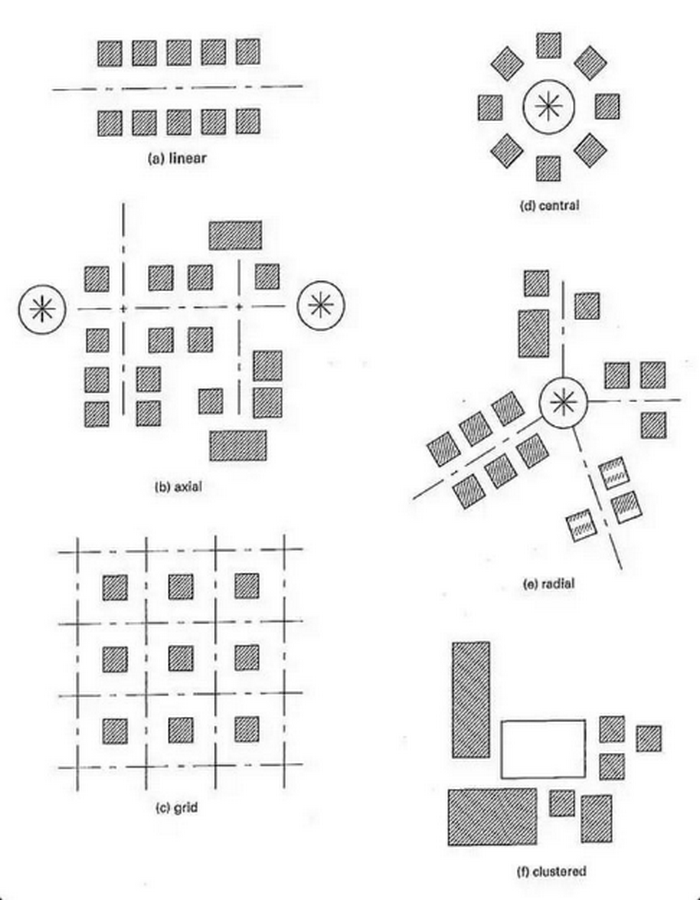
In today’s cities, Alexander’s ideas have a newly found urgency.
The global housing crisis, the isolation of vertical living, and the ecological fragmentation of urban form all point to the need for spatial frameworks that prioritize community, permeability, and adaptability, precisely what his patterns proposed.
Take Pattern 33: Night Life, which argues that lively public life depends on the proximity of diverse functions. Its logic applies directly to contemporary discussions on mixed-use zoning and 24-hour cities.
Or Pattern 61: Small Public Squares, which insists that intimate, well-defined spaces nurture interaction better than vast, empty plazas, a truth evident in the failure of many monumental modernist public spaces.
Even Pattern 252: Pools of Light, which recommends low, discrete light sources that form intimate ‘bubbles’ of social space, resonates with contemporary sensory and neuroarchitecture concerns.
A Participatory Future
Alexander’s collaborative approach has had a profound influence not only on architects but also on software engineers, interaction designers, and social theorists. The concept of “pattern languages” has become foundational in computer science, most notably in software design, where reusable patterns now structure digital environments, much like Alexander envisioned physical ones.
In architecture, the way Alexander’s ideas spilled into other fields made one thing obvious: useful design, whether it ends up as a building or a digital tool, grows out of people responding to something and adjusting it, not from someone perfecting a theory in isolation. And today, you can see the same logic behind many of the tools we use, including participatory design platforms, community mapping exercises, and even the way AI is being used to read spatial patterns. They’re all, in one way or another, working with the same idea.
The difference lies in technology, not philosophy. Alexander’s method was manual and communal, which in the current scenario is digital and distributed. But the core principle, that design emerges from patterns of use, remains unchanged.
Conclusion: Designing for Continuity
More than four decades on, A Pattern Language remains one of the few architectural texts that continues to operate both as theory and as method. It challenges architects to examine how patterns of movement, light, and social interaction accumulate into form. The questions it raises about what makes a space genuinely inhabitable, or how the built environment can nurture rather than regulate, are not nostalgic concerns but practical ones that become foundational for contemporary design ethics.
In a profession still divided between formal experimentation and regulatory compliance, Alexander’s framework proposes a third ground: a design process that is iterative, empirical, and grounded in human-centred observation. Its relevance today lies less in the replication of its 253 patterns and more in the operational logic it demonstrates design as a participatory act guided by feedback and contextual adaptation.
The book’s contribution is not a catalogue of design solutions, but rather a reminder that good architecture is systemically informed, socially embedded, and driven by context. It is the shift from design as object to design as pattern that ensures A Pattern Language remains as critical to the practice of architecture today as it was before.
References:
- Alexander, C., Ishikawa, S., & Silverstein, M. (1977). A pattern language: Towns, buildings, construction. Oxford University Press.
- BIMsmith. (2022). Remembering Christopher Alexander, the “Father of Pattern.” Bimsmith.com. https://blog.bimsmith.com/Remembering-Christopher-Alexander-the-Father-of-Pattern