In the past, cities took the approach of adapting to nature by adopting techniques that use natural materials and structures (e.g., organic and vernacular architecture) in the formation of an urban landscape in the relationship between nature and human beings. After the development of functional architecture at the beginning of the 20th century, it became possible to maximize environmental control via mechanical facilities; thus, architectural environments and urban landscape have begun to change significantly. Advances in technology improve convenience and efficiency and promote urbanization. However, urbanization generates complex urban environmental problems, such as an increase in energy demand, resource consumption, greenhouse gas emissions, biodiversity loss, and climate change. Many studies have reported that urban areas are the major source of anthropogenic carbon emission.
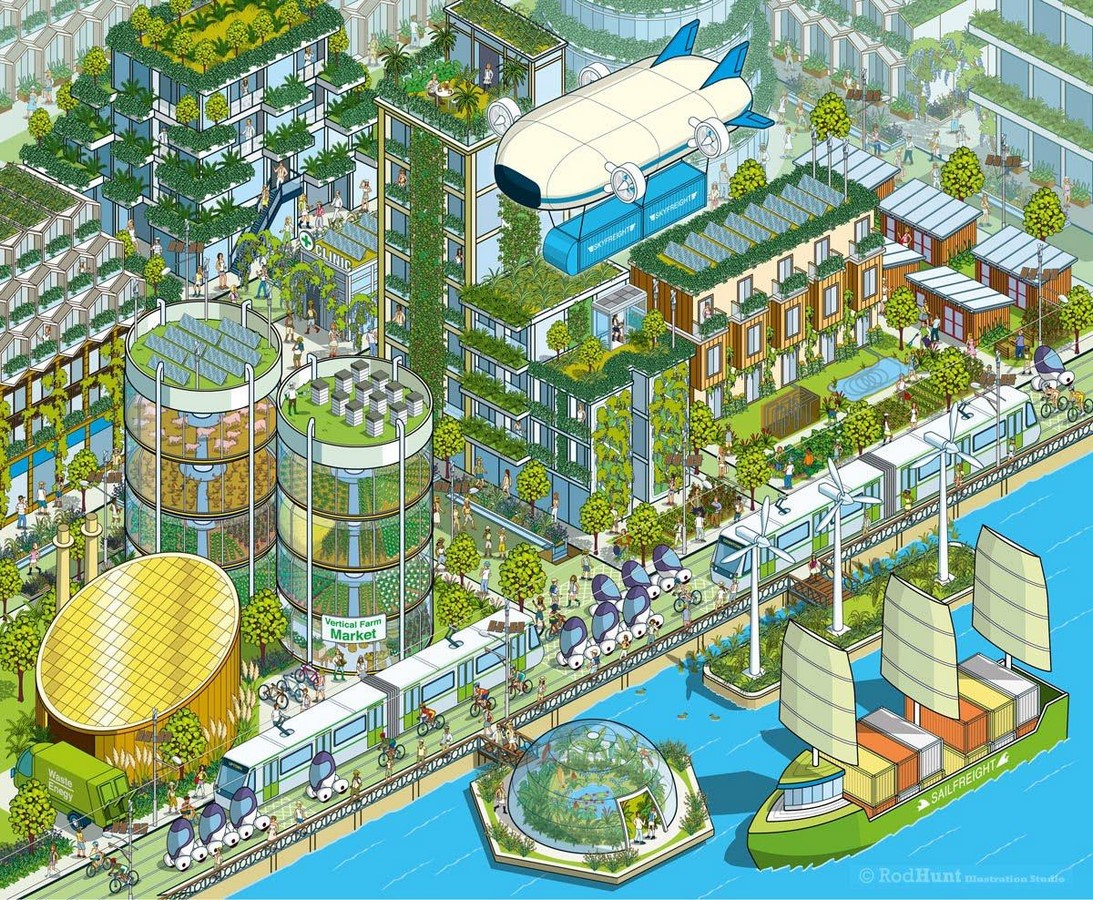
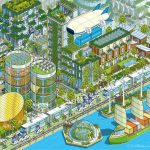
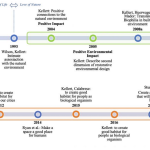
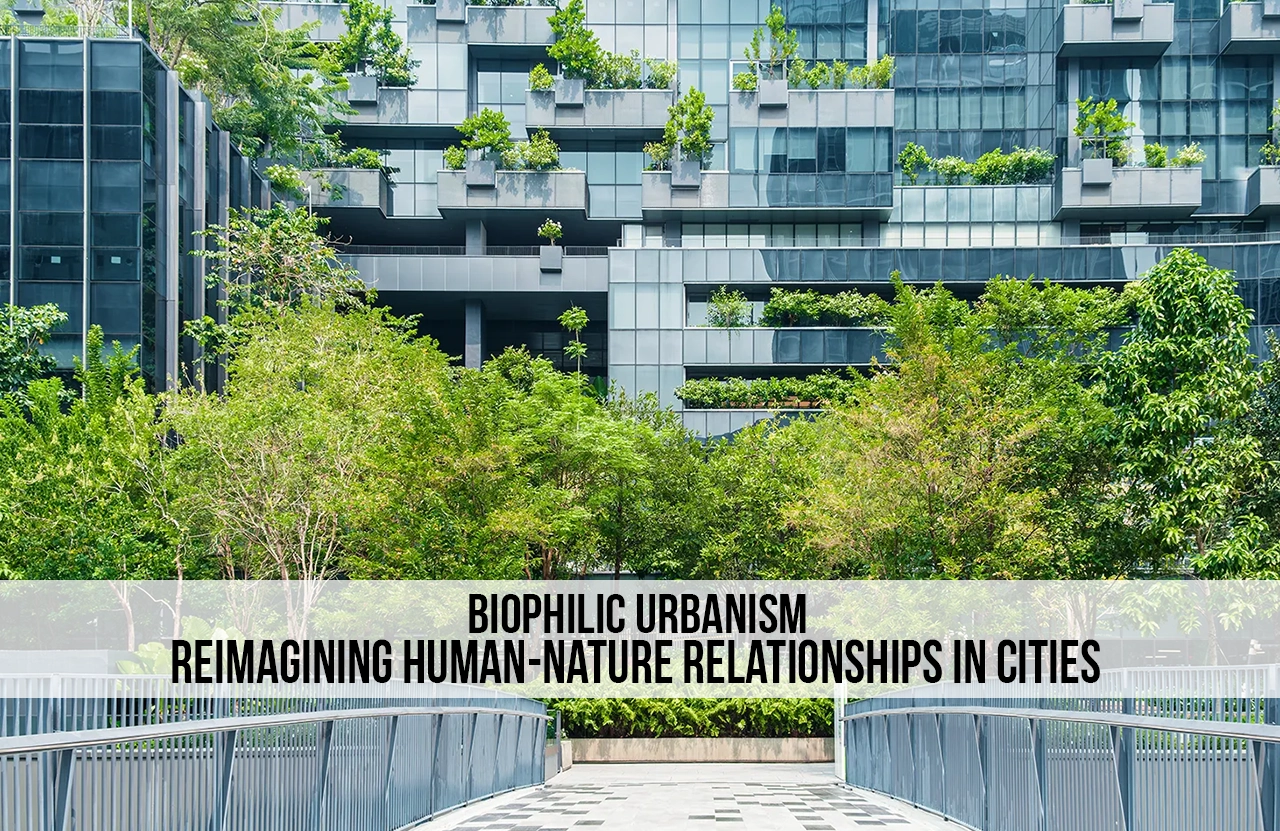
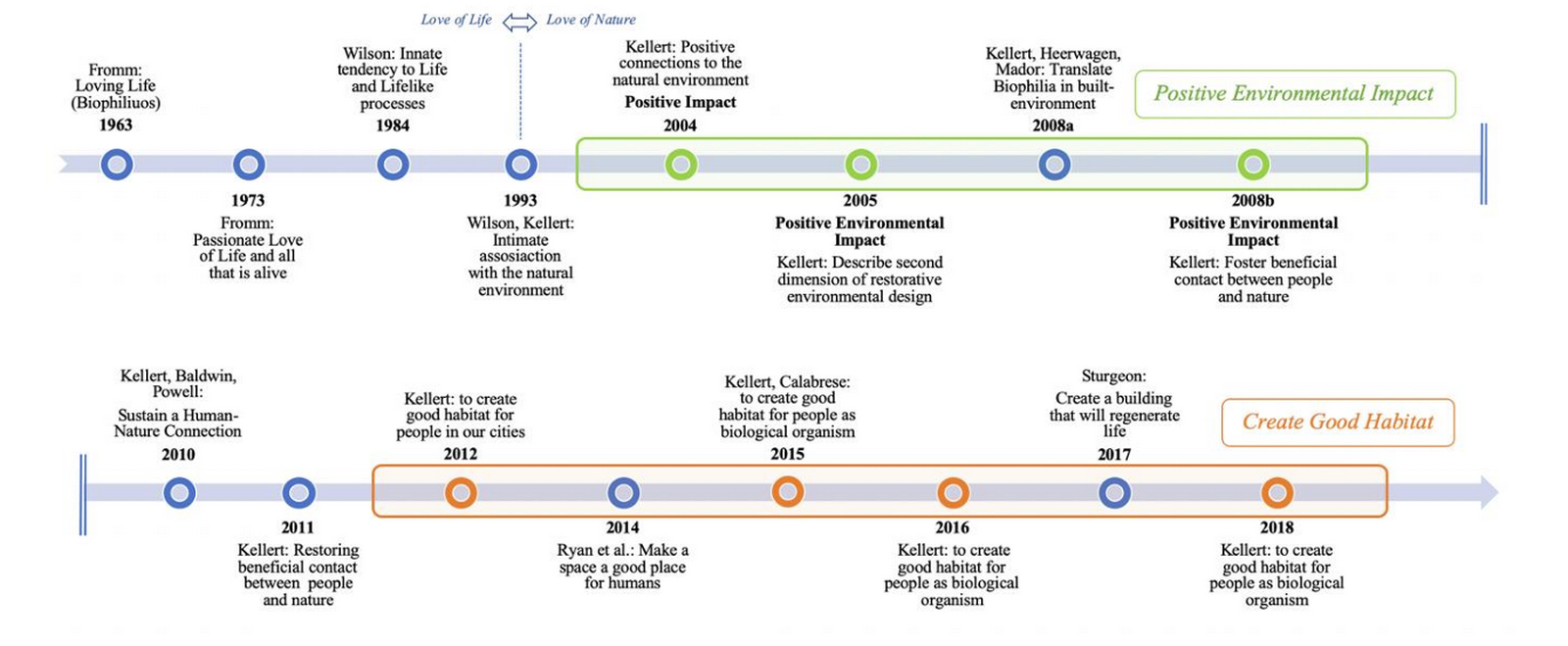
More than 90 % of the emission is generated in cities, due mainly to the burning of fossil fuels for heating and cooling, industrial processes, and transportation. In addition, urbanization may reduce the magnitude of global carbon sinks with regional land-use changes, such as deforestation. Recently, to solve these problems, architects and urban planners have begun to focus on the approach of adapting and relating to nature in modern cities. An attempt to bring as many natural elements into the human living environment as possible is approached with the concept of ‘biophilic urbanism’ or ‘biophilic design’. Biophilic urbanism stems from Wilson’s concept of biophilia “innate tendency to focus on life and lifelike processes”
The Biophilic Imperative on Human health
The human immune system functions better in a state of nature connection. Nature killer cells, NK cells, a type of white blood cells for fighting with infections and cancers, will increase up to 40%in one week of living in nature. Modern urban lifestyle’s stress and anxiety, these are the main causes of psychological disorders and threats to holistic health. On the other hand, being in the nature is one of the most effective factors in reducing stress and anxiety. Theories in relation to psychological health and nature, have been described based on three categories: cognitive psychology, emotional psychology, and evolutionary psychology. Environments that are devoid of any connection with nature, destroy the holistic health of human beings, and cause decline of moral values and behavior of individuals.
Key Principles of Biophilic Urbanism
Architecture may perform on the screen, simultaneously embodying cultural memory, nostalgia, and critique. Biophilic urbanism is characterized by key principles and elements for integrating natural features in urban areas. Environments to enhance sustainability, well-being, and ecological connectivity. The concept is centered on building cities that are in harmony with nature, develop environmentally friendly stewardship and improve the quality of urban life. One key principle of Biophilic urbanism is the deliberate and functional use of natural or biophilic elements within the built environment. This encompasses the inclusion of city and pocket parks, linear green spaces, green roofs and walls for a more sustainable and ecologically friendly urban landscape. By integrating natural elements, biophilic urbanism strives to improve biodiversity, enhance air quality, and provide opportunities for residents to connect with nature in their everyday lives. Another key principle of biophilic urbanism is about human-nature interaction and making spaces that foster well-being and mental health. This could involve planning urban centers with more naturalistic features and fostering access to green spaces. Biophilic urbanism seeks to improve psychological well-being, reduce stress, and enhance the quality of life in general for city dwellers. Biophilic urbanism departs from the conventional approaches to urban design through the emphasis on integration. It involves the integration of natural elements and systems into urban design to create sustainable, resilient, human-centered cities.
Challenges and Considerations
Economic obstacles can be one of the biggest barriers to adopting biophilic urbanism in cities which hampers the establishing of sustainable design practices and integrating natural elements into the built environment. One of the key economic barriers to implementing biophilic urbanism is the lack of supportive planning in place. Without clear guidelines and regulations in place that emphasize biophilic design principles, developers and cities, planners may be less willing to invest in sustainable and nature-integrated urban projects. Besides, insufficient financial means and incentives for projects on biophilic urbanism can hamper their implementation. Economic barriers include high initial costs, limited funding opportunities, and a lack of financial incentives for sustainable design practices may deter stakeholders from investing in biophilic initiatives. In all, biophilic urbanism represents a holistic and future-facing framework for city building. Emphasizing the integration of nature in the creation of sustainable, resilient, and livable environments. Aligning with biophilic urbanism signals a sea-change in thinking about urban planning that can help achieve global sustainability goals and enhance the quality of life within an urban context by promising ecological health, community cohesion, and human well-being amidst the challenges facing modern urban centers.
Citations:
Zare, G., Faizi, M., Baharvand, M. & Masnavi, M.R., 2022. A Review of Biophilic Design Conception Implementation in Architecture. Journal of Design and Built Environment, 21(3), pp.16–36. [online] Available at: https://www.researchgate.net [Accessed 2 November 2025].
Gadhi, A., Tiwari, A. & Qurnfulah, E., 2024. Biophilic Urbanism’s Impact on Sustainable Development: Challenges and Opportunities. Journal of Sustainable Development, 17(6). [online] Available at: https://ccsenet.org [Accessed 2 November 2025].
Lee, S. & Kim, Y., 2021. A framework of biophilic urbanism for improving climate change adaptability in urban environments. Urban Forestry & Urban Greening, 61, 127104. [online] Available at: https://www.sciencedirect.com [Accessed 2 November 2025].
Lefosse, D.C., Naghibi, M., Luo, S. & van Timmeren, A., 2025. Biophilic Urbanism Across Scales: Enhancing Urban Nature Through Experience and Design. Land, 14(5), 1112. [online] Available at: https://www.mdpi.com [Accessed 2 November 2025].