
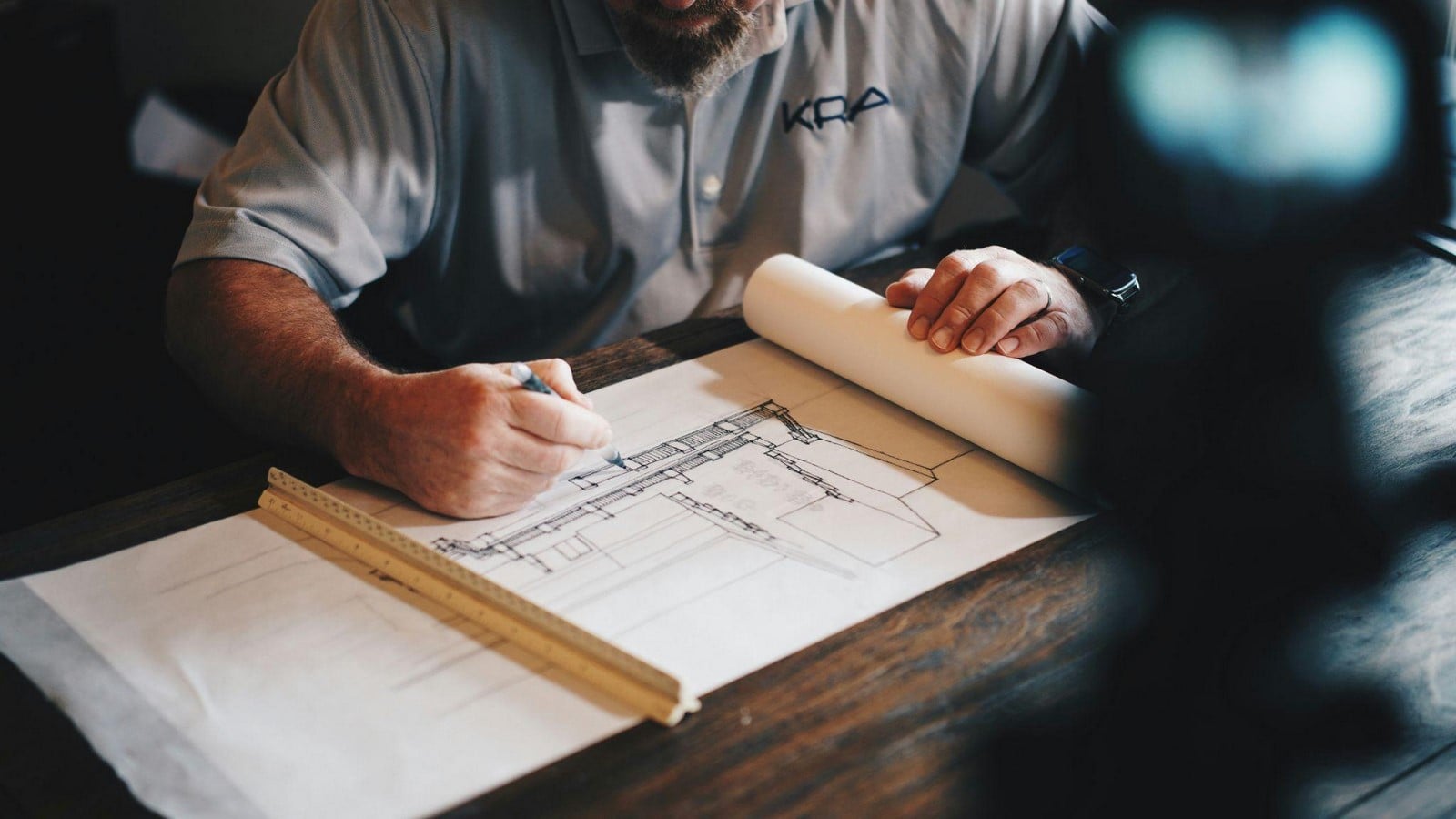
Architects spend almost 40 to 50 per cent of their time in design studios where they come up with design options, solutions, presentation boards and much more. This connection to the studio begins as early as the foundational year of architecture school and carries forward well into the profession. But along with the technical skills learned in school, a prevailing myth becomes ingrained in the minds of students and young architects alike. The myth that being an architect is to suffer. Sleepless nights, empty coffee cups, relentless deadlines, and the sacrifice of personal well-being become the aesthetic of the contemporary architect. This image has been passed down through generations of architectural education, absorbed as tradition and mistaken for excellence.

It is no wonder that architecture has been labelled as one of the most time-consuming majors by a survey conducted by Indiana University, measuring student engagement hours across multiple disciplines. On average, architecture students spend 22.2 hours per week on studio work, surpassing any other major by over two and a half hours (Lynch, 2017). This immense workload and the stress resulting from it are taken as a given because the culture of burnout in architecture studios is not incidental; it is institutionalised. The romanticisation of that suffering is one of the most damaging myths the profession continues to promote.
The Consistent All-Nighters
Ask any architecture student how many hours of sleep they get at night before deadlines, and the answers will be the same, all under the average hours of sleep needed by a functioning adult. From zero to less than five hours of sleep, students are accustomed to pulling all-nighters to complete their assignments, prepare for exams, detail their design sheets, or make sure that their model is immaculate. The all-nighter has become a cultural ritual in most architecture design studios. Students who work through the night are quietly admired. Those who pack up at a reasonable hour risk being perceived as less committed, less serious, and less deserving of the title ‘architect’ (LaValley, 2020).
This culture is taught from generation to generation through ‘inspiring’ stories about successful architects staying up late to complete their designs, mostly narrated by studio tutors themselves. While they may have the good intentions of using their experience to kindle dedication and commitment to the profession in the hearts of their students, they remain oblivious to the fact that they are transferring their own trauma rather than their wisdom. The distinction matters. There is a difference between sharing the realities of a demanding profession and romanticising the conditions that made it damaging. When exhaustion is framed as a rite of passage, students do not simply hear that architecture is hard – they hear that suffering is proof of their commitment. So the cycle continues as students inherit not only the technical skills and knowledge from their tutors but also this unhealthy conditioning of burnout.
Passion as a Cover Story
Burnout in architecture studios is normalised before students have even entered professional practice (Kamel and Khalil, 2025). It is seen not as a warning but as a sign of dedication and passion, which serves as the perfect cover story for the suffering it causes to the students. Architecture has long operated on the assumption that passion justifies hardship. If you are passionate enough about your project, losing a few hours of sleep is nothing compared to the joy of delivering a well-researched and immaculately detailed presentation. But even then, design critiques sometimes add to the stress the students are already battling with – the need to make more options, to present everything, and to justify each question the jurors may have weighed heavily on the students’ shoulders. Thus, passion and hard work alone cannot get them through this phase. They need presence of mind as well, which is usually compromised due to the long hours without sleep and the consistent suffering and burnout.

Words like passion, dedication, commitment, and love for the discipline function as a convenient cover for a system that expects too much from students while offering very little in return (ArchDaily Editorial Team, 2018). When a student is deeply invested in their work, the institution benefits. Push back on their design, and they will work harder to prove themselves. Set an impossible deadline, and they will meet it, because giving up would feel like letting down something they genuinely care about. Architecture schools have long used the idea of the ‘tortured creative’ – the suffering artist whose pain produces greatness. It is a romanticised image, and it gives institutions a ready-made excuse for workloads that would not be acceptable in any other field of study (Borson and Valiente, 2012).
The Human Cost
The cost of this culture of burnout and suffering demands from students and young professionals cannot be underestimated. Research in the Building Healthy Academic Communities Journal reveals that 46 per cent of architecture and landscape architecture students screen positive for moderate to extreme anxiety, while 33 per cent report moderate to extreme depression and stress. These high rates of distress are largely driven by studio culture, with 71 per cent of students reporting increased anxiety from deadlines and 59 per cent experiencing chronic sleep deprivation (Battisto et al., 2024). These statistics are significantly higher compared to students in other disciplines. They also represent students withdrawing from programmes they were passionate about, seeking mental health support, or simply enduring years of an education that demanded too much from them compared to nurturing them.

Furthermore, the burden in architecture design studios is not distributed equally. Students from working-class backgrounds are at a greater disadvantage as they are usually balancing studies with part-time employment. Students with caregiving responsibilities, such as married women or those with families depending on them, find the expectation of round-the-clock studio presence impossible to meet without a high personal cost. International students also struggle with the immense workload, combined with the troubles of navigating language barriers and geographic isolation. In short, students have fewer support systems because this suffering is expected from them to undertake, almost as if choosing architecture meant choosing a self-sacrificial work ethic. Mental health literacy within architecture schools also remains inadequate. Conversations about well-being often address individual students in crisis rather than the systemic conditions that created the crisis. Thus, the studio remains a space where emotional resilience is assumed rather than cultivated, and where asking for help can feel like a professional liability.
Does Suffering Actually Produce Better Designs?
Mostly, the romanticising of suffering and burnout stems from the assumption that it produces better work, but is this really true? Research does not support it. Fatigue impairs cognitive function, reduces creative flexibility, and narrows the capacity for the kind of lateral, associative thinking that good design requires. A student working on their third consecutive sleepless night is not producing their most inventive work. They are producing work that satisfies the immediate demands of a deadline while their capacity for genuine creative thought steadily erodes (LaValley, 2020).

Great design emerges from curiosity, exploration, and the mental space to observe the world and translate those observations into spatial ideas. None of these can be fulfilled with chronic exhaustion. The architects whose work endures – whose buildings provoke thought and serve people well – are rarely those who worked the longest hours. Rather, they are those who developed habits of sustained, focused attention, which is very different from the scattered, deadline-driven output that the studio’s burnout culture incentivises (Walsh, 2023).
When students are racing against the clock on insufficient sleep, the impulse is to default to solutions that are familiar and safe. The bold, experimental thinking that architecture school claims to encourage is actually the first thing to be compromised when students are burnt out. So the real irony is that a culture priding itself on producing creative, innovative designers may actually be doing the opposite, turning out exhausted graduates who have learned to look creative rather than practice it.
Breaking the Cycle: What Needs to Change?
For a myth that has been practised religiously from generation to generation, it will require more than just telling students to go home early and rest. It needs a structured improvement on the institutional level. Deadlines need to be designed with genuine human capacity in mind. Assessment frameworks should reward depth of thinking over volume of output. Studio culture must shift from valorising sacrifice to modelling sustainability, and that shift must begin with the educators who set the tone (Kamel and Khalil, 2025). Students also have a role to play by not just accepting this culture of suffering as a given but prioritising their own health and managing working hours accordingly. They should recognise that burnout is not a sign of passion. It is a sign that your body and mind are running on empty, which will ultimately affect both your health and performance.

The romanticisation of suffering in architecture studios is not a harmless tradition. It is a mechanism that normalises exploitation, marginalises those who cannot afford to endure it, and ultimately undermines the quality of the design thinking it claims to cultivate. Architecture is a discipline of remarkable ambition to shape the way people live, move, and experience the world. It deserves an educational culture that matches that ambition. A culture that invests in the well-being of the designers it produces, rather than measuring their worth by how much they are willing to sacrifice.
References:
ArchDaily Editorial Team (2018). Is Architecture Synonymous with Stress? [online] ArchDaily. Available at: https://www.archdaily.com/892367/is-architecture-synonymous-with-stress.
Battisto, D., Hambright-Belue, S., Browning, L., Hall, L., Blouin, J., Dong, J., Li, X. and Price, K. (2024). Mental Health Challenges in Architecture and Landscape Architecture Students. Building Healthy Academic Communities Journal, 8(2), pp.53–73. doi:https://doi.org/10.18061/bhac.v8i2.9767.
Borson, B. and Valiente, U. (2012). Mental Health Awareness for the Architecture Student | Life of an Architect. [online] Life of an Architect -. Available at: https://www.lifeofanarchitect.com/mental-health-awareness-for-the-architecture-student/.
Gumusel, B. (2025). Is Being an Architect Stressful? Exploring the Challenges and Rewards of the Profession. [online] illustrarch. Available at: https://illustrarch.com/articles/44564-is-being-an-architect-stressful.html.
KAMEL, M.A.E. and KHALIL, M.W.I. (2025). BURNOUT IN ARCHITECTURE STUDENTS: THE ROLE OF STUDIO CULTURE NORMS. [online] Tpmap.org. Available at: https://tpmap.org/submission/index.php/tpm/article/view/906/767.
LaValley, M. (2020). Understanding Burnout in Architecture School and the Profession – Architizer Journal. [online] Journal. Available at: https://architizer.com/blog/inspiration/industry/understanding-burnout/.
Lynch, P. (2017). New Survey Confirms Architecture as Most Time Consuming Major. [online] ArchDaily. Available at: https://www.archdaily.com/805264/new-survey-confirms-architecture-as-most-time-consuming-major.
Walsh, N.P. (2023). 10 Tips for Overcoming and Preventing Burnout in Architecture. [online] Archinect. Available at: https://archinect.com/features/article/150439407/10-tips-for-overcoming-and-preventing-burnout-in-architecture.