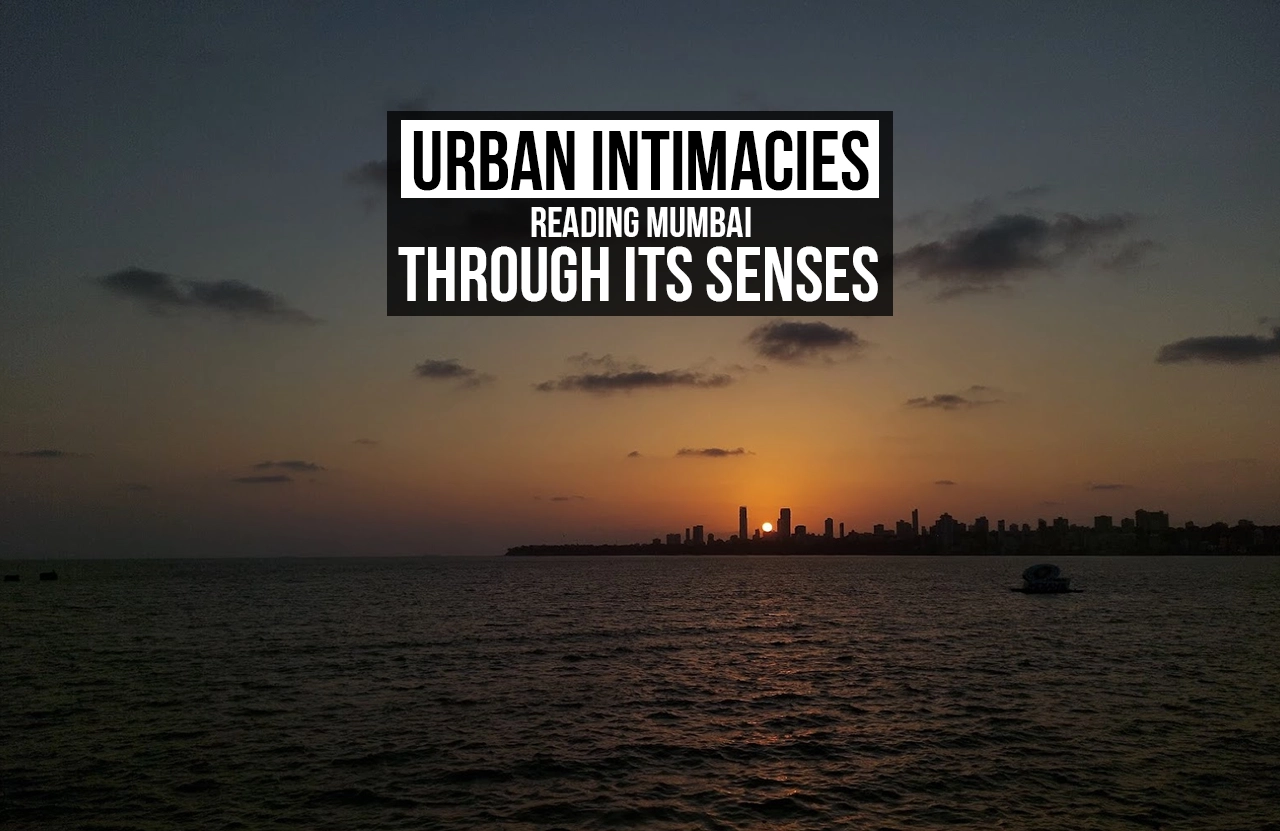
Cities are often understood through their skylines, maps, and monuments, essentially through what we see. Yet what truly defines belonging in an urban landscape is not sight, but the subtler dimensions of touch, sound, and smell. These sensory cues shape our perception of space and our connection to it. In a city like Mumbai, which is chaotic, intimate, and endlessly layered, the senses are what anchor experience. To sense the city is to read it beyond its architecture: through its textures, its rhythms, and its air. Mumbai, more than any other Indian metropolis, is about everyone and anyone. Its sensory landscape is the invisible architecture of inclusivity – a collective pulse that allows millions to coexist.
Touch: The Texture of Space
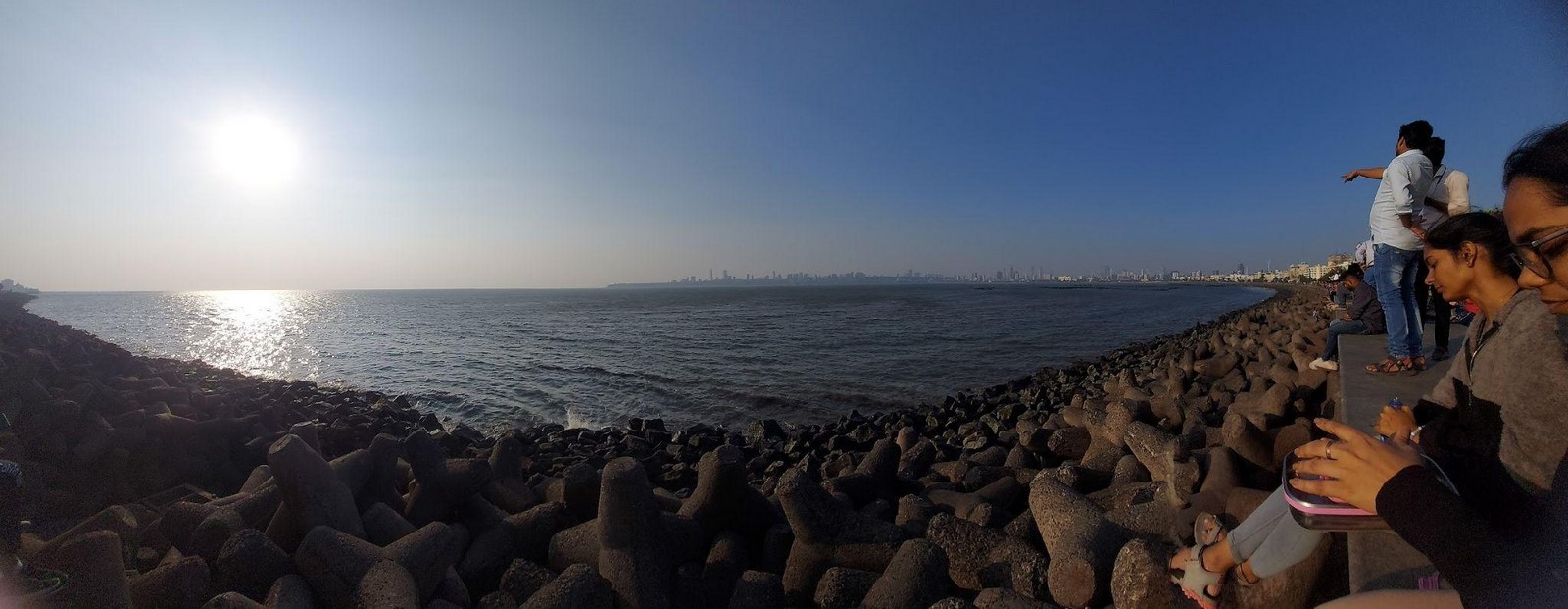
The tactile dimension of Mumbai is inseparable from its geography. The city invites physical contact. It is a place that asks to be felt.
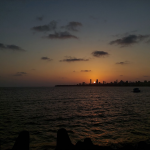
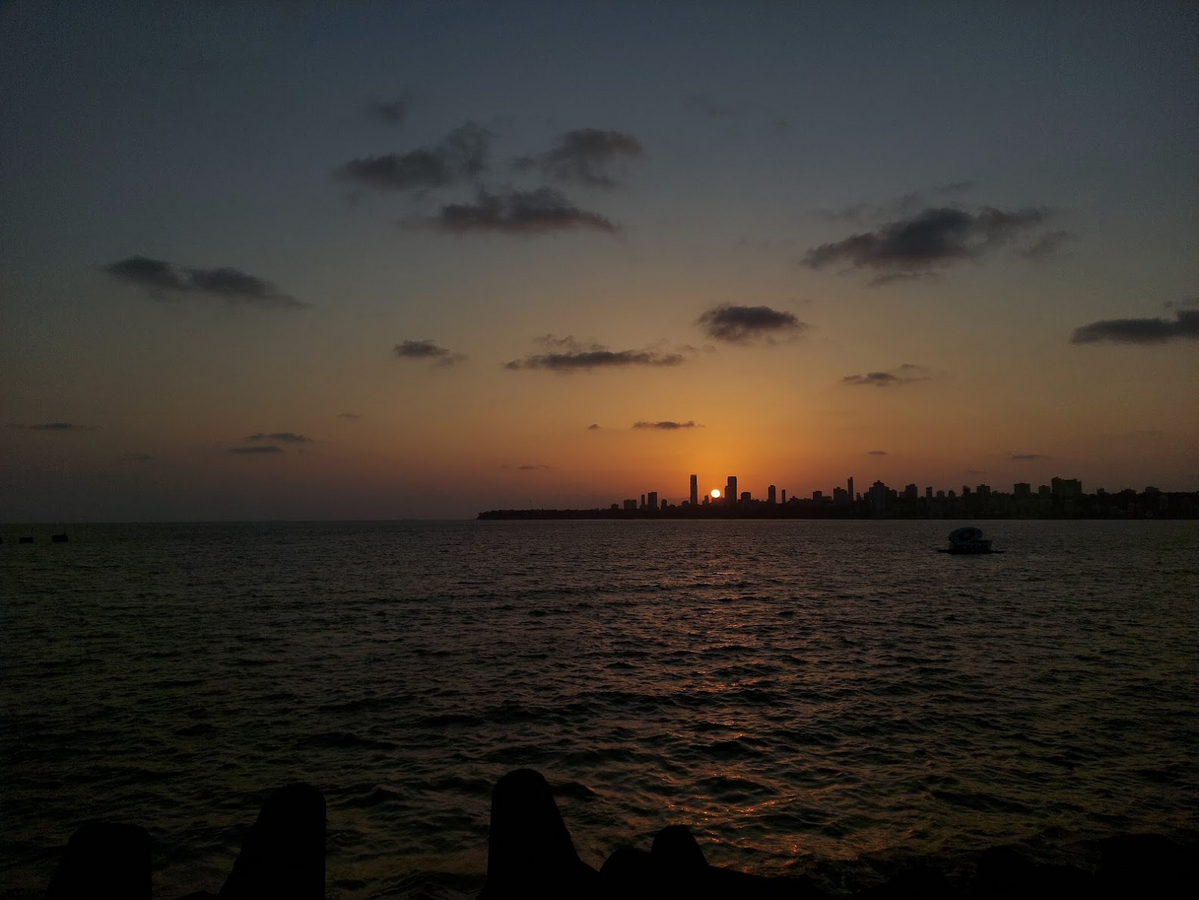
At Marine Drive, the encounter begins with the roughness of its RCC seawall, a barrier that negotiates daily between land and sea. Its concrete surface, coarse yet familiar, carries the touch of countless elbows, palms, and monsoon waves. The linear wall becomes an unintentional urban bench; it is a civic threshold where people pause to breathe. The faint vibration of waves striking its base and the salt residue gathering along its edge turn this infrastructure into a sensory interface between the city and its coastline. Here, architecture is not enclosure but exposure, belonging defined by touch.
The beaches of Juhu and Girgaum Chowpatty offer another kind of tactility, which is loose, shifting, forgiving. The sand clings to bare feet, merging body and landscape. These beaches, democratic and open, dissolve social hierarchies. They are where the city exhales, where children, workers, and families share the same horizon, the same breeze, the same grainy ground beneath.
In the Koliwadas, Mumbai’s oldest fishing settlements, touch becomes the texture of livelihood. The coarseness of nets, the slickness of fish, and the rough timber of boats speak of centuries of routine. Houses merge with workspaces; the materiality of everyday life defines the built form. Here, touch is culture – an architectural vocabulary of resilience passed through hands and generations.
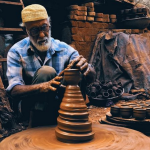
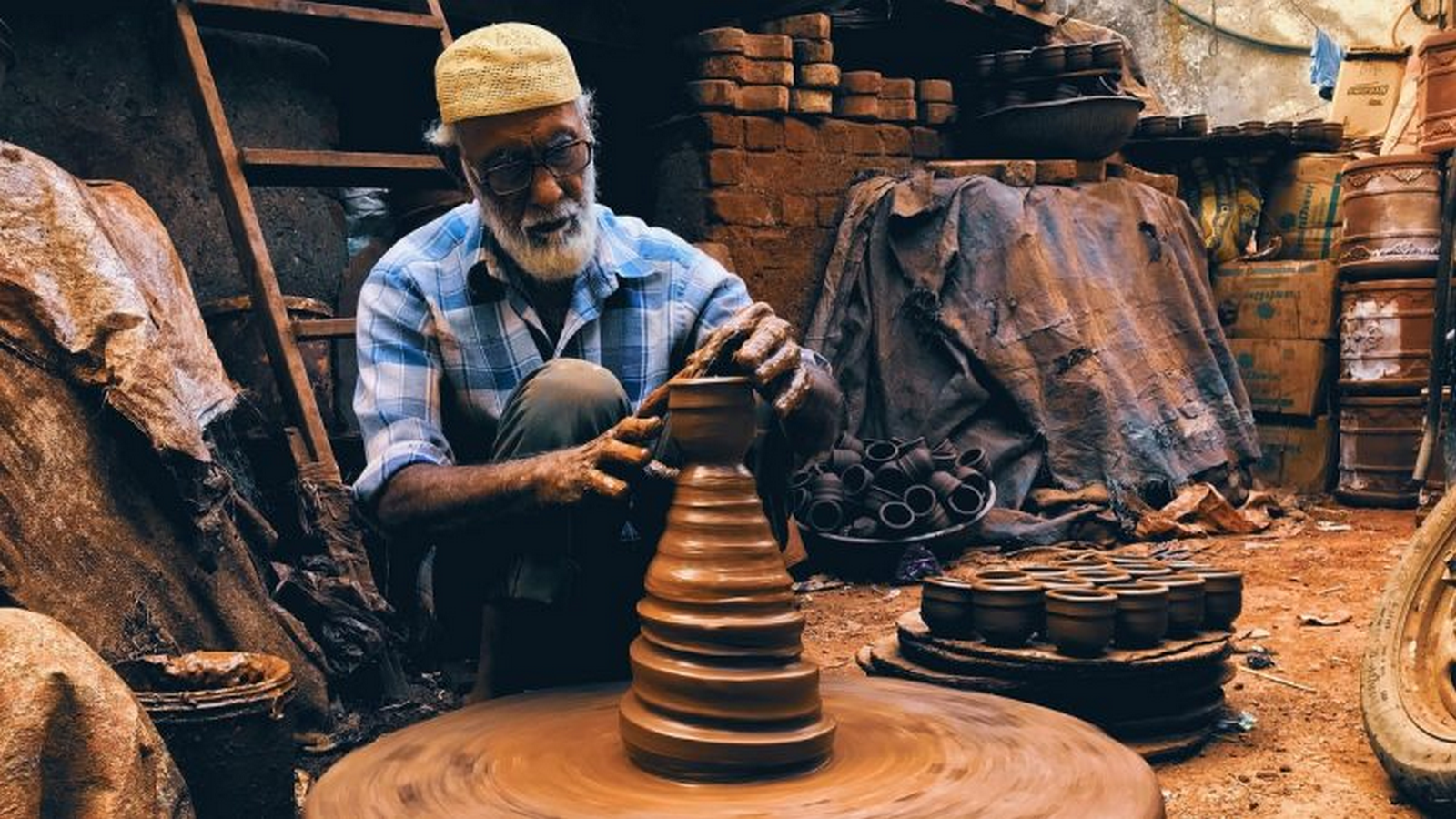
Similarly, in Kumbharwada, Dharavi, touch transforms into creation. Clay, wet and pliable, spins beneath skilled fingers, forming vessels that hold the rituals of the city. The dense morphology of low roofs, uneven lanes, and open kilns heightens the haptic experience. Surfaces are never smooth; they bear the imprints of labor. This is architecture as a process that is felt more than seen.
Sound: The Rhythms of the Urban Pulse
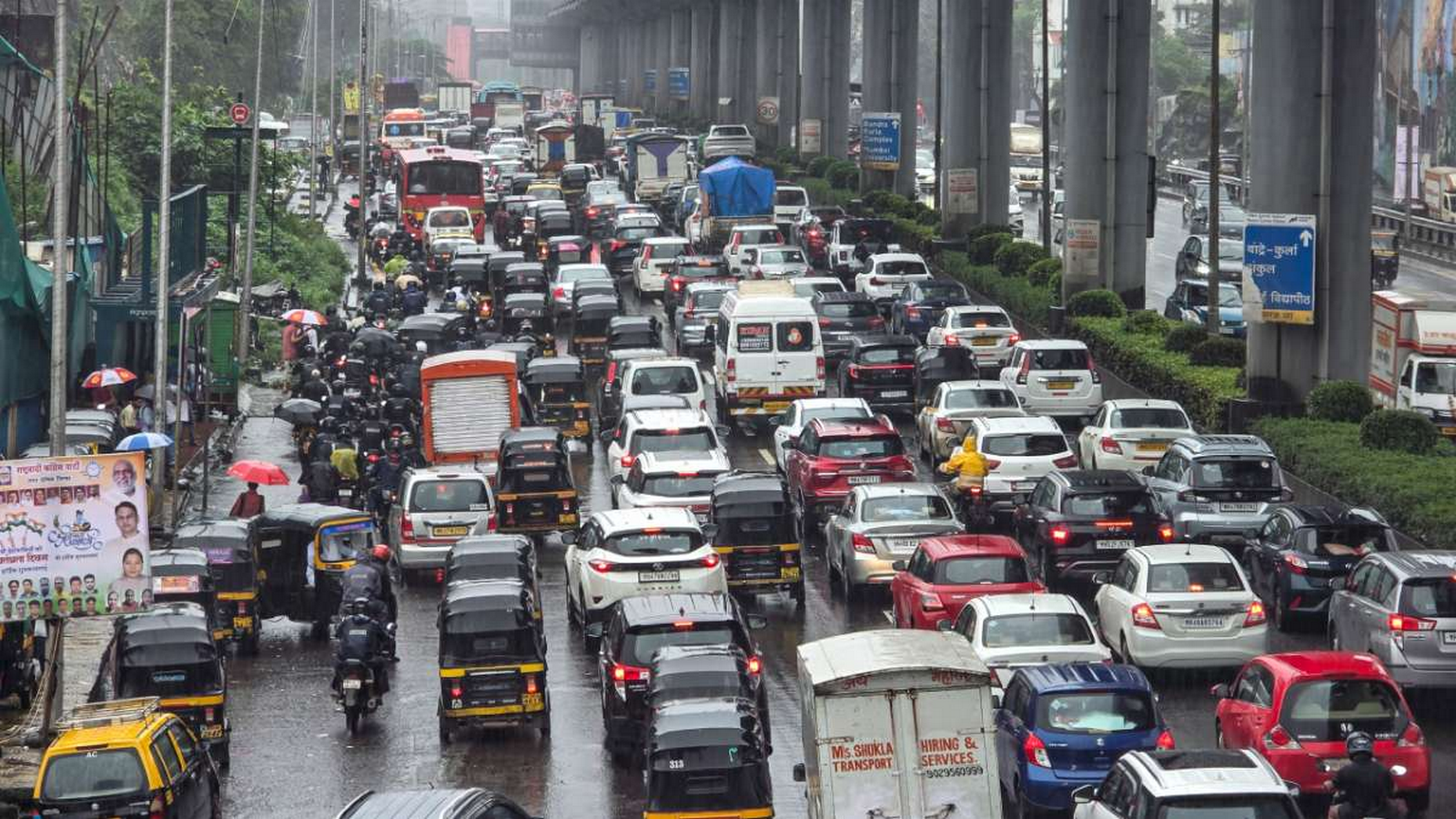
Sound in Mumbai is not background noise; it is the rhythm that synchronizes urban life. Each neighborhood carries its own acoustic signature.
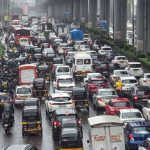
At Sakinaka, the relentless honking of rickshaws, grinding of engines, and hum of construction create a percussive soundtrack to industrial Mumbai. The noise is exhausting, yet it represents motion and the sonic pulse of survival.
At Mohammad Ali Road, the muezzin’s call from the mosque threads through the dense bazaar, blending with clattering utensils and sizzling kebabs. During Ramadan, the sounds grow richer, layering devotion with appetite. The spiritual merges with the commercial. An aural architecture defined by coexistence.
A few kilometers away, the Siddhivinayak Temple presents another form of sacred sound. The ringing of temple bells and the rhythmic chanting of the aarti spill onto the streets, momentarily stilling the city’s pace. These sonic rituals blur the boundary between public and private space, turning the street itself into an extension of the shrine.
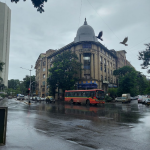
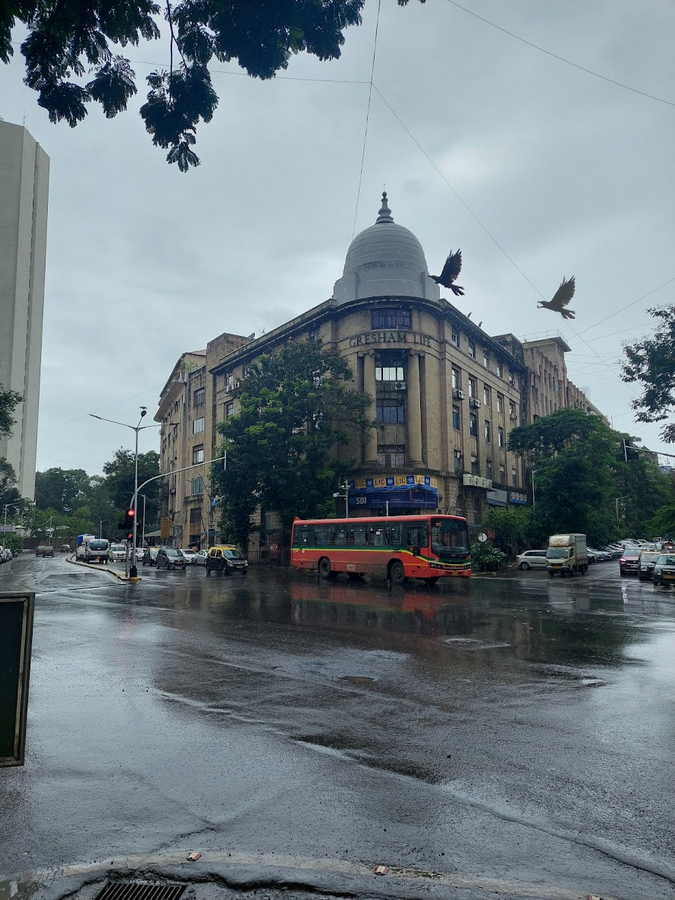
Further south, Kala Ghoda and Ballard Estate carry a quieter register. The colonial stone façades absorb noise, creating a rare urban calm. The echo of footsteps under arcades, café chatter, and distant music form a composed urban soundscape the one that demonstrates how built form can modulate auditory experience. Architecture here doesn’t just house sound; it orchestrates it.
Smell: The Invisible Architecture of Memory
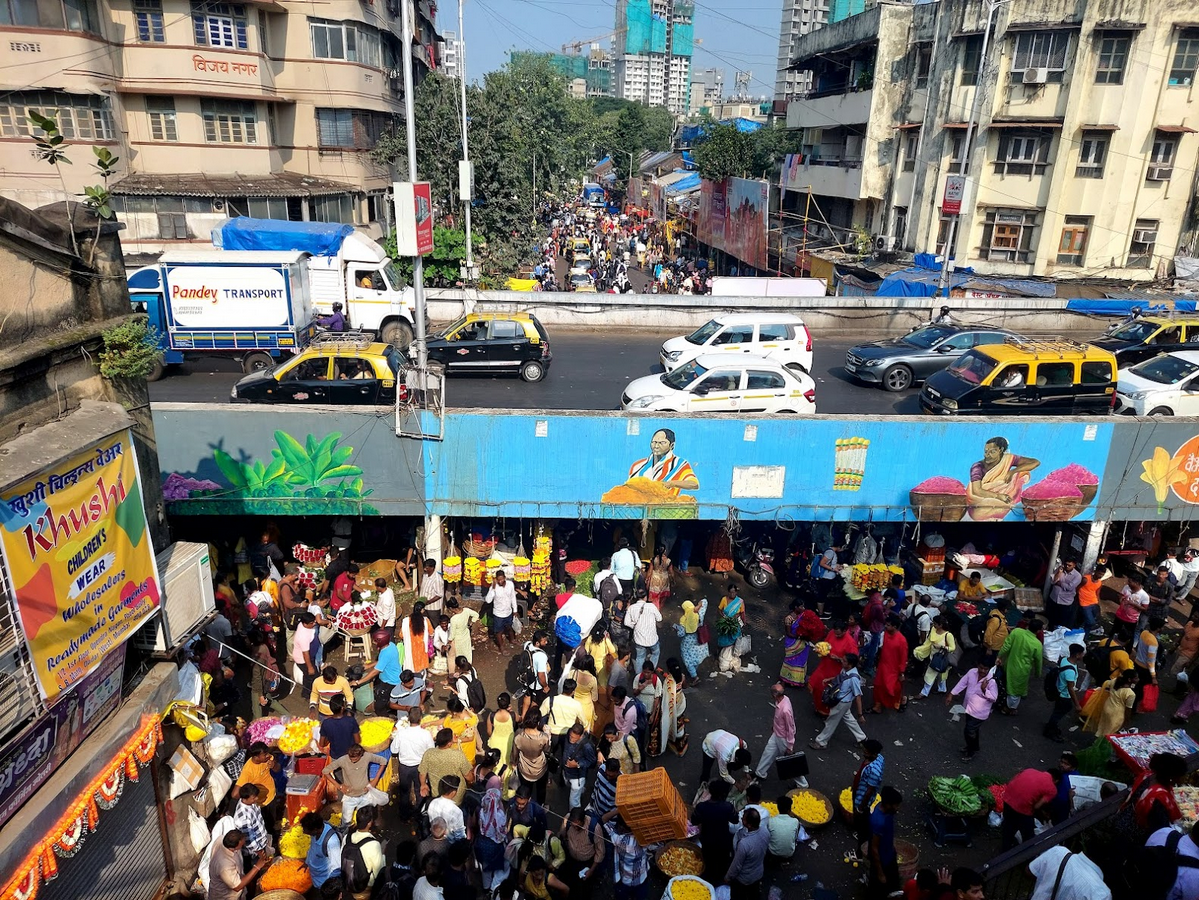
Smell defines space in Mumbai as powerfully as sight. It is the most democratic and unforgiving sense of all. The Dadar flower market at dawn is an assault of fragrance and fatigue: Marigold, Rose, Jasmine, and sweat mingling beneath the railway bridge. The air is thick with trade, devotion, and routine. This overwhelming mix becomes an invisible architecture. Here, boundaries are defined by scent rather than walls.
In contrast, in Vile Parle, the air once carried the unmistakable sweetness of freshly baked Parle-G biscuits. A scent that wrapped itself around the neighbourhood, blurring the line between industrial and domestic space. Today, that fragrance has faded, the factory silenced, and the site stands as a reminder of how cities evolve by erasing some of their most personal memories. The absence of that smell, once a collective marker of belonging now defines the space just as powerfully as its presence once did. Here, the architecture of memory is built on loss, showing how the sensory fabric of a city can shift even as its buildings remain.
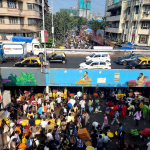
The Khau Gallis of Ghatkopar, Girgaon,Churchgate, and Mulund meanwhile, are olfactory playgrounds. The mingling aromas of pav bhaji, kebabs, and sugarcane juice merge with the metallic tang of traffic and sweat. Here, food defines place where the act of eating in shared air becomes an architectural ritual of community.
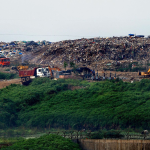
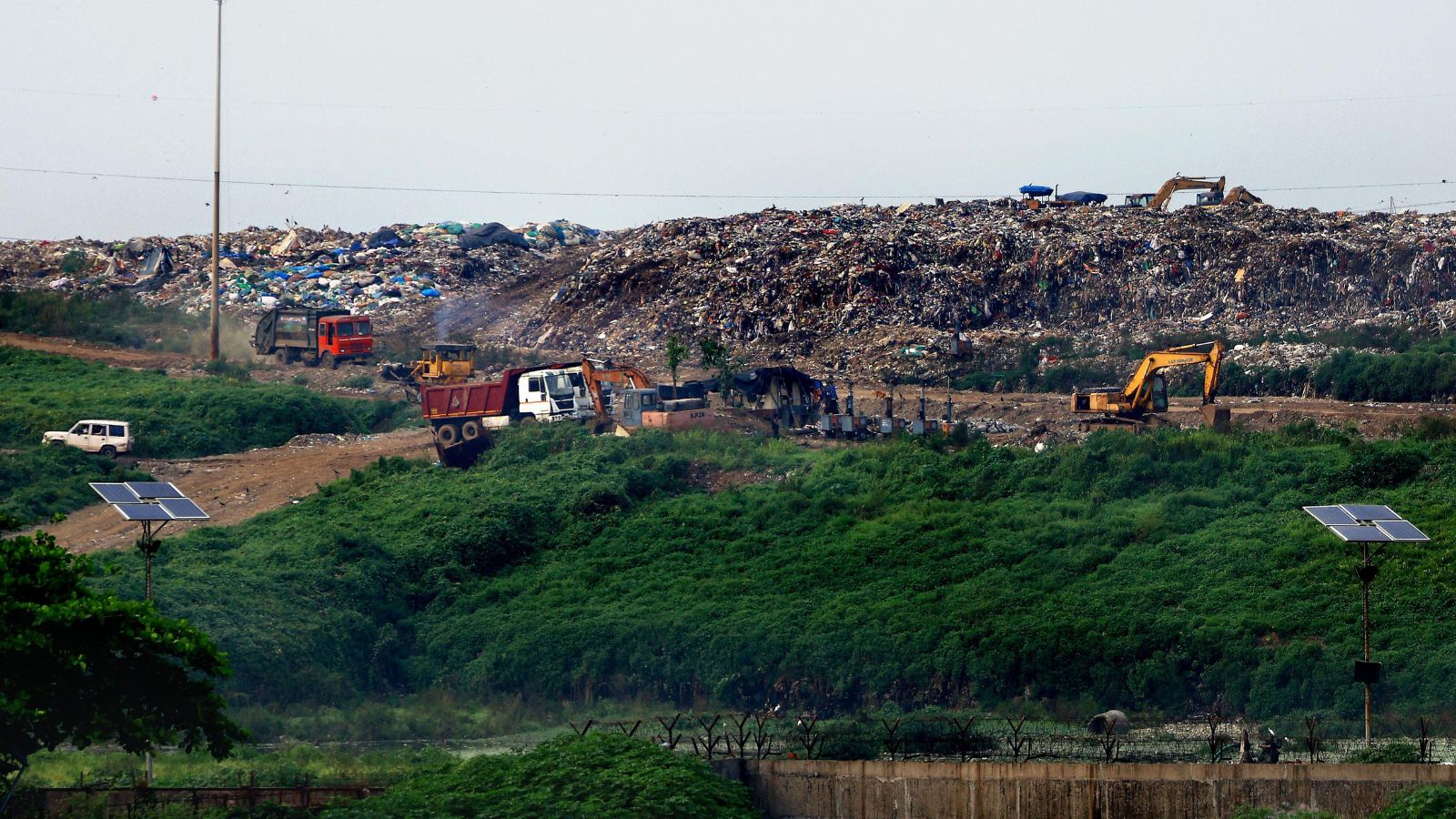
At the edge of the sensory spectrum, the Deonar dumping ground offers a sobering contrast. The acrid odor of waste reminds the city of its excess which is the unseen cost of consumption. The same breeze that carries the scent of sea and spice also carries the stench of neglect. Smell here becomes political. It exposes who bears the sensory burden of the metropolis.
The Sensory Continuum of Belonging
To sense the city is to acknowledge that Mumbai’s architecture extends beyond its skyline. It exists in the grain of its walls, the echo of its streets, and the air between its buildings. Belonging here is not about property or permanence: it is about sensory fluency. You belong when you can recognize Marine Drive’s seawall by touch, identify a neighborhood by its smell, or tell the time by the rhythm of distant trains.
For architects and urbanists, this means reimagining design not just as the shaping of form but as the curation of sensory experience. A truly inclusive city does not mute its sounds or sterilize its smells, rather, it embraces them. Mumbai’s architecture lies as much in its skyline as in the texture of its everyday life.
Conclusion: The City That Lives Through You
Mumbai is not a city one merely inhabits; it is a city that inhabits you. Its scent lingers on your clothes, its soundscape becomes your heartbeat, and its textures stay under your skin. Belonging here is not comfort , it is recognition.
To touch its seawall, to hear its prayers, to smell its contradictions is to participate in its making. Every person in the city, from the fisherwoman in Versova to the commuter at Dadar, from the potter in Dharavi to the vendor in a Khau Galli adds a sensory layer to the city’s collective architecture.
This is what makes Mumbai truly inclusive: its ability to hold contrasts together through shared sensory experience. In Mumbai, architecture does not end where the building stops, it continues in the sea breeze, the street corner, the sound of traffic, and the smell of food.
To sense Mumbai is to understand that the truest architecture of belonging is not built in concrete or glass – it is built in life itself.
References:
- Pallasmaa, J. (1996). The Eyes of the Skin. Chichester Wiley.
- Classen, C., Howes, D. and Synnott, A. (1997). Aroma : the cultural history of smell. London: Routledge.
- Gehl, J. (2010). Cities for people. Washington, Dc: Island Press
- Virani, S. (2022). How tactical urbanism is transforming Mumbai, bit by bit. [online] Citizen Matters. Available at: https://citizenmatters.in/tactical-urbanism-bmc-mumbai-projects/ [Accessed 28 Jul. 2024].
- Mehrotra, R. (2011). Architecture in India since 1990. Mumbai Pictor Ostfildern Hatje Cantz.